AI Photography for Modest Fashion · The Gulf · Case Study
Modest Valoria — coverage
is a spec, not a mood.
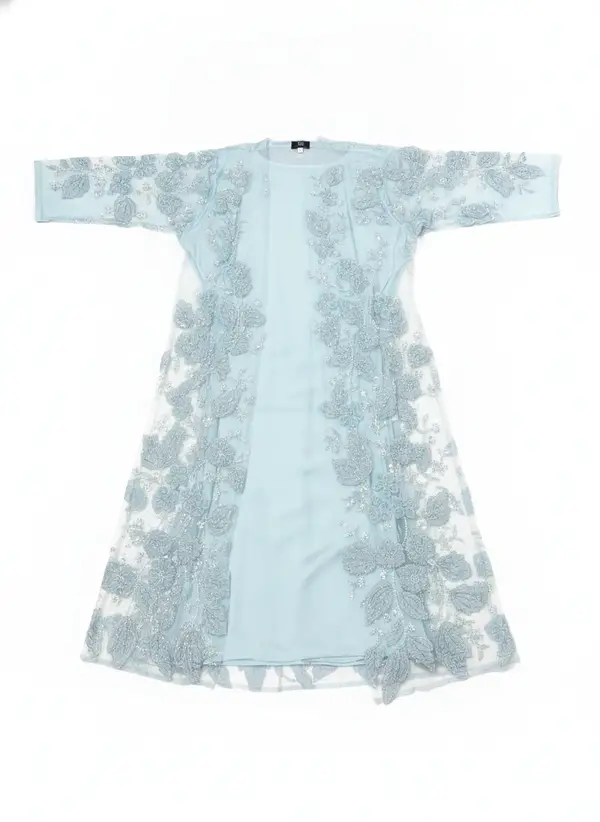
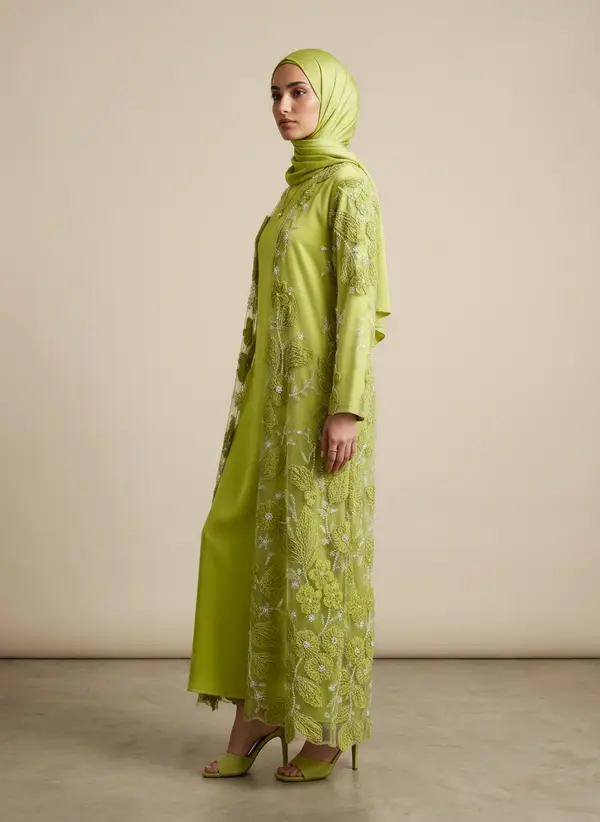
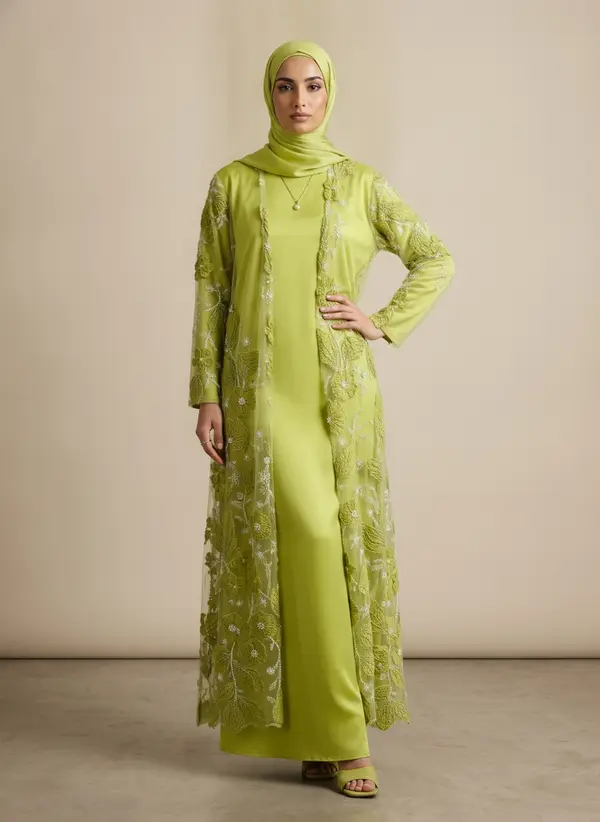
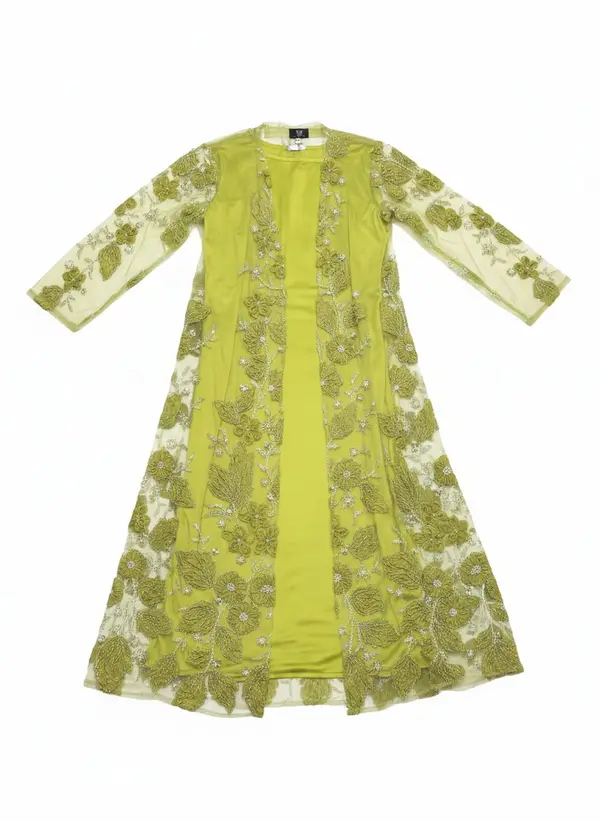
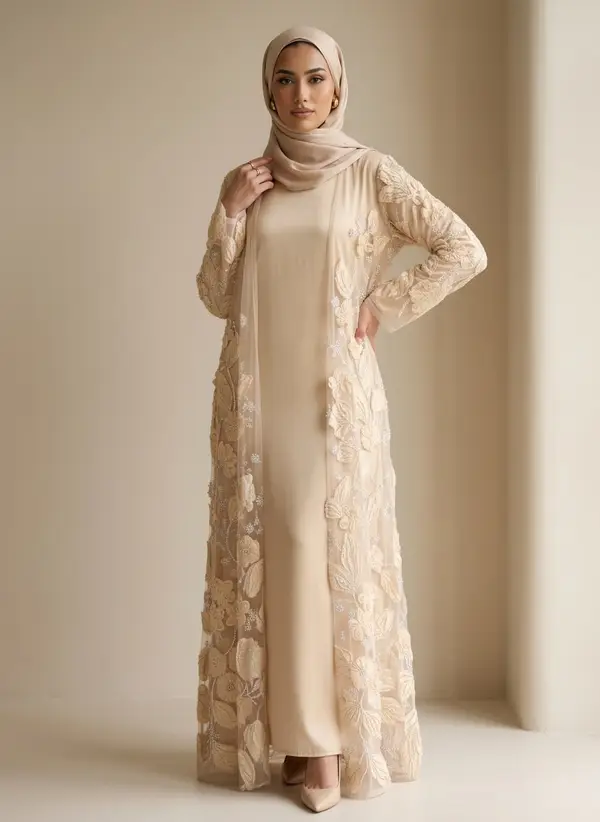
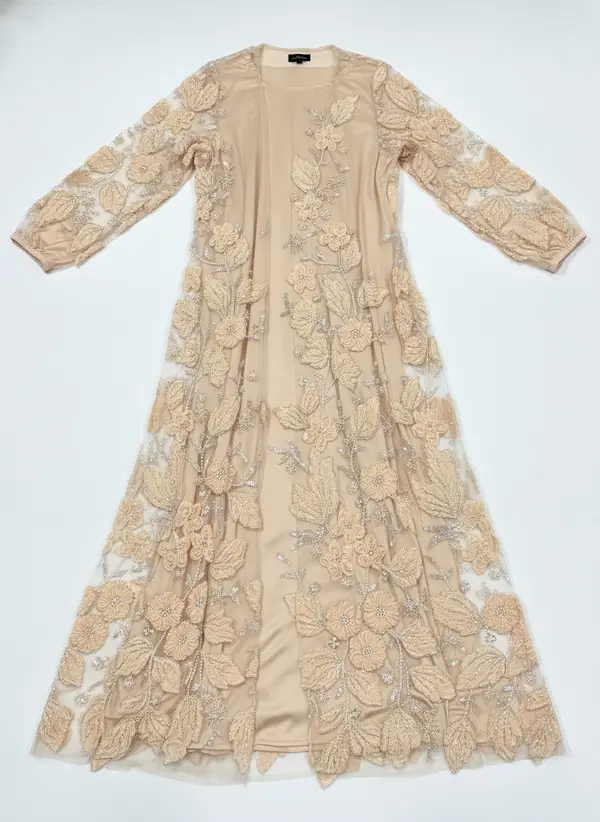
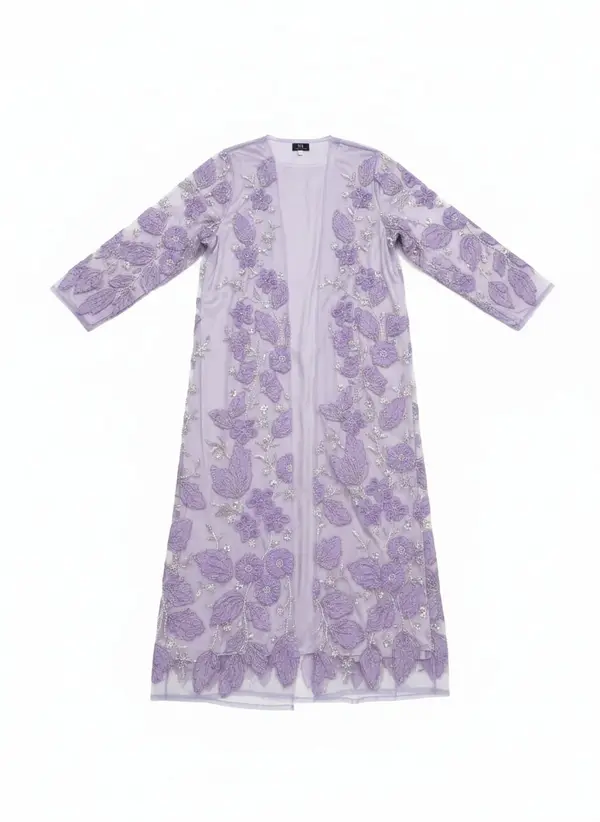
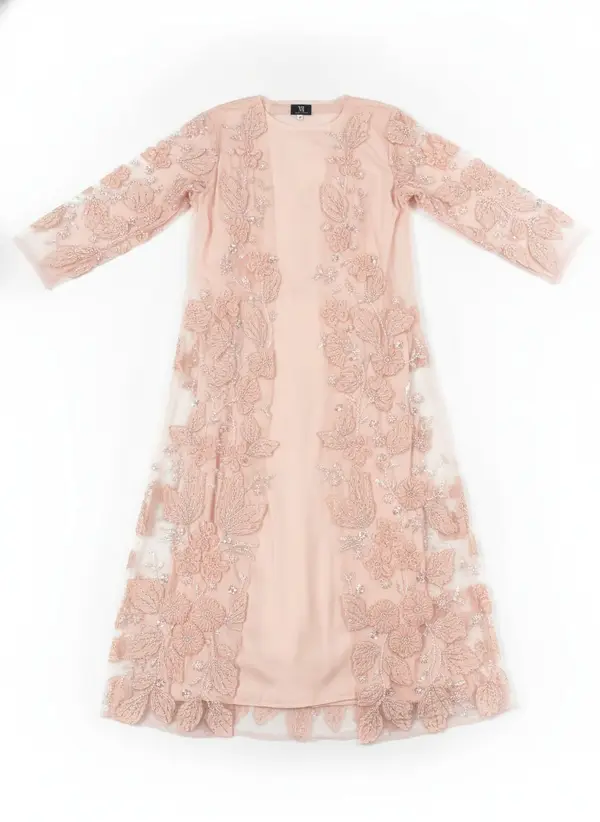
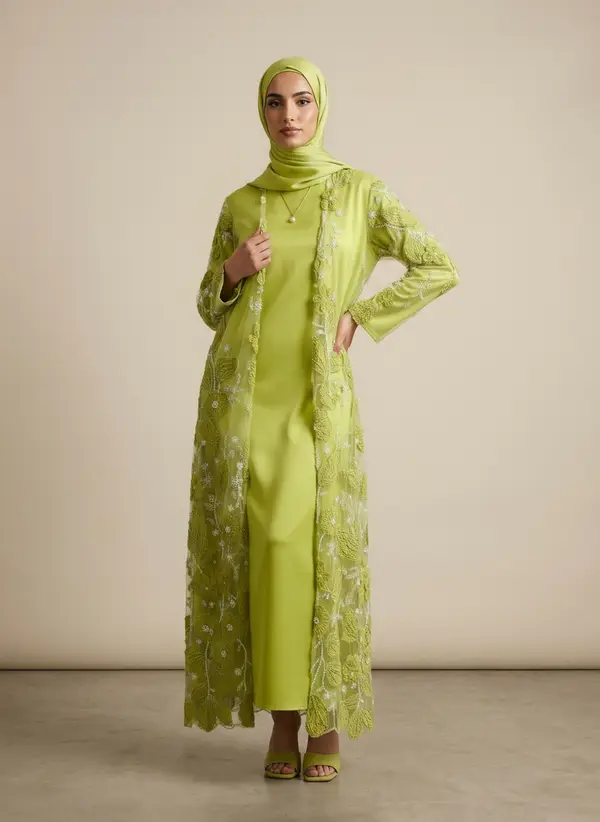
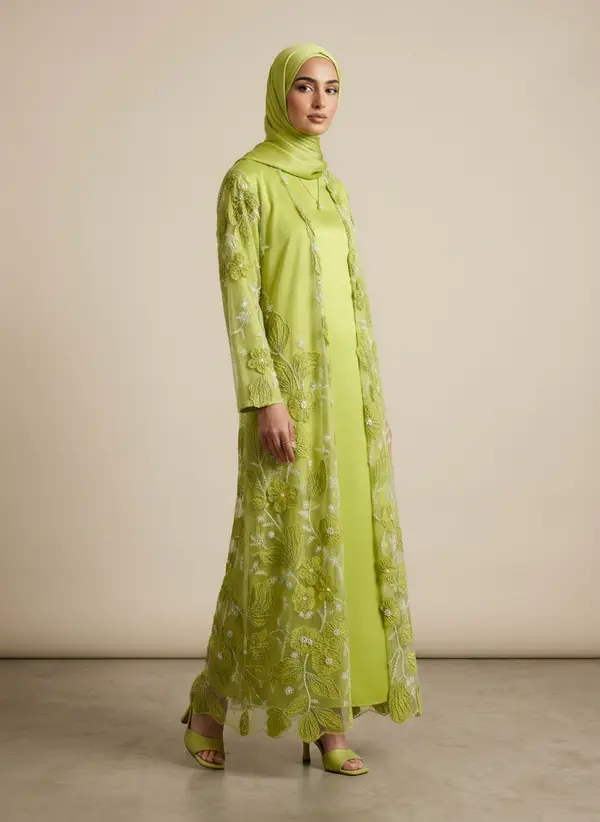
A sheer tulle open abaya carrying hundreds of raised floral appliqués, worn over a matching satin under-dress and finished with a matching hijab. Six colorways, one occasion collection, and a brief with no room in it: the head stays covered, the wrist stays covered, the hem stays on the floor, and the embroidery has to still read as embroidery from every angle. Ten frames and a video per piece.
Every colourway, an image set and a video each.
The anchor — one ivory set, ten catalog frames
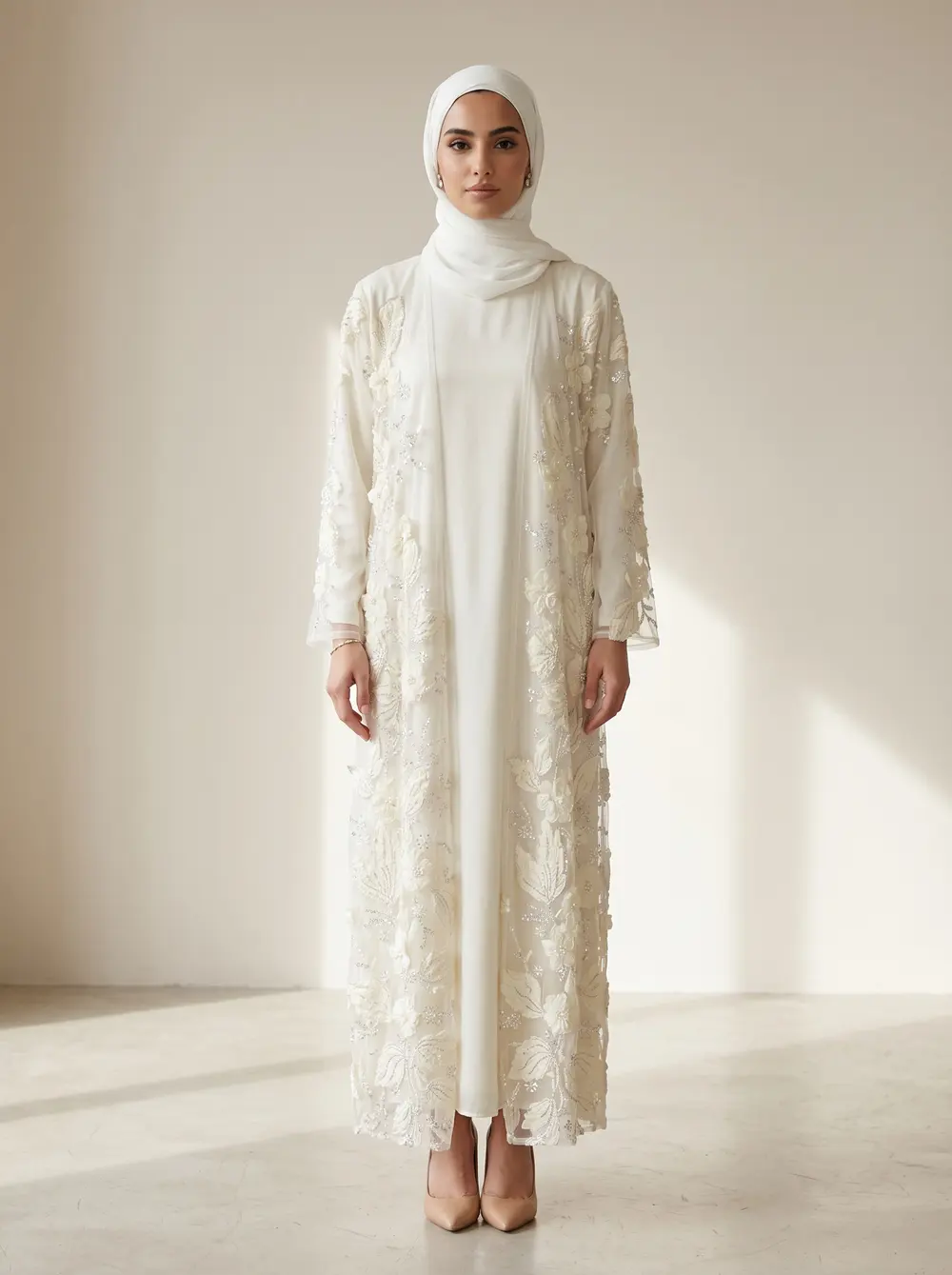
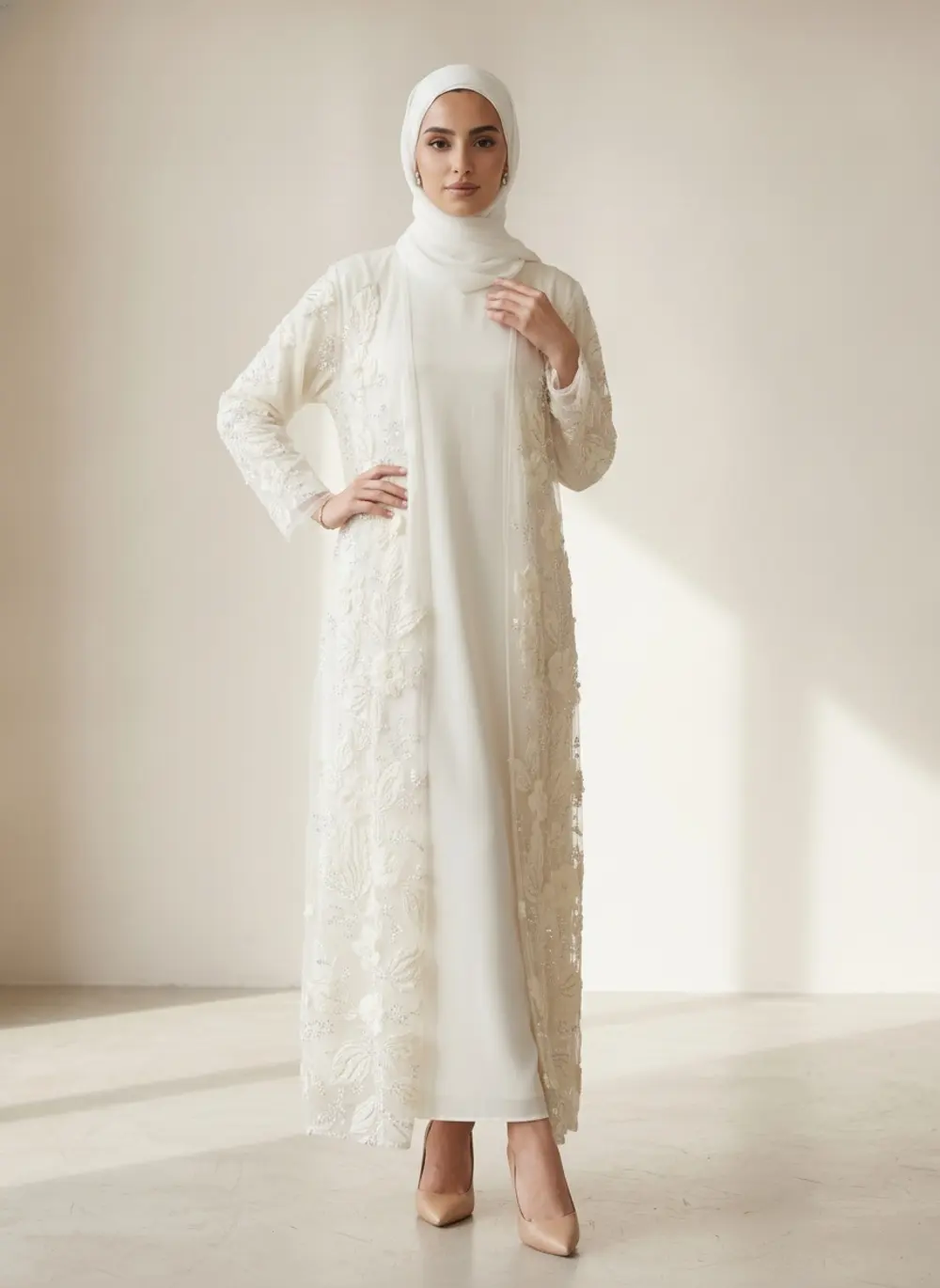
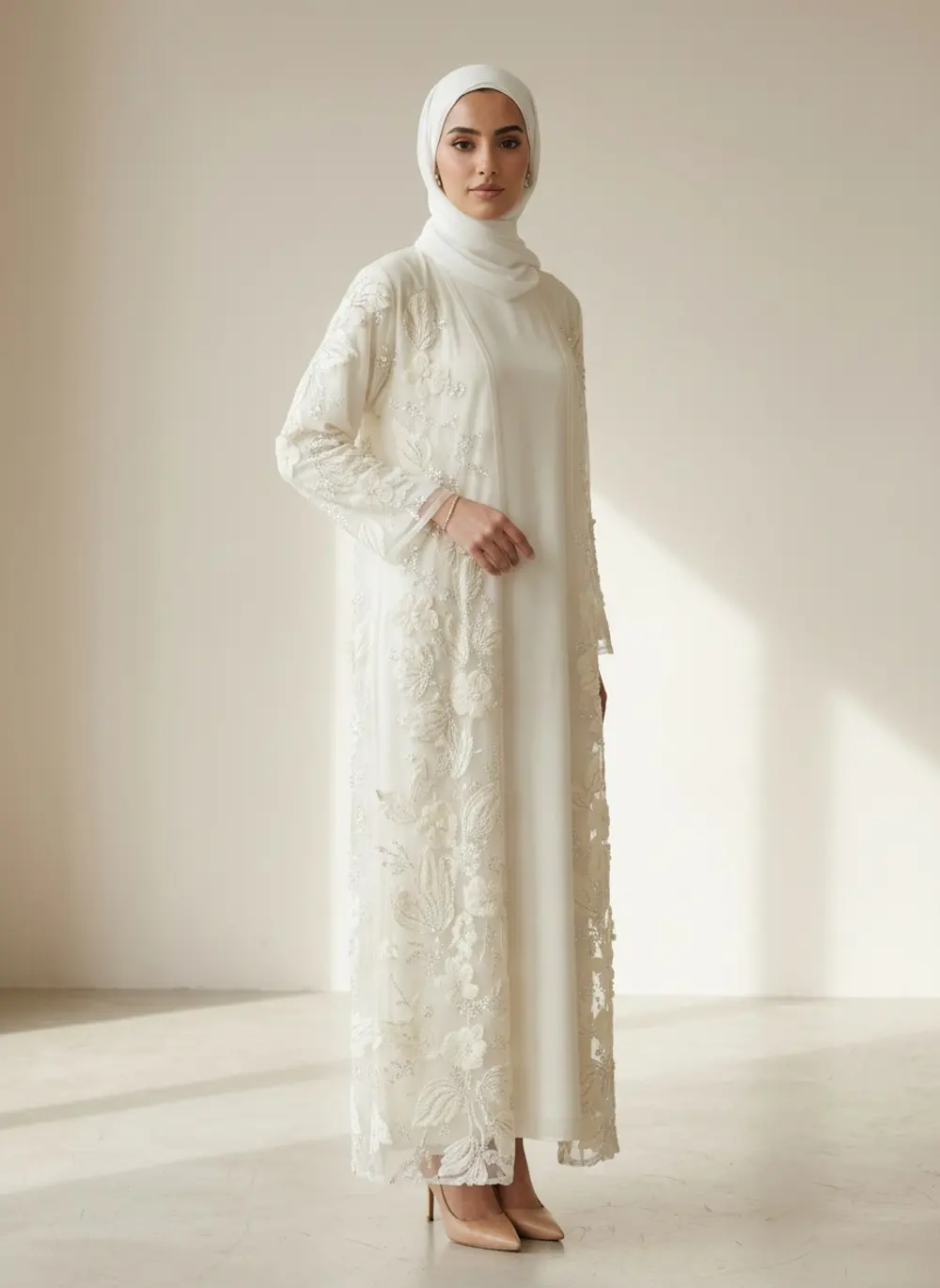
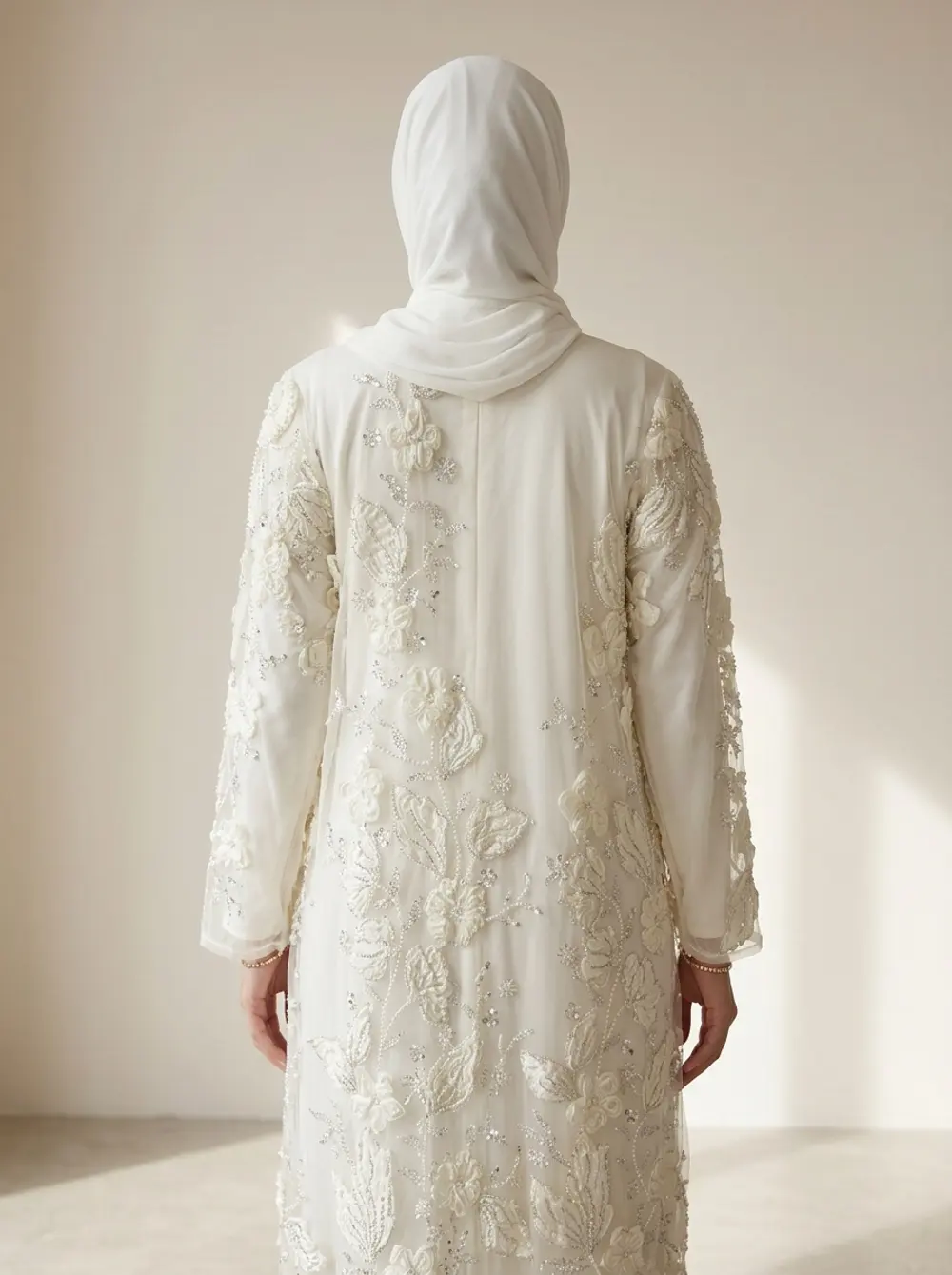
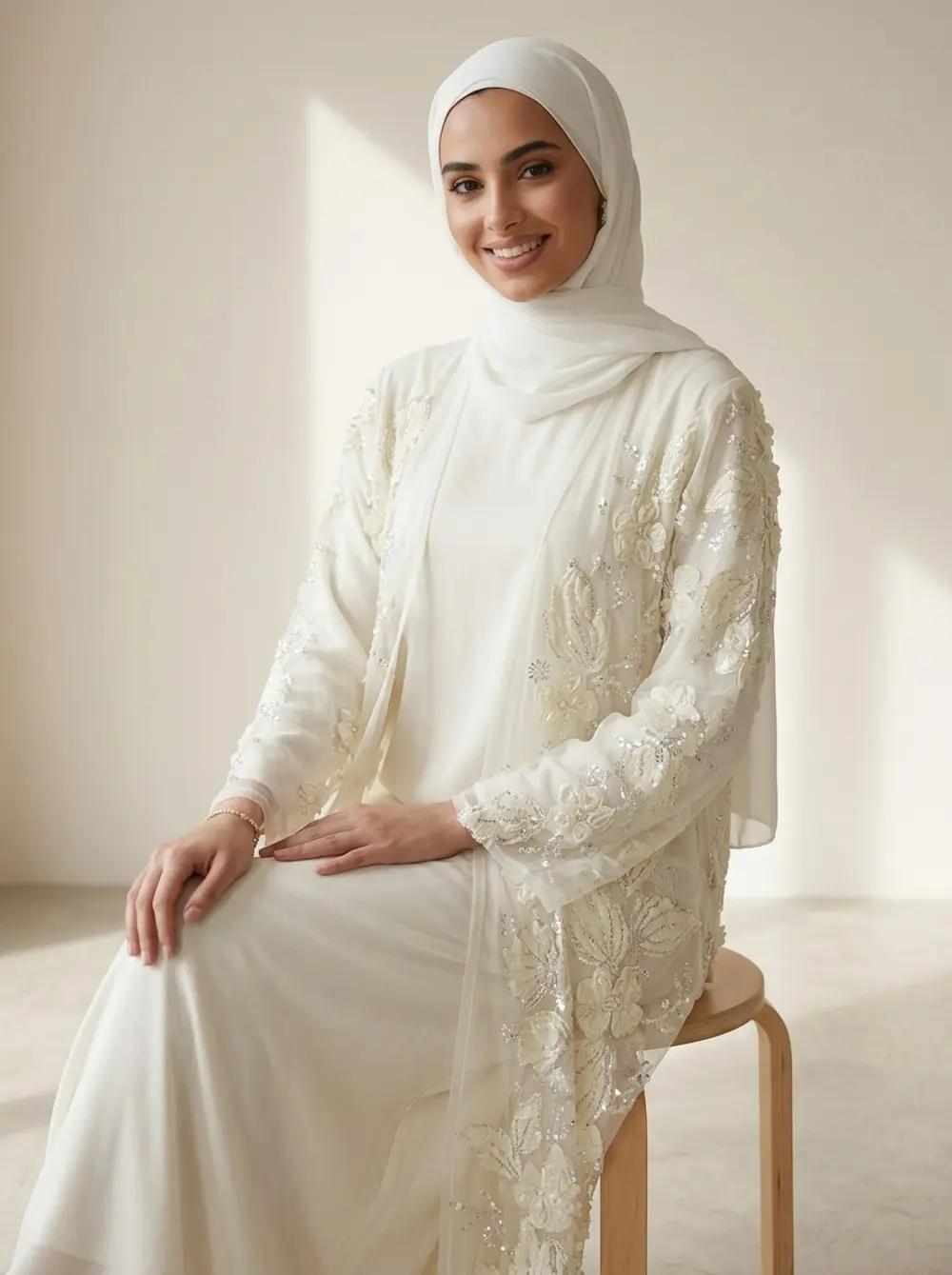
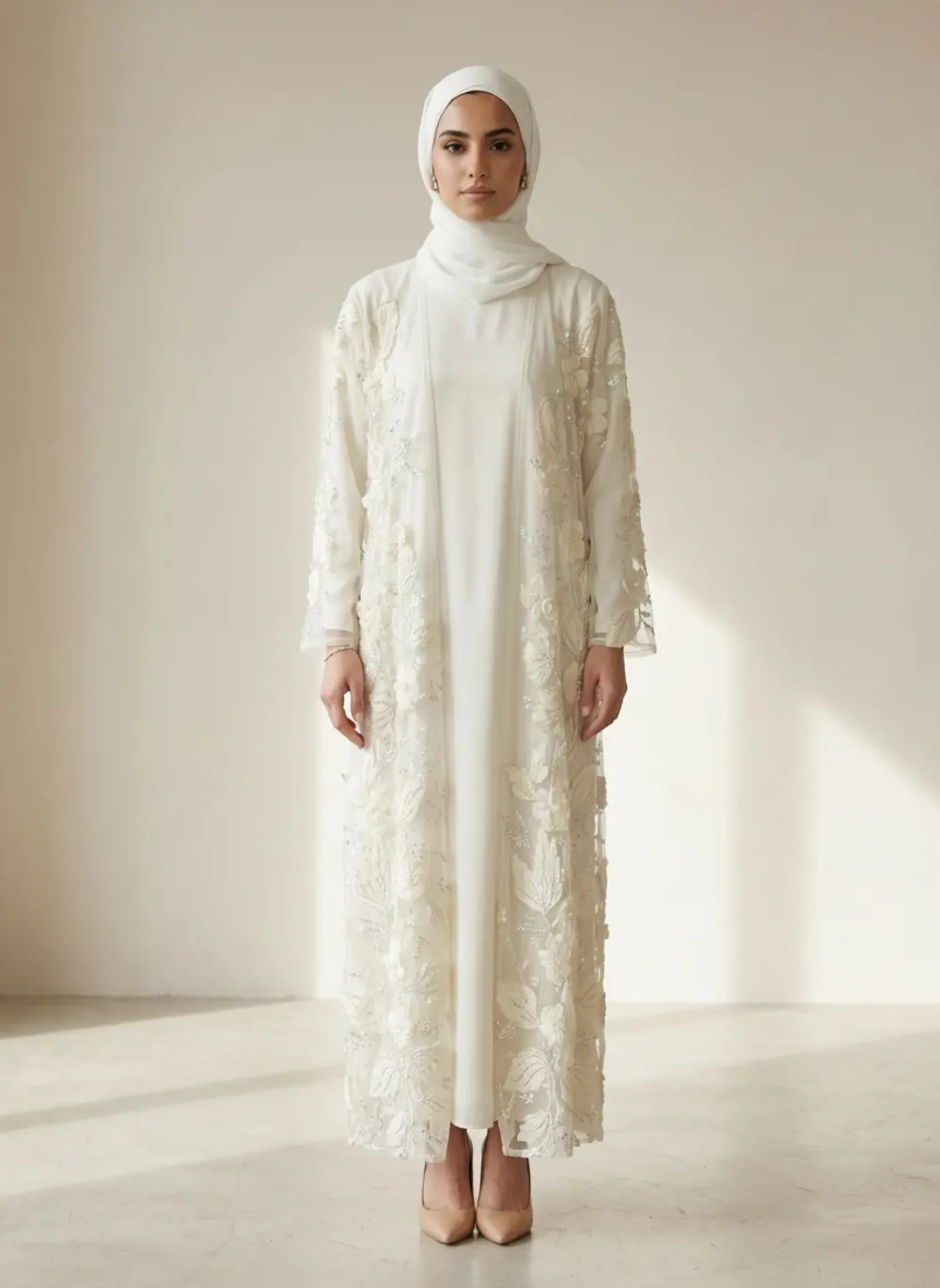
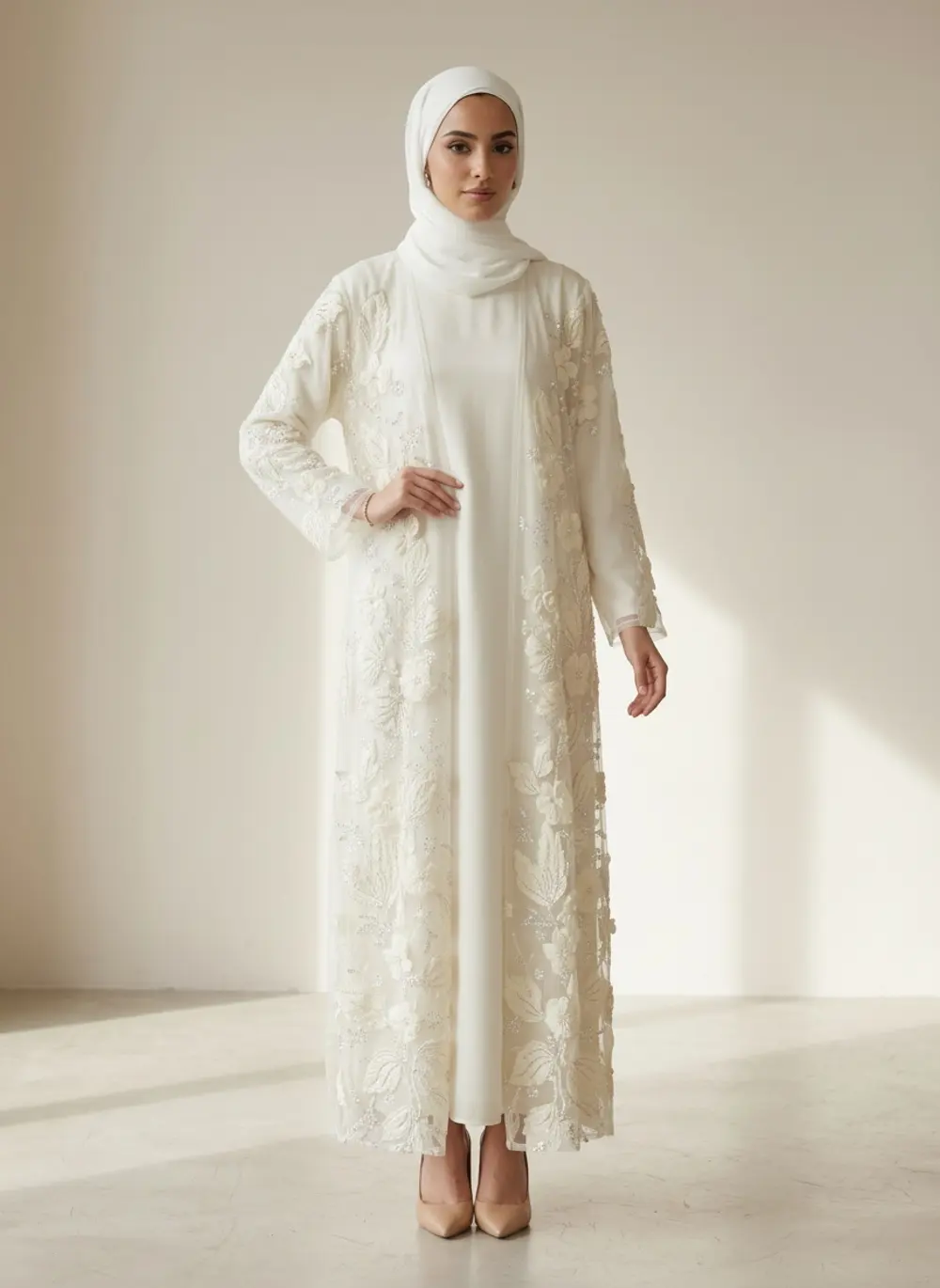
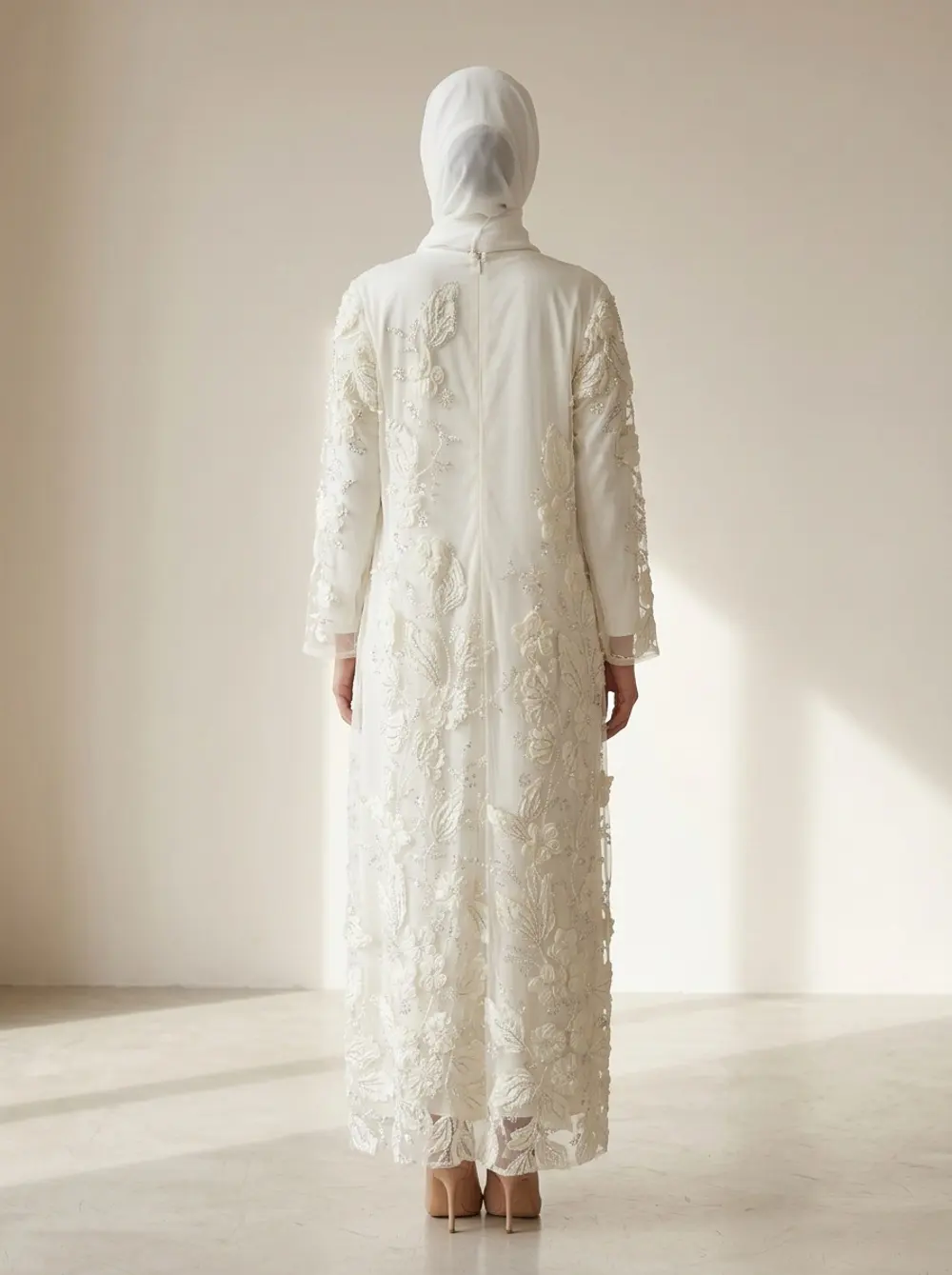
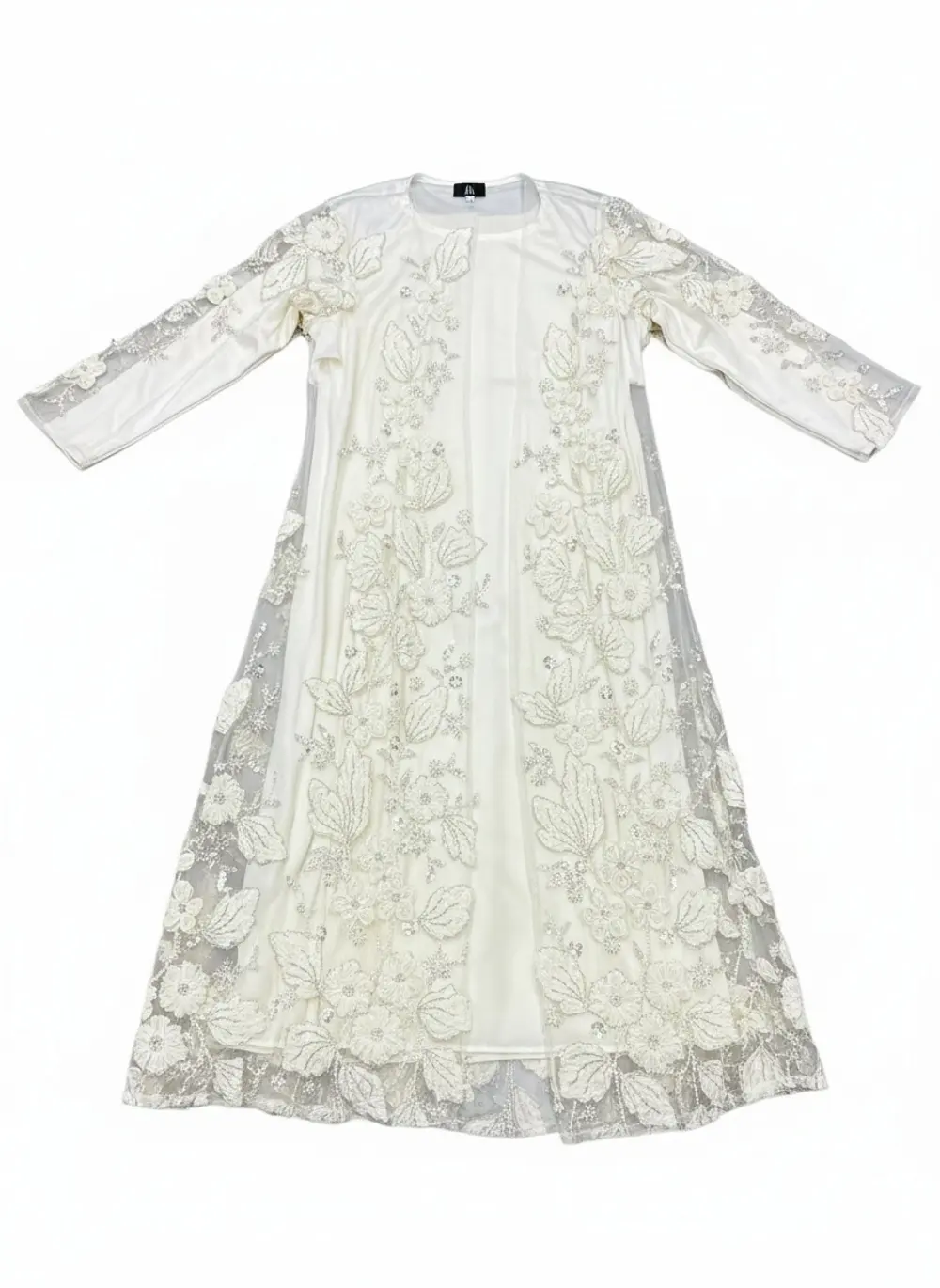
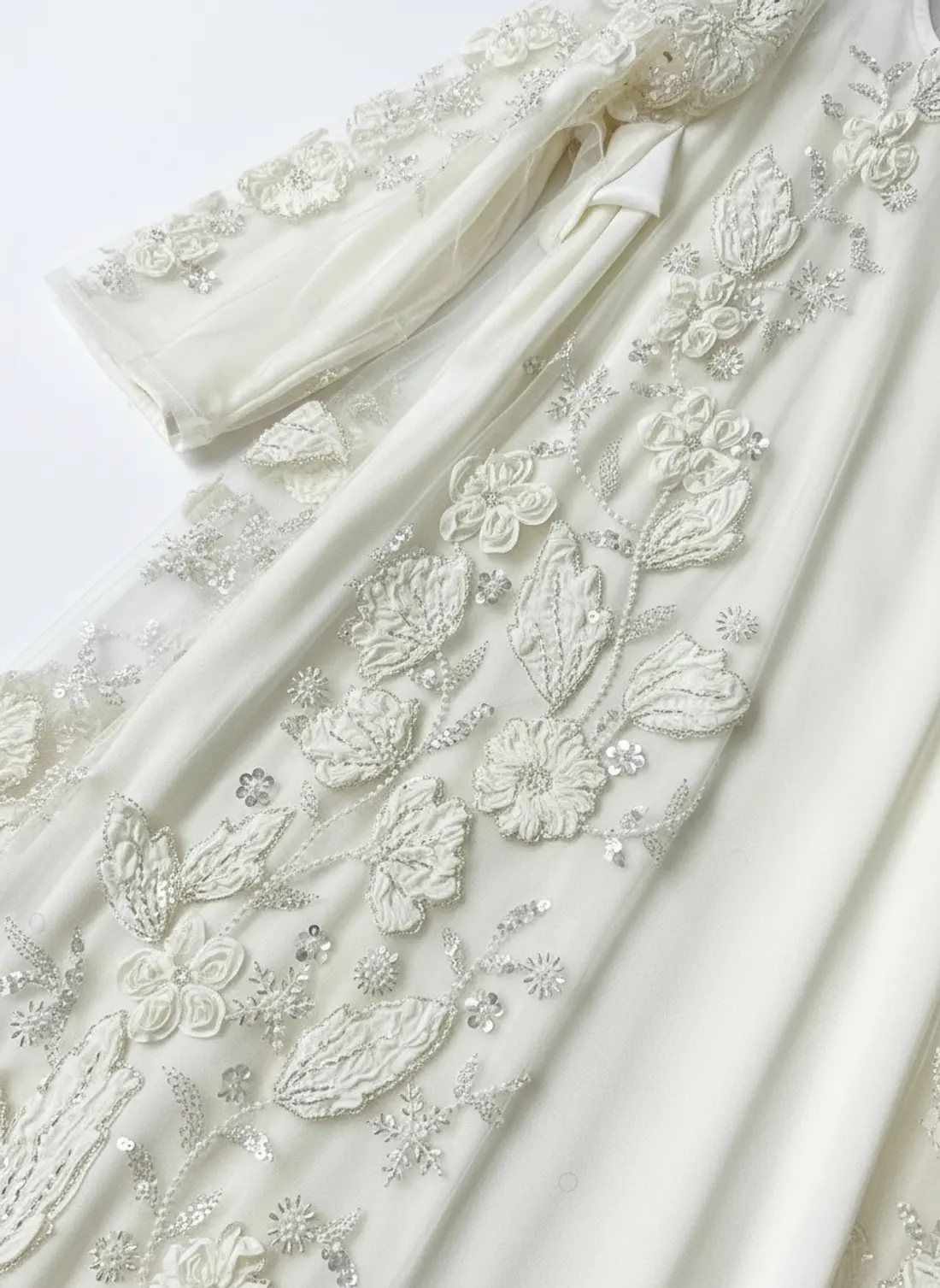
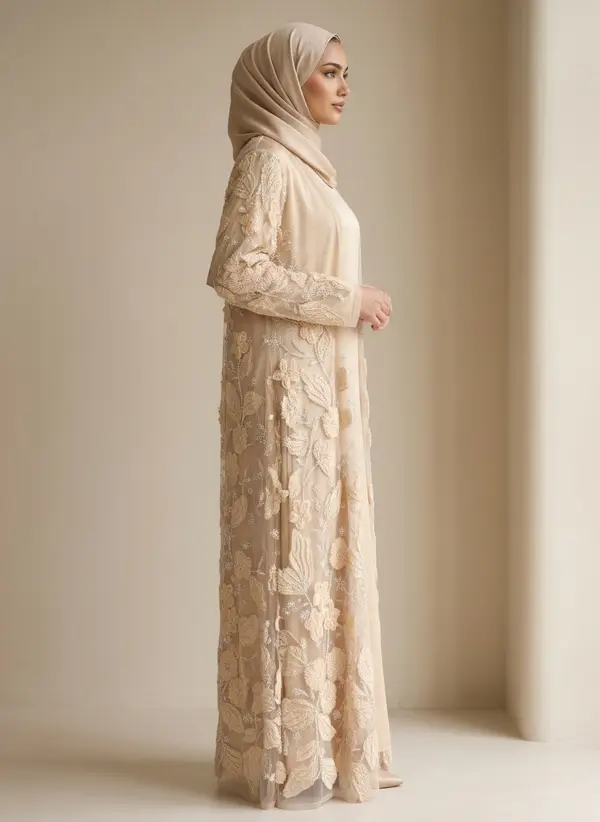
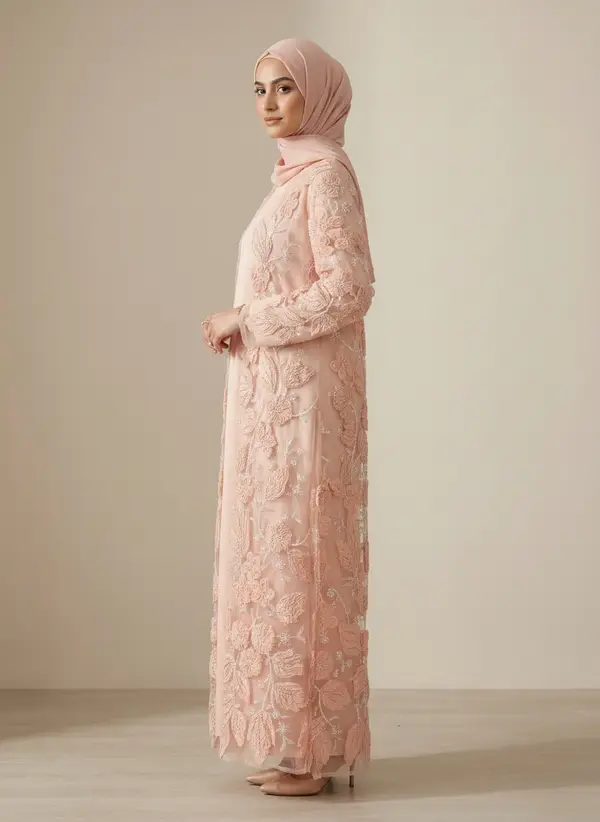
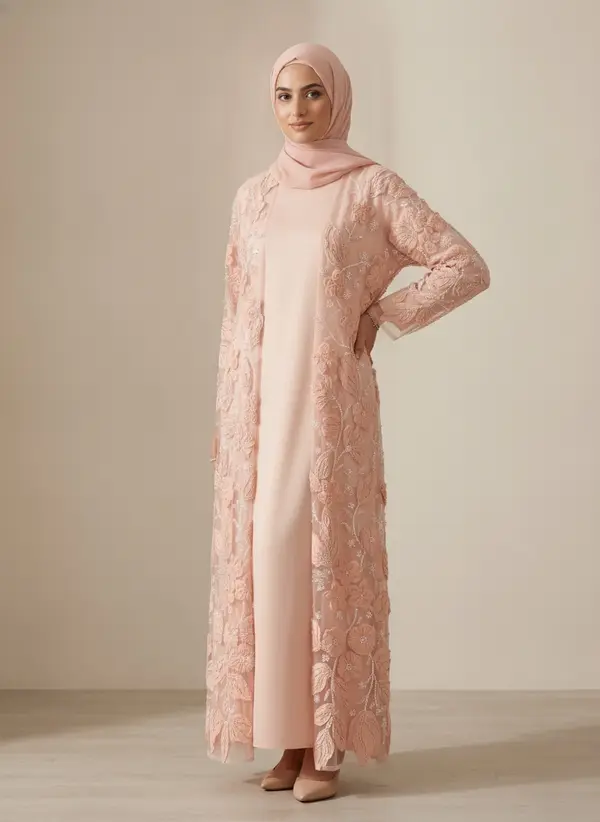
Front, three-quarter, walking, back, seated, side, alternate pose, full back, product flat, embroidery macro.
The rules are the hard part
Most fashion photography can improvise. A sleeve pushed up, a hem caught mid-turn, a shoulder bared for the shot — nobody minds. Modest wear has no such margin. A hijab that slips at the temple, a sleeve that rides past the wrist, a hemline that lifts on the walking frame, a silhouette pulled tight at the waist: any one of those turns a beautiful image into an unusable one, and a customer who trusted the brand into a customer who does not.
That is why this brief was a precision problem before it was an aesthetic one. Sixty frames across six colorways, and the wrap of the hijab, the length of the sleeve, the break of the hem and the ease through the body had to hold in every single one — standing, walking, turning, seated. They did.
The collection — six colorways, one room, one light
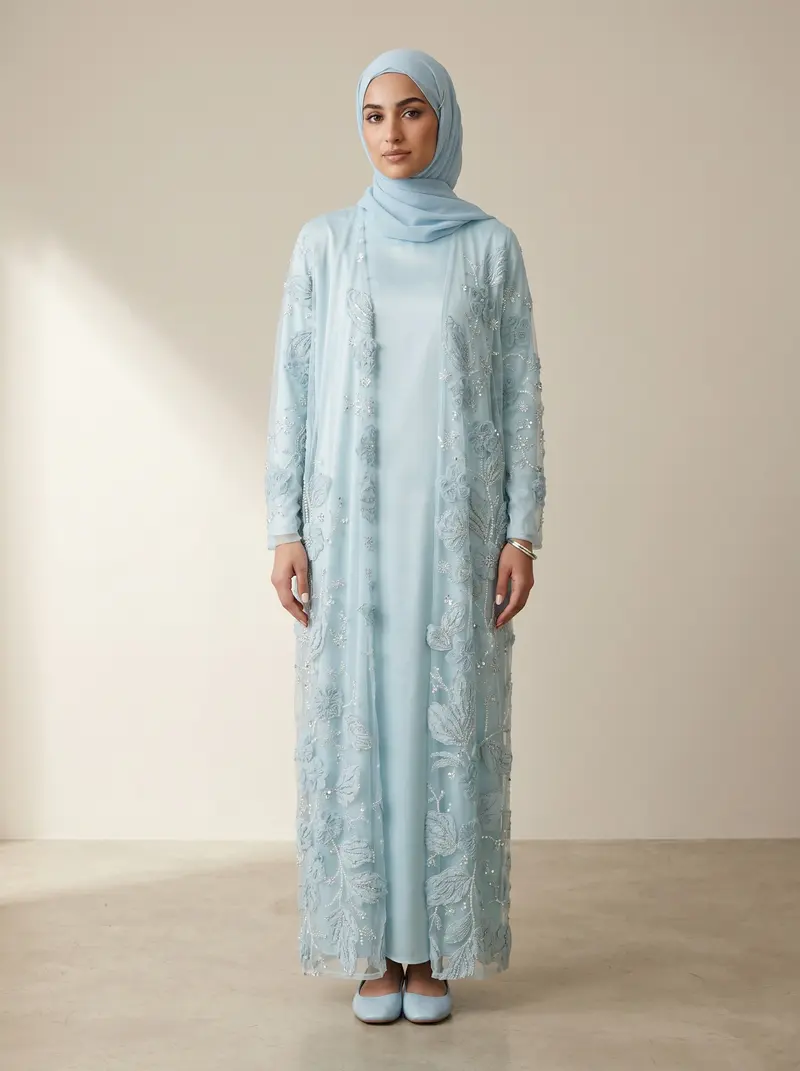
Powder Blue
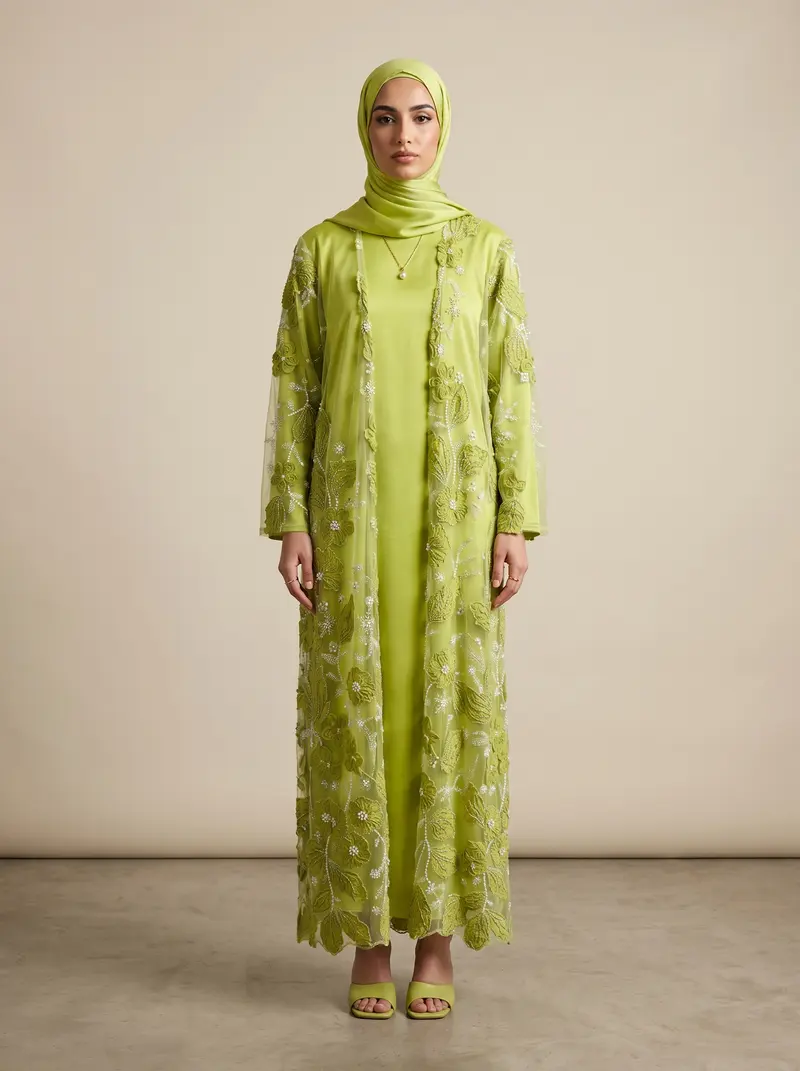
Lime
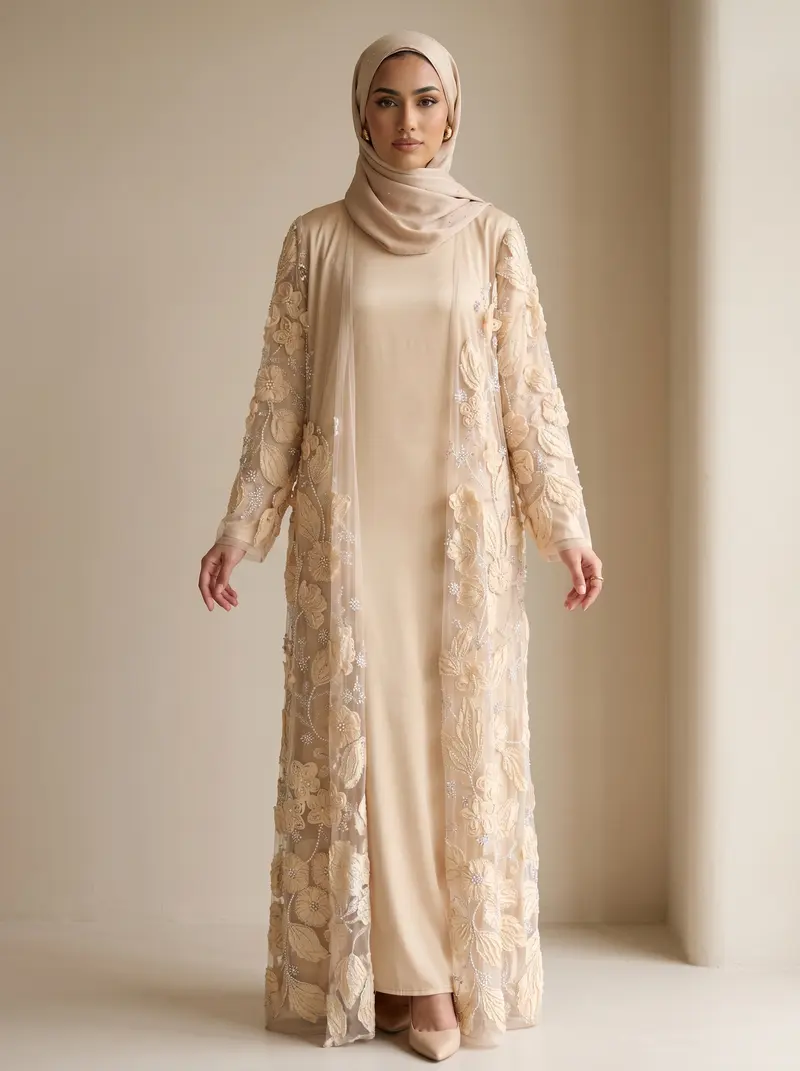
Champagne
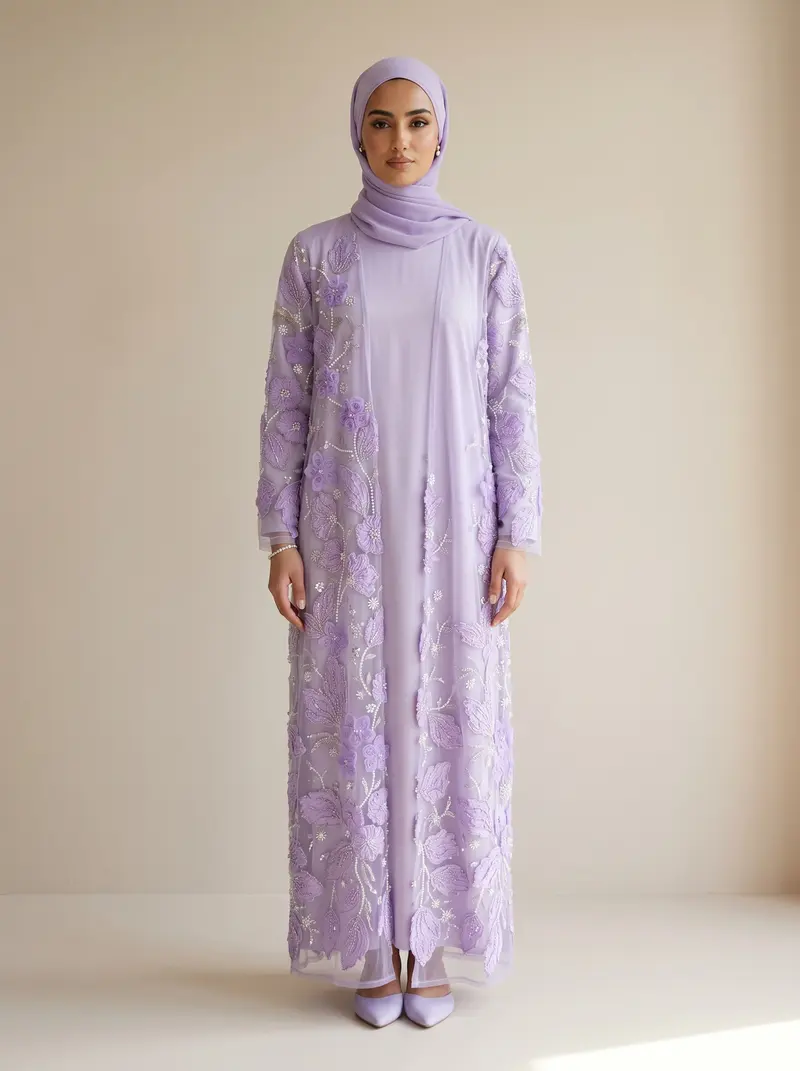
Lilac
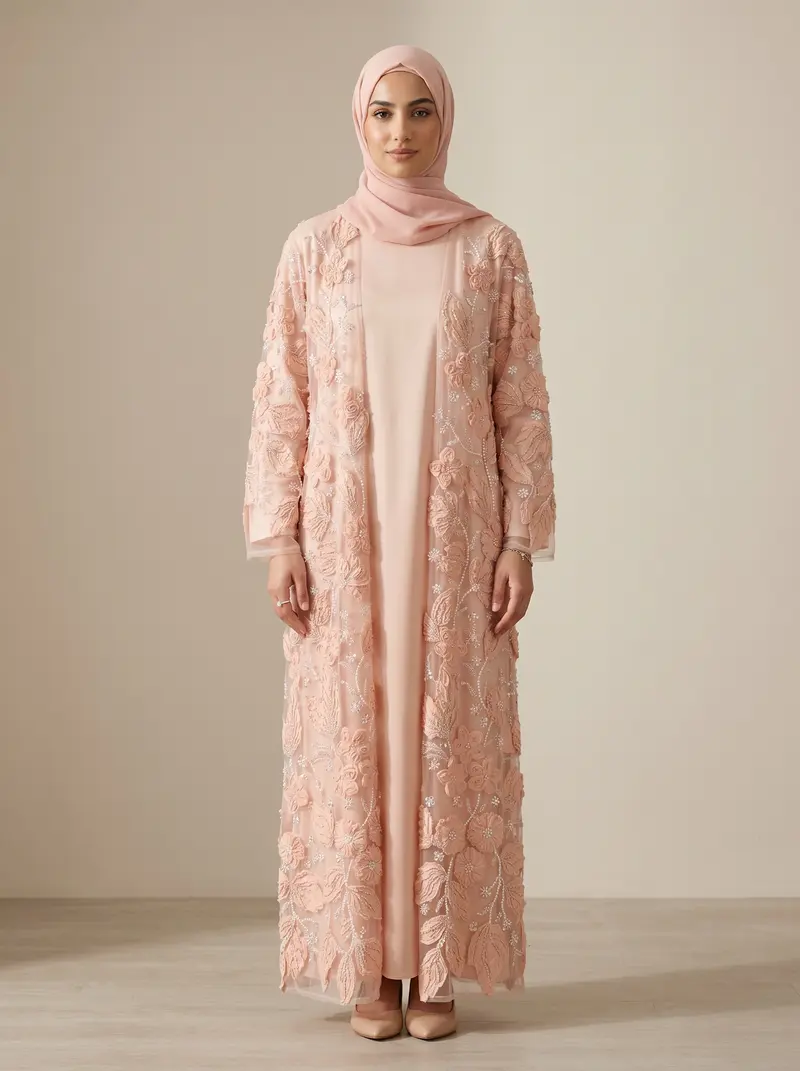
Blush
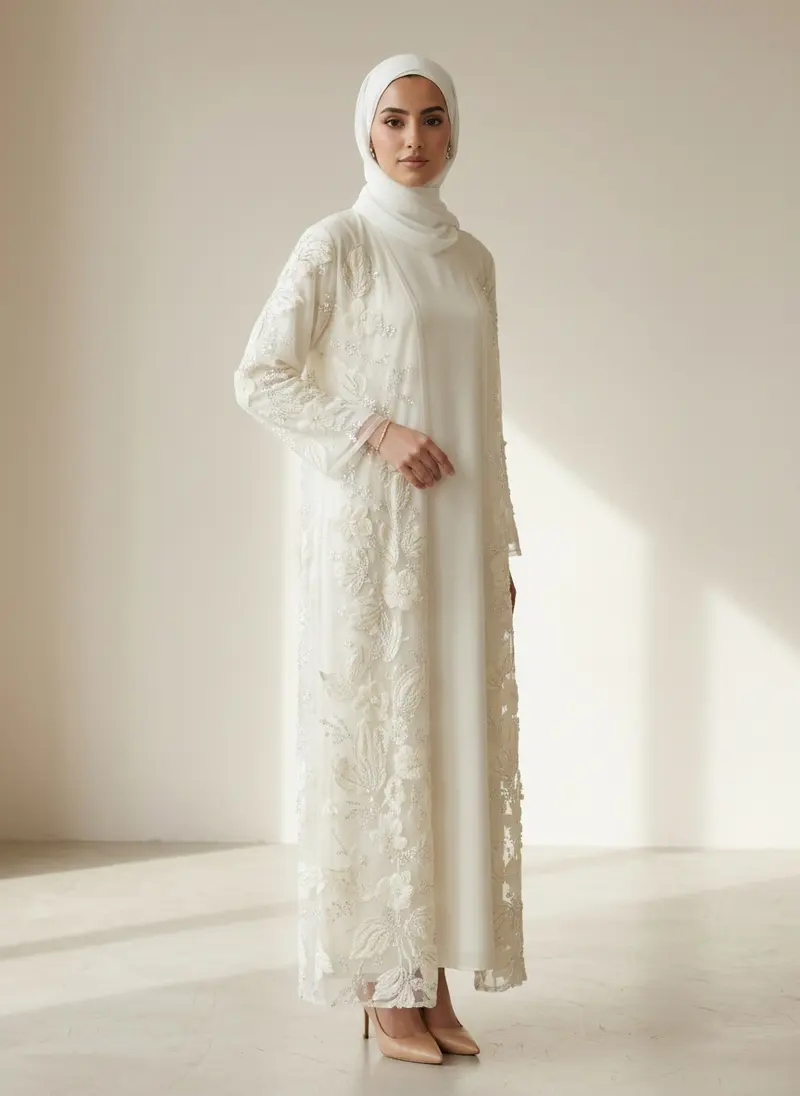
Ivory
Powder blue, lime, champagne, lilac, blush, ivory — the same sunlit plaster room and the same model behind every one.
The embroidery had to survive the turn
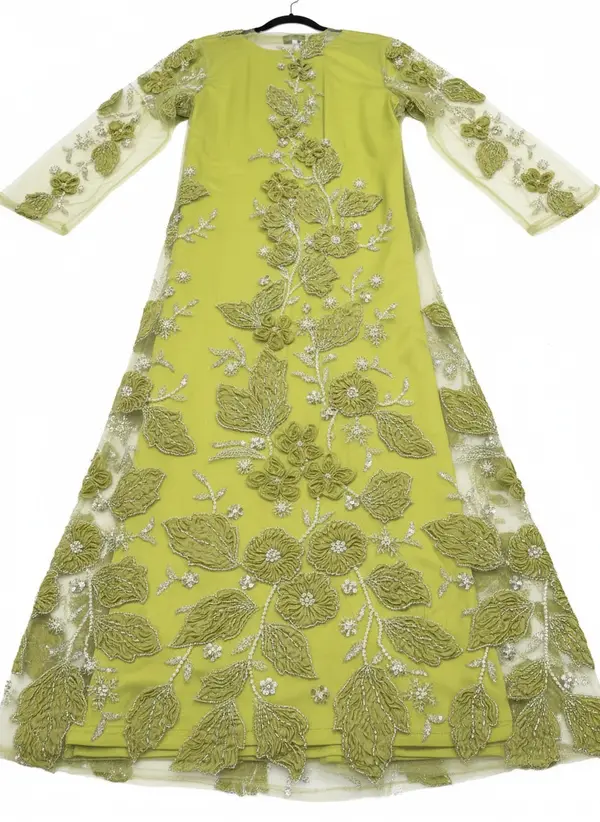
The whole value of this collection sits on the surface: three-dimensional floral appliqué, beadwork, and a tulle base sheer enough that the satin colour shows through it. That combination is where generated imagery usually fails. The flowers flatten into a printed pattern. The tulle turns opaque. The beadwork blurs into noise the moment the model moves off straight-on.
Look at the macros below and then at the three-quarter and seated frames above. The appliqué still stands off the fabric. The tulle still reads sheer where it crosses the satin. And the beadwork still throws small highlights, which is the only reason a shopper can tell this is a hand-worked occasion piece and not a printed one. The same test applies to prints and logos, which the logo reproduction guide pulls apart in detail.
Surface detail — the embroidery frame, colorway by colorway
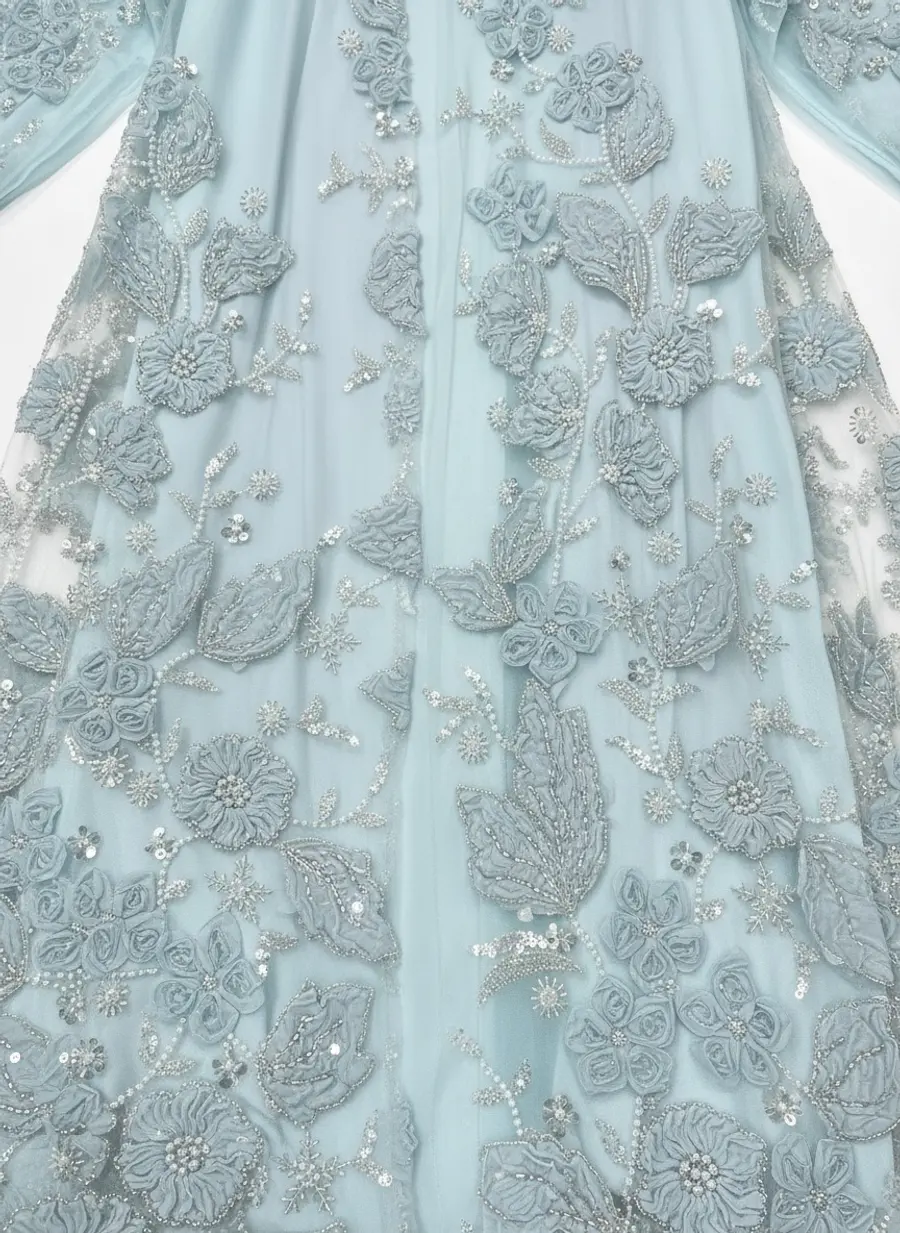
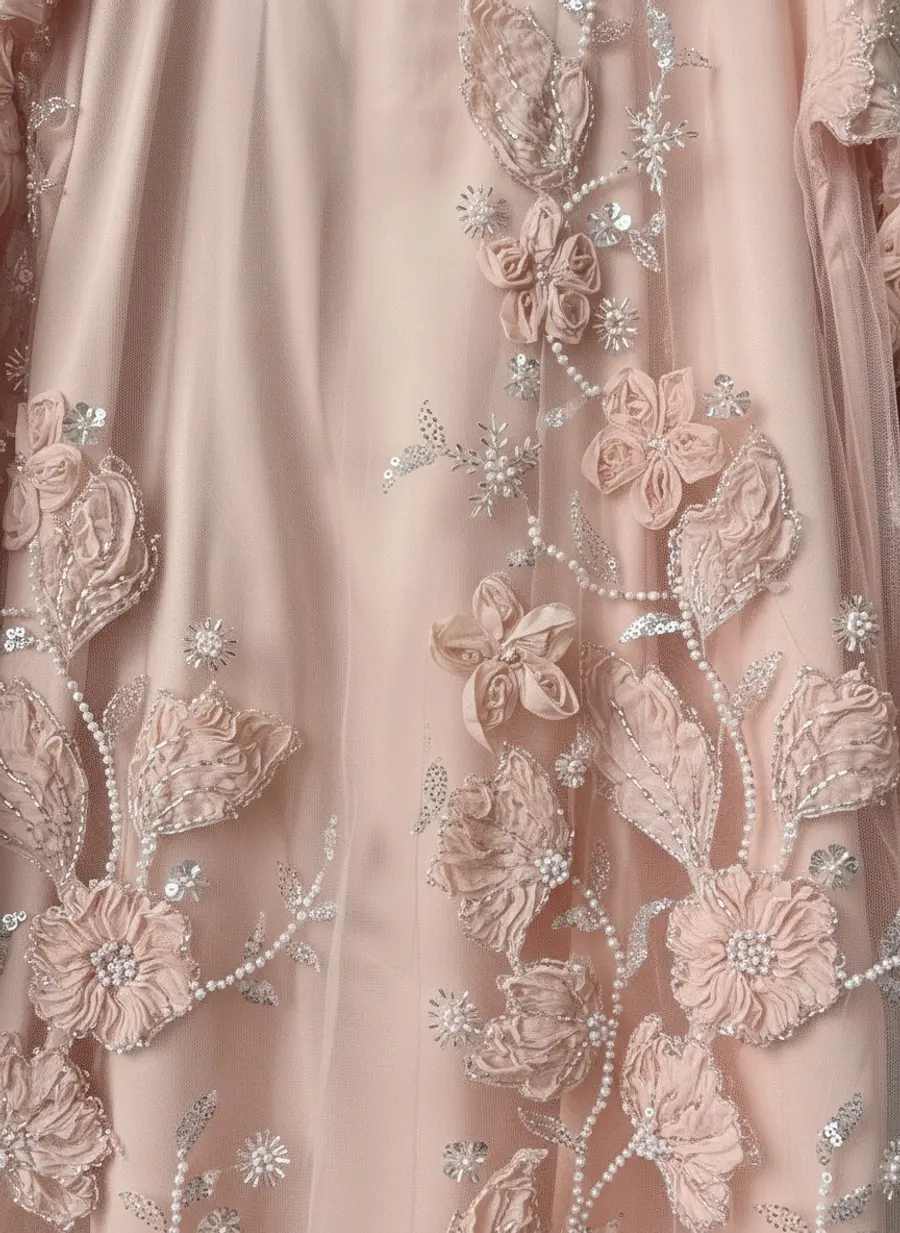
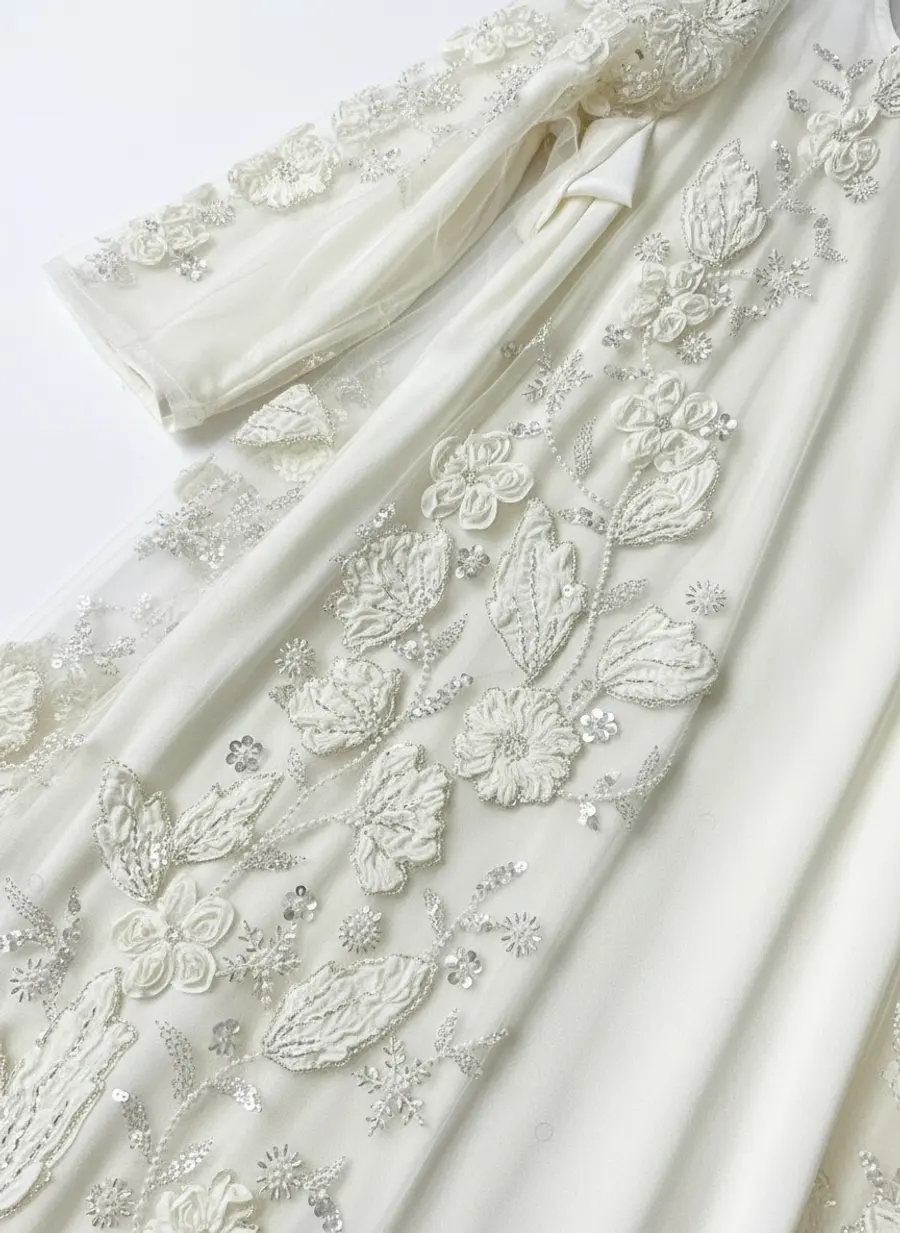
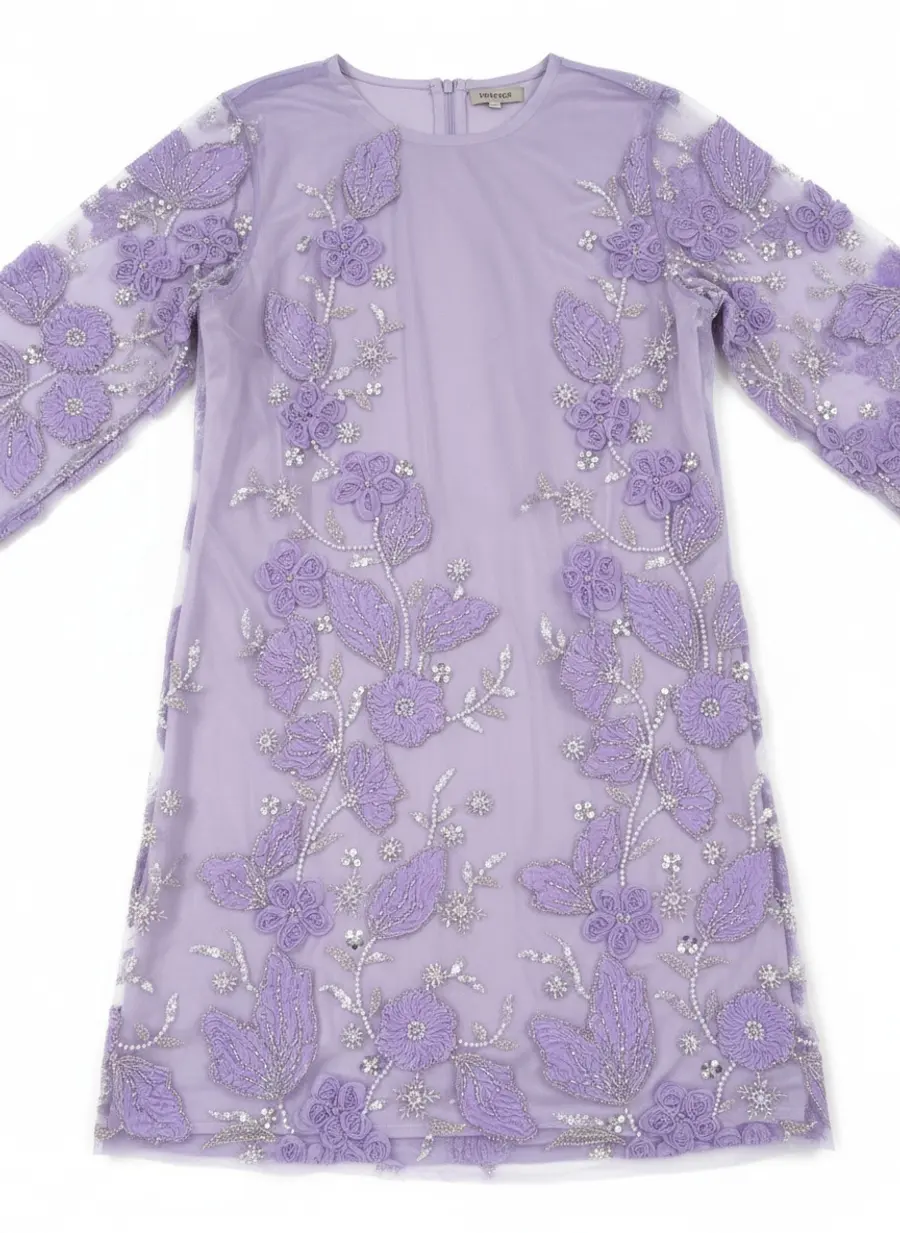
Three macros and a panel frame. The appliqué keeps its relief, the tulle stays sheer, and the beading still catches light.
Sheer fabric only makes sense in motion
A still can show you that the overlayer is transparent. It cannot show you how it moves — whether it floats away from the body or hangs like a curtain, whether the embroidery weighs the hem down, whether the whole thing behaves at a wedding. That is the single most common question a modest-wear customer asks before an occasion purchase, so every piece in this collection shipped with its own clip. Our piece on video in fashion ecommerce covers what motion does to conversion and returns.
Ivory
Lime
Powder Blue
Blush
Champagne
Five from the collection, looping a second apart. Each one generated from the same garment inputs as the stills, on the same model, in the same room.
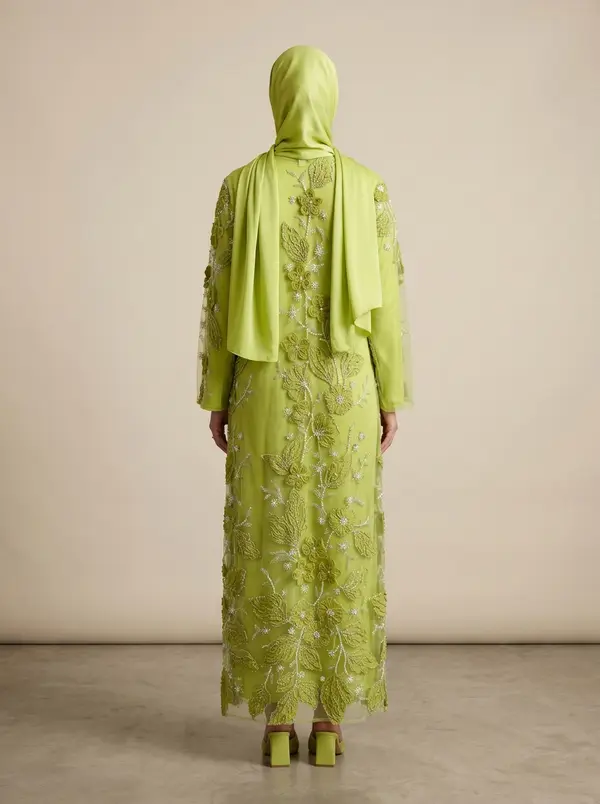
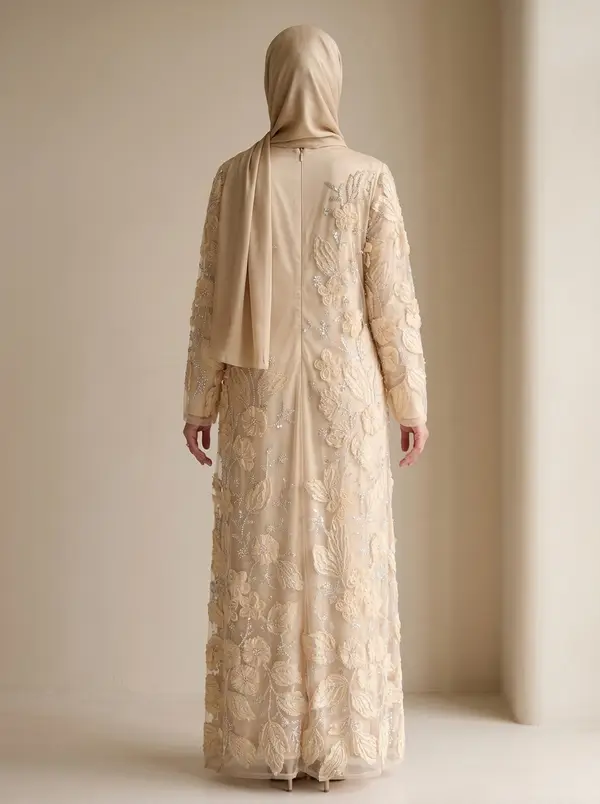
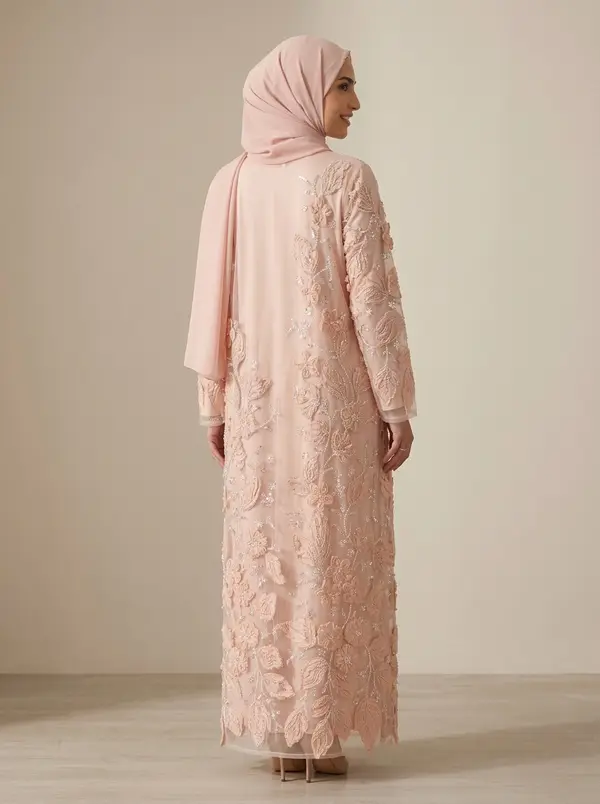
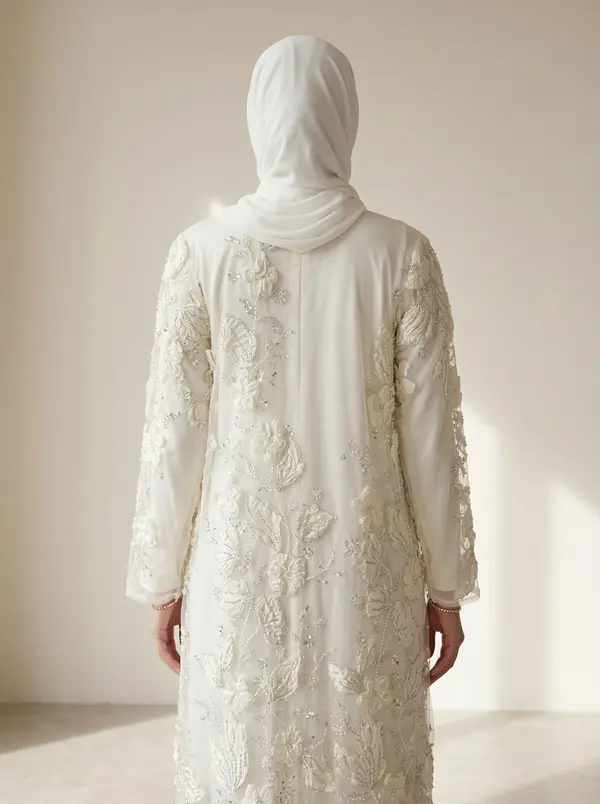
The back frame — where coverage is easiest to get wrong
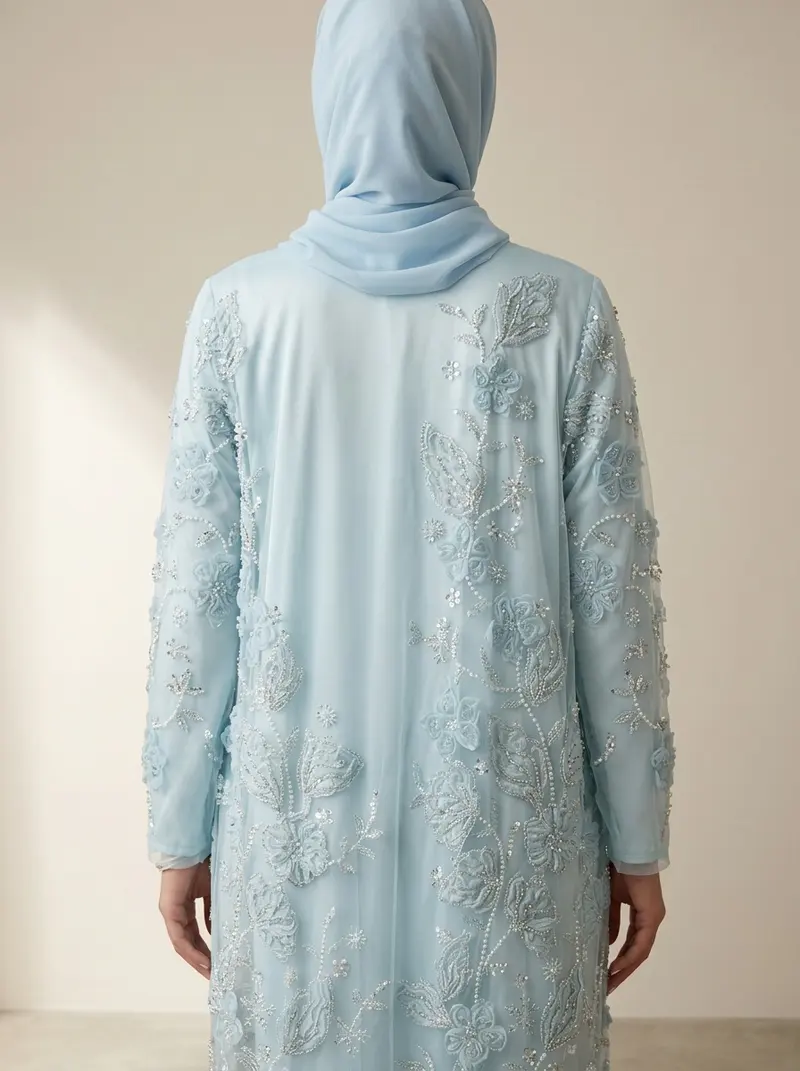
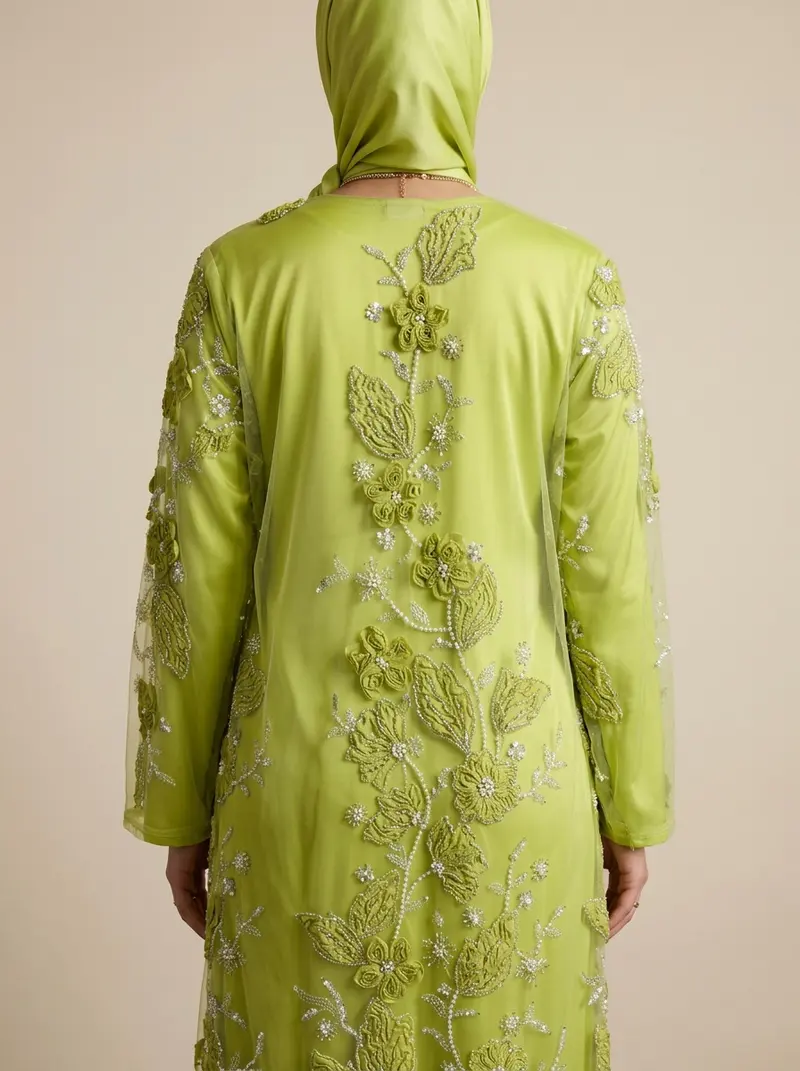
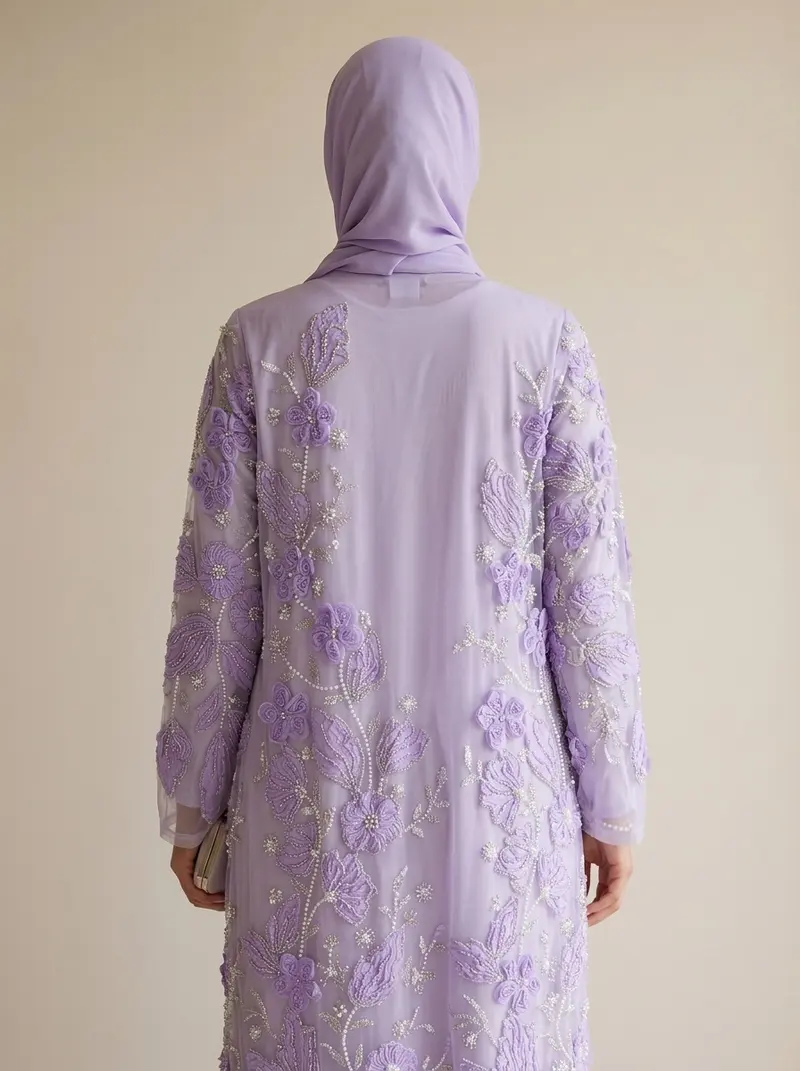
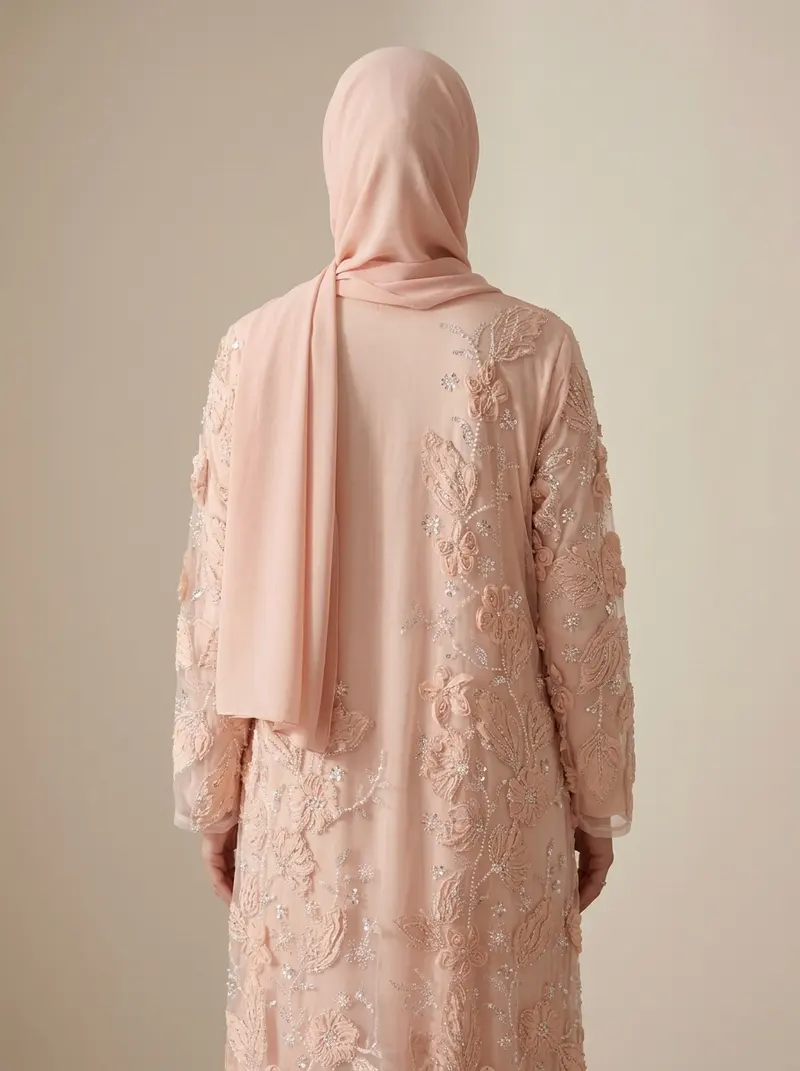
The frame most tools quietly fumble: hair showing at the nape, a hijab that stops being a hijab. Here it holds.
The collection, laid out the way buyers see it
Occasion wear is bought by colour. A bride’s mother, a bridal party, an Eid group order — the decision is made across a grid, not on one product page. Because every colorway came out of the same saved studio setting, the grid actually works: six cards that differ in exactly one variable. That reuse is the whole method behind cohesive collection photography, which walks through setting the references once.
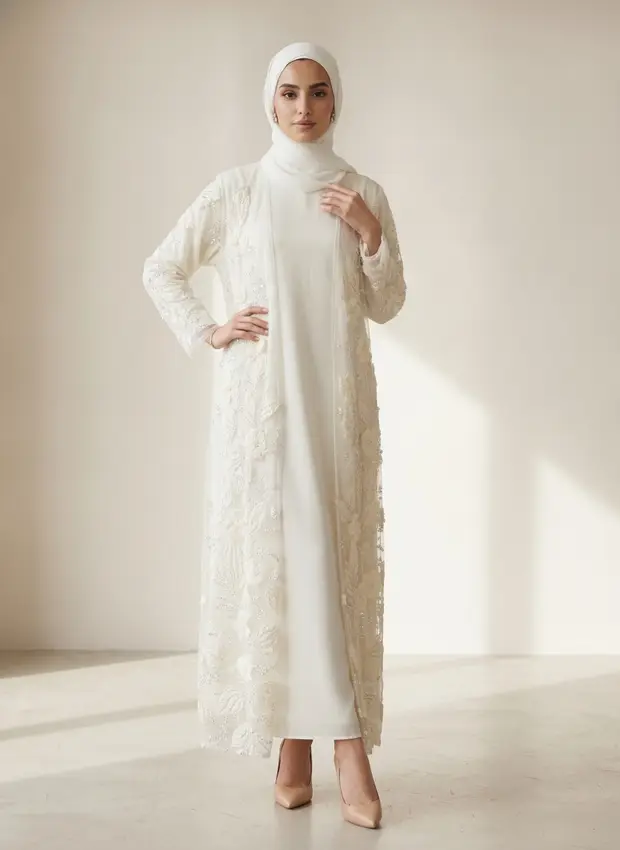
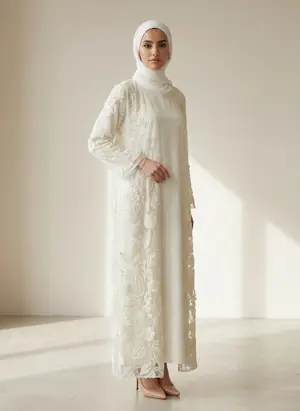
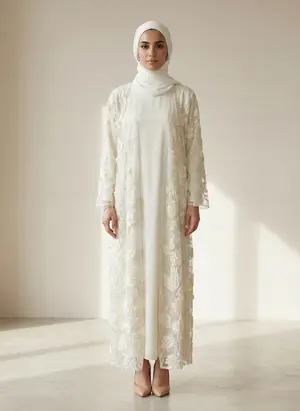
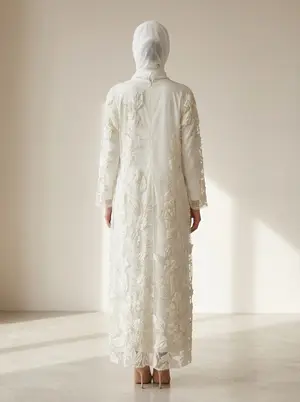
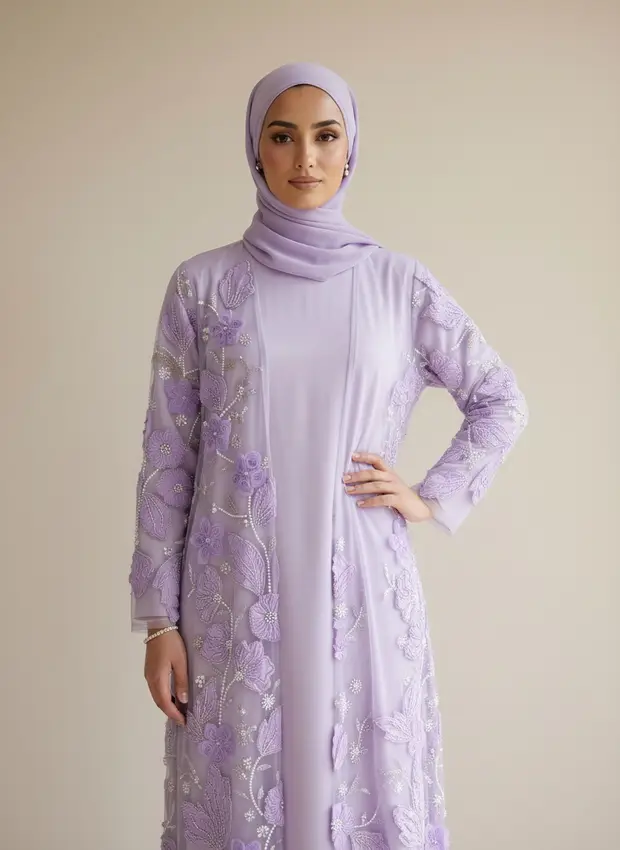
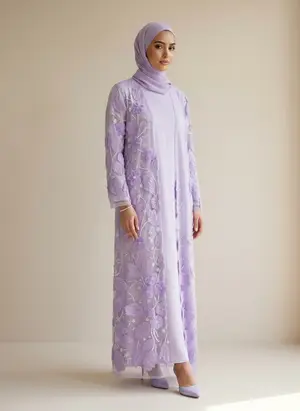
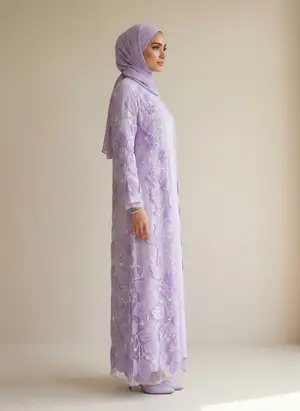
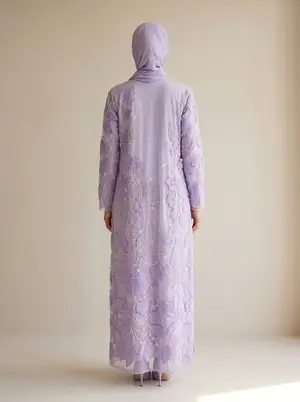
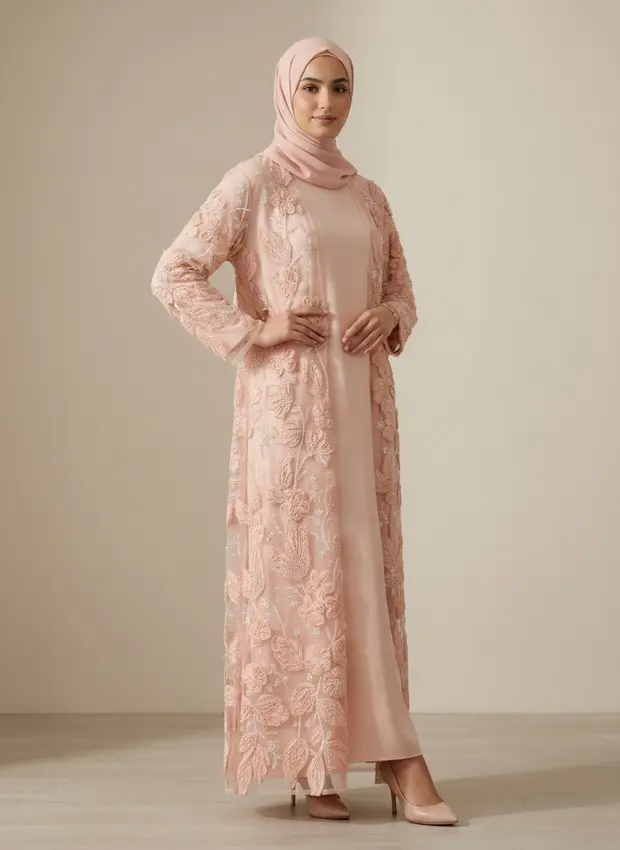
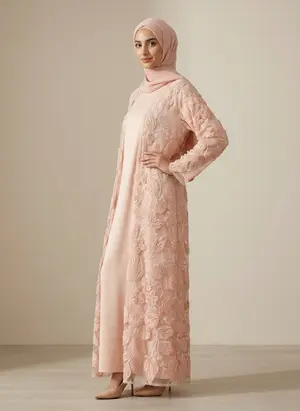
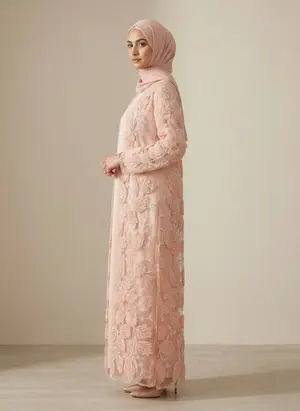
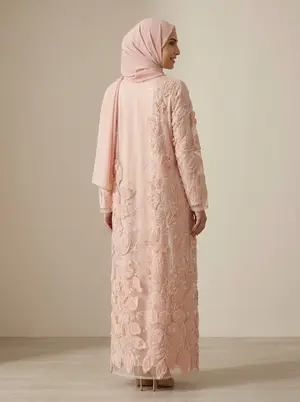
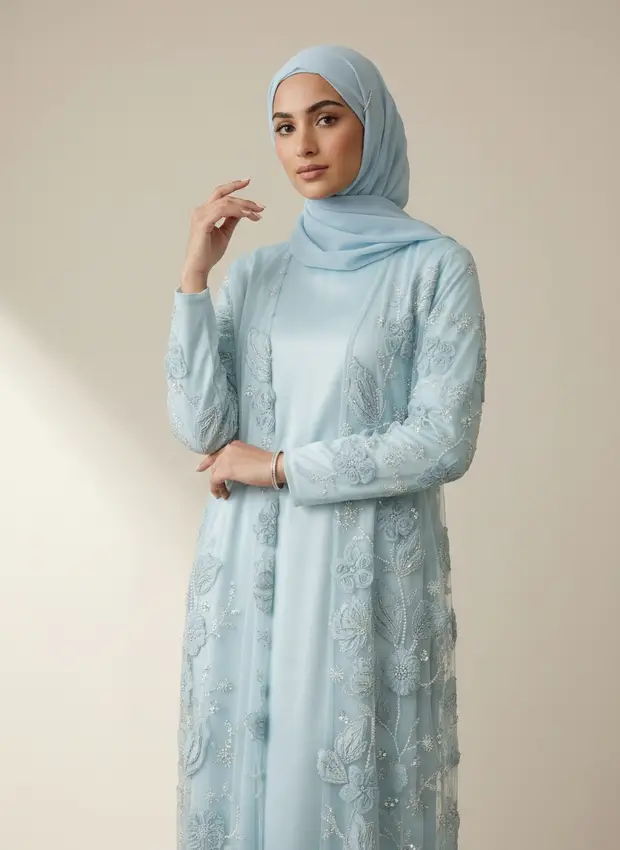
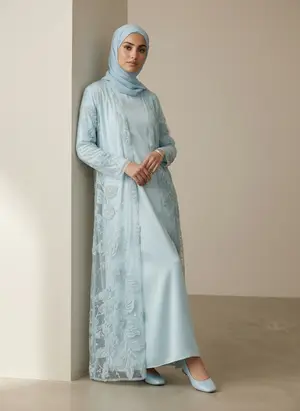
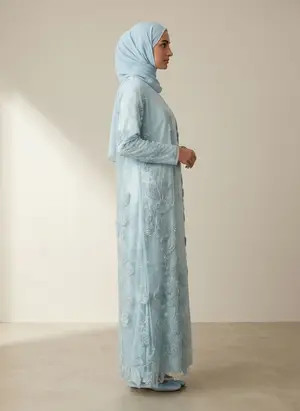
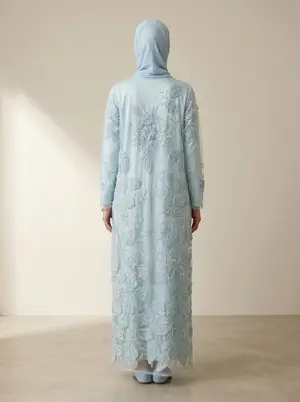
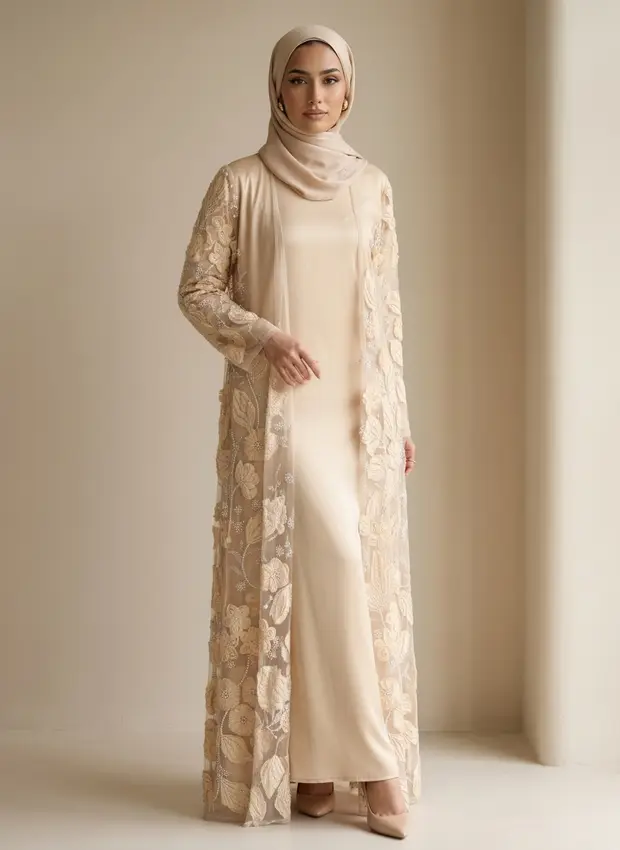
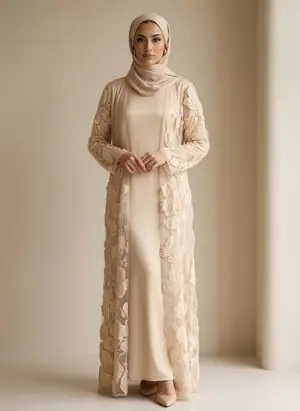
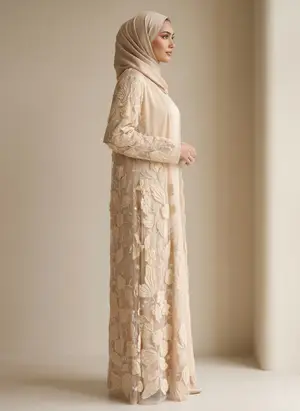
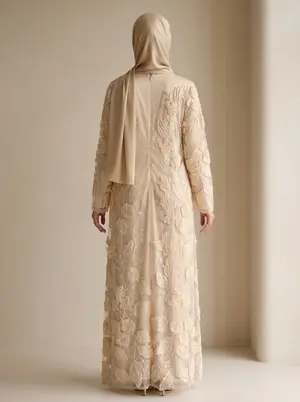
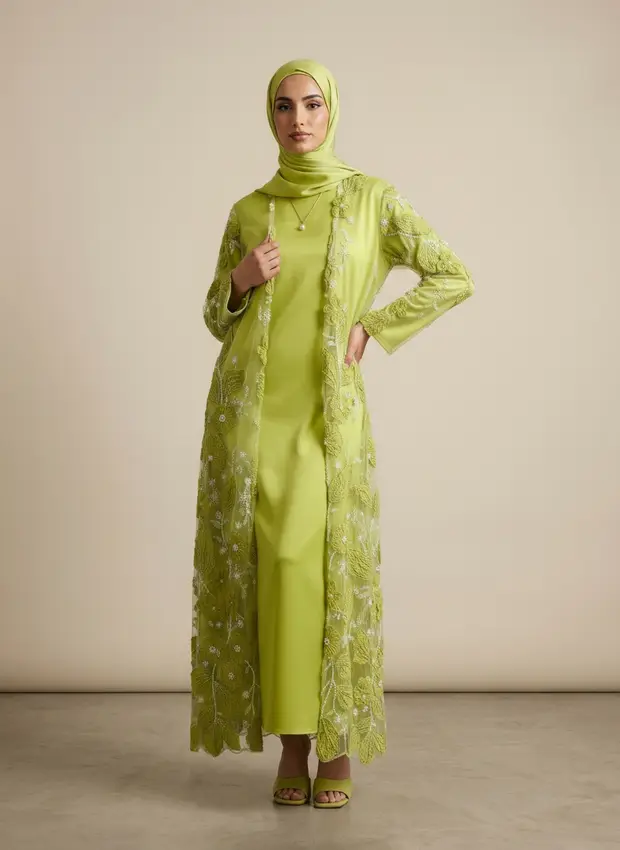
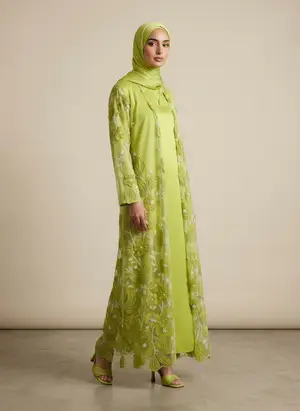
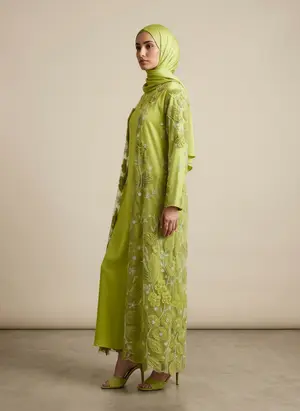
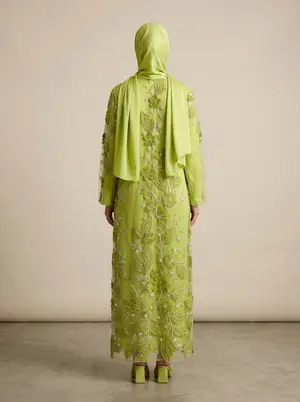
Illustration only. MODA AI supplies the imagery and the clips; the greyed fields — style code, size run, price — stay yours to fill in.
The seated frame — the one that sells the occasion
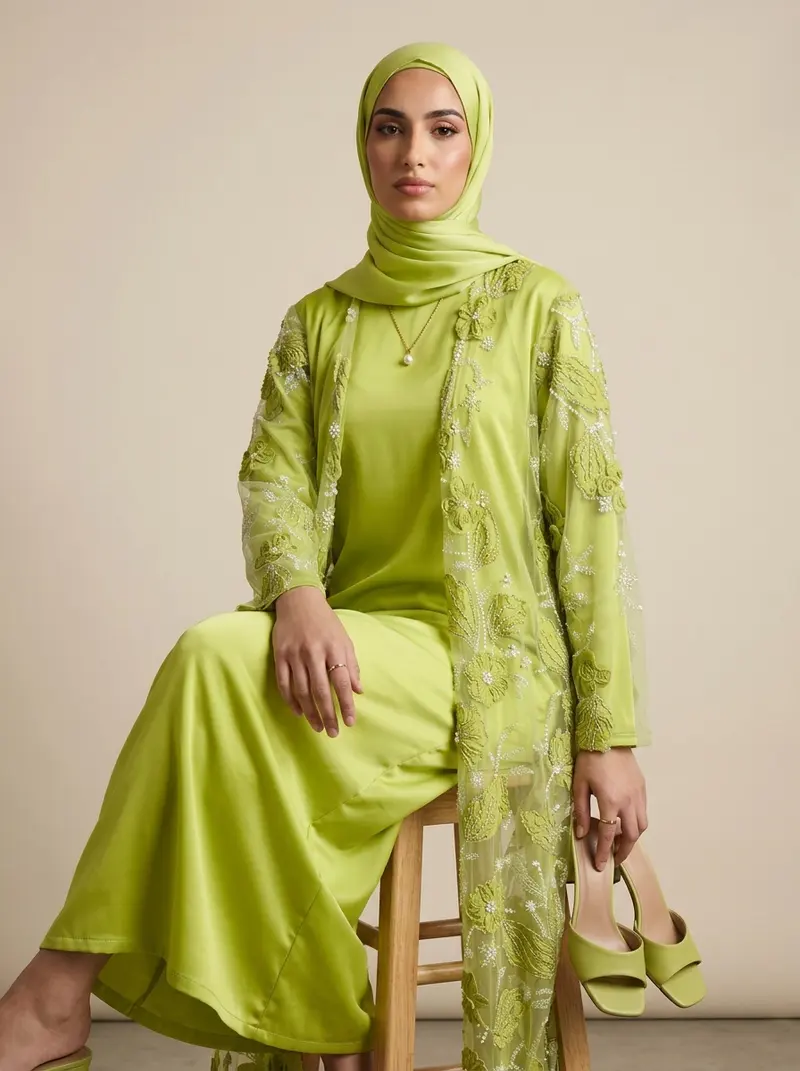
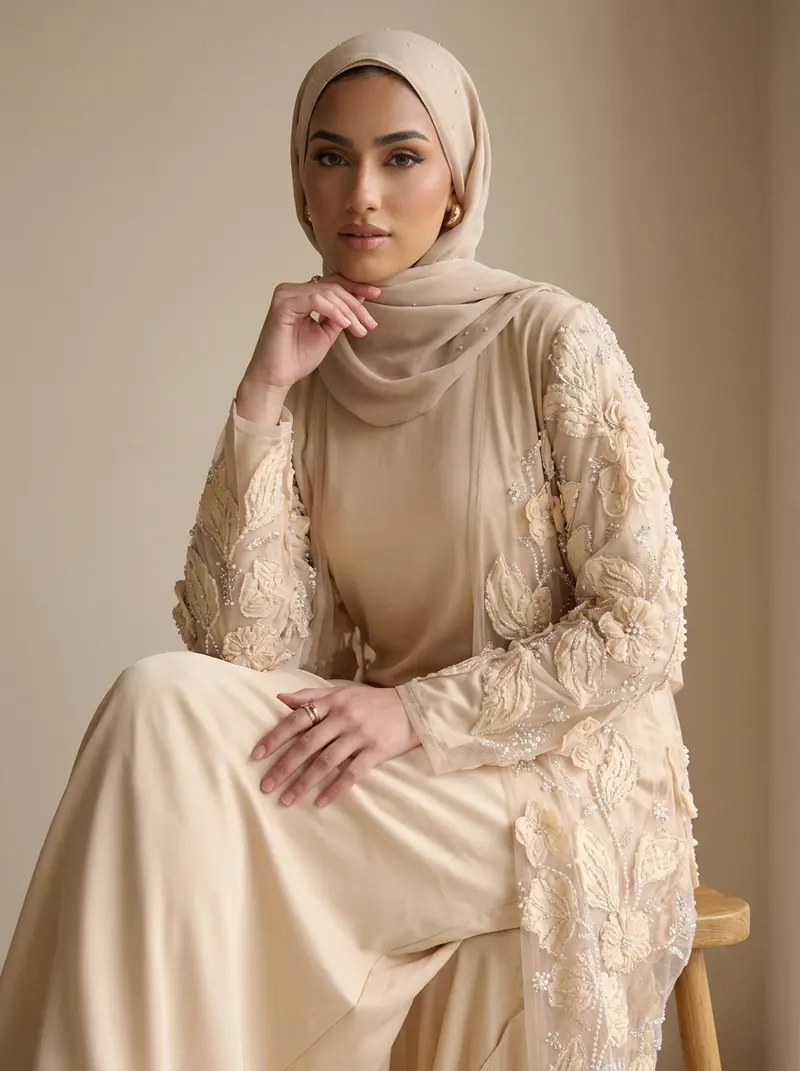
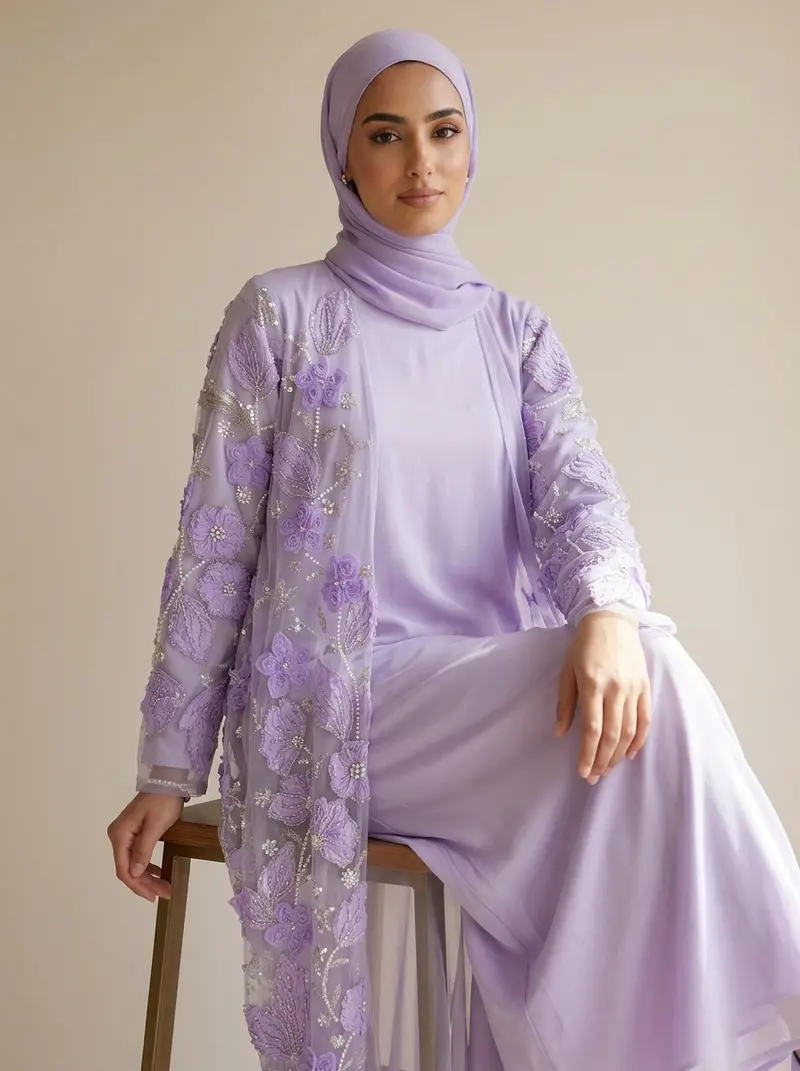
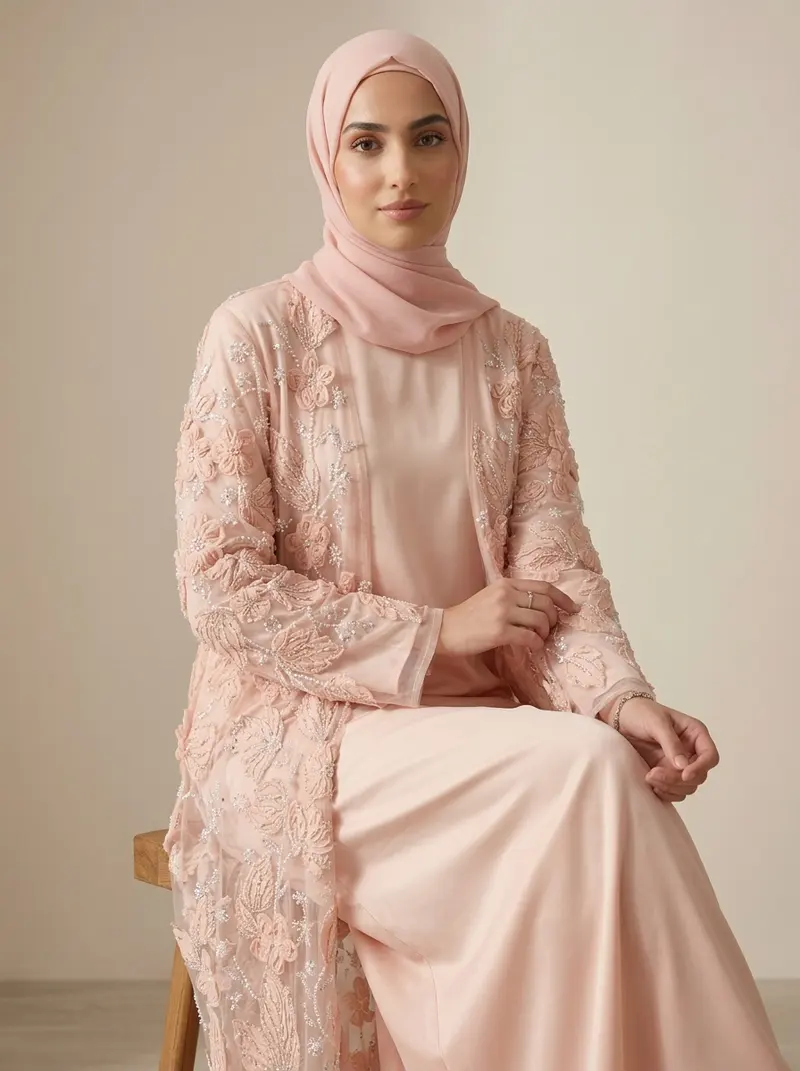
Nobody stands through a wedding. The seated frame is the one that answers “will this work all evening?”
Inside the shoot — the gallery wall
Every colorway, every angle MODA AI returned for Modest Valoria — side profile, alternate pose, full back, product flat, embroidery macro — all in one sunlit plaster room.
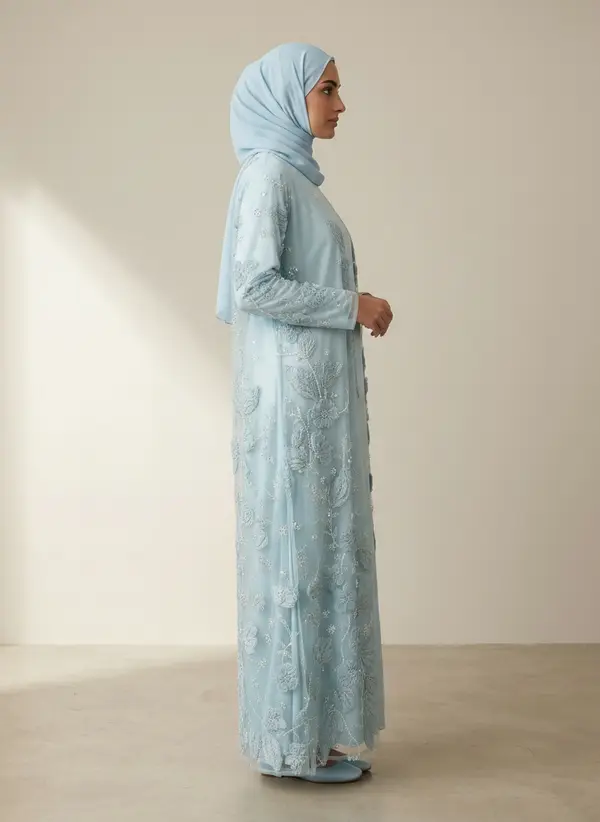
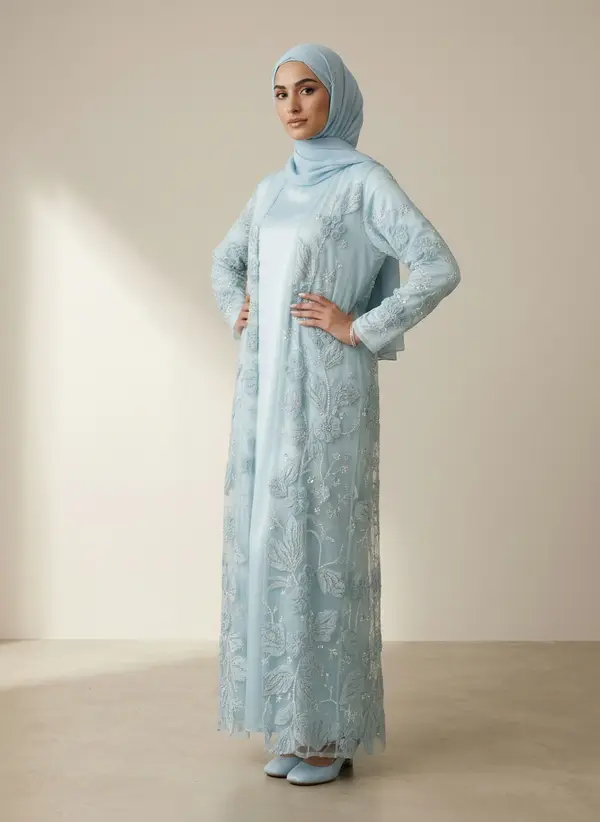
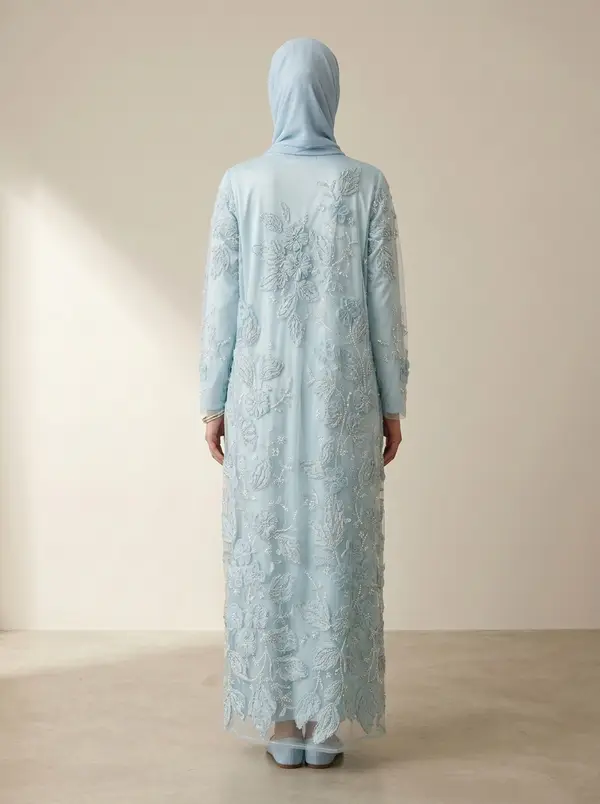
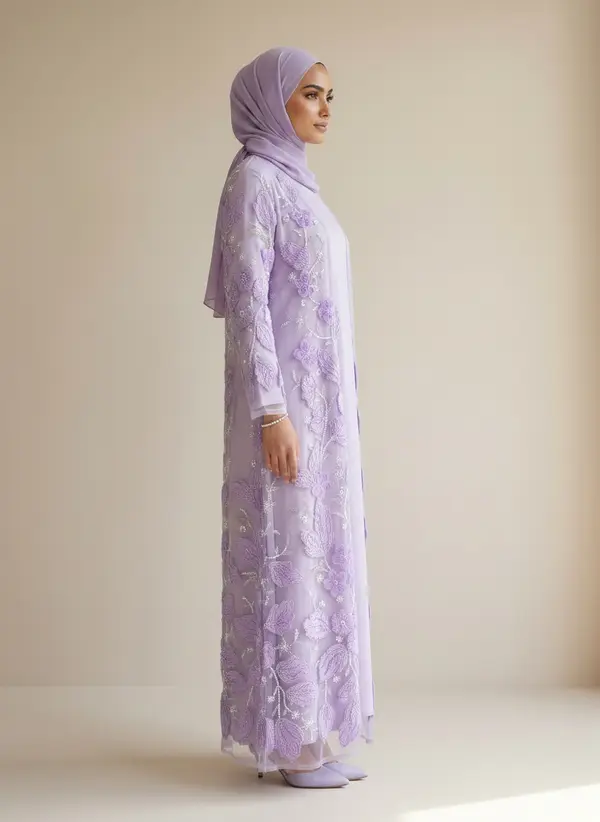
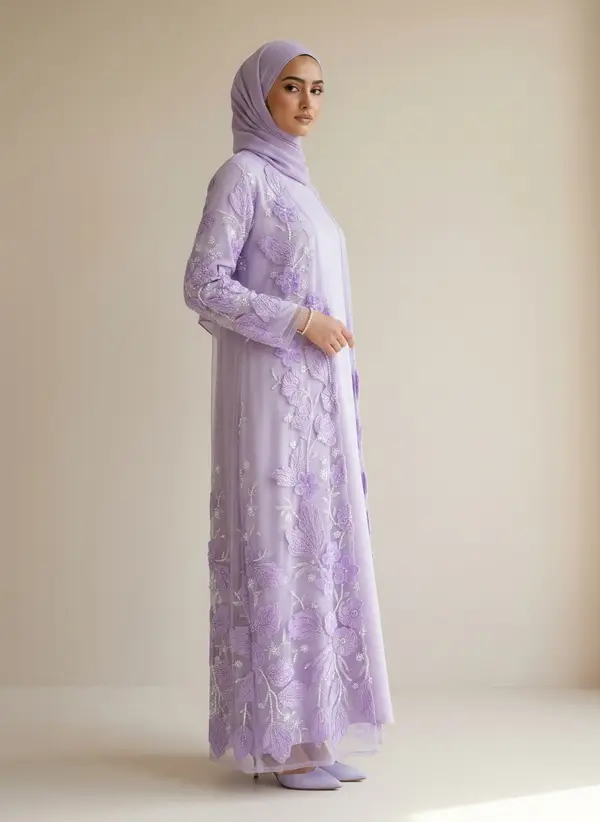
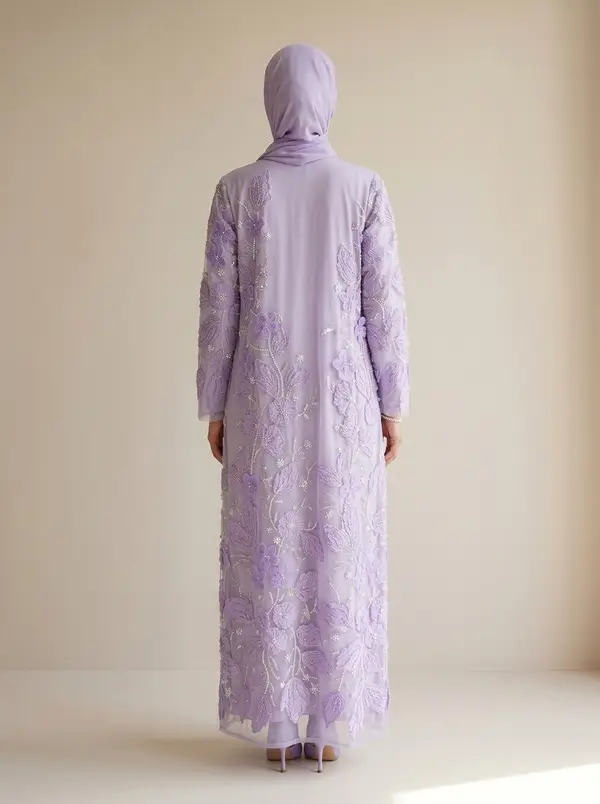
Covered, cultured, and unmistakably luxury.
Sixty frames and six films, and the rules never broke once.
Shooting modest wear — common questions
Can AI photography keep the hijab and full coverage in every frame?
That was the whole brief here, and it held across sixty frames. The hijab stays wrapped with no hair at the temple or the nape, sleeves stay at the wrist, the hem stays on the floor and the silhouette is never pulled tight — standing, walking, turning and seated. The back frame is the one worth checking first in any tool you trial, because it is where coverage most often quietly breaks.
Will heavy 3D embroidery, appliqué and beadwork survive generation?
In this collection they did. The raised floral appliqué still stands off the fabric in three-quarter and seated angles rather than flattening into a printed pattern, the tulle stays sheer where it crosses the satin under-dress, and the beading still throws small highlights — which is what tells a shopper the piece is hand-worked rather than printed. Every run also returns a macro frame so the surface can be inspected on the product page.
Can I get the same model and the same room across every colorway?
Yes, and for occasion wear you need it. Save the studio setting — background, model style and shot list — and run each colorway through it. All six colorways here came back in the same sunlit plaster room, on the same model, in the same light, so the collection grid differs in exactly one variable: colour.
Can I get video as well as stills for an abaya or a modest dress?
Yes. A sheer overlayer only makes sense in motion — whether it floats away from the body or hangs like a curtain, whether the embroidery weighs the hem down. Each piece here shipped with its own ten-second clip alongside the ten stills. Video is generated per product and is billed as its own credit, separate from the ten-image set.
Is this suitable for a Ramadan or Eid collection launch?
That is the pressure this solves. Occasion collections land on a fixed date and are bought by colour across a grid, so the whole colourway range has to be photographed and live at once. Generating the set rather than booking a shoot means a new colour added three weeks out drops into the same room, on the same model, matching the pieces shot before it.
What do I need to upload for a modest-wear piece?
A front and a back photo of the garment, and the studio you want it shot in. Flat lays, hanger shots and mannequin shots all work. For a two-piece look like an open abaya over an under-dress, shooting the layers as they are worn is what lets the run keep the overlayer reading as a separate, sheer layer.
More case studies
See how other brands use MODA AI to transform their product photography.
Bully
Türkiye wholesale summer line with one attitude
Read case study →Future Homme
New York men's lounge and sleepwear in warm light
Read case study →Bubber Couture
Luxury Indian ethnic menswear with editorial consistency
Read case study →Kraftiez
Colombian designer dresses on one consistent model
Read case study →Maison Blu
Marrakech-mood resortwear from a single background ref
Read case study →Blended Boutiques
Plus-size inclusive fashion across diverse backgrounds
Read case study →Black Bananas
Dutch kids streetwear on one calm brand muse
Read case study →Godzeal
Urban American Christian streetwear in studio light
Read case study →Bōdie Surf Co
Gulf Coast surf summer catalog with print accuracy
Read case study →Mekko
Scandi-inspired kids pajamas with color-matched backgrounds
Read case study →WUPT
French streetwear puffer jackets from supplier to store
Read case study →Shoot modest wear without compromising it.
Like Modest Valoria, upload front and back inputs of each piece and the studio you want it shot in — and get a full-coverage, colorway-complete collection back, with video for the pieces that need it.