AI Photography for Wholesale Menswear · Türkiye · Case Study
Bully — a whole wholesale
summer, shot with one attitude.
Bully sells through a Türkiye wholesale operation: raglan football tees, washed star-graphic tees, an entire sweatpant colorway wall, co-ord sets. Individually they are a spreadsheet. Together, shot on one buzz-cut model in black sunglasses under one bright studio light, they became a Summer 2026 collection a buyer could actually see.
An entire summer wholesale line, and still running.
The anchor — one raglan tee, ten catalog frames
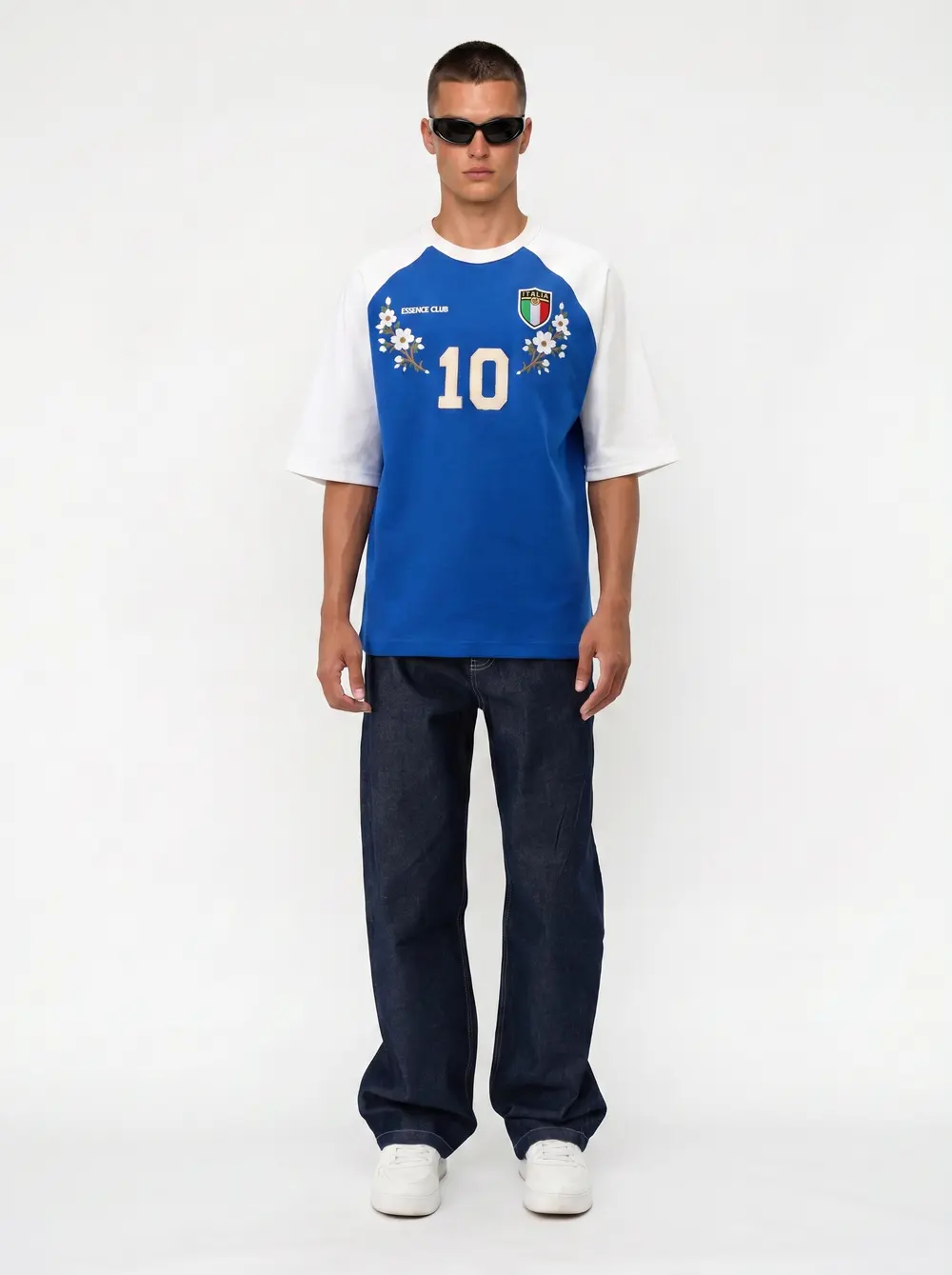
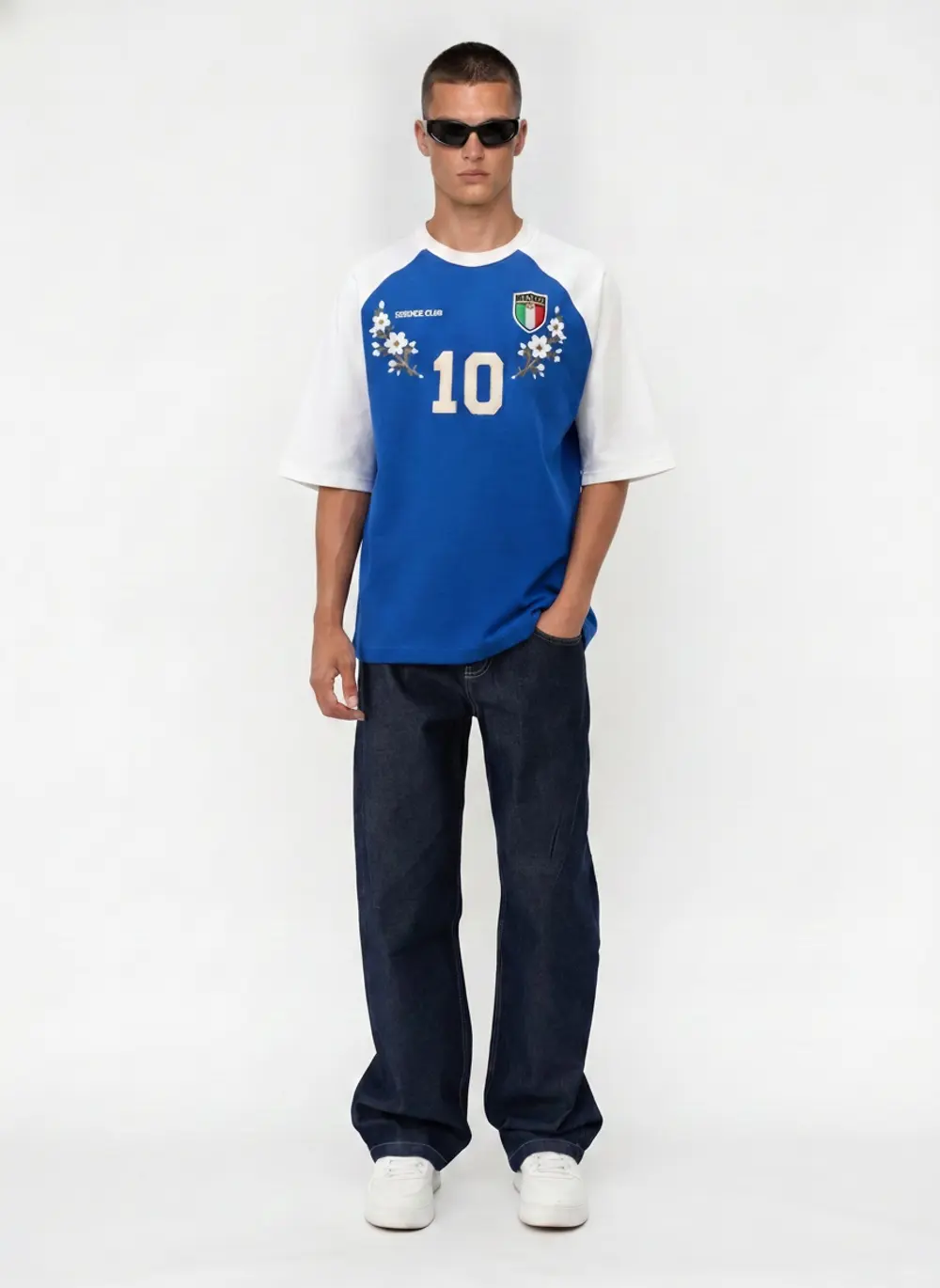
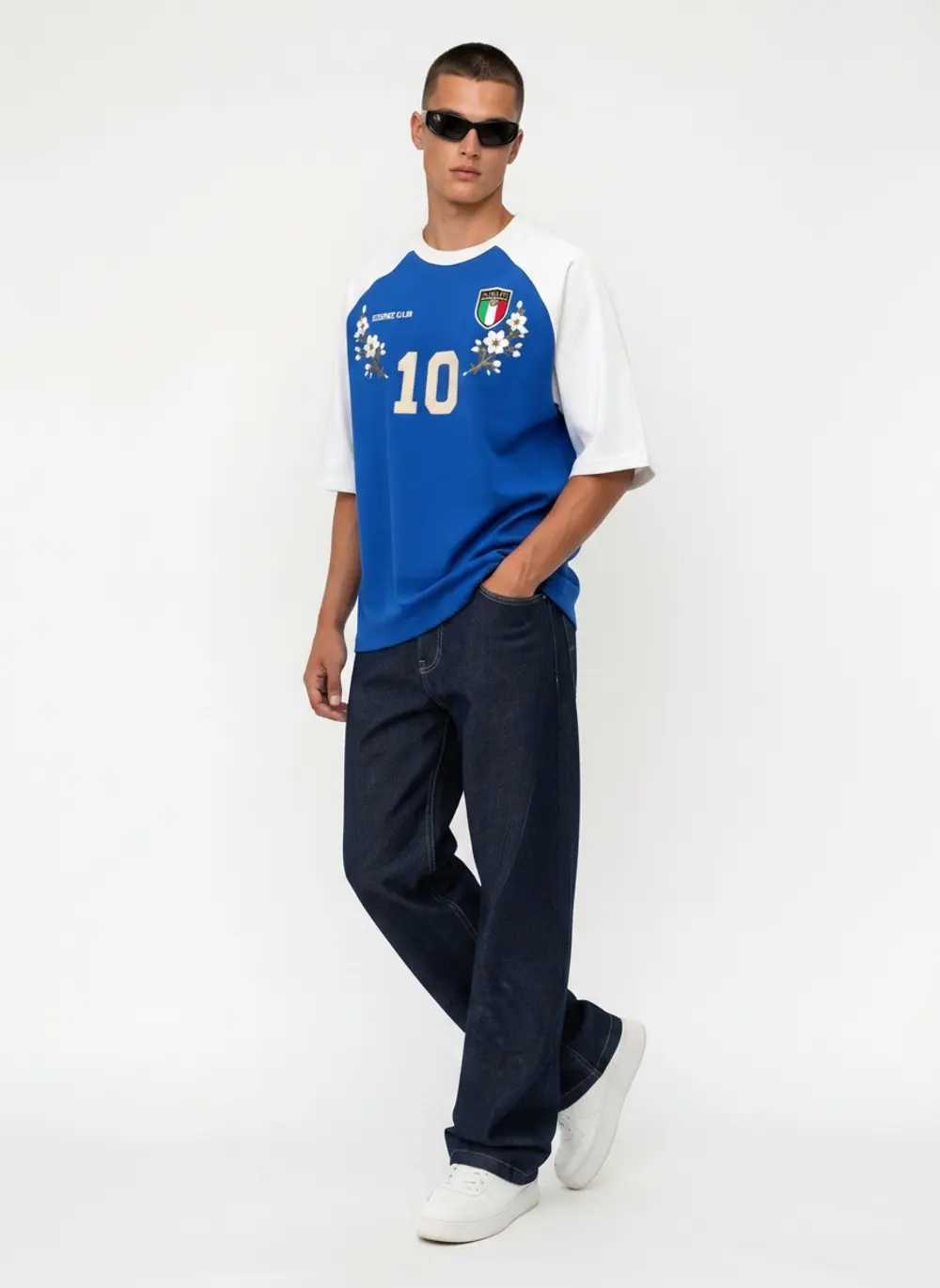
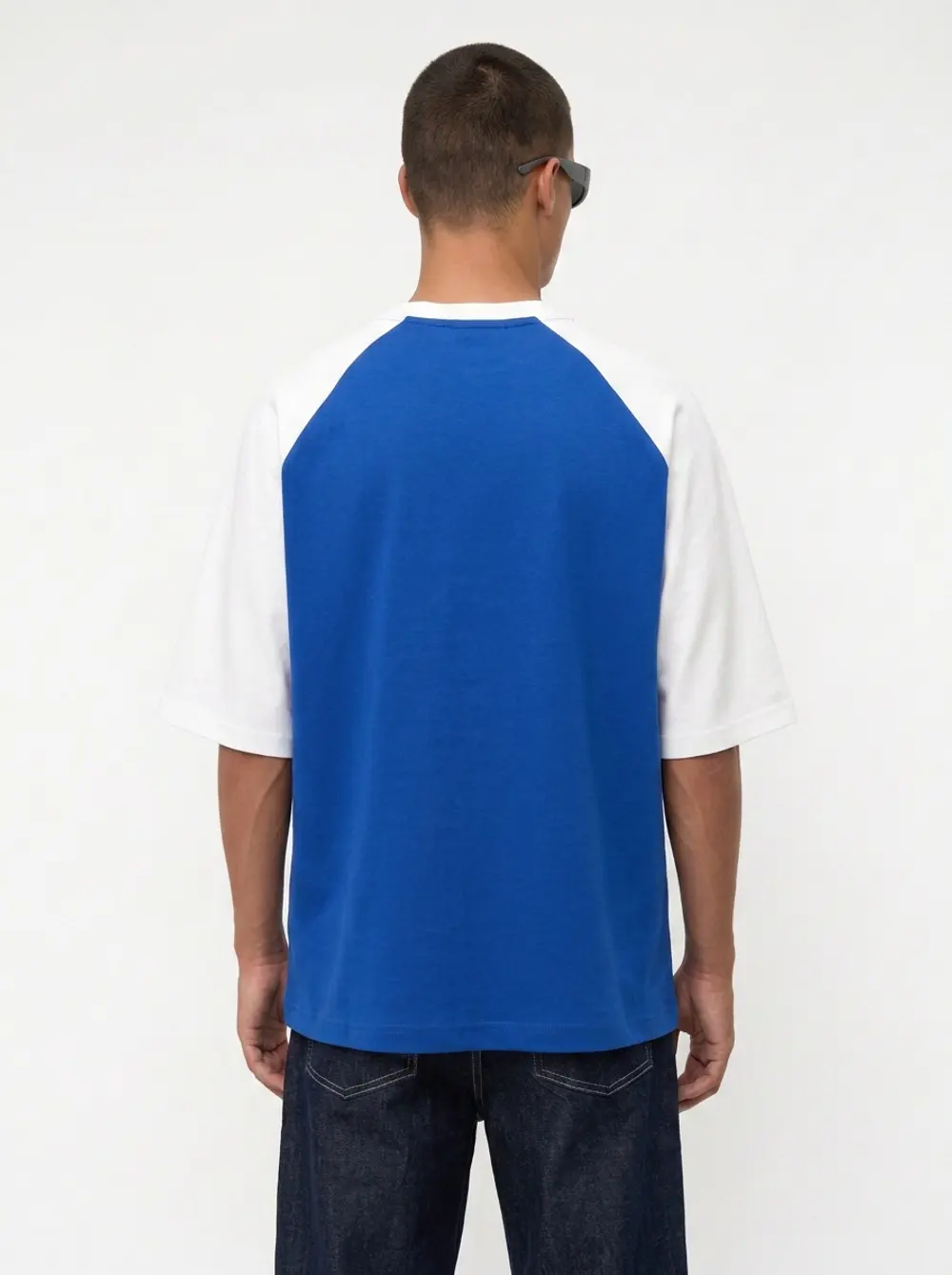
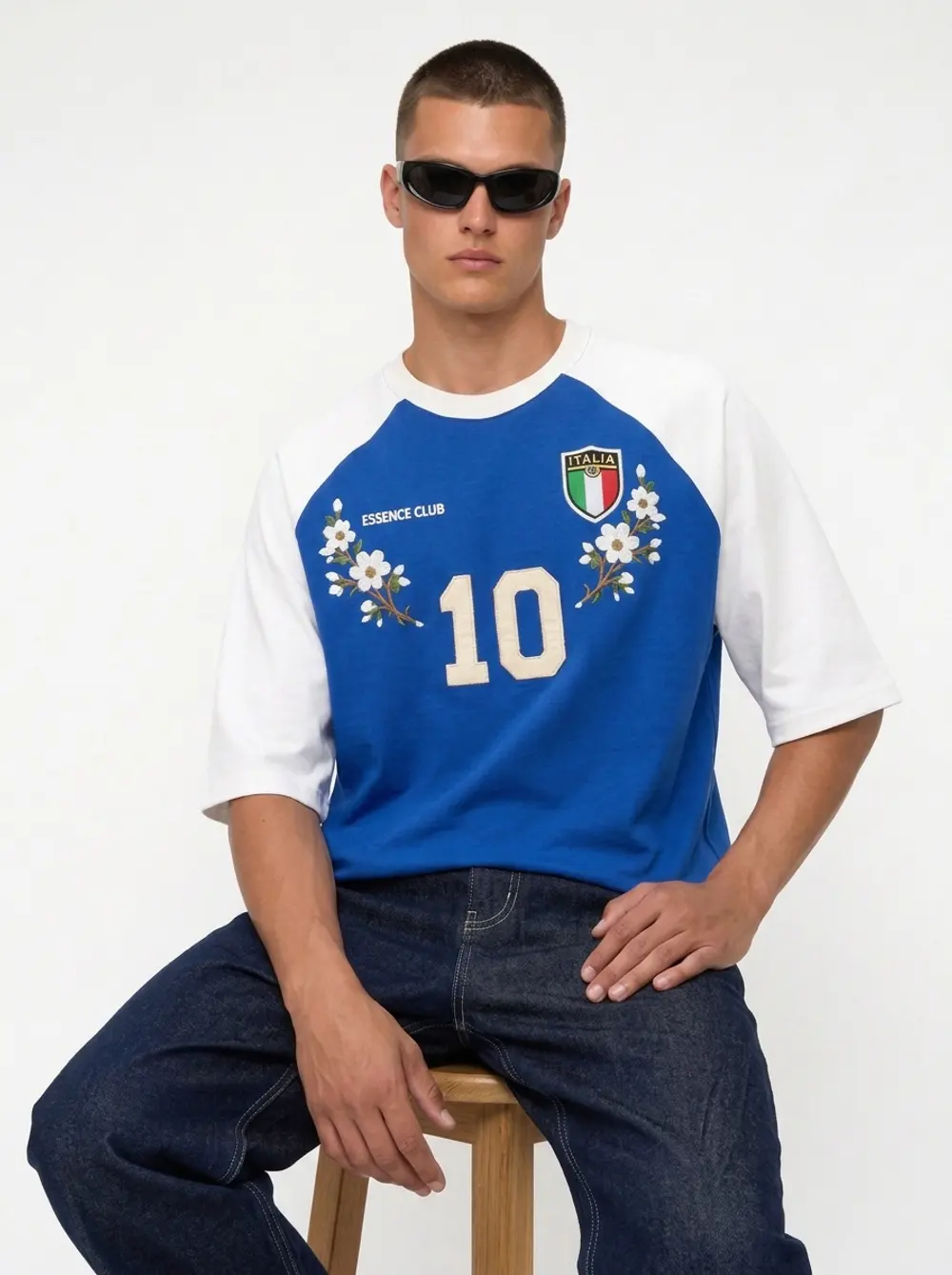
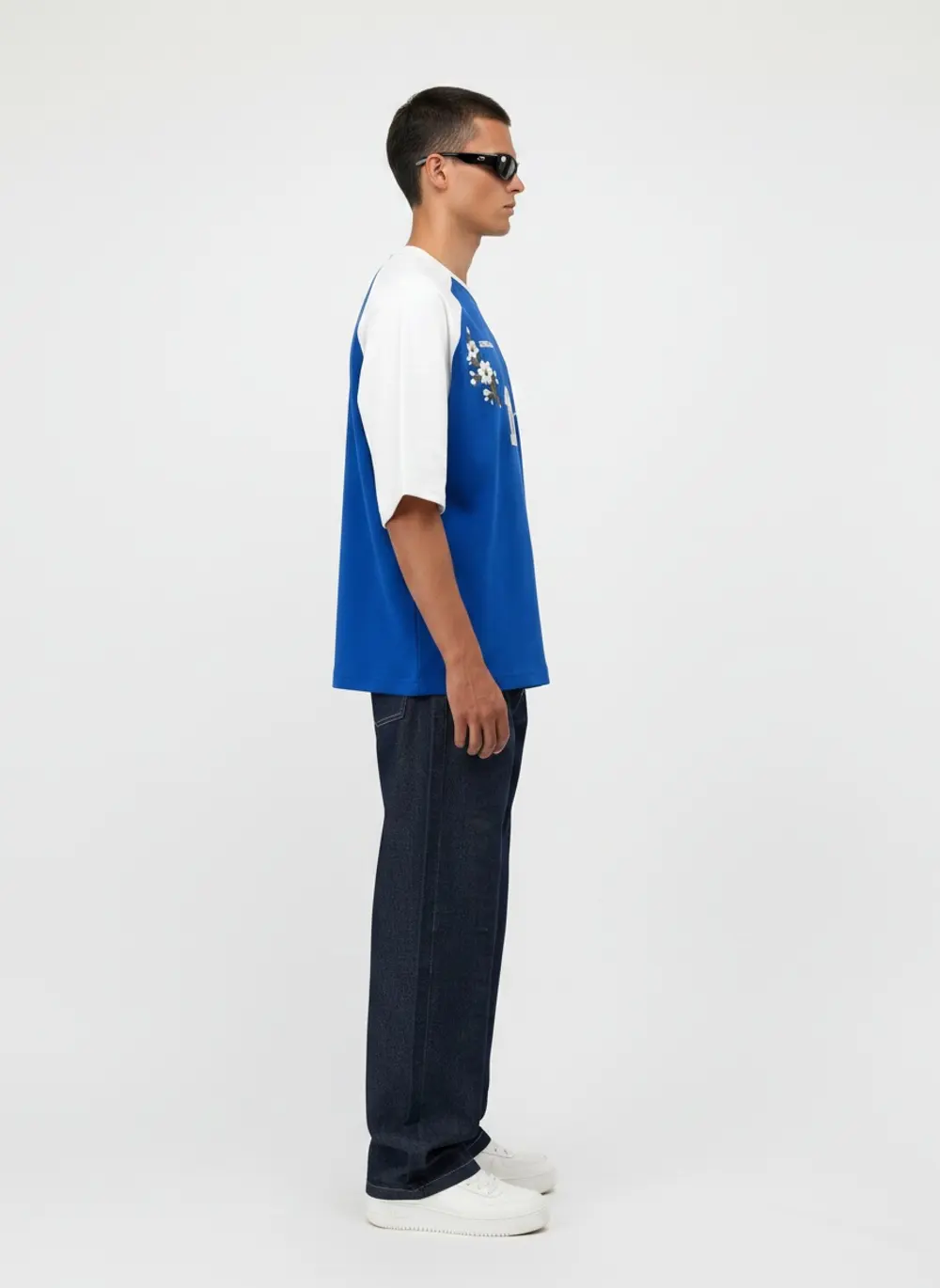
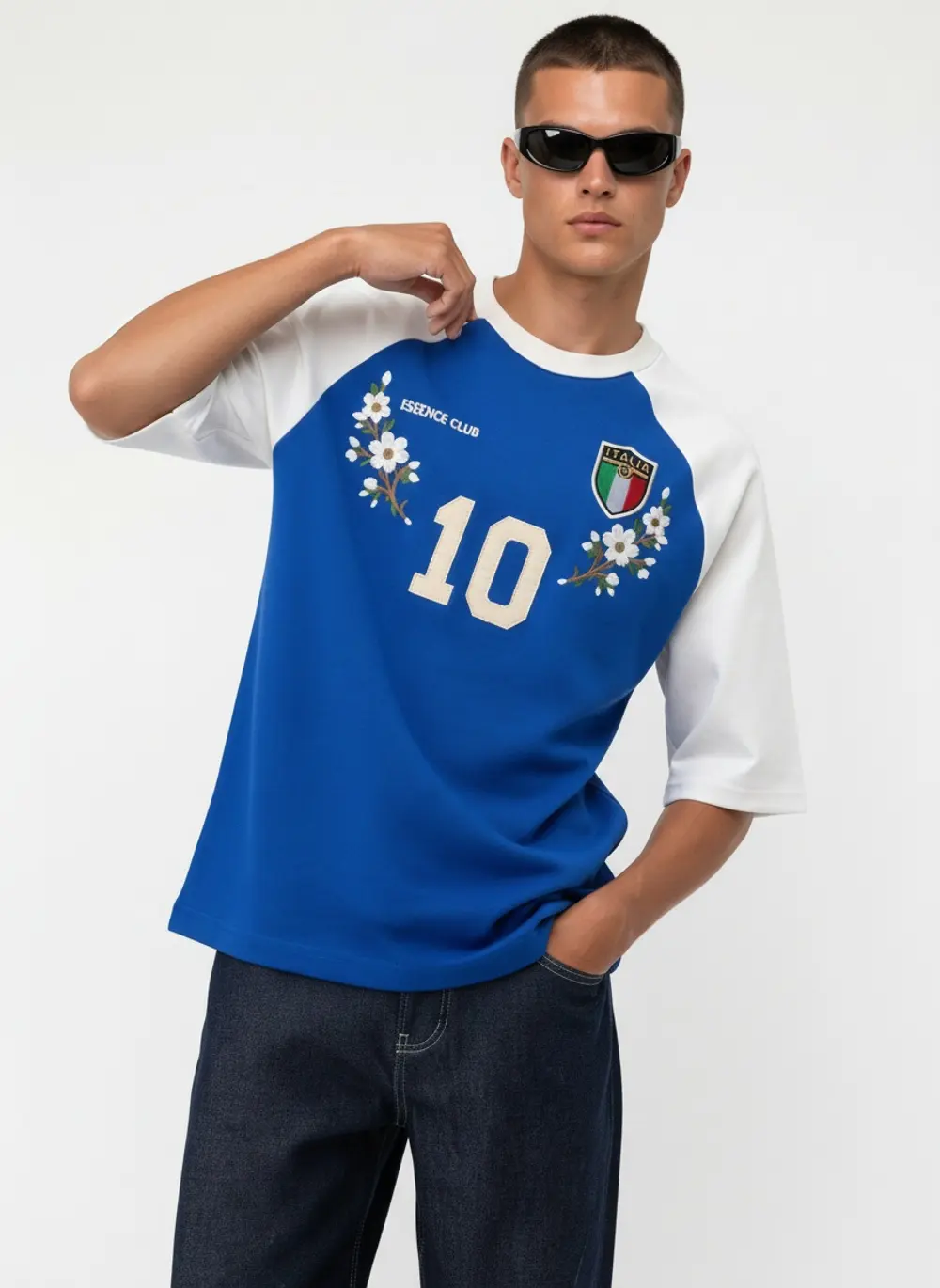
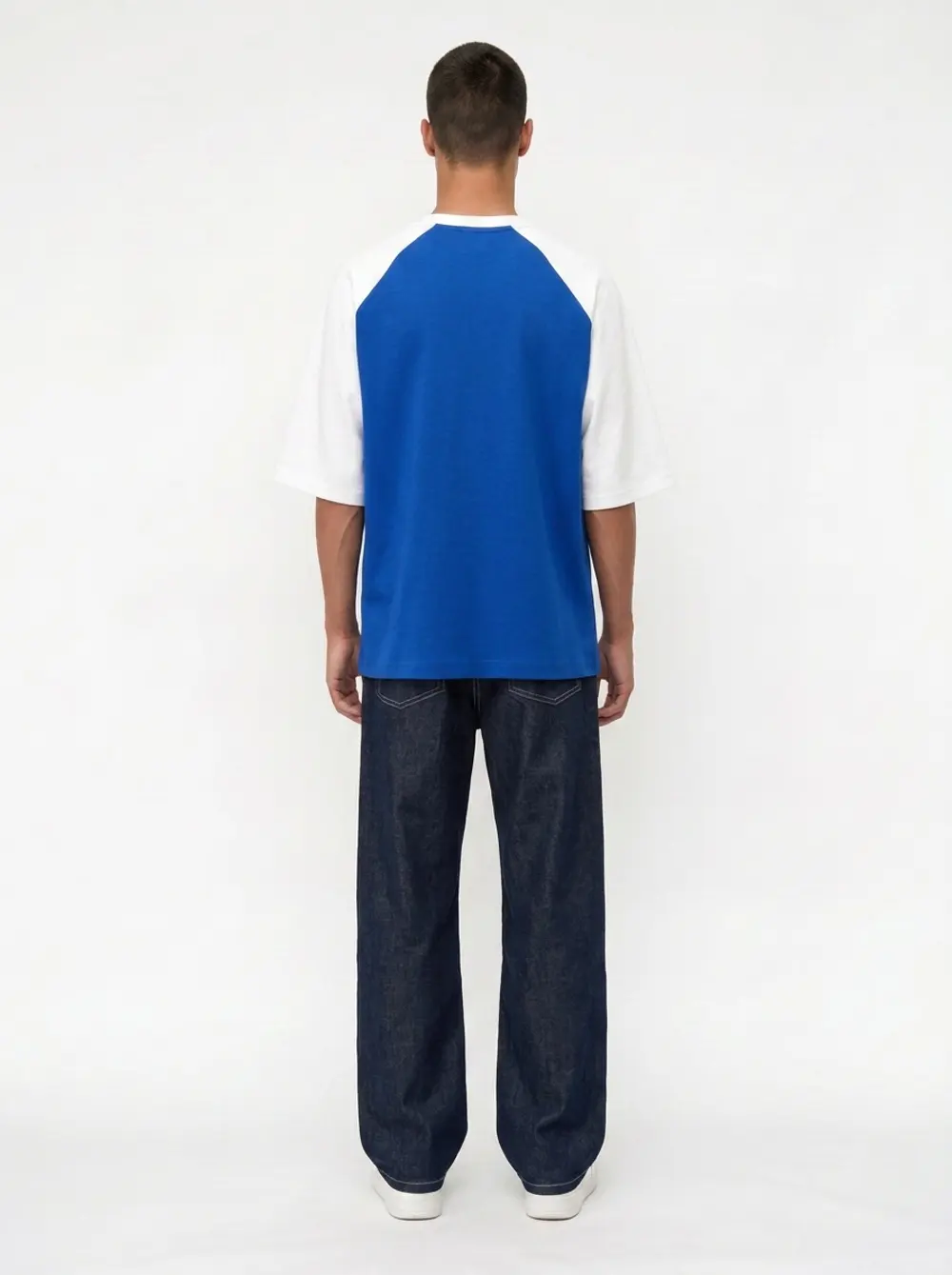
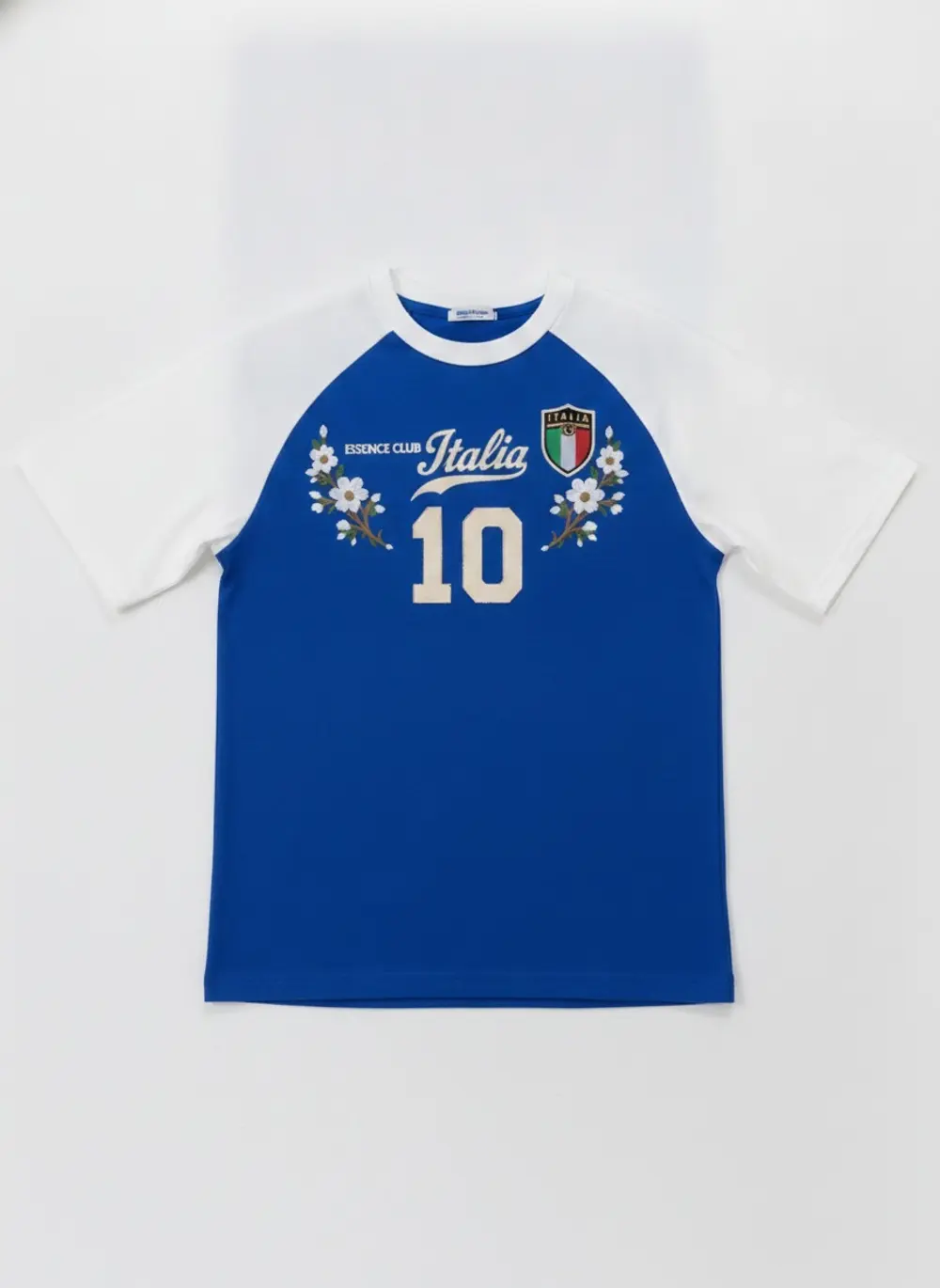
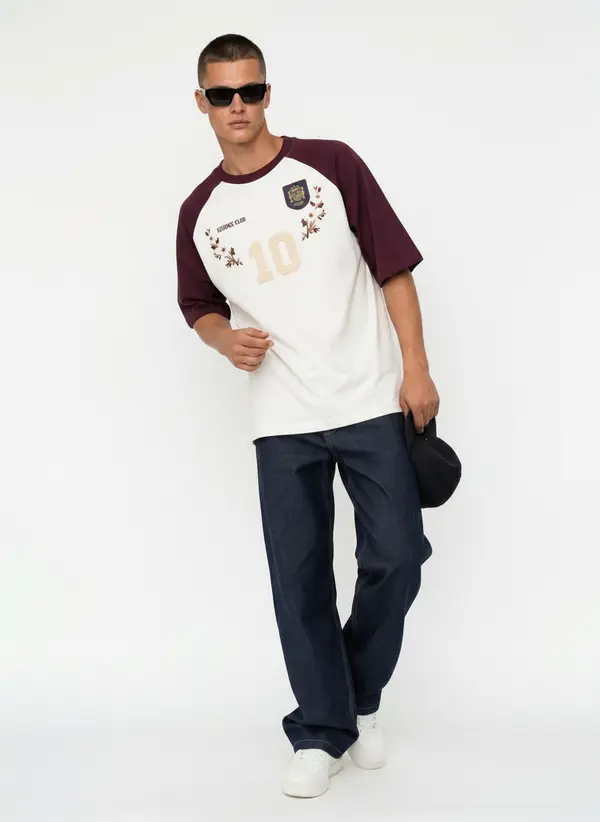
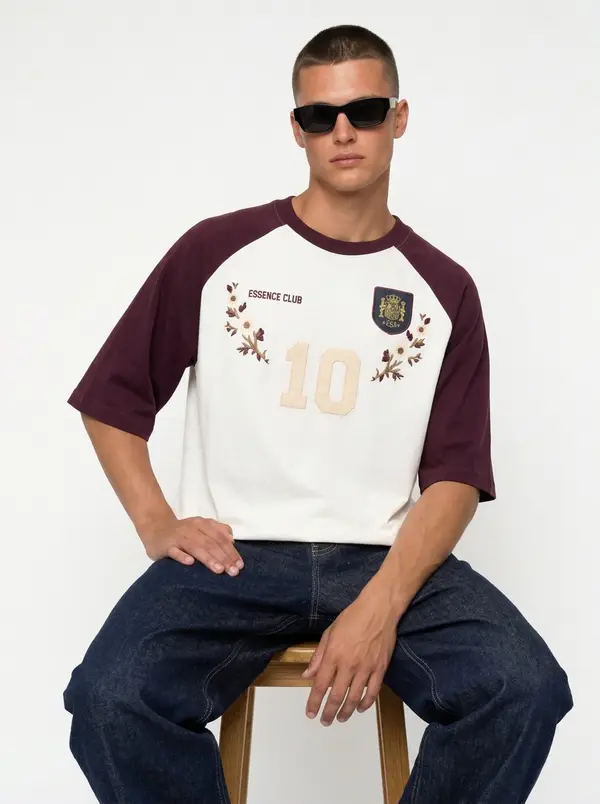
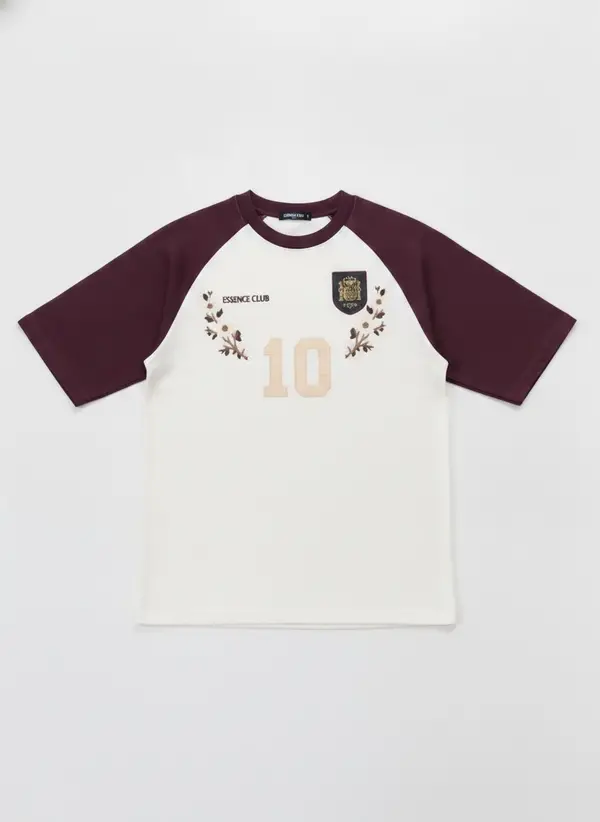
Front, three-quarter, walking, back, seated, side, editorial, full back, product flat, print macro. One SKU, one run.
A wholesaler’s real problem is coherence
Nobody buys wholesale one product at a time. A buyer opens a catalog, scrolls for maybe ninety seconds, and forms a single judgement about whether this supplier is a brand or a warehouse. Mixed lighting, four different models, a white background here and a grey one there — and the answer is warehouse, no matter how good the garments are.
That is a photography problem, but it is priced like a logistics problem. Booking one model for twenty-two styles across three programs means a two-day shoot, a studio, a stylist, and a season’s worth of scheduling before a single line sheet goes out. Bully skipped all of it and set the same face reference and the same bright white background reference on every job instead.
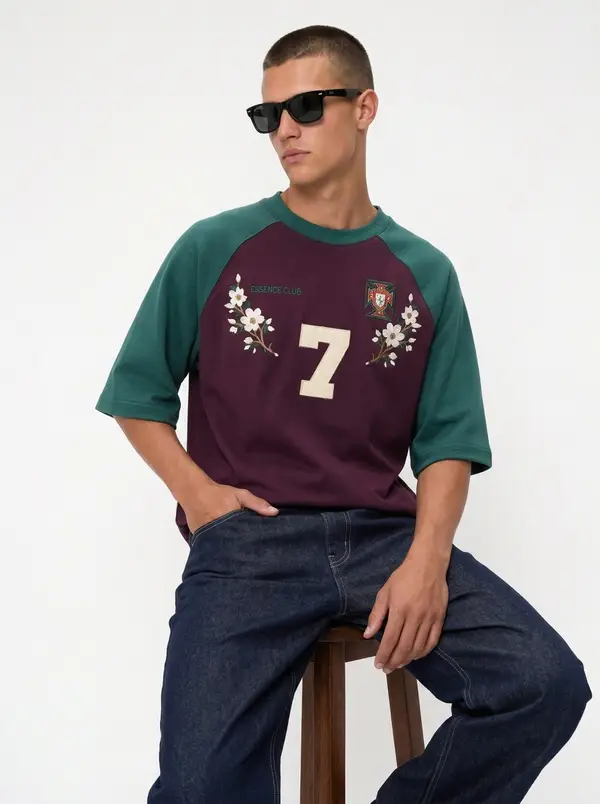
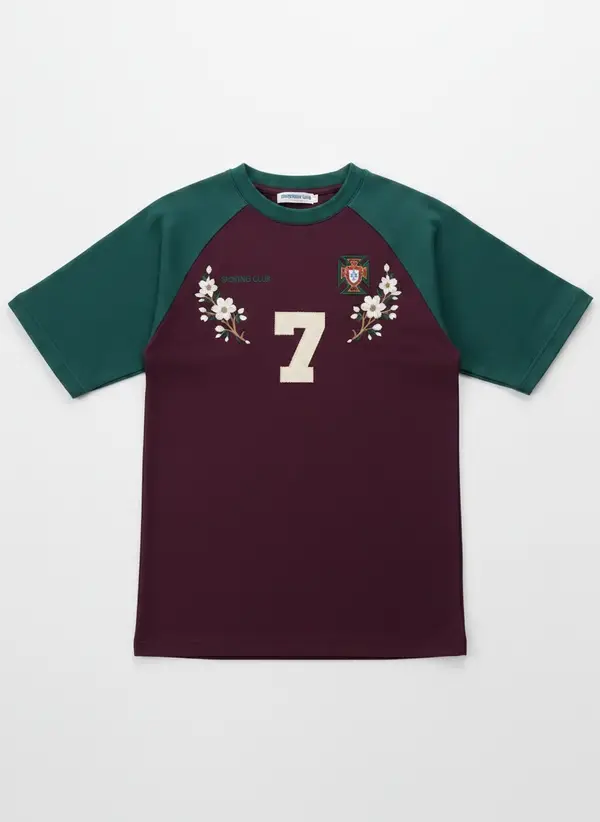
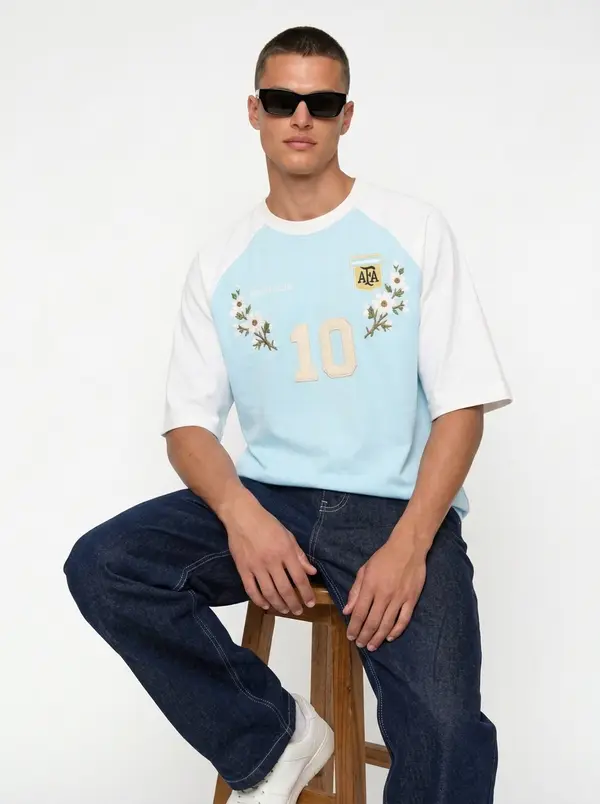
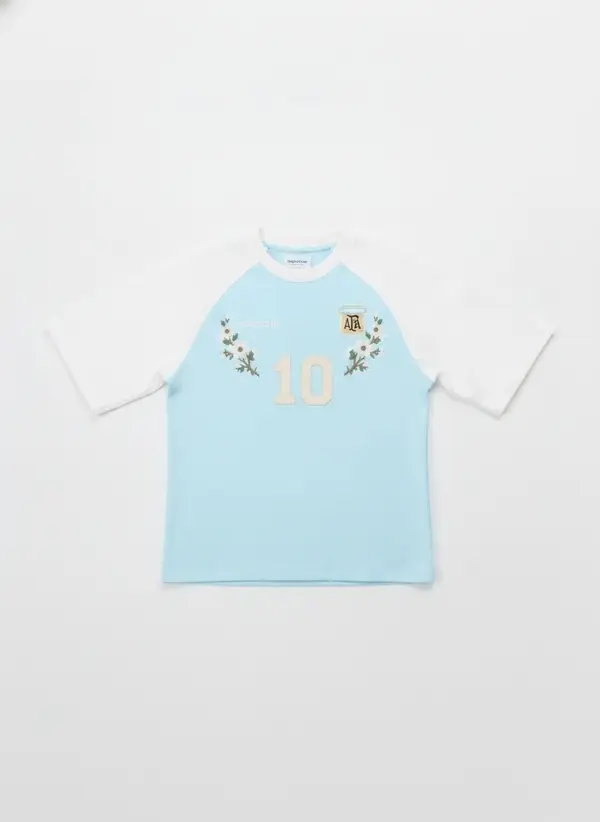
Program one — Essence Club raglans, six colorways
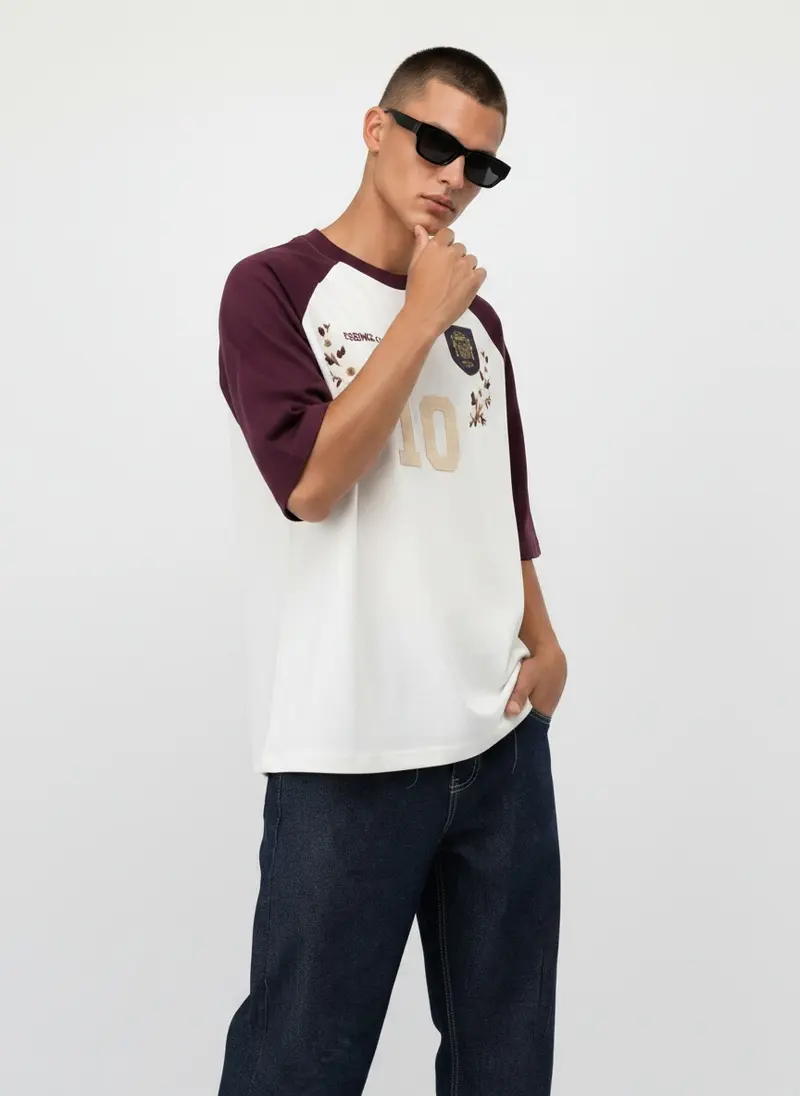
Cream / Burgundy
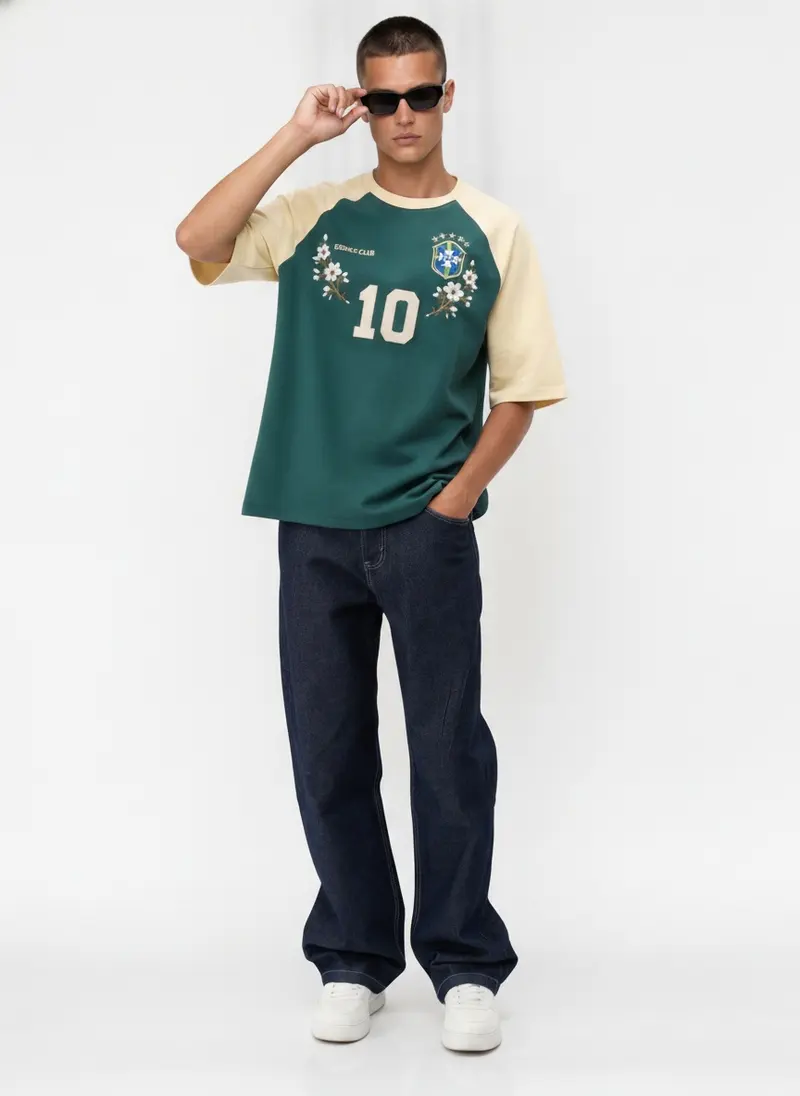
Green / Cream
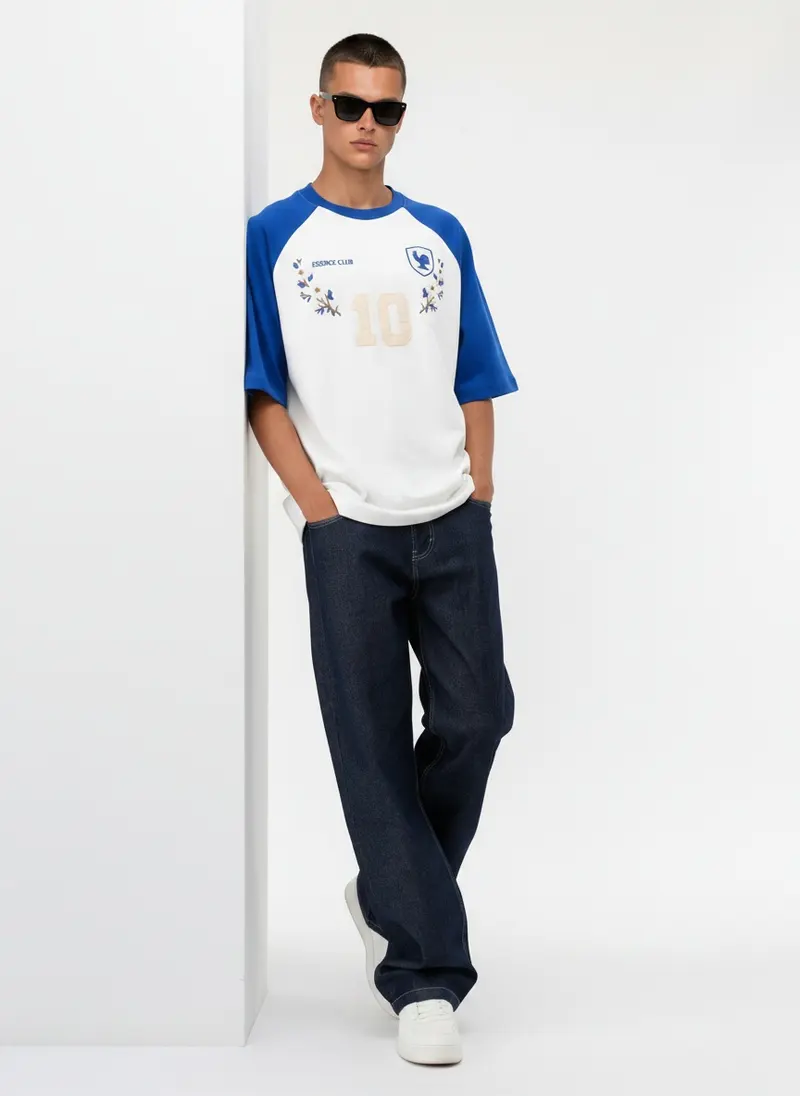
White / Royal
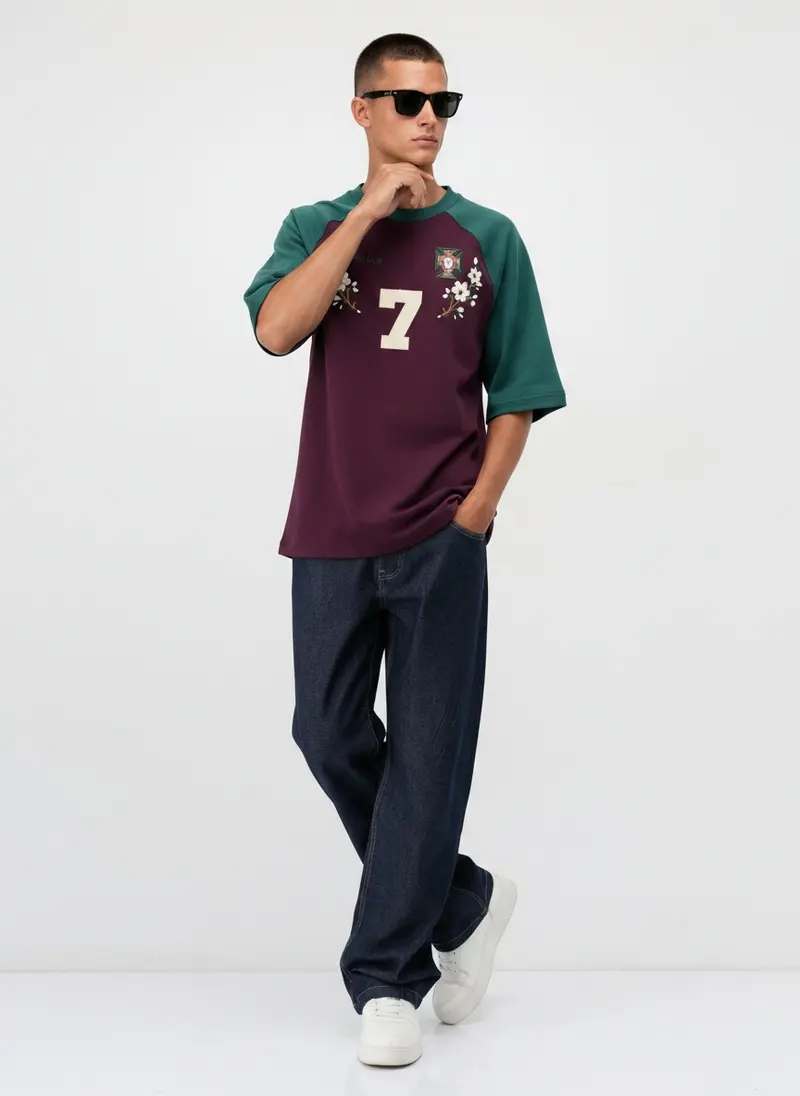
Plum / Green
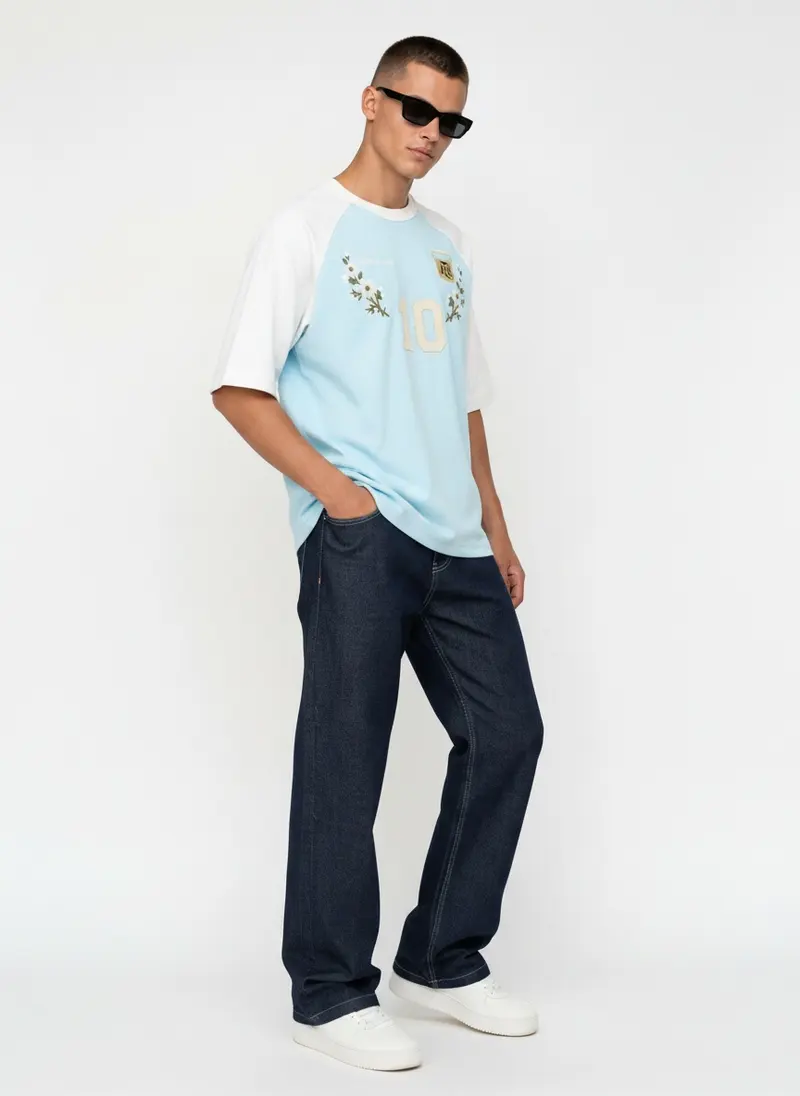
Sky / White
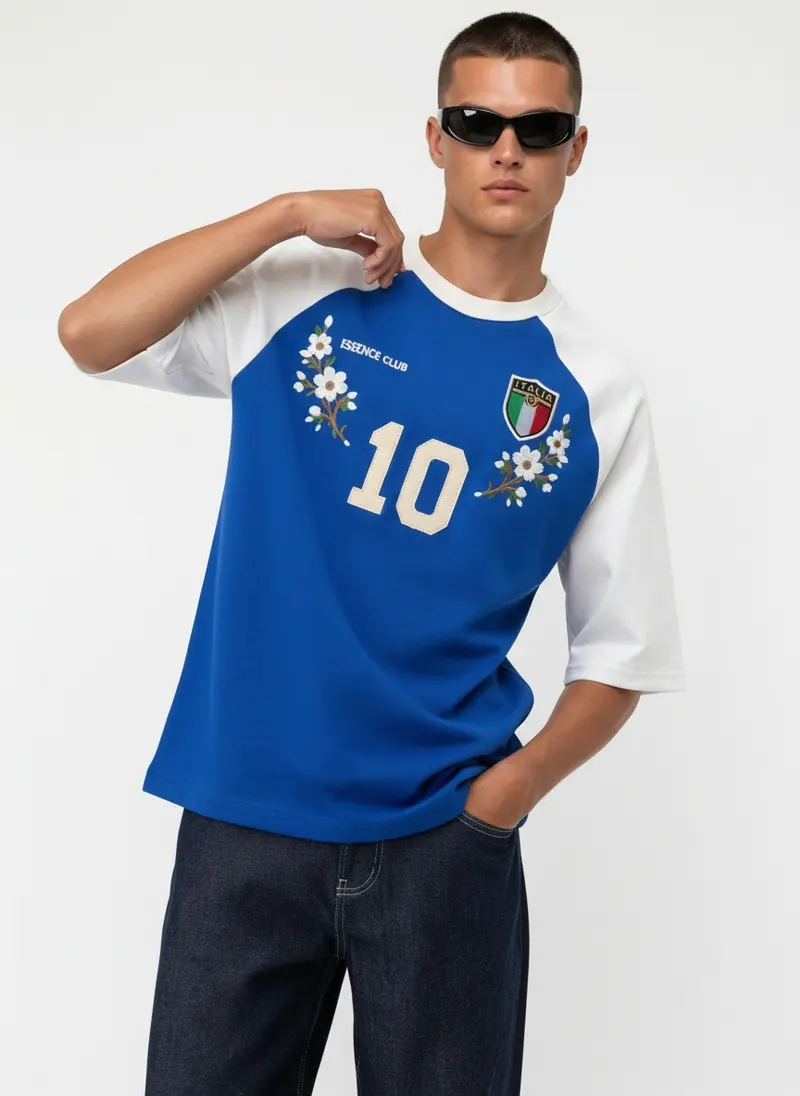
Royal / White
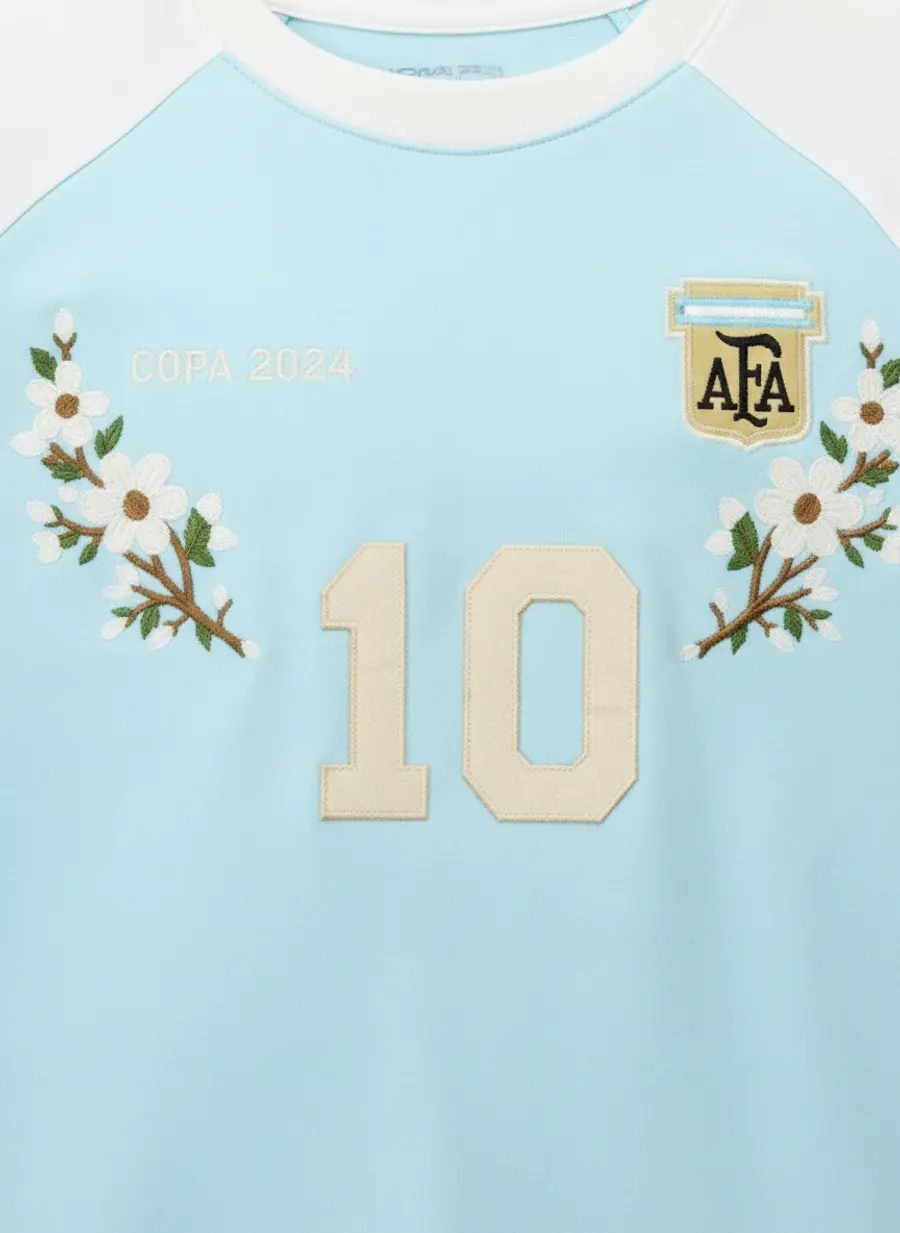
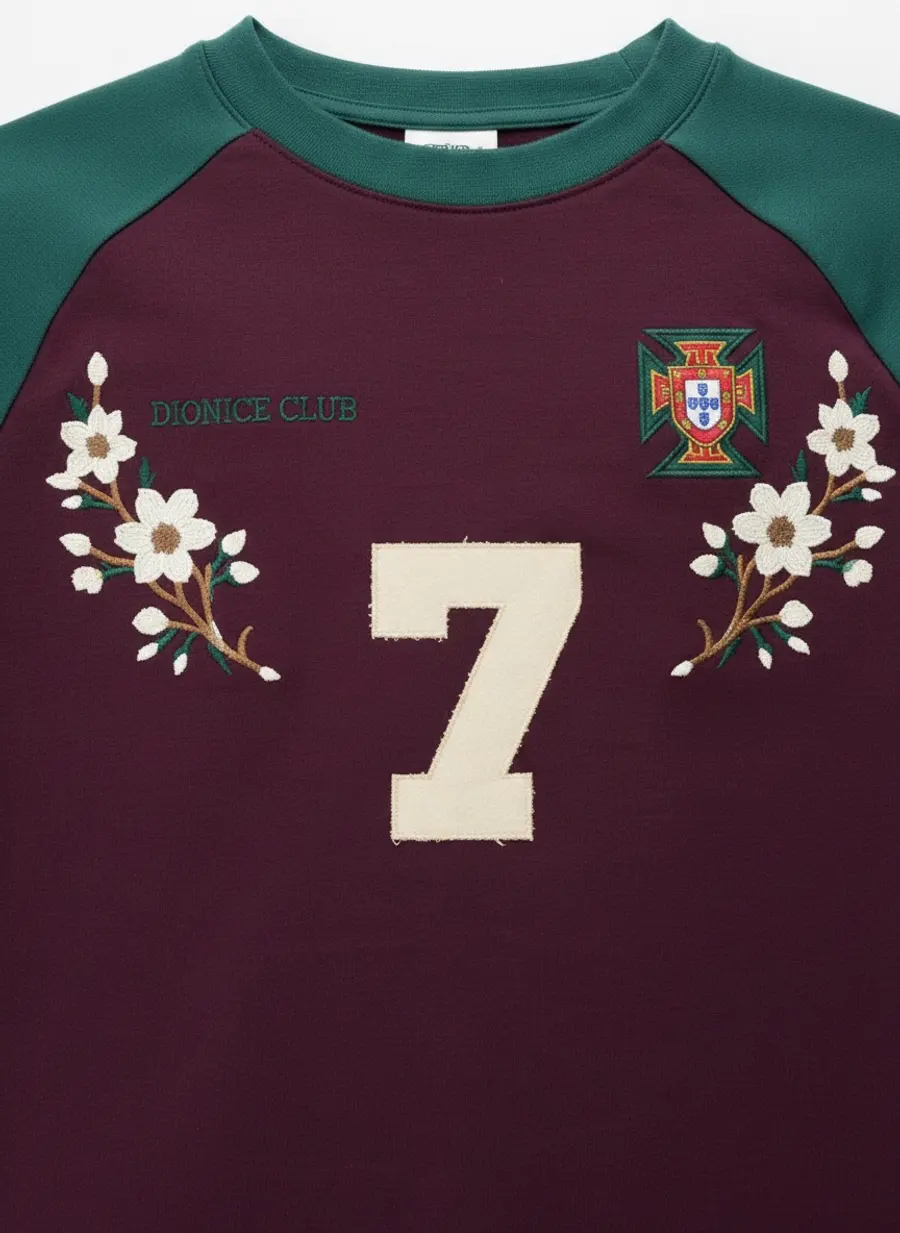
Embroidered crests, floral sprays, appliqué numbers — six versions of one block, same denim, same stance.
Sunglasses on. Chin up. Every time.
The styling decision is the brand decision here. Buzz cut, black sunglasses, ribbed tank or oversized tee, baggy denim, low-top sneakers, hard high-key light with almost no shadow. Weight on the back foot, hand in the pocket, chin slightly up — the posture language every European high-street catalog trained shoppers to read as current.
None of it is accidental, and none of it had to be re-briefed twenty-two times. Held constant across three programs, it does something a wholesaler almost never gets from supplier imagery: it makes a mixed range of tees, pants and sets look like they were designed by the same person, in the same season, for the same customer.
Program two — the Pleasure star tee, six washed colorways
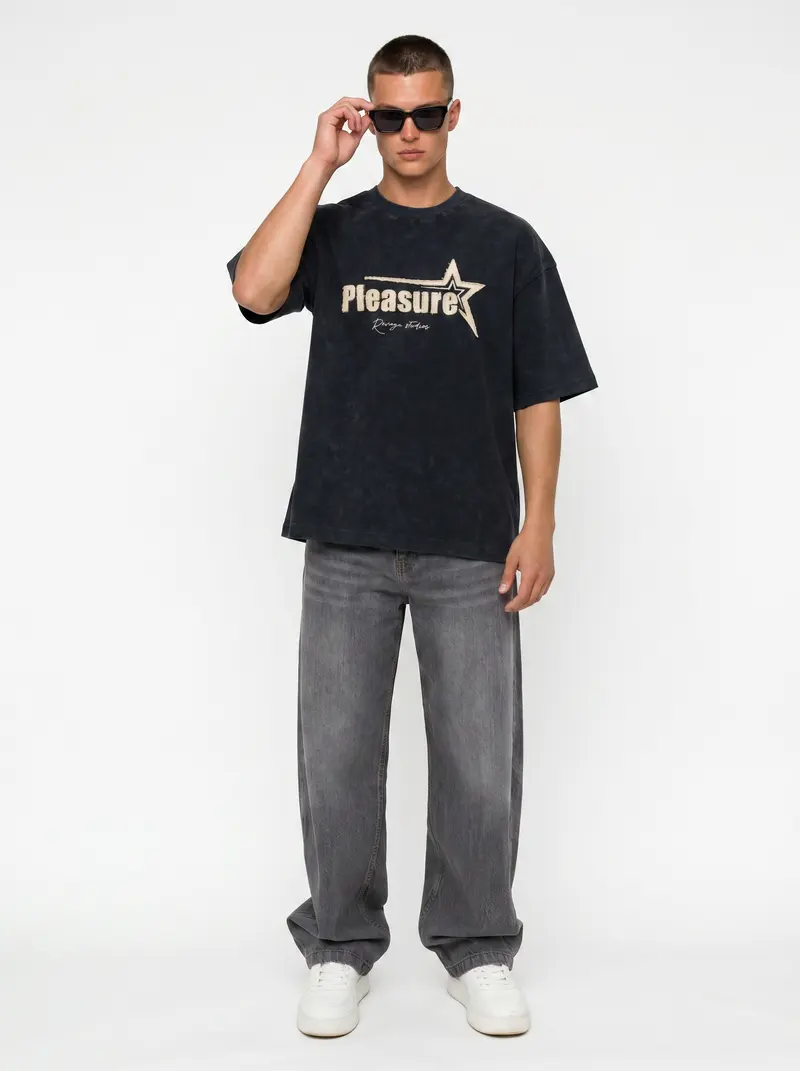
Washed Black
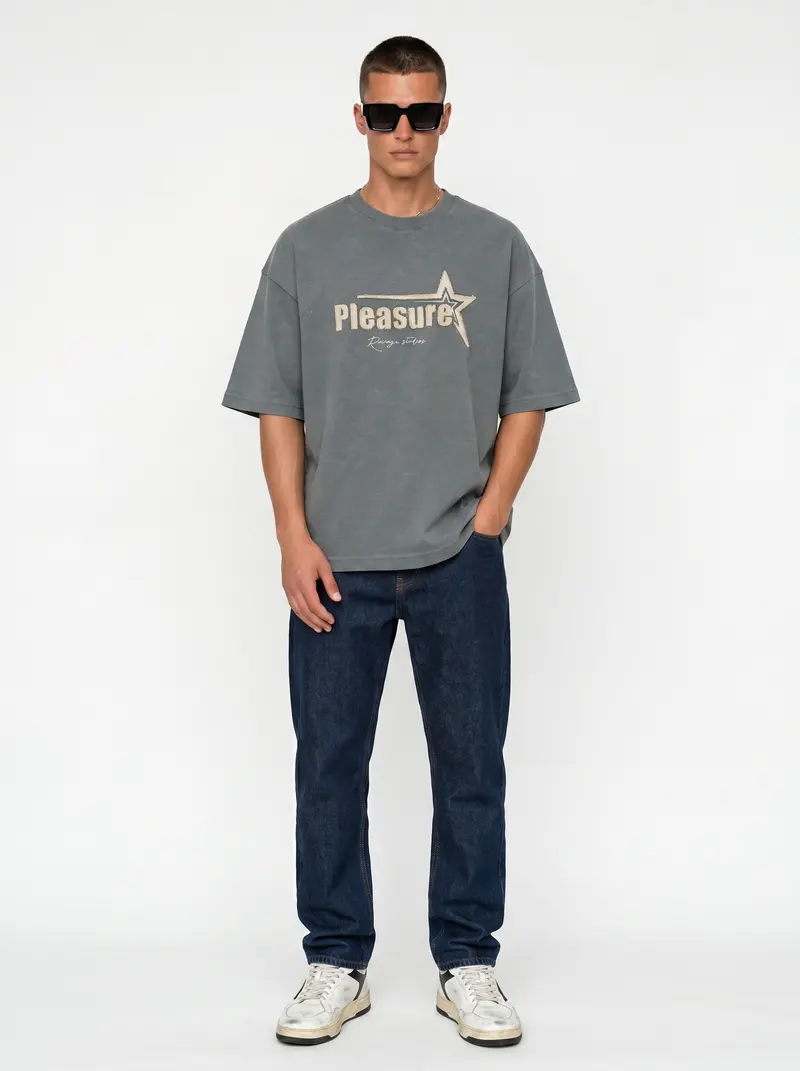
Sage
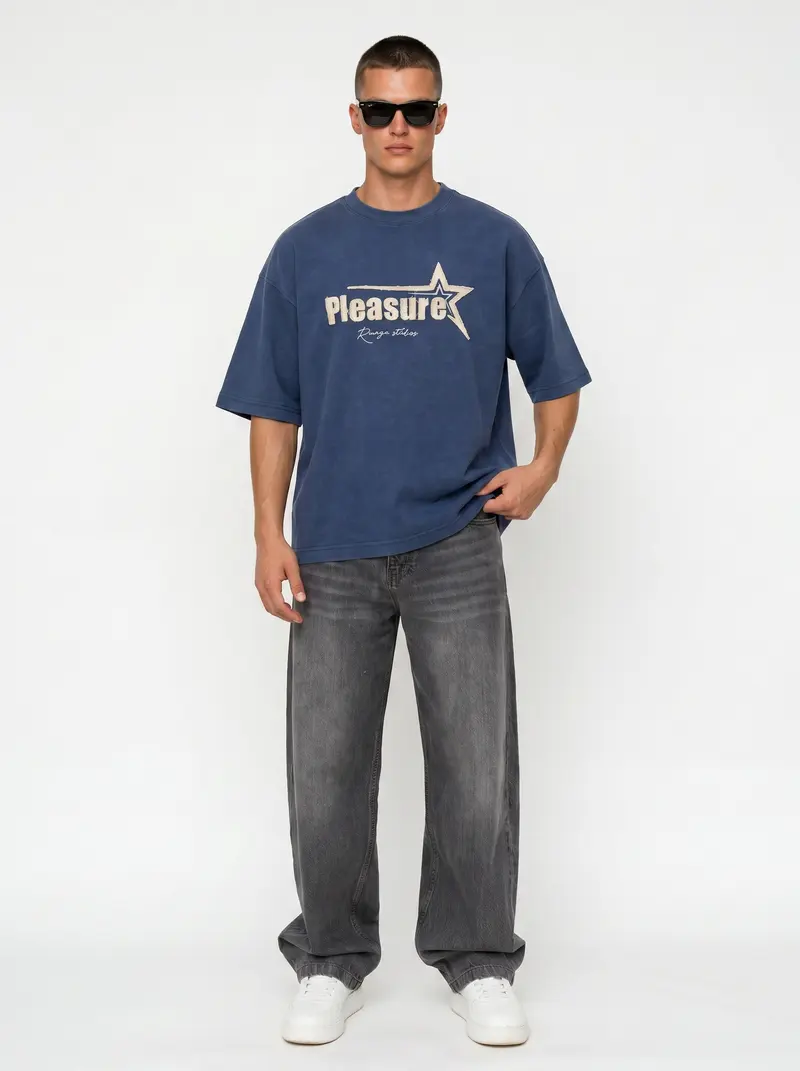
Navy
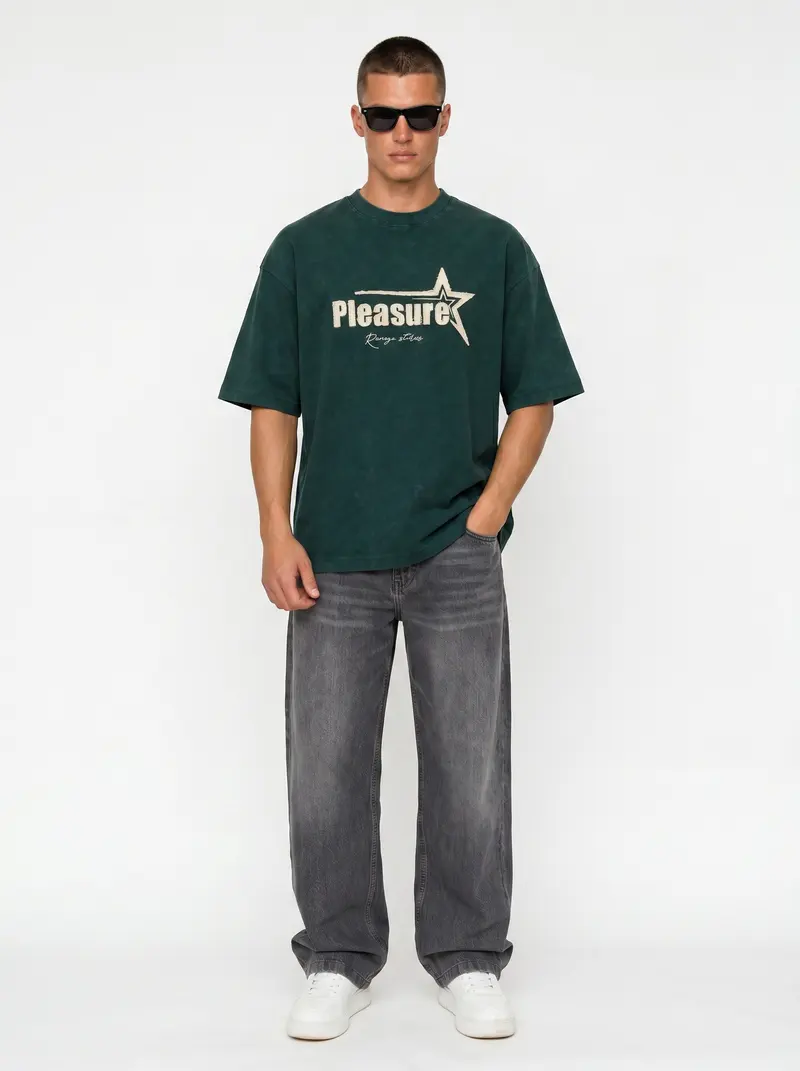
Forest
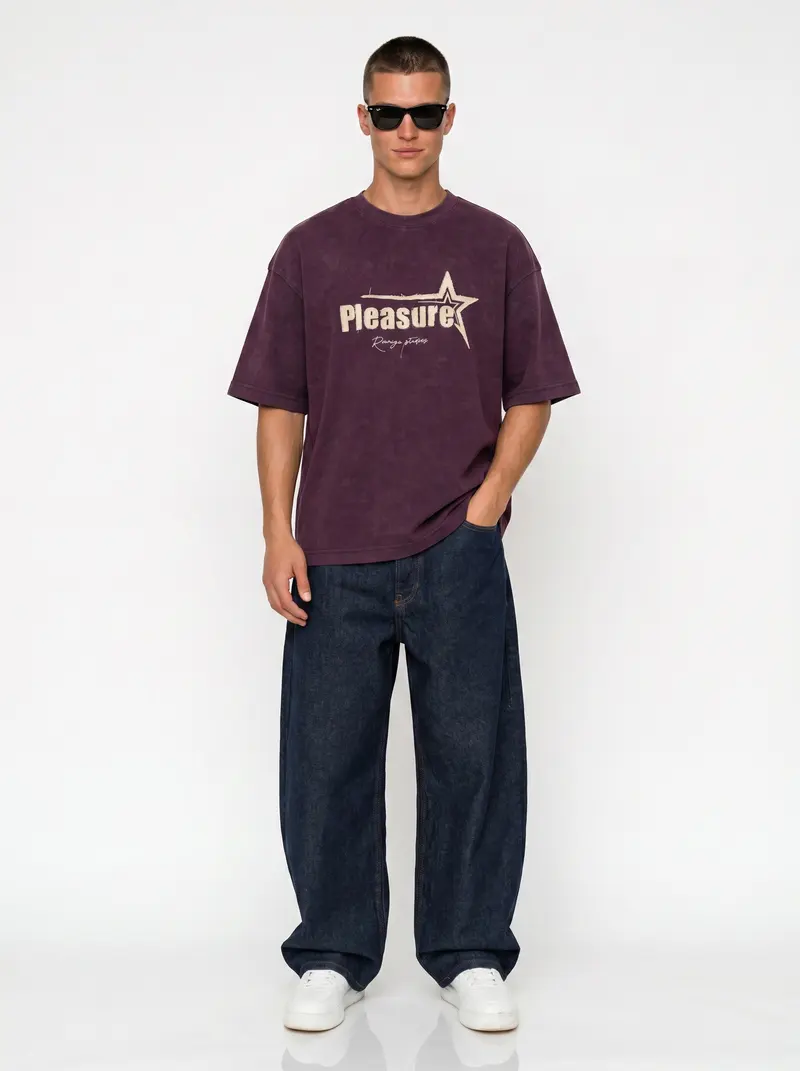
Plum
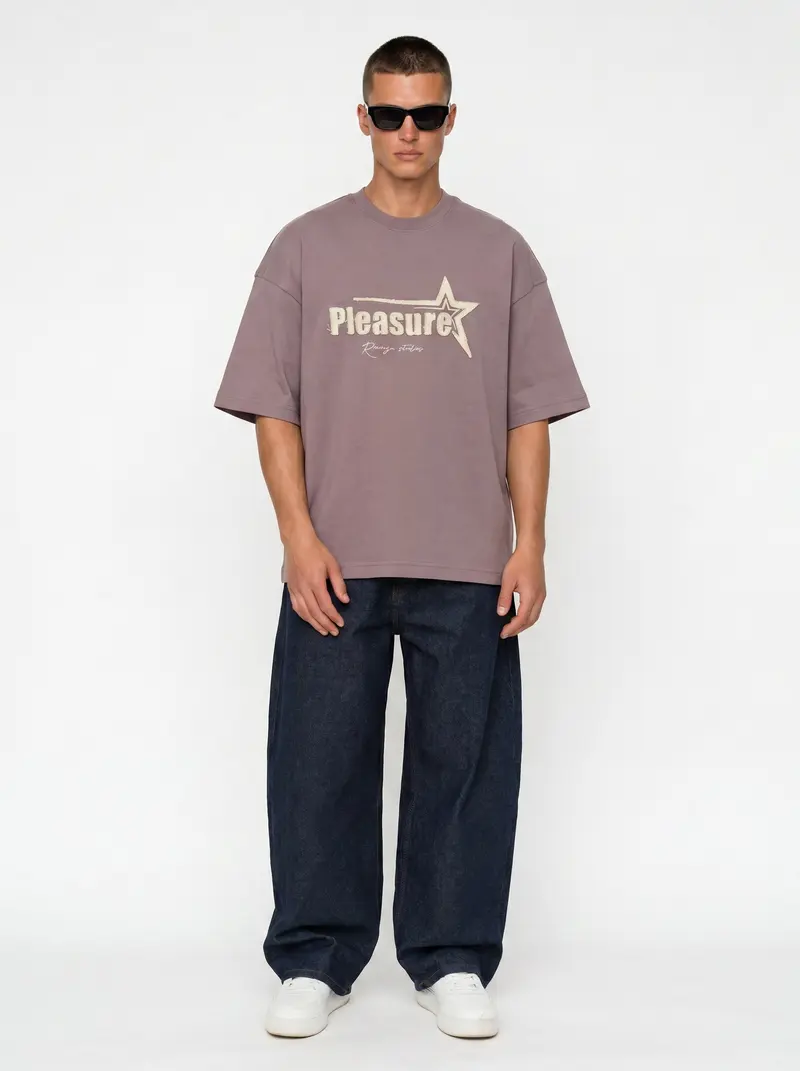
Mauve
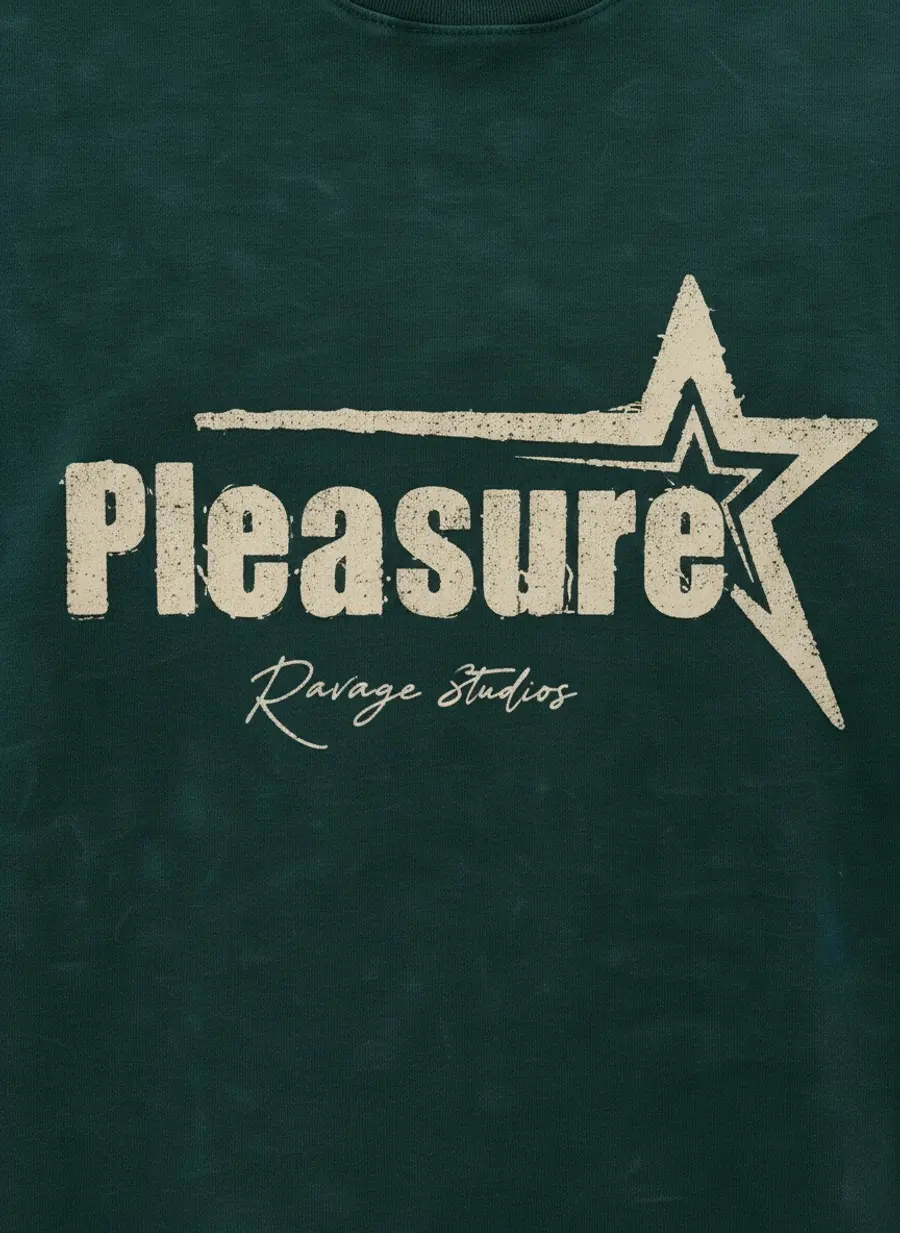
The hardest colour job in the range: six garment-dyed washes that all have to stay distinguishable on a white cyclorama.
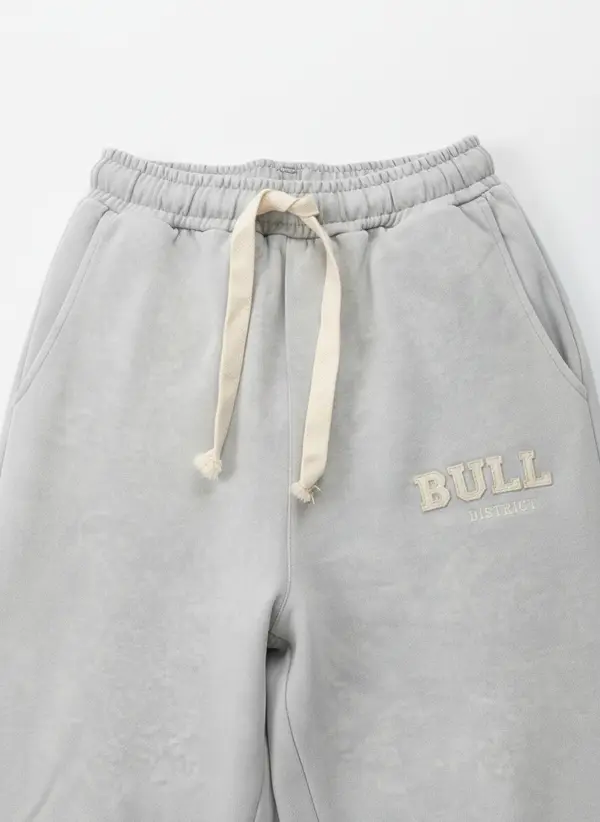
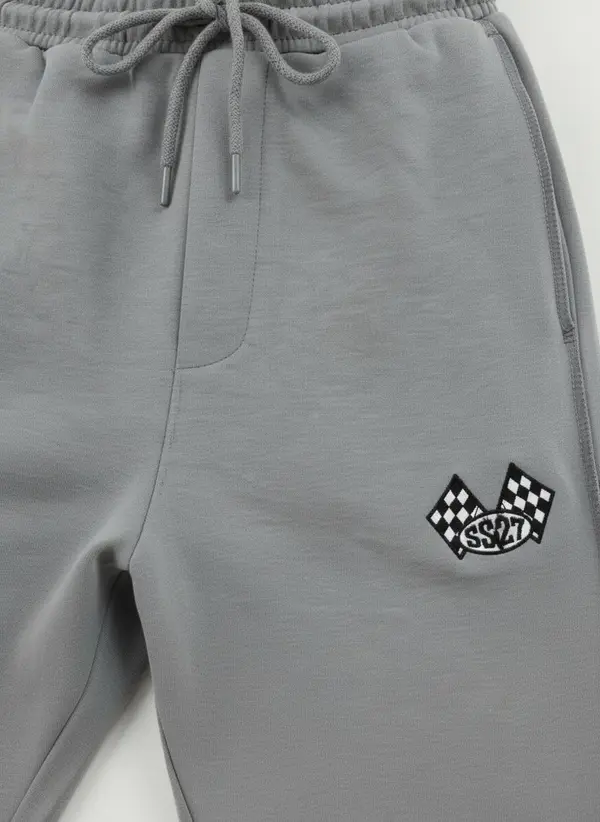
Program three — the sweatpant wall
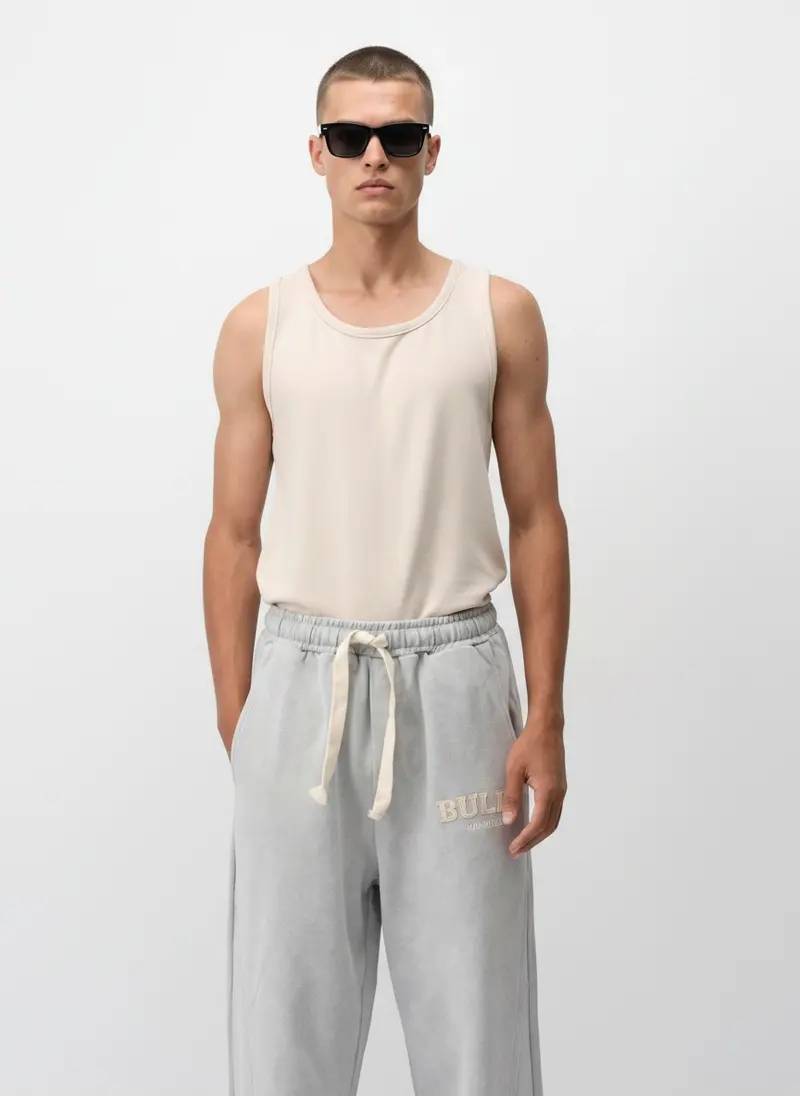
Heather Grey
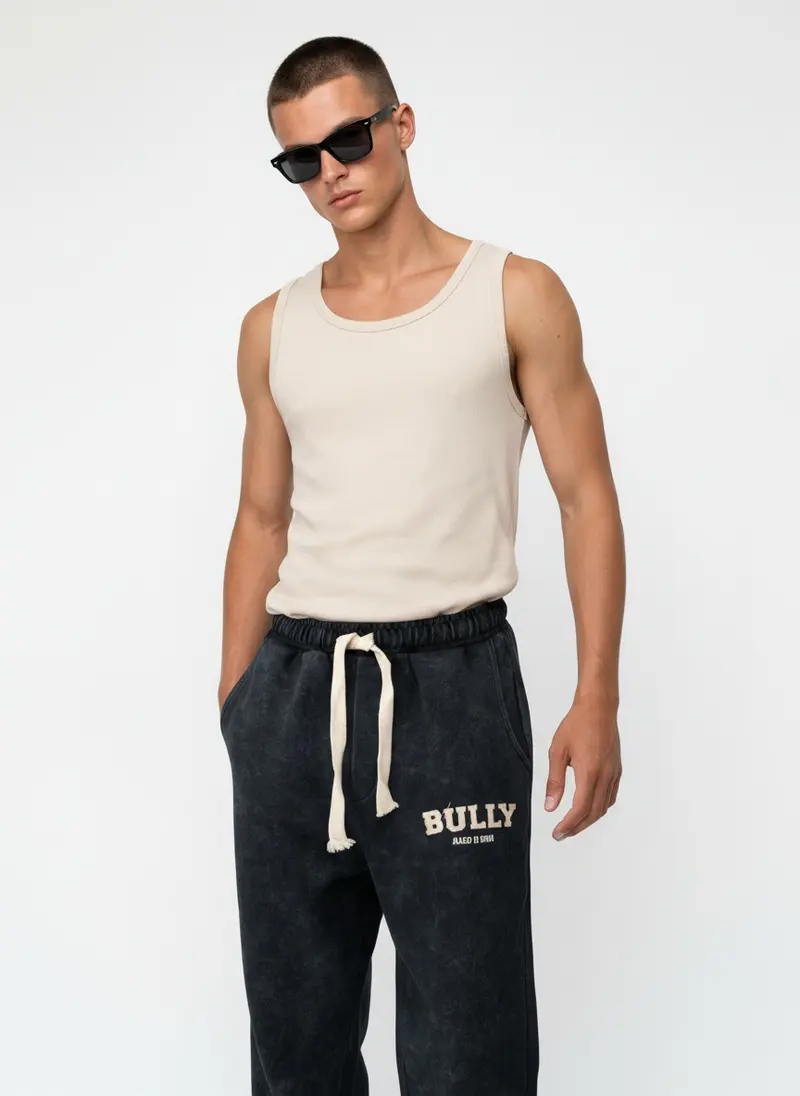
Ink Wash
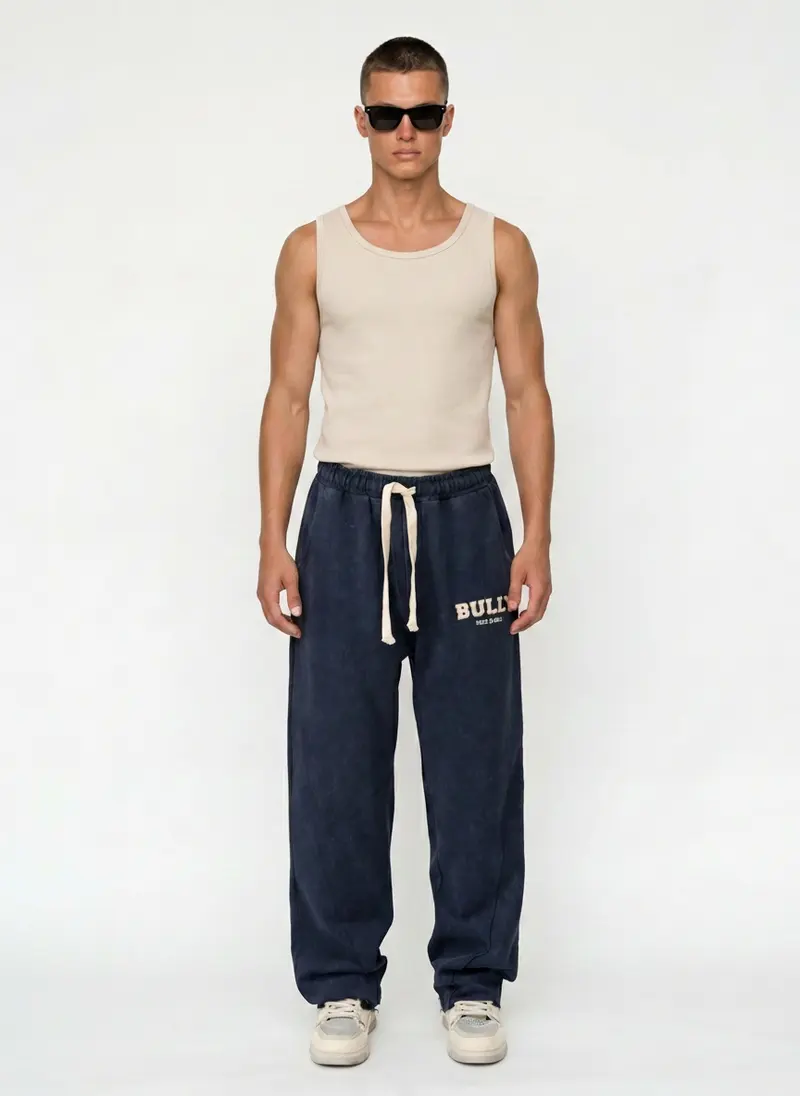
Navy Wash
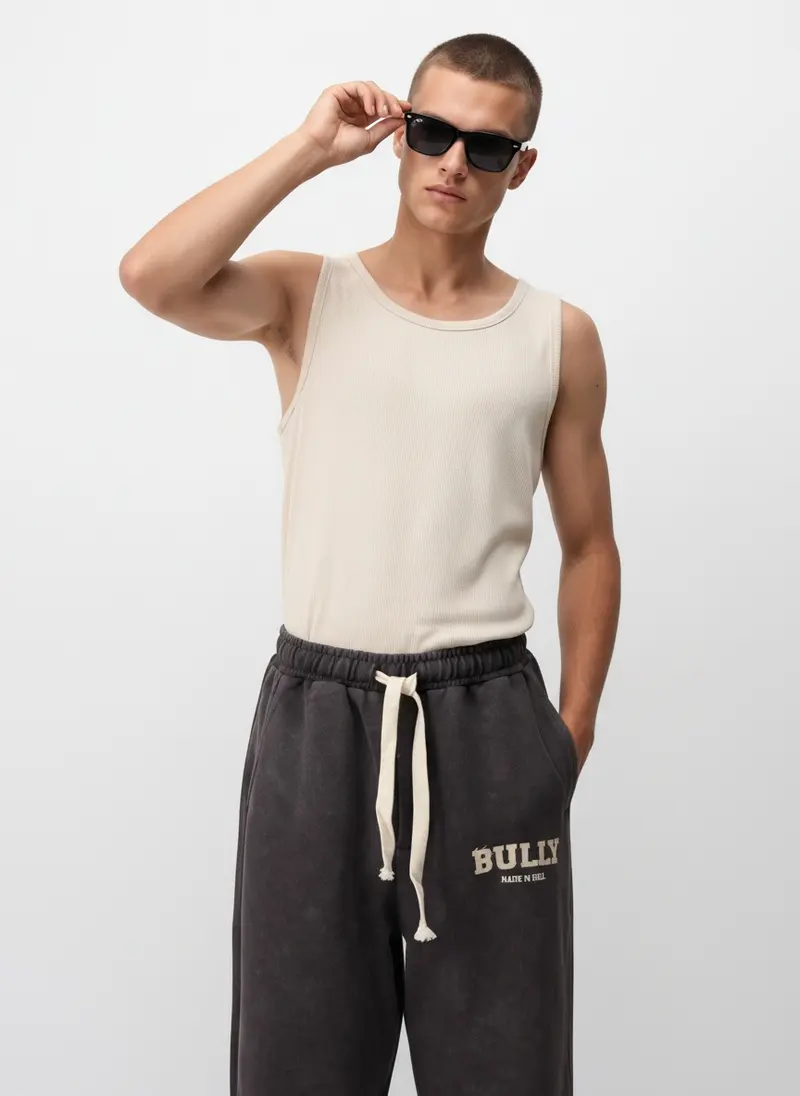
Espresso Wash
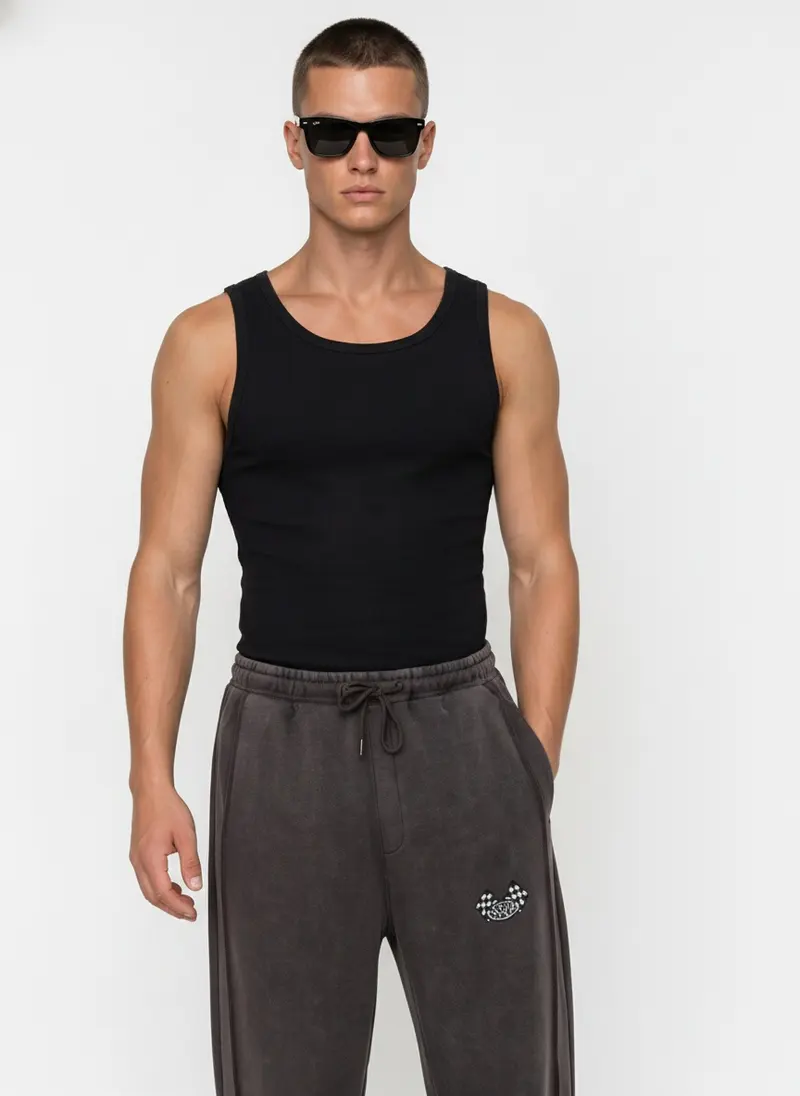
Charcoal
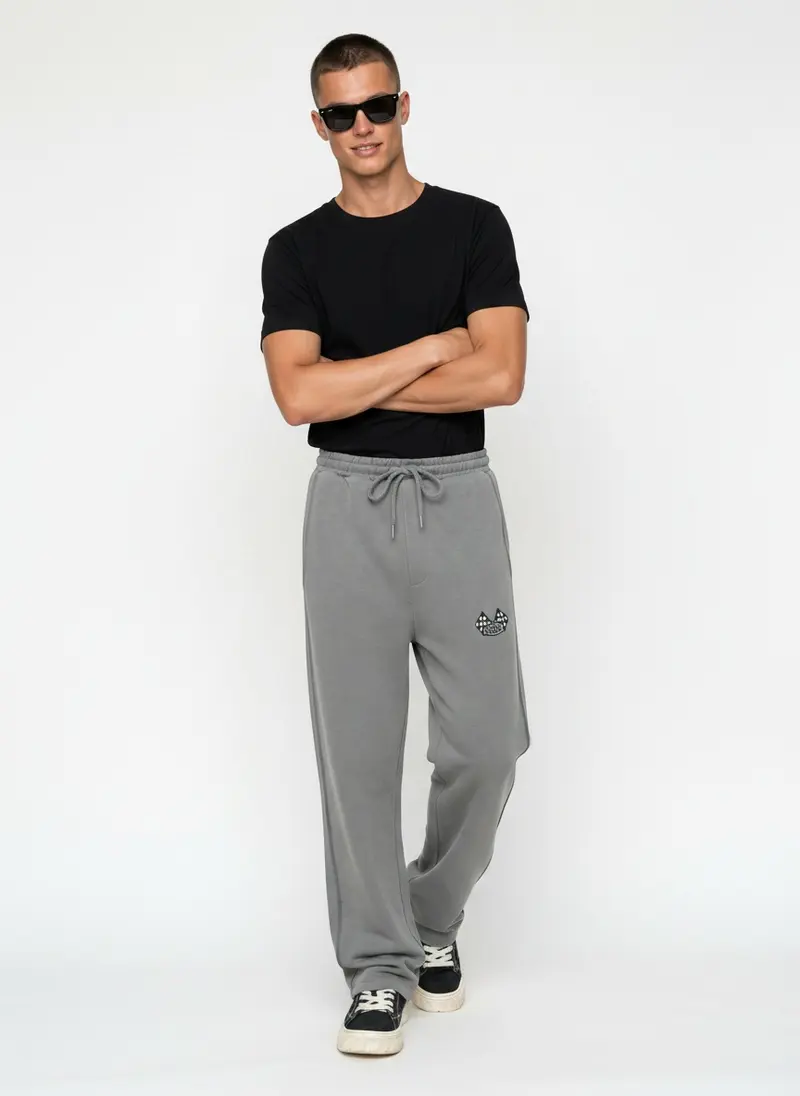
Silver
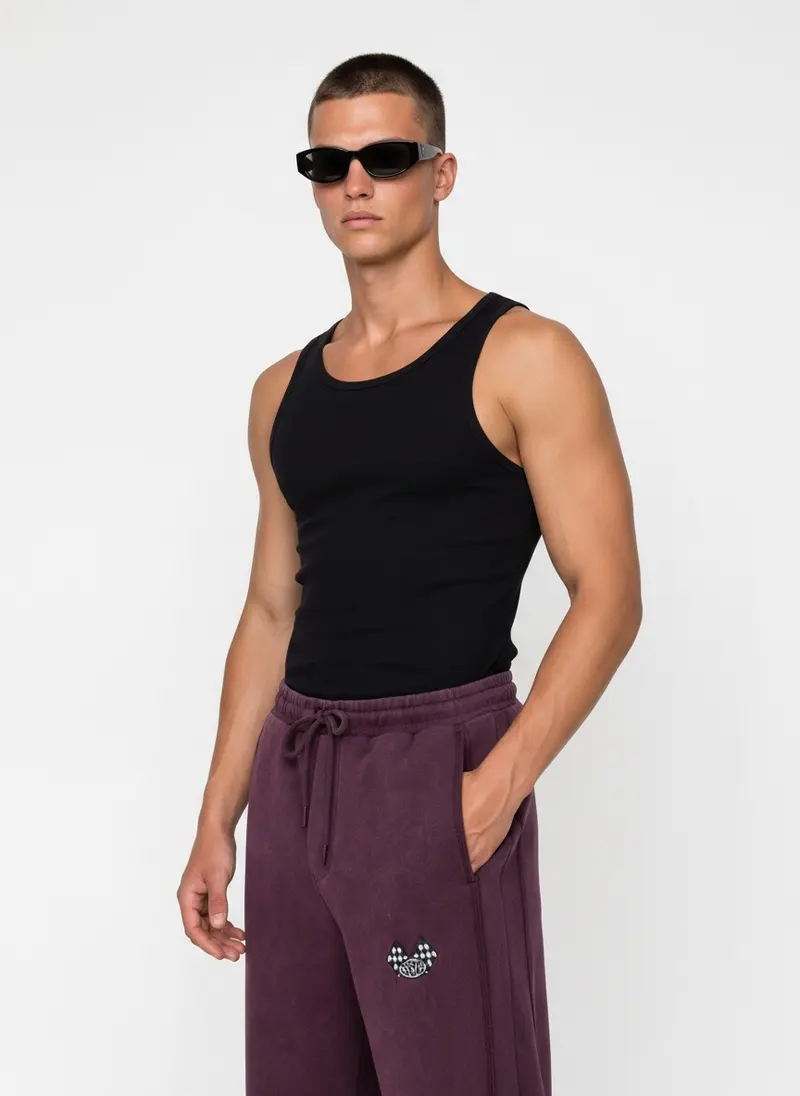
Plum
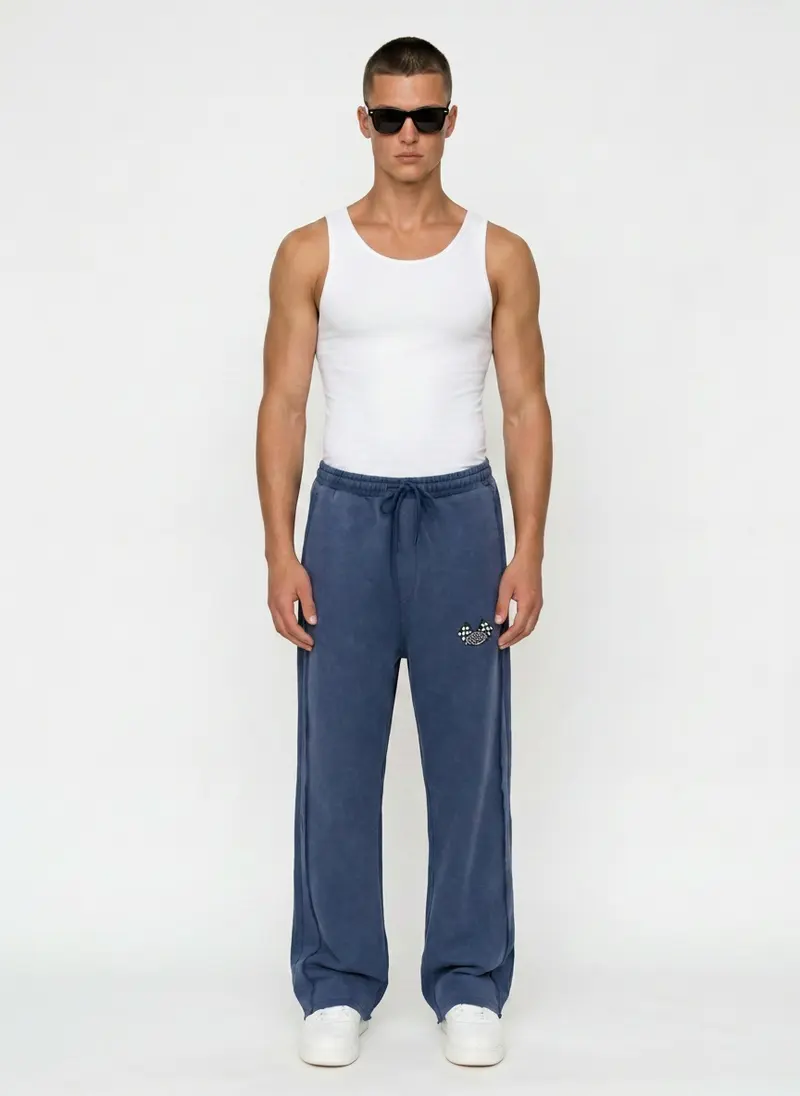
Denim Blue
Wordmark and chequered-flag embroidery, acid washes and flat knits — one silhouette, a whole wall of ways to order it.
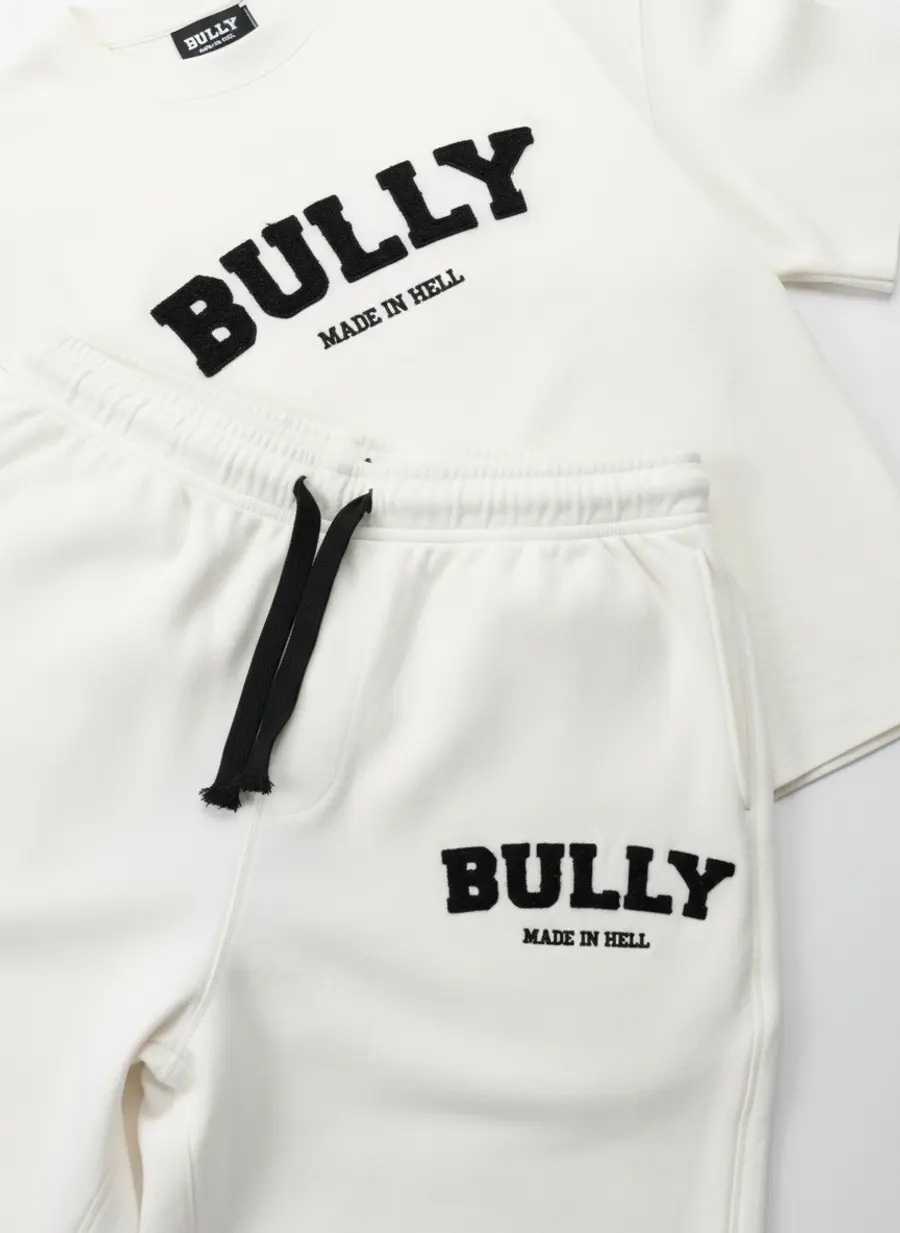
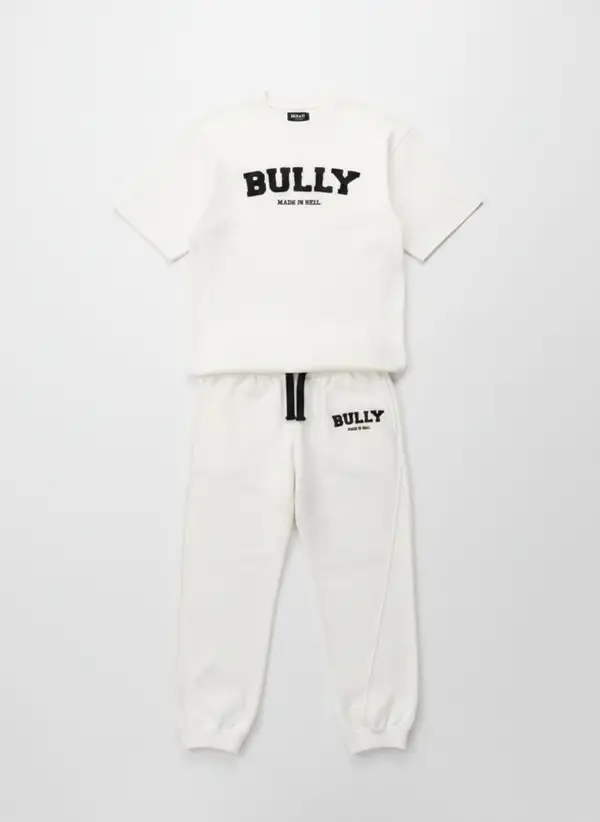
The co-ord — Made In Hell, tee and pant together
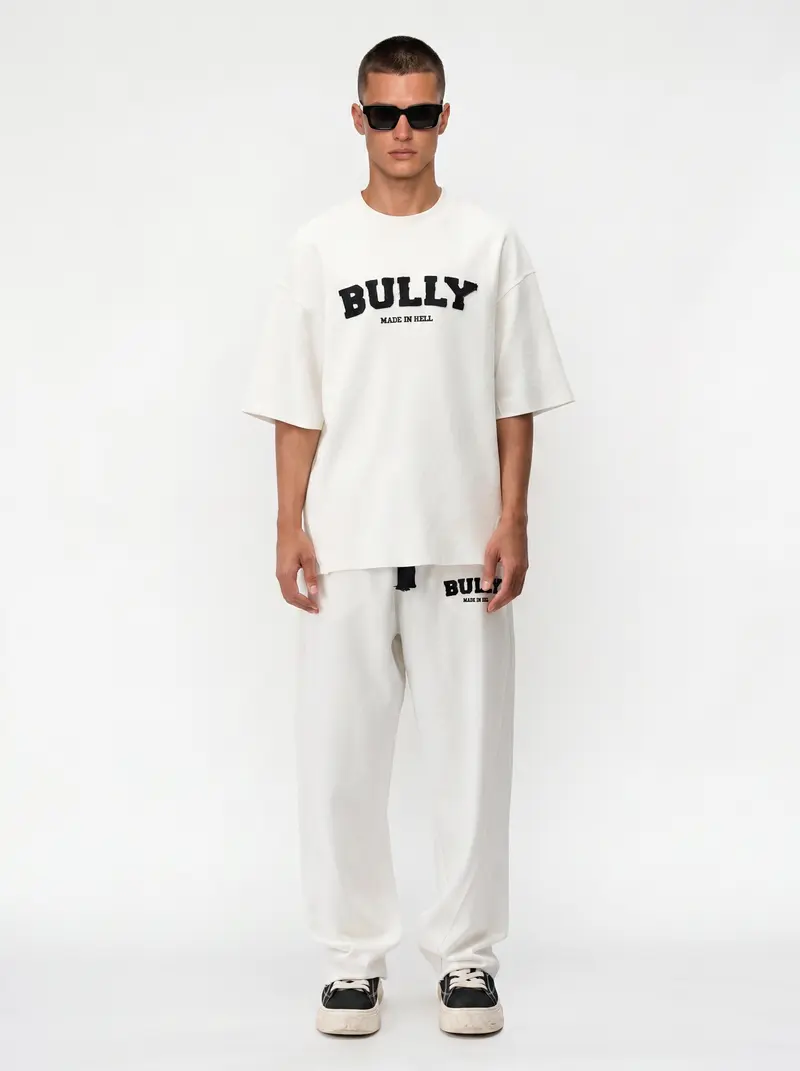
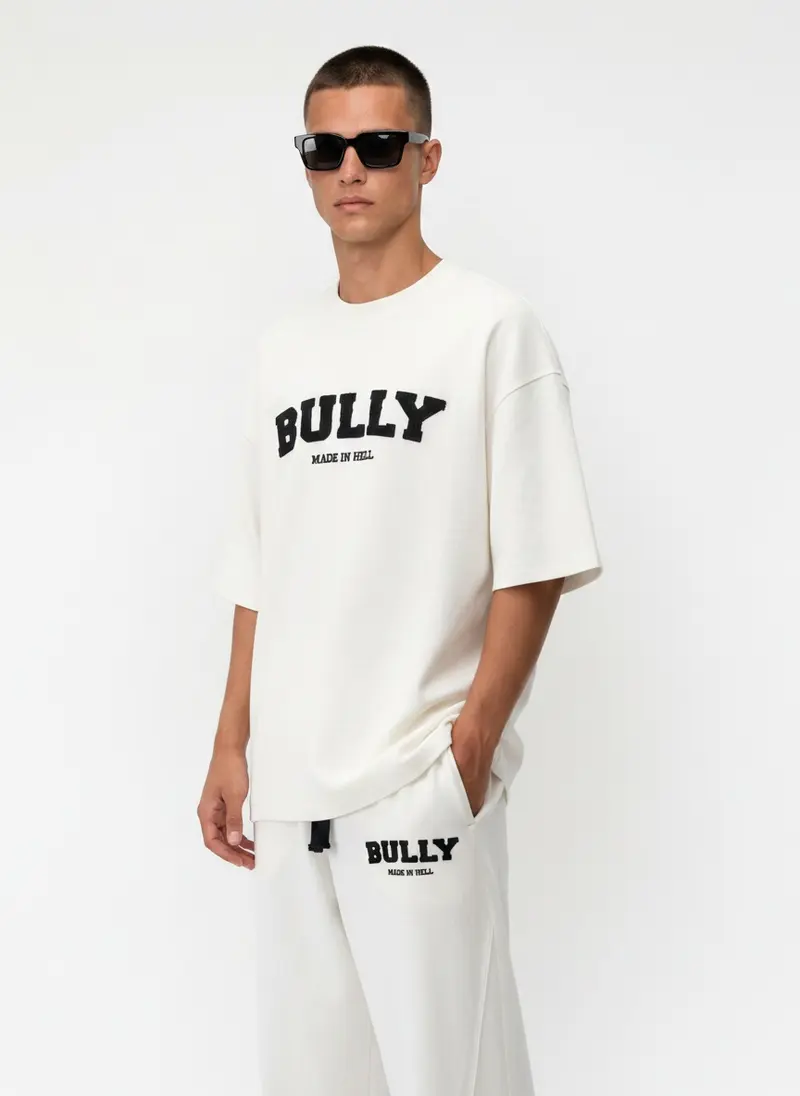
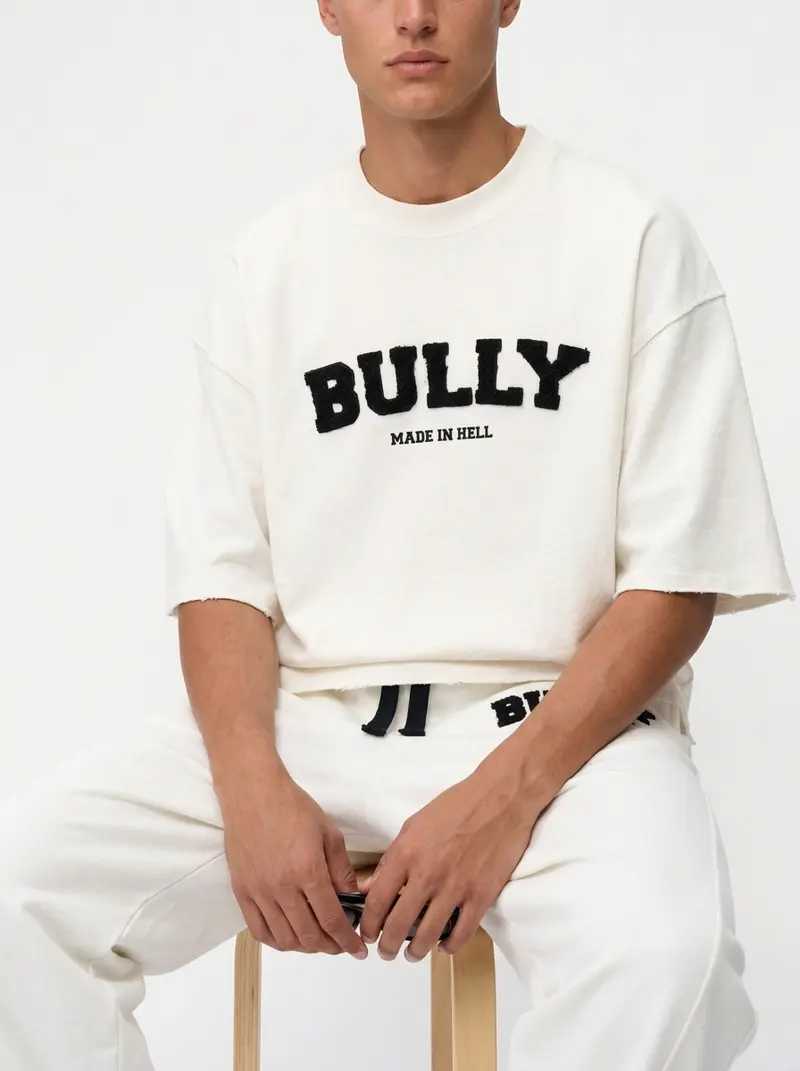
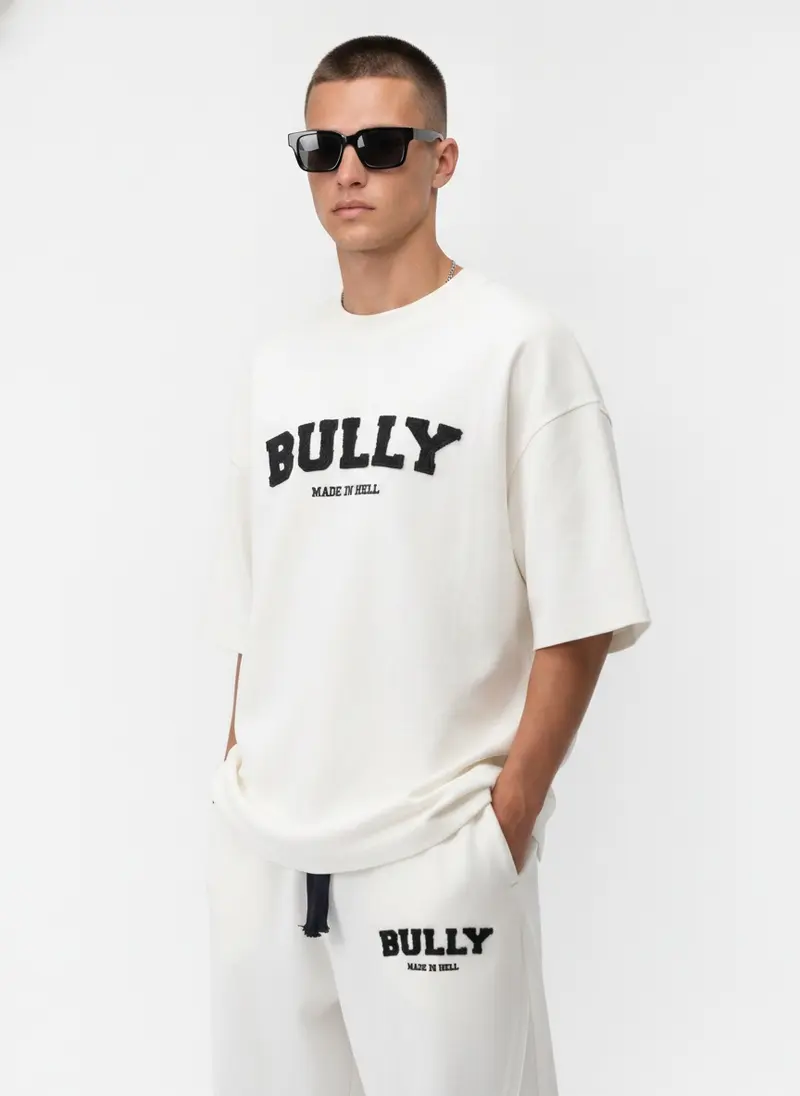
Two SKUs styled as one look — the frame that turns a tee order into a set order.
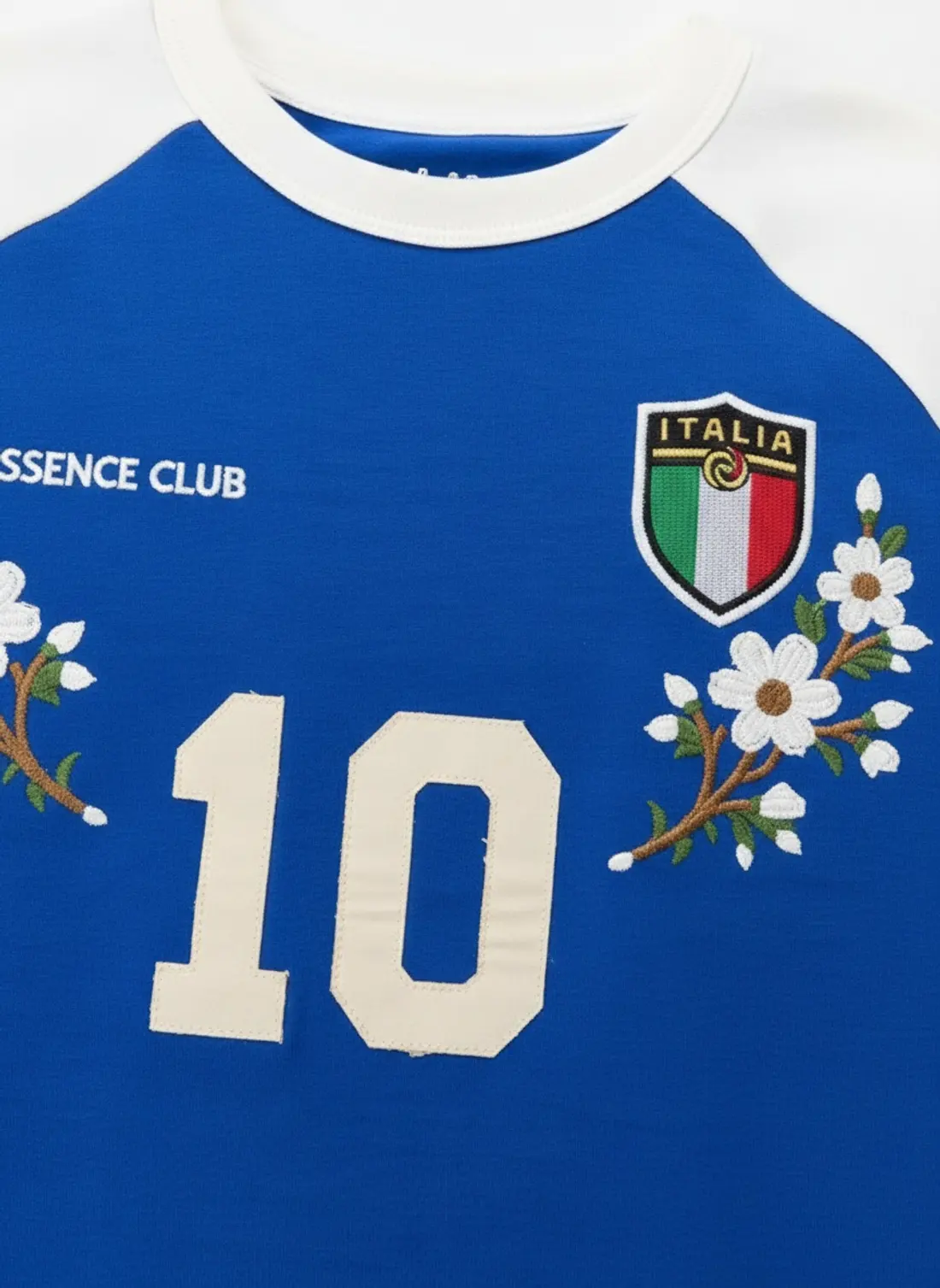
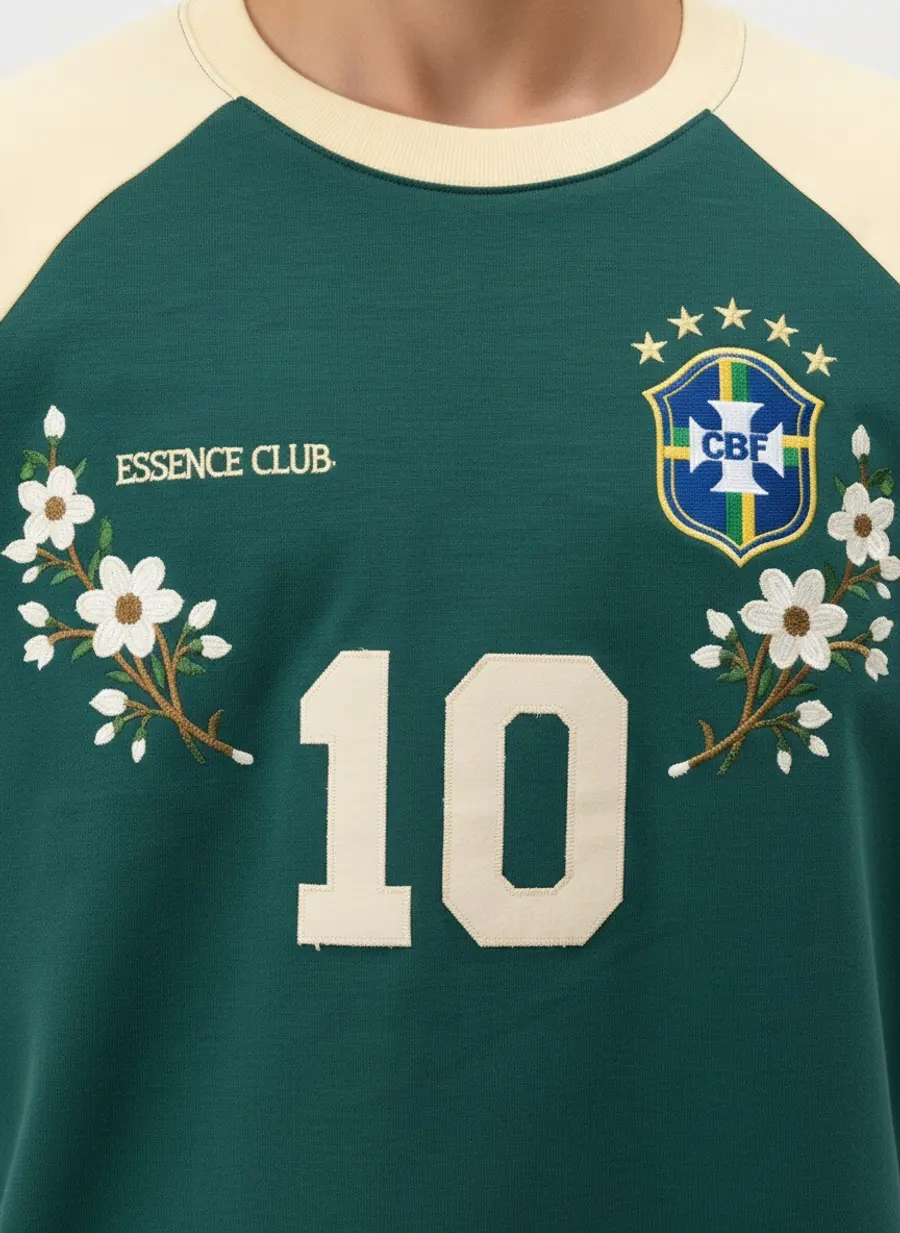
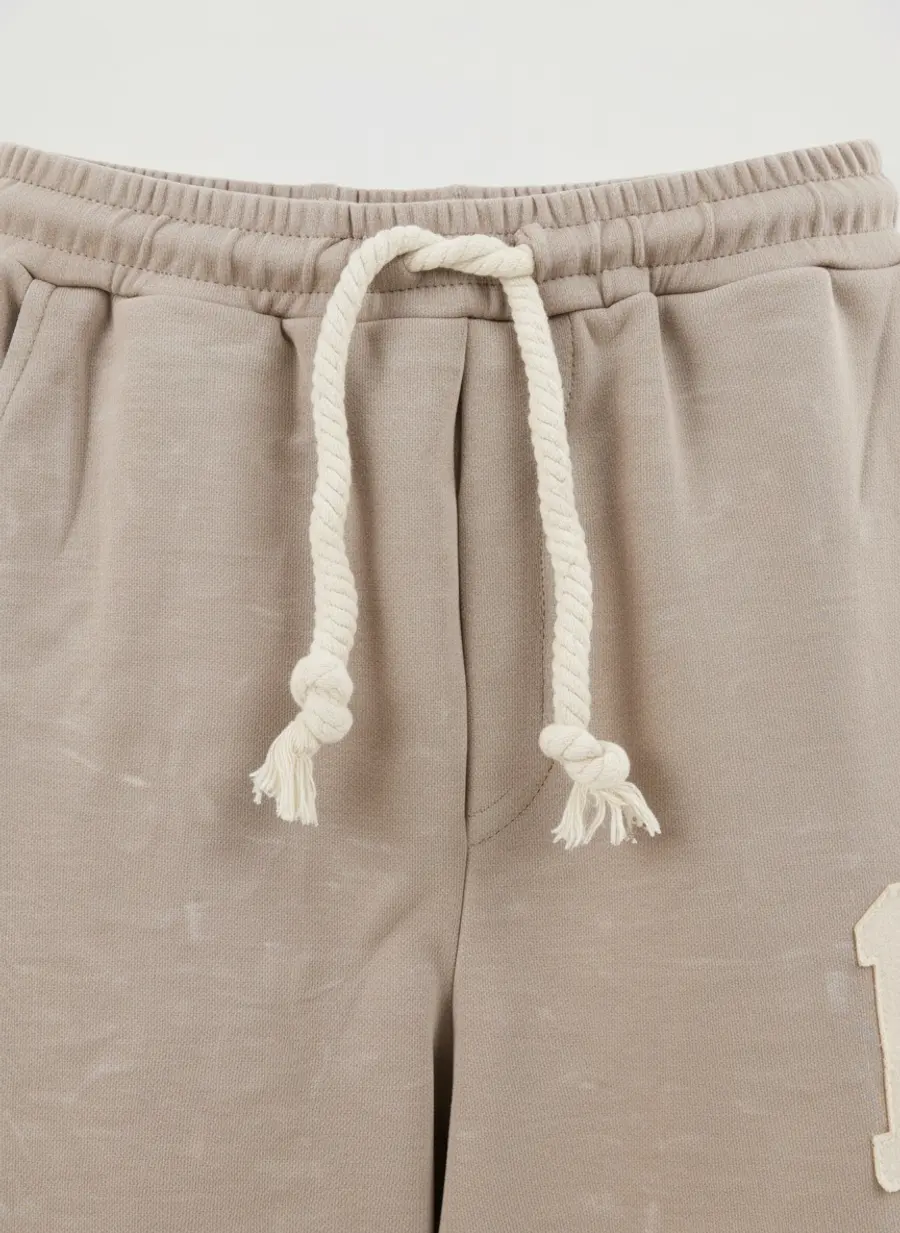
The crest is the product
On a plain tee, a generated image that fudges the graphic is annoying. On this range it is fatal. The whole reason a buyer picks the raglan is the embroidered crest, the chenille number, the little floral spray running under the wordmark. If those turn to mush, the tee is just a tee.
So the print macro sits in every set, and it earns its place: appliqué edges stay defined, the crest stays the crest, and the wordmark under the star keeps its script legible at the size a buyer zooms to. Our logo reproduction guide covers how to test this before you trust any tool with branded stock.
Print and trim detail — the macro frame
What it looks like in the line sheet
The catalog is not the deliverable — the order is. Below is a mock of how the run drops into a wholesale sheet: three programs, a lead image and three supporting angles per colorway, all in the same light. MODA AI makes the imagery; the sheet itself still gets built in your own tool, and the numbers are still yours. Our guide to line-sheet photography goes deeper on how brands assemble it.
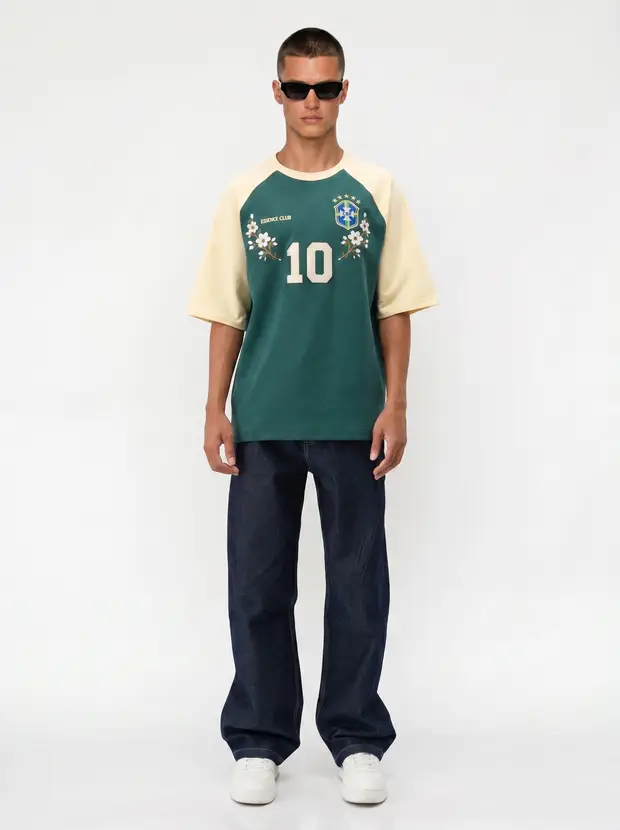
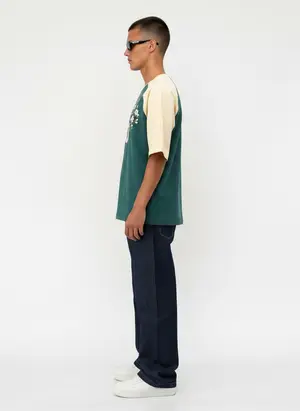
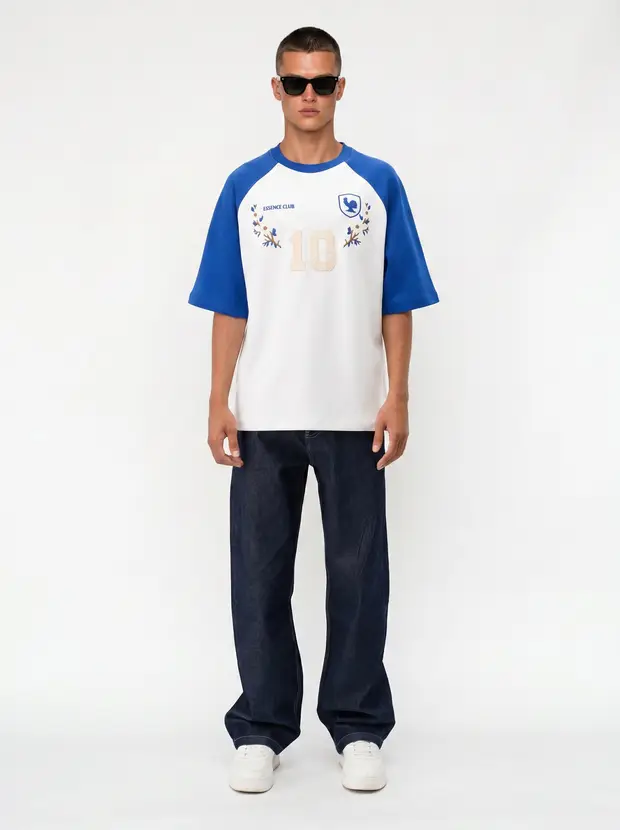
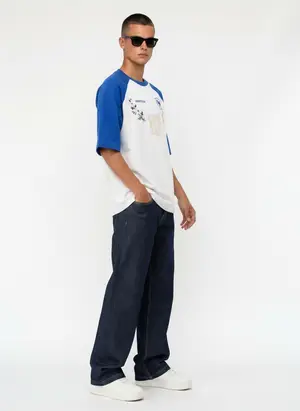
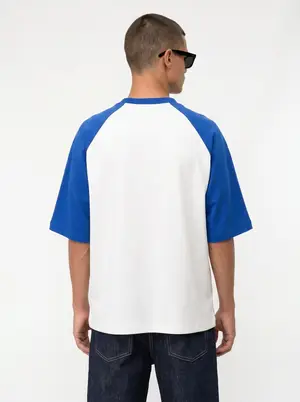
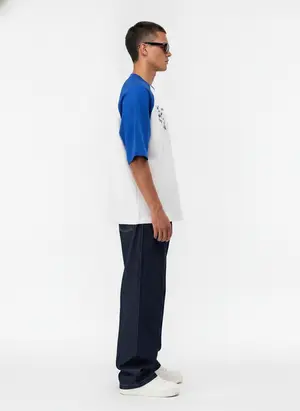
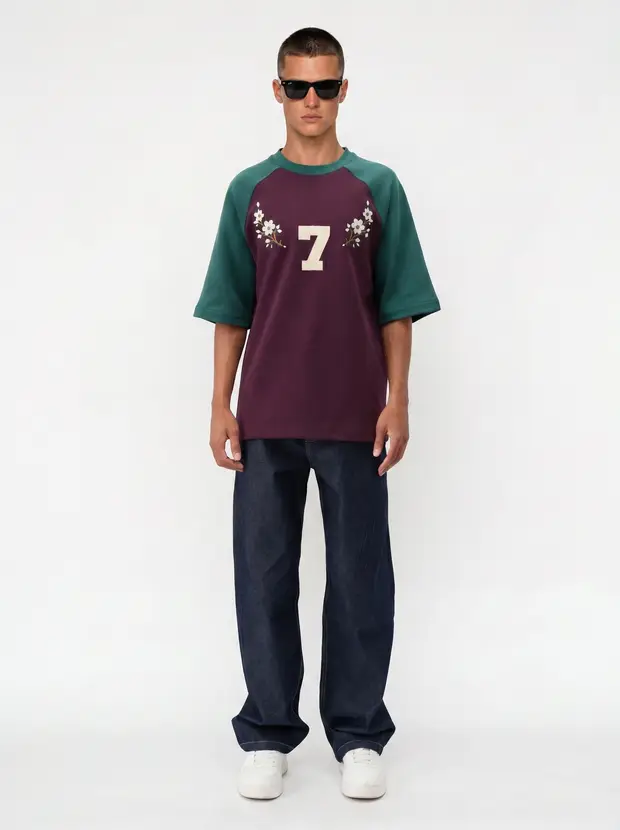
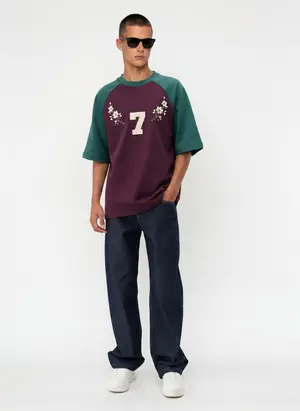
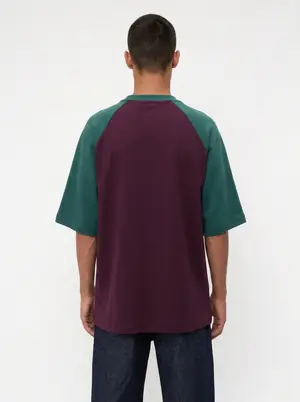
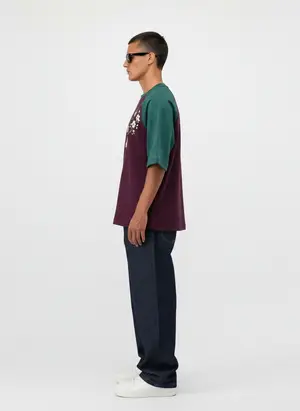
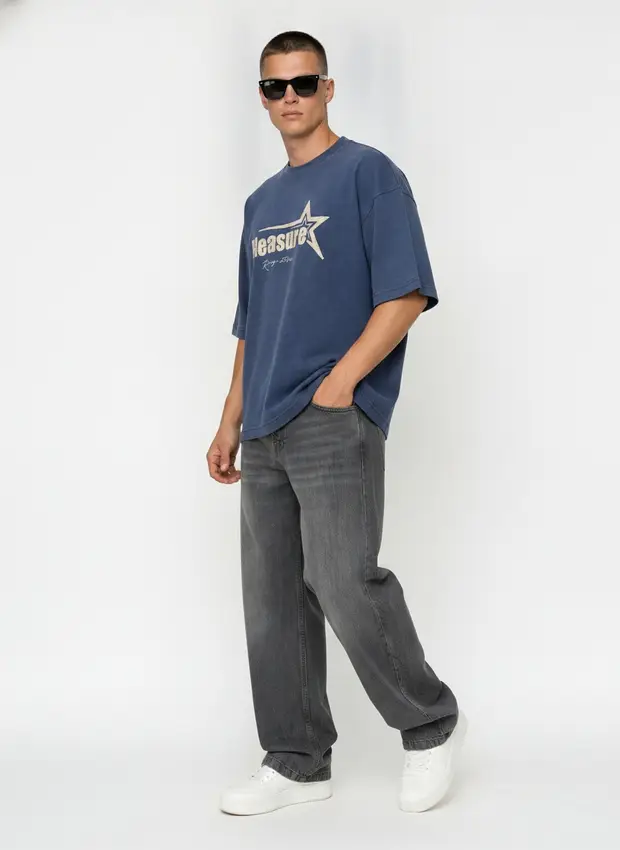
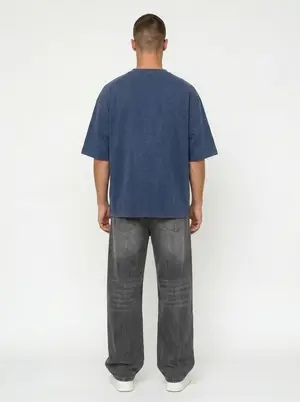
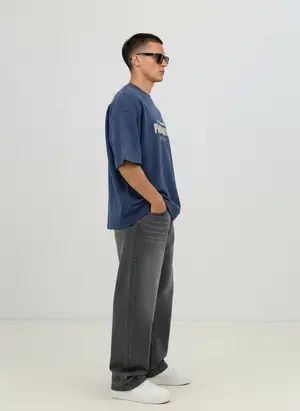
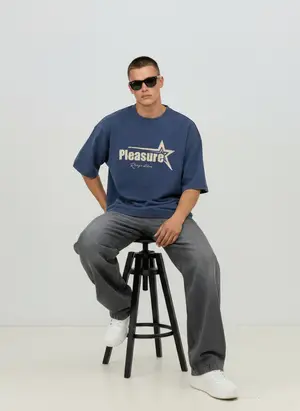
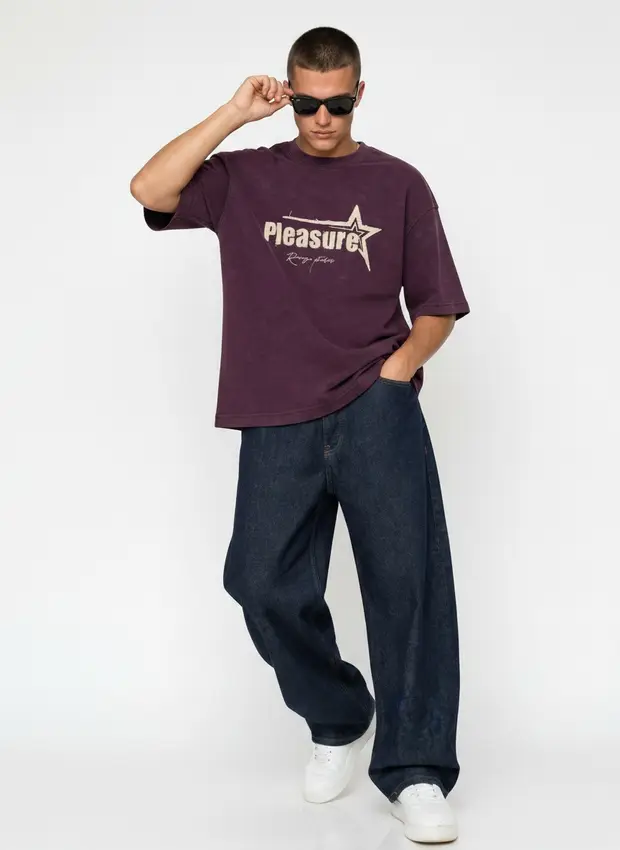
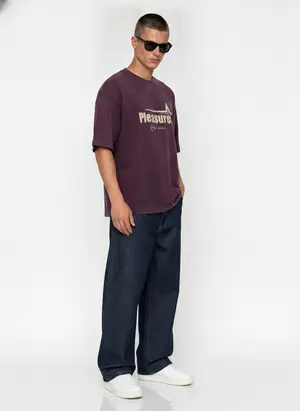
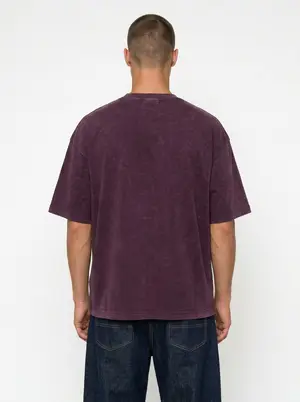
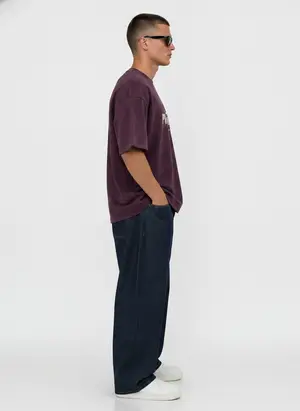
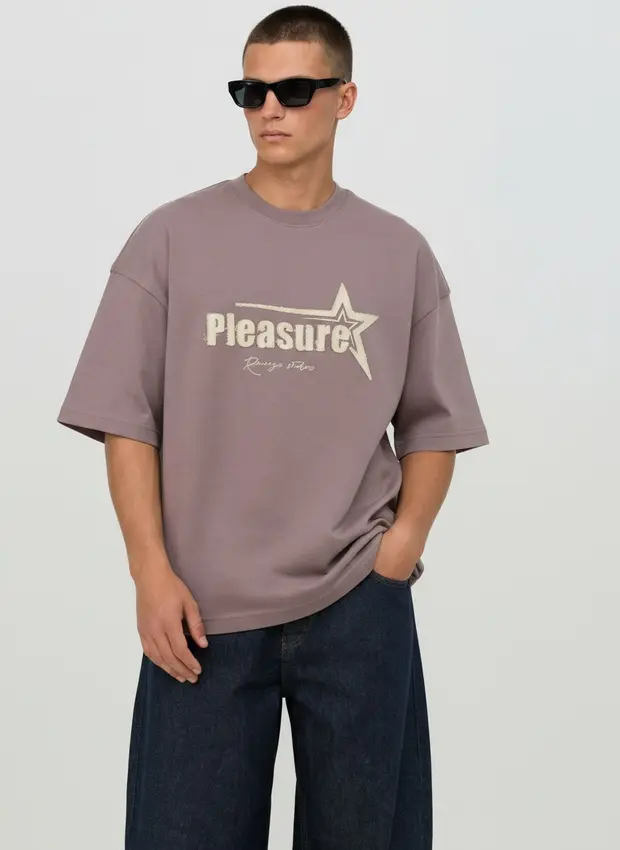
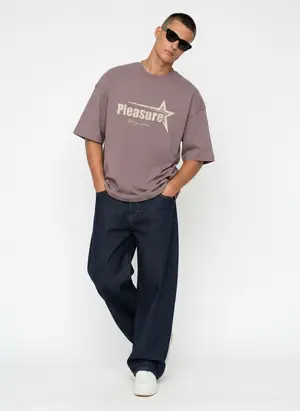
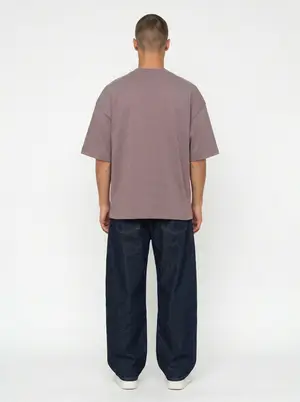
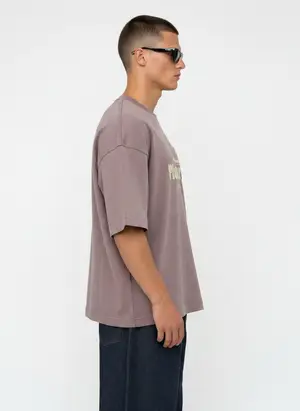
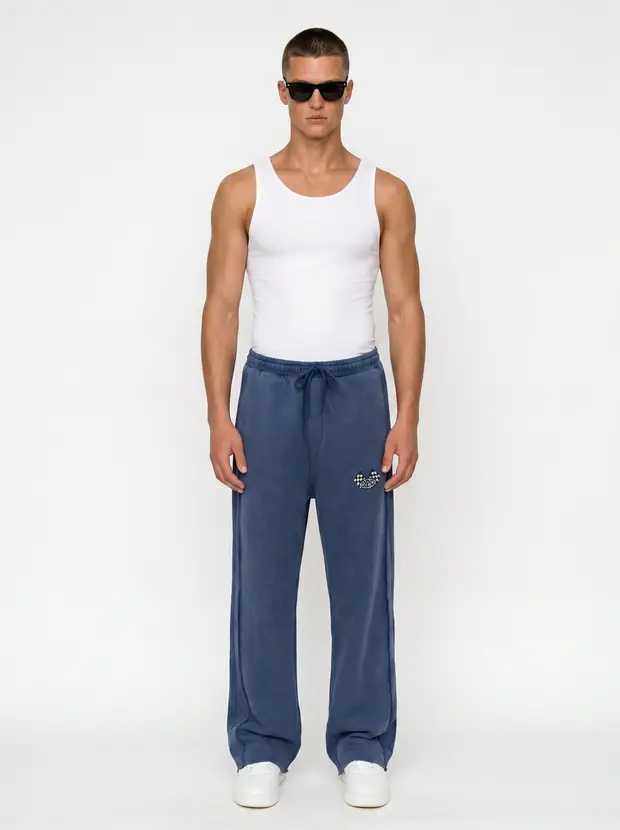
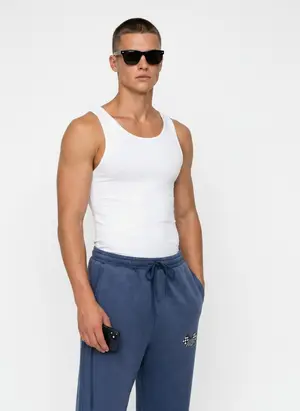
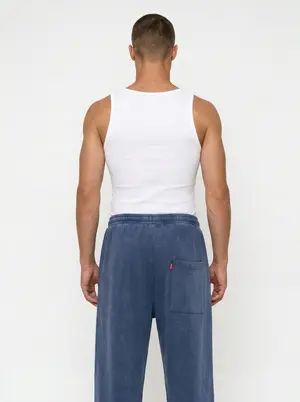
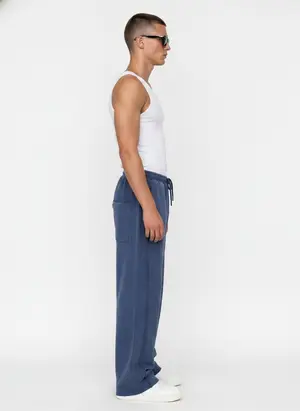
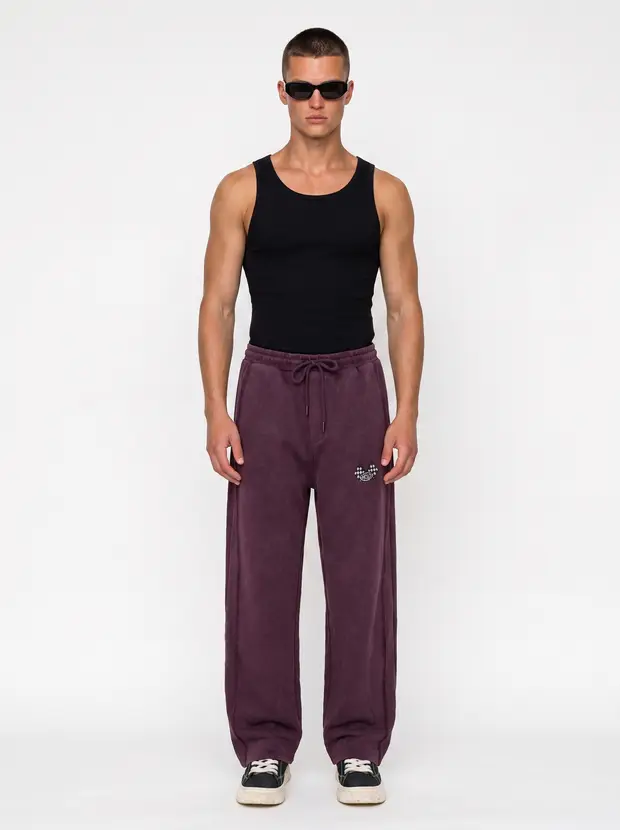
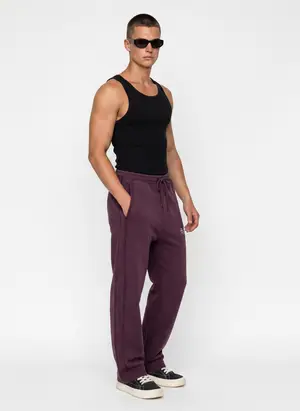
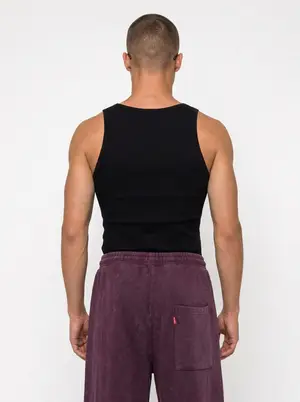
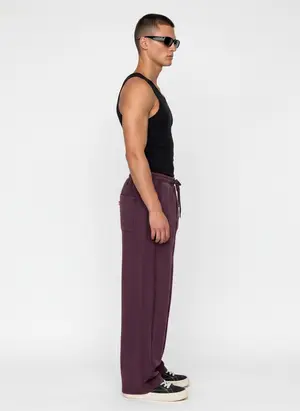
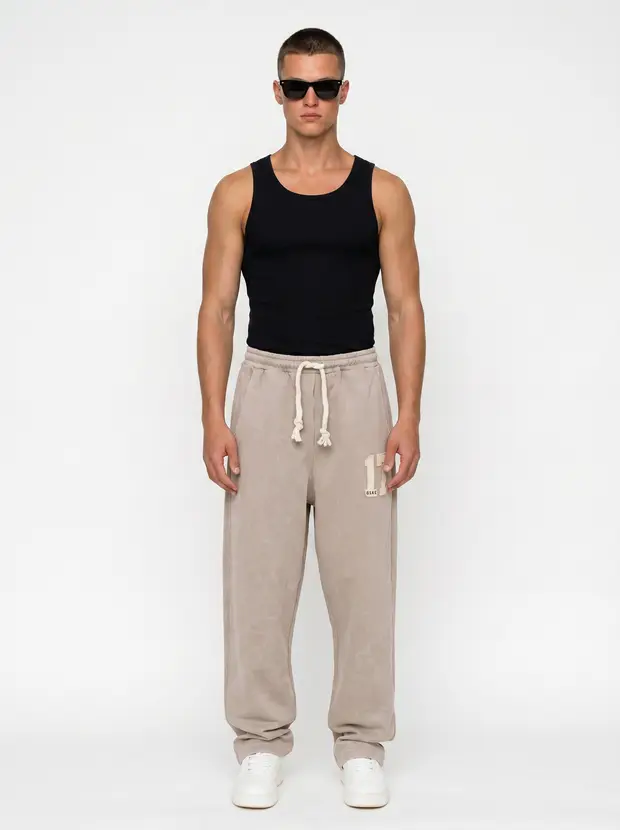
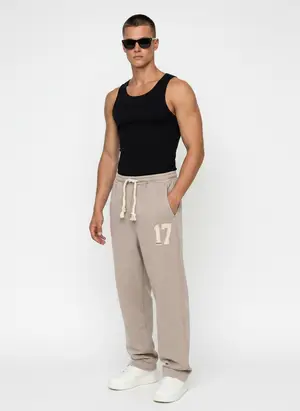
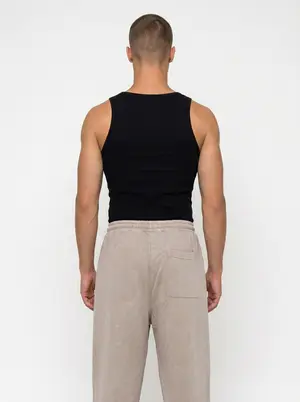
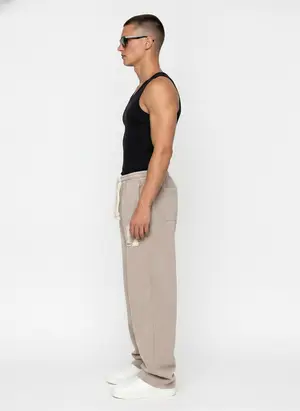
Illustration only. MODA AI supplies the on-model images and flats; the greyed fields — style code, wholesale, MOQ — are the data you add in your own line-sheet tool.
Inside the shoot — the gallery wall
Every program, every colorway, every angle MODA AI returned for Bully — walking, seated, back, product flat, print macro — all on one model in one bright room.
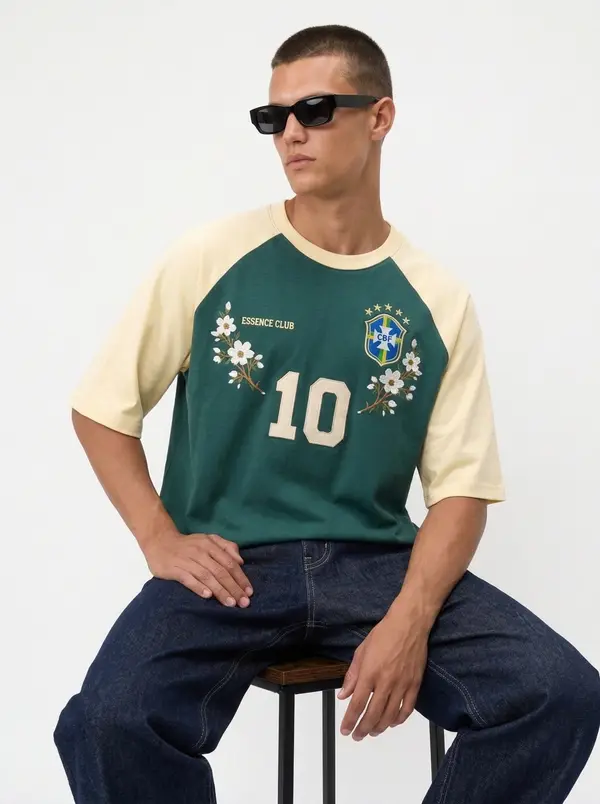
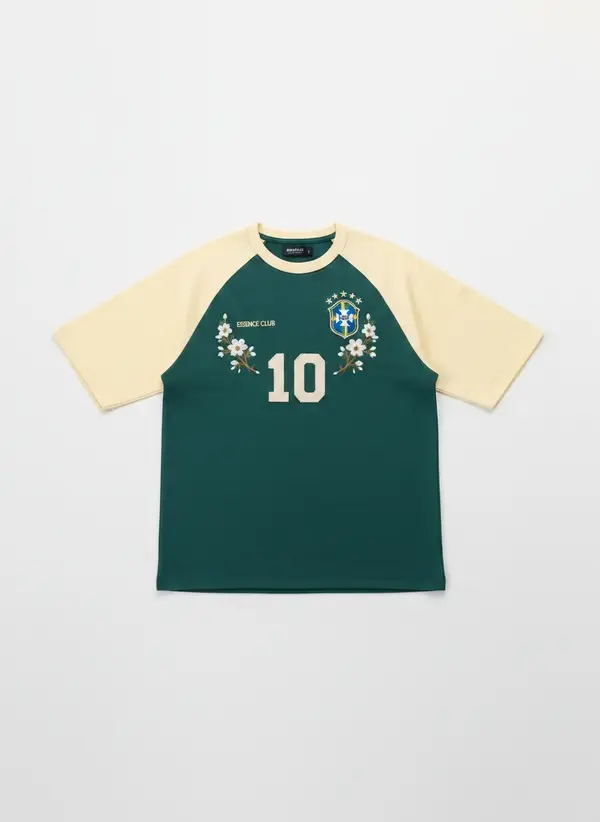
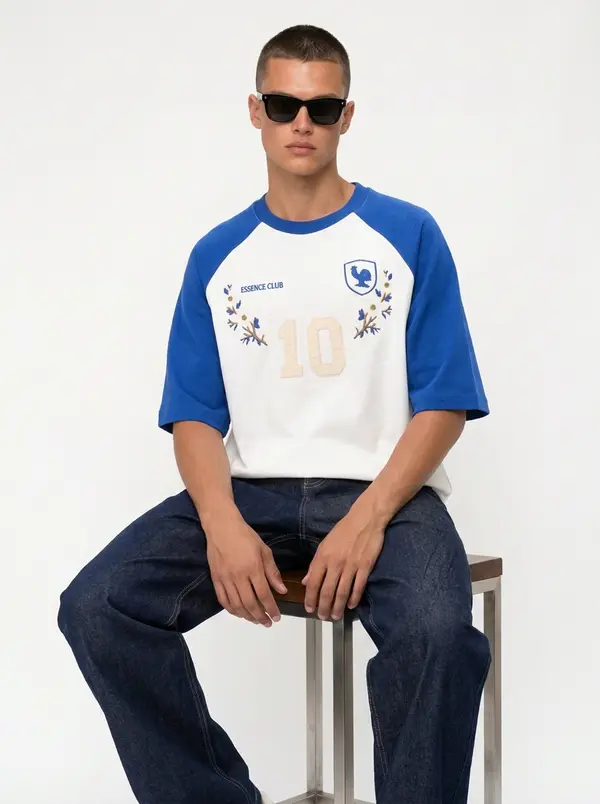
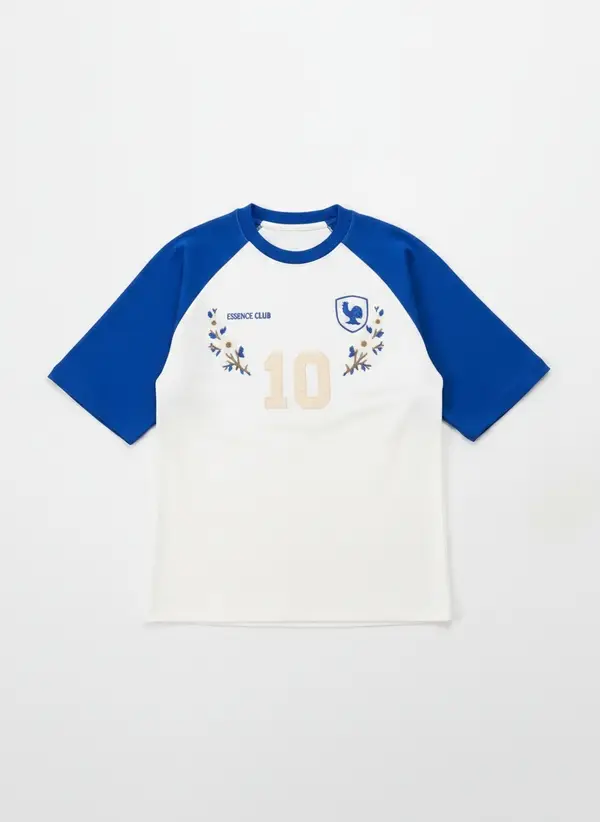
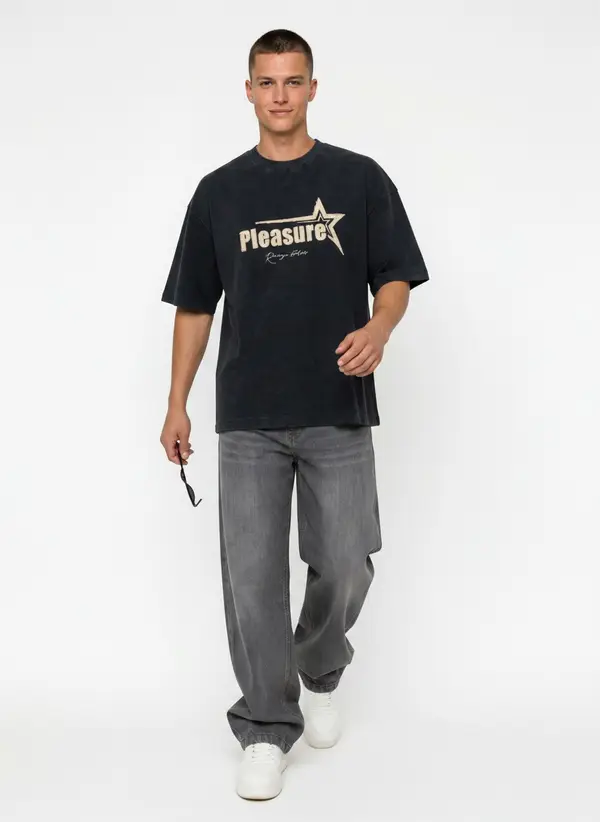
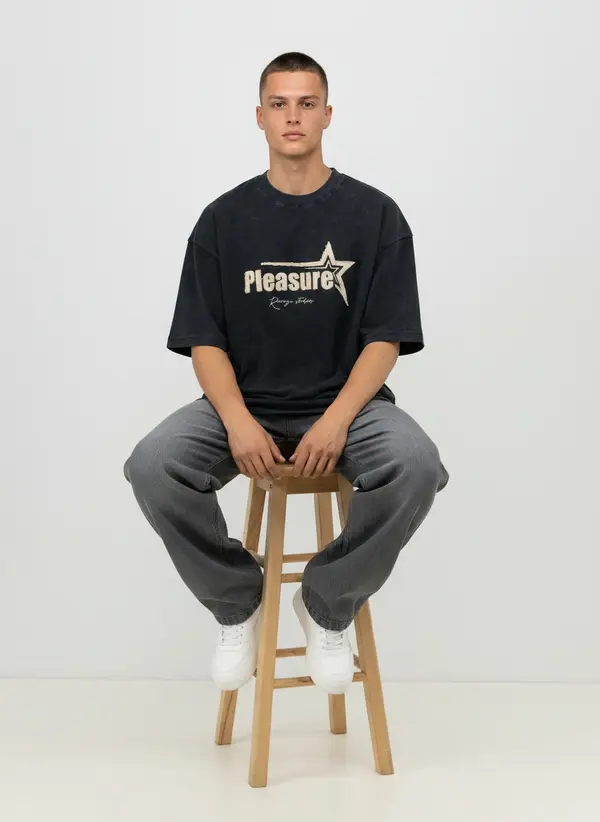
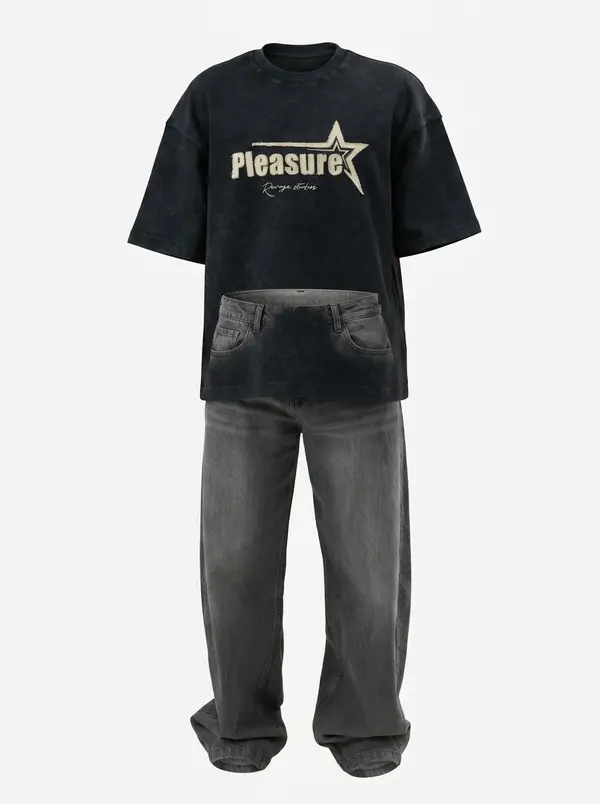
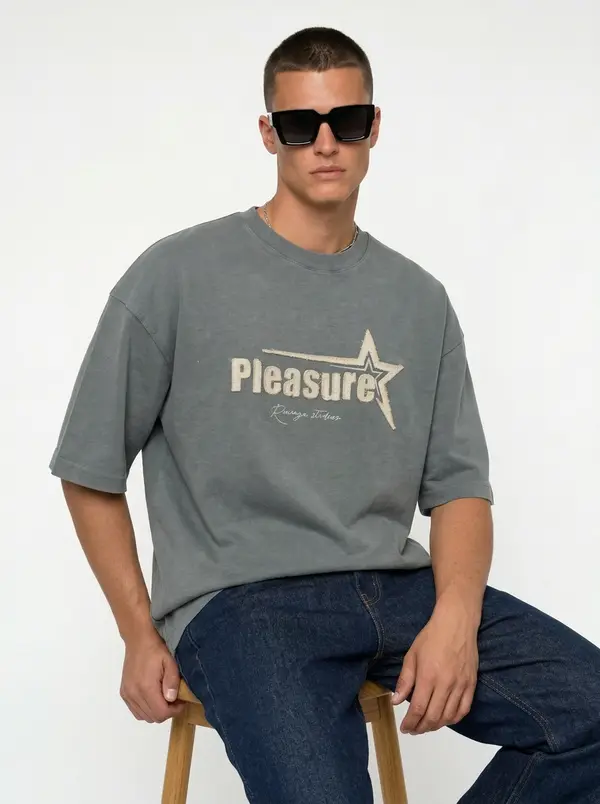
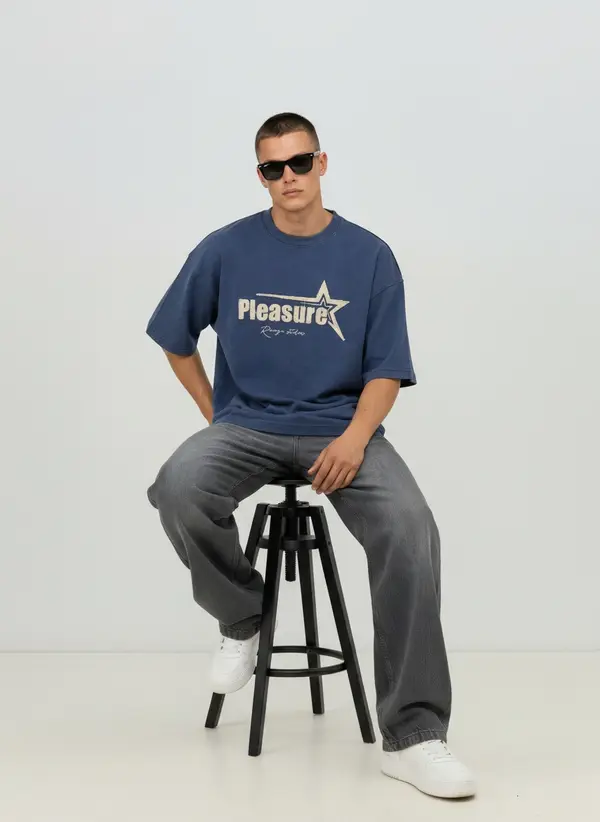
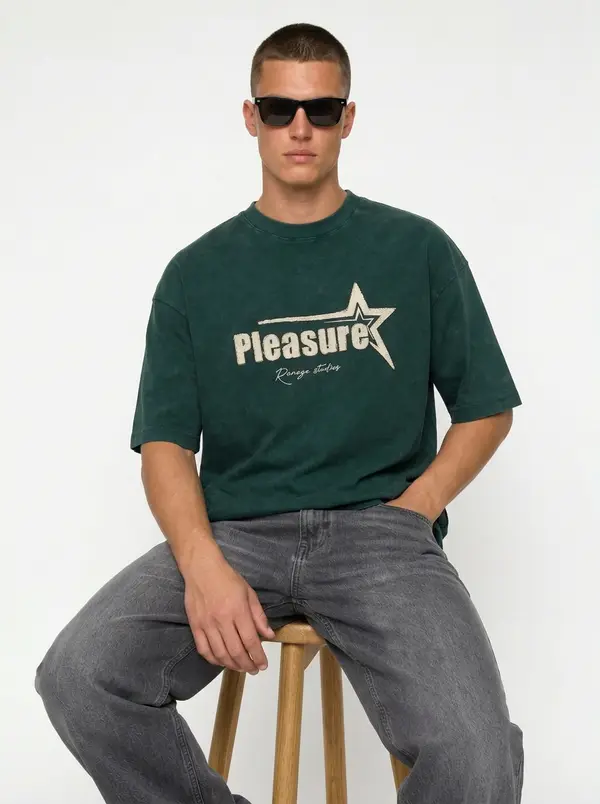
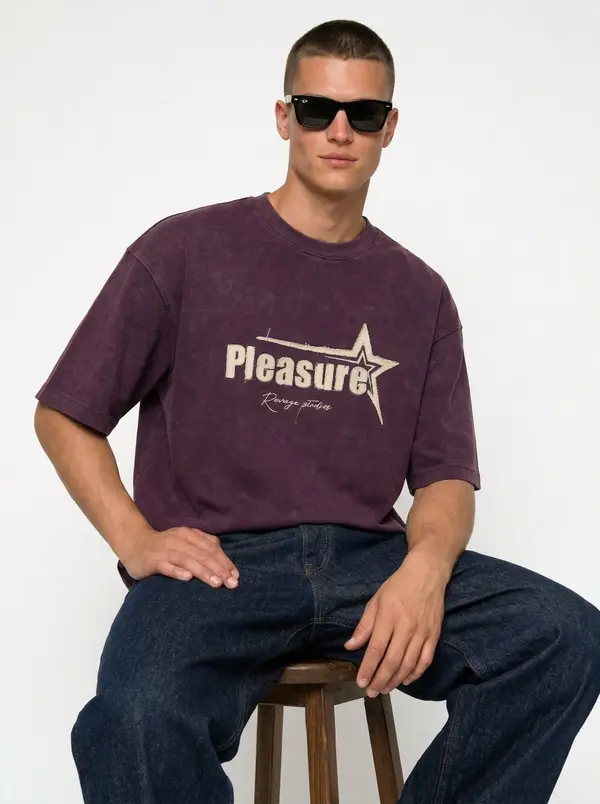
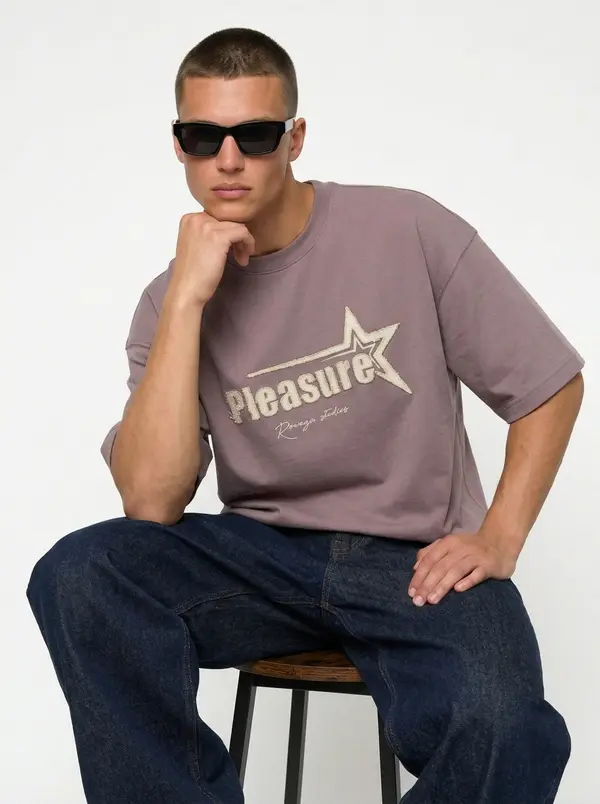
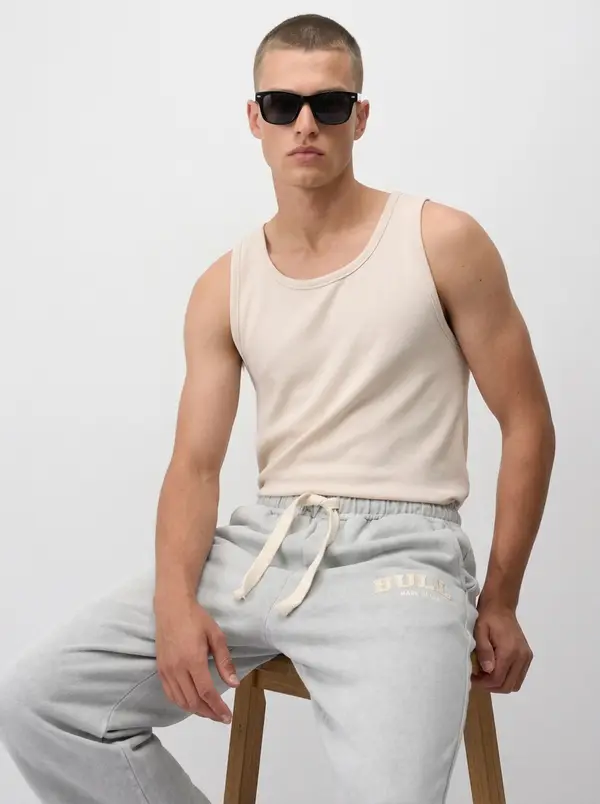
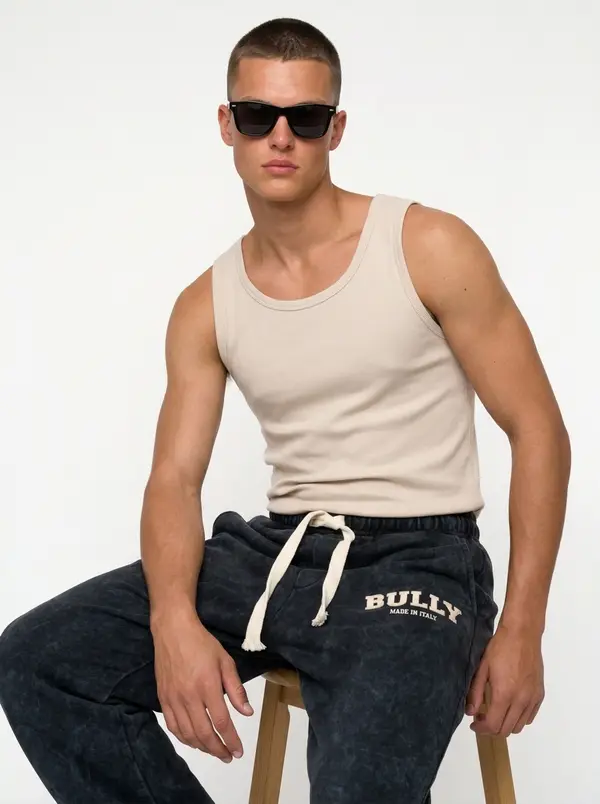
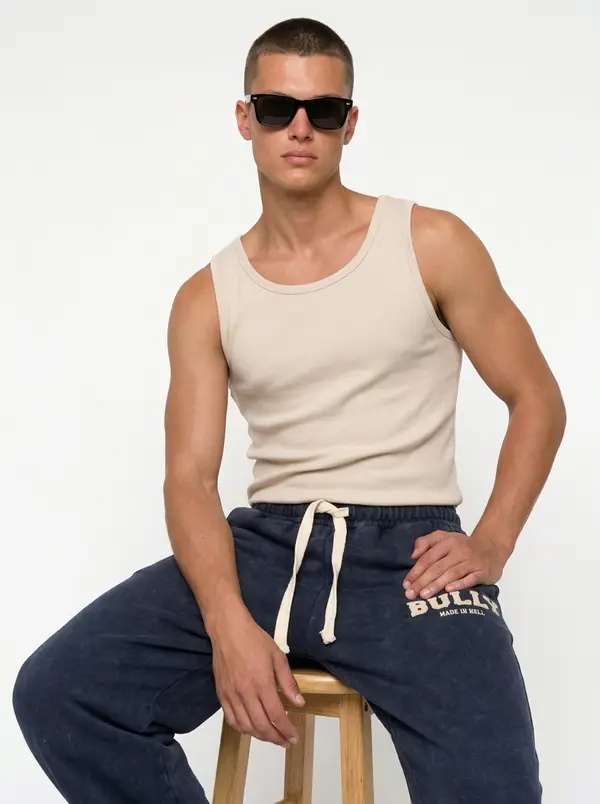
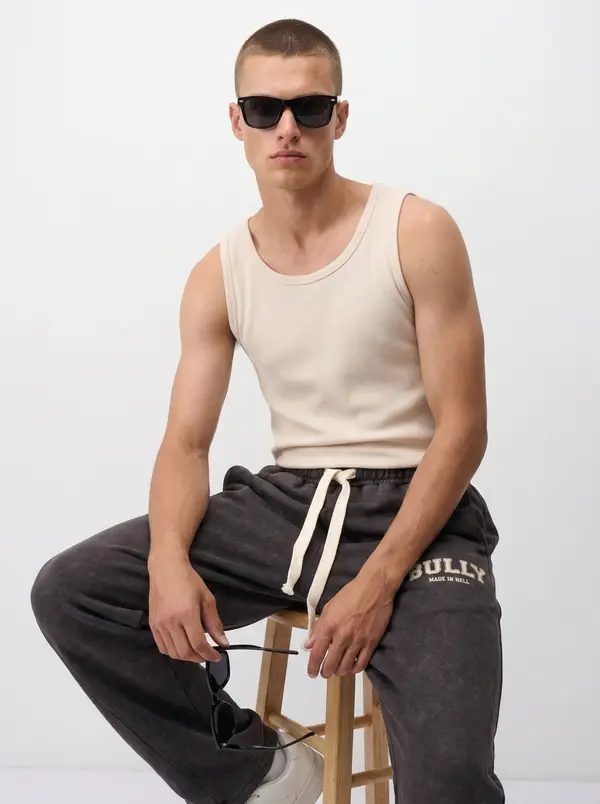
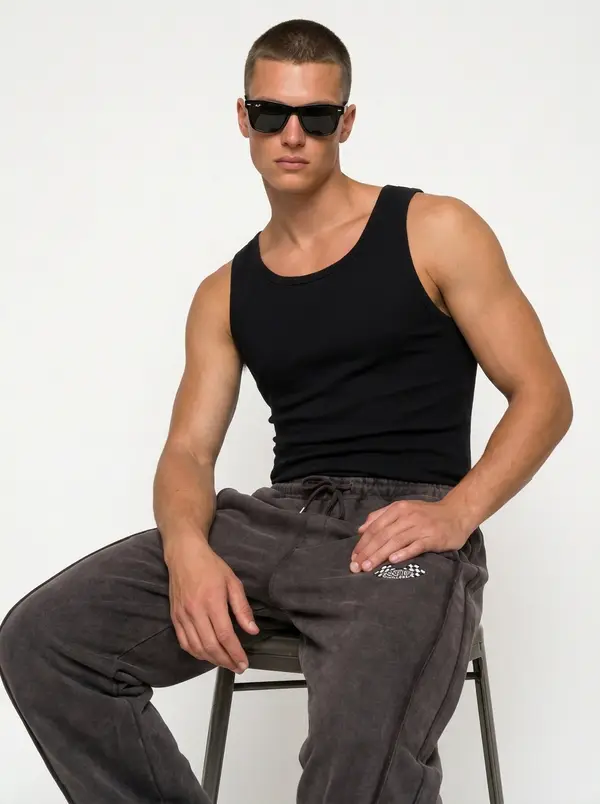
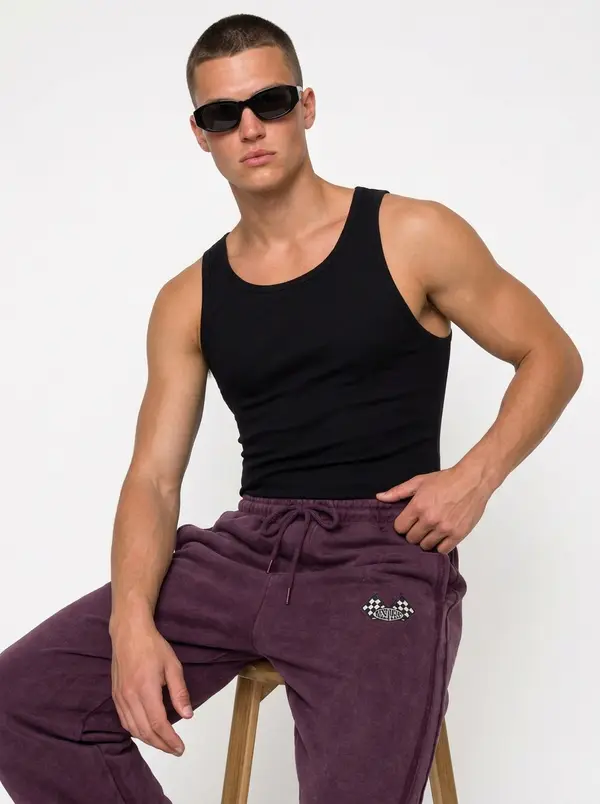
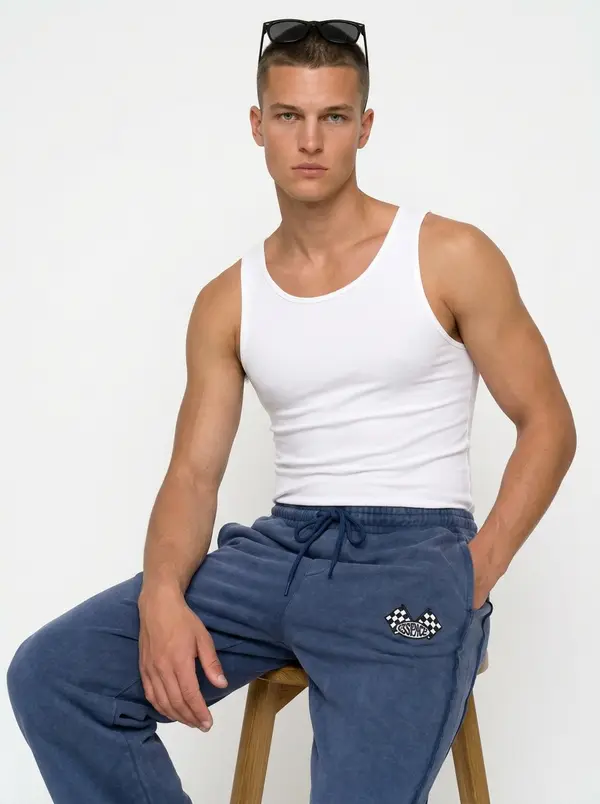
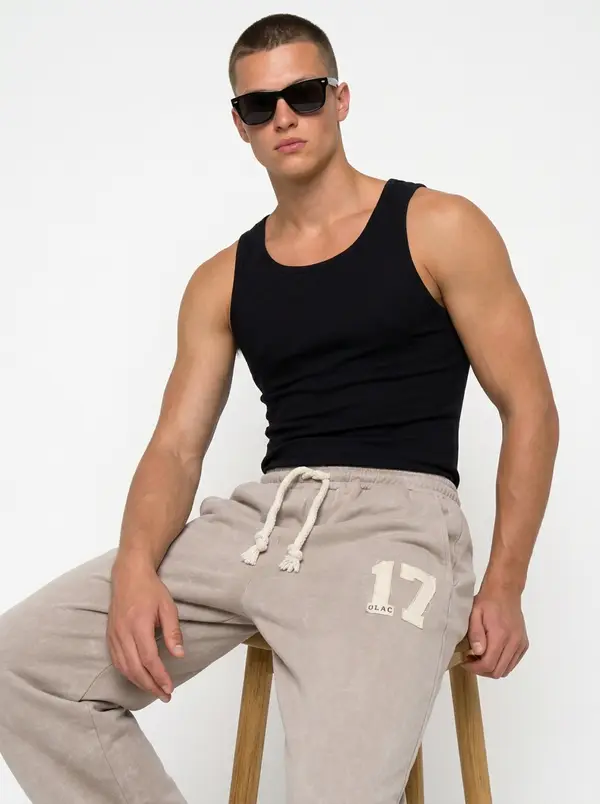
Twenty-two styles. Two hundred frames. One season that reads as a season.
That is what a buyer is actually paying attention to.
Türkiye’deki toptancılar için
Bütün koleksiyon, tek bir çekim gibi
Toptan satışta en büyük görsel sorun tutarlılık. Alıcı kataloğu doksan saniyede tarar; her üründe farklı ışık, farklı model ve farklı arka plan gördüğünde karşısında bir marka değil, dağınık bir depo olduğuna karar verir.
MODA AI’da tek bir yüz referansı ve tek bir arka plan referansı belirlersiniz, sonra bütün ürün gamını aynı referanslardan geçirirsiniz. Tişörtler, eşofmanlar, takımlar — hepsi aynı sezonun parçası gibi görünür. Stüdyo, model ve fotoğrafçı ayarlamanız gerekmez; 10 karelik set başına yaklaşık bir dolar.
Above, in Turkish: why a wholesale range shot on one model and one background reads as a brand rather than a warehouse — and what it costs to do it that way.
Wholesale catalog shoots — common questions
Can a wholesaler shoot an entire range without booking a model?
Yes — that is what this run was. Twenty-two styles across three programs came back on one model without a studio, a stylist or a shoot day being booked. You upload a front and back photo of each piece, set a face reference and a background reference once, and run every style and colorway through the same two.
How do you keep twenty-plus styles looking like one collection?
By fixing the variables that normally drift. The same face reference gives one model; the same background reference gives one room and one light; the same shot list gives the same crop, stance and distance. That is why a mixed range of raglan tees, oversized tees, sweatpants and co-ord sets reads as a single season rather than as photos from four different suppliers.
Do embroidered crests, appliqué numbers and washes reproduce accurately?
This range was the test case, because the crest is the product — take away the embroidered badge, the chenille number and the floral spray and the raglan is just a tee. Appliqué edges stay defined and the crest stays legible at zoom, which is why a print macro sits in every set. Garment-dyed washes are the other hard case: six Pleasure colourways had to stay distinguishable from each other on a white cyclorama, and they do.
Can I get product flats as well as on-model shots for a line sheet?
Yes. Each ten-frame set here includes a clean product flat and a print detail macro alongside the on-model angles, which is the combination a wholesale sheet actually needs — a lead on-model image to sell the look and a flat to show the garment honestly.
Does MODA AI build the line sheet document itself?
No. MODA AI makes the imagery; you still build the sheet in your own tool — NuORDER, Brandboom, JOOR, Faire or Canva — and the style numbers, wholesale prices, minimums and delivery windows stay yours. What it removes is the hardest part to get right at range scale: a consistent, multi-angle image for every style in every colorway.
Türkiye'den ihracat yapan toptancılar bunu kullanabilir mi?
Evet. Bu koleksiyon Türkiye merkezli bir toptan operasyonu için üretildi. Tek bir yüz referansı ve tek bir arka plan referansı belirleyip bütün ürün gamınızı aynı görünümde çekebilirsiniz — tişört, eşofman, takım, hepsi aynı sezona ait gibi. Stüdyo, model ve fotoğrafçı ayarlamanız gerekmez; 10 karelik set başına yaklaşık bir dolar. (Yes — this collection was produced for a Türkiye-based wholesale operation, and the same references can carry your whole range.)
More case studies
See how other brands use MODA AI to transform their product photography.
Future Homme
New York men's lounge and sleepwear in warm light
Read case study →Modest Valoria
Gulf modest wear with full coverage held every frame
Read case study →WUPT
French streetwear puffer jackets from supplier to store
Read case study →Godzeal
Urban American Christian streetwear in studio light
Read case study →Black Bananas
Dutch kids streetwear on one calm brand muse
Read case study →Bōdie Surf Co
Gulf Coast surf summer catalog with print accuracy
Read case study →Bubber Couture
Luxury Indian ethnic menswear with editorial consistency
Read case study →Maison Blu
Marrakech-mood resortwear from a single background ref
Read case study →Kraftiez
Colombian designer dresses on one consistent model
Read case study →Mekko
Scandi-inspired kids pajamas with color-matched backgrounds
Read case study →Blended Boutiques
Plus-size inclusive fashion across diverse backgrounds
Read case study →Make your whole range look like one brand.
Like Bully, set one face reference and one background reference, then run every style and every colorway through them — and hand buyers a line sheet that reads as a collection.