AI Photography for Men’s Lounge & Sleepwear · New York · Case Study
Future Homme — making a sweatpant
look like something you want.
Comfort wear is the hardest category to shoot well. Photographed badly it is pyjamas. Future Homme, a New York men’s label built around lounge and rest, needed the opposite: soft, warm, and still a little bit wanted. One backdrop, two muses, and the whole drop — shorts, pants, joggers, knit sets, hooded sets — came back looking like one campaign.
The full lounge and sleepwear range.
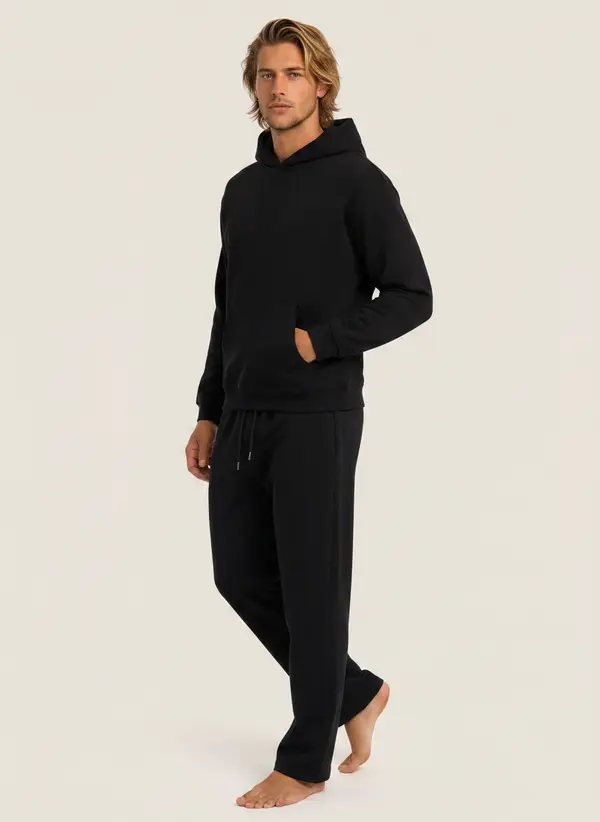
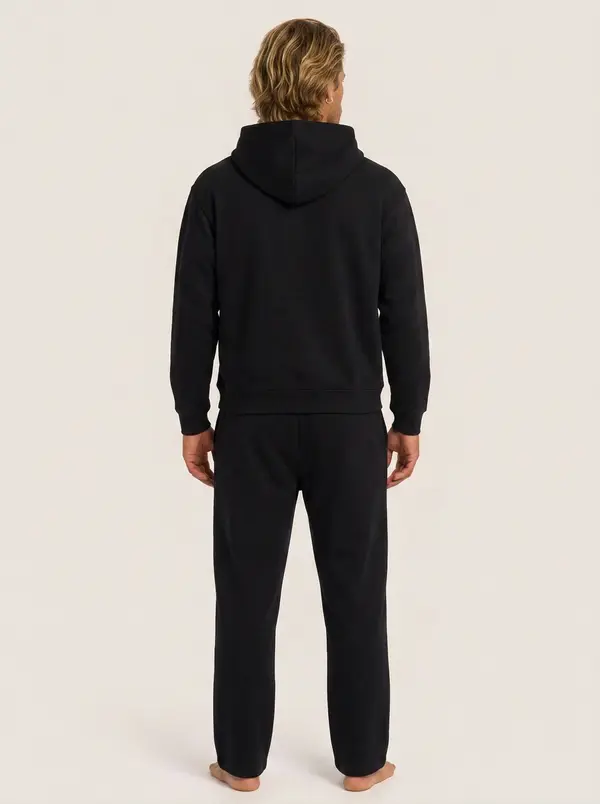
The anchor — one graphite hooded set, six catalog frames
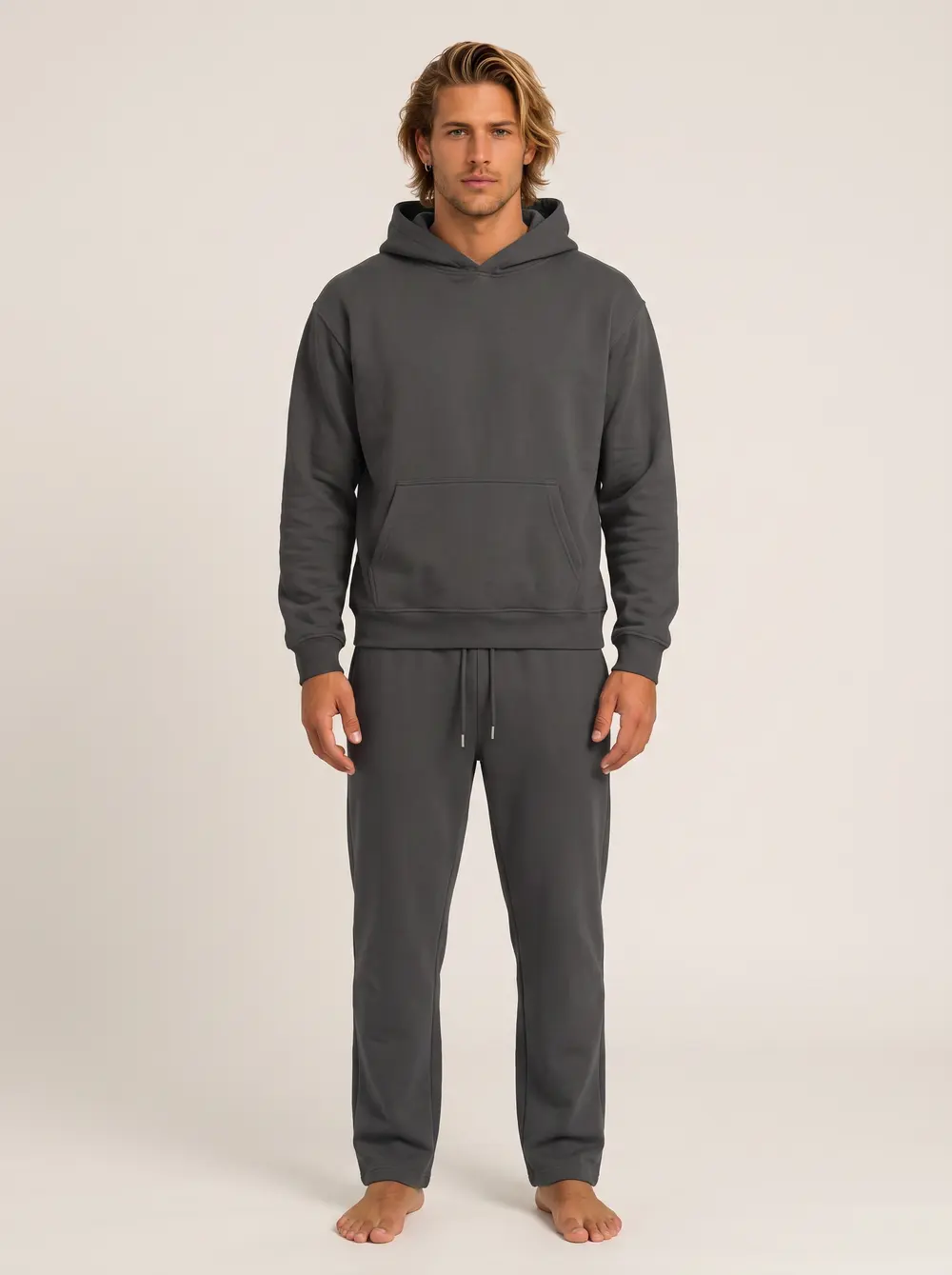
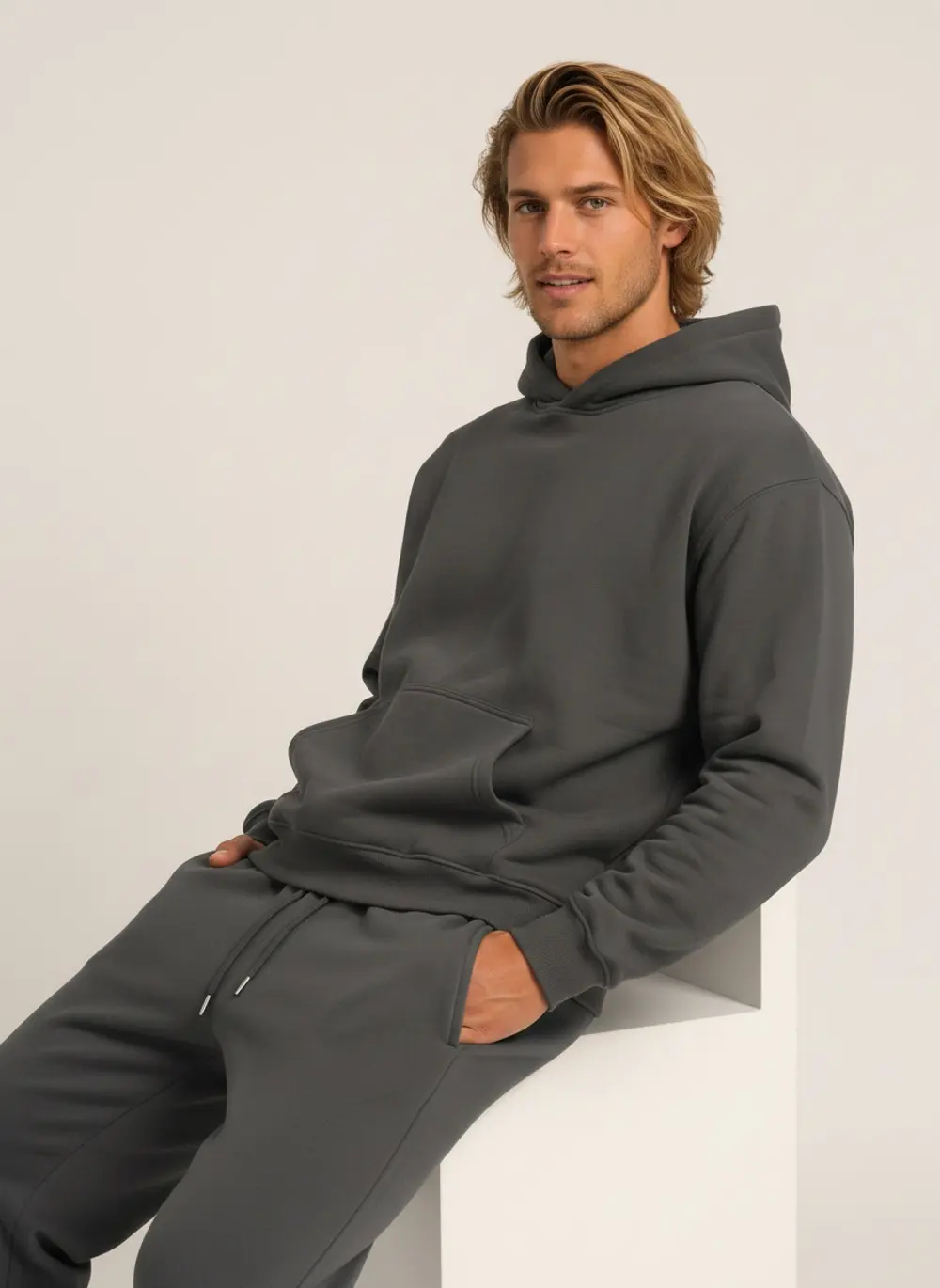
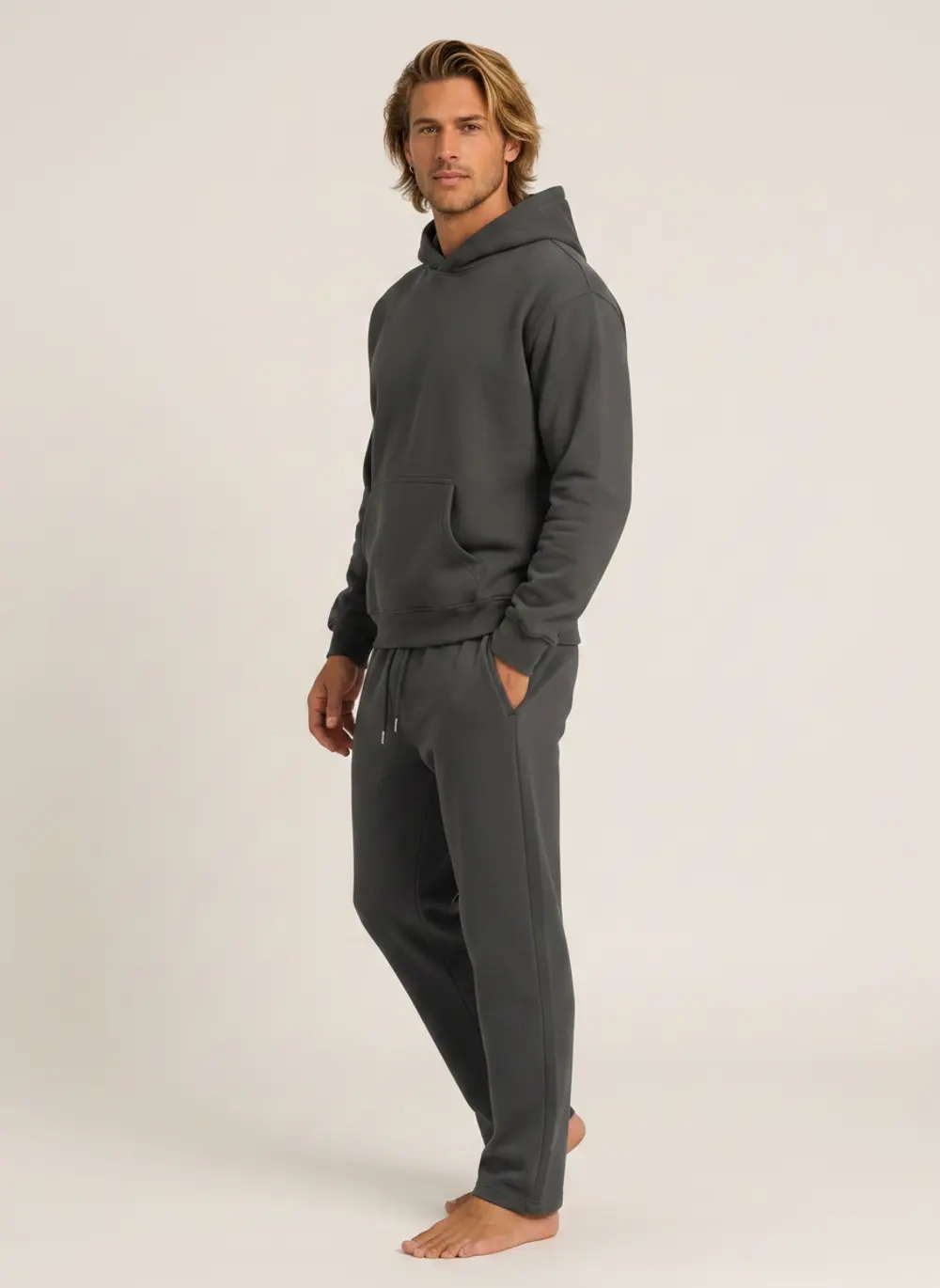
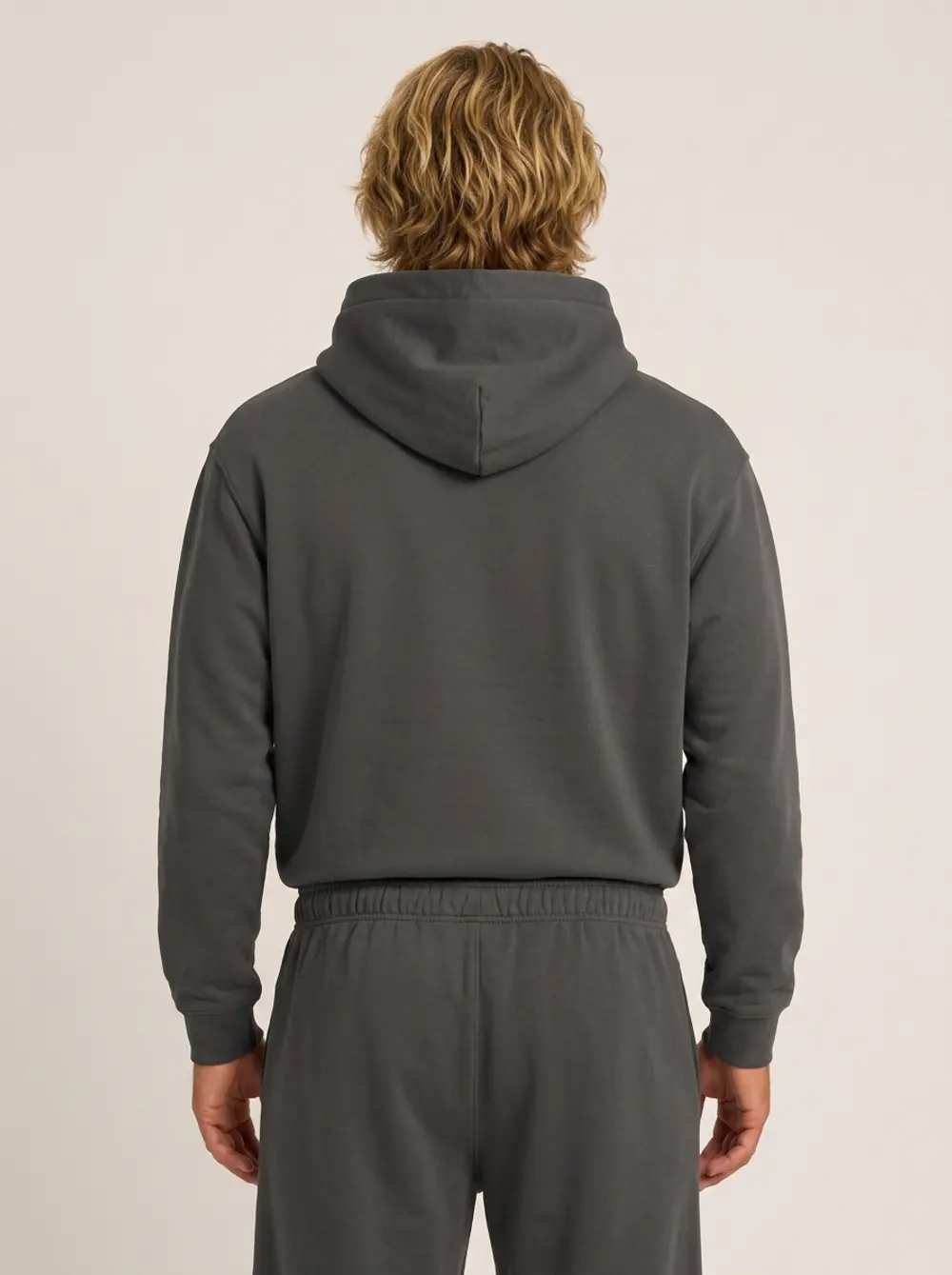
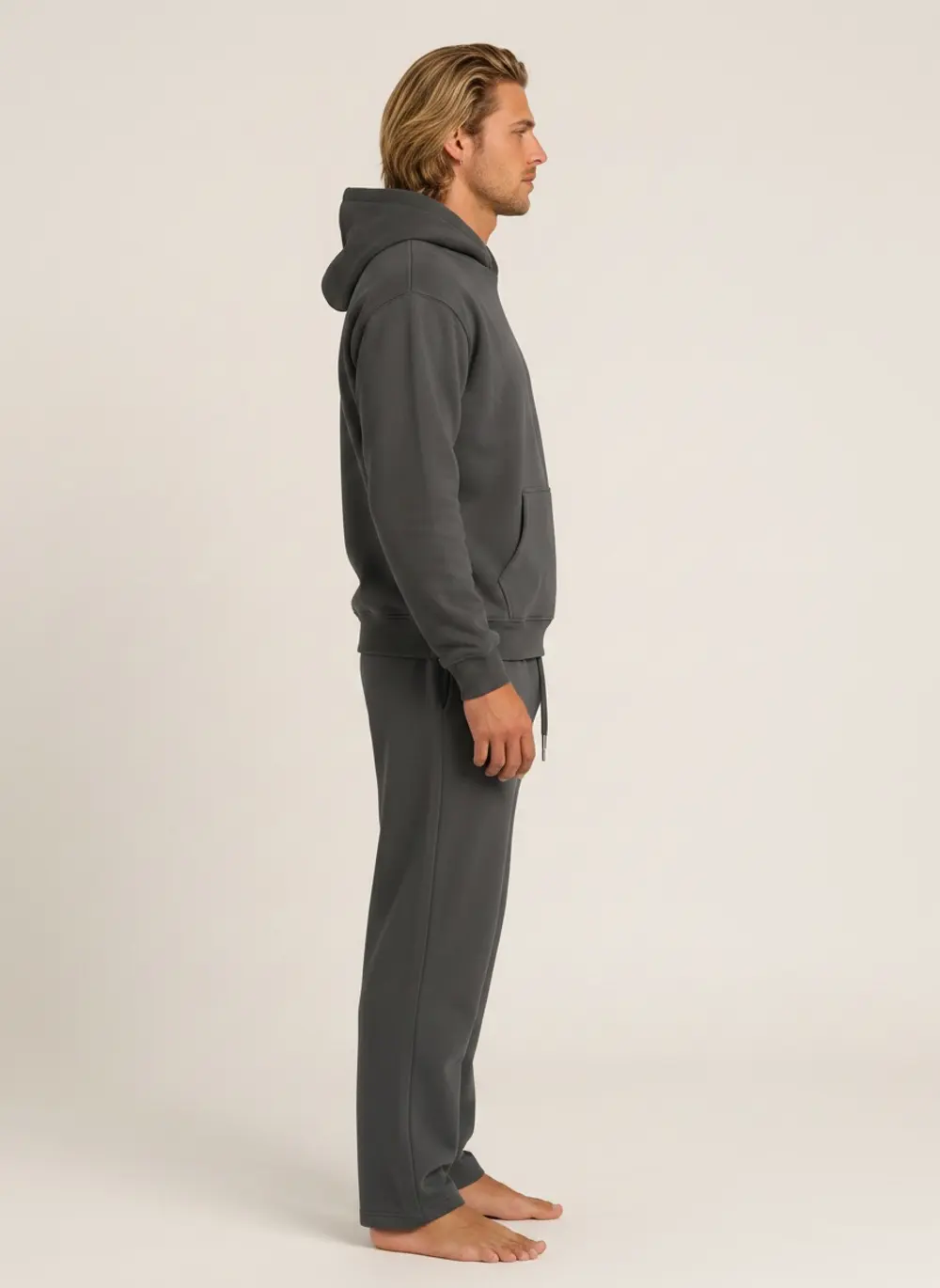
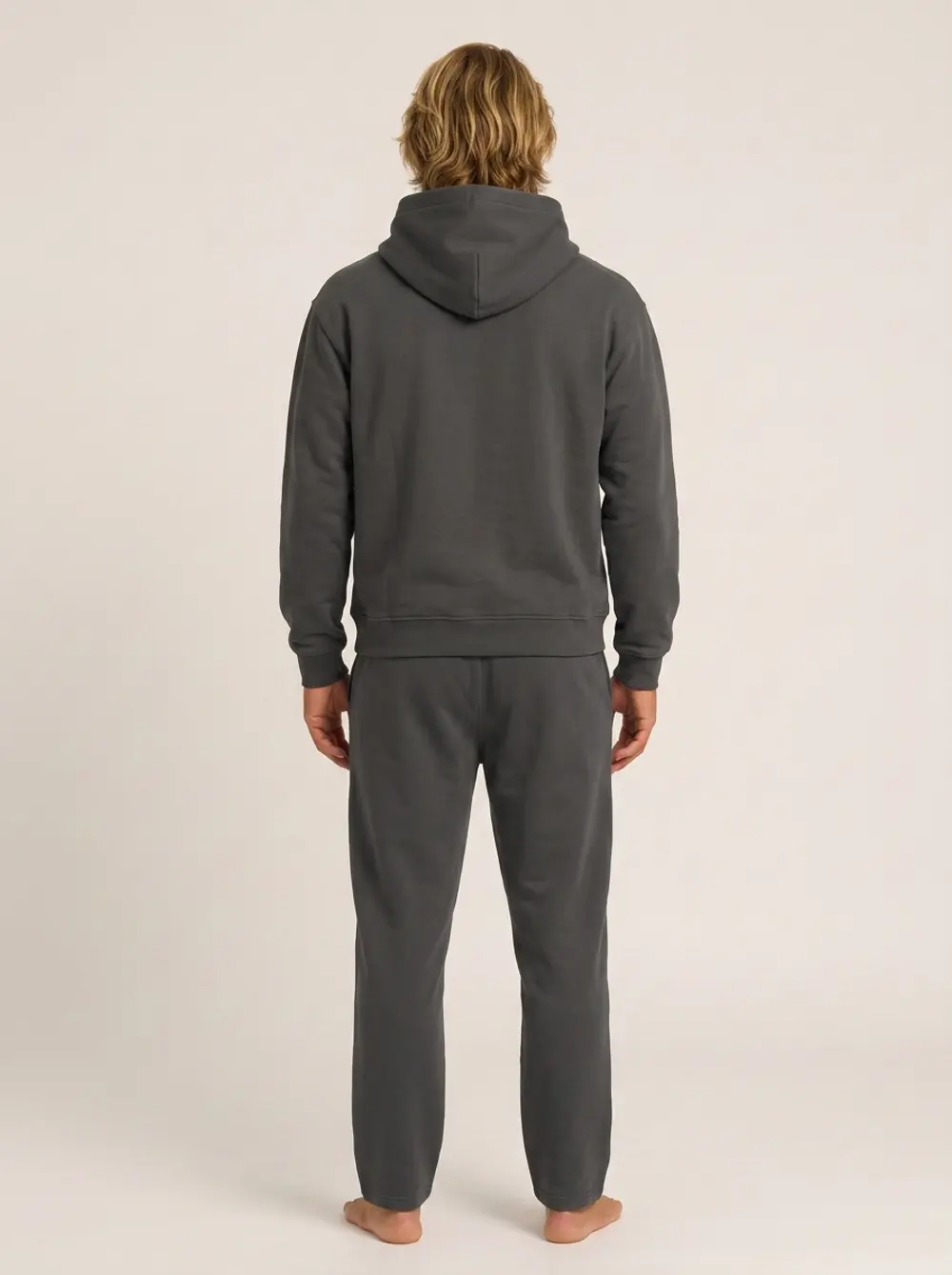
Front, seated, three-quarter, back, side, hood up. The product page, in one run.
Cozy and sexy are not opposites
Every loungewear brand hits the same wall. Shoot the garment too plainly and it reads as hospital-issue. Shoot it too hard and the softness — the whole reason anyone buys the thing — disappears. The category lives on a knife edge between comfort and desire, and most catalogs fall off one side of it.
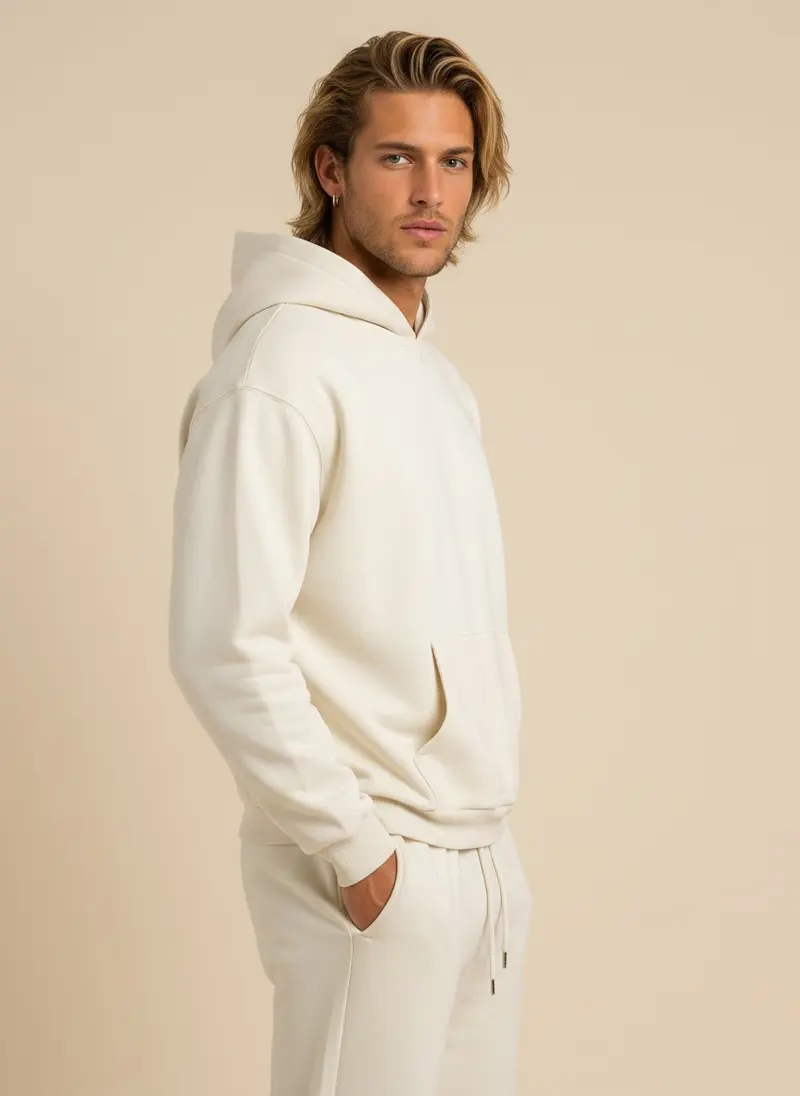
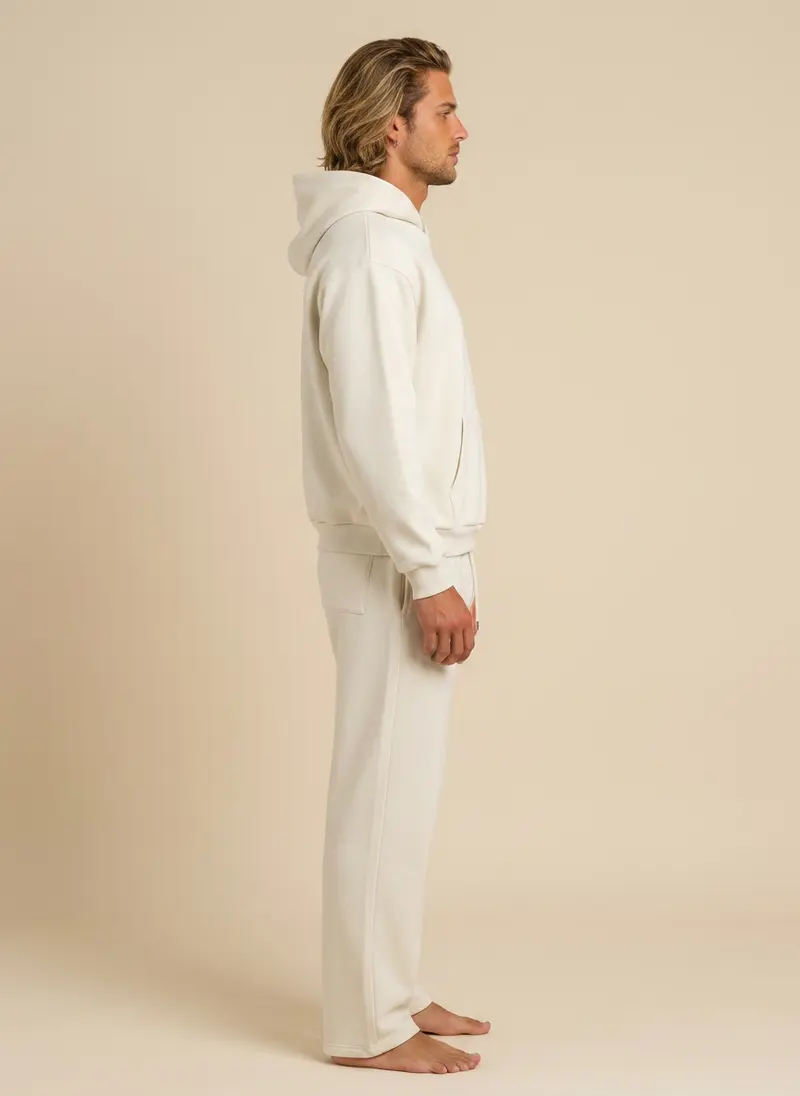
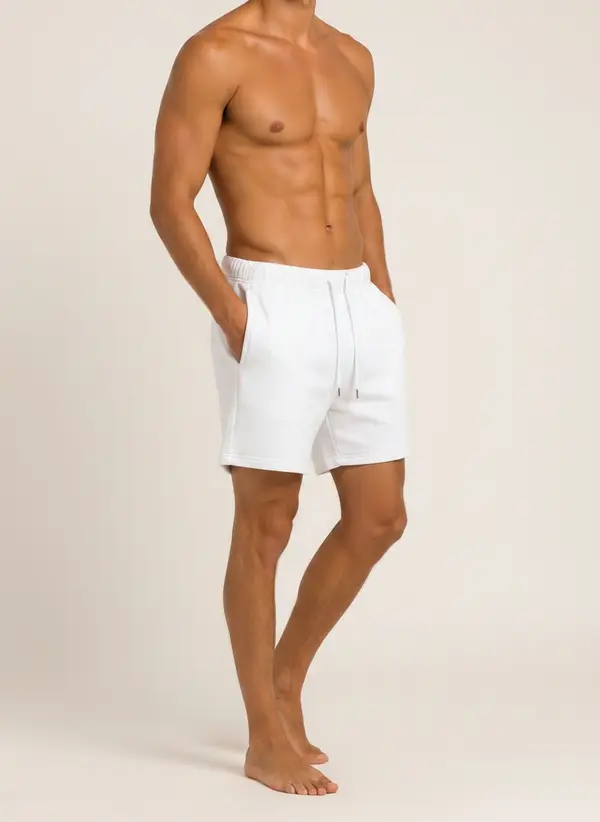
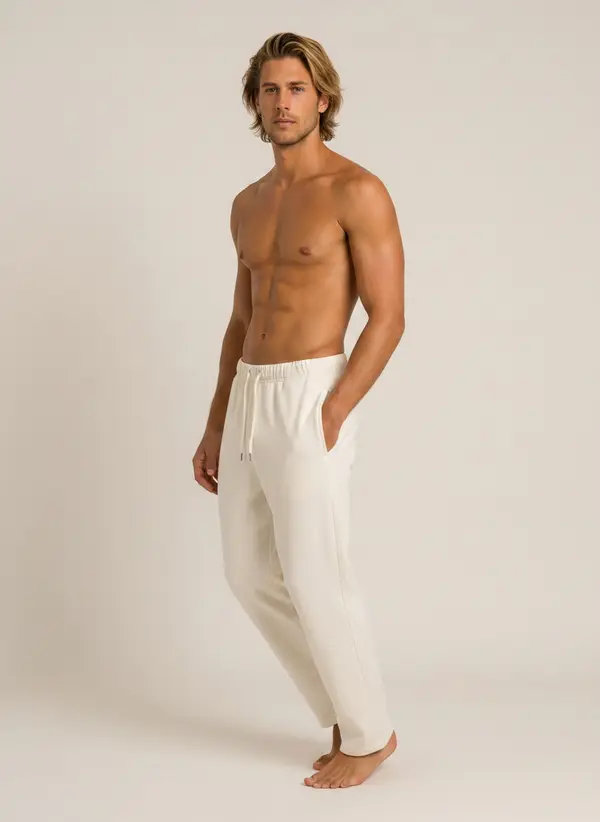
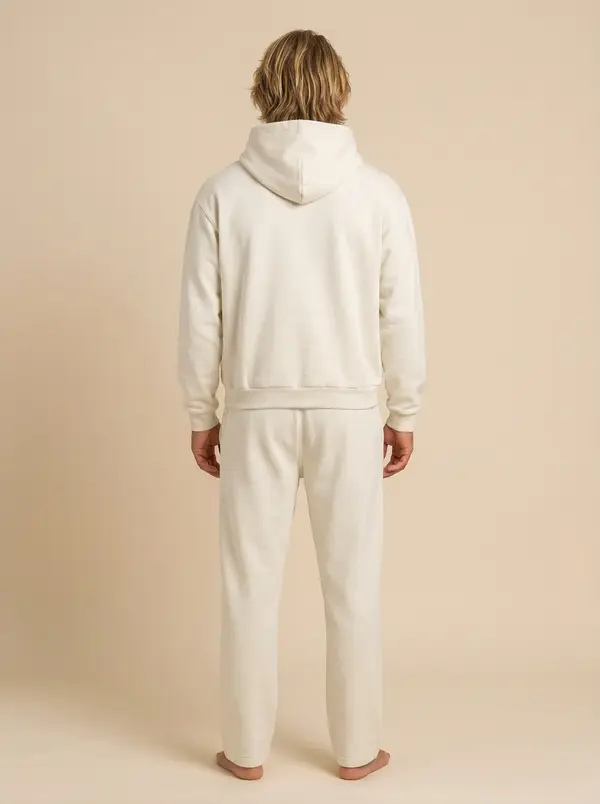
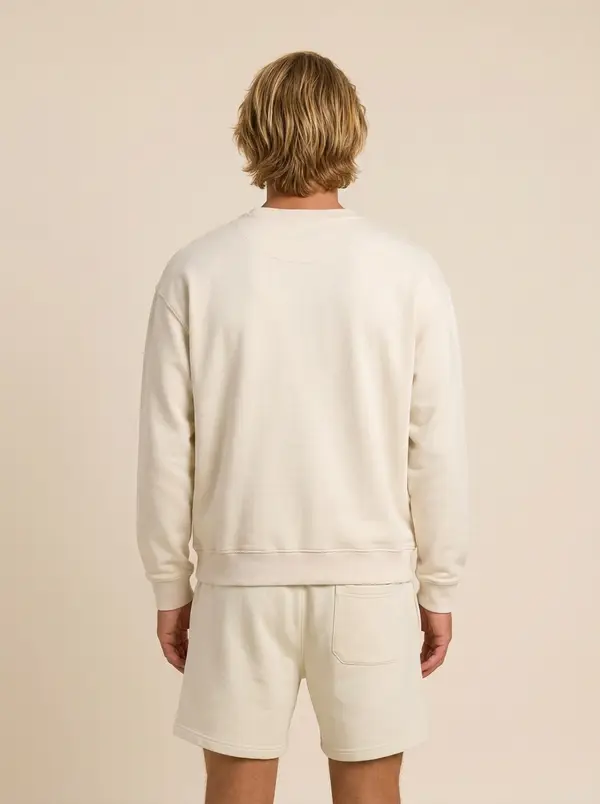
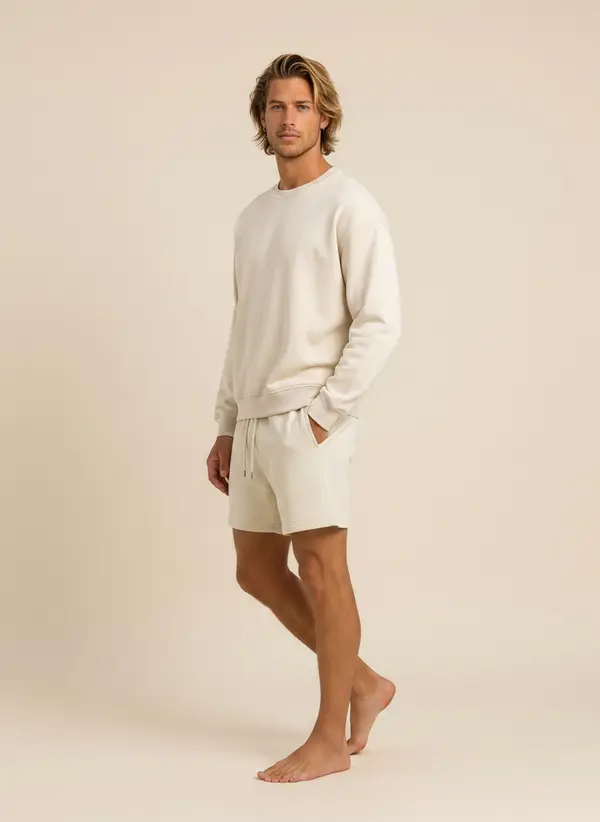
Future Homme picked the middle. Warm sand and bone seamless instead of cold white. Low contrast, so shadows fall like late afternoon rather than a flash. Bare feet. Relaxed shoulders. Nobody performing. The clothes look like they were already being worn when the camera arrived, which is exactly how you sell something meant for the hours nobody is watching.
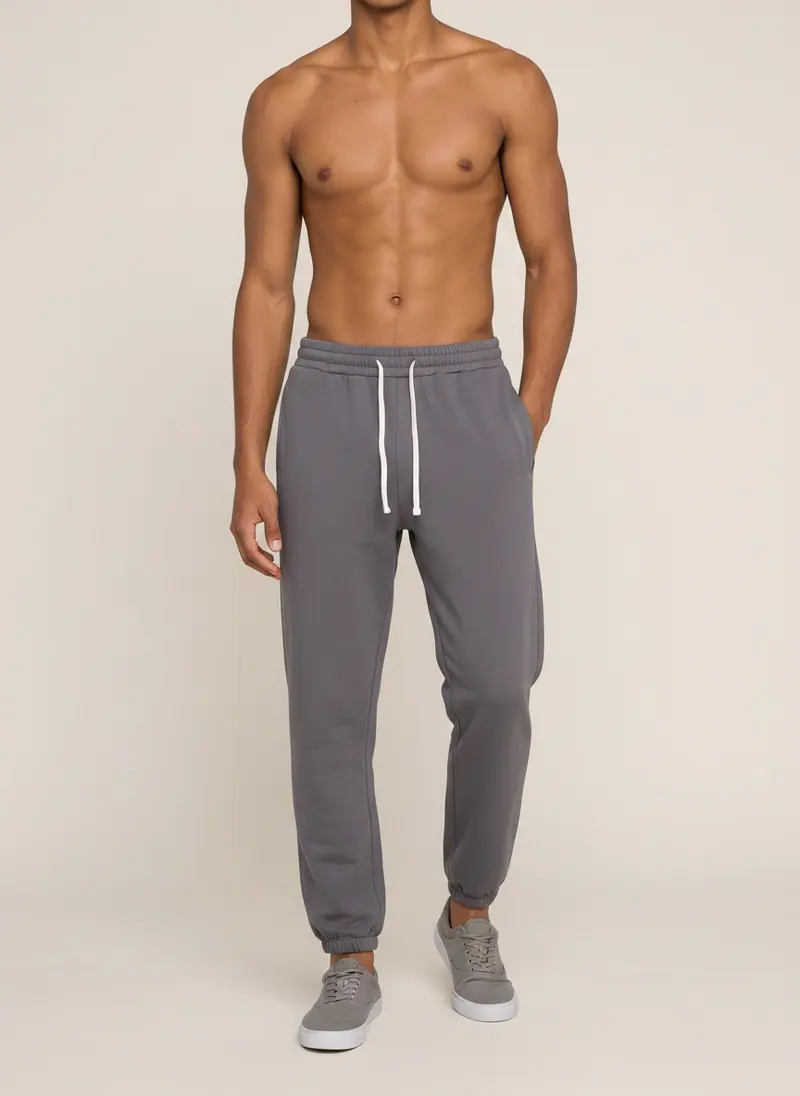
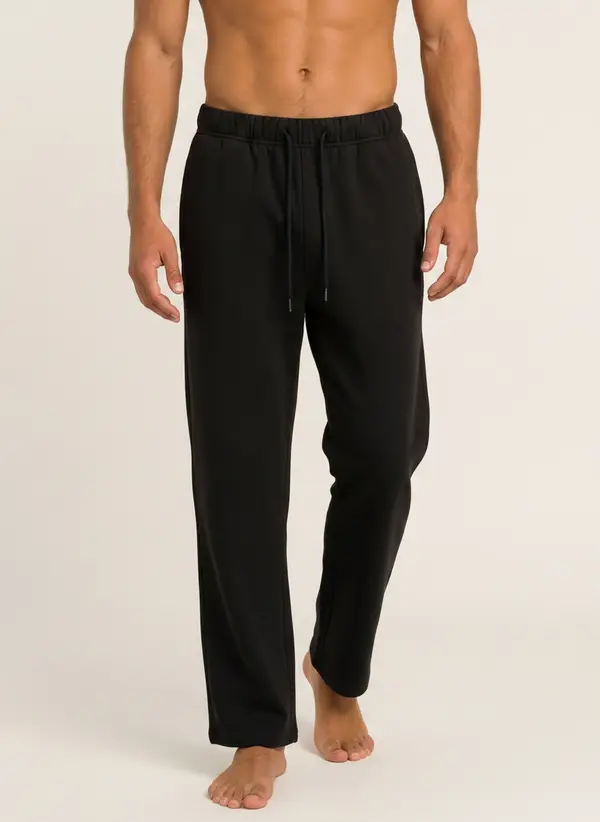
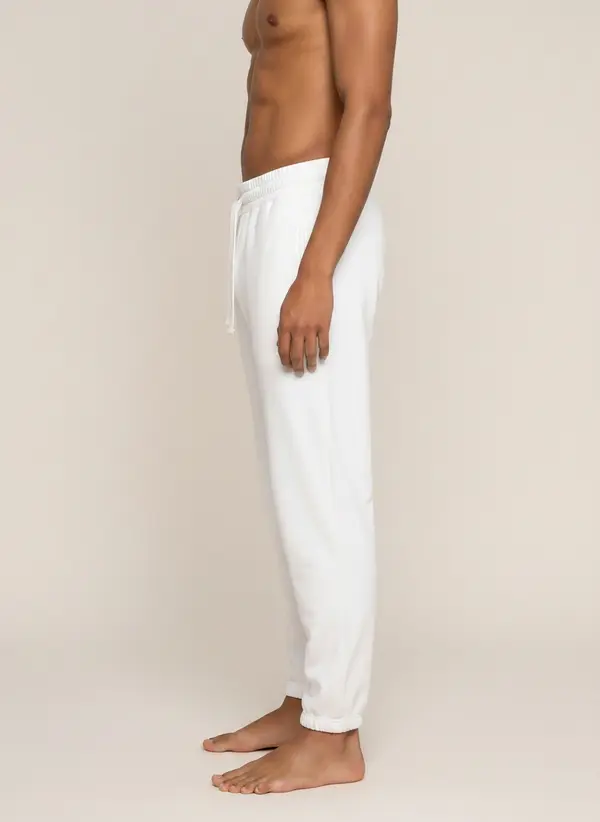
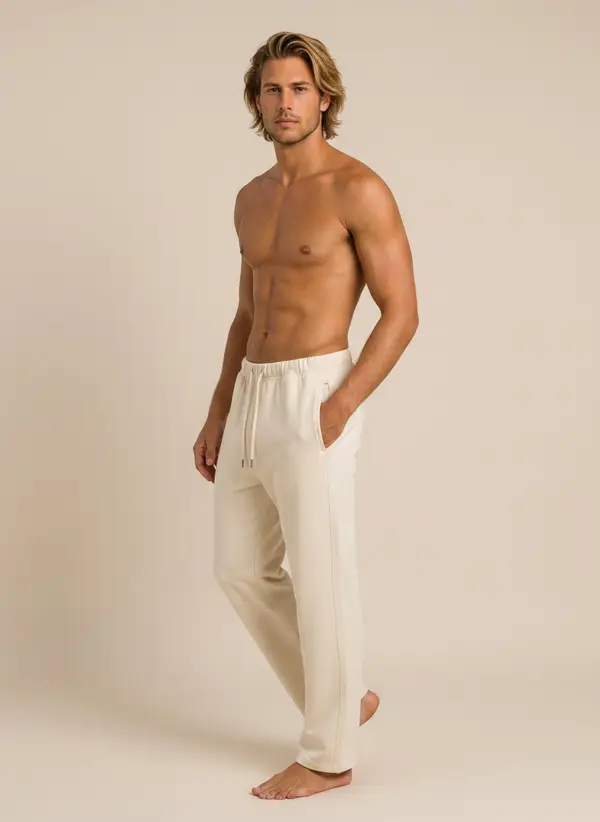
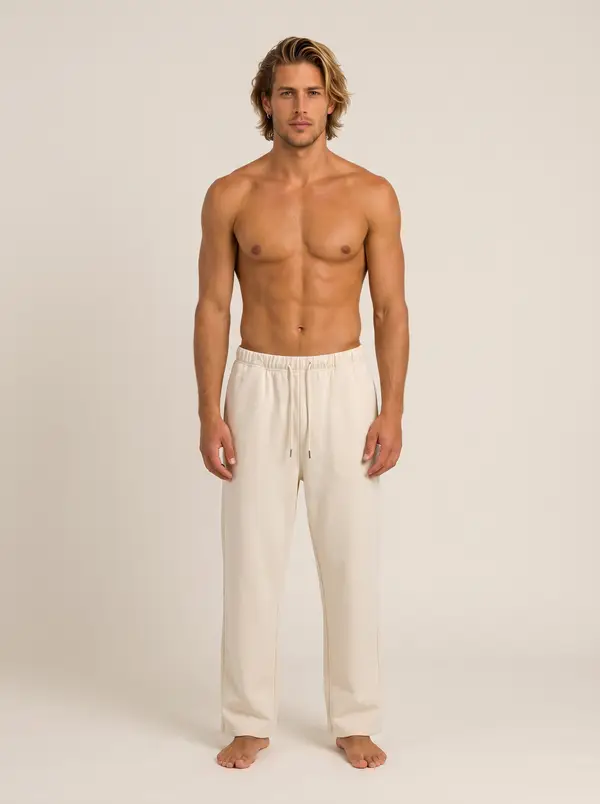
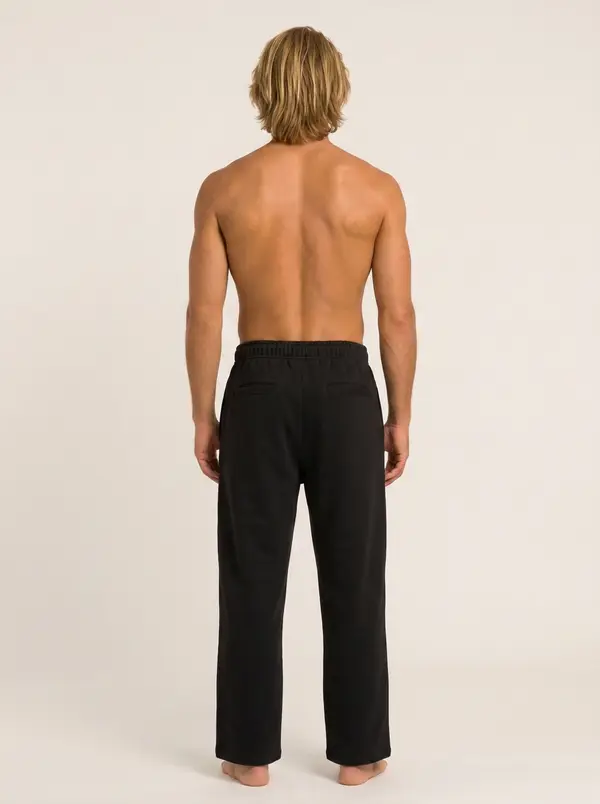
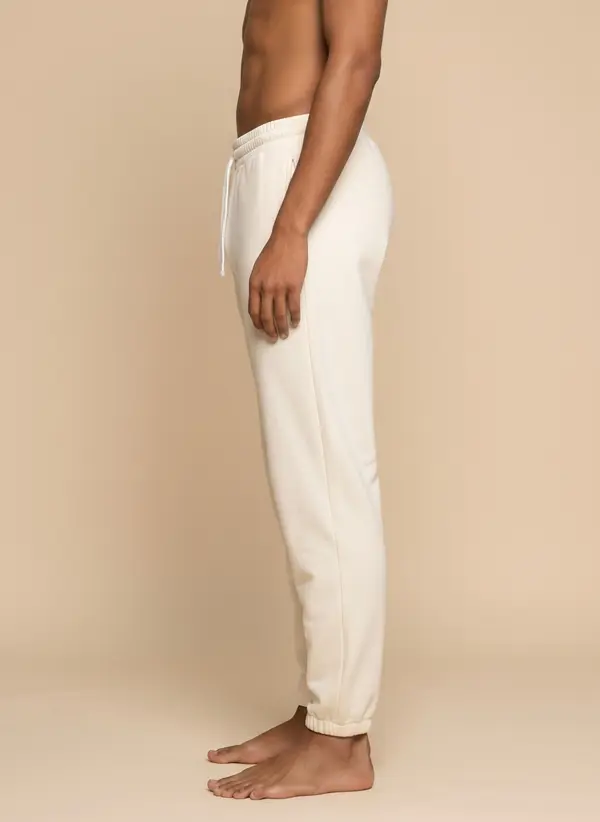
Skin and cloth — the bottoms shot bare-chest, on purpose
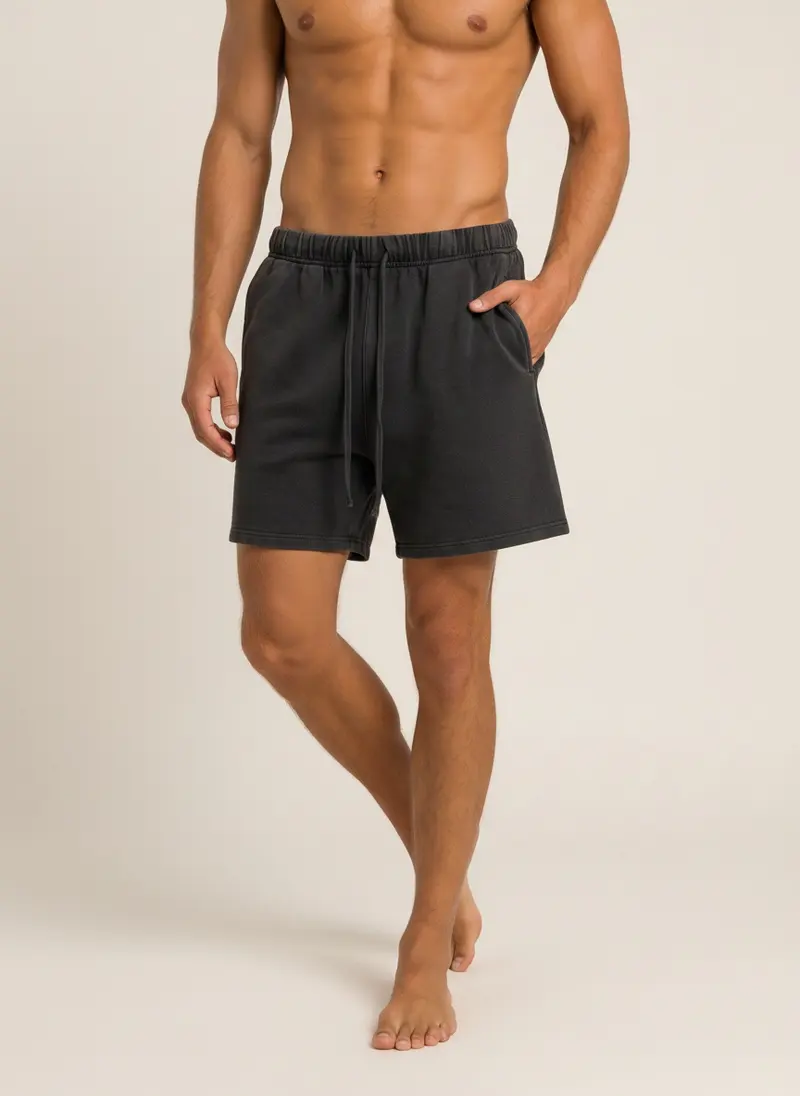
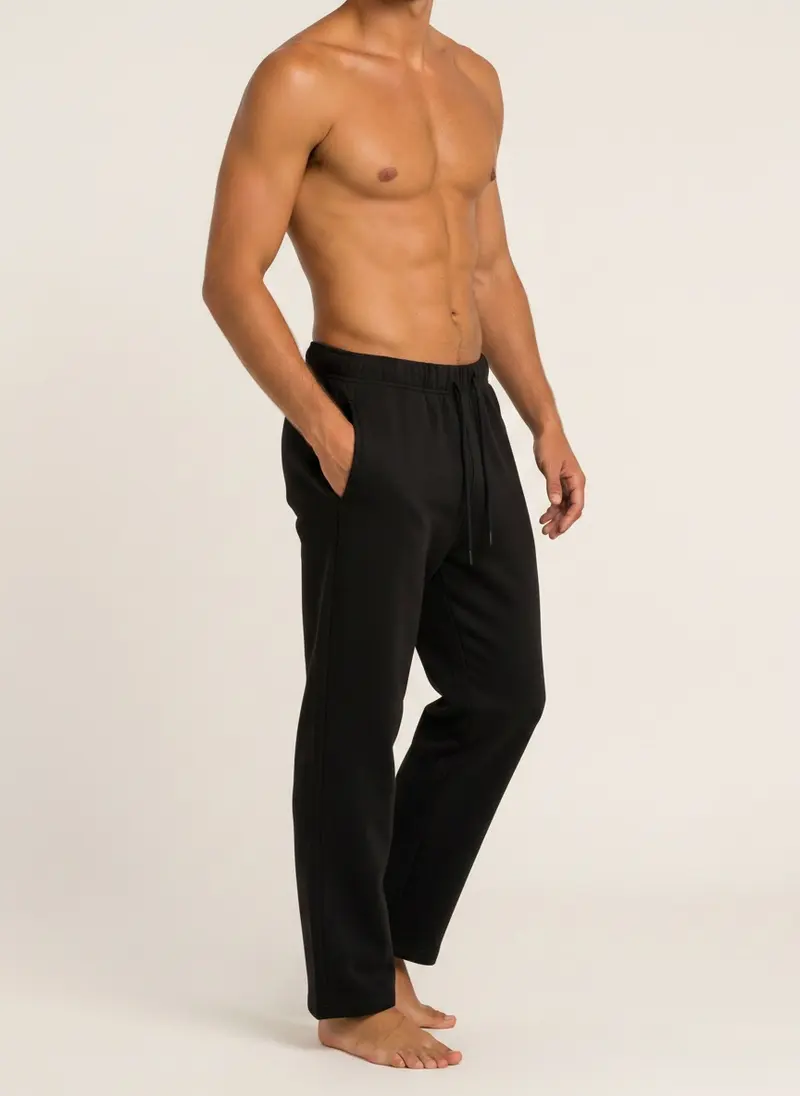
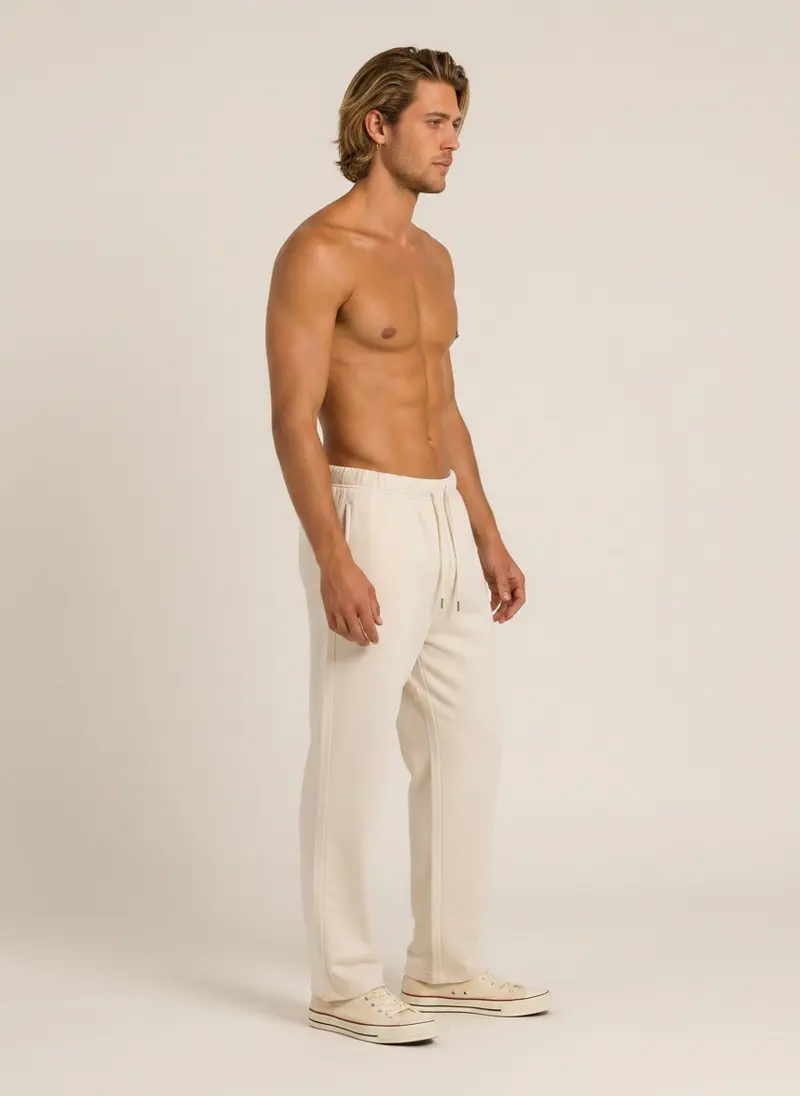
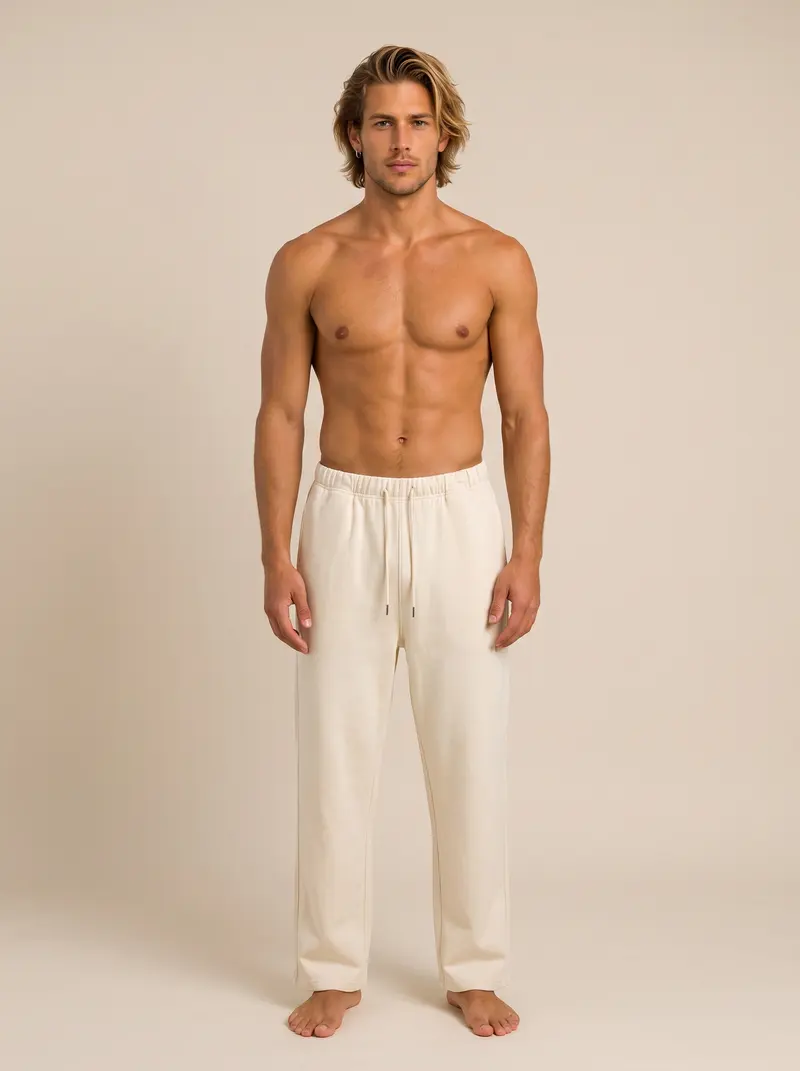
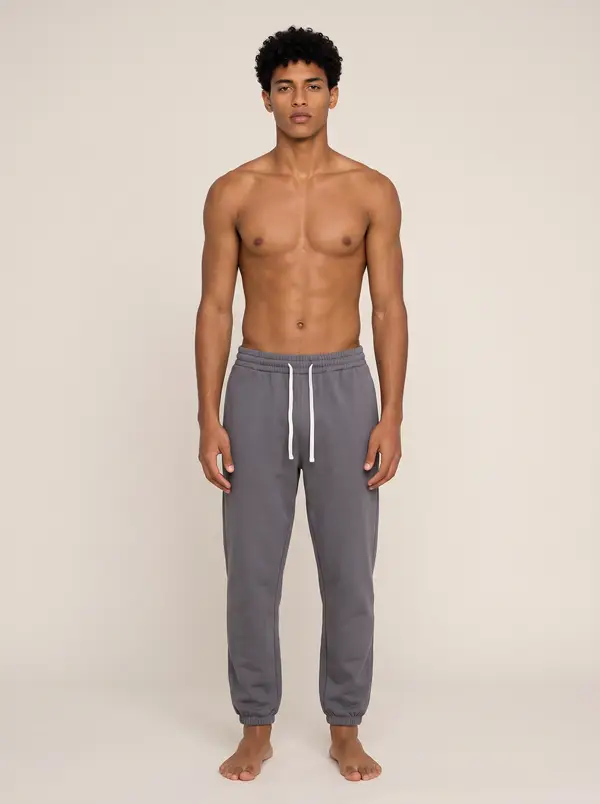
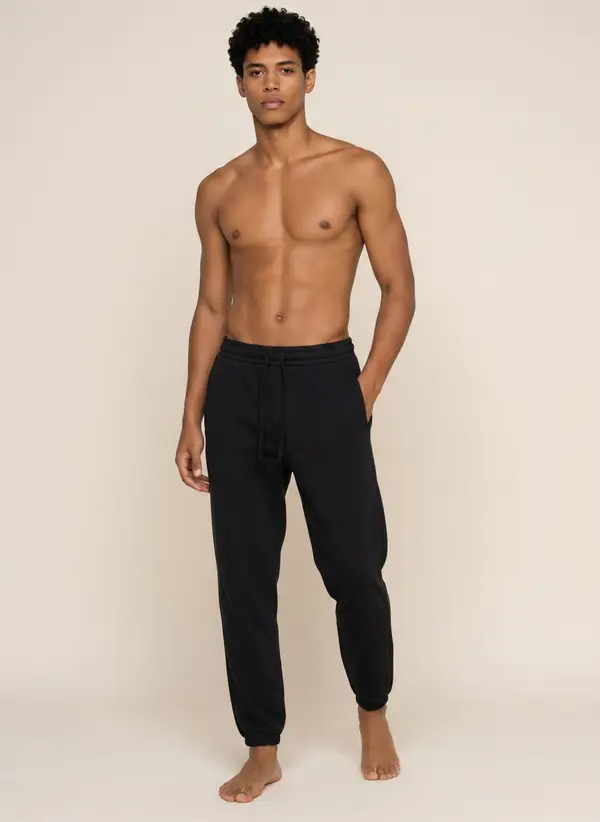
No top competing for attention. The waistband, the drape, and the weight of the fabric do all the talking.
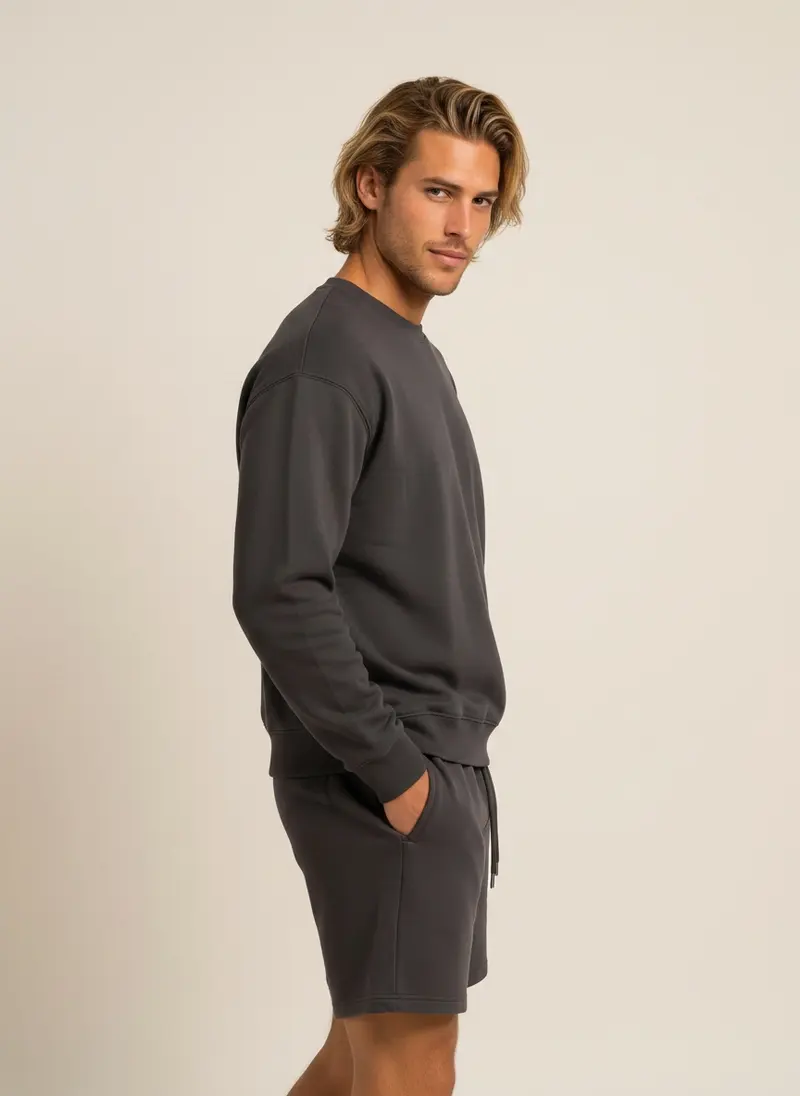
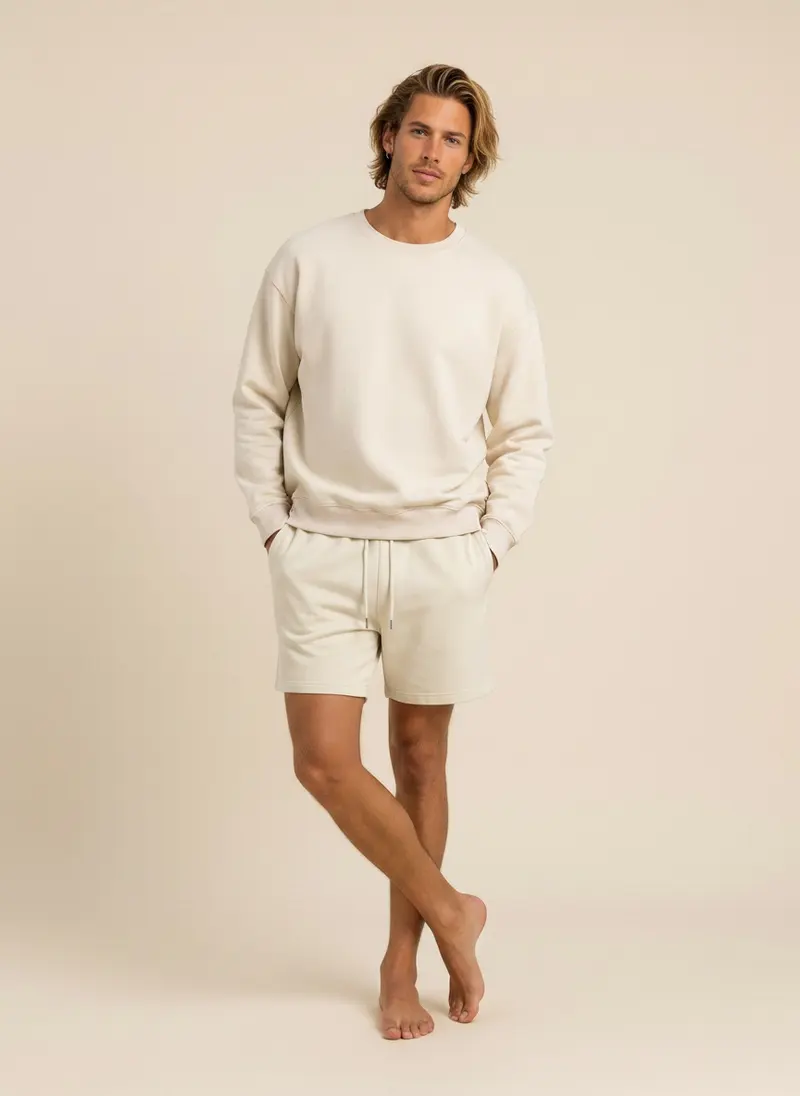
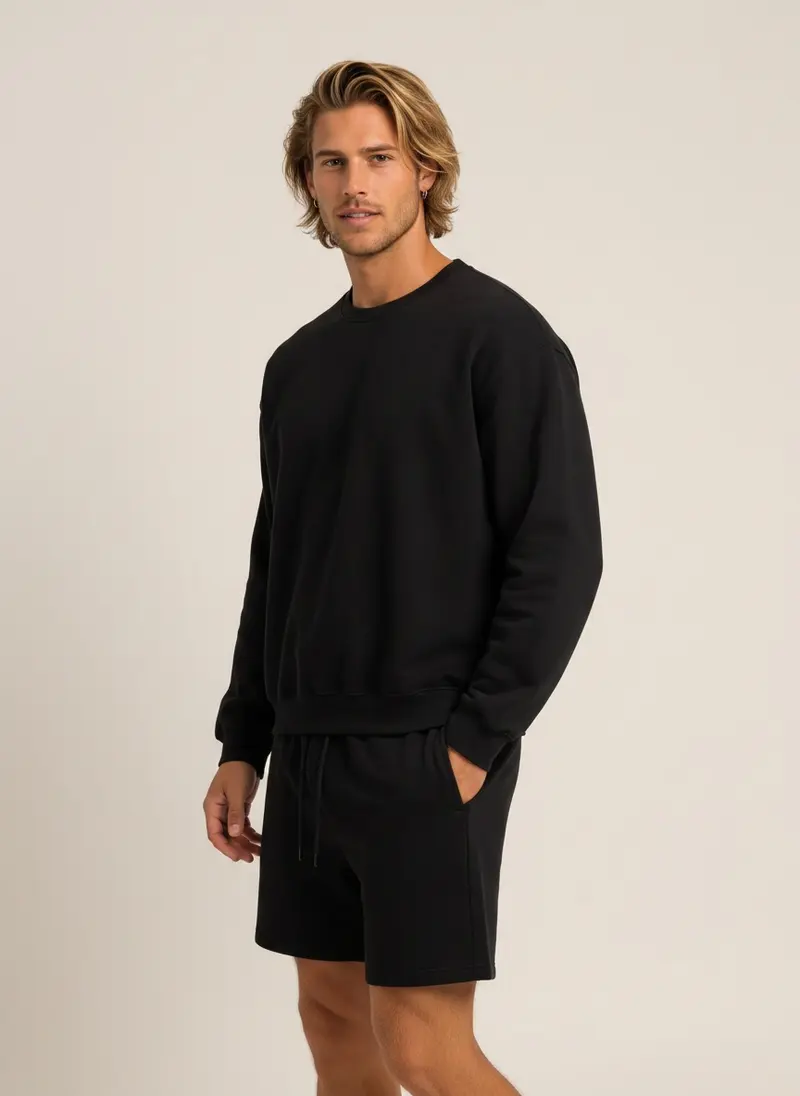
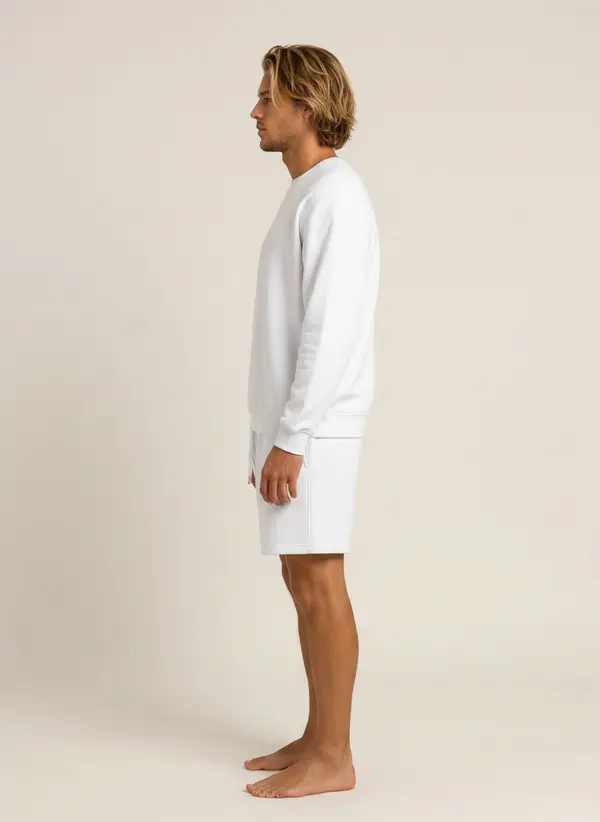
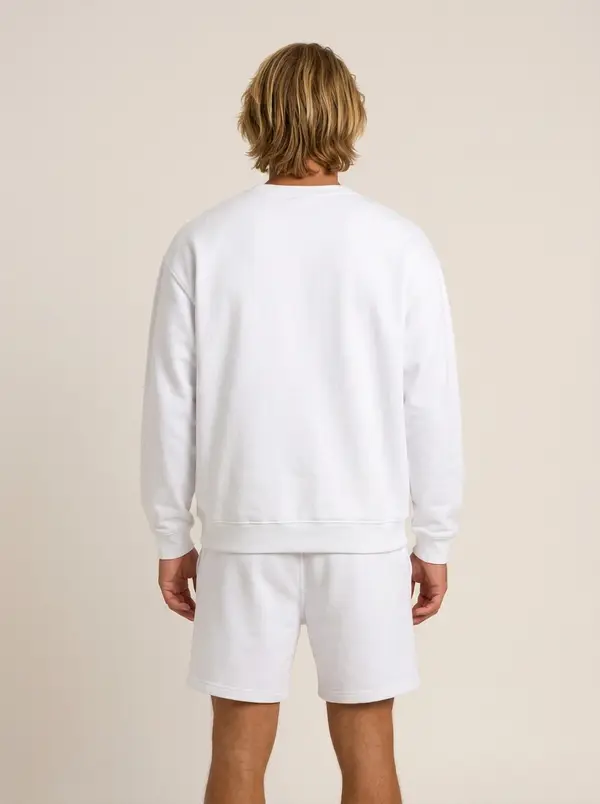
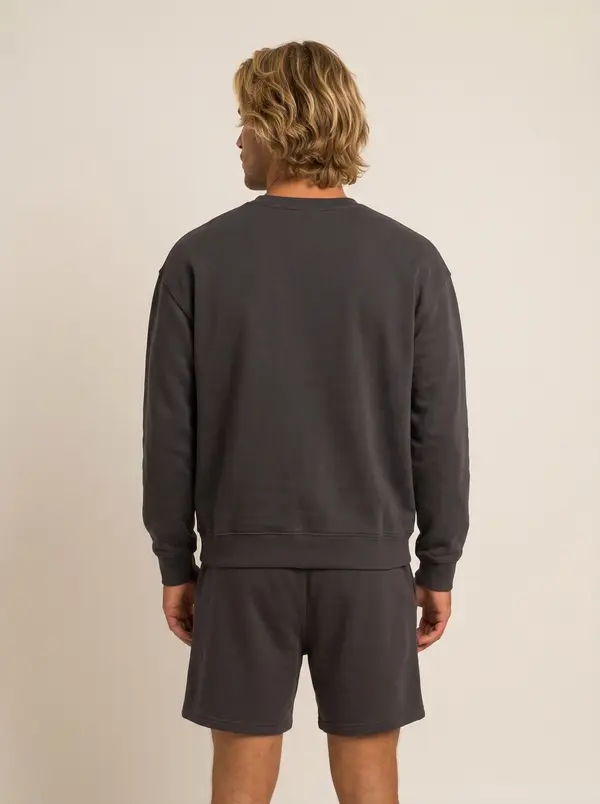
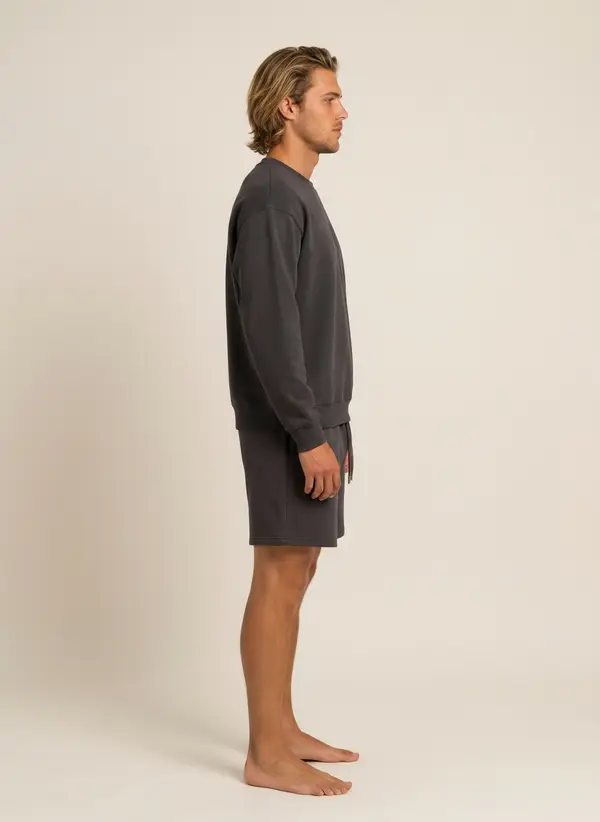
The knit sets — crew and short, four colorways, one styling
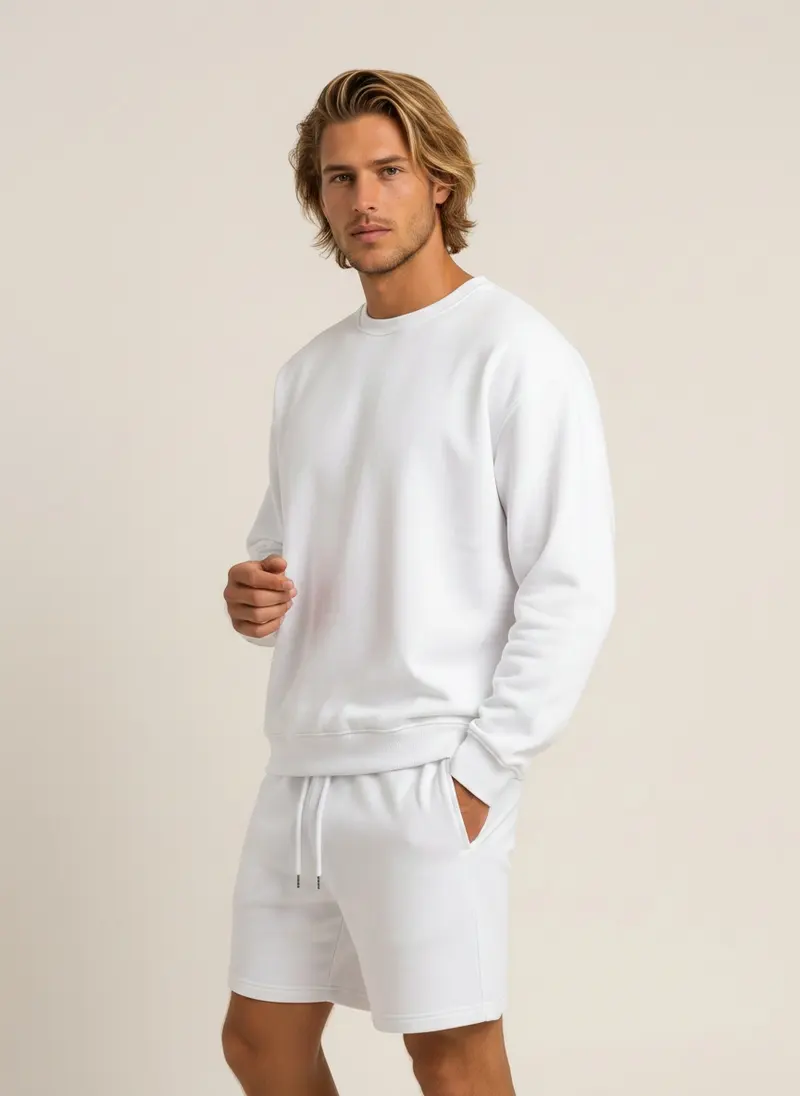
The light was the brand decision
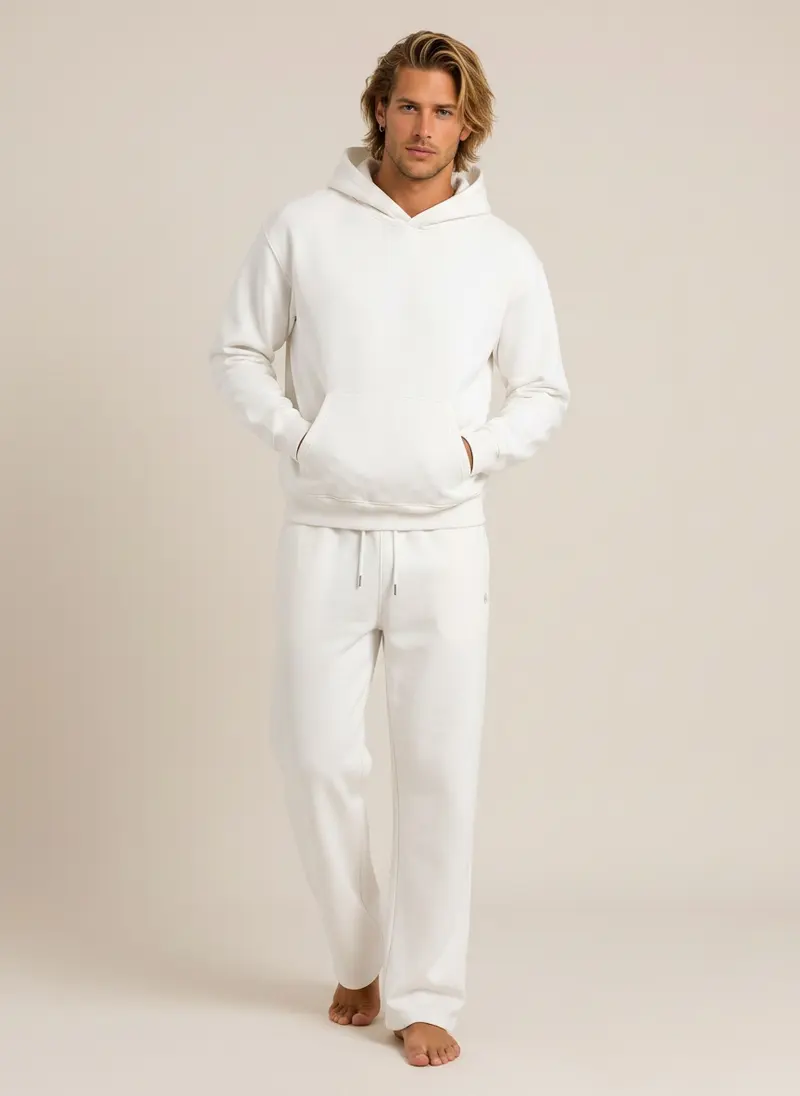
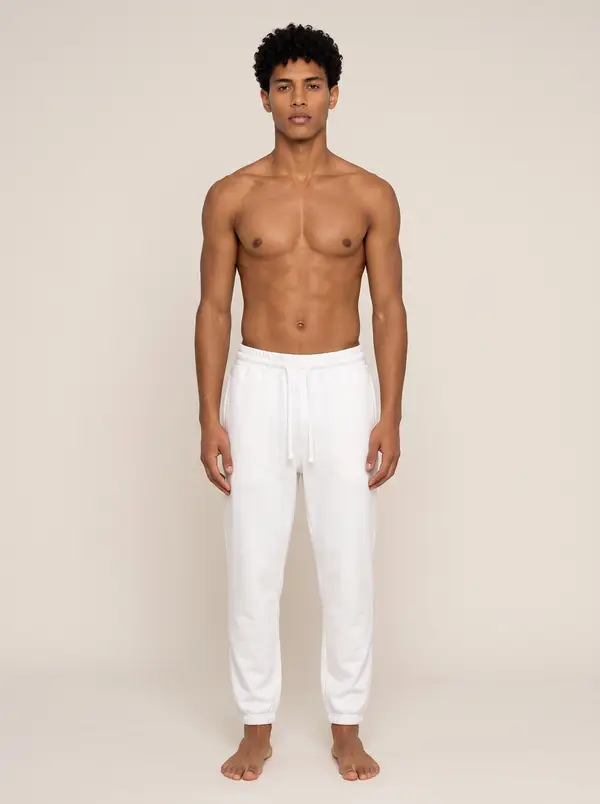
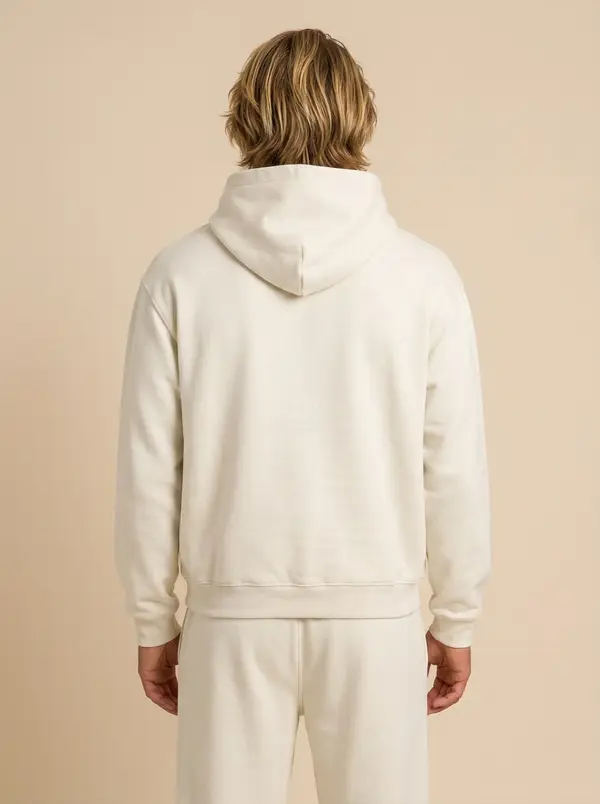
A bone hoodie on a white cyclorama disappears. A cream jogger under hard studio strobe turns grey-green in the shadows and every customer service email that month is about colour. Half of Future Homme’s range sits inside two shades of off-white, so the backdrop had to be warmer than the garments — a sand seamless that pushes ivory forward instead of swallowing it.
That one choice, set as a background reference and reused on every job, is why the catalog holds together. Graphite reads as graphite. Bone reads as bone. And the shortcut that makes AI catalogs look cheap — a different room and a different light for every SKU — never gets a chance to happen.
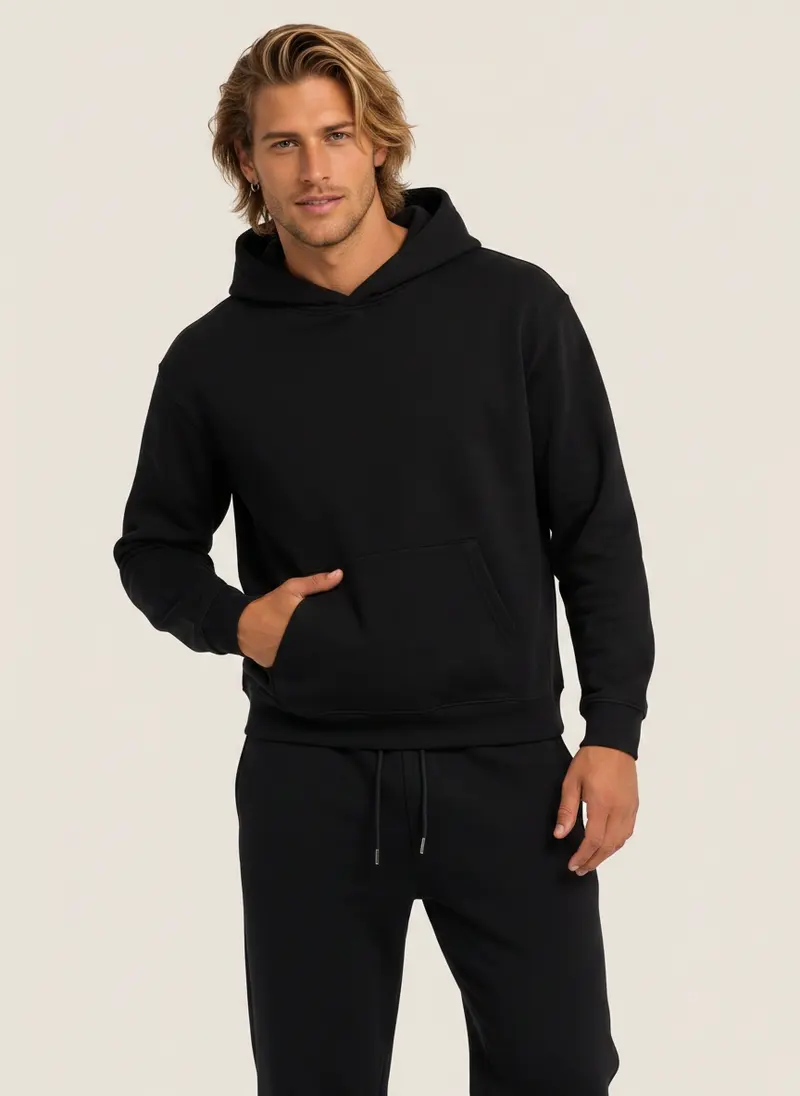
The hood program — black, bone, white
Two men, one house
A menswear catalog on a single face gets monotonous by the fortieth product page. Two is enough to break it — and one more than most small brands can afford to book, fly, and feed for a two-day shoot.
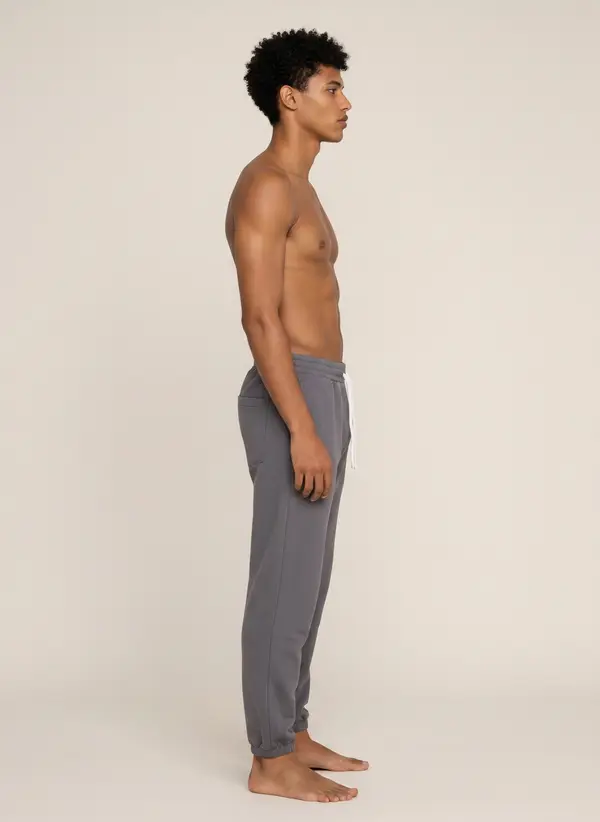
Future Homme runs a second muse through the same background reference and the same shot list. Different body, different colouring, identical grammar: same crop, same distance, same warm floor. On the collection grid the two men read as one campaign with range, not two shoots stitched together. Our piece on AI male models and the menswear photography gap covers why menswear brands hit this wall first.
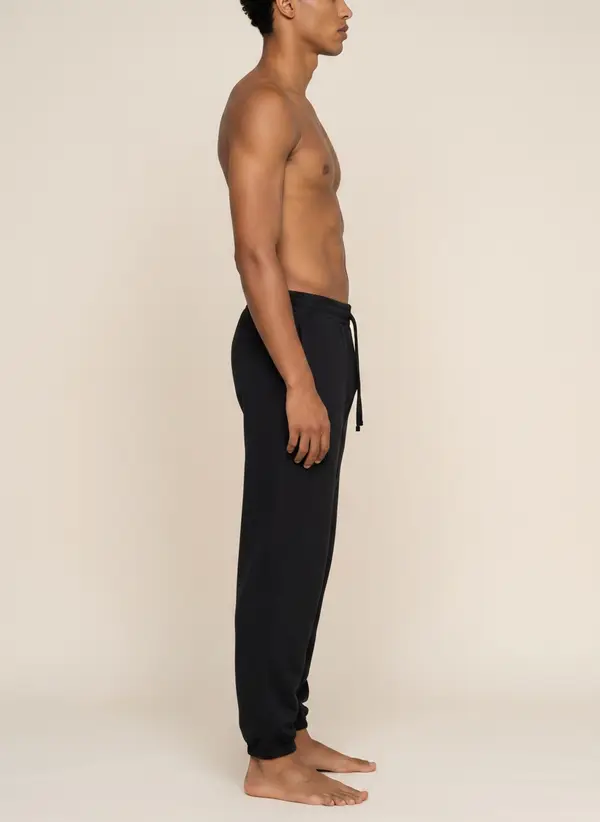
The second muse — the jogger program
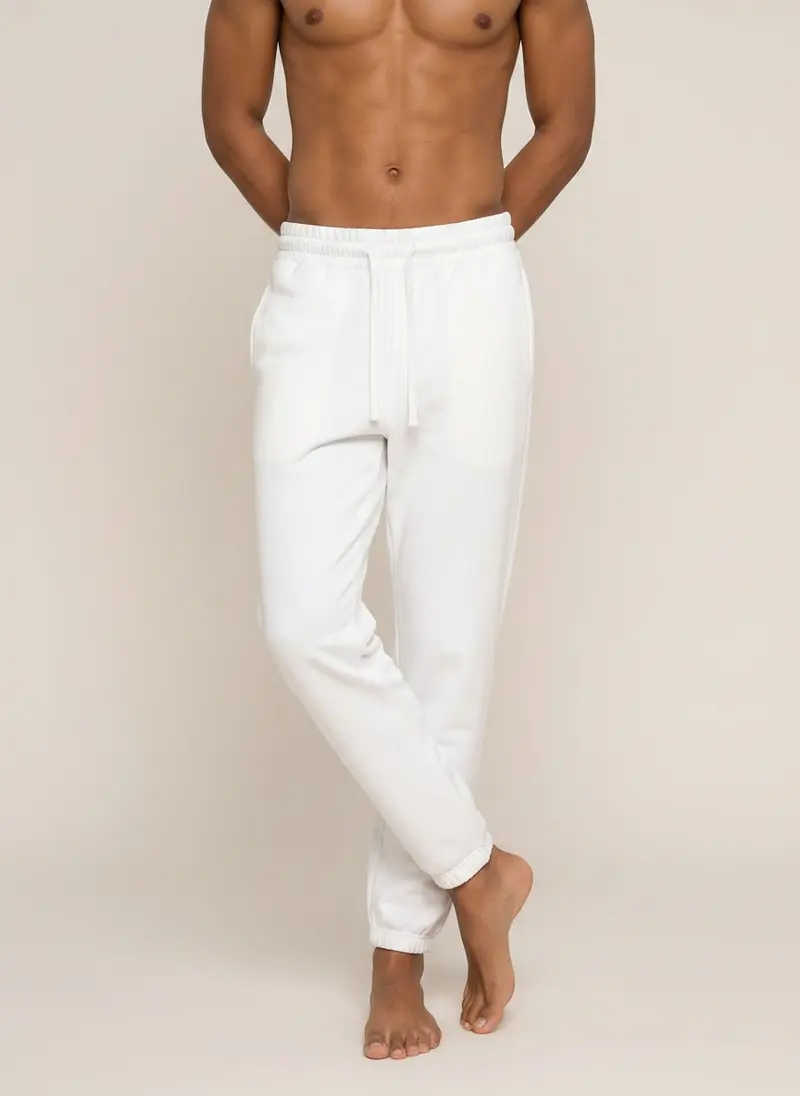
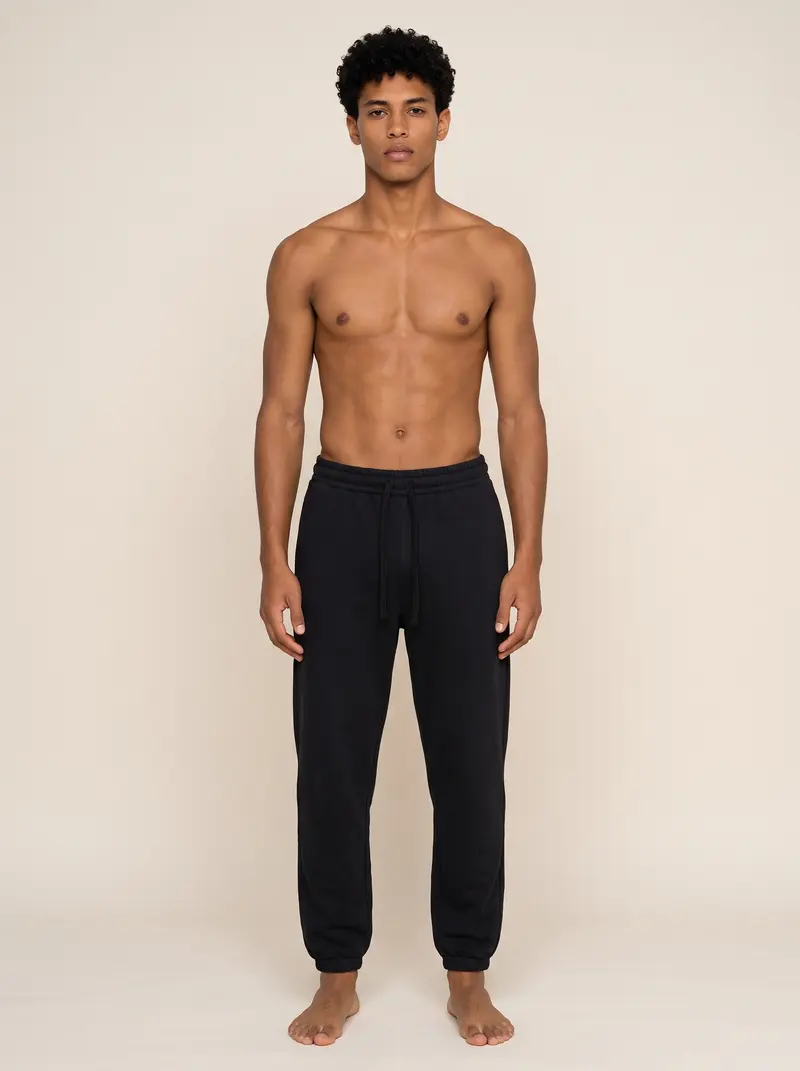
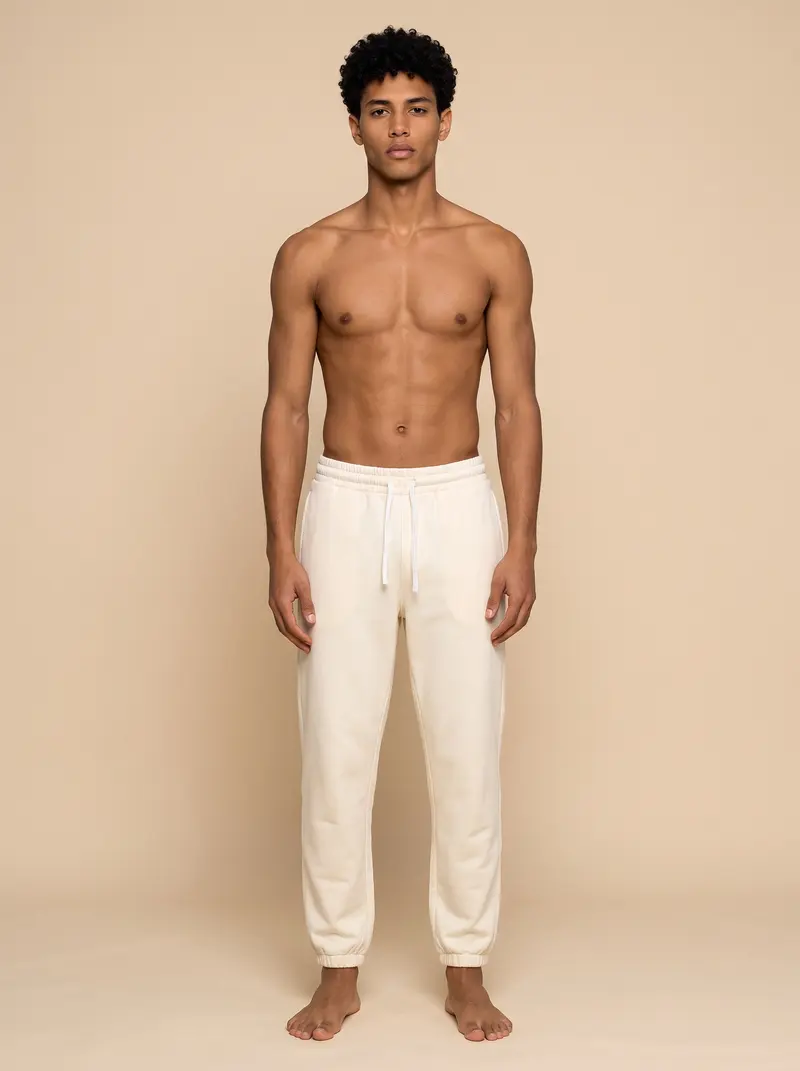
The bottoms program, laid out as a range board
Loungewear sells as a program, not as a hero. Four cuts, four weights, and the customer decides between them side by side. Because every colorway ran through the same references, the board below is what the merchandiser actually sees — a lead frame and three supporting angles per style, all shot in the same room on the same afternoon that never happened.
Fit is the other half of a bottoms program. A wide straight leg and a close tapered jogger are different products in the same cloth, and the pictures have to make that legible — volume through the thigh, where the break falls, how much floor the hem takes. So the cut is specified per style rather than left to the run: you say whether this one hangs loose or sits slim, and the board comes back reading as a range of shapes instead of one trouser in four colours.
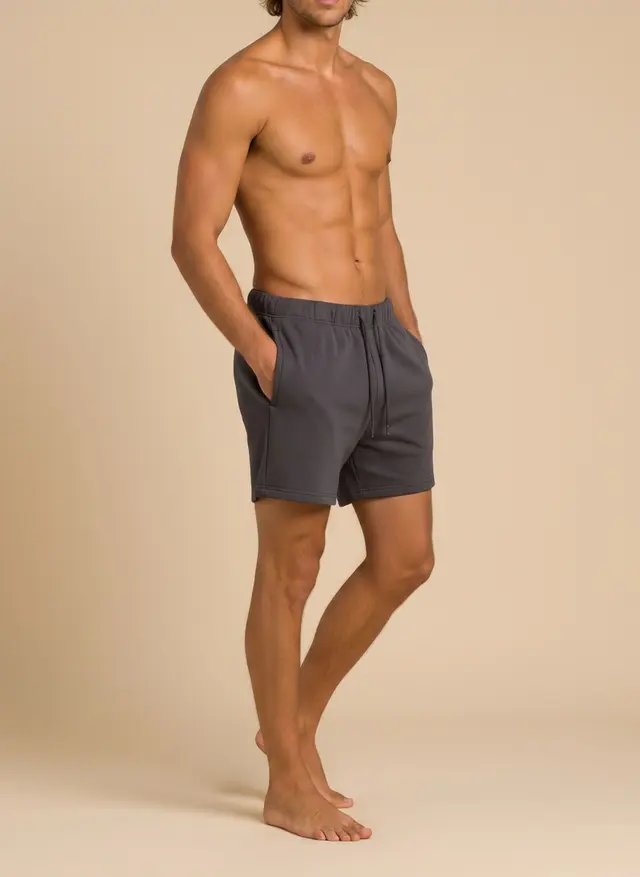
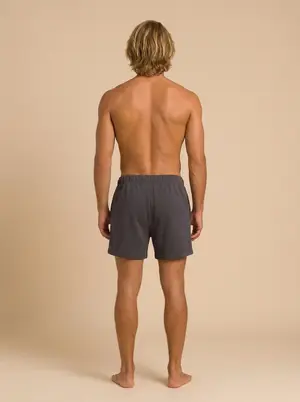
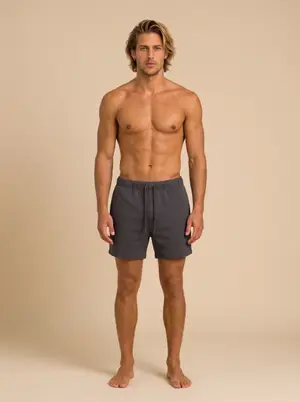
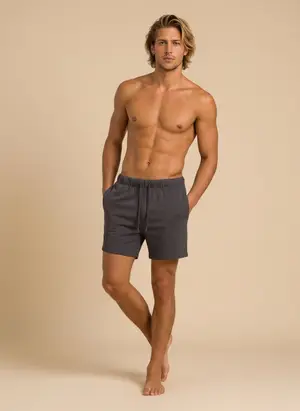
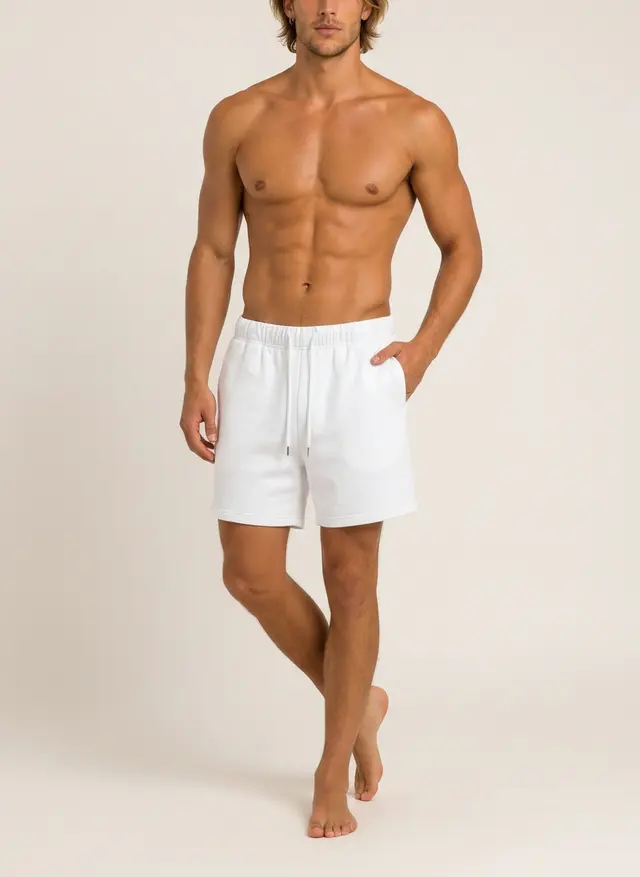
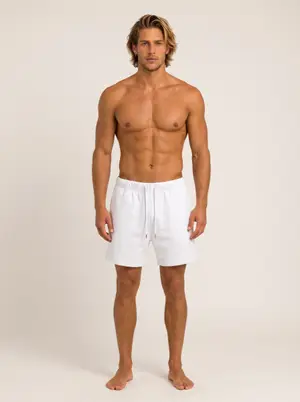
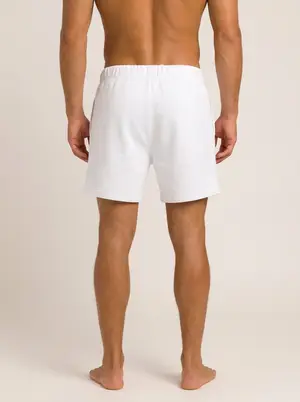
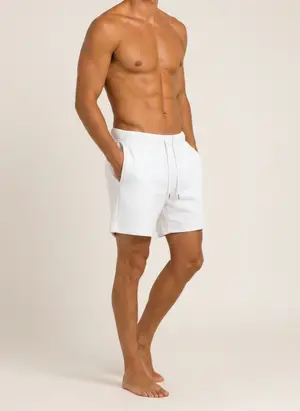
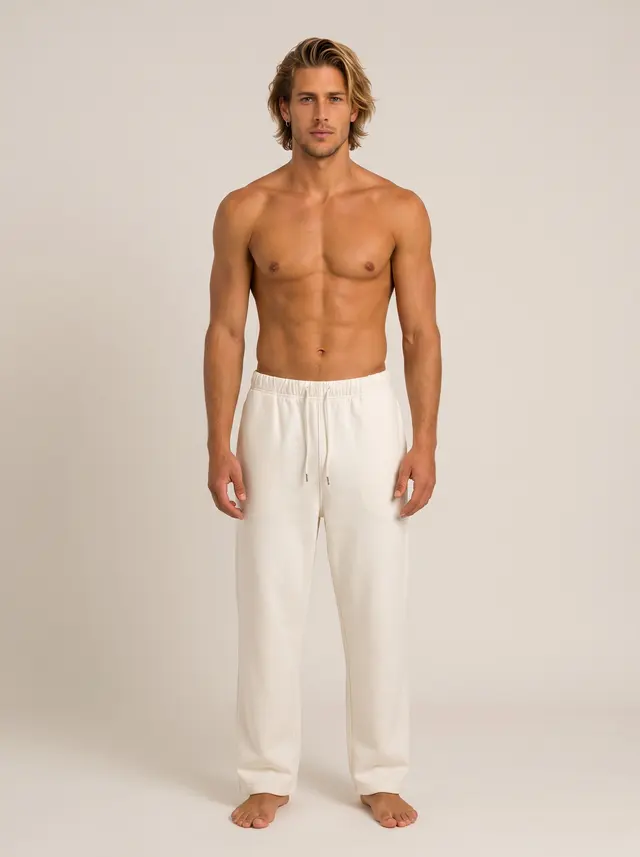
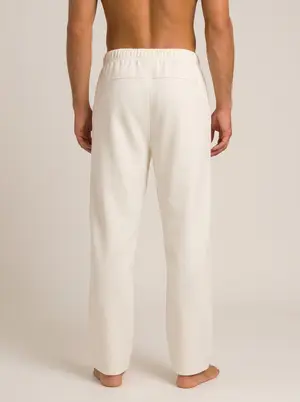
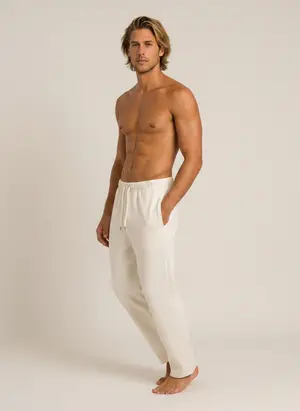
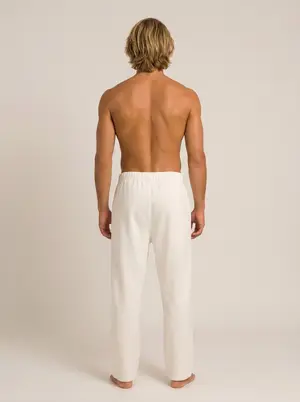
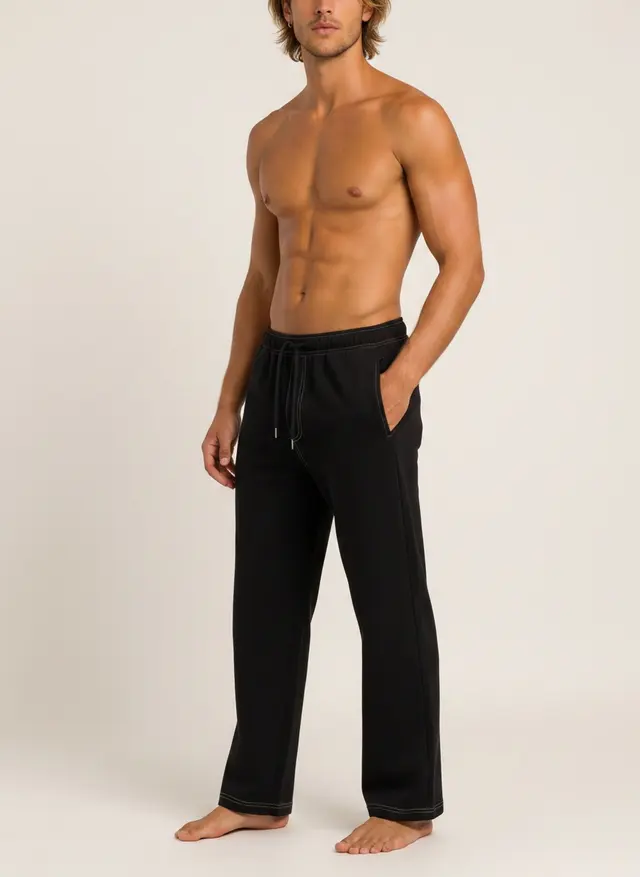
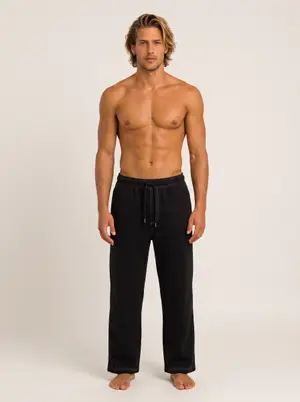
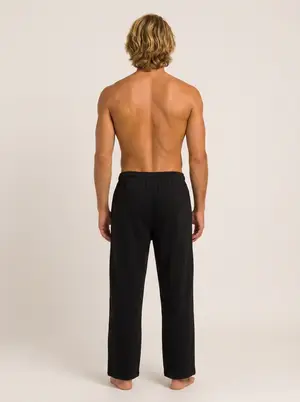
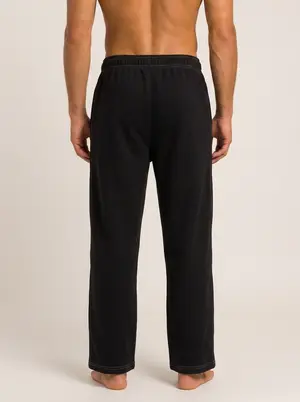
Illustration only. MODA AI supplies the imagery; the greyed fields — fabric, size run, style data — stay yours to fill in.
Inside the shoot — the gallery wall
Every cut, every colorway, every angle MODA AI returned for Future Homme — front, back, three-quarter, side, seated, waistband detail — across two muses and one warm room.
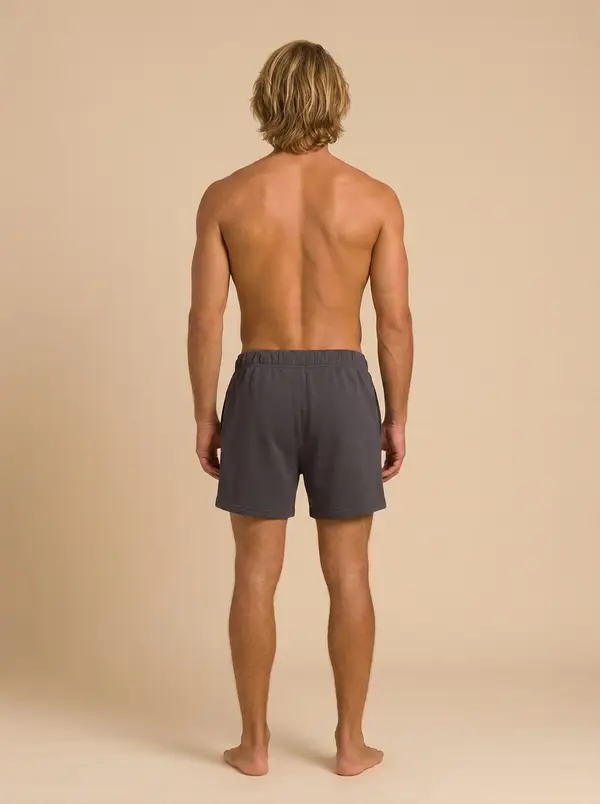
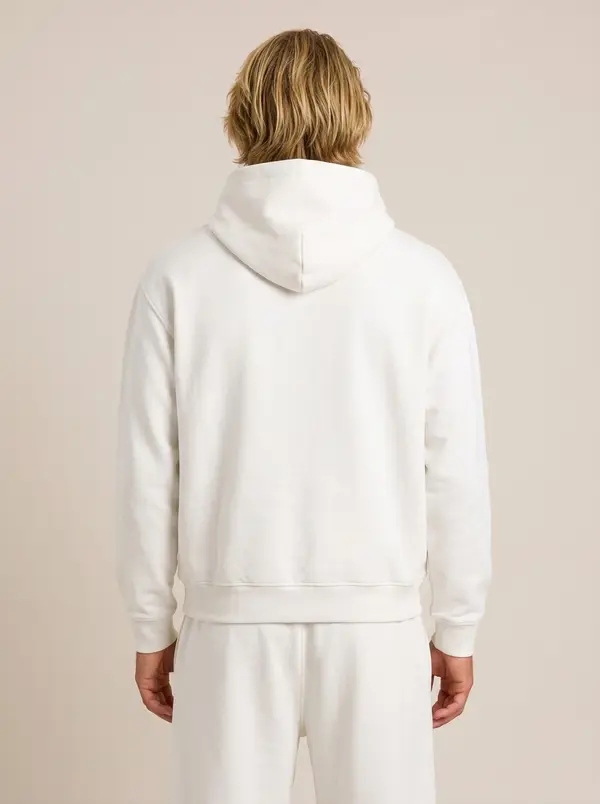
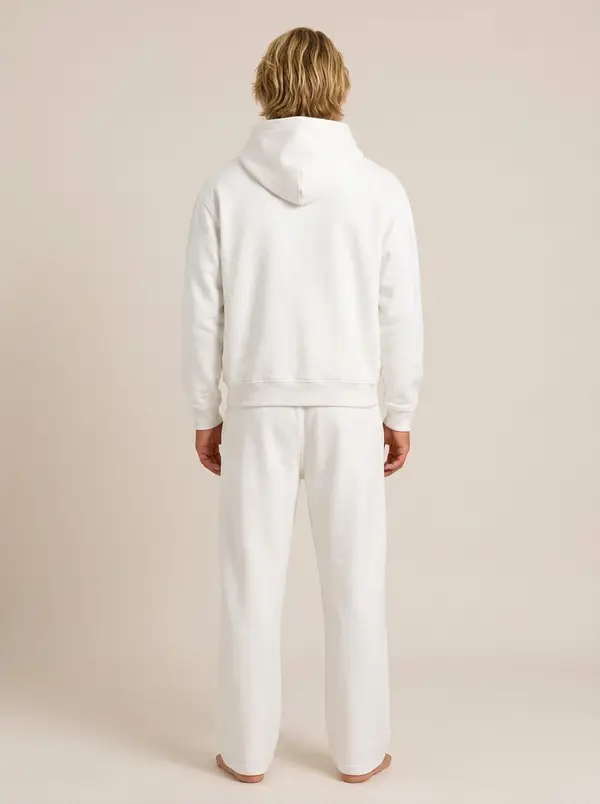
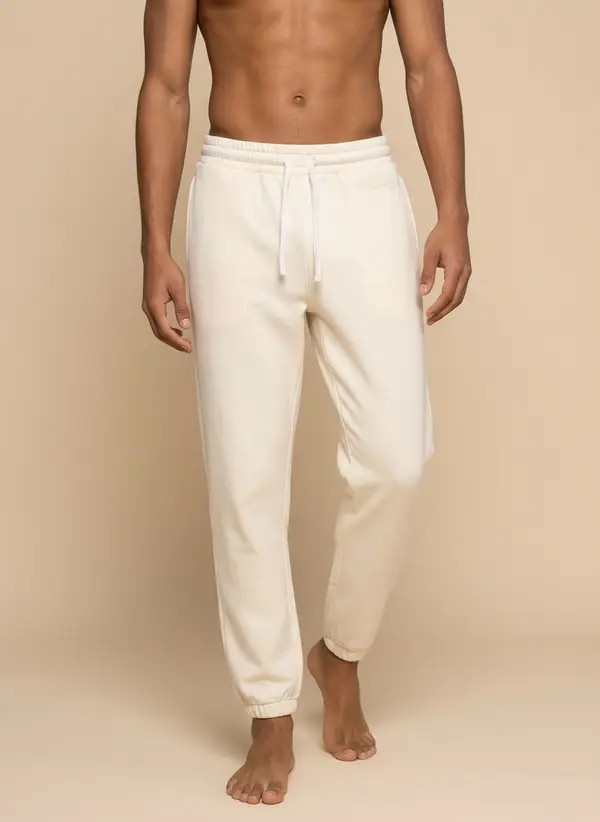
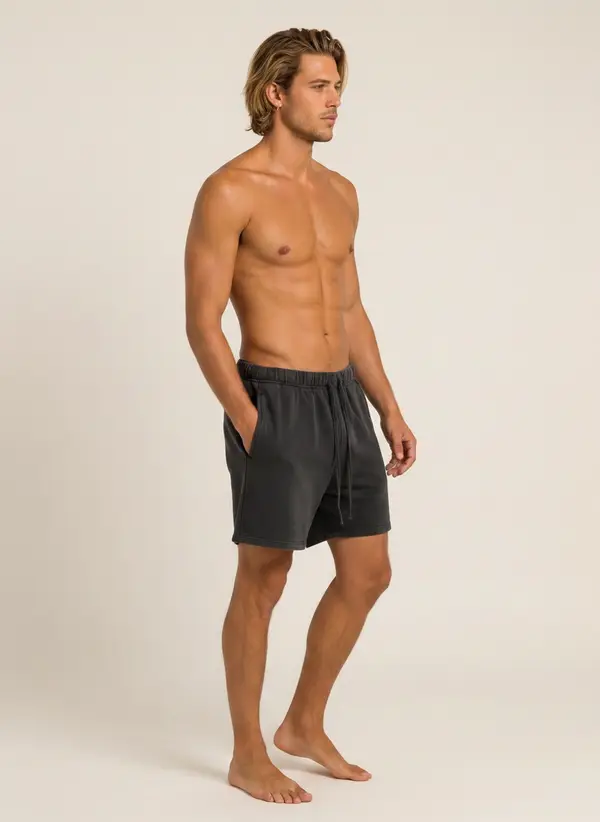
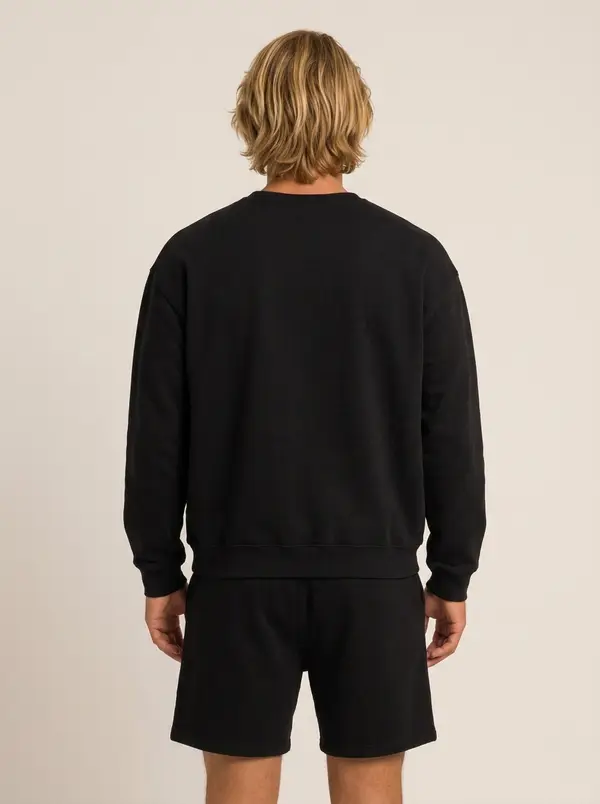
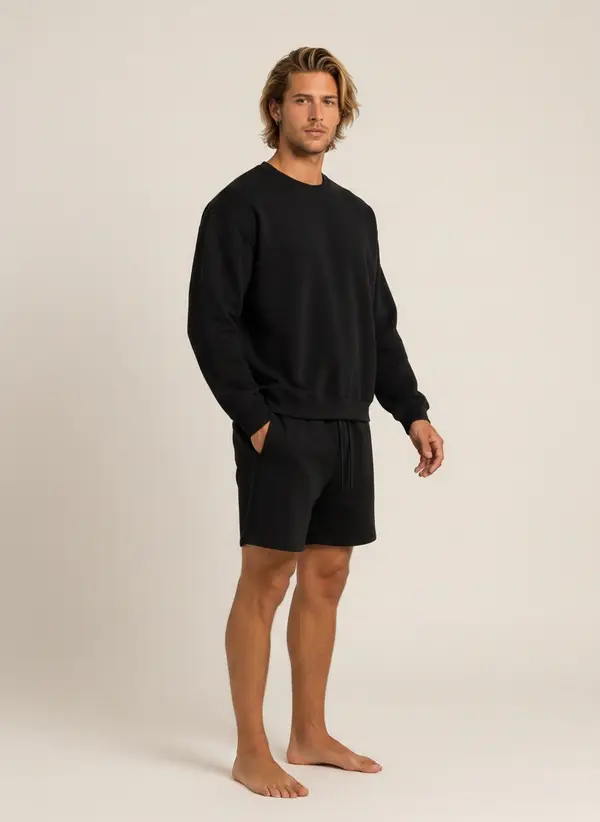
Soft enough to sleep in. Good enough to want.
A tone, not just a shot list — and it survived every SKU.
Shooting loungewear — common questions
Can MODA AI shoot loungewear and sleepwear on a male model?
Yes — this whole catalog is loungewear on AI male models. Lounge shorts, straight and wide lounge pants, joggers, crew-and-short knit sets and hooded sets all came back on the same two muses. Upload a front and back photo of each piece, a face reference for the model you want, and a background reference for the room, and the run returns the catalog set.
How do you stop bone, cream and off-white pieces from washing out?
By making the backdrop warmer than the garments. Half of this range sits inside two shades of off-white, so a white cyclorama would have swallowed it. Setting a warm sand seamless as the background reference and reusing it on every job keeps ivory reading as ivory and graphite reading as graphite across the whole catalog.
Can I use more than one model across the same catalog?
Yes, and for menswear you usually should — a forty-product wall on a single face gets monotonous. Run a second face reference through the same background reference and the same shot list. The bodies differ; the crop, distance, light and floor do not, so the two read as one campaign with range rather than two separate shoots.
Do I have to specify the fit, or does the model decide it?
You specify it. A wide straight leg and a close tapered jogger are different products in the same cloth, so the cut is set per style rather than left to the run — loose or slim, tapered or straight, where the break falls at the ankle. That is what lets a bottoms range board read as a range of shapes instead of one trouser in four colours.
Do I need a photo of the garment already on a body?
No. Flat lays, hanger shots, mannequin shots and existing on-model photos all work as input. Front and back is the useful pair, because the back view is what tells the run how the piece actually closes and falls.
What does a catalog like this cost to produce?
One credit returns ten catalog images, and credits work out to roughly a dollar per ten-shot set at the entry tier. A twenty-style lounge range is therefore in the tens of dollars rather than the cost of a two-day studio booking with a male model, a stylist and a photographer.
More case studies
See how other brands use MODA AI to transform their product photography.
Bully
Türkiye wholesale summer line with one attitude
Read case study →Modest Valoria
Gulf modest wear with full coverage held every frame
Read case study →Black Bananas
Dutch kids streetwear on one calm brand muse
Read case study →Godzeal
Urban American Christian streetwear in studio light
Read case study →Maison Blu
Marrakech-mood resortwear from a single background ref
Read case study →Bōdie Surf Co
Gulf Coast surf summer catalog with print accuracy
Read case study →Mekko
Scandi-inspired kids pajamas with color-matched backgrounds
Read case study →Kraftiez
Colombian designer dresses on one consistent model
Read case study →Bubber Couture
Luxury Indian ethnic menswear with editorial consistency
Read case study →WUPT
French streetwear puffer jackets from supplier to store
Read case study →Blended Boutiques
Plus-size inclusive fashion across diverse backgrounds
Read case study →Shoot your lounge catalog in the right light.
Like Future Homme, upload front and back inputs of each piece, a face reference, and the backdrop you want it lit against — and walk away with a warm, coherent men’s comfort-wear catalog.