Category Guide · Fetish Fashion
Fetish Wear and Roleplay Lingerie on AI Models: Show the Play, Not the Sex
Harness sets, wet-look, sheer mesh and roleplay costumes are real products with real stores. Photographing them well is product work, and it is the hardest brief in fashion.
September 29, 2026 · 15 min read
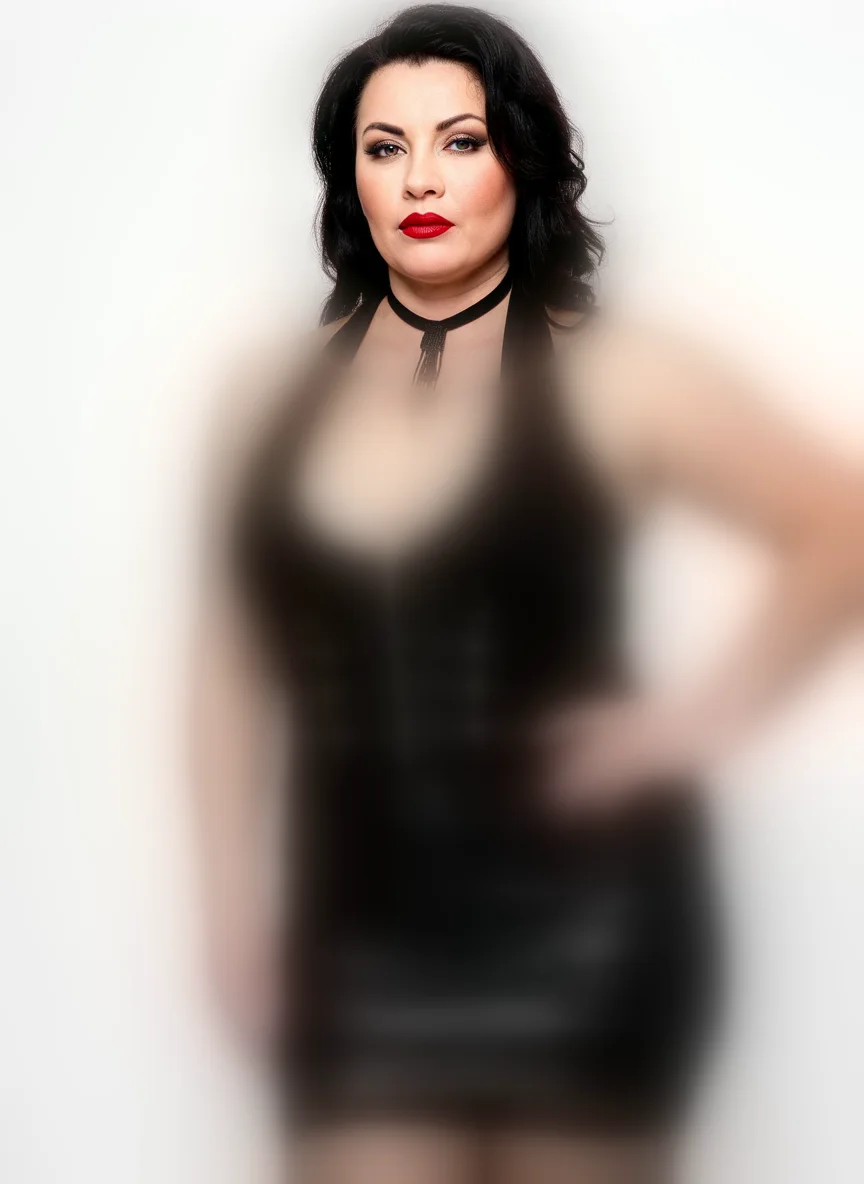
A plus-size model in her late forties, in a corset halter and wet-look skirt. The images on this page are softened until you tap them.
There is a whole category of fashion that photography guides pretend does not exist: fetish, kink and adult play attire. It sells steadily, it has loyal customers, and a lot of it is sold through Shopify. It is also where most AI lingerie models stop working.
It also has a reputation problem it does not deserve. The pieces are about dress-up, character and play. A customer buying a sensual harness is buying the costume for the mood, the same way someone buys a sequin dress for a party. The product page has to sell that, and the photography is where most stores in this category struggle.
This guide is for the people running those stores. It covers where the line sits between showing a product and showing sex, why this is the hardest brief in fashion to shoot with real models, who almost never gets shown wearing it, and what each sales channel will and will not accept. Every set on the page was generated with MODA AI.
One
A real category, and it lives on Shopify
Retailers call it different things: sexy lingerie, provocative lingerie, kink wear, and on Amazon, Women’s Exotic Apparel. It is one category, and it is not a fringe business. Honey Birdette, Bluebella, Fleur du Mal and Playful Promises all sell it, and all of them run on Shopify. Shopify has published case studies on intimates brands such as Lounge and Ysé. Faire, the wholesale marketplace independent boutiques buy from, runs a fetish wear category for retailers stocking exactly this kind of product.
The payment rules reflect that. Shopify Payments lists "adult products" among its prohibited businesses, but defines them as "products or services that contain sexually explicit content, such as adult videos, pay-per-view adult content, or adult magazines." That is media. A corset and a wet-look skirt are garments.
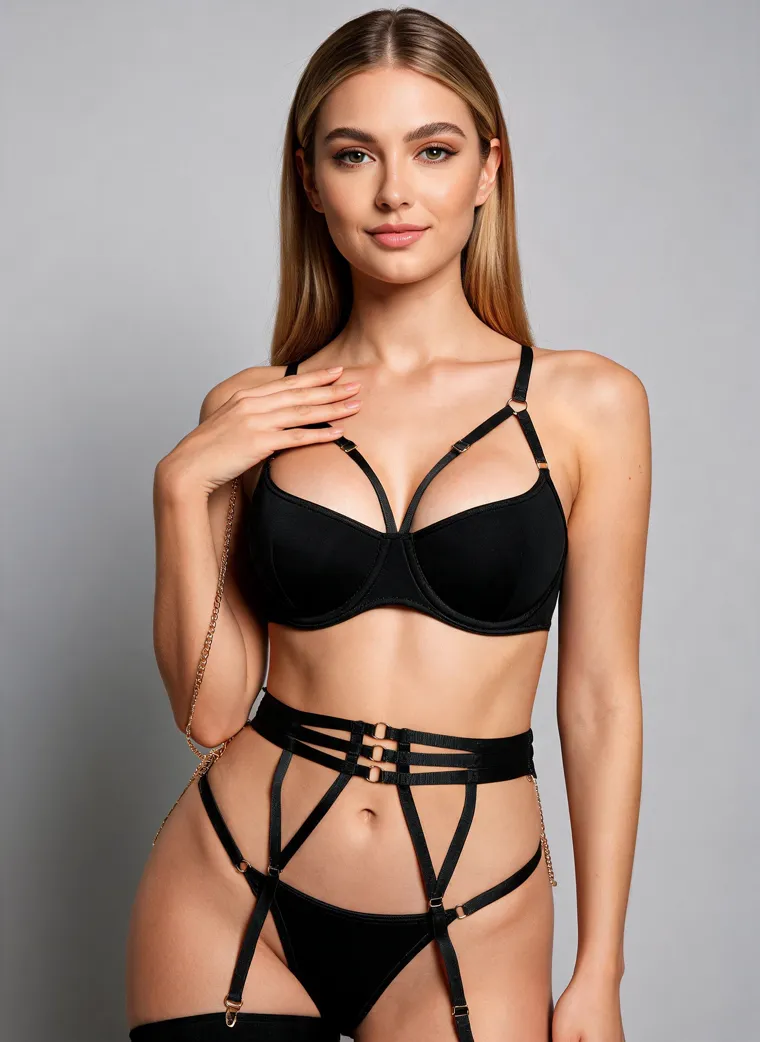
Construction. A cage harness, strap by strap.
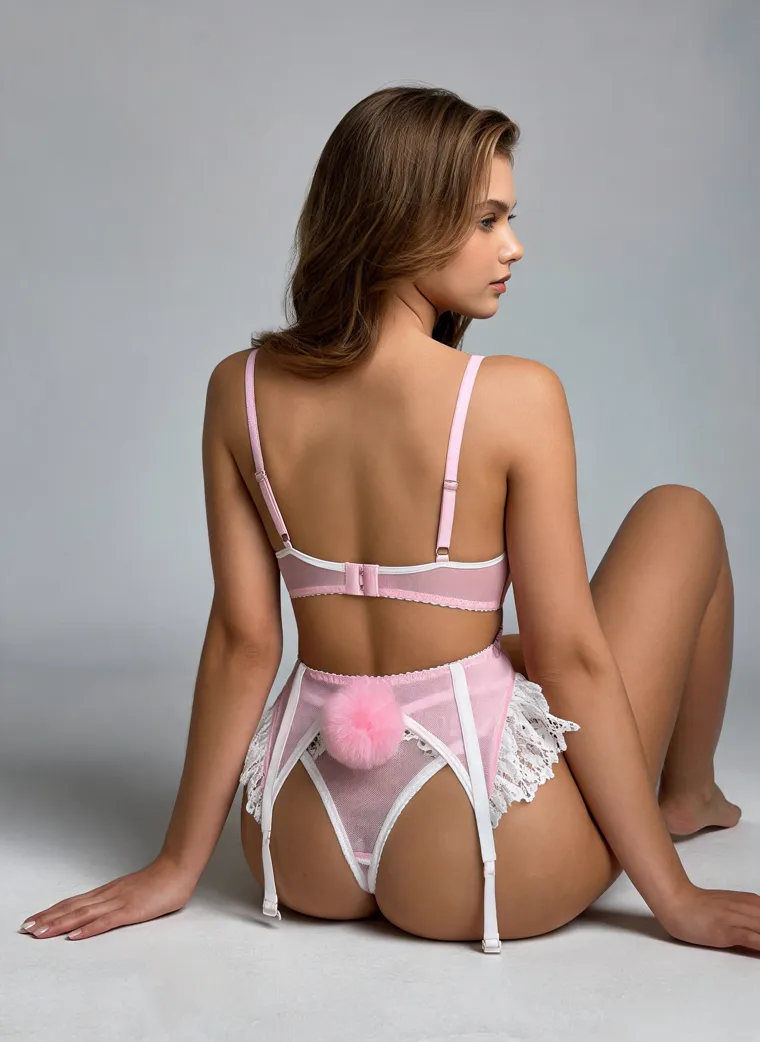
Character. A bunny set, tail and ruffles.
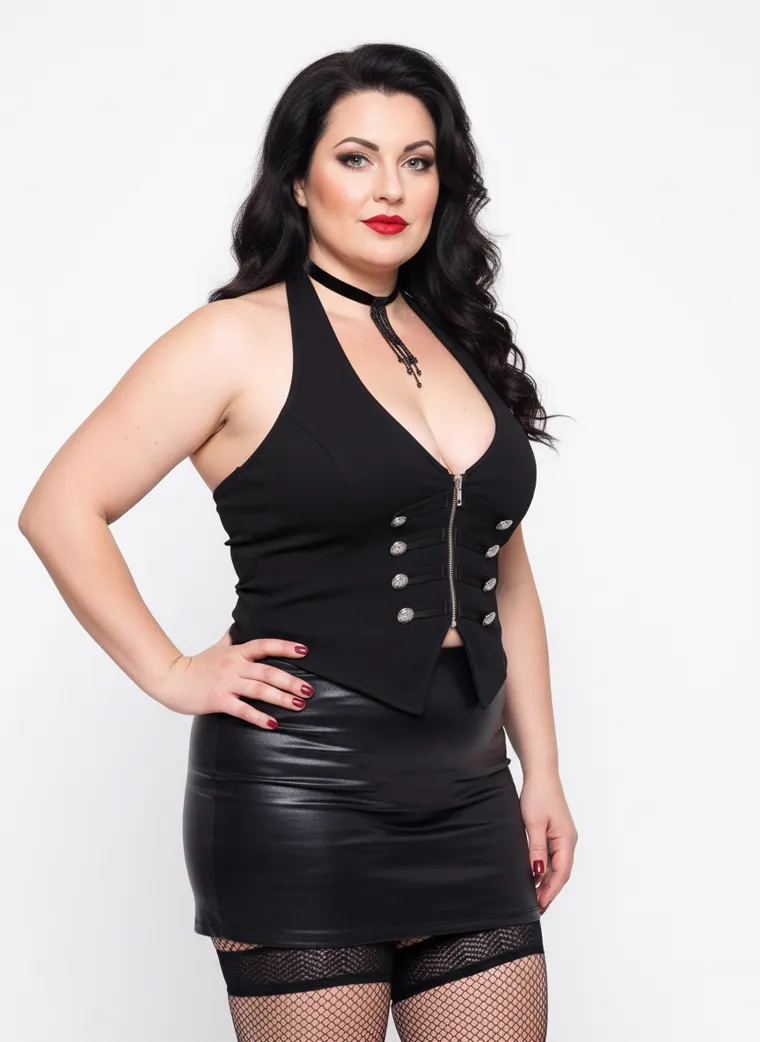
Attitude. Corset clasps, a beaded choker, wet-look.
This category sells dress-up, character and play. The photography should sell the same thing.
Two
Product photography, not pornography: where the line sits
The line is easier to draw than people assume, because the platforms have already drawn it in writing. None of them ban this category. All of them care about the same handful of things: whether intimate areas are covered, and whether the pose is about the garment or about sex.
Etsy allows harness and revealing styles as long as intimate areas are covered by opaque clothing. Google flags poses, not garments. Meta counts blurred nudity as nudity.
| Product showcase | Explicit imagery | |
|---|---|---|
| Coverage | Intimate areas covered by opaque material in every frame | Nudity, including through sheer mesh or under a blur |
| Pose | Standing, three-quarter, back view, seated with legs together | Legs spread, hands on covered intimate areas, sexual positioning |
| Framing | The whole garment and how it is built | A crop that frames a body part rather than the piece |
| Subject | The costume, the character, the construction | Sex |
Generating a set gives you more frames than you should publish. Cutting the ones that break these rules, a seated pose with legs apart, a hand on the chest, a crop that leads with the body, is part of the job.
The blur on this page is not concealment. It follows a convention Etsy already uses: mature listings must be tagged and have their first image obscured, so nobody sees the category before they choose to.
If intimate areas are covered and the pose is about the garment, it is a product photograph. The piece can be as bold as you like.
Three
Why this is the hardest brief in fashion
Photographing a knit jumper is a booking. Photographing a harness set is a negotiation. Model agencies publish this in their booking terms, and the numbers are consistent.
| Agency | Lingerie terms |
|---|---|
| SMG, Seattle | Billed at time and a half. Closed set required. Every booking approved by the agency first. |
| Sigal, Columbus | Double the model’s normal hourly rate, including sheer items. Two hour minimum, closed set, the model is asked first. |
| Max, Toronto | Double the regular rate. The client must name the lingerie type when booking. |
| BFMA, UK | See-through and lingerie photography need the agency’s express prior written approval. |
Those premiums exist for good reasons, and they are only the start. Many models decline this category outright, and agencies advise them to decide their boundaries before the shoot, not during it. Fetish-adjacent briefs, harness, wet-look, roleplay, are the ones most often turned down. A store that needs ten styles in four colourways is asking for a lot of goodwill from a small pool of people.
Consent is where it has gone wrong. The Model Alliance reports that nearly all models have experienced a "surprise" nude shoot or casting. In 2026 a model sued a fashion retailer alleging it used AI to generate new, suggestive images of her beyond what her contract allowed, including one straddling a barstool. New York’s Fashion Workers Act, in force since June 2025, now requires clear written consent, with scope, purpose, pay and duration, before a brand creates or uses a digital replica of a model.
That settles the ethical version of AI in this category. It is never a copy of a real model who did not agree to it. It is a model who does not exist, wearing your product, in the poses you choose. More on the disclosure side is in our guide to AI model disclosure.
Four
The brief no agency can fill
The customer for this category is not who the photography usually shows. The average American woman wears a size 16 to 18. Mintel found that 3 in 10 women over 55 struggle to find clothes that suit their age. When Aerie stopped retouching and widened its casting, sales grew 20 percent the following year.
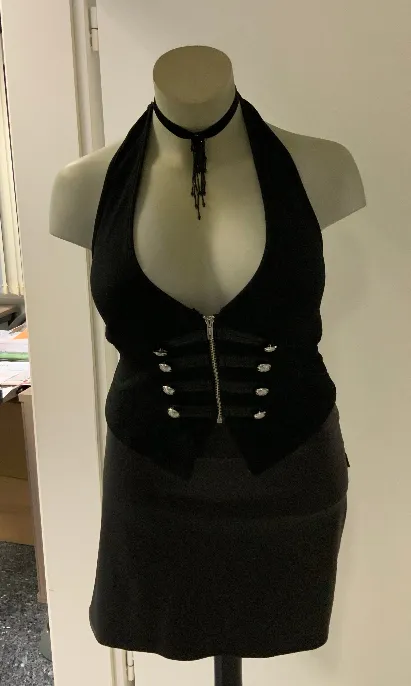
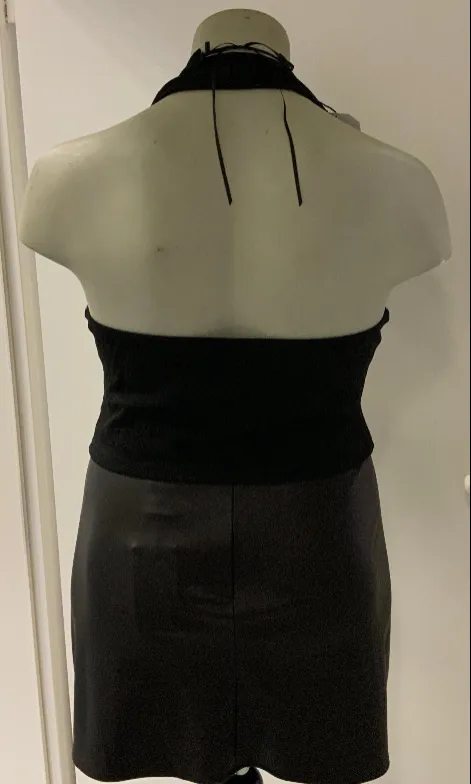
Now try booking it. A plus-size model in her late forties, comfortable in a corset and a wet-look skirt, available for a studio day, at a lingerie rate. That is who wears the set below: a full figure, dark hair, red lipstick, completely at ease. And all the seller had to start from were two phone shots of the outfit on a stockroom mannequin. It is the set the category most needs and the one a traditional shoot is least likely to deliver.
Input
Output
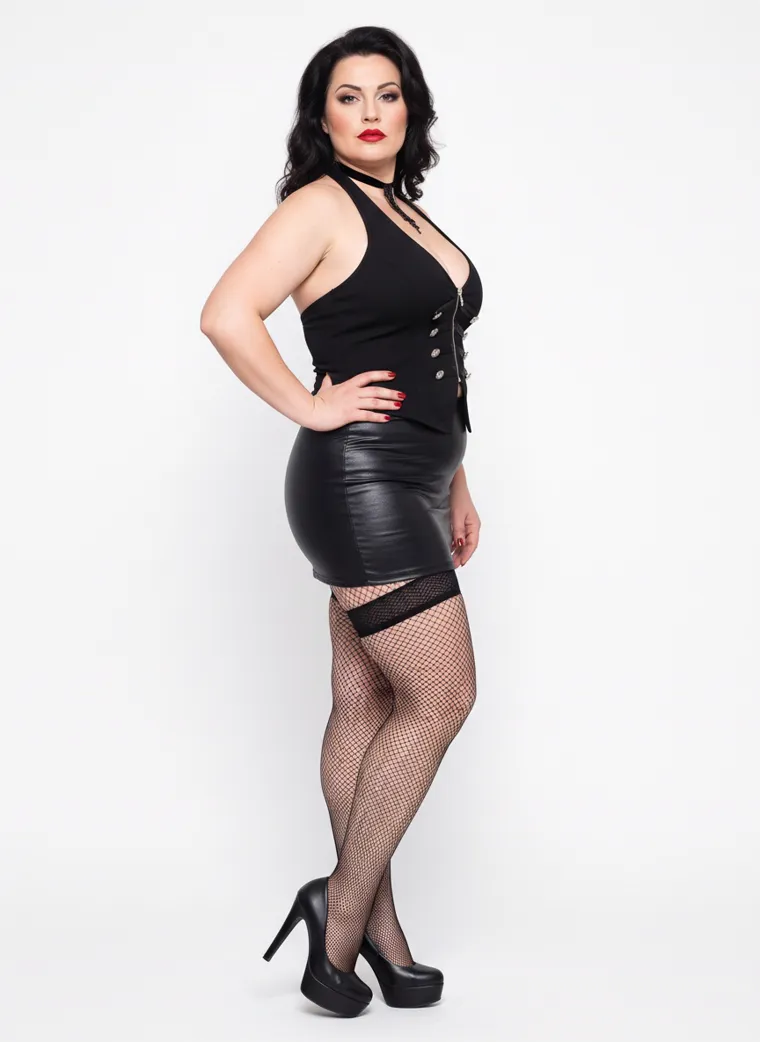
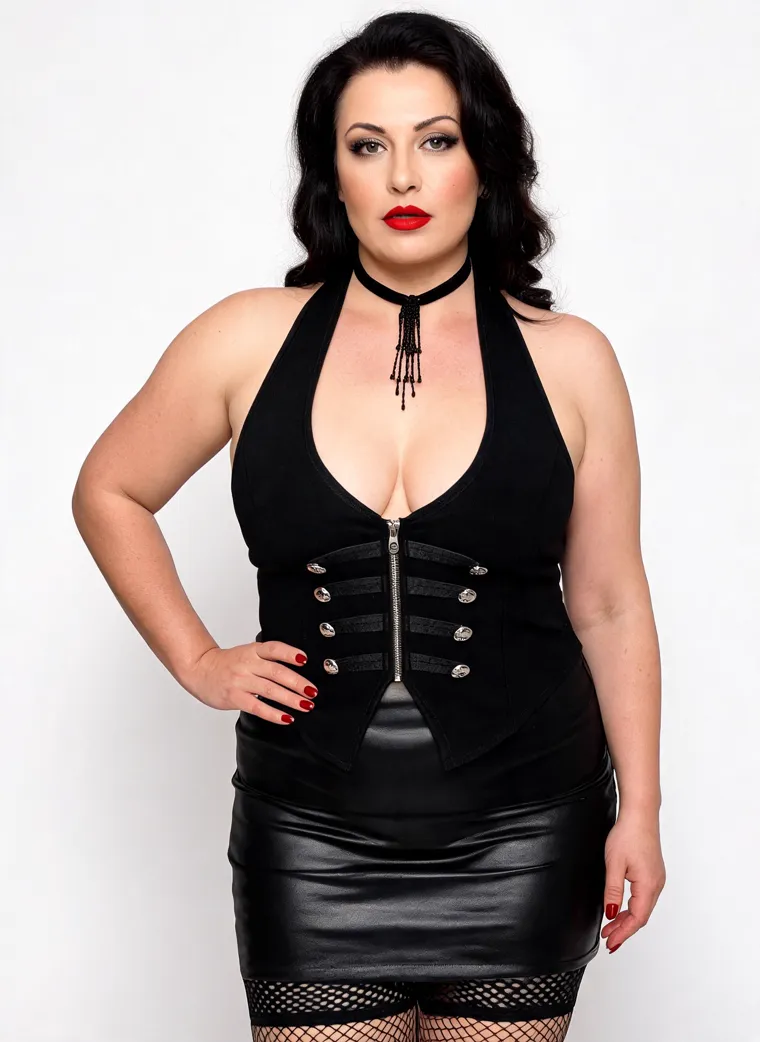
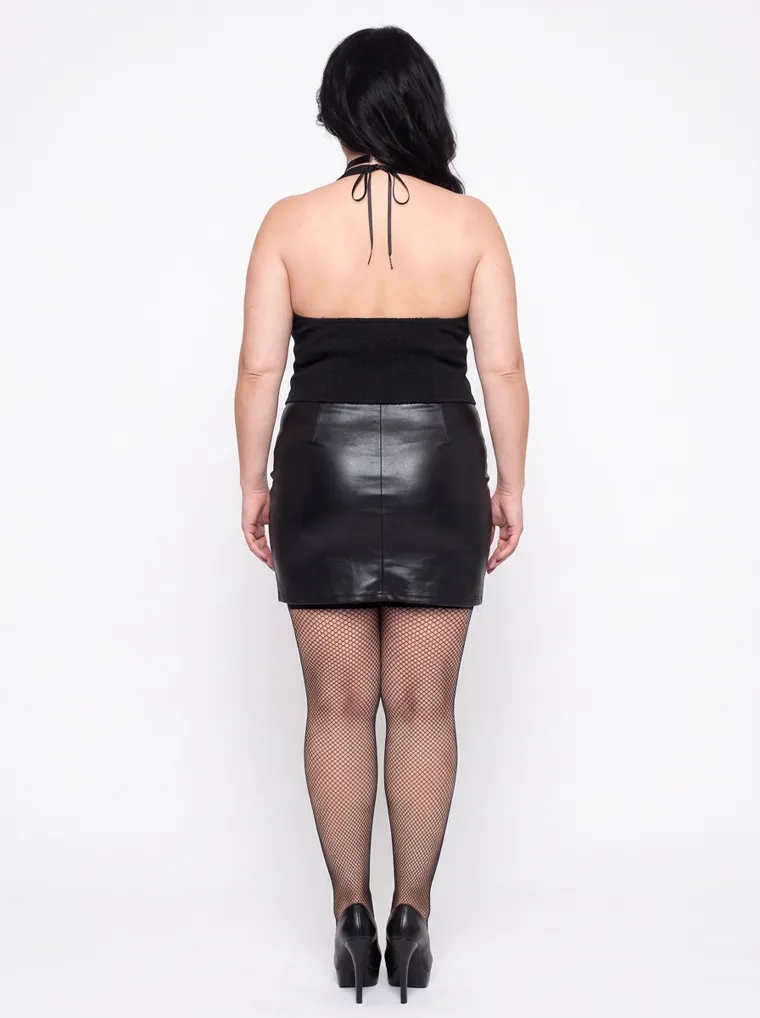
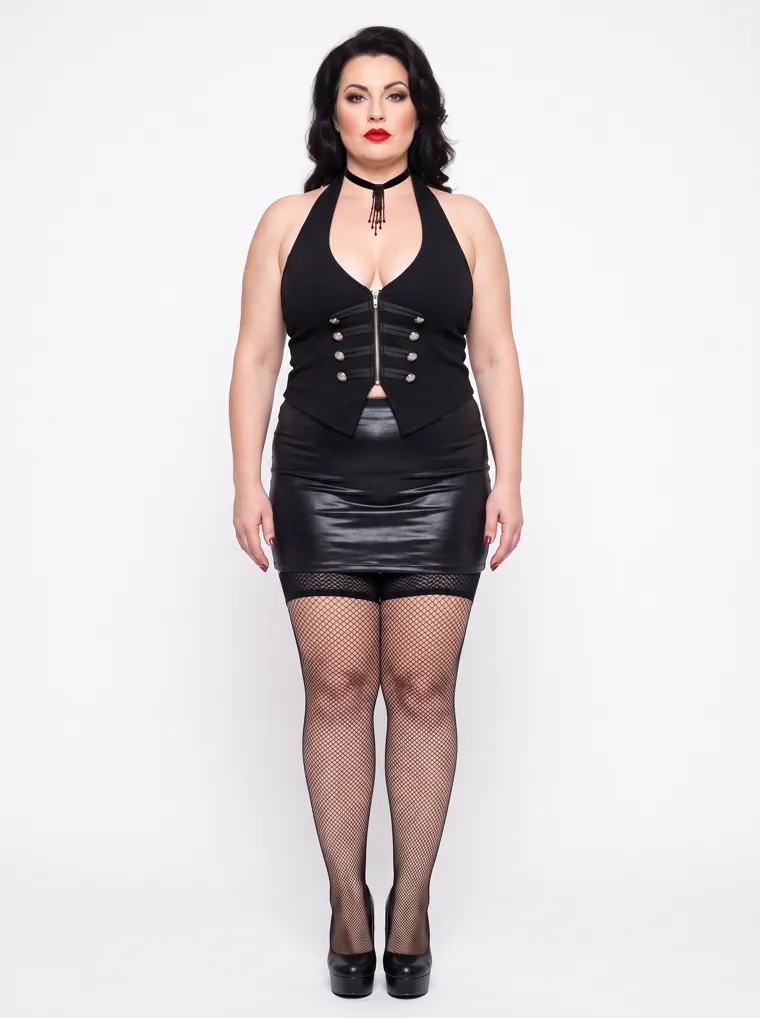
Left, the two photos the seller had: the outfit on a mannequin in the stockroom, front and back. Right, the set generated from them.
Ten seconds of the same set in motion. How a wet-look skirt moves is something a still cannot show.
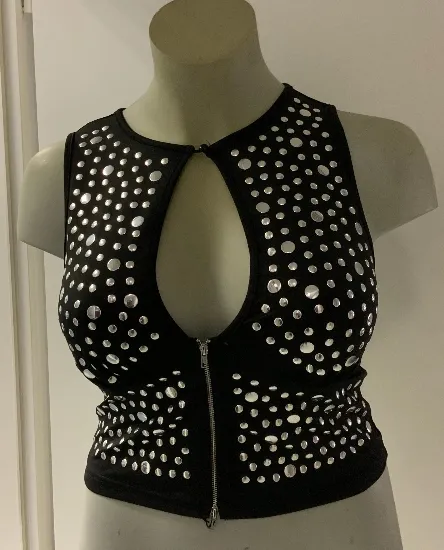
The second set started the same way, on a mannequin in the stockroom. A different outfit on the same kind of brief, with full coverage throughout. A studded keyhole crop top and a wet-look mini. Nothing about it is timid, and nothing about it is explicit.
Input
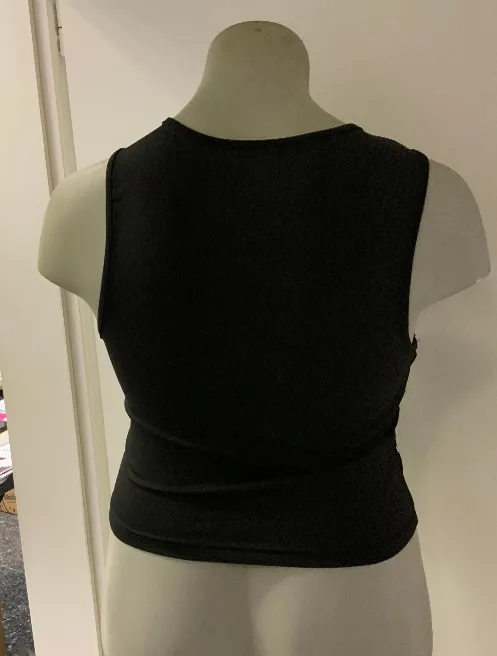
Output
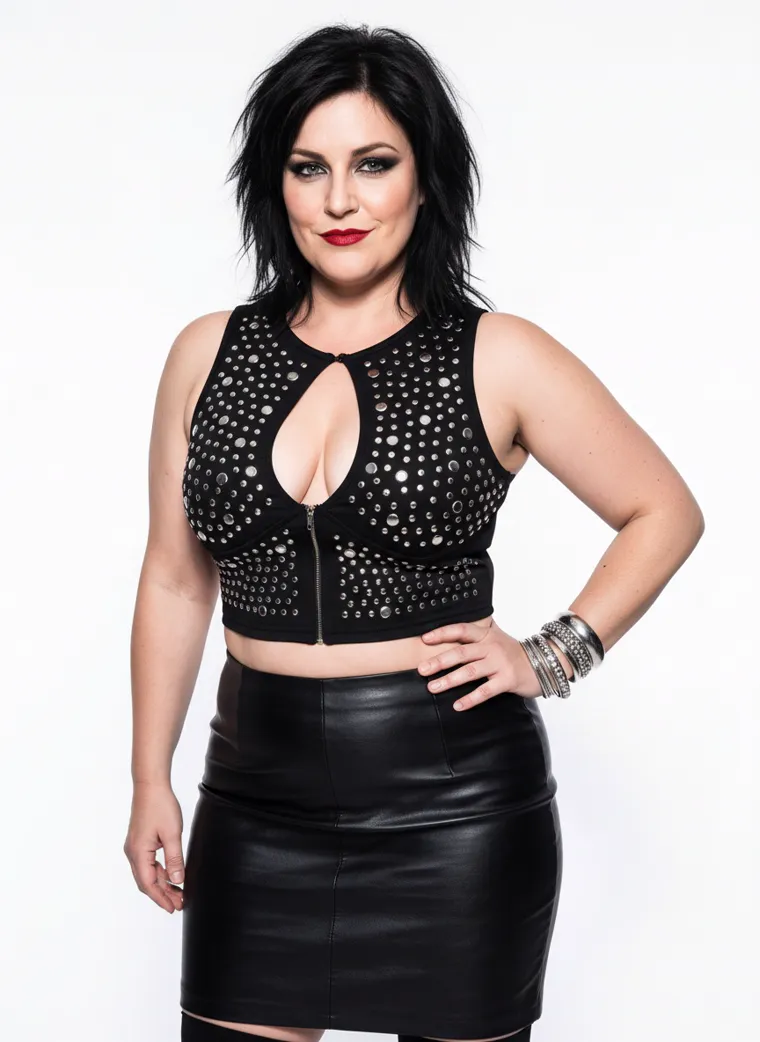
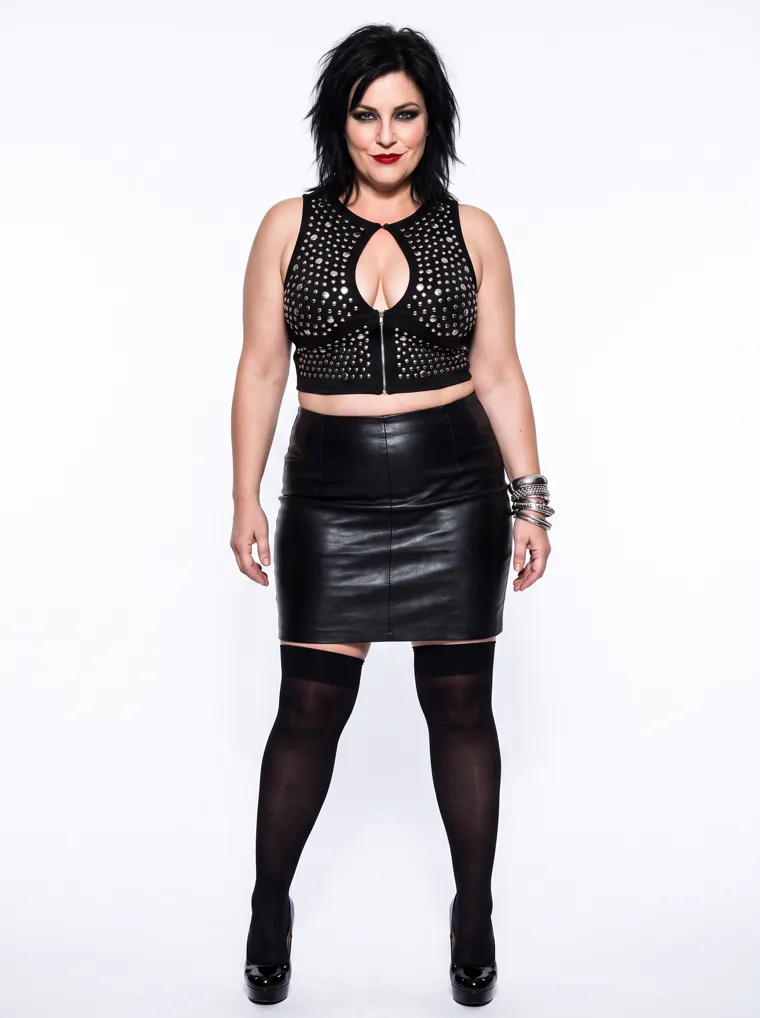
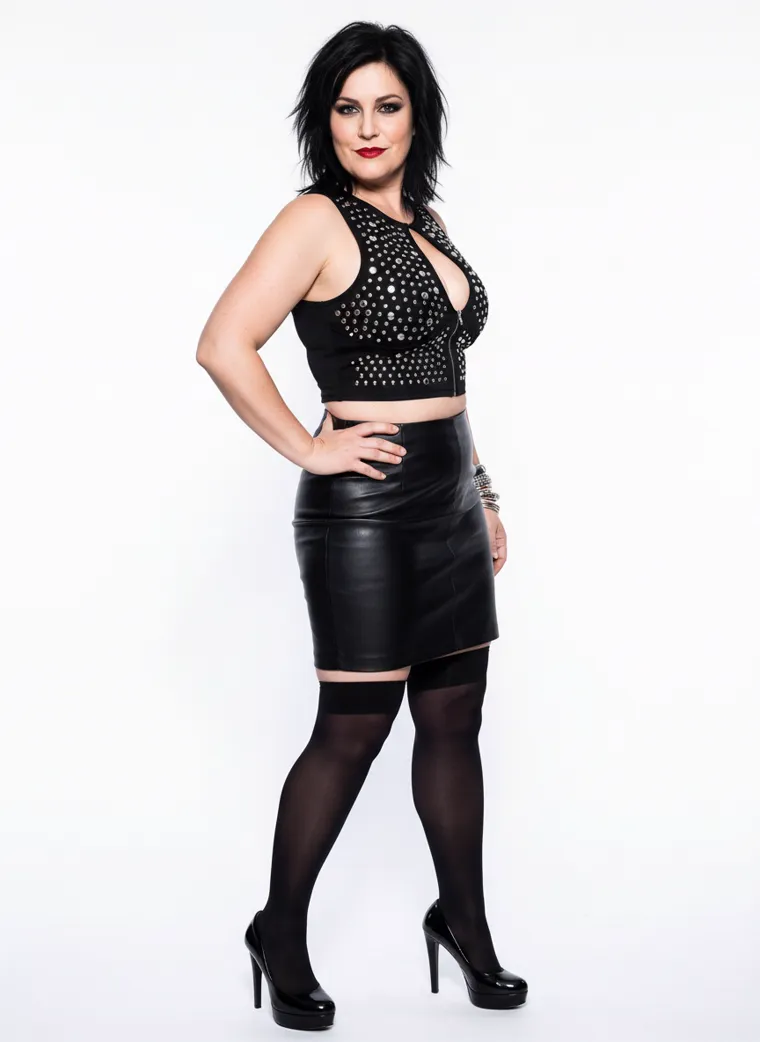
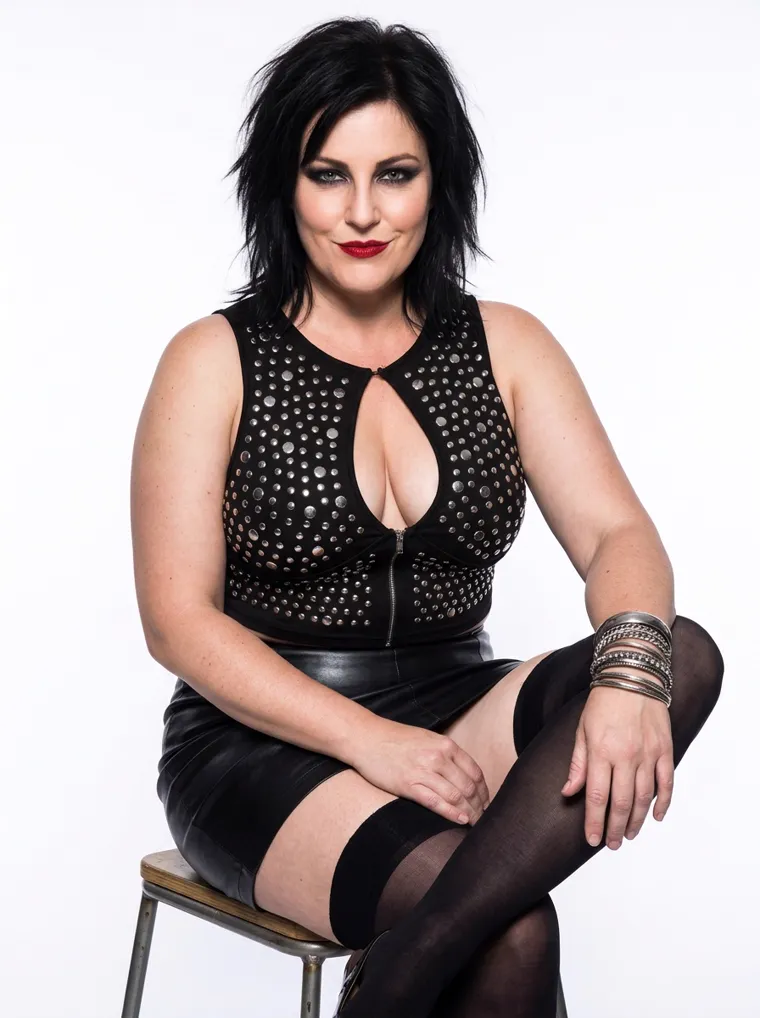
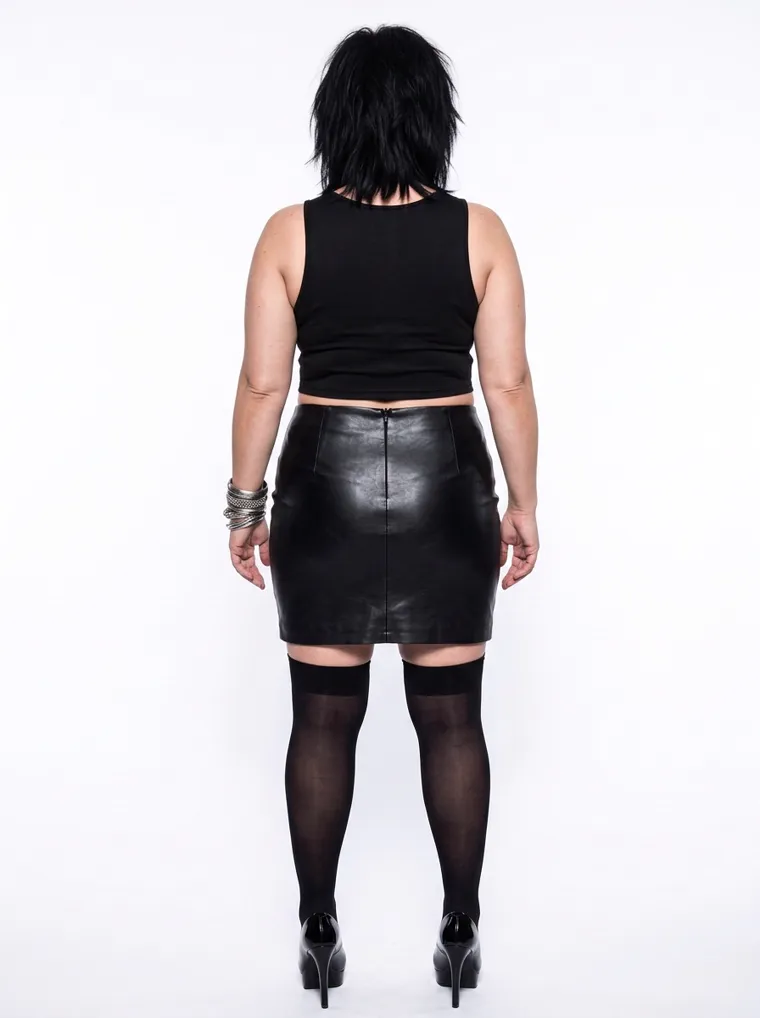
The customer who buys this category is every age and every size. The photography should look like her.
Five
Posing AI lingerie models for the product, piece by piece
These pieces are construction-heavy. Straps, rings, suspenders, bows and closures are the reason the customer is paying, so the frames have to explain how the piece is built and how it sits. Each set below is a worked example.
The cage bra and harness garter belt. The back is where the strap routing lives, so the back view is not optional. The rest are standing or three-quarter frames that show where each strap meets the waistband.
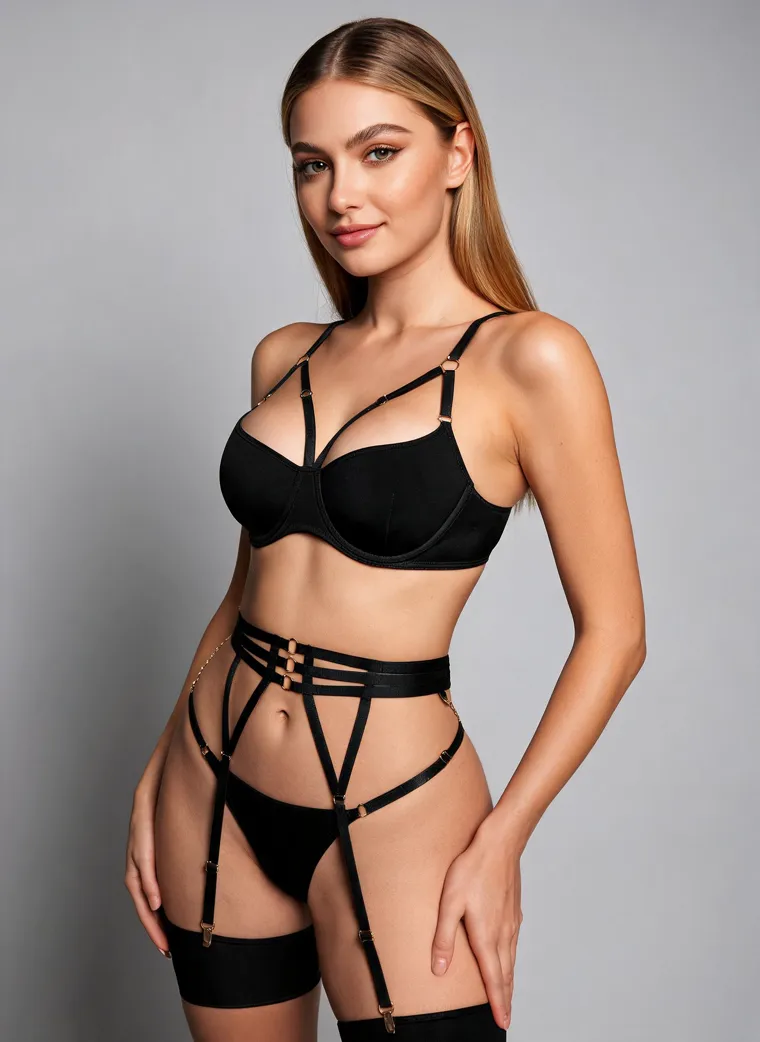
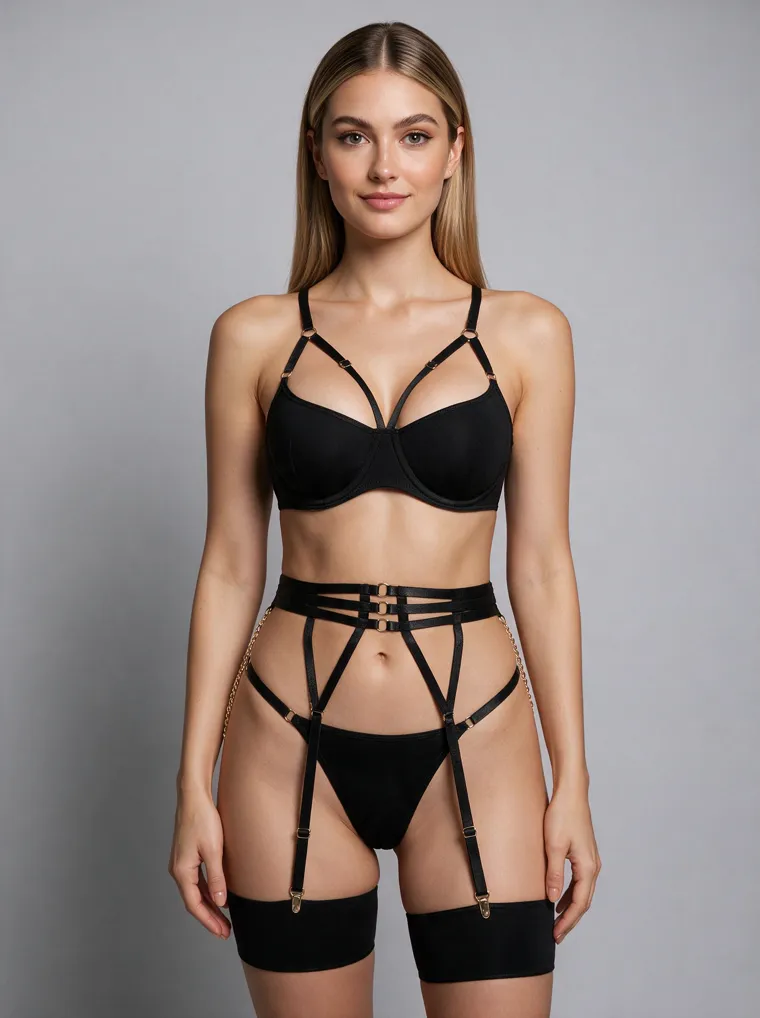
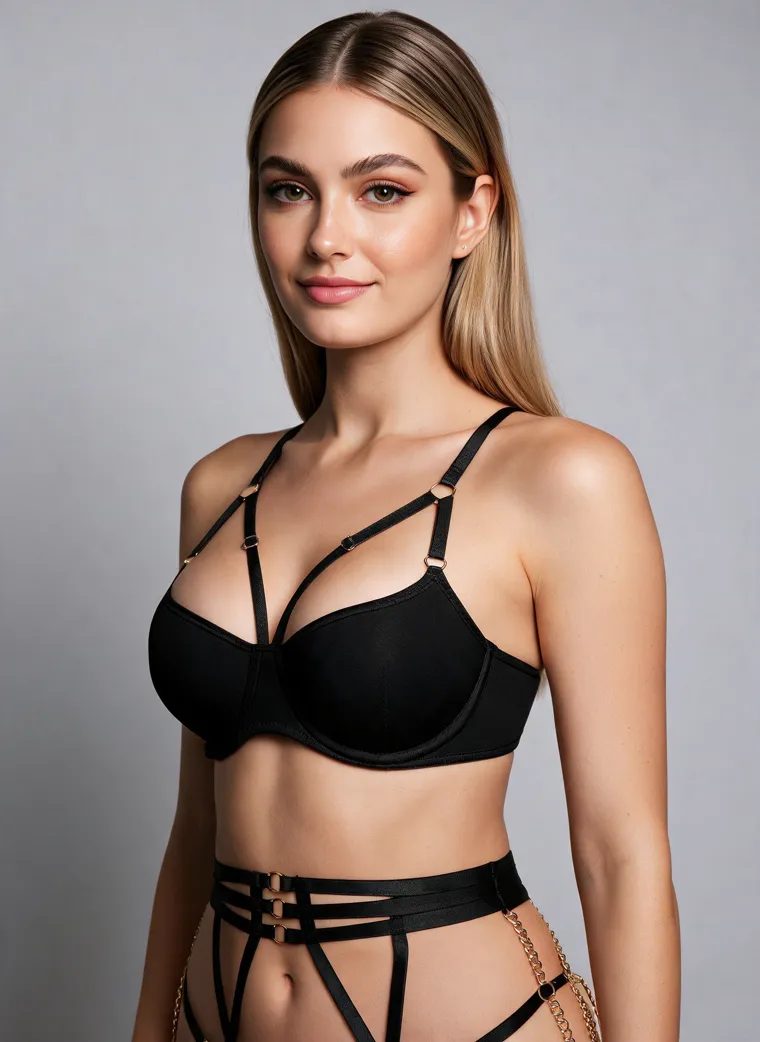
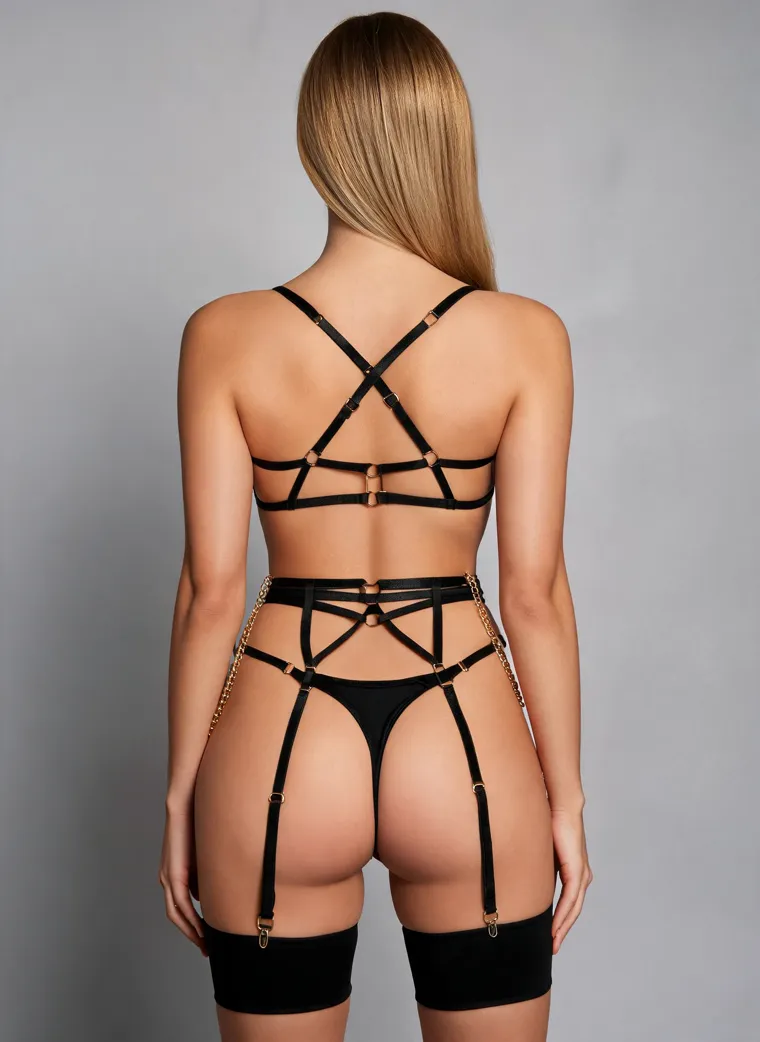
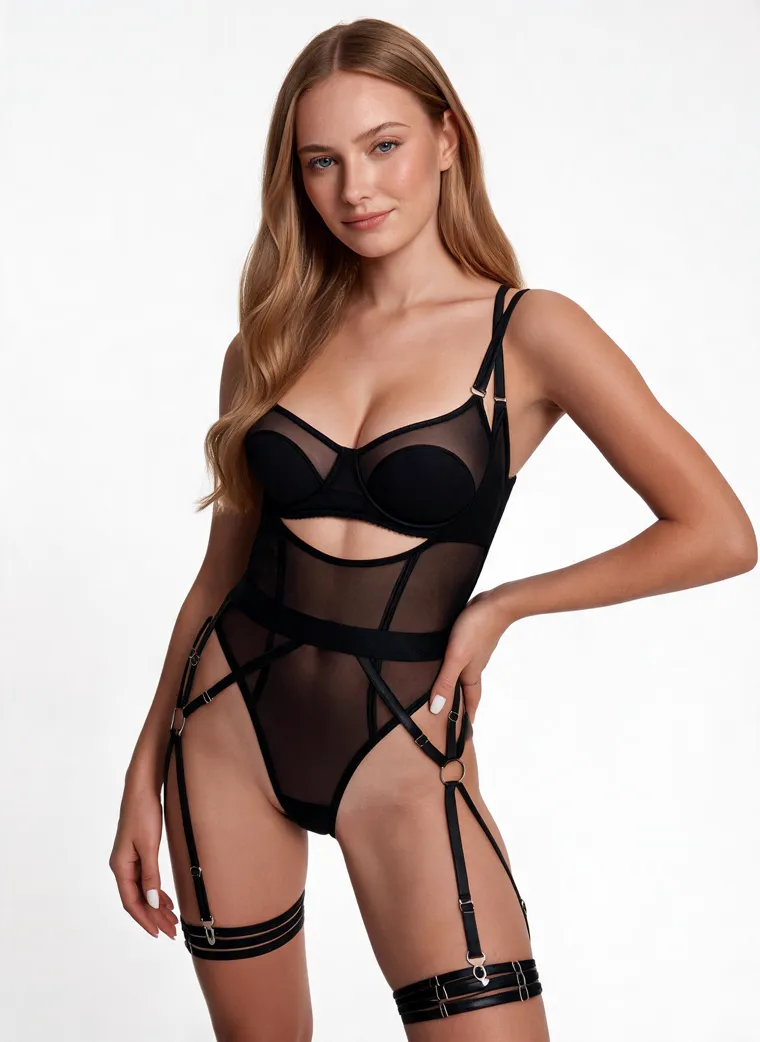
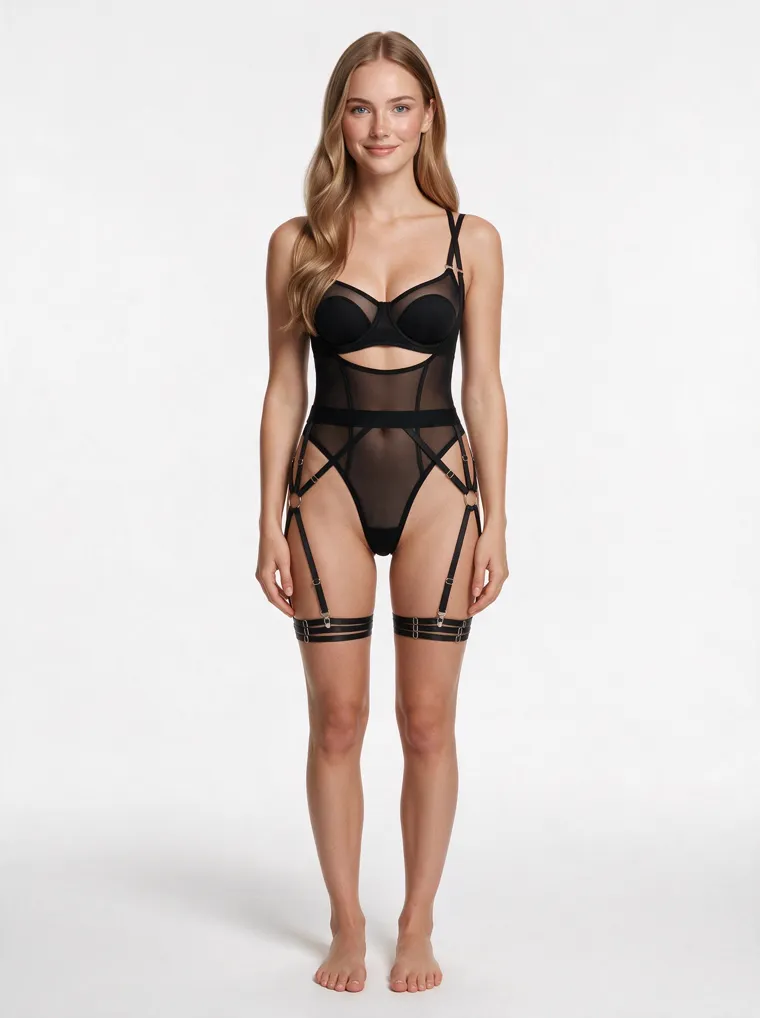
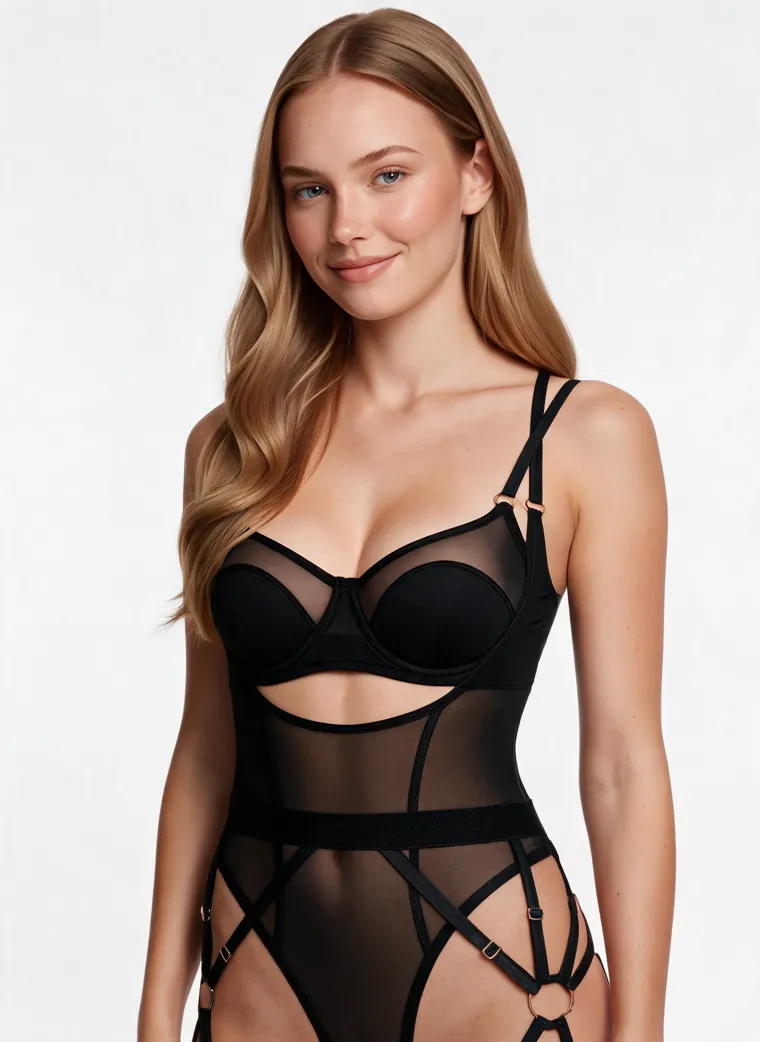
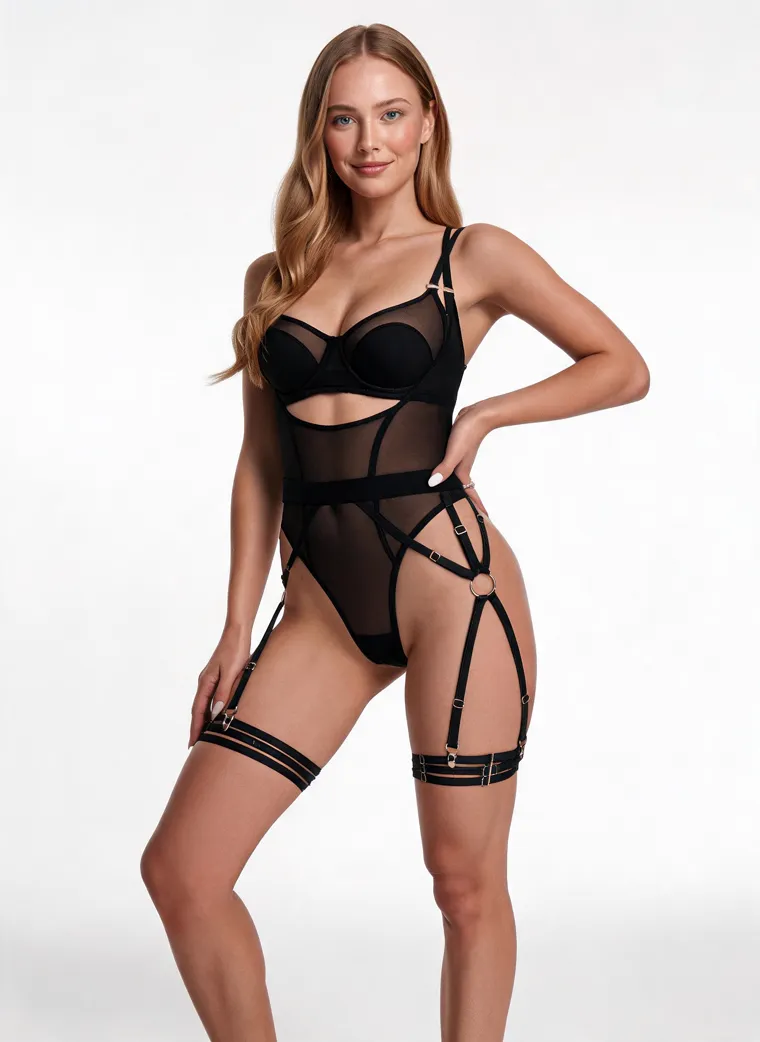
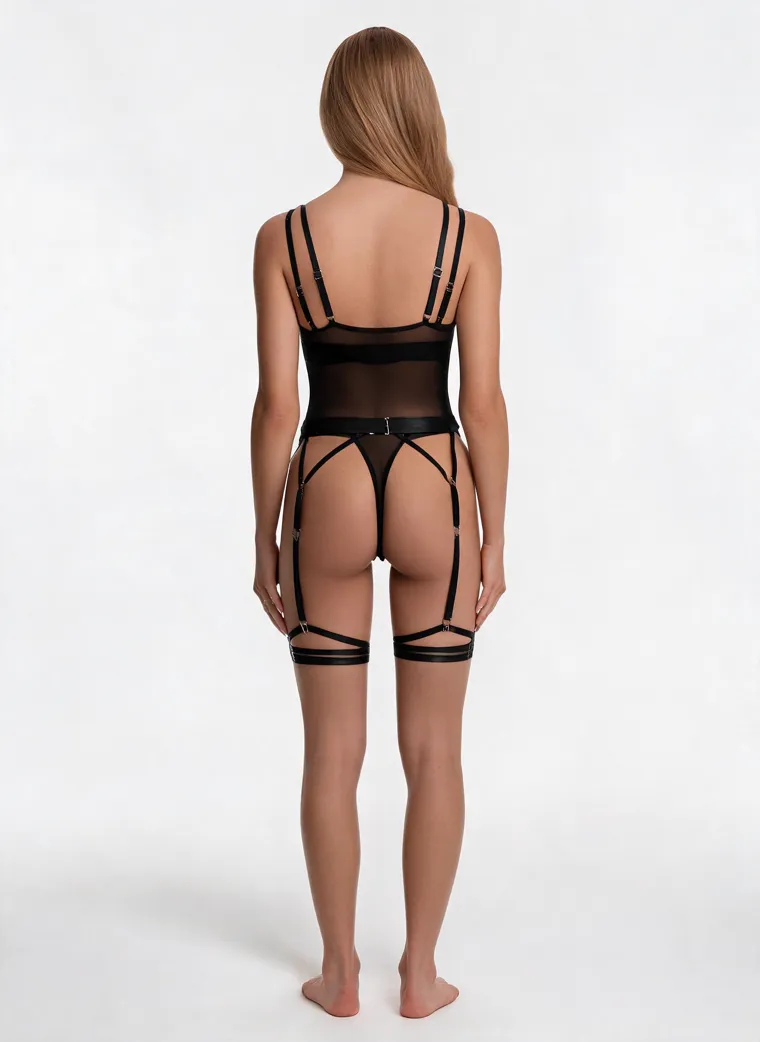
Left, the harness: the last frame of the rail is the one that sells it. Right, the teddy: sheer mesh over opaque moulded cups, with the suspenders visible where they meet the garters.
The mesh teddy. Sheer pieces are where the line is tested most, and the answer is in the garment, not the pose. This style has opaque moulded cups under the mesh, so every frame stays within the rule. For sheer pieces without that, pair them with an opaque layer, the same way pale garments need a ground that isn’t pale.
The bunny set. Roleplay costumes sell a character, so the frames lean into it: the bow collar up front, the ruffled garter belt in the three-quarter, the pom-pom tail from behind. It reads as a costume because it is photographed as one.
The lace set with bow details. A white lace set becomes a character piece through its contrast: black bows at the centre front and hip, black strap accents. The close frames sit on those details, because they are what separates it from every other white lace set.
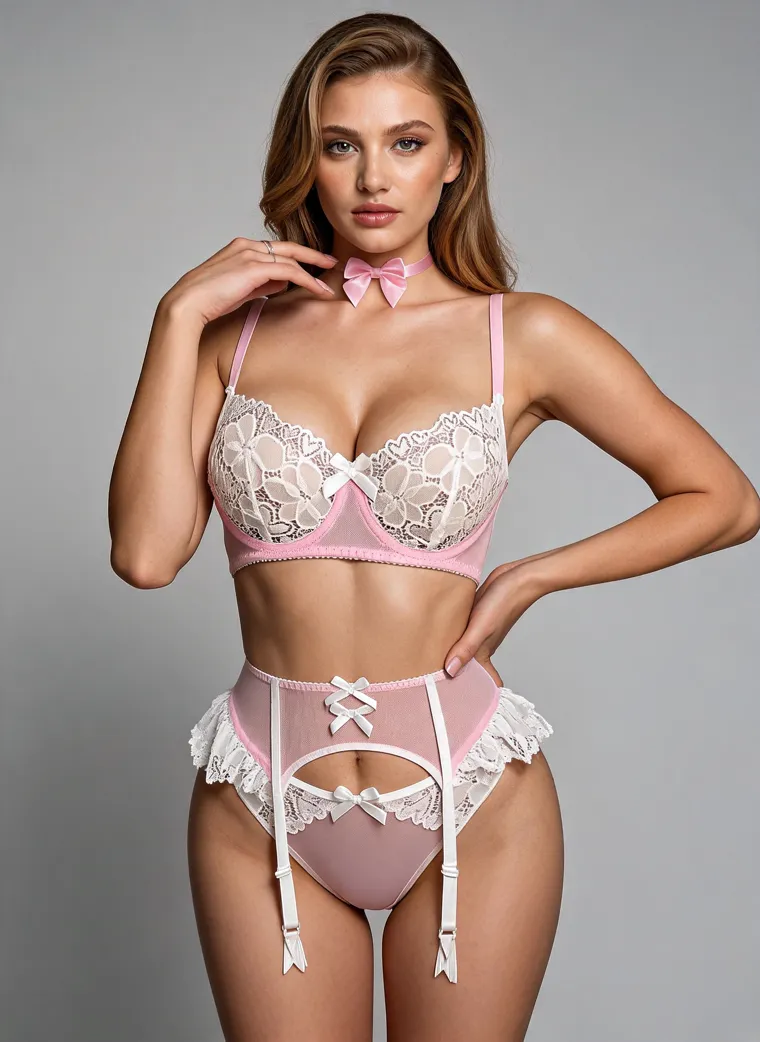
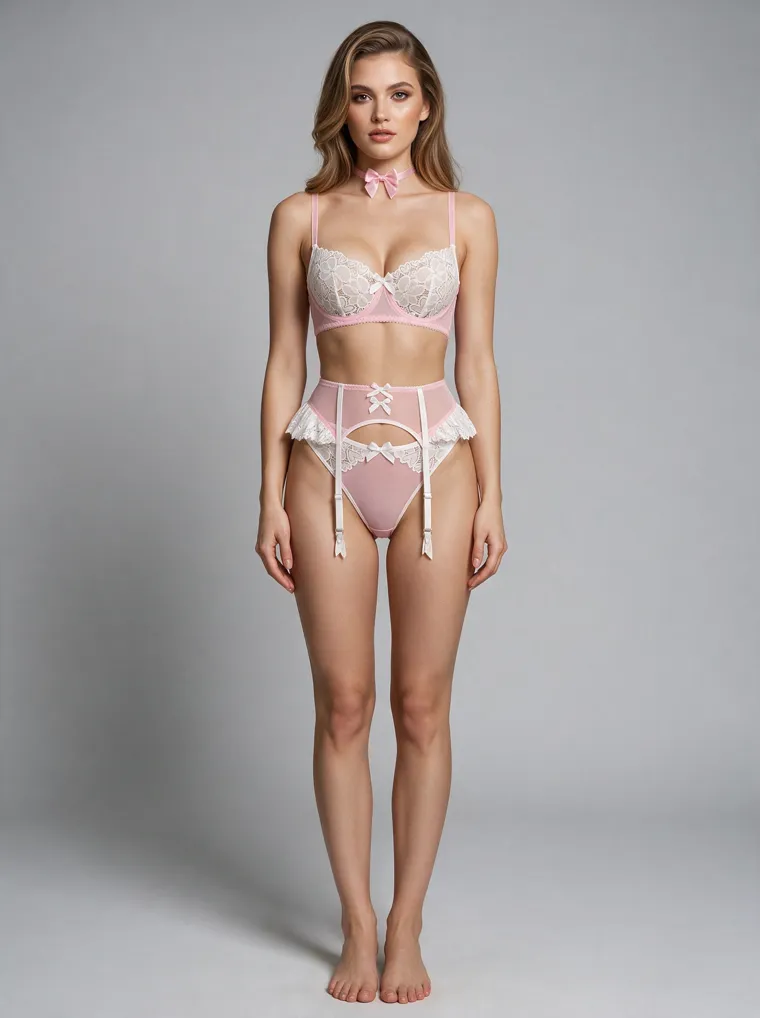
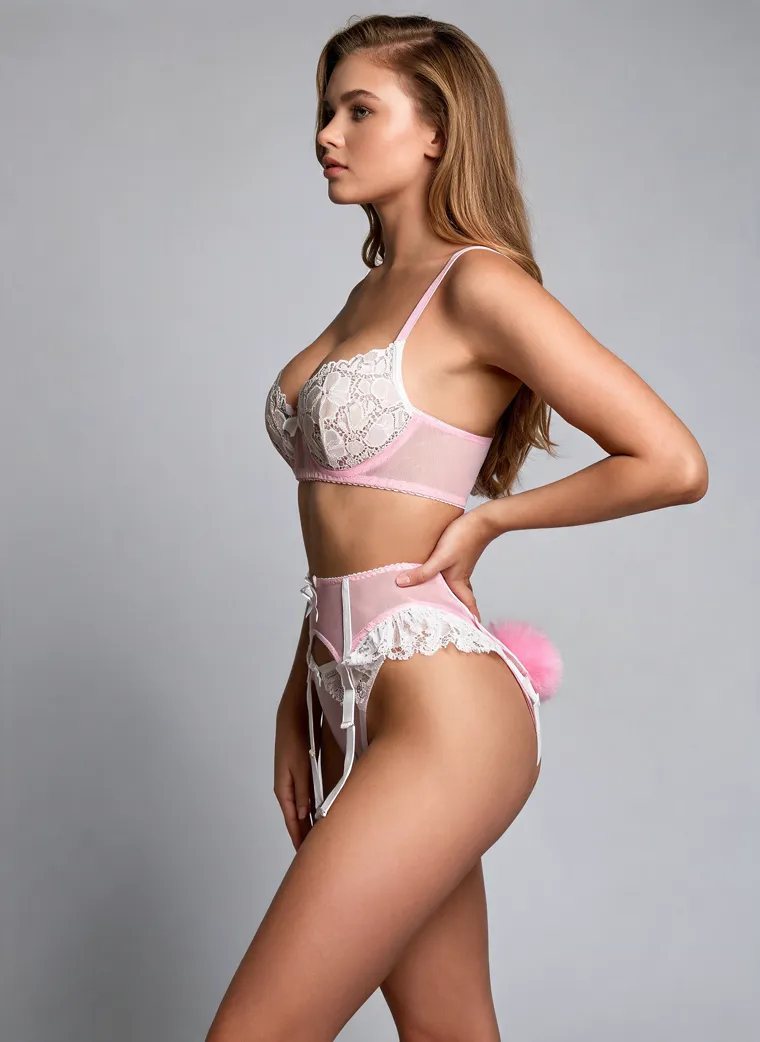
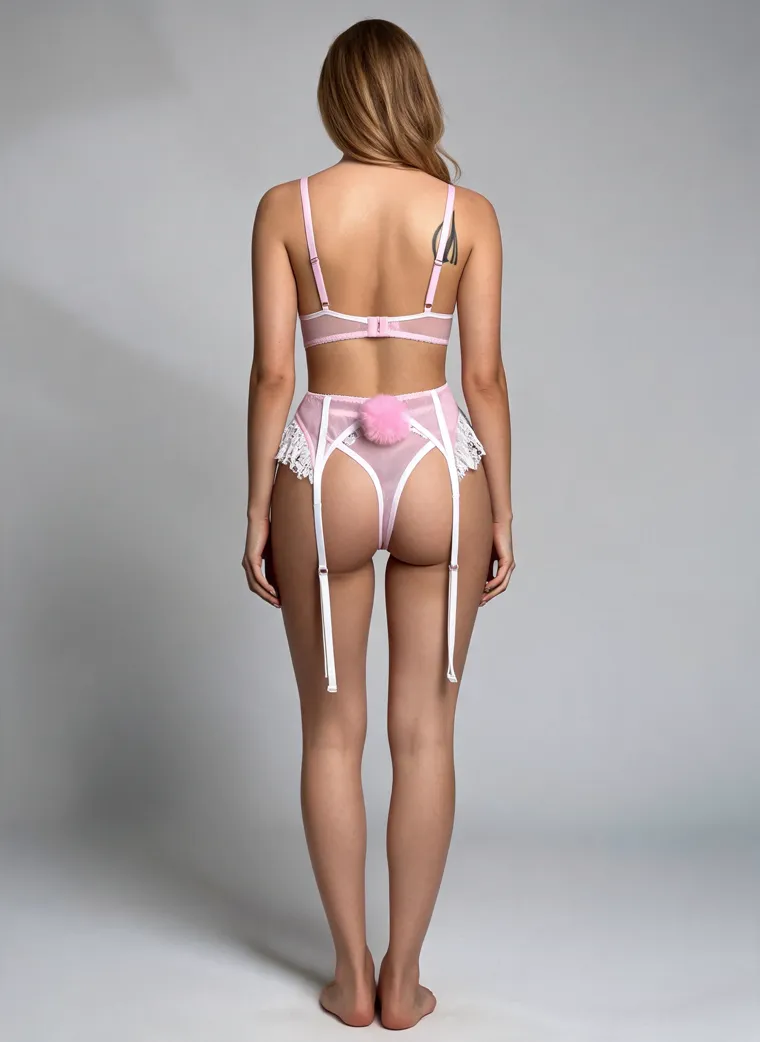
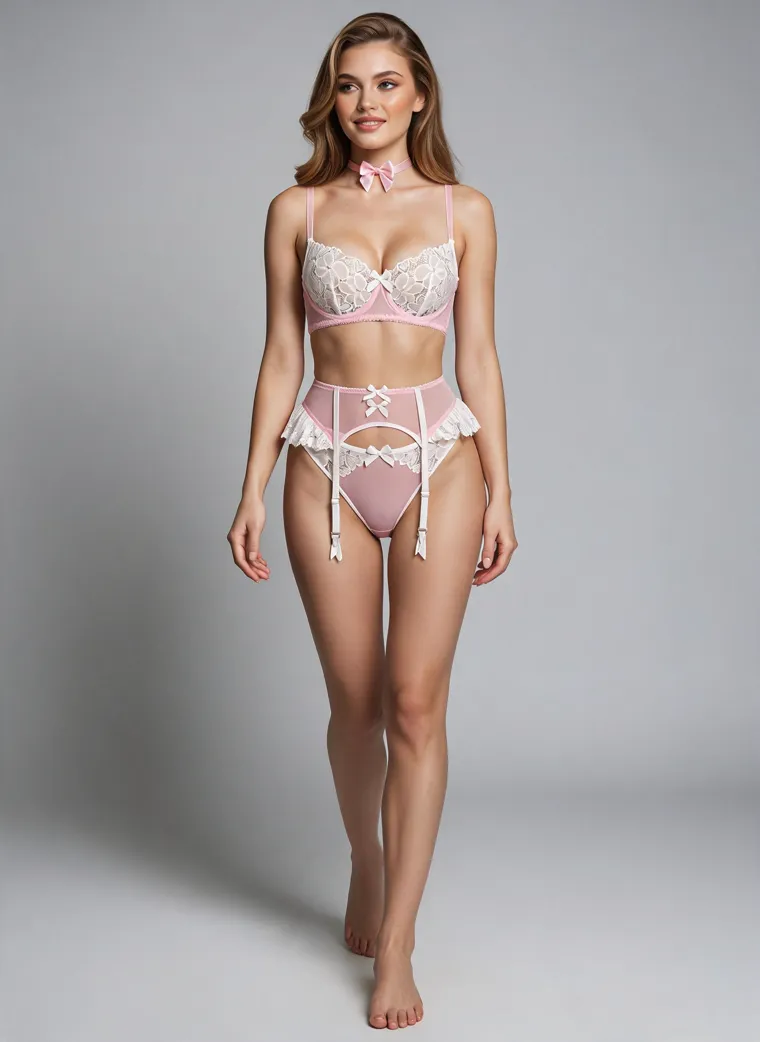
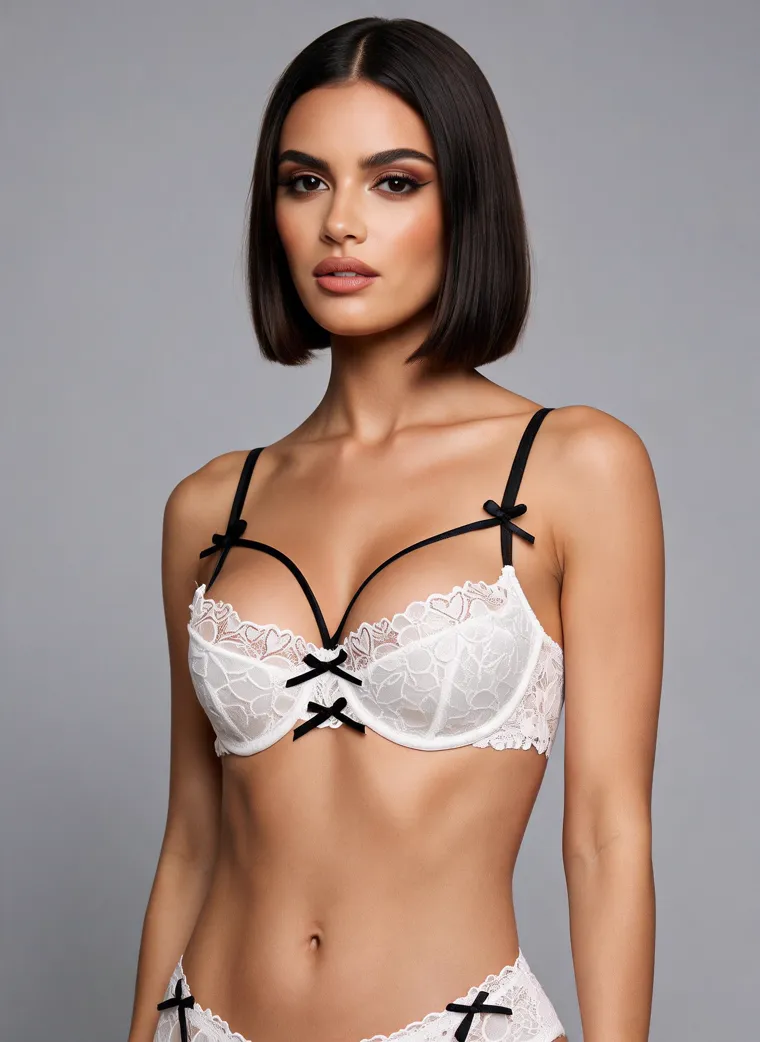
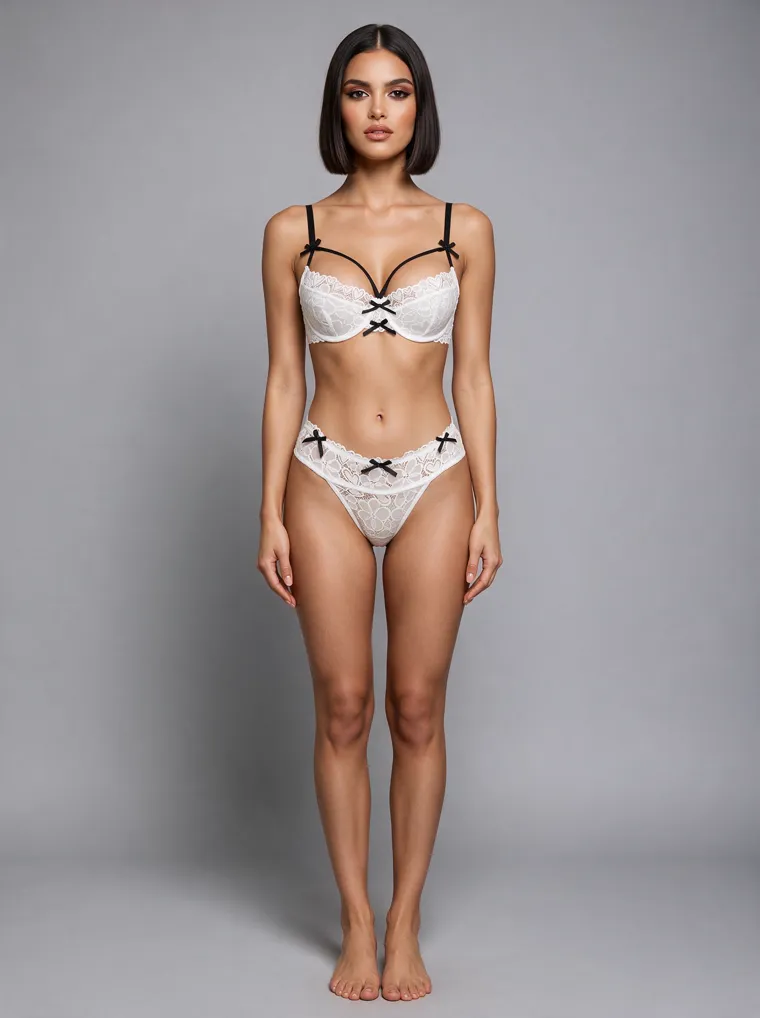
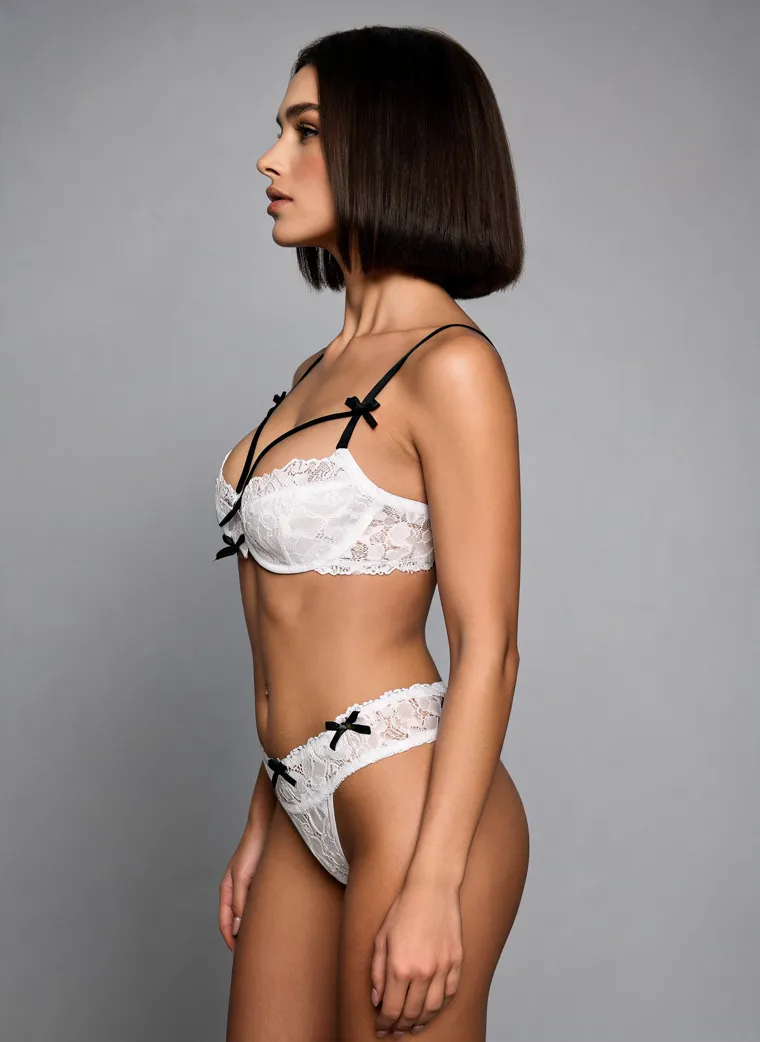
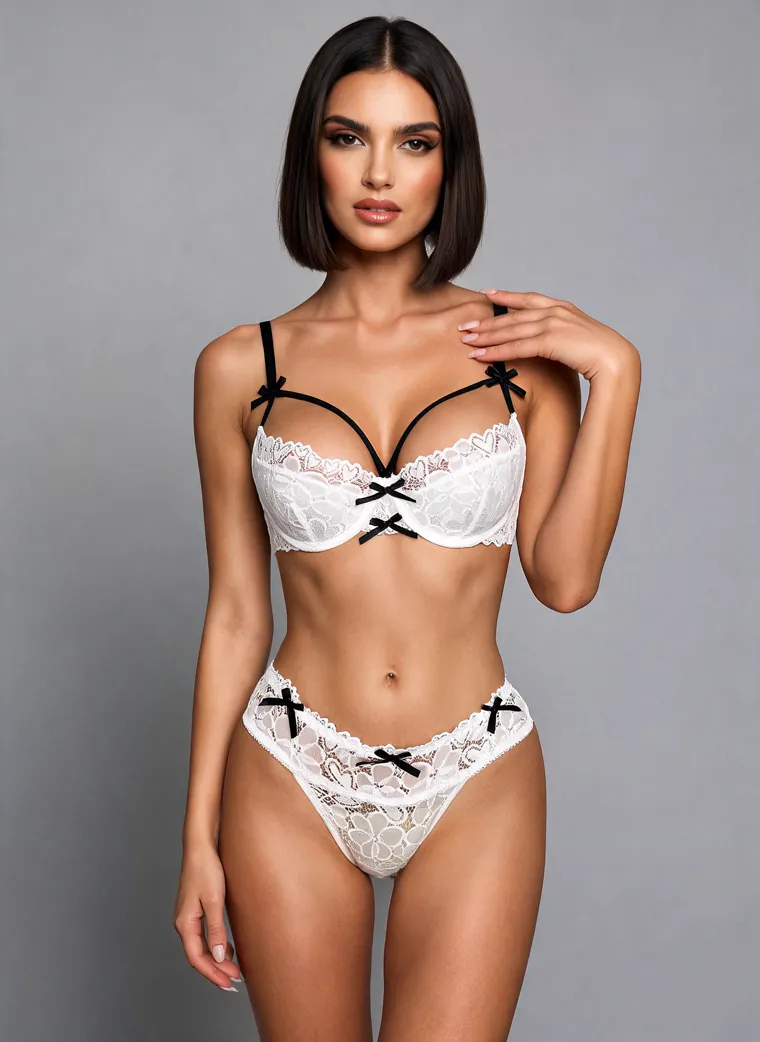
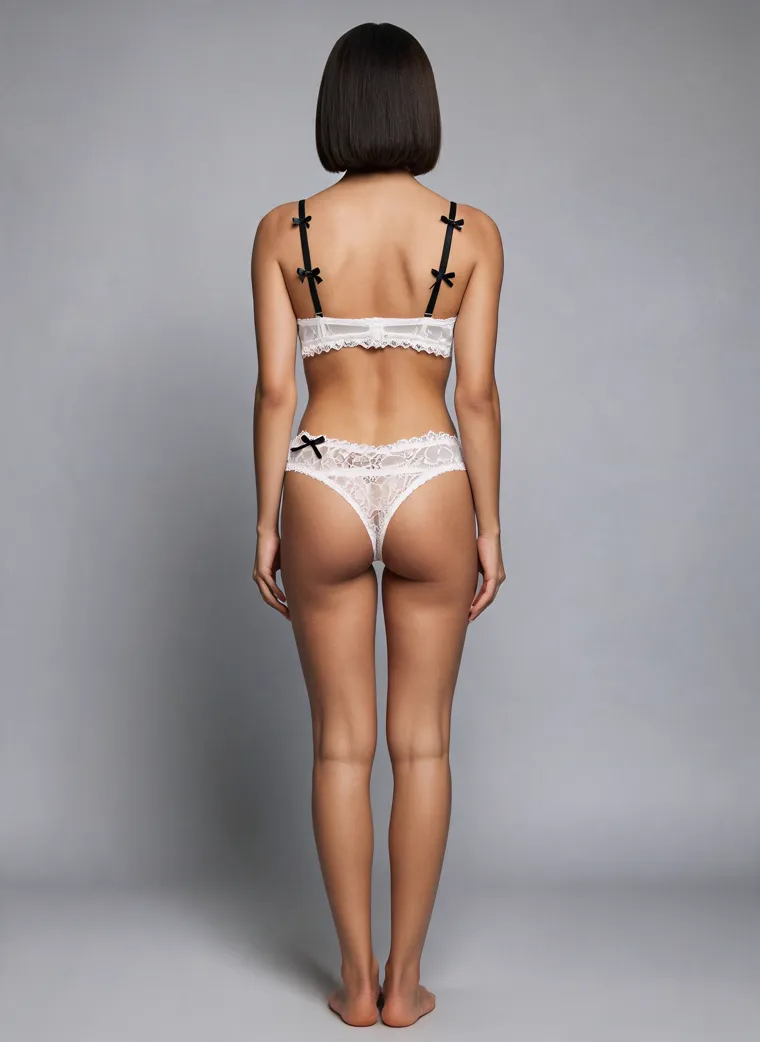
Show how it is built. Front for the idea, three-quarter for the shape, back for the construction.
Six
One design, two colourways
The gift-wrap harness comes in burgundy and black. The shopper comparing them needs to see the same design, the same bow and the same fit, with only the colour changed. Both colourways are shown on a matching model and studio ground, in varied poses, so the only thing that changes between them is the colour.
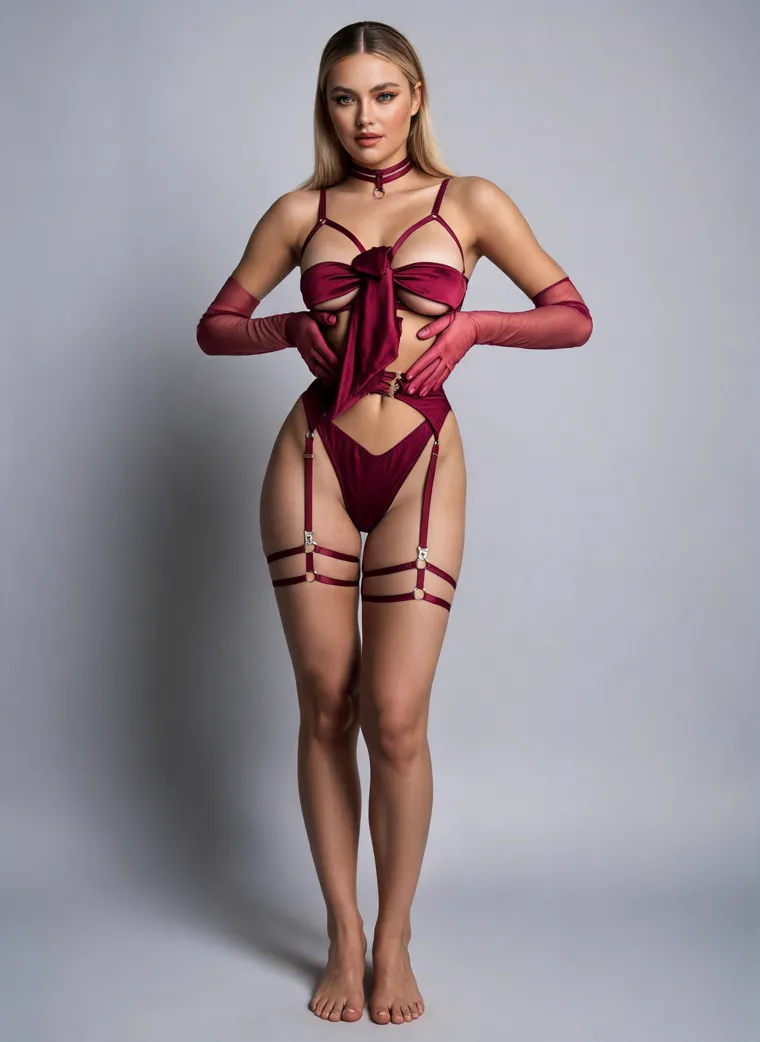
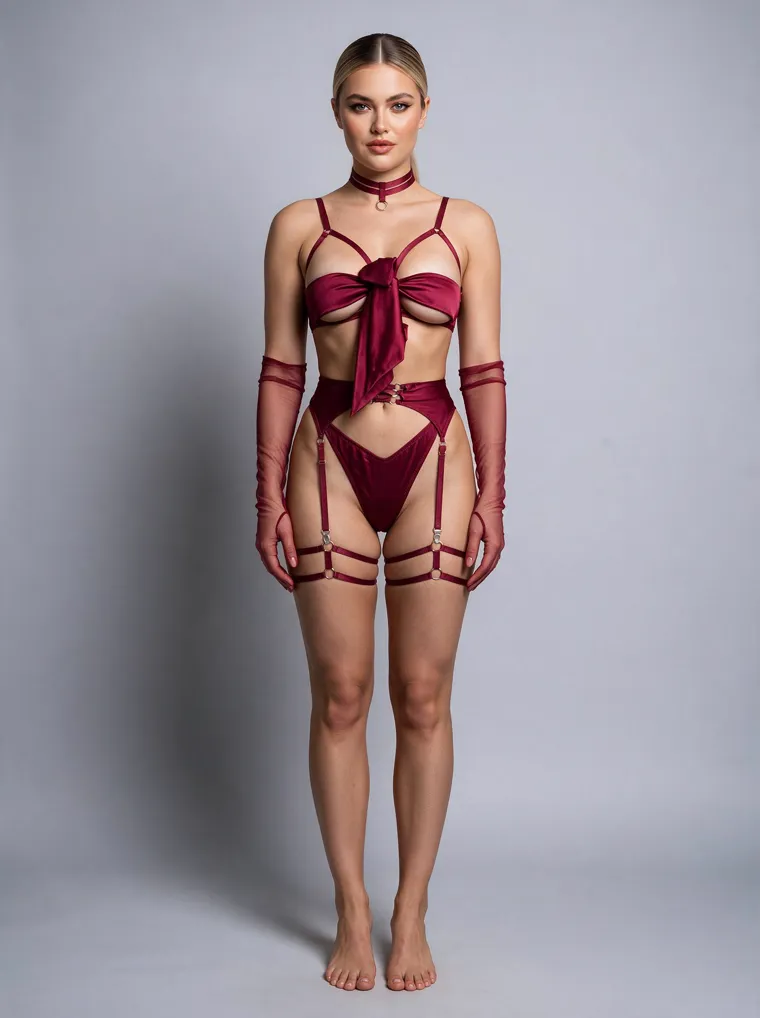
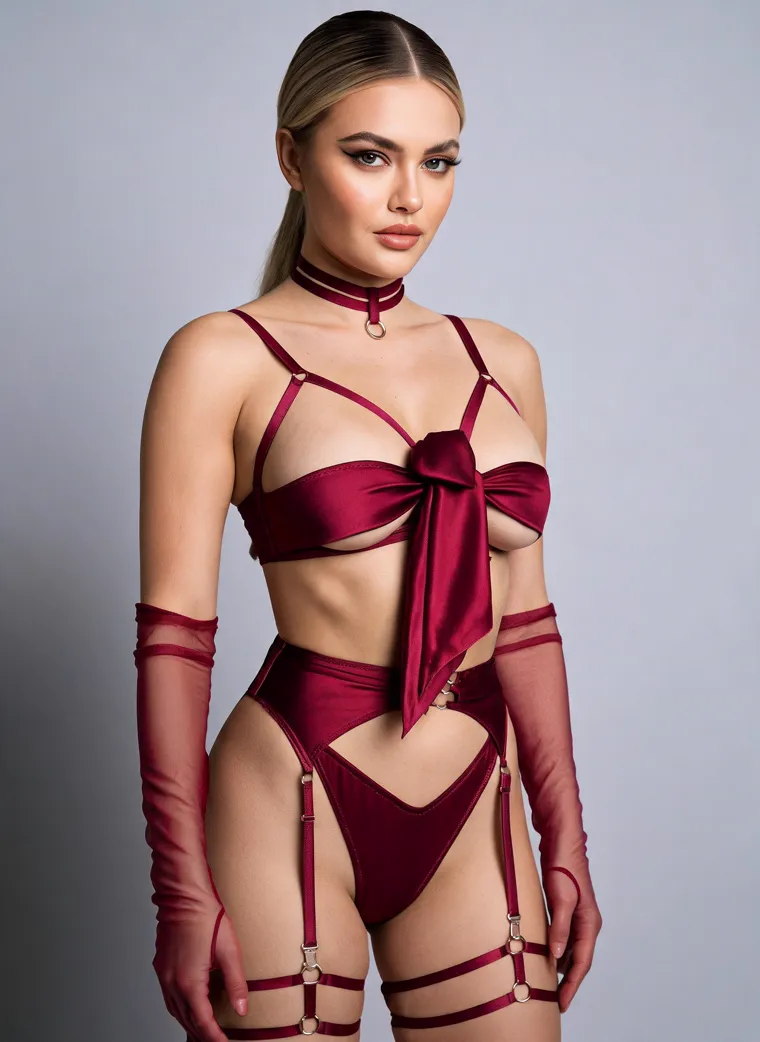
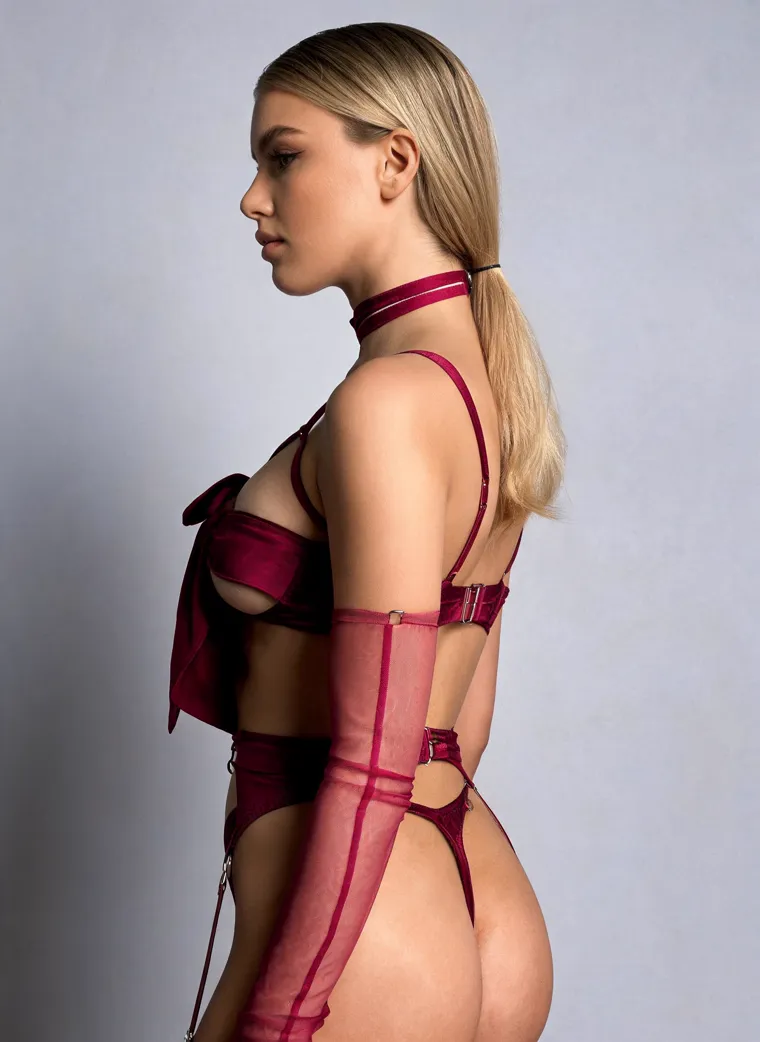
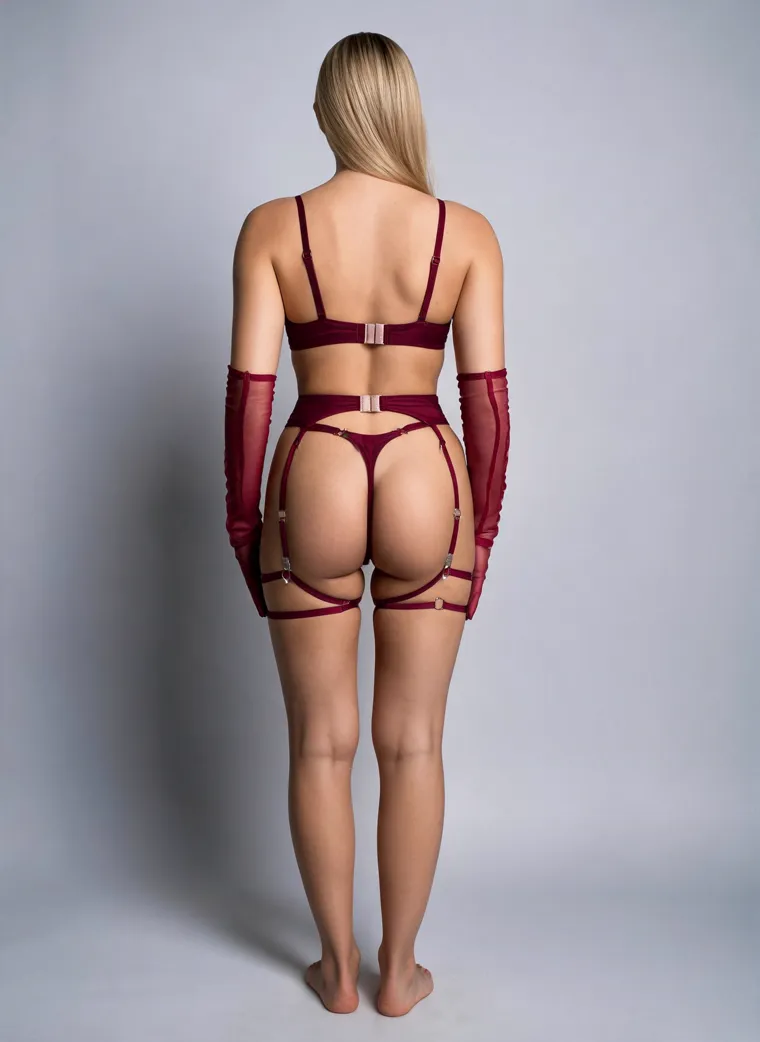
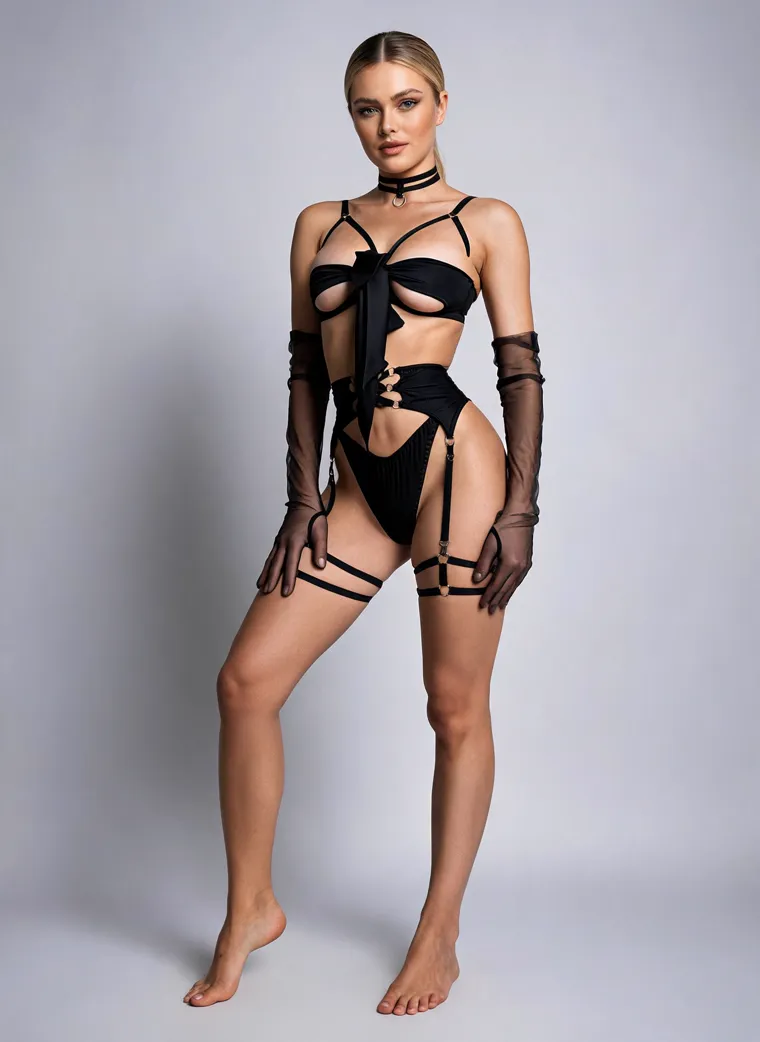
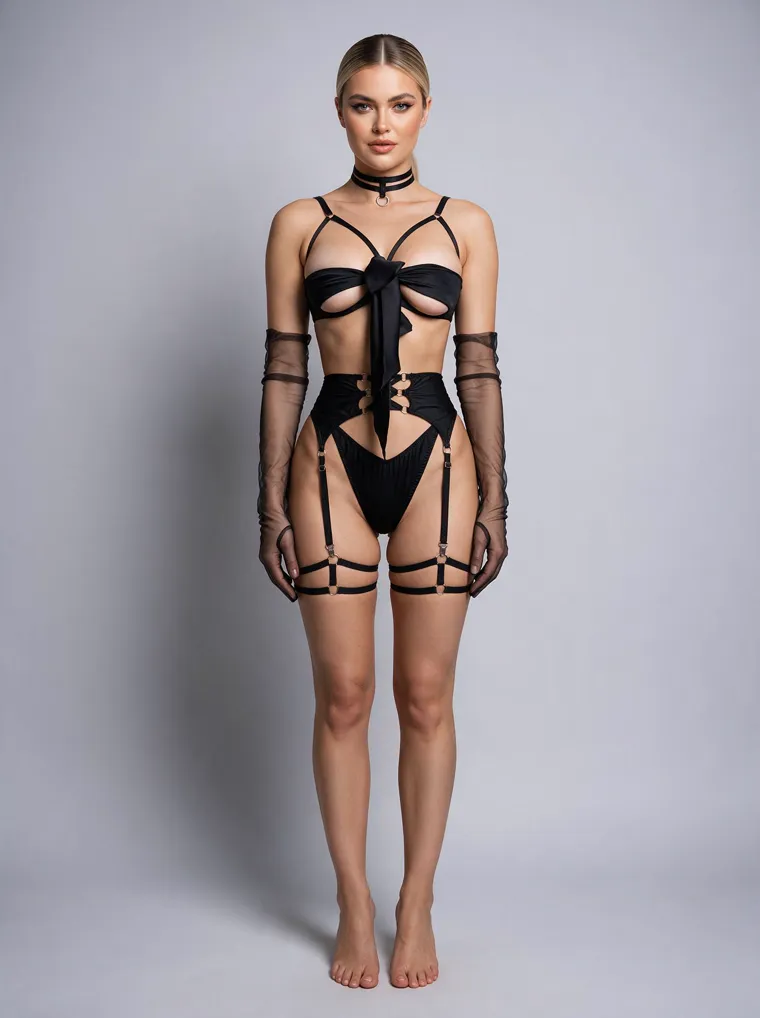
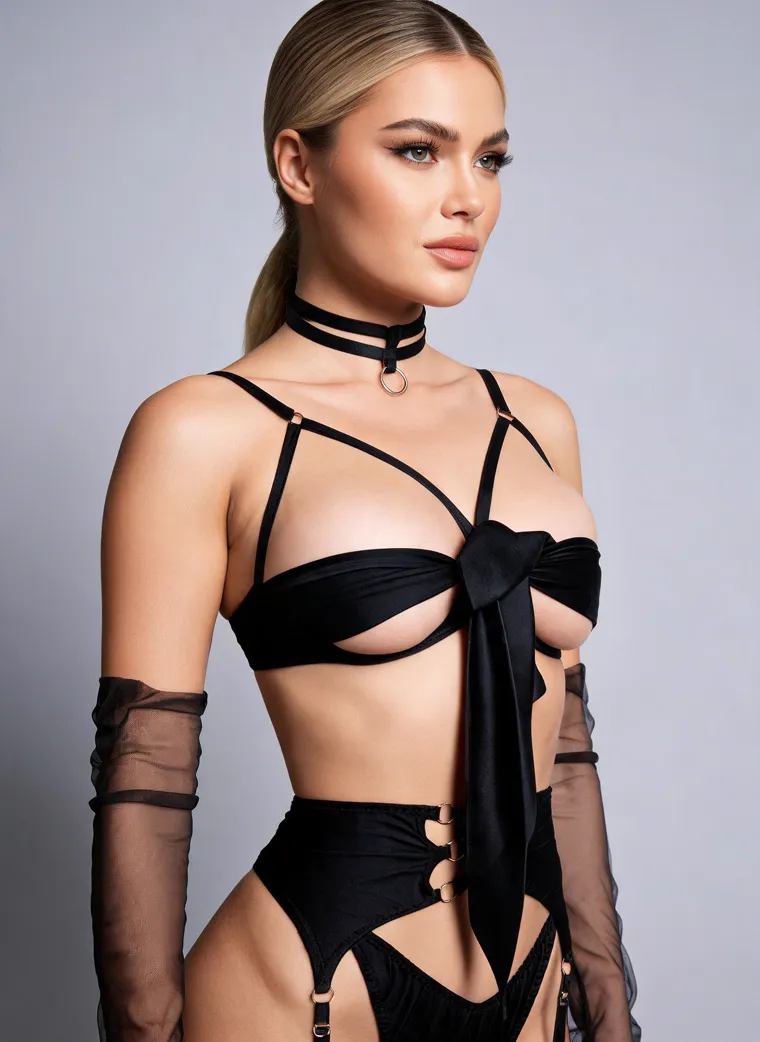
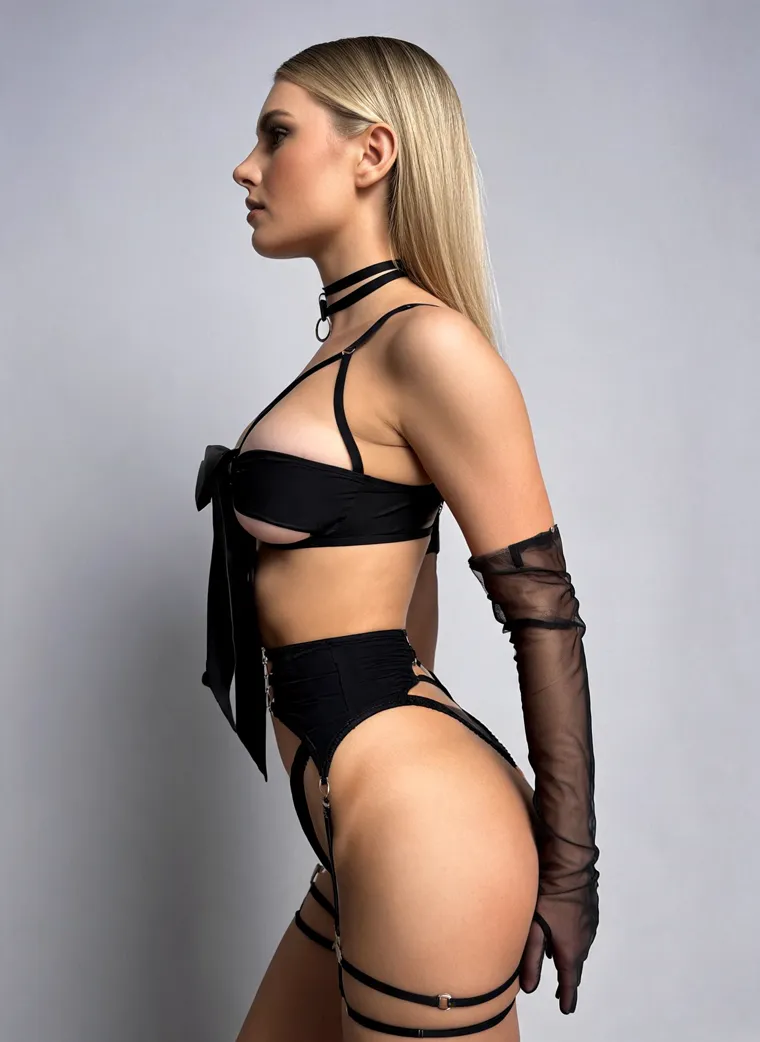
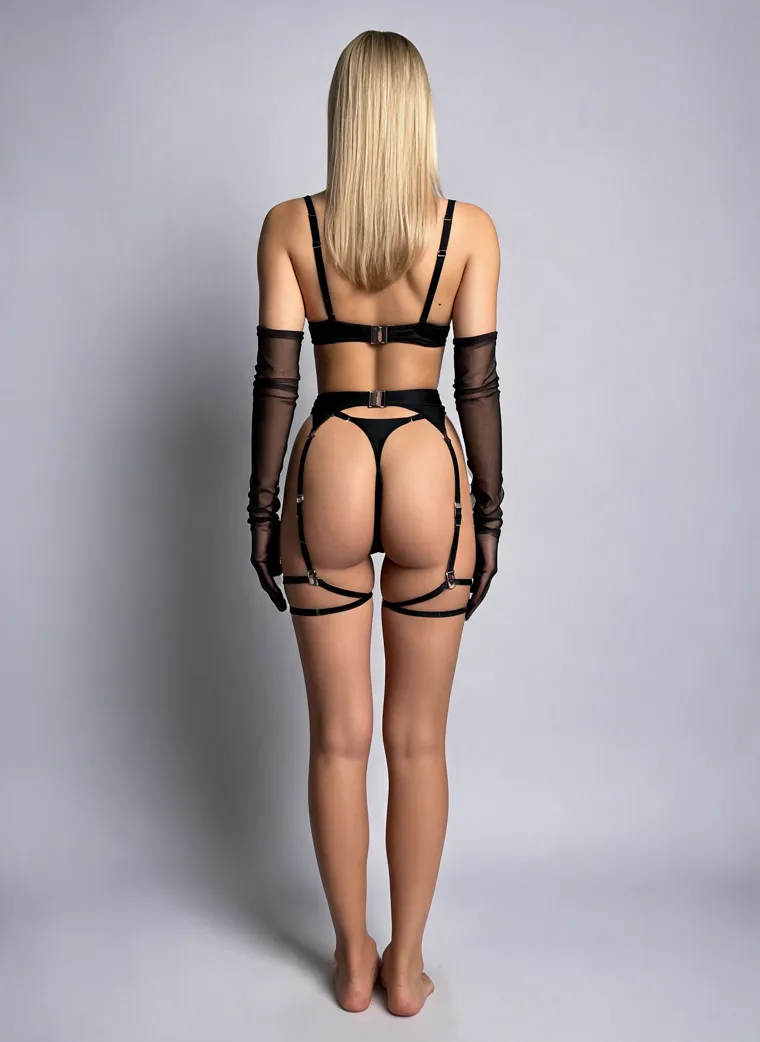
Same design, two colourways. The opera gloves change from satin to mesh with the colour, which is exactly the kind of detail a shopper compares.
The reasoning behind holding the model and ground fixed across a range is in One Model, Four Colors.
Seven
Where these images can go
Your own store is the easy part. Every other channel has its own rule for this category, and a few exclude it entirely. This is the part most sellers learn the hard way, through a disapproved feed or a rejected ad.
| Channel | The rule | What to do |
|---|---|---|
| Your Shopify store | Garments are fine. Shopify Payments bars sexually explicit media, not clothing. | Sell from your own storefront first. Keep product pages free of nudity. |
| Shop app | Excludes "mature and adult content" and products that have nudity. | Expect some of this category not to qualify for Shop. |
| Google Shopping | Sexually suggestive lingerie promotions are restricted: no Search serving, not shown to minors. Around 30 countries, including India and Turkey, allow no adult content. | Set the adult attribute on these products. Exclude those countries. |
| Google Ads | Names "sexual fetish lingerie" as restricted, and counts the exposed lower curve of the breast or most of the buttocks as partial nudity. | Submit your most covered frame, usually the front standing shot, never a thong back view. |
| Meta | Lingerie ads are allowed. Revealing clothing or body-part focus requires 18+ targeting. Blurred nudity is still nudity. | Target 18+ for the whole category. Use covered frames. |
| TikTok Shop | Prohibits fetish wear and requires intimate apparel shown in a non-sexualised way. | List everyday lingerie only. Keep fetish pieces on your store. |
| Etsy | Allows harness and revealing styles with opaque coverage. Mature listings are tagged and the first image obscured. | Tag "mature" and follow the coverage rule in every frame. |
| Amazon | Its 2021 apparel imaging guide prohibits "nudity or sexually suggestive images". Main images cannot show models kneeling or lying down. | Standing frames only, most covered frame as the main image. |
One more that affects the whole site, not a single listing. Google’s SafeSearch classifies pages using their text, images and links, and if it decides a site is explicit, it can filter the entire site from results. That is the strongest commercial argument for everything above: product pages that stay within the line keep your whole store searchable. The full platform-by-platform image specs are in Marketplace Image Requirements for Fashion Sellers.
Your storefront can carry the whole range. Every other channel needs your most covered frame, and some will not take the category at all.
Eight
Why most AI lingerie generators stop at the safe end
Try this category in most AI model photo apps and you will hit a wall. Botika warns that its safety filter may flag semi-transparent garments or certain lingerie photos. Claid says swimwear and lingerie may be flagged. Sheer and mesh pieces are usually the first to be refused.
The AI lingerie generators that do allow it mostly stop at the safe end. The published comparisons test T-shirt bras, maternity bras, bralettes and shapewear. Sleepwear and slip dresses are the norm on their example pages. Harness, wet-look and roleplay barely appear at all.
MODA AI treats this category like any other product. Harness sets, sheer mesh, wet-look and roleplay costumes come back as full catalog sets, on the model and background you choose, from photos as plain as a mannequin in a stockroom. Every set on this page was made that way. For the fit and skin side of everyday intimates, see AI Photography for Activewear and Intimates.
Nine
The line, and who holds it
MODA’s terms permit lingerie, intimate apparel, fetish fashion and costume for catalog use. Sexual activity, sexually explicit poses and pornographic output are not.
Holding that line day to day is the merchant’s job. A set will always give you more frames than you should publish, as section two noted, and choosing which ones go live is part of running the store. The checklist below is how to do it quickly.
The checklist
Before a frame goes live
01
Opaque coverage.
Intimate areas covered in every frame. Check sheer pieces at full size, not just in the thumbnail.
02
Pose.
Standing, three-quarter, back, or seated with legs together. Cut legs spread, hands on covered intimate areas and sexual positioning.
03
Framing.
The garment leads. Cut any crop that frames a body part rather than the piece.
04
Construction.
A back view for anything with strap routing, and a frame for every closure, ring and bow the price depends on.
05
Character.
Roleplay and costume pieces get frames that show the character: the collar, the tail, the gloves.
06
Channel frame.
Your most covered frame goes to Google, Meta and Amazon. Set the adult attribute and 18+ targeting.
07
People.
Never build an AI model from a real person without their written consent.
A note on these sets
Every set here was produced with MODA AI. The corset set is the one worth pausing on: a plus-size model in her late forties, confident, in fishnet stay-ups and platform heels, starting from two photos of a mannequin in a stockroom. That is a casting call most agencies would struggle to fill in a week. Here it is one set.
The category deserves better photography than it usually gets. Not louder, not more explicit. Clearer about the piece, braver about who wears it, and honest about the character it is sold to create.
Frequently asked questions
Can I sell fetish wear and sexy lingerie on Shopify?
Yes. Harness lingerie, fetish fashion and roleplay costumes are clothing, and many established brands in the category run on Shopify. What Shopify Payments prohibits is sexually explicit media, such as adult videos and magazines. The Shop app is stricter and excludes mature content, so some of these products will sell on your own storefront but not through Shop.
Will fetish wear or lingerie photos get my Google Shopping listings disapproved?
Not automatically, but they are likely to be restricted. Google treats sexually suggestive lingerie promotions as restricted content and names sexual fetish lingerie in its ads policy. Restricted listings do not serve on Search or to minors, you need to set the adult attribute on those products, and around 30 countries allow no adult content at all. Nudity, including partial nudity such as the exposed lower curve of the breast or most of the buttocks, is treated more strictly, so choose covered frames as the images you submit.
Can an AI lingerie generator handle harness, sheer or fetish-style pieces?
Many AI photography tools flag or refuse lingerie, and the ones that allow it mostly stop at sleepwear, T-shirt bras and shapewear. MODA AI generates these garments for catalog use, including harness, wet-look and sheer mesh pieces.
How do I photograph sheer pieces without nudity?
Keep intimate areas covered by opaque material in every frame. For sheer mesh, choose styles with opaque cups or pair them with an opaque underlayer. Use standing, three-quarter and back poses, and leave out seated legs-apart poses, hands on covered intimate areas and crops that frame a body part rather than the garment.
Do I need consent to use AI models for lingerie photos?
Not for an AI model who does not exist. You do for anyone real. New York’s Fashion Workers Act requires clear written consent before a digital replica of a working model is created or used, and a 2026 lawsuit alleges a brand used AI to create suggestive new images of a model beyond what she agreed to. The safe rule is simple: never build an AI model from a real person’s face or body without their written consent.
Show the piece. Cast who actually buys it.
Harness, wet-look, roleplay and lingerie, on models of every size and age, without the closed-set booking. Free to try from the Shopify App Store.
Get Started FreeOr browse the full lookbook