Industry Insights
AI Model Disclosure for Shopify Fashion: The NY Synthetic Performer Act, EU AI Act, and What Mango Got Right (and Wrong)
The disclosure regime is live. The model needs labeling — the garment is real. Here’s the playbook, the brand case studies, and the language you can lift straight to your Shopify PDP.
June 21, 2026 · 14 min read
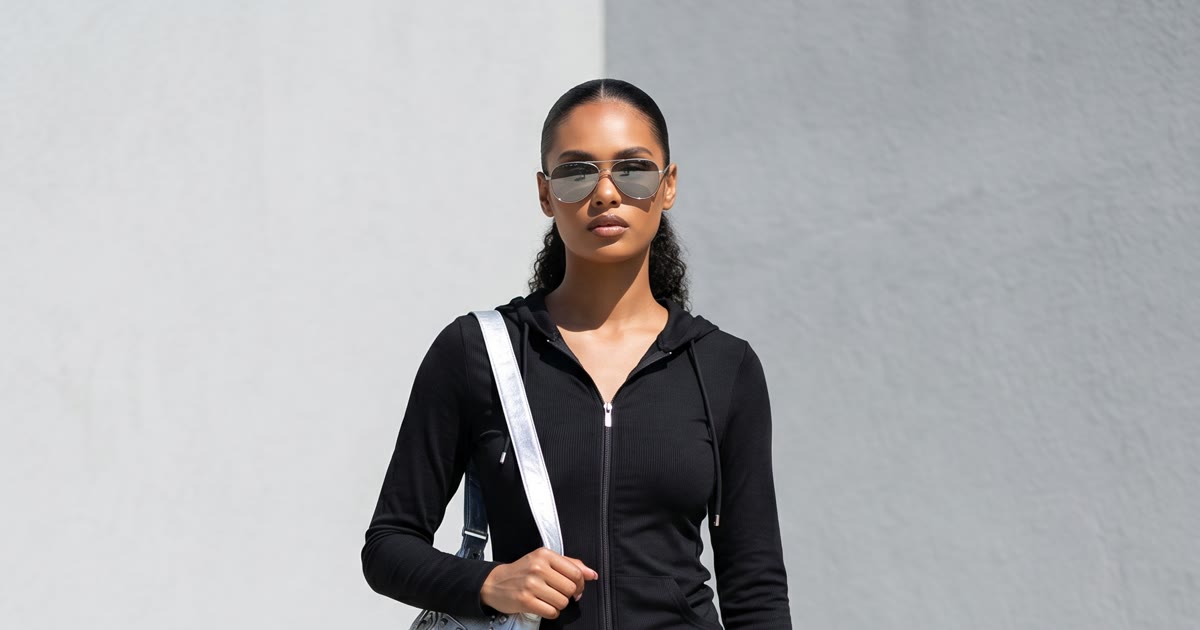
The garment is the actual product. The model is AI-generated. That distinction is the entire playbook for the new disclosure laws.
~90%
of consumers globally want to know if an image was created with AI
Getty Images, Building Trust in the Age of AI (30,000 adults, 25 countries)
76%
will switch to brands with proactive transparency, even at a premium price
Relyance AI Consumer Trust Survey 2025
$5,000
NY Synthetic Performer Act penalty per repeat violation
NY General Business Law §396-b
Two Laws. One Sentence to Remember.
On June 9, 2026, New York’s Synthetic Performer Act went live. On August 2, 2026, the EU AI Act’s transparency obligations under Article 50 take effect for the European market. Both regulate AI-generated content in commercial use. Both carry real penalties. Both apply to every Shopify fashion brand selling into the US or the EU. And both target the same specific thing — not your product, but the synthetic model standing next to it.
The one sentence to remember: the garment is real, the model is AI — and only one of those needs a label.
That single distinction is the entire playbook. Get it right and disclosure becomes a confident brand line that protects your product’s trust signal while satisfying both laws. Get it wrong — as Mango did in its first major PDP rollout with a disclaimer in font that customers couldn’t read — and the disclosure becomes a credibility tax instead of a quality signal. This guide is the operational version: what the laws cover, what they don’t, the three brand case studies that have already been tested in public, and the disclosure language you can lift straight to your Shopify product detail page today.
What Is the NY Synthetic Performer Act?
The NY Synthetic Performer Act is an amendment to New York General Business Law §396-b, signed by Governor Hochul on December 11, 2025 and effective June 9, 2026. It requires advertisers to conspicuously disclose when an advertisement features a “synthetic performer.” That term is defined, per the statute and as analyzed by Cooley and Manatt, as:
“A digitally created asset using generative AI or software algorithms intended to create the impression of a human performer not recognizable as any identifiable natural person.”
Read that definition carefully — it’s narrowly written and it matters. The law is specifically targeting AI-generated humans that are not recognizable as real people. Real-person deepfakes are already illegal in New York under separate right-of-publicity and Fashion Workers Act regimes. The Synthetic Performer Act was written to close the remaining gap: AI-from-scratch humans that look human but aren’t real anyone.
Penalties: $1,000 for a first violation; $5,000 for each subsequent violation. The law does not specify disclosure form — no required font size, no mandated placement, no specific language. That sounds permissive but in practice it shifts the visibility burden squarely onto the brand. The Mango case below shows what happens when disclosure technically exists but isn’t actually visible.
When Does the EU AI Act Take Effect for Fashion Brands?
The EU AI Act’s transparency rules under Article 50 become enforceable August 2, 2026. The European Commission’s Code of Practice on AI-Generated Content provides the operational detail. The core requirements that matter for fashion ecommerce:
- AI providers must mark outputs as artificially generated. This is the upstream requirement on tools like MODA AI — not the merchant. The marking is typically machine-readable metadata.
- Deployers (the brands) must label deepfakes and synthetic content visibly. The label has to be visible to users at the moment they encounter the content — not buried in T&Cs or a separate disclosure page.
- A standardized EU “AI” visual label is proposed, with a taxonomy distinguishing “fully AI-generated” from “AI-assisted” content.
- Where content is evidently artistic, creative, satirical, or fictional, only minimal and non-intrusive disclosure is required. Standard PDP imagery does not qualify as artistic exemption.
One sharp practical point: the EU regime applies to anyone selling into the EU market, regardless of where the brand is incorporated. A US Shopify brand shipping to a German customer is in scope.
The Wider Backdrop: California SB 942 and the FTC
Two more layers belong in any complete read of the regime, even though neither imposes the merchant-level disclosure burden NY and the EU do. California’s AI Transparency Act (SB 942), signed by Governor Newsom in September 2024 and now operative August 2, 2026 after the AB 853 amendments — Troutman Pepper Locke breakdown covers the timeline — targets generative AI providers with more than one million monthly users. That obligation lands on tools like MODA AI, not on Shopify merchants directly. It still matters to merchants because it shapes which AI photography tools will ship clean provenance metadata and which won’t.
And the always-on backdrop: FTC Act Section 5 has policed unfair and deceptive advertising practices long before any AI law was drafted, and the agency’s updated Endorsement Guides explicitly cover AI-generated endorsements and testimonials. The maximum civil penalty for Section 5(l) and Section 5(m)(1)(A) violations is currently $53,088 per violation, inflation-adjusted effective January 17, 2025 per FTC’s 2025 adjustment. The practical upshot for Shopify fashion brands: even before NY or EU, undisclosed AI imagery that misleads consumers about a product’s features could already be actionable under Section 5. The new state and EU laws don’t replace the FTC backdrop; they layer on top of it.
Do AI-Generated Fashion Models Need Disclosure?
This is the question every Shopify brand owner asks first when they read the laws. The intuition is reasonable: if my AI model isn’t a deepfake of a real person, isn’t she just a digital character — like a cartoon? Why would she need disclosure?
The answer is yes — especially the from-scratch case. The NY Synthetic Performer Act’s definition specifically targets AI-generated humans that are not recognizable as real people. Real-person likeness violations are already illegal under New York Civil Rights Law §§ 50–51 (right of publicity) and the Fashion Workers Act (model consent regime). The Synthetic Performer Act was drafted to catch the precise gap those other laws left open: AI faces from scratch.
And under EU AI Act Article 50, AI-generated content needs labeling regardless of whether it resembles a real person. From-scratch synthesis doesn’t exit the regime. It’s in scope by design.
The good news, though
The NY Fashion Workers Act — which requires written consent before creating an AI replica of a real fashion model — does not apply when you use MODA AI’s from-scratch base models. That’s the heavier compliance regime, with consent paperwork, model rights management, and meaningful exposure. The Synthetic Performer Act’s disclosure is a single line of copy. The Fashion Workers Act’s consent is an entire legal workflow. MODA AI’s default workflow keeps you in the lighter regime.
What This Looks Like For a Real Shopify Seller
Before the brand case studies and the playbook, three quick walkthroughs from a real Shopify boutique drop. The seller’s source photos are exactly what most small brands have: iPhone shots in her bedroom, her apartment, and her small studio with a tailor’s dummy. MODA AI carries each garment onto one consistent model identity — locked by face reference — against a clean catalog backdrop. Same garment. Different shoot conditions. One cohesive catalog.
Walkthrough 1 — Bedroom iPhone to Catalog
Red Sweat Shorts
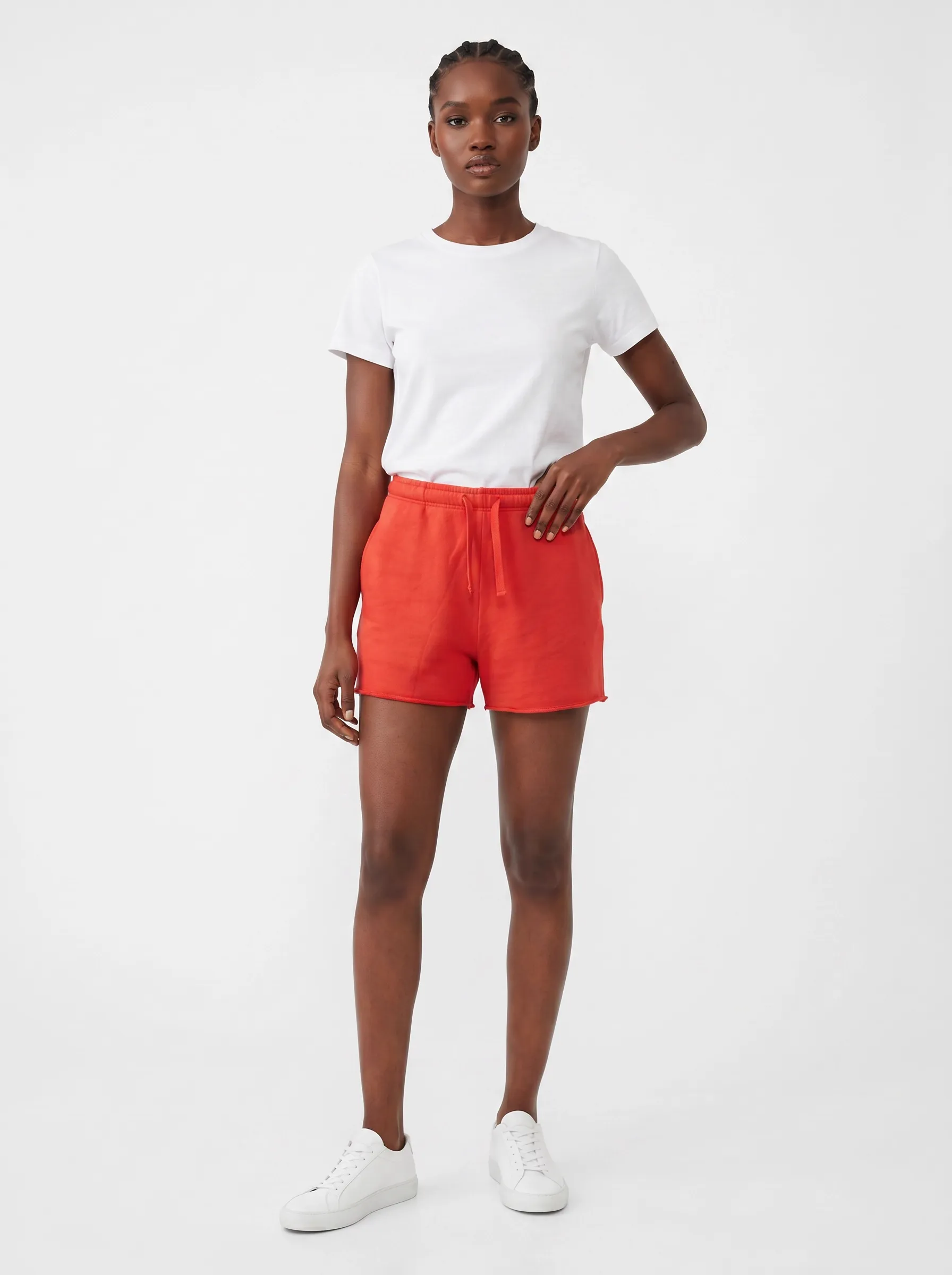
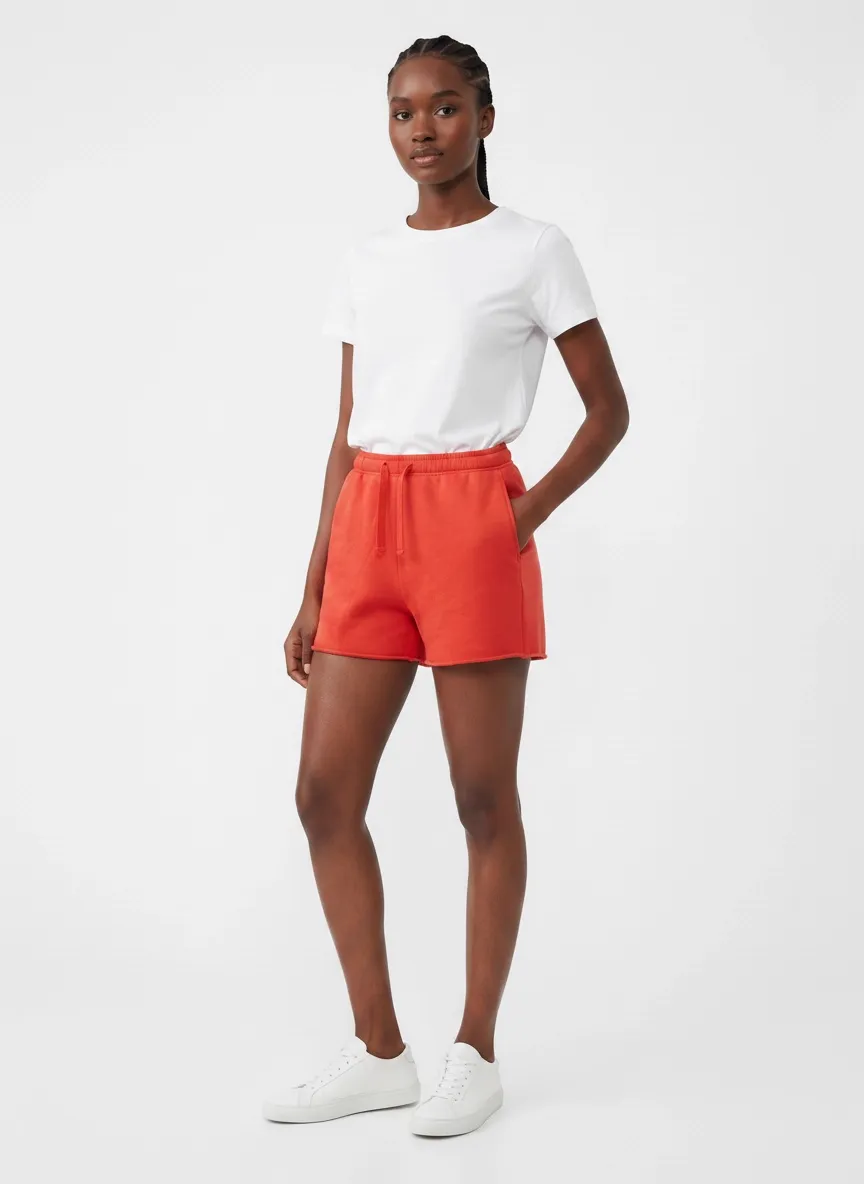
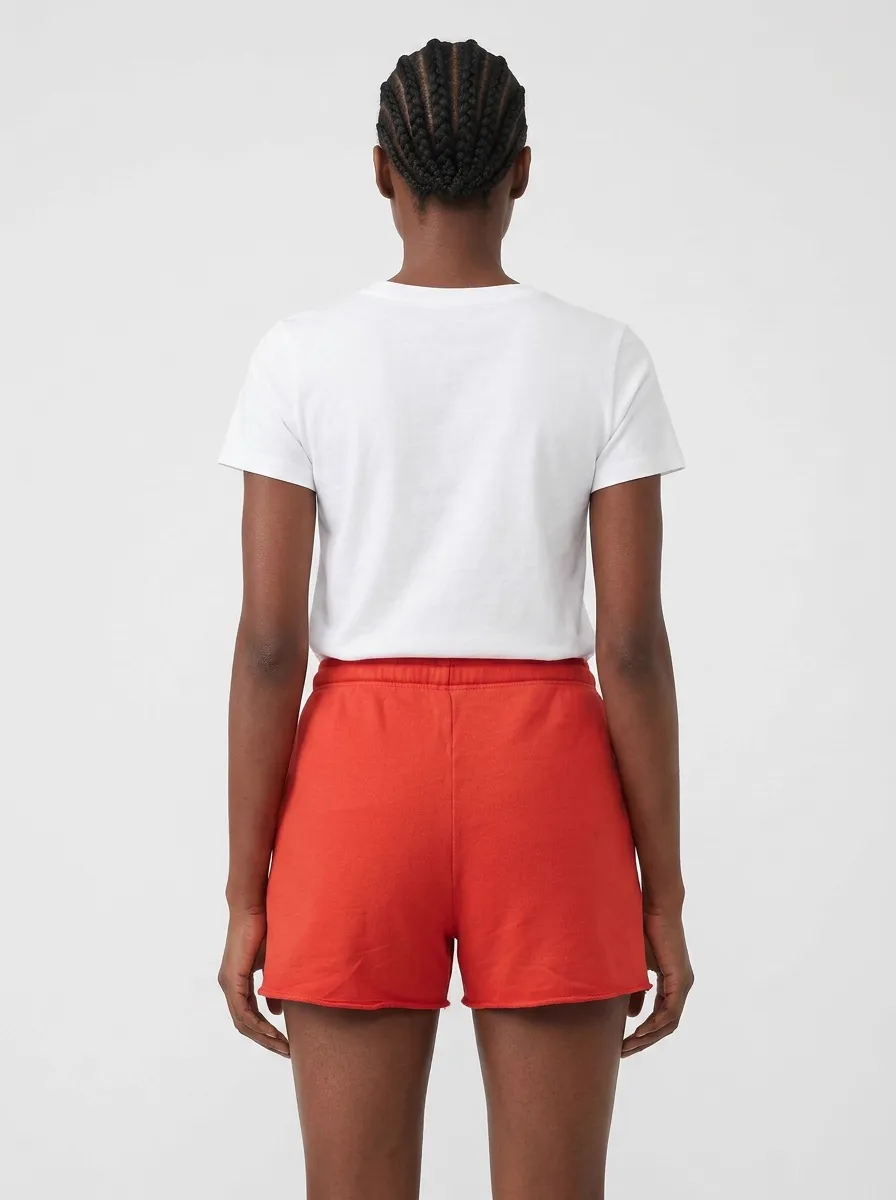
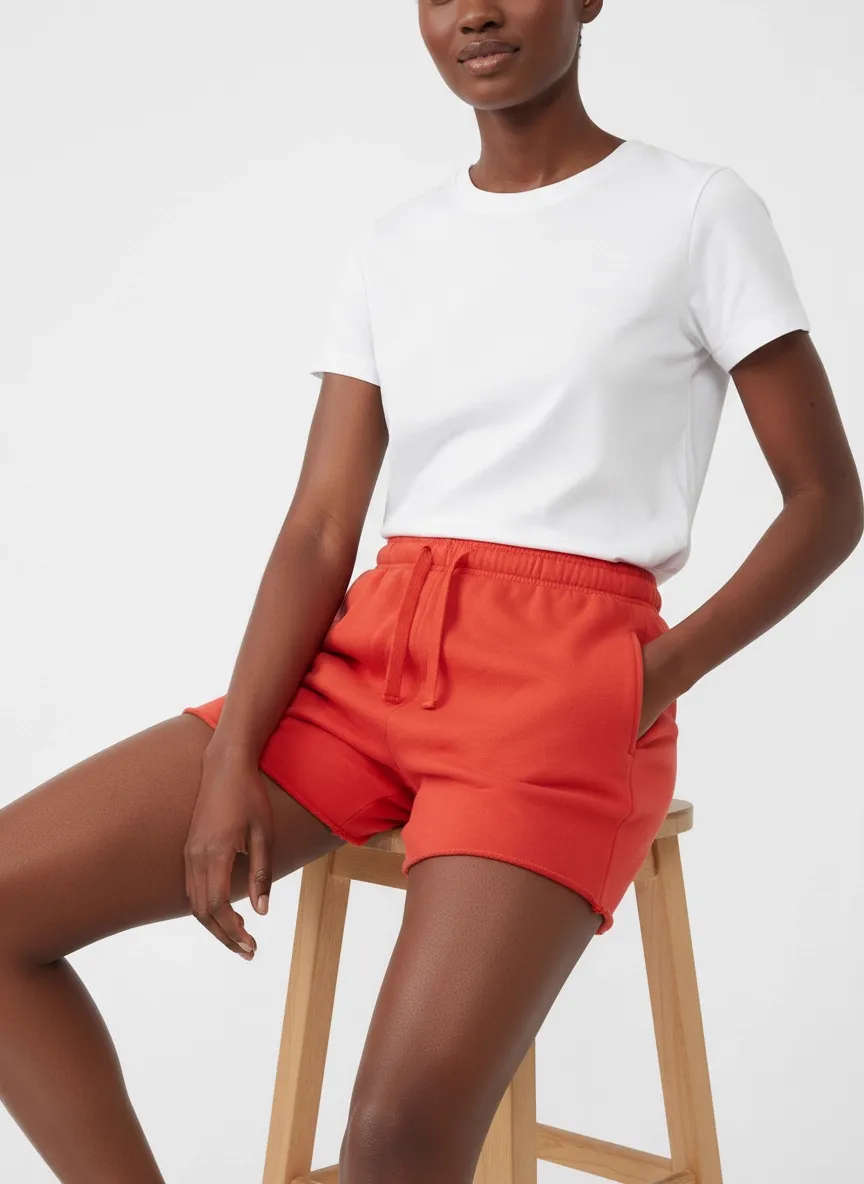
The source is a phone selfie taken in the seller’s bedroom, kitchen and closet visible in the background, hand in the frame, lighting from a window. Standard small-brand reality. Below: the input she uploaded, and four of the eight catalog frames MODA AI returned. The garment is the actual red sweat shorts she sells. The model is generated.
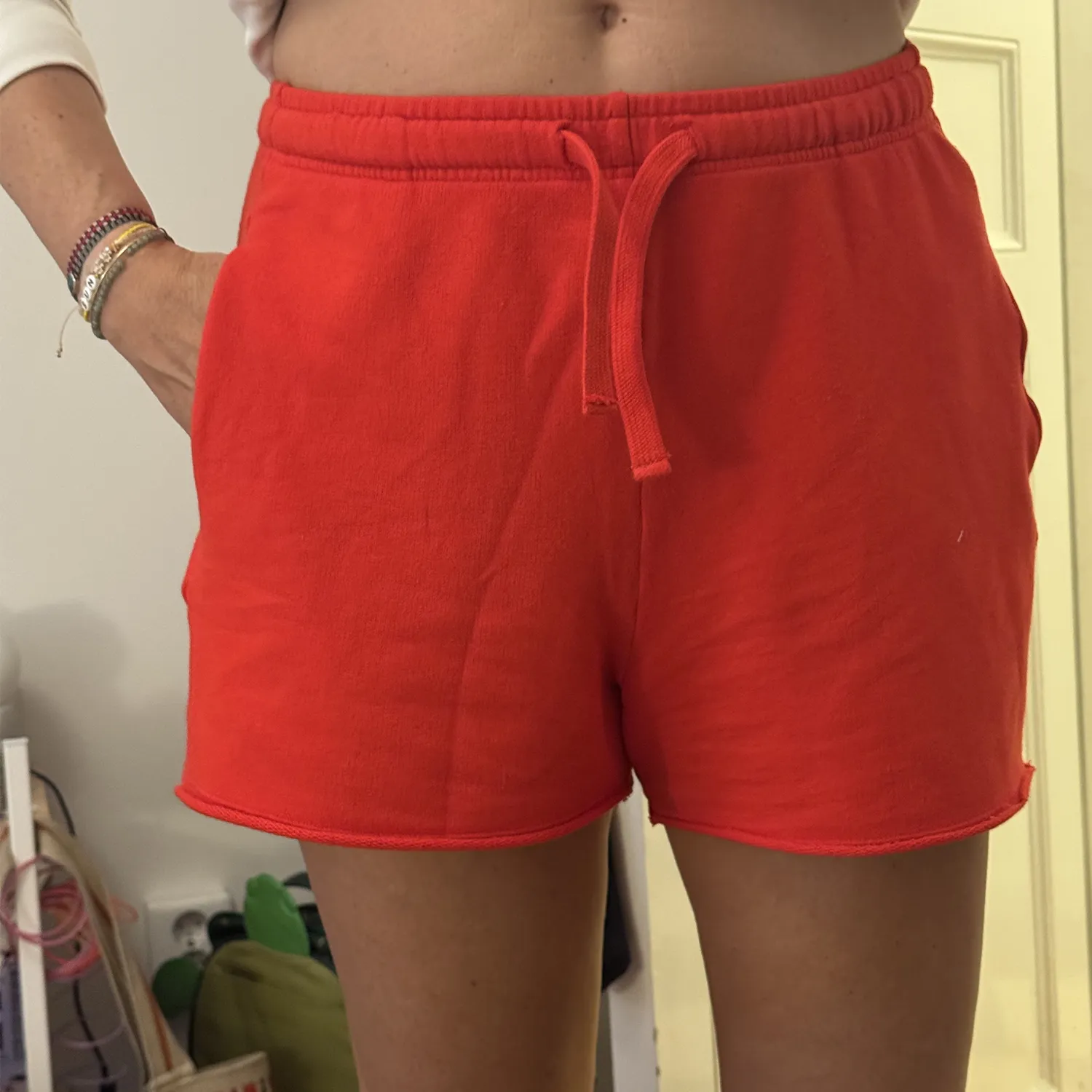
BEFORE — iPhone, bedroom
Walkthrough 2 — Apartment Selfie to Lookbook
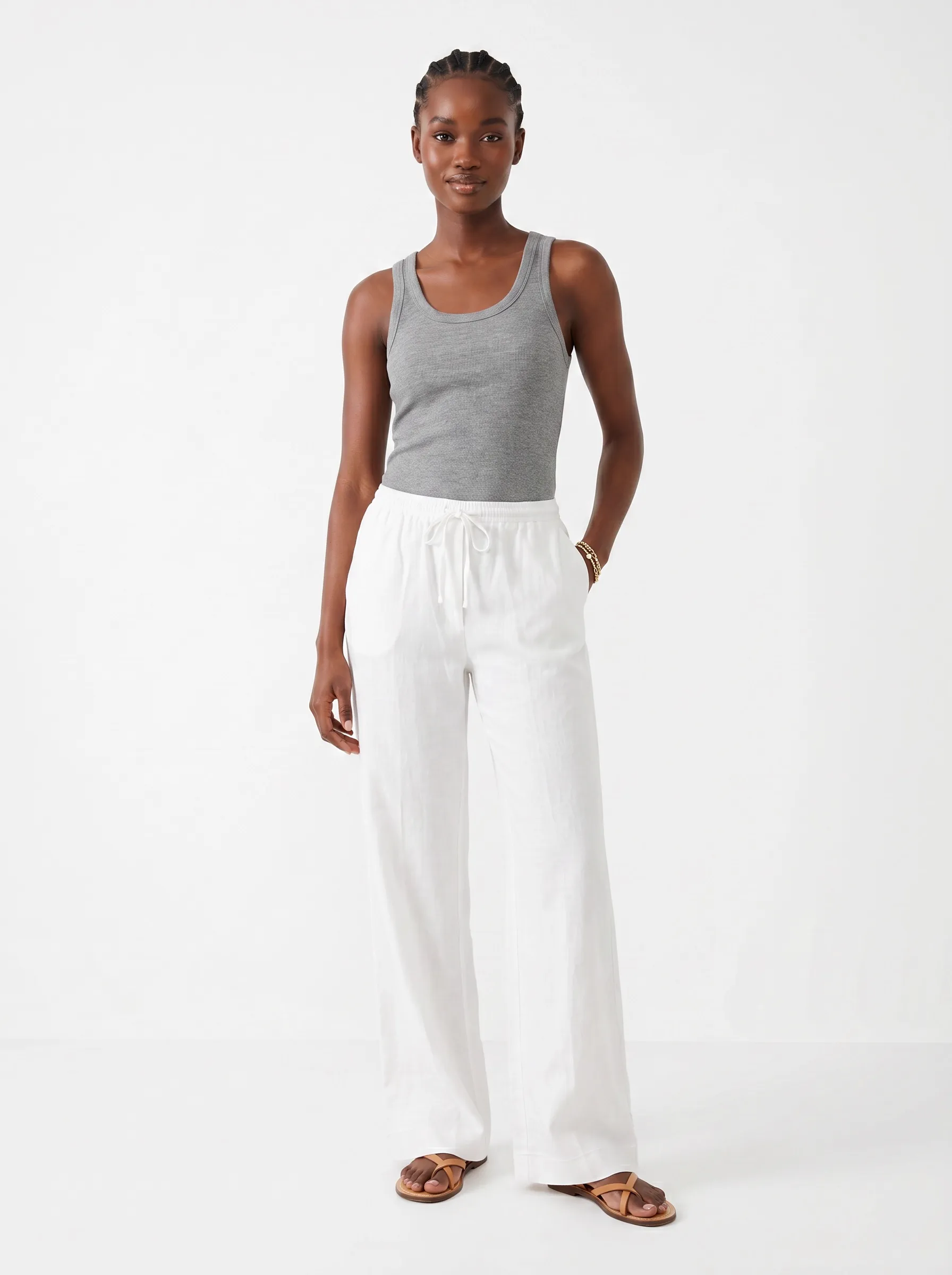
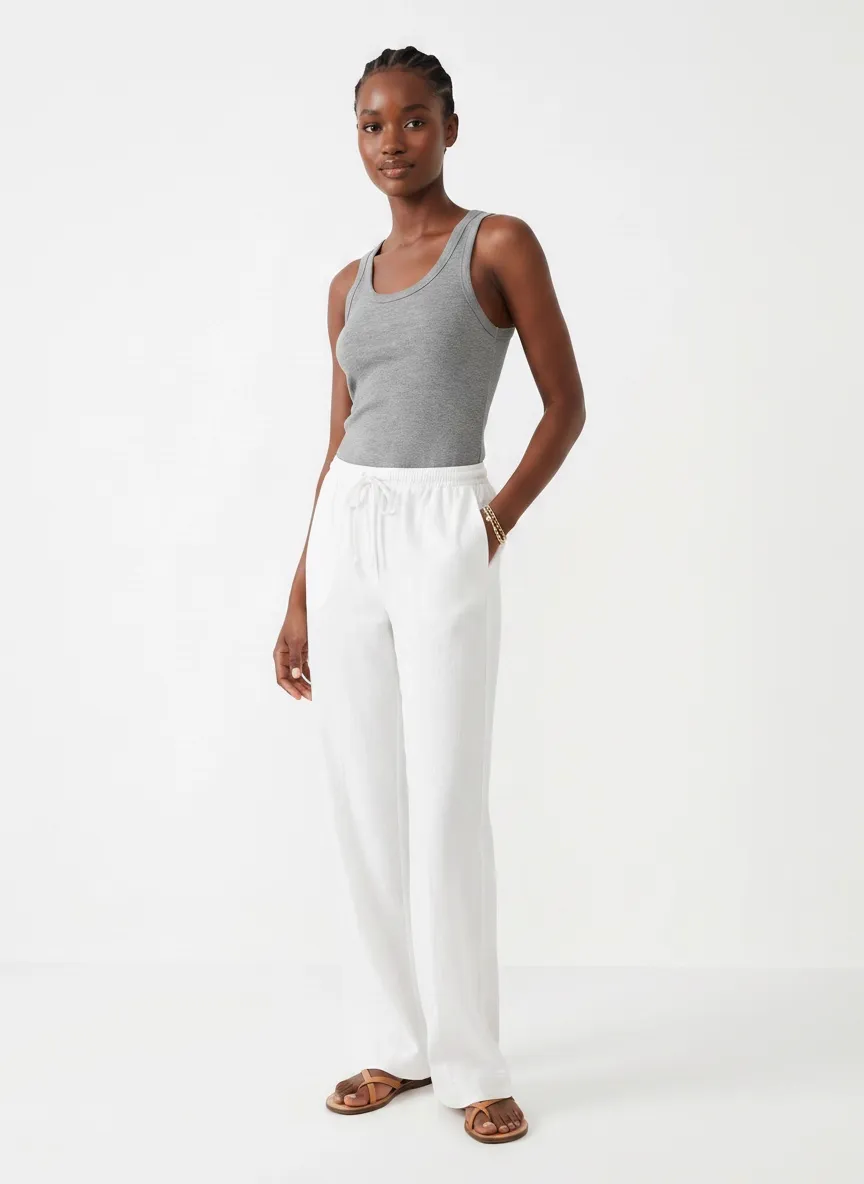
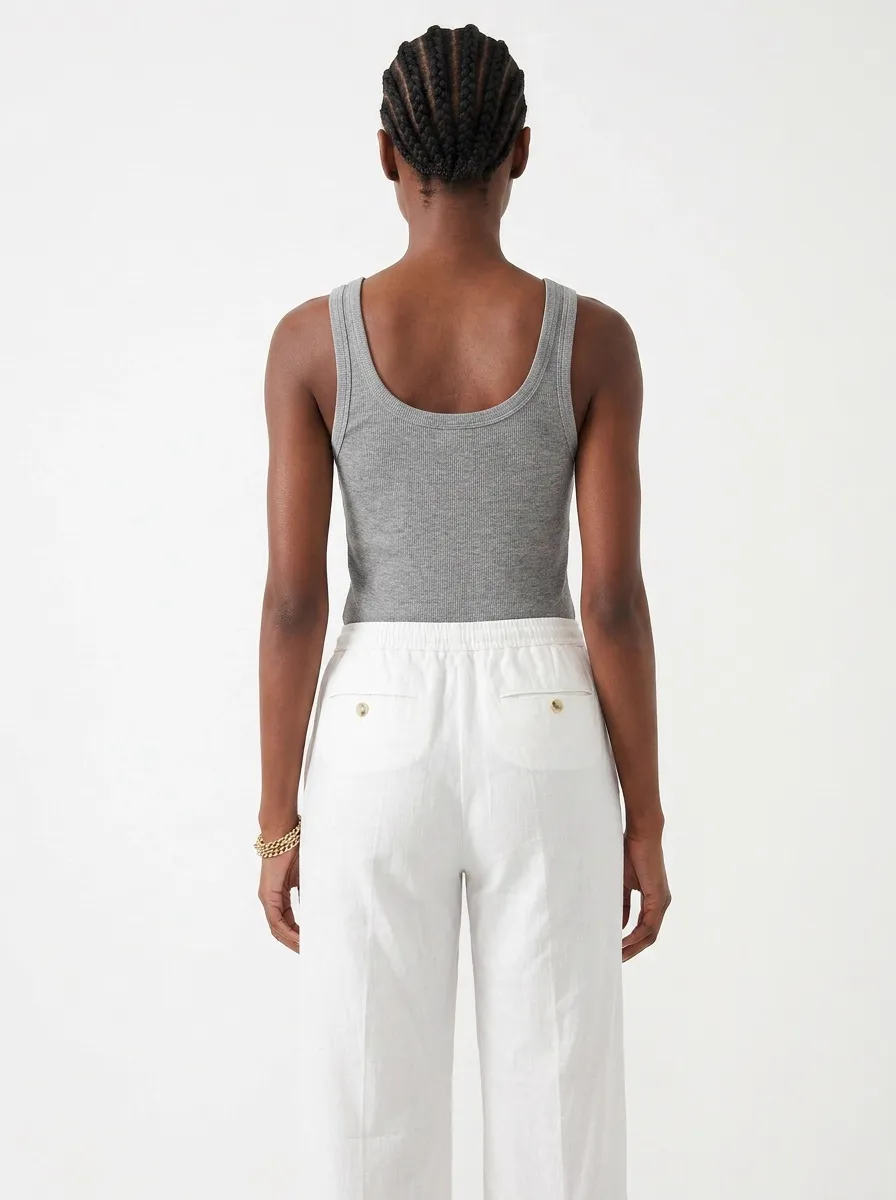
White Linen Pants
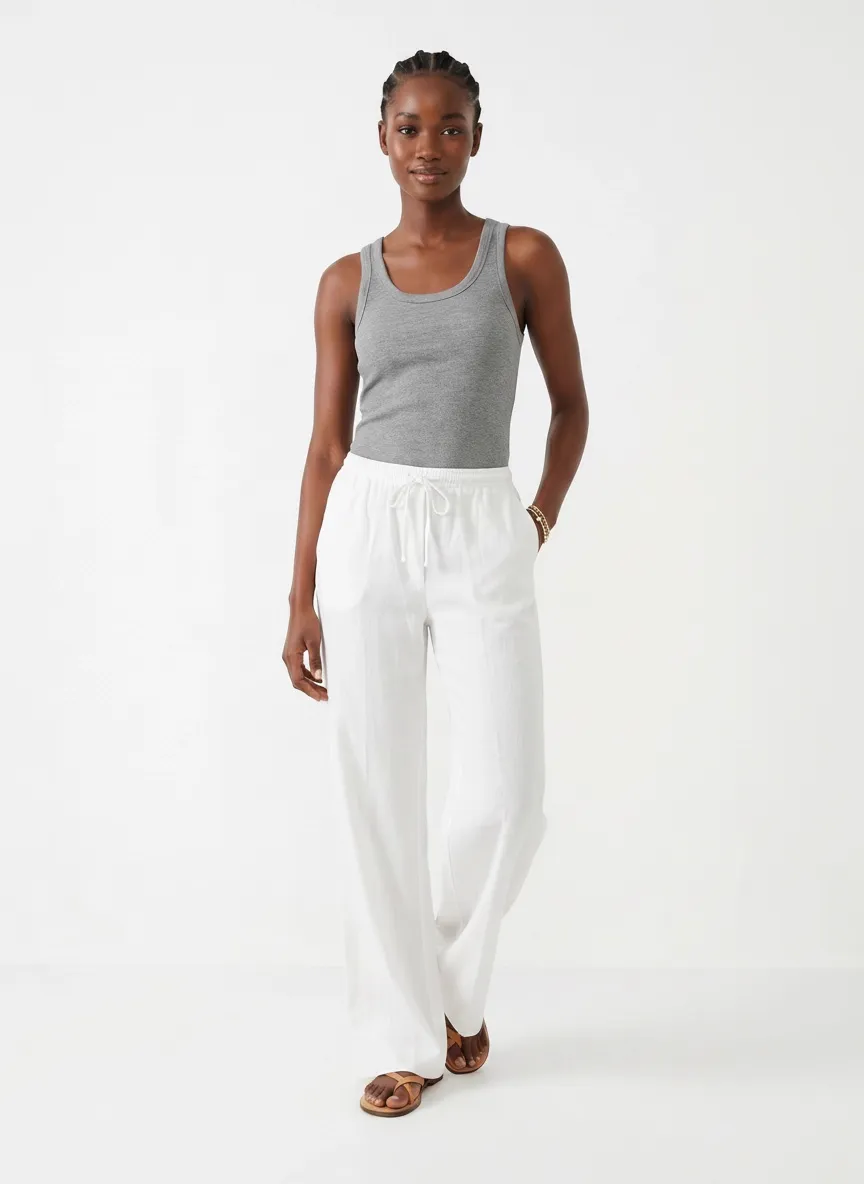
The source is the seller standing in her apartment — purple wall, wood floor, mirror in the frame, an ironing board visible behind her. MODA AI carries the linen pants onto the same model from walkthrough 1 (locked by face reference), styled with a gray ribbed tank, sandals, and a stool prop for the seated frame. Same model, different garment, one cohesive look.
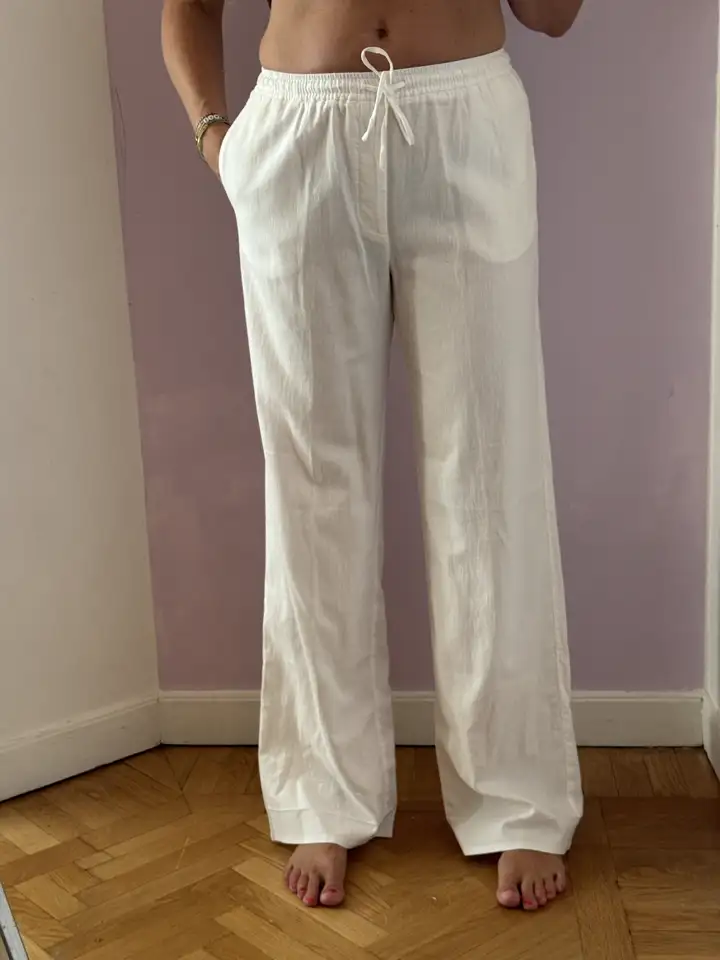
BEFORE — apartment selfie

Walkthrough 3 — Tailor’s Dummy to PDP
Pink Boxy Tee
The source is the tee photographed on a tailor’s dummy inside the seller’s small workshop — sewing materials, fabric racks, and bookshelves visible in the frame. MODA AI carries the tee onto the same model, paired with light-wash mom jeans for the catalog styling. Three different source photos. Three different garments. One model identity locked across all of them.
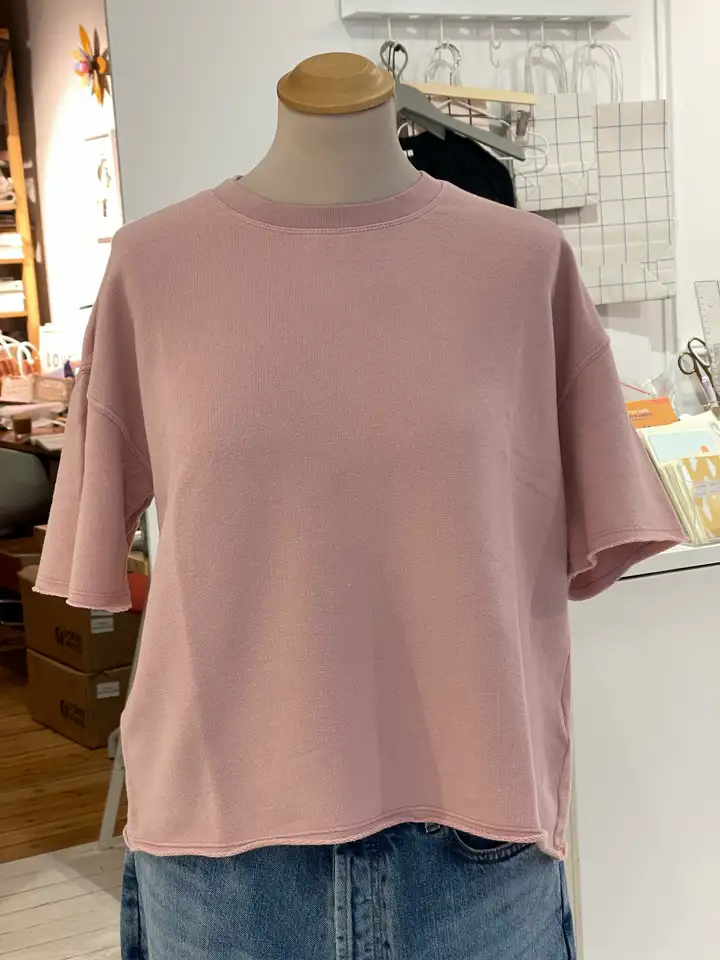
BEFORE — tailor’s dummy
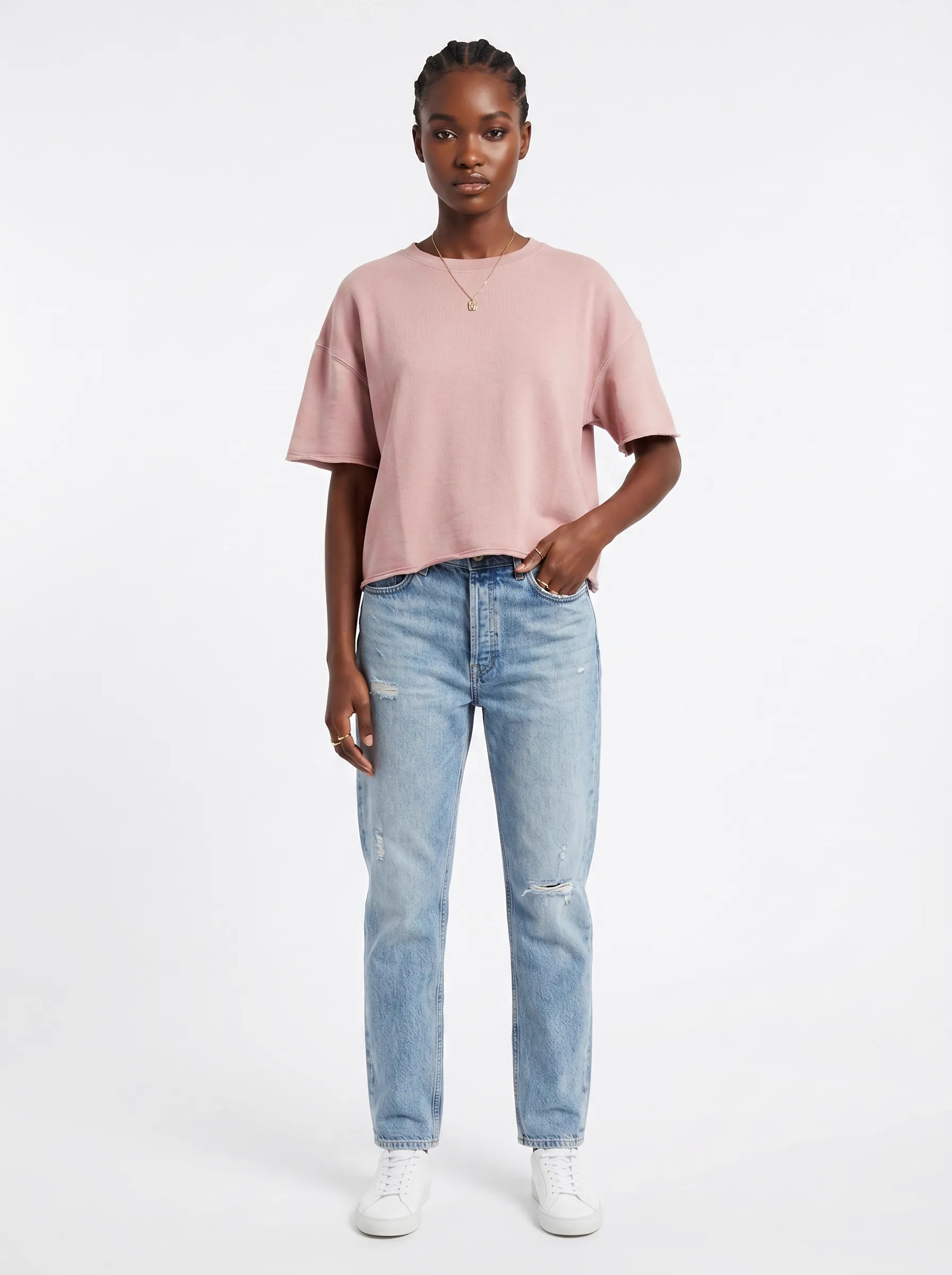
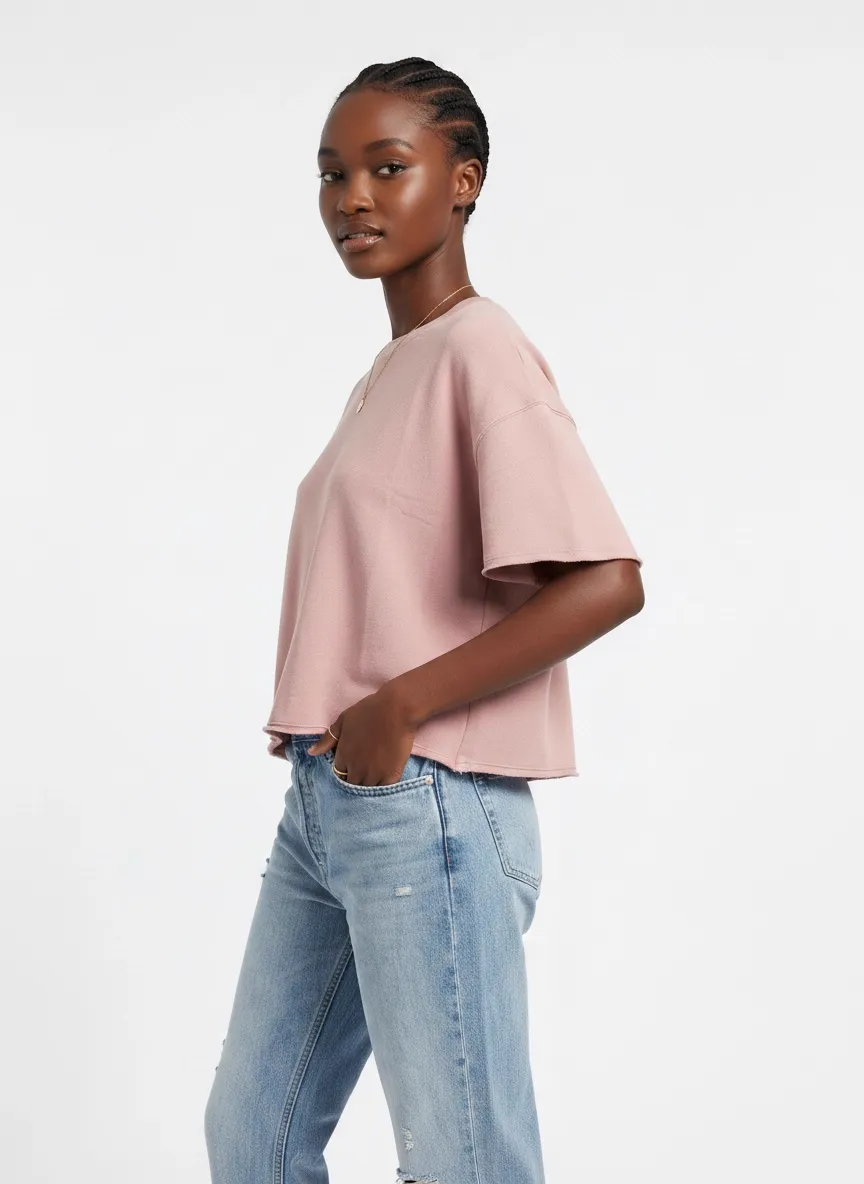
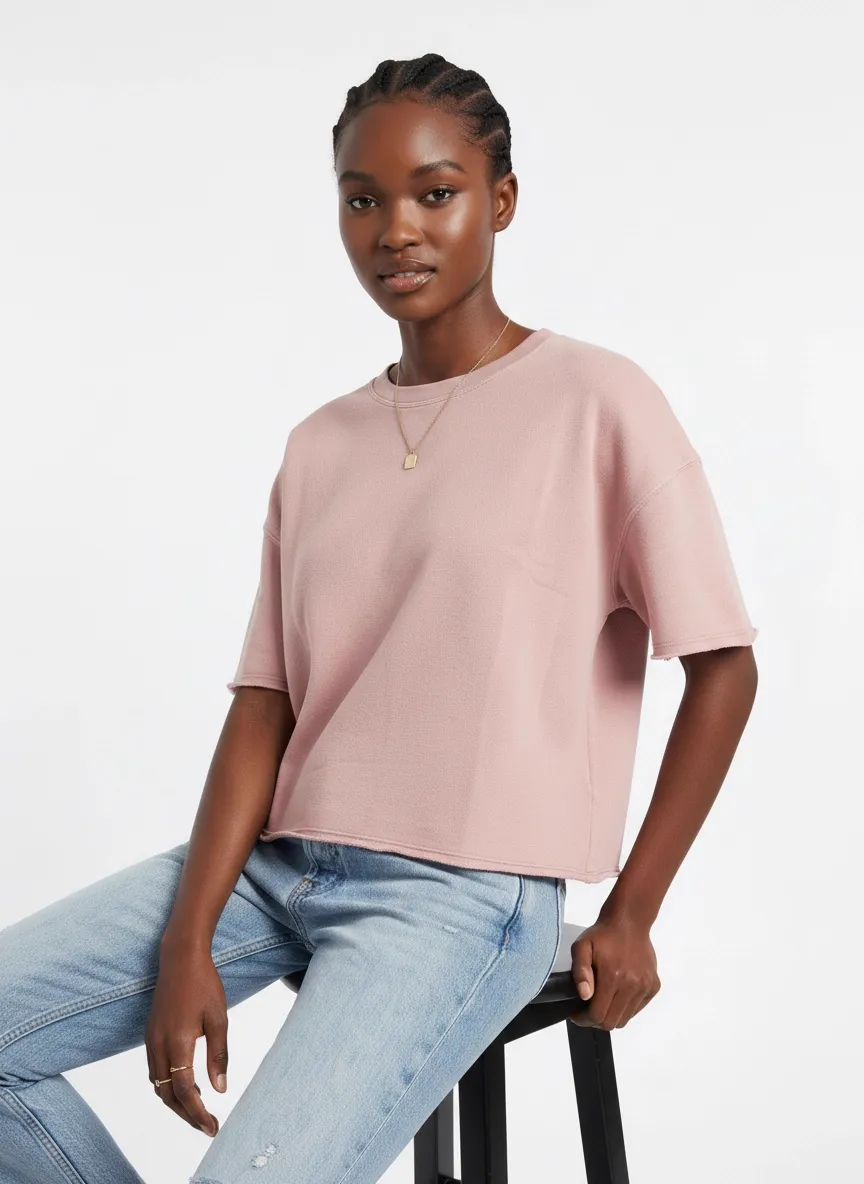
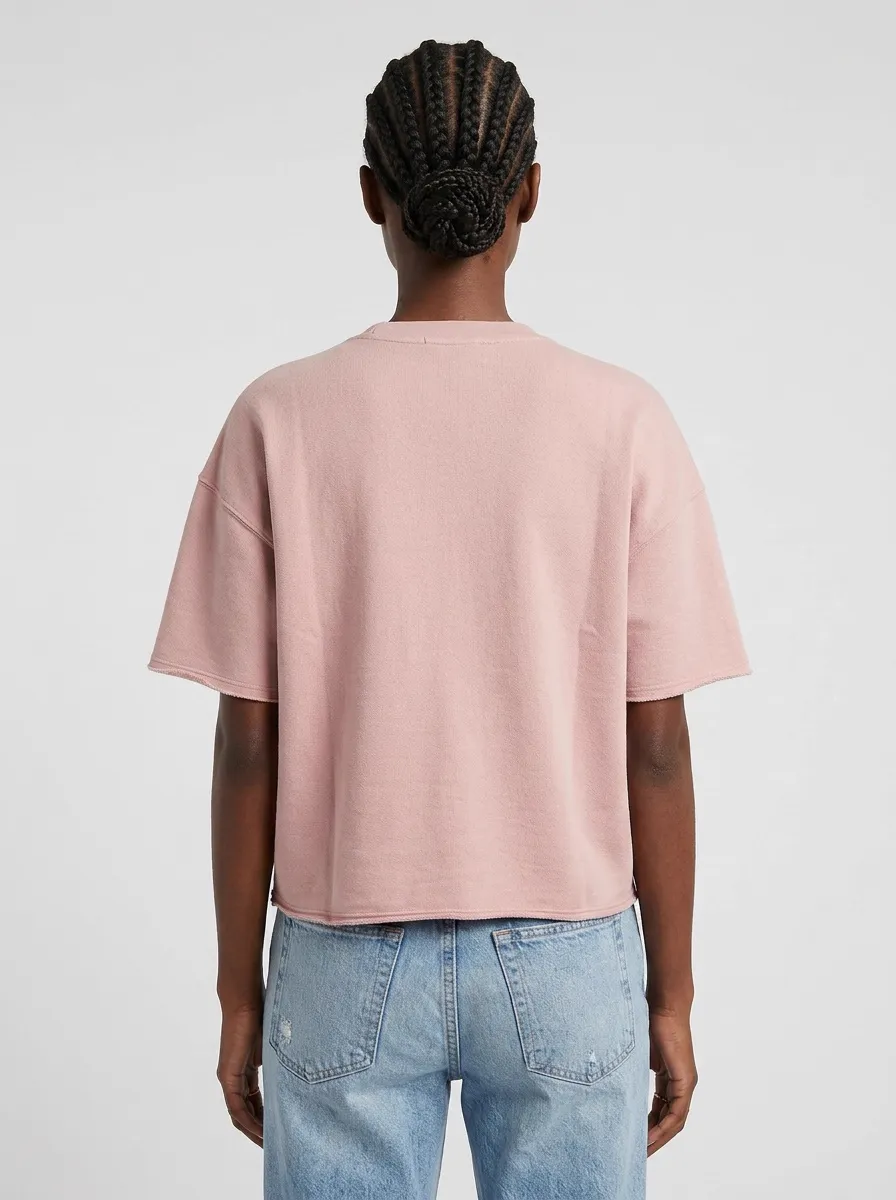
Three garments. Three source-photo contexts. One model. One consistent catalog. The disclosure line for every one of these images: Model: AI-generated. Garment: actual product.
What Mango Got Right — and Wrong — on AI Disclosure
Mango became, in 2025, the first major fashion retailer to deploy AI-generated imagery directly on live product detail pages, replacing the main on-model shots that drive purchase decisions. Business of Fashion and eMarketer covered the rollout closely. The key facts:
What Mango got right: they disclosed. The AI-generated imagery on PDPs did carry an AI-generated disclaimer. That alone put Mango ahead of every fashion brand running undisclosed AI imagery elsewhere.
What Mango got wrong: the disclaimer was placed and sized in a way that made it difficult for shoppers to actually read. The ArcadianAI analysis described the labels as small-font and subtle — technically compliant but reputationally a miss. When the Getty Images research says nearly 90% of consumers want to know if an image was created with AI, a disclaimer that requires a magnifying glass doesn’t meet the trust expectation those consumers are bringing to the PDP.
The lesson for Shopify brands: meet the letter and the spirit. Place the disclosure where customers actually look. Size it so the average shopper can read it on a phone. Don’t treat the legal compliance and the trust signal as separate problems — the same line of copy can solve both, but only if it’s visible.
The Levi’s Lesson: Publish Your AI Principles Before You Launch
In March 2023 Levi’s announced a partnership with Lalaland.ai to use AI-generated models “to increase diversity” in product imagery. The framing landed badly. Critics called it “corporate digital blackface” — the idea that synthesizing diverse-looking models could substitute for hiring actual diverse real models. The Wiley case study on the crisis breaks down the dynamics in detail.
Levi’s response, as reported by Rangefinder, is the part worth studying. They paused the pilot, issued a clarifying statement (“we do not see this pilot as a means to advance diversity or as a substitute for the real action that must be taken to deliver on our diversity, equity and inclusion goals”), and publicly committed to “draft and implement AI principles and ways of working” before any future launch — and to “be transparent and proactive about the use of this technology before it went live on our site.”
The lesson for Shopify brands: publish your AI principles publicly before you launch AI imagery, not as crisis cleanup. Don’t conflate AI photography with a DE&I substitute — that’s a different category of work. Treat AI as a portrayal tool you use intentionally, with values you can articulate. The brands that get ahead of the explanation own the narrative; the brands that wait until the backlash are reacting to someone else’s.
The H&M Approach: Consent for Real-Model AI Clones
H&M’s 2025 program, covered by CNN and PetaPixel, takes a different route: AI clones of 30 working models, created with written model consent. The novel move is that consent. It anticipated the NY Fashion Workers Act consent regime by a year, and it’s the right precedent for any brand that wants to use real-model AI replicas without violating the consent law.
The lesson for Shopify brands: if you upload a face reference of a real person to MODA AI — whether a working model, a brand ambassador, your founder, or anyone else — get written consent first, and document it. The default MODA AI workflow uses AI-from-scratch base models that sidestep the consent regime entirely. The moment a real face reference enters the workflow, the consent question follows it in.
How to Write an AI Disclosure for a Shopify Product Page
The operational specifics matter. Here’s the playbook a Shopify fashion brand can implement this week:
- Place the disclosure adjacent to the image, not in the footer. The EU AI Act requires users to be informed at the moment they encounter the content — not in T&Cs.
- Use specific language, not vague terms. “AI model. Real garment.” is clearer than “AI-enhanced imagery.” Customers reward specificity.
- Make it readable at mobile sizes. If a 13–14px label on a 5-inch screen requires zoom, you’ve created Mango’s problem.
- Carry the disclosure through alt text. Add to image alt: “AI-generated model wearing [product name].” Helps with screen-reader accessibility and AI-content provenance.
- Apply the same line to social ads. If your PDP image is repurposed for Instagram Shopping, the disclosure travels with it.
- Publish a brief AI principles page linked from the site footer. Two or three paragraphs explaining how and why you use AI imagery, signed by the brand. This is the Levi’s lesson institutionalized.
- Document model-reference consent where applicable. If you use any real face as a reference, keep a signed consent record.
Sample disclosure copy that works for both the NY Synthetic Performer Act and EU AI Act, sized for a PDP caption line:
AI model. Real garment. The model is generated by AI; the garment shown is the actual product you’ll receive.
Reads as a feature, not a confession.
AI Photography Is the Latest in a Long Line of Portrayal Tools
Take a breath here. The legal compliance is the floor. The bigger story is worth saying out loud.
Every product detail page has always been a portrayal. The seller’s choice of how to represent the product, curated for the customer. That work didn’t start with AI. It started with the first photographer who shaped studio lighting to flatter a fabric’s drape. It continued through every era since:
- Milk shoots use white glue. Real milk wilts under hot lights. No disclosure required.
- Beauty ads airbrush skin texture — smoothing pores, removing blemishes, lifting eye color. No disclosure required in most markets.
- Shampoo bottles are CGI renders. The bottle you see on the website didn’t exist when the “photo” was made. No disclosure required.
- Photoshop has been doing model retouching — thinning waistlines, lengthening legs, swapping skies, adjusting colors — since the 1990s. France passed a narrow disclosure law for retouched fashion ads in 2017; most markets have nothing.
- Studio lighting bends reality in every single catalog shot ever taken. Light shaping doesn’t exist in nature, and no one has ever asked for a disclosure.
Sellers have always had license to portray. The laws that just went live didn’t invent a new category of regulation — they caught up to one specific new capability that AI brought into reach: synthesizing a human who doesn’t exist. That’s the threshold the NY Synthetic Performer Act and EU AI Act are addressing, and it’s the right threshold to address. It’s also a very narrow one.
What changed isn’t whether portrayal is allowed. What changed is that AI gave small sellers access to the same production quality that big brands previously bought with studio days. The seller’s iPhone photo of red sweat shorts on her bedroom carpet doesn’t need to look like a magazine spread. With MODA AI it does. That’s the democratization. The disclosure label is the small entry fee — and it’s also a quality signal. It tells the customer: this brand is using the best portrayal tool available.
Treat it that way and the math changes. A confident, well-placed disclosure isn’t a credibility tax — it’s the line that converts the 76% of consumers who switch to brands with proactive transparency, per the Relyance consumer trust survey. The brands that disclose like they’re proud of the tool will win that segment. The brands that disclose like they’re hiding shame will not.
Why MODA AI’s Workflow Makes Disclosure Easier
One last operational point. MODA AI’s product architecture aligns cleanly with the disclosure regime:
- The garment is real. You upload your actual product. MODA AI preserves the input garment with fidelity — covered in detail across our logo reproduction and activewear and intimates walkthroughs. The product trust signal stays intact.
- The base models are AI-from-scratch. No deepfake of a real working model means no NY Fashion Workers Act consent burden in standard workflows.
- The brand promise IS “AI fashion photography.” Disclosure doesn’t contradict the value prop — it states it plainly. There’s no hidden inconsistency to manage.
- The output is metadata-aware. MODA AI’s generated assets carry AI-content provenance information, supporting both EU machine-readable marking requirements and any future provenance standard.
The Math: Penalties Are Small, the Trust Premium Is Not
$1,000 first violation, $5,000 each subsequent — the NY Synthetic Performer Act penalties are modest. EU AI Act fines can reach higher tiers for repeated or systemic non-compliance, but for an individual Shopify fashion brand running a clean disclosure policy, the practical exposure is low.
The real number is the opposite side of the equation: 76% of consumers will switch to brands with proactive transparency, and 50% will choose transparency even when it costs more. The trust premium for clear, confident disclosure is structurally larger than the penalty for compliance failure. The right framing isn’t “avoid the fine.” It’s “win the conversion.”
Who This Workflow Is For
The disclosure regime applies broadly. The disclosure strategy we’ve walked through is built for:
- Independent Shopify boutiques using AI imagery for catalog refreshes and seasonal drops — the brands closest to a Mango-style PDP deployment at scale
- Dropshippers generating unique catalog imagery from generic supplier flat lays
- DTC apparel founders shipping into both the US and EU markets, where both disclosure regimes apply
- Wholesale brands whose imagery is repurposed by multi-brand retailers, where the disclosure travels with the asset
- Marketing teams at established brands evaluating how to formalize AI imagery as a recurring catalog mechanism
- Legal and compliance teams at fashion businesses building policy around the new regulatory regimes
Frequently Asked Questions
What is the NY Synthetic Performer Act?
The NY Synthetic Performer Act is an amendment to New York General Business Law §396-b that went into effect on June 9, 2026. It requires advertisers to conspicuously disclose when an advertisement features a 'synthetic performer' — a digitally created asset using generative AI intended to create the impression of a human performer not recognizable as any identifiable natural person. Penalties are $1,000 for a first violation and $5,000 for each subsequent violation. The disclosure form (language, size, placement) is not specified by statute.
When does the EU AI Act take effect for fashion brands?
The EU AI Act's transparency obligations under Article 50 — including the requirement to label AI-generated content and deepfakes — become enforceable on August 2, 2026. For fashion ecommerce specifically, this means AI-generated model imagery must be marked as artificially generated, and users must be informed at the moment they encounter the content rather than through notices buried in terms and conditions.
Do AI-generated fashion models need disclosure?
Yes. Under the NY Synthetic Performer Act, the definition of synthetic performer was written precisely to catch AI-generated humans that are not recognizable as any real person — exactly the type of model produced by tools like MODA AI. The disclosure applies even when the AI model is not a deepfake of a real person. Under EU Article 50, any AI-generated content shown to users in the EU market must be labeled as such.
Does the disclosure apply to the garment in the image, or just the AI model?
Both laws regulate the synthetic performer or the AI-generated content of the image — not the product itself. For Shopify brands using MODA AI, this distinction matters: the garment in the catalog shot is real (uploaded by the merchant), and the model is AI-generated. The disclosure language should reflect that — for example, 'Model: AI-generated. Garment: actual product.' This protects the product trust signal while satisfying the legal requirement.
How should a Shopify brand write its AI disclosure?
Place the disclosure conspicuously on or directly adjacent to the AI-generated image — not buried in a footer or terms-of-service page. Use specific language ('AI model. Real garment.') rather than vague terms ('AI-enhanced'). Keep the font legible at the size customers actually view product detail pages. Mango's first-mover PDP deployment included a disclaimer but the small font and difficult-to-read placement drew criticism — meeting the letter of the law without earning the trust premium.
What did Mango, Levi's, and H&M get right or wrong with AI disclosure?
Mango became the first major fashion retailer to put AI imagery directly on live product pages in 2025 and did include an AI disclaimer — but the placement was criticized as too subtle to be effective. Levi's launched its 2023 Lalaland.ai partnership framing AI models as a DE&I initiative, drew backlash, paused the program, and committed publicly to drafting AI principles before any future launch. H&M is creating AI clones of 30 working models with written model consent — aligned with the NY Fashion Workers Act consent regime for digital replicas of real people. The takeaways: disclose conspicuously (Mango), publish principles before launch (Levi's), and document consent for any real-model use (H&M).
Does using MODA AI's face-from-scratch models help me sidestep the Fashion Workers Act?
Yes for the NY Fashion Workers Act, which requires written consent for AI replicas of real working fashion models. MODA AI's base models are generated from scratch — not replicas of any specific real person — so the Fashion Workers Act's consent regime doesn't apply to standard MODA AI workflows. However, the NY Synthetic Performer Act still applies (its definition was written precisely to cover AI-from-scratch synthetic humans), and EU Article 50 still applies to any AI-generated content. Use of a real-model face reference would invite Fashion Workers Act consent requirements; the standard MODA AI workflow does not.
The garment is real. The model is AI. Both can be said proudly.
Install MODA AI from the Shopify App Store. Upload your garments. Generate ten catalog-ready images on a from-scratch AI model. Disclose it like a feature.
Get Started Free