Category Deep Dive
AI Photography for Activewear & Intimates: Where Fit and Skin Decide the Sale
The two categories with the highest return rates in apparel. Where seam, skin, and color tolerance break most AI tools. Here’s what catalog photography needs to handle.
May 17, 2026 · 9 min read
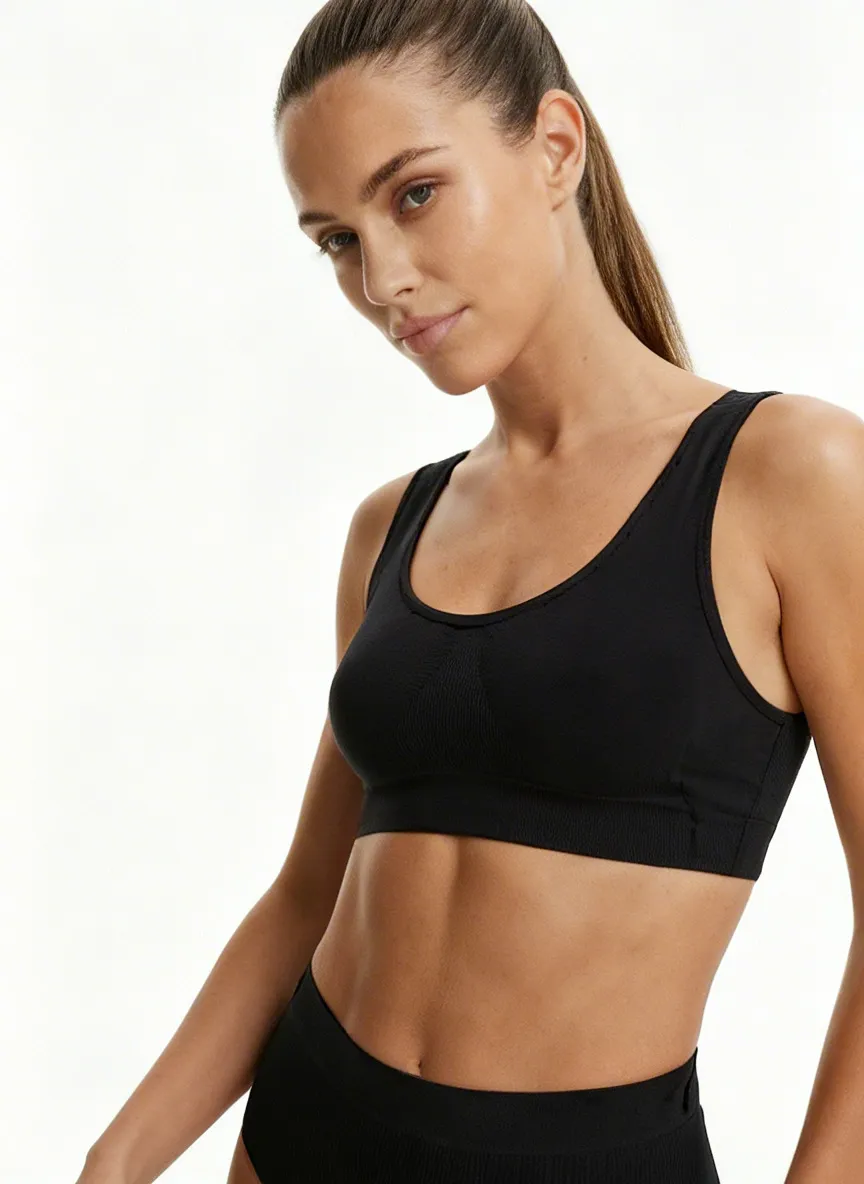
The bralette flat lay carried into a real frame. Skin reads as skin. Seams stay where the garment put them. This is the bar.
30–40%
return rate for online lingerie and swim — the highest in fashion
Coresight Research
53%
of apparel returns are driven by size and fit — the single largest cause
Prime AI retailer survey
10
catalog-ready images per MODA AI upload — clearing the 3–4 minimum 60% of shoppers require
CXL conversion research
The Stress Test for AI Catalog Photography
Most AI photography demos use a denim jacket on a model in a neutral studio. The garment covers most of the body, the lighting is forgiving, the color is mid-range. It’s a fair demo. It’s also the easy mode.
Activewear and intimates are the hard mode. A seamless bralette shows three things at once: the construction of the garment, large areas of skin, and a color that’s usually in the difficult-to-reproduce neutral range. A pair of high-waist leggings sets the rise at a specific height on the body, and even a centimeter of drift in the waistband position changes the silhouette and the fit signal. The customer is reading these details to make a buying decision, because returning a sports bra or a pair of compression leggings is an exhausting process they want to avoid.
If an AI tool can carry a black scoop-neck bralette and high-waist leggings without losing seam, band, color, or skin fidelity — and can hold one model identity across a five-shot set — it can carry anything in your catalog. That’s the argument of this post.
Why These Categories Break Most AI Tools
The failure modes are predictable. Here are the four that show up most often when generic AI photography tools are tested on activewear and intimate apparel:
Smoothed skin reads as plastic.
Most AI tools default to a 'beauty retouch' look — pores erased, skin texture flattened. On a bralette close-up where 60% of the frame is skin, this reads instantly as AI. Customers notice. Trust drops. Returns rise.
Seams blur and bands drift.
The rib structure on a seamless bralette, the elastic band depth, the stitching at a leggings inseam — these are the fit cues a customer reads to decide whether the garment will work. Generic AI smooths them into a soft, indistinct surface. The garment loses its construction.
Neutrals drift first.
Black, nude, beige, and deep maroon are the hardest colors to reproduce accurately. AI tools tend to shift them — nude becomes pink, black becomes navy, maroon becomes brown. For categories where color is the only variable across a SKU range, this is unacceptable.
One body type, one skin tone.
Many AI tools have a single 'default' body shape baked into the model. The garment renders on that shape regardless of input. For activewear and intimates, where customers actively look for representation that matches them, a single body type signals the brand isn't for them.
Walkthrough 1 — Intimates
The Black Scoop-Neck Bralette
This is the hardest single garment in the test. Black, seamless, ribbed band, deep scoop neckline, low back. The flat lay has to carry into close-up bust framing, side profile, back, and full-body two-piece — with the construction visible in every frame.
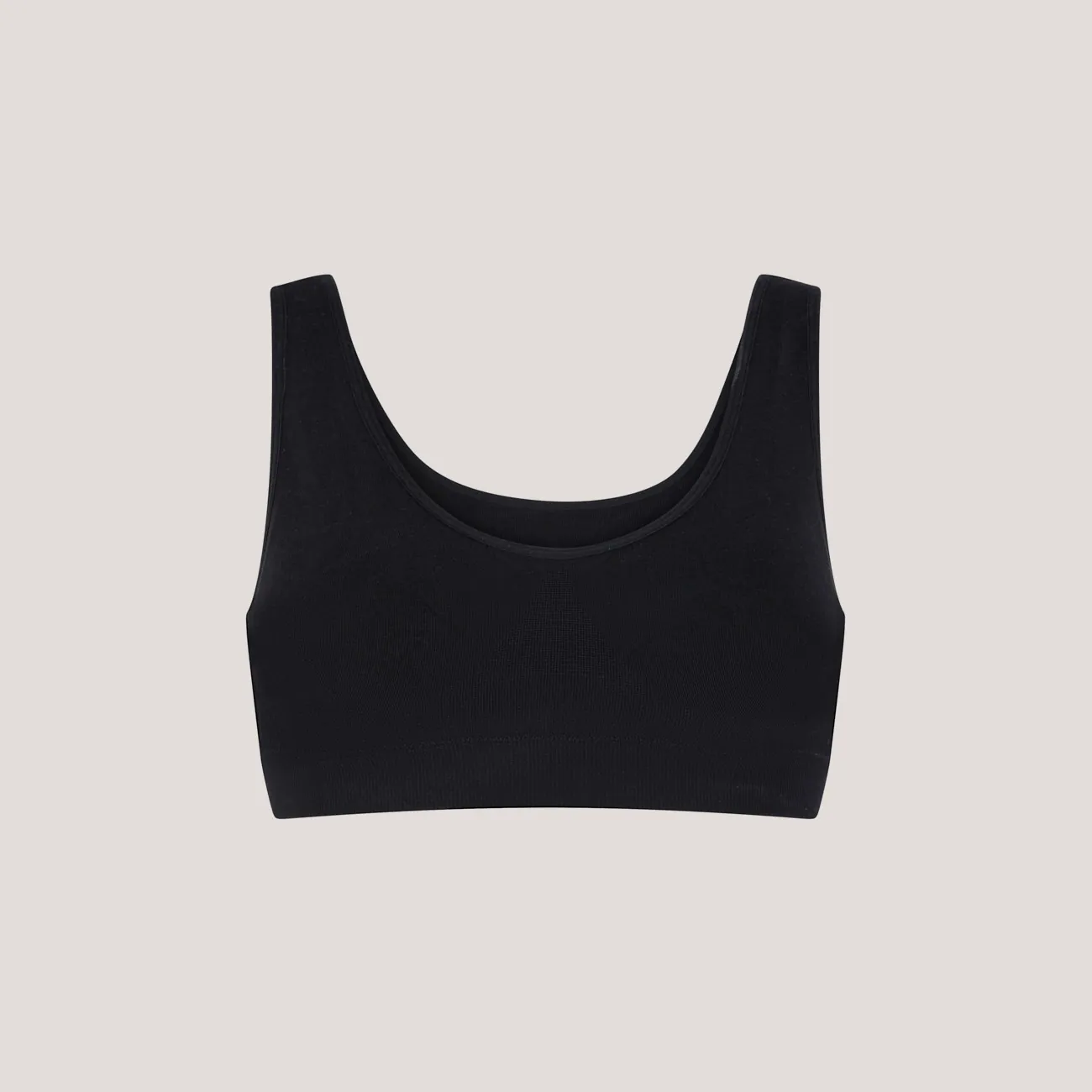
Input — flat lay, front
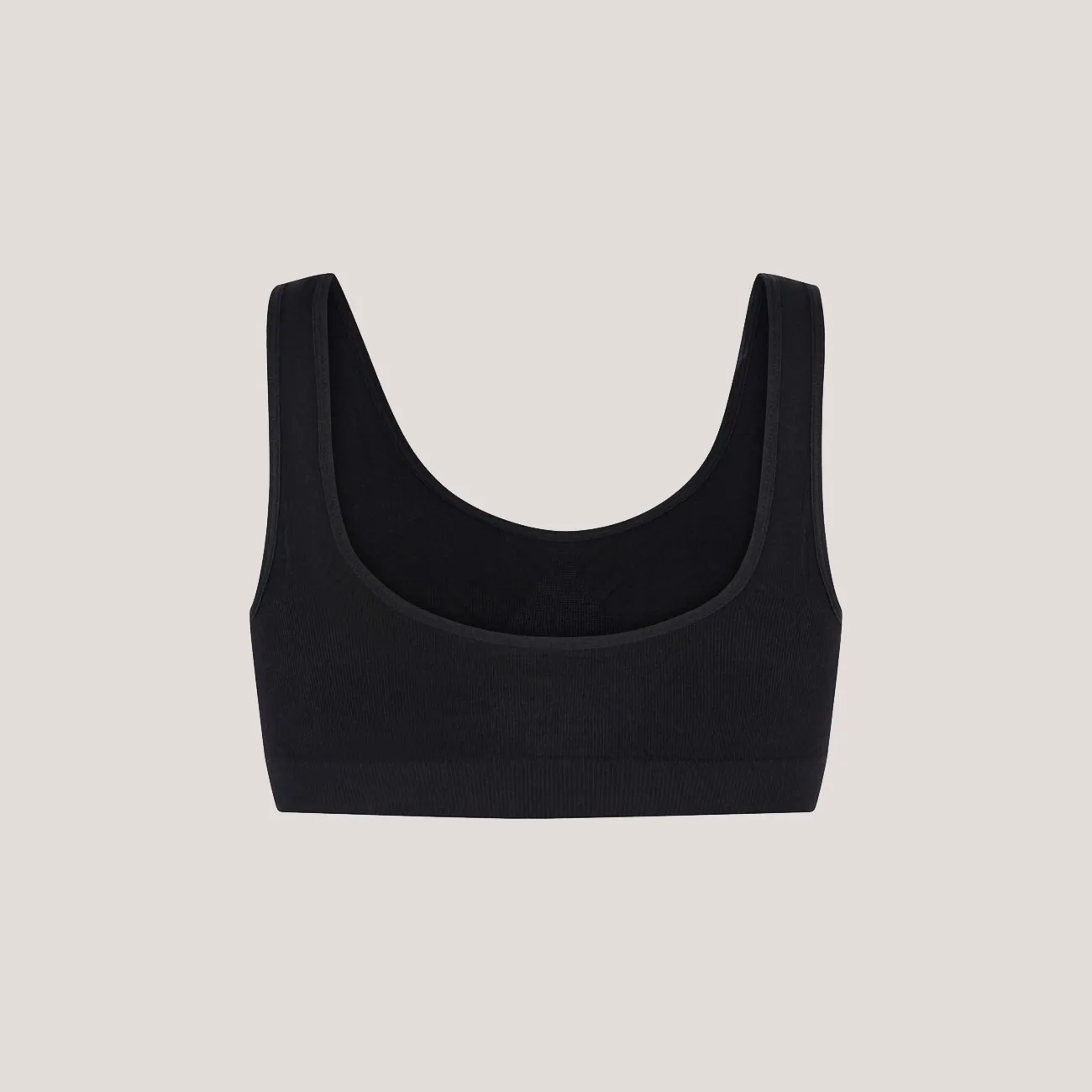
Input — flat lay, back
Two flat lays in. Everything below comes out.
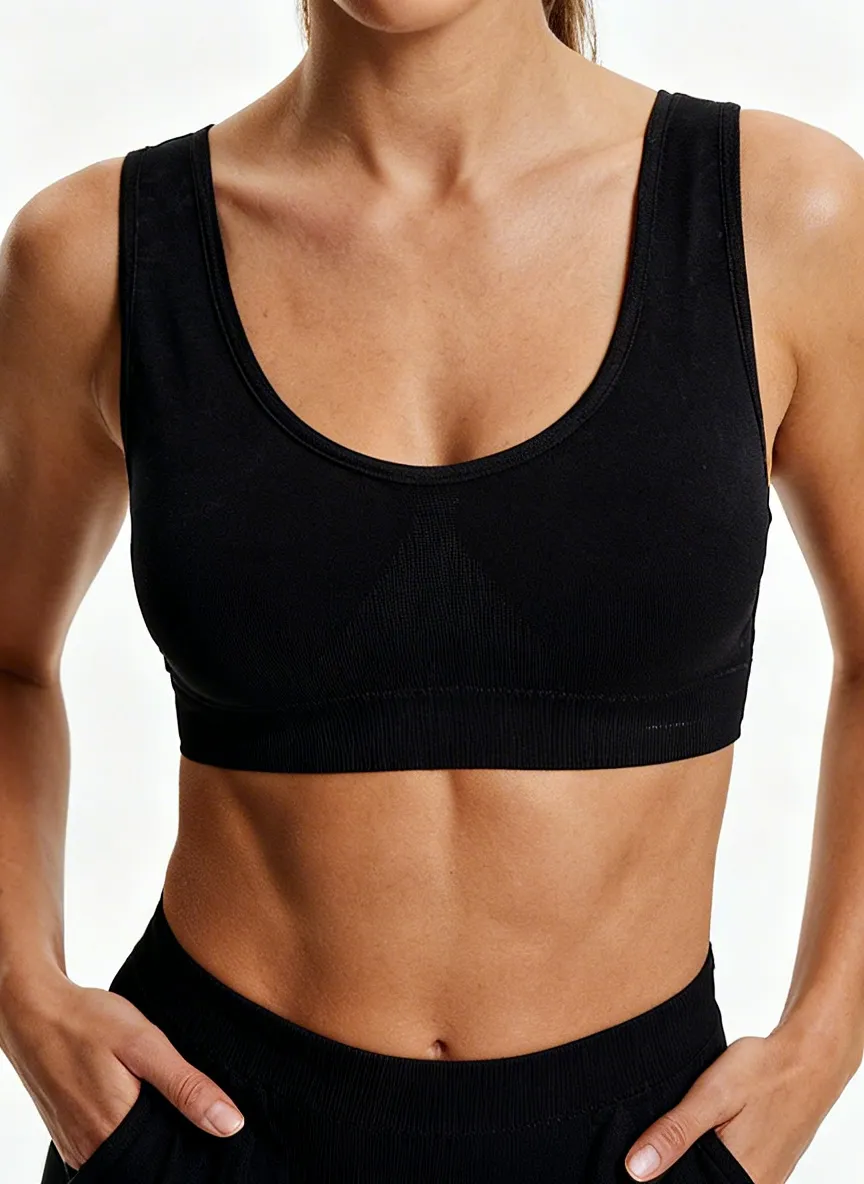
Bust close-up — construction detail
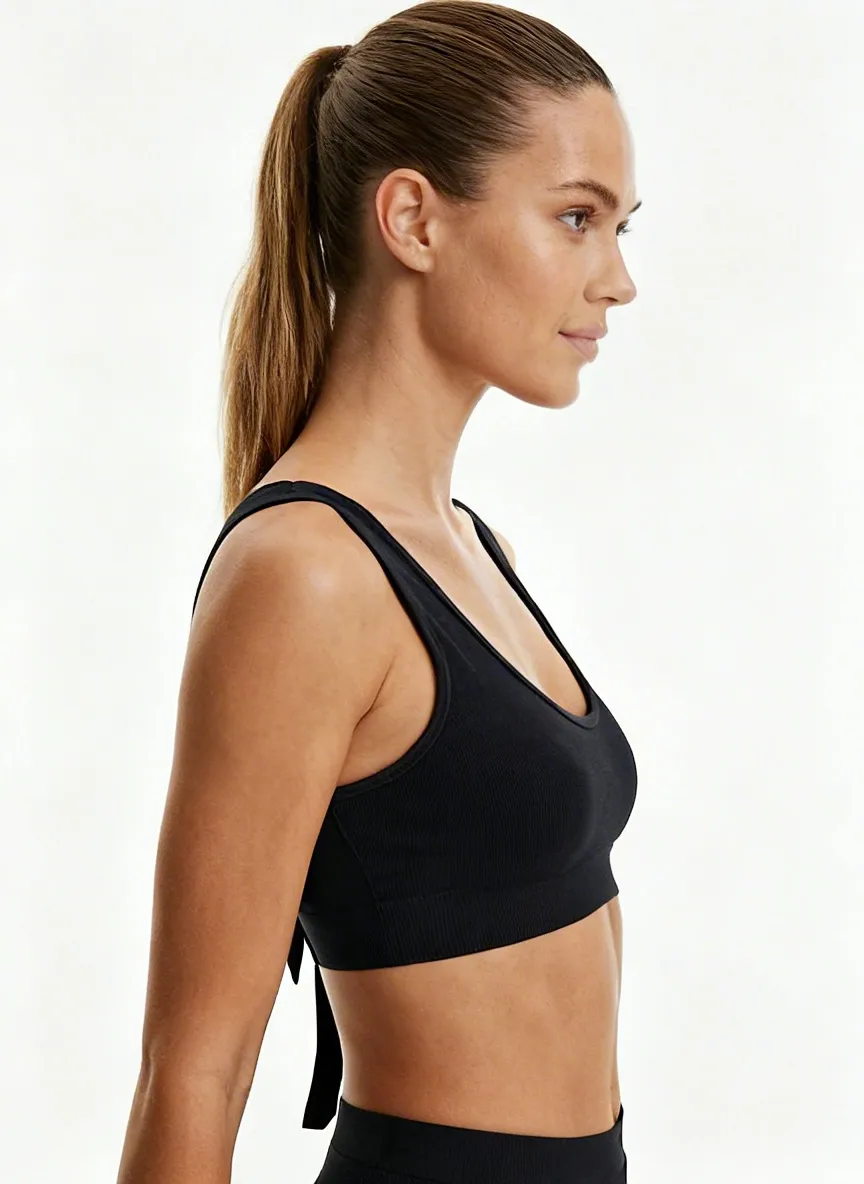
Side profile — bust shape and band fit
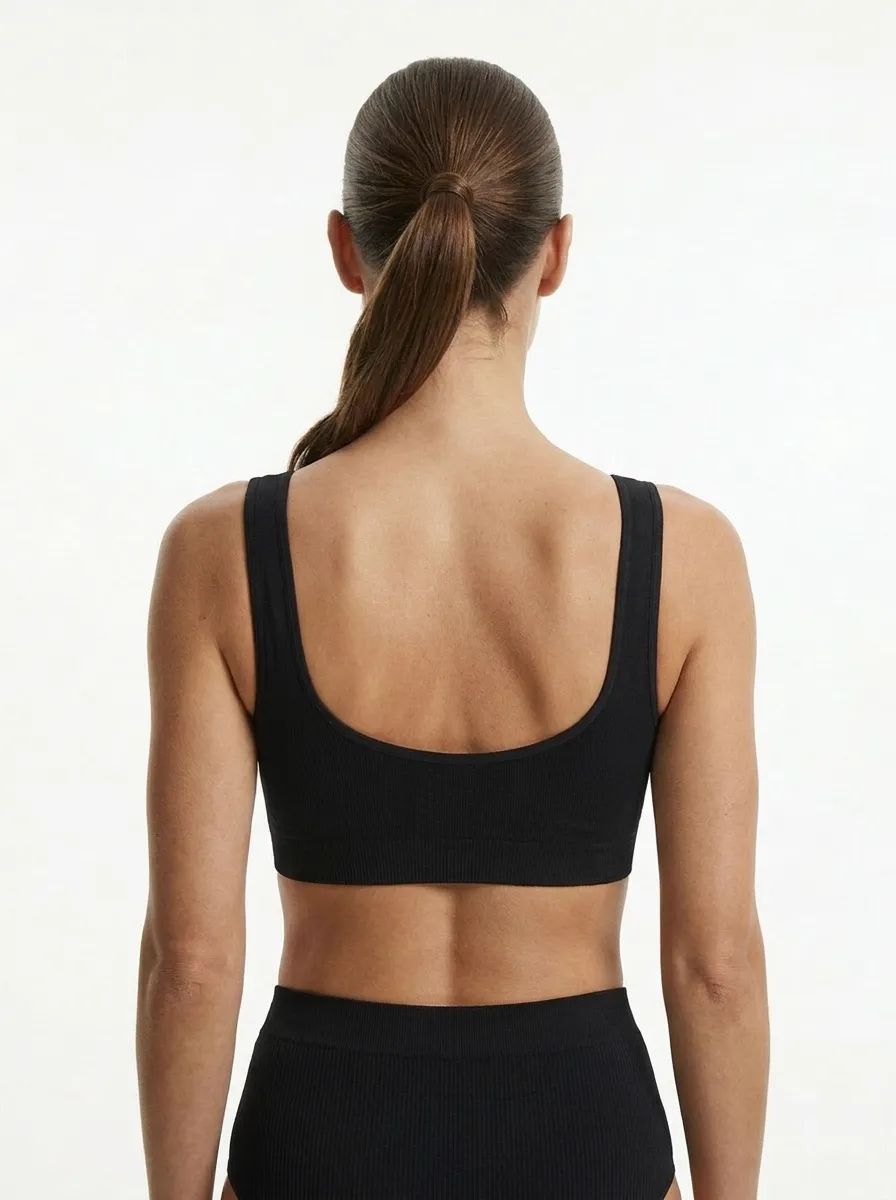
Back view — strap and scoop depth
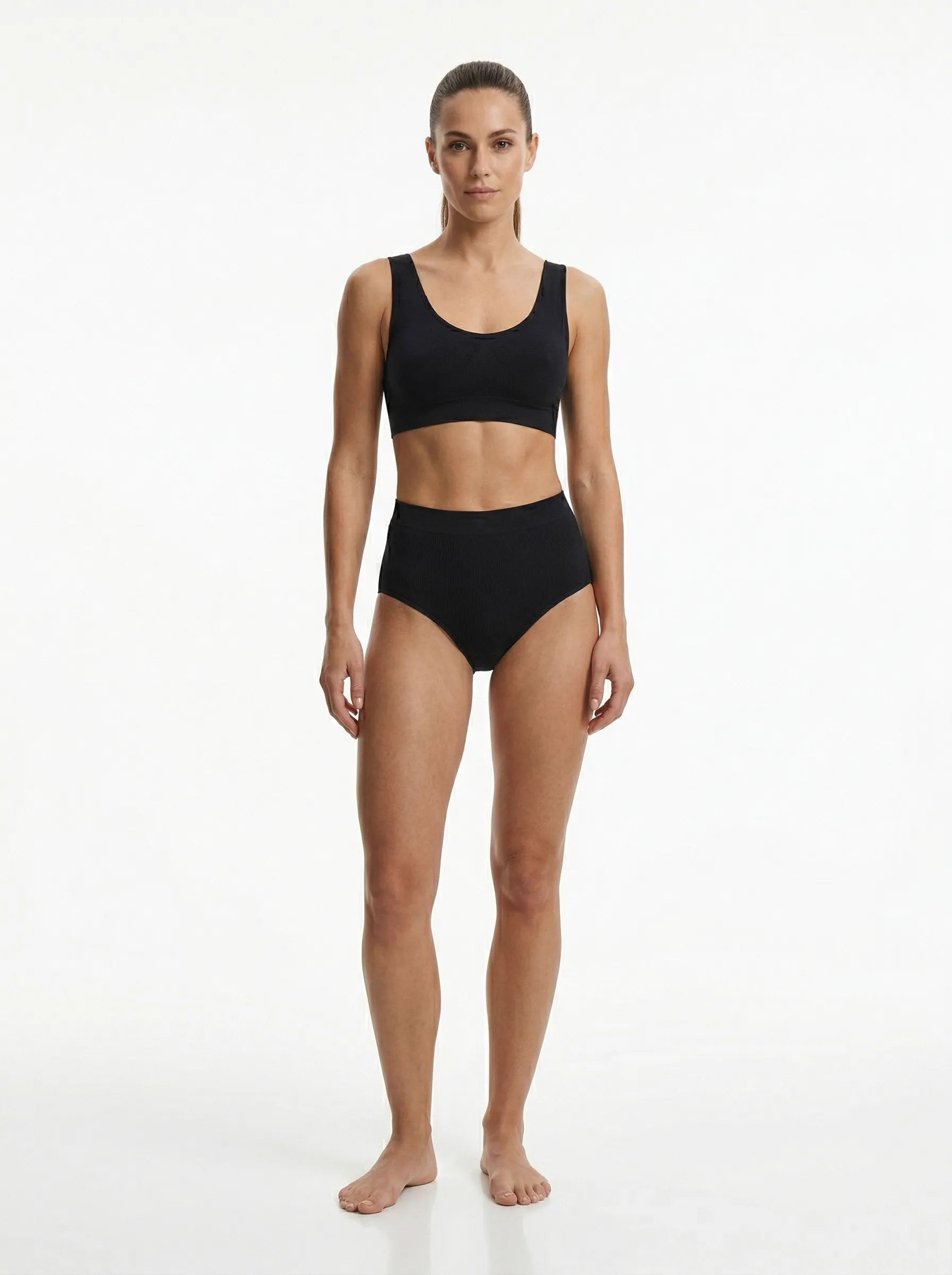
Full body — two-piece set
Same garment across four framings. Scoop curve, band depth, strap width all preserved.
Walkthrough 2 — Activewear Bottom
Maroon High-Waist Leggings, Locked Model
Leggings test two things at once: fit accuracy and model consistency across a multi-pose set. The rise has to sit at the same height in every shot. The leg seam has to stay straight. The maroon has to read as the same maroon under different lighting. And if a brand wants the same face across the whole catalog, the face reference has to hold.
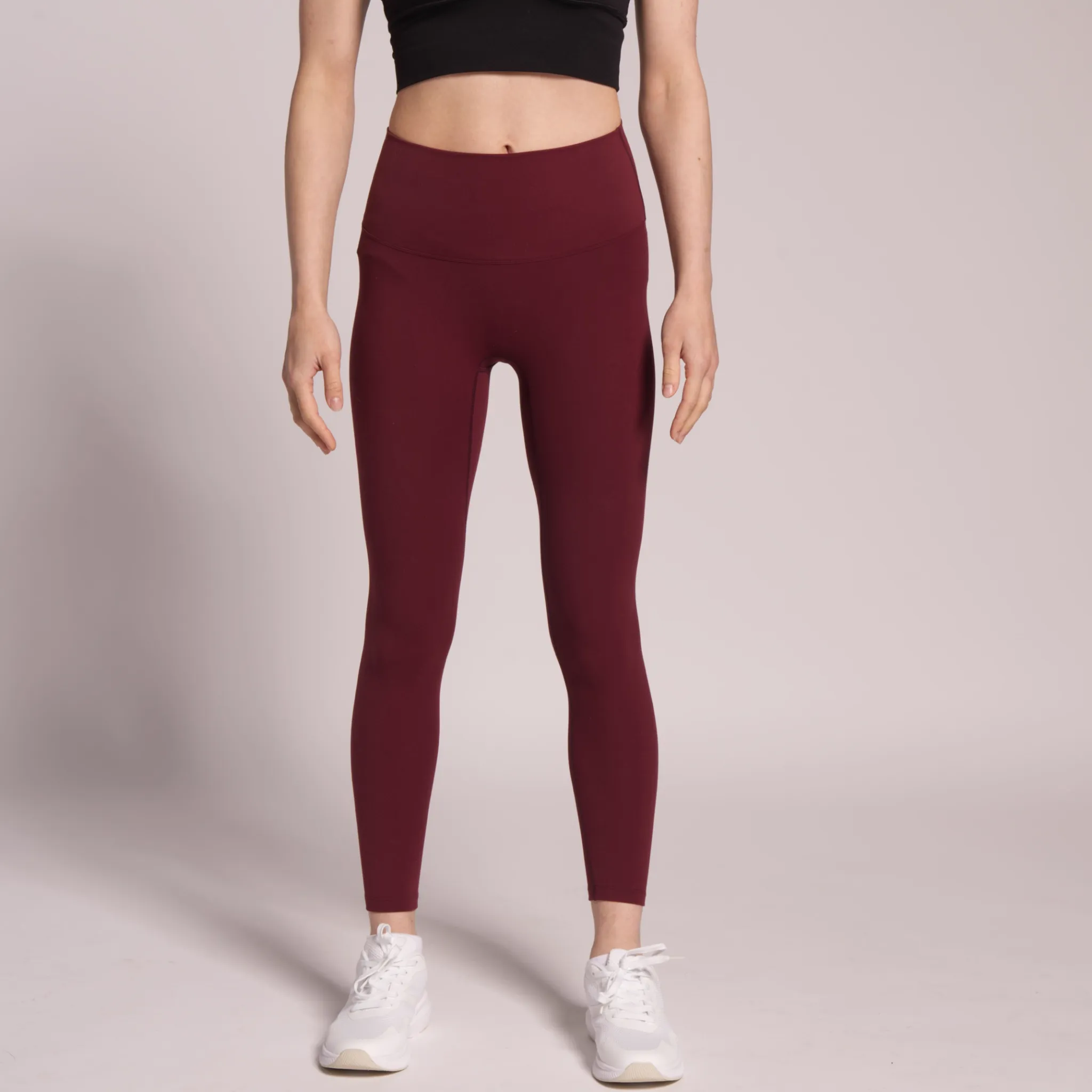
Input — on-mannequin garment shot
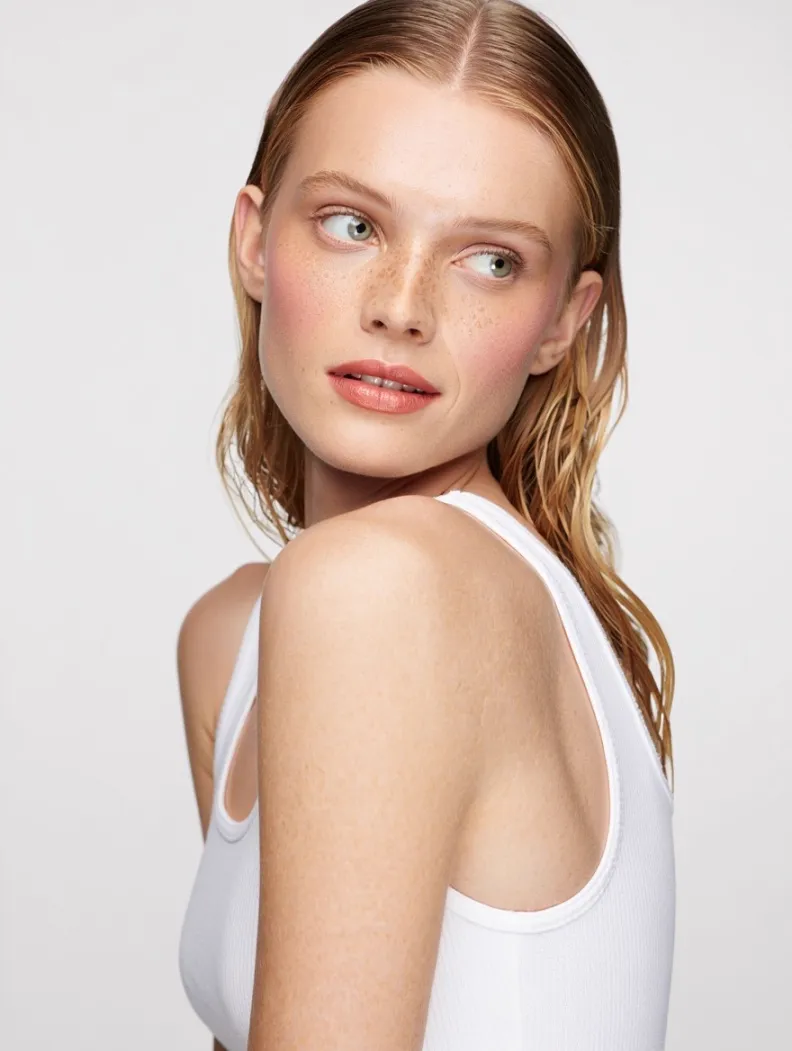
Input — face reference
One garment, one face. Below: the same model wearing the leggings across four catalog frames.
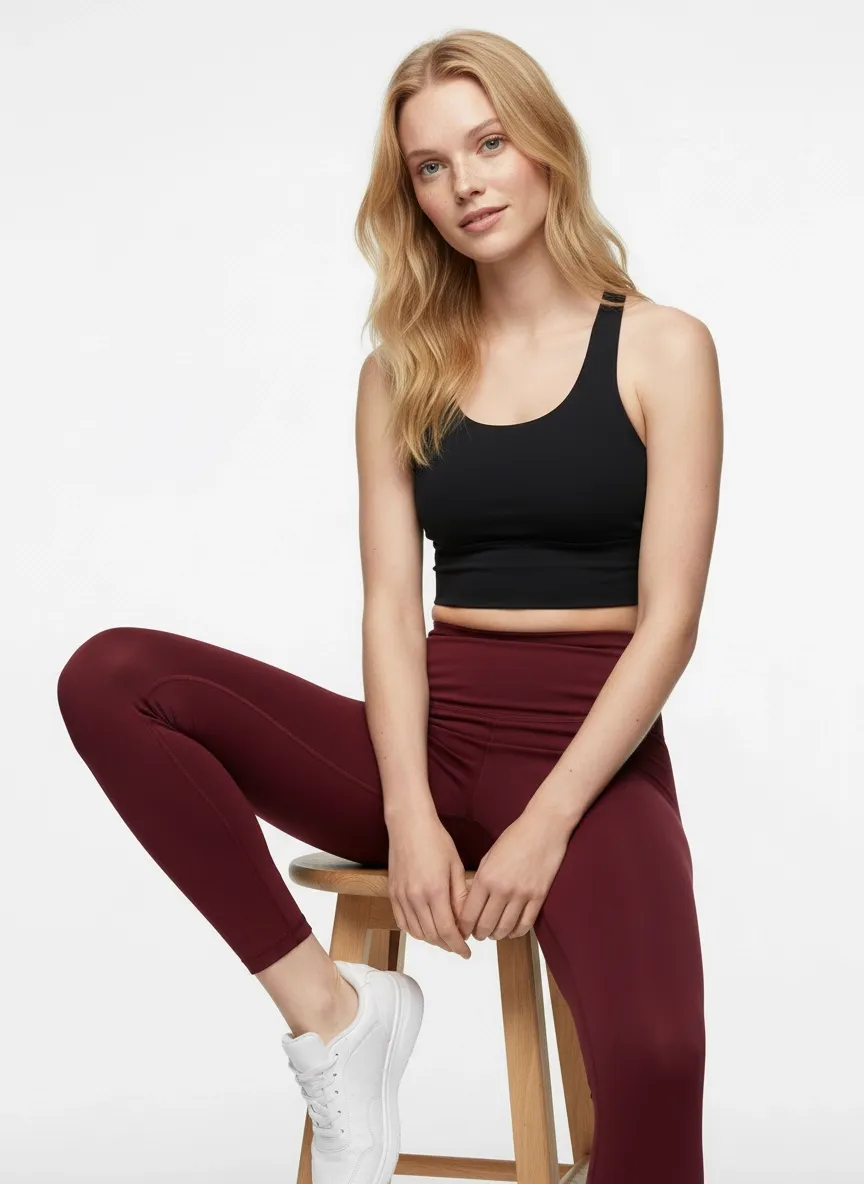
Seated — lifestyle frame
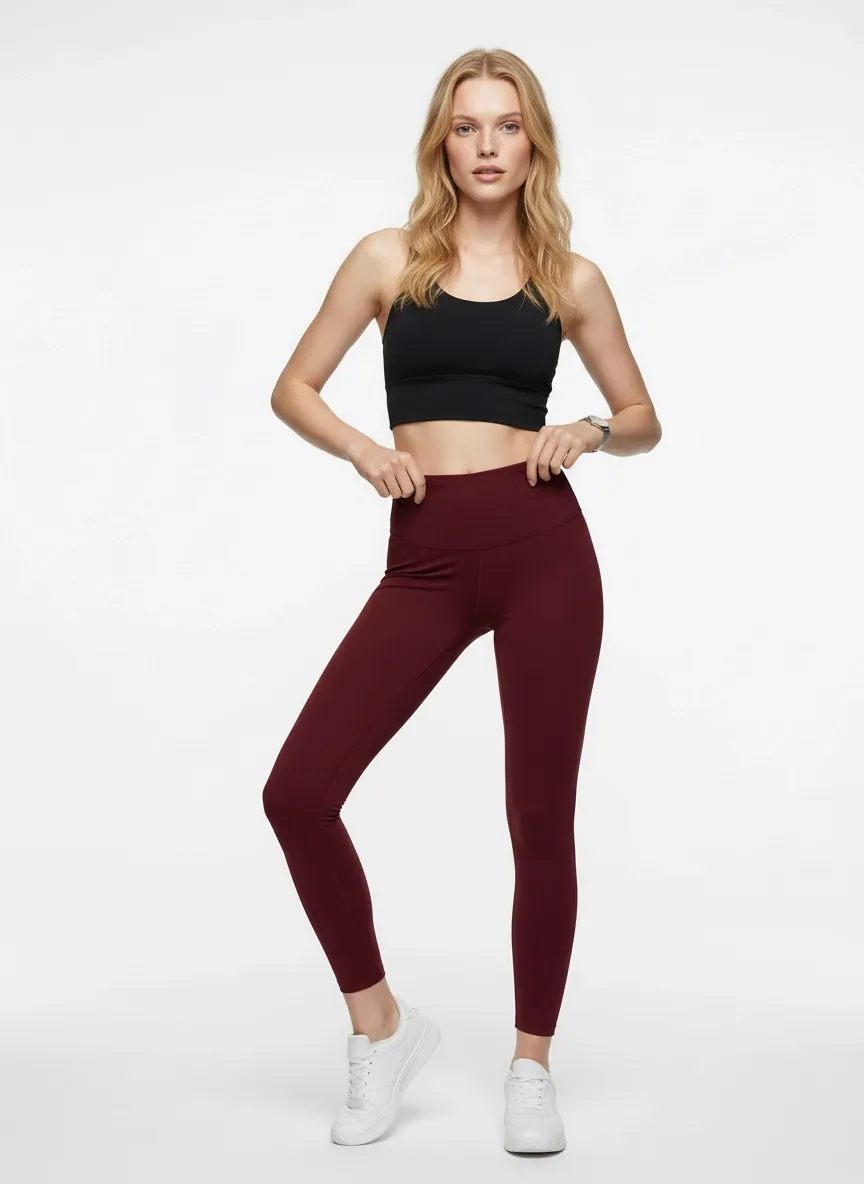
Standing — waistband and rise check
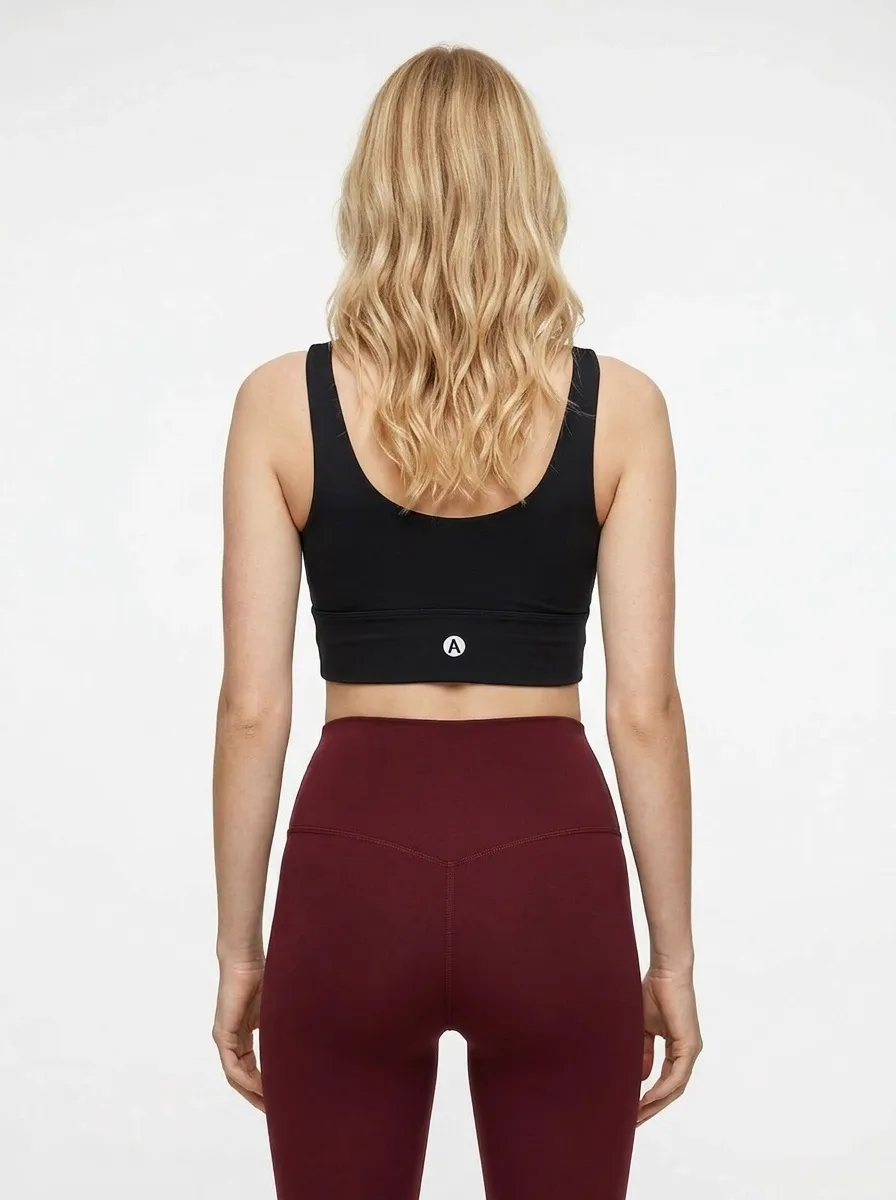
Back — waistband construction
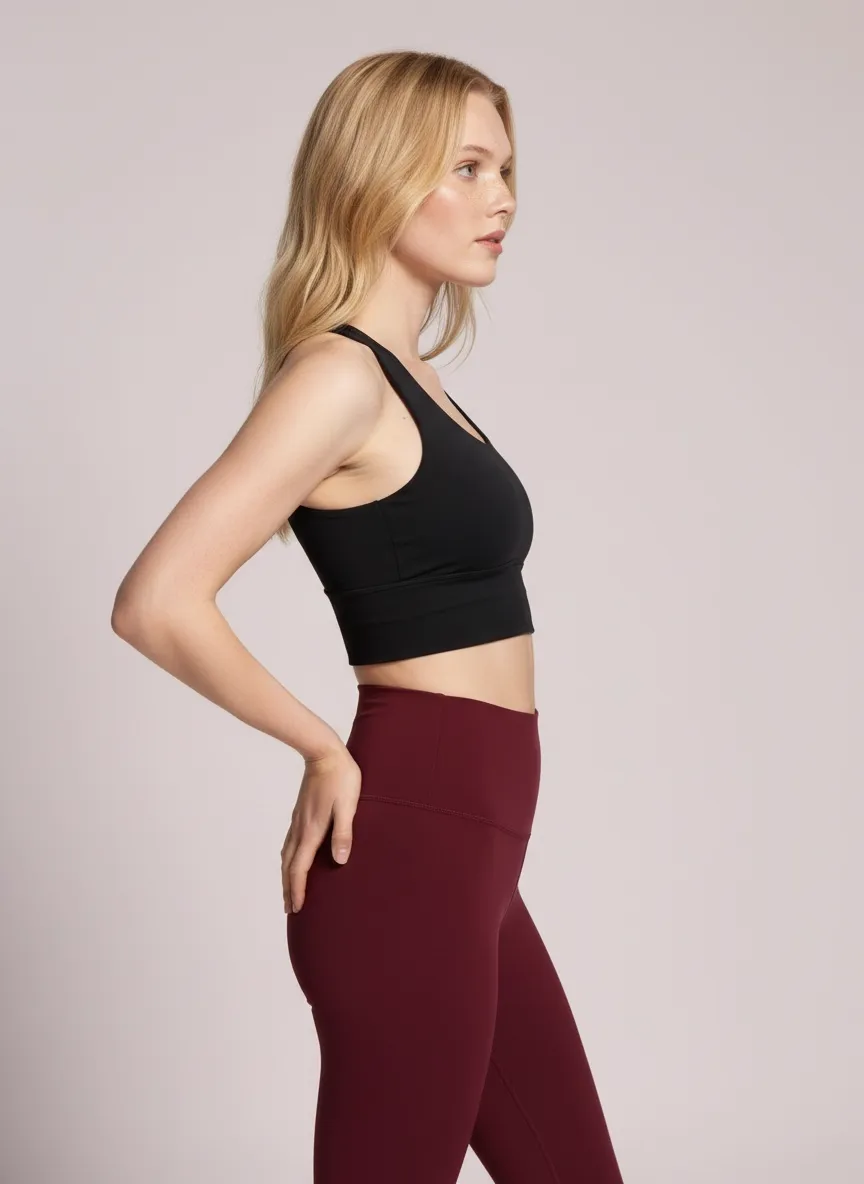
Side — profile in motion
Four frames, one model identity, one garment color held across all four lighting conditions.
Why model lock matters for activewear
Activewear catalogs sell in collections, not single SKUs. Same model across the legging colorway, the sports bra range, and the matching shorts gives the page a coherent brand feel. SellHound’s analysis found model consistency lifts revenue 23–33%. The face reference is the lever that delivers that consistency without re-booking talent.
Walkthrough 3 — Different Body, Same Garment
Blush Seamless Bra, Different Model
Nudes and blush tones are the colors that drift first in generic AI tools. They’re also the colors customers care most about getting right — because a nude bralette has to read as nude against the customer’s skin, and a generic pink isn’t nude on anyone. This walkthrough shows the same blush bra on a different model than the first two walkthroughs, expanding the visible model range without a separate shoot.
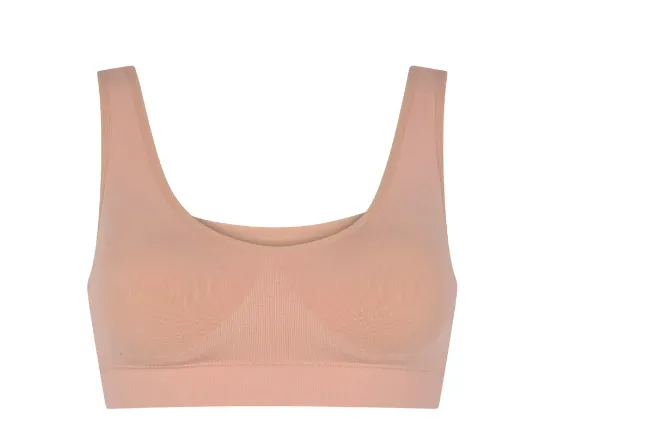
Input — blush seamless bra, flat lay
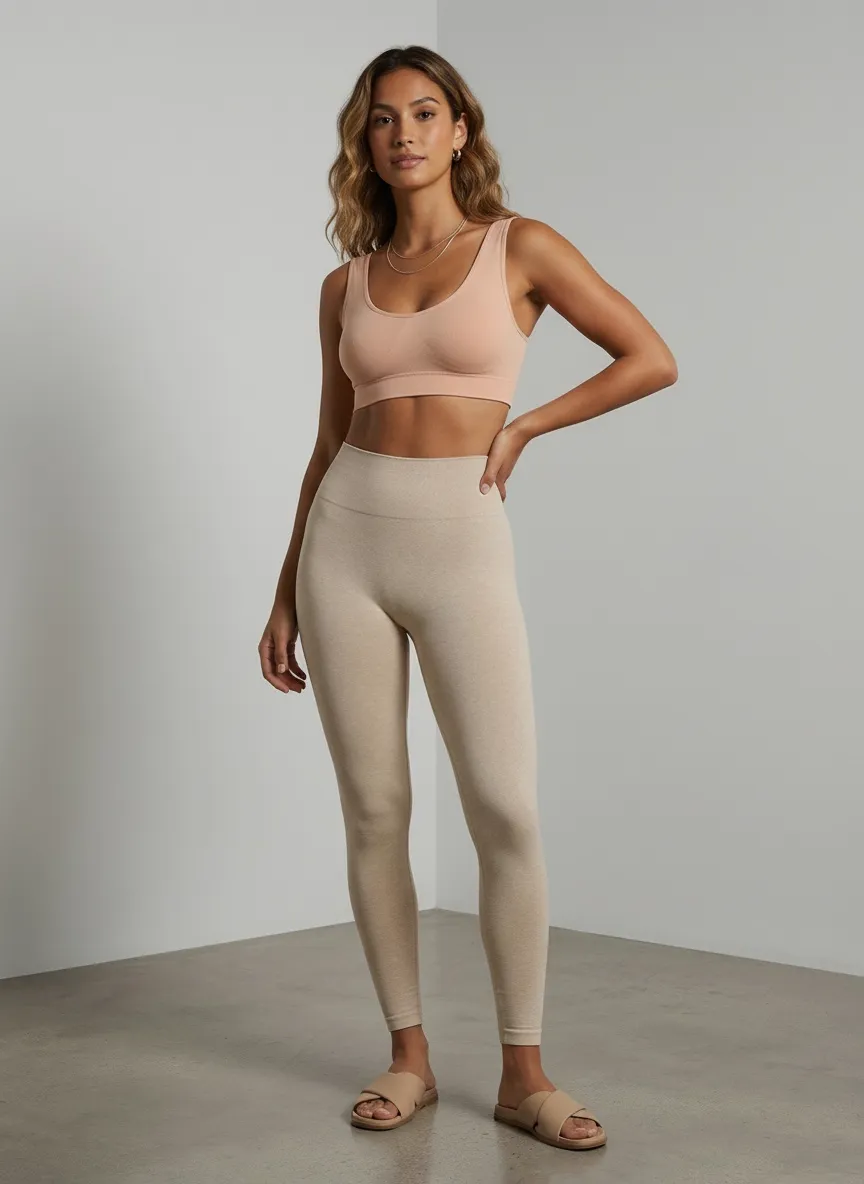
Full body — styled with loungewear
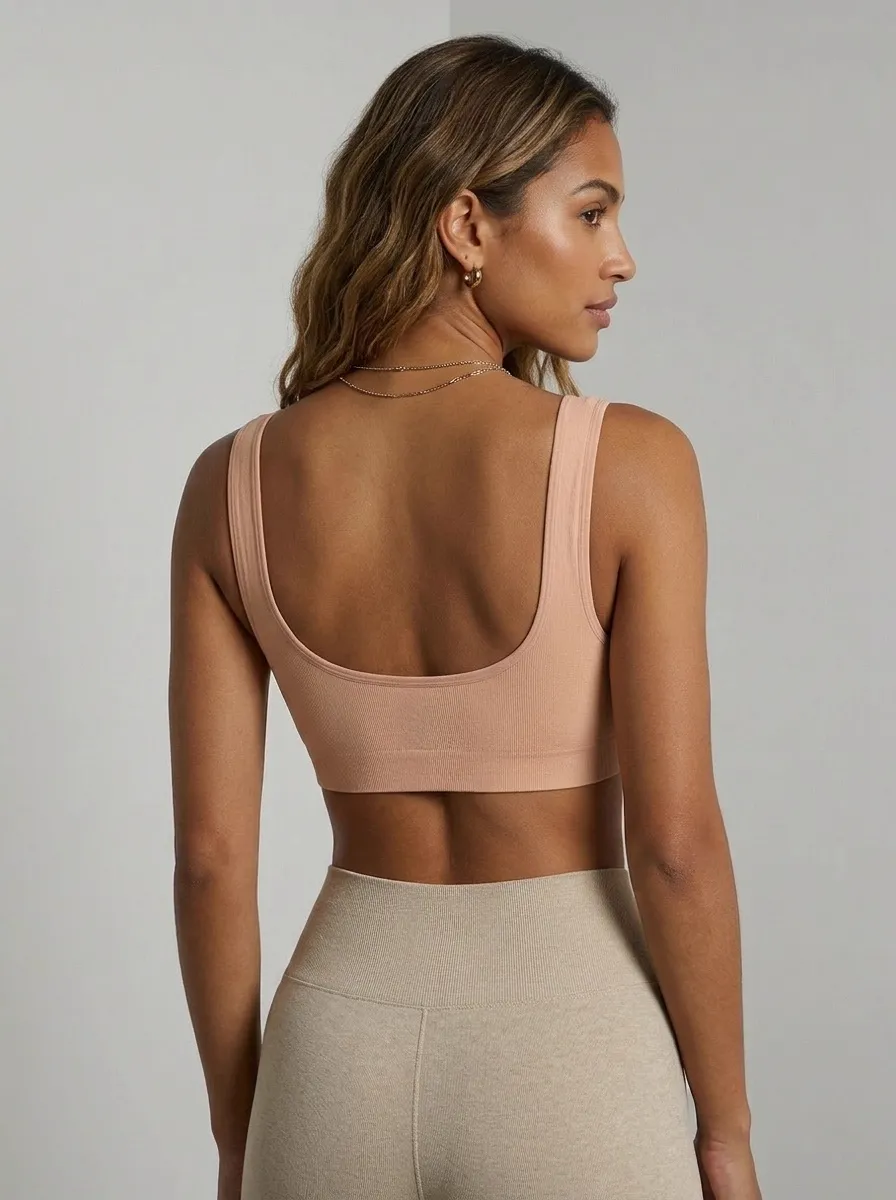
Back close-up — rib and scoop detail
Same garment, different model, accurate nude tone against medium skin. No reshoot required.
The Conversion Math
The case for investing in proper catalog photography for activewear and intimates is not subjective. Three numbers tell the story:
Returns are expensive and concentrated in fit perception. Apparel sits at roughly 26% return rate in the US, leading every online category (Statista). Lingerie and swim hit 30–35%, with some sources reporting up to 40% (Coresight Research). Size and fit is the dominant reason for those returns — 53% per Prime AI’s retailer survey, up to 70% per McKinsey (Prime AI). For a $75 apparel order returned for fit, the brand’s actual loss is $102.98 once shipping, inspection, and restocking are counted — 37% more than the refund itself (Fitez).
Image quantity and quality move conversion the other way. 60% of US digital shoppers require at least 3–4 images before purchasing, and another 13% want 5 or more (CXL). High-quality product imagery lifts conversion up to 40%, model-worn shots with multiple angles can lift add-to-cart up to 73% versus flat lays alone, and model consistency across a catalog drives revenue up 23–33% (SellHound). ASOS reported 65% higher purchase completion when additional high-quality views were added to listings.
One MODA AI upload clears the threshold. Every batch produces 10 catalog-ready images across 16+ pose angles — from a single flat lay or mannequin shot. That covers the 3–4 minimum 60% of shoppers ask for, the 5+ another 13% prefer, and gives you front, back, profile, three-quarter, seated, and detail close-ups for every SKU. From one input, in under two minutes, for under $1.25 per batch on the starter tier.
What “Fit Accuracy” Actually Means in an AI Shot
“Fit accuracy” is the term every AI fashion tool claims. Here’s the specific checklist that matters when the category is activewear or intimates:
For more on how on-body inputs drive these fit signals through the generation, the on-model and mannequin inputs guide walks through four production scenarios.
Who This Is For
MODA AI is built for Shopify catalog teams running:
- DTC activewear brands — leggings, sports bras, matching sets, where collection coherence and accurate fit signal are the conversion drivers
- Intimate apparel and lingerie — bralettes, briefs, sleep sets, where skin tone accuracy and rib/lace construction visibility matter most
- Sexy lingerie and fetish wear: harness sets, wet-look and roleplay costumes, covered in our guide to AI lingerie models for sexy lingerie and fetish wear
- Shapewear and body-conscious — categories that demand both fit precision and a wide range of represented body types
- Swim and resortwear — high skin visibility, color accuracy on whites and brights, location range driven by background reference
- Multi-skin-tone catalog initiatives — brands committed to showing every SKU on the range of bodies their customers actually have
Frequently Asked Questions
Why are activewear and intimates considered the hardest categories for AI photography?
Three reasons. First, both categories show more skin than typical apparel — any smoothing or plastic-looking texture is immediately visible. Second, fit is the buying decision: rise on leggings, band tension on a bralette, scoop depth on a sports bra. Generic AI tools drift these details. Third, neutrals (nudes, blacks, beiges) are where color reproduction breaks first. A bralette in the wrong nude is a guaranteed return.
What return rate should I expect for activewear and intimates online?
Sportswear sits in the 20-25% range, with leggings, compression and bras driving the high end due to sizing (Rocket Returns, 2025). Lingerie and swim hit 30-35%, some sources up to 40% (Coresight Research). Size and fit is the dominant reason — 53% of returns per Prime AI's apparel retailer survey, up to 70% per McKinsey. Better imagery doesn't fix sizing, but it does reduce the share of returns driven by fit perception.
How does MODA AI preserve seam and fabric detail on close-up bralette shots?
MODA AI's pipeline preserves the original garment's seam placement, rib structure, band construction, and stitching from the flat lay or mannequin input. When you upload a black scoop-neck bralette, the output keeps the same scoop curve, the same shoulder strap width, the same rib-knit band depth. We don't generate a generic "sports bra" — we render the specific garment you uploaded onto a real model.
Can I show the same garment on different skin tones without a separate shoot?
Yes. Upload the same flat lay with different face references — light, medium, deep — and MODA AI produces matched outputs across your model range. The garment stays consistent. The model varies. For intimates and activewear specifically, this is essential: nude bralettes and beige leggings look different against different skin, and showing accurate representation cuts the "is this for me?" hesitation that drives returns.
How many images does MODA AI produce per upload?
Every upload produces 10 catalog-ready images across 16+ pose angles — front, back, profile, three-quarter, seated, close-up. This matters because 60% of US digital shoppers require at least 3-4 images before purchasing, with another 13% wanting 5 or more (CXL). One MODA AI upload exceeds that threshold from a single flat lay. ASOS reported 65% higher purchase completion when more high-quality views were added to product pages.
Is MODA AI suitable for shapewear, swim, and other body-conscious categories?
Yes. Shapewear, swim, and body-conscious silhouettes share the same demands as activewear and intimates: real skin texture, accurate fit perception, and visible seam construction. If MODA AI handles a seamless nude bralette and high-waist leggings without losing color, seam, or skin fidelity, it handles these adjacent categories. The same workflow applies — flat lay or mannequin input, face reference for model lock, output goes directly to your Shopify product page.
Built for the categories where fit decides the sale.
Install MODA AI from the Shopify App Store. Flat lay, mannequin, hanger, or on-model inputs. 10 catalog images in under 2 minutes. From $1 per batch.
Get Started Free