Workwear & Uniform Brands
AI Photography for Workwear & Chef Uniform Brands: From Ghost Mannequin to Catalog That Sells
Chef uniform catalogs run on ghost mannequin product flats. Real bodies, real commercial kitchens, and real angles are logistically out of reach. Five walkthroughs, three buyer questions answered, a 25-shot gallery at the end.
June 27, 2026 · 12 min read
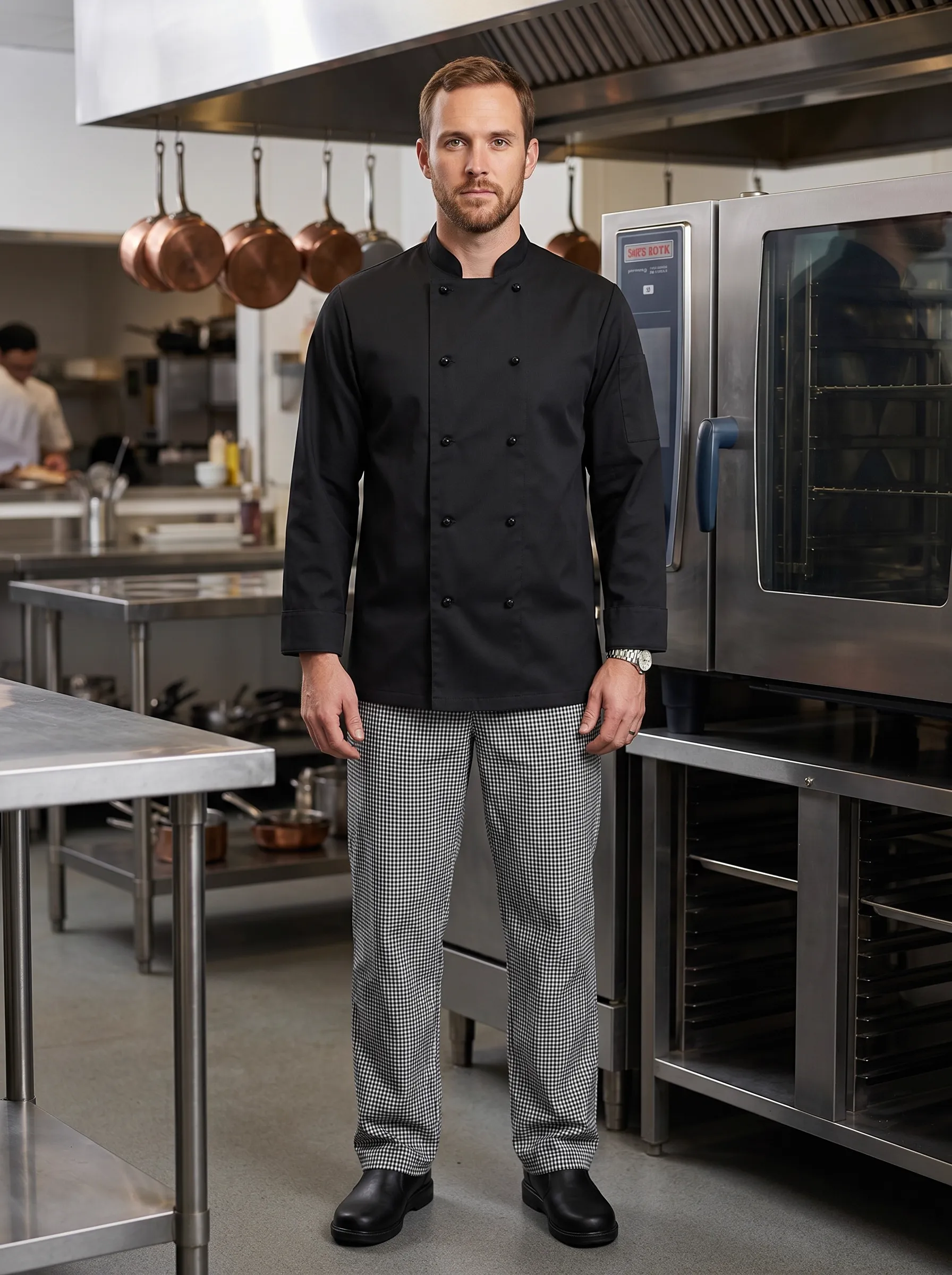
Input: a ghost mannequin chef coat. Output: this. No location rental, no food safety clearance, no five-figure shoot day.
$1.6B
chef apparel market by 2036 — up from $814M in 2025 at 5.3% CAGR
Fact.MR
67%
of uniform end-user demand sits with hotels and restaurants
Fact.MR end-user segment
15.7M
US restaurant workforce — the actual people uniform buyers are buying for
BLS Food Services NAICS 722
The Ghost Mannequin Problem
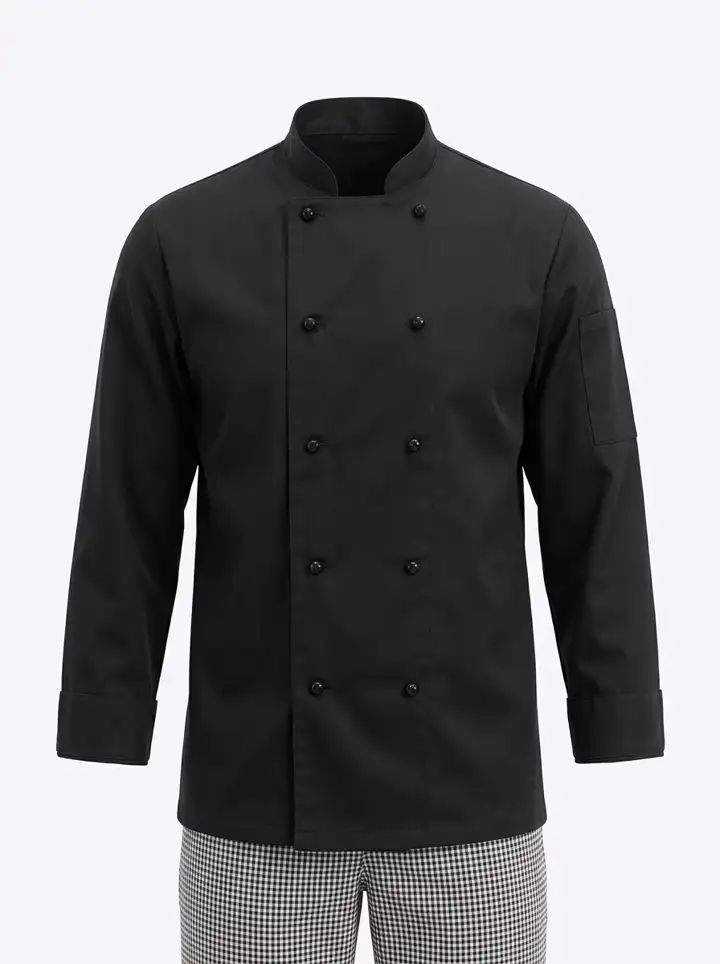
Open any chef uniform supplier website. Click any product. You will see, with near-total reliability, the same image format: a chef coat or an apron rendered as a ghost mannequin product flat — the garment floating on a transparent body, against a pure white background, in front view. It is functional. It is fast. It is also visually indistinguishable from every competitor’s catalog, and it answers none of the questions the actual buyer of that garment is asking.
The reason every uniform brand looks the same is structural. Real commercial kitchen photoshoots are logistically out of reach. Renting a working kitchen with operational hood lighting, food safety clearance, chef talent who looks the part, and the stainless steel reflection mess of a real environment runs into real five-figure production budgets per shoot day. So no one does it. So the catalog defaults to the flat, and the buyer scrolling on a Tuesday afternoon to order uniforms for ten line cooks is left to imagine what the coat looks like on an actual person doing actual service.
Fact.MR’s chef apparel research sizes this market at $814M in 2025, growing to $1.587B by 2036 at a 5.3% CAGR, with 55-60% of distribution running through B2B uniform suppliers and 67% of end-user demand sitting with hotels and restaurants. BLS data tracks 15.7M total US restaurant workers, including 197,300 chefs and head cooks and 2,651,090 cooks. That’s the buyer pool. None of them are aspirational shoppers. All of them are operational ones — ordering for a team, evaluating against the question of whether the garment will actually work in a real shift.
MODA AI flips the production constraint. Same ghost mannequin input, real chef in real kitchen output. Five walkthroughs below show the transformation across the actual range of culinary and front-of-house uniforms.
What B2B Uniform Buyers Are Actually Asking
A buyer ordering uniforms for a kitchen is not shopping aspirationally for themselves. They are shopping operationally for a crew. They are evaluating against three concrete questions, and the catalog imagery either answers them or doesn’t:
- Will this fit the bodies that actually staff my kitchen? The line cook, the dishwasher, the pastry chef. They are not all the same archetype. Catalog imagery that shows one body type leaves the buyer guessing on the rest.
- Will the team look professional during service? The buyer needs to project the uniform onto a crew working under hood lights, plating in front of guests, walking past the pass. Studio flats can’t answer that. In-environment shots can.
- Will the garment hold up to the angles of the job? Reaching for the salamander, leaning over the prep table, side profile through the swing door. Multi-angle imagery answers that visually. Front-only doesn’t.
Brand Vision’s product photography research notes that multi-angle imagery and lifestyle context shots are particularly critical for B2B catalogs, because the buyer is doing the visual assessment they would normally do in a physical store. Earley’s B2B imagery analysis echoes the point: front, back, side, and at least one in-context shot is the bare minimum for B2B conversion. That’s a five-shot floor at minimum — and the ghost mannequin gives you one.
Walkthrough 1 — The Apron Set
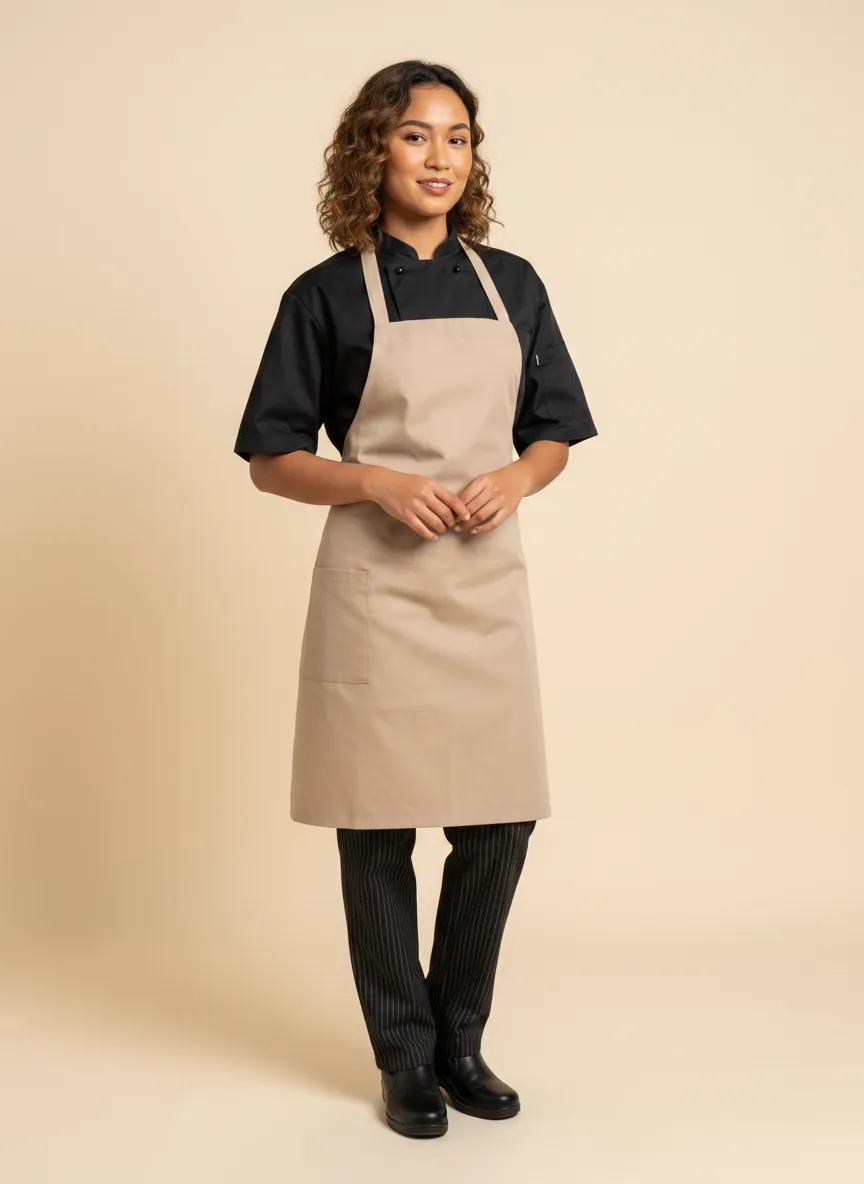
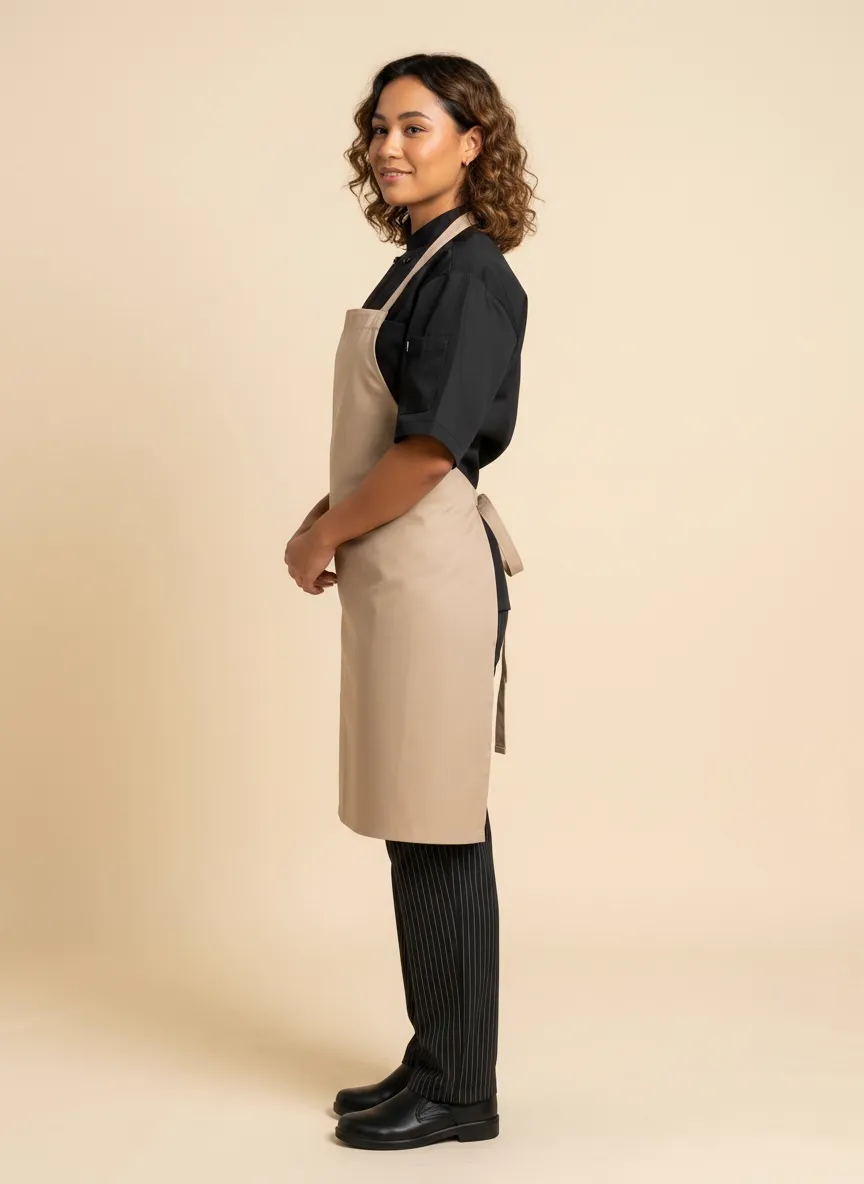
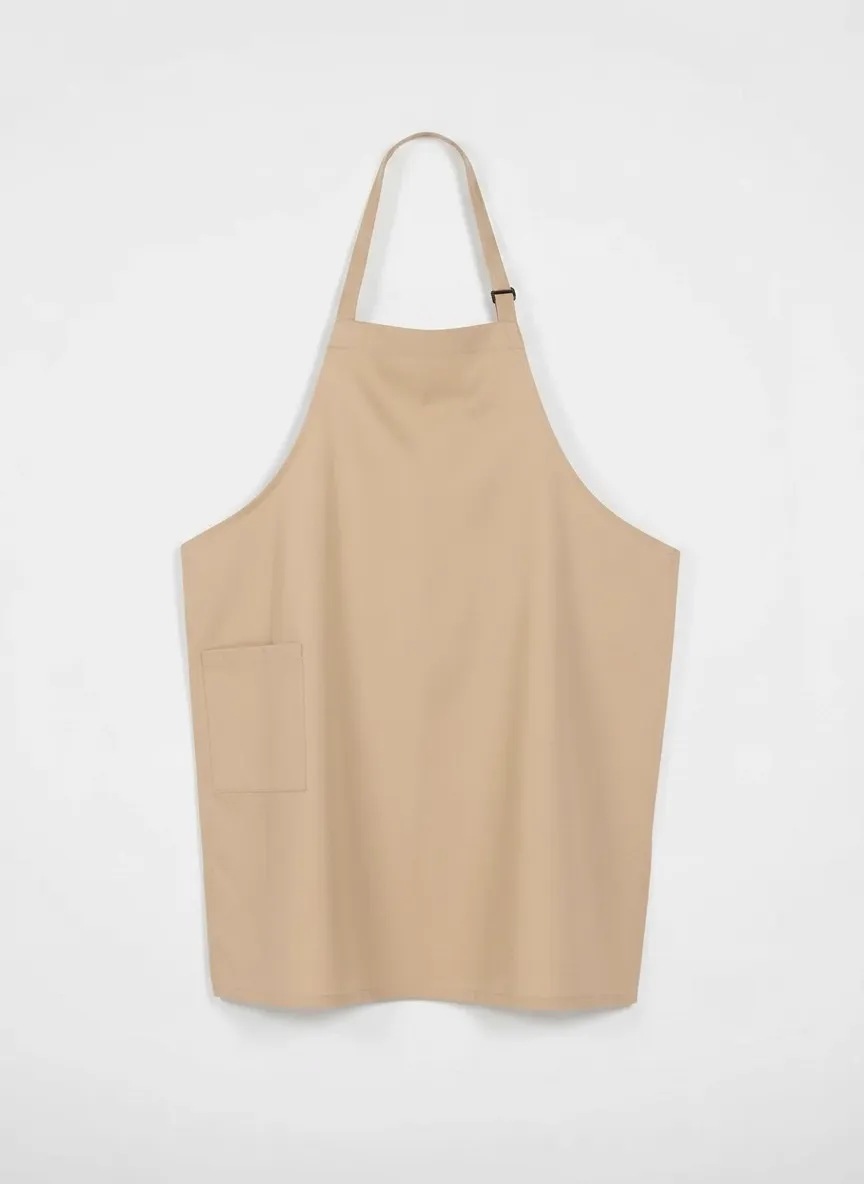
Classic Tan Apron, Chef Coat, Striped Pants
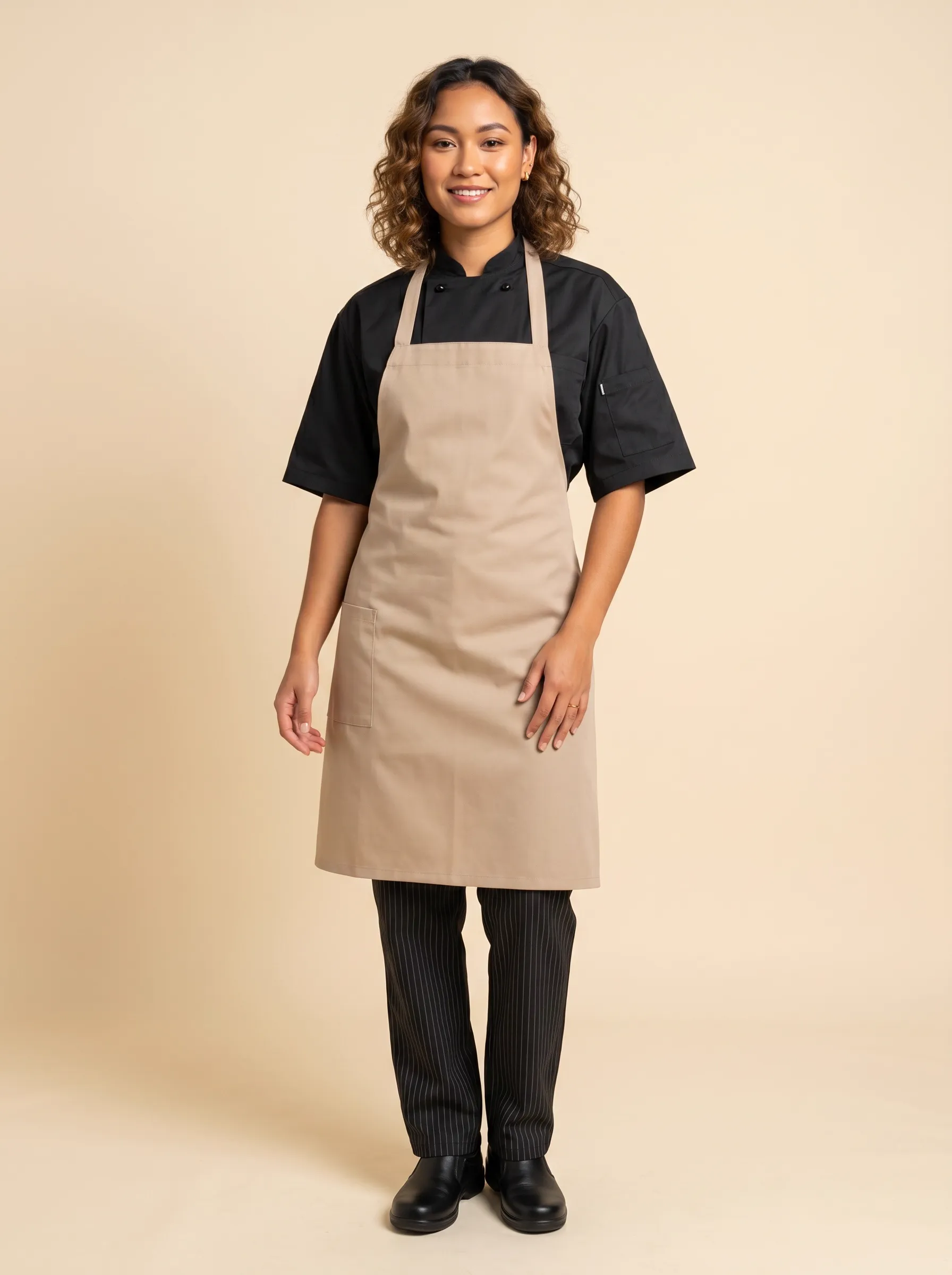
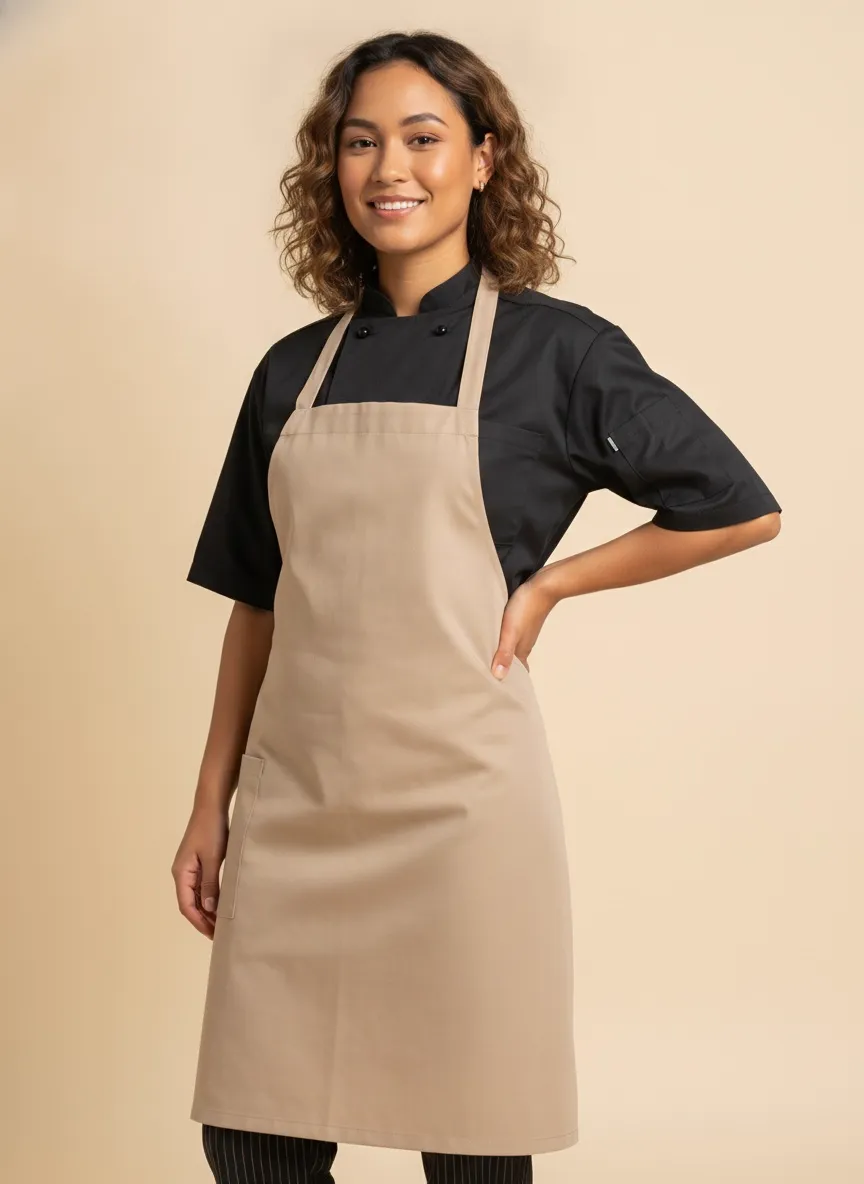
A standard culinary apron set — tan bib apron over a black short-sleeve chef coat with classic black-and-white pinstripe pants. The kind of uniform that ships out of every uniform supplier on the internet. MODA AI puts it on a real model with five catalog-ready angles for the PDP.
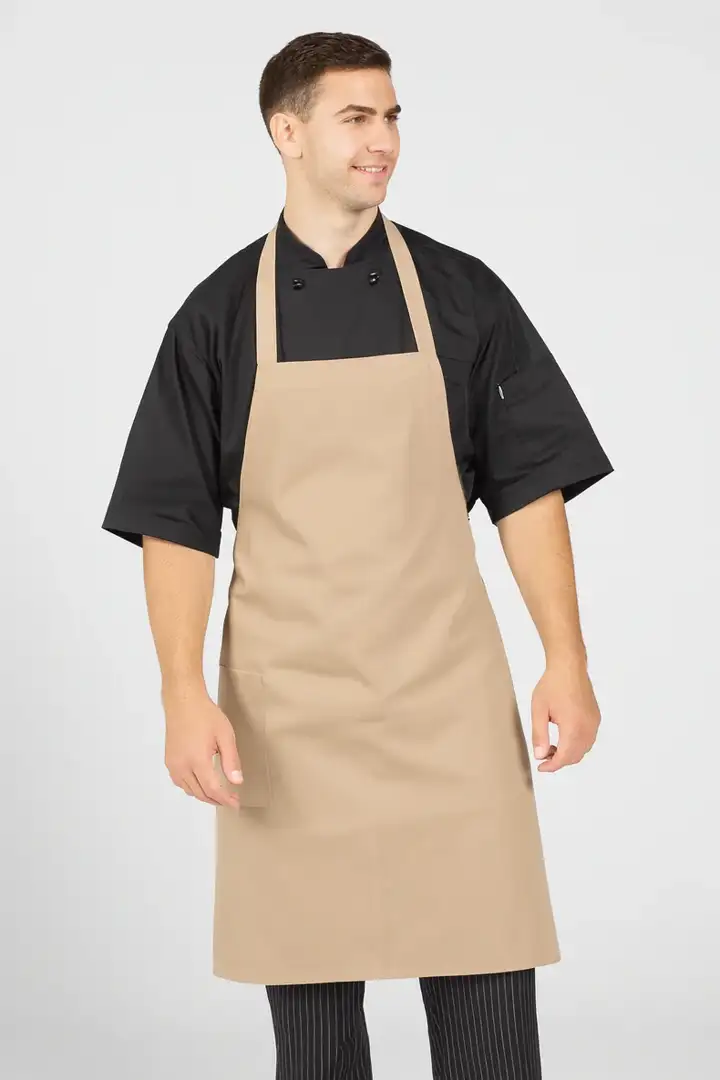
BEFORE — Studio source
Walkthrough 2 — The Marquee Moment
Ghost Mannequin to Real Commercial Kitchen
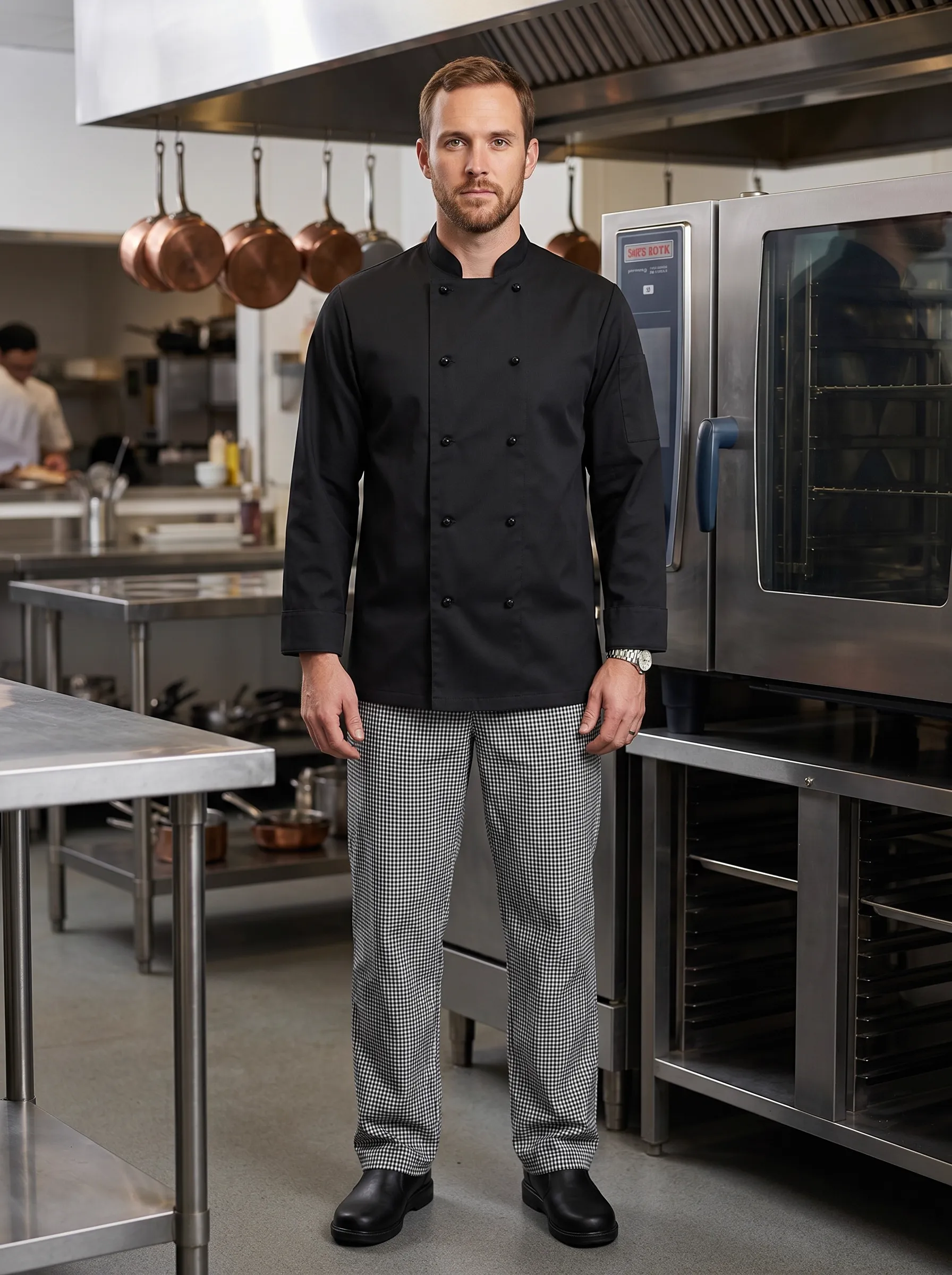
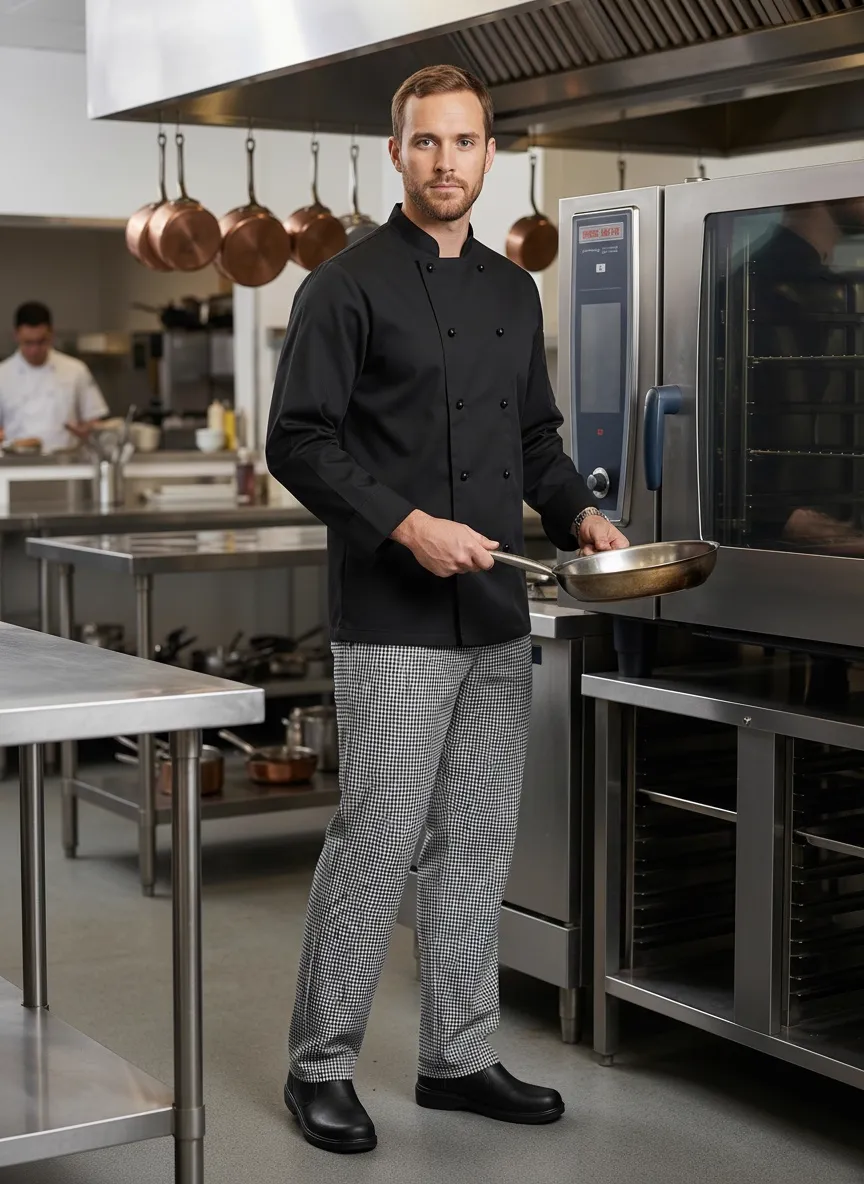
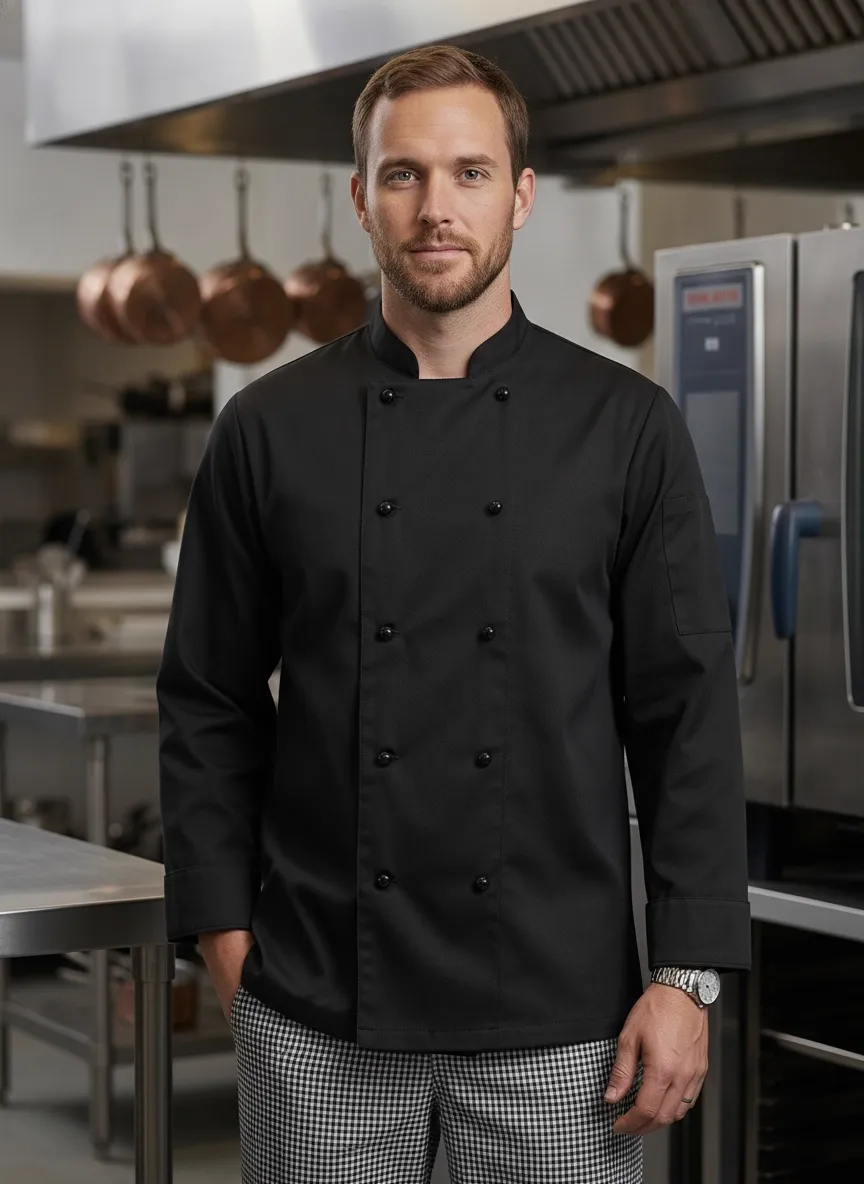
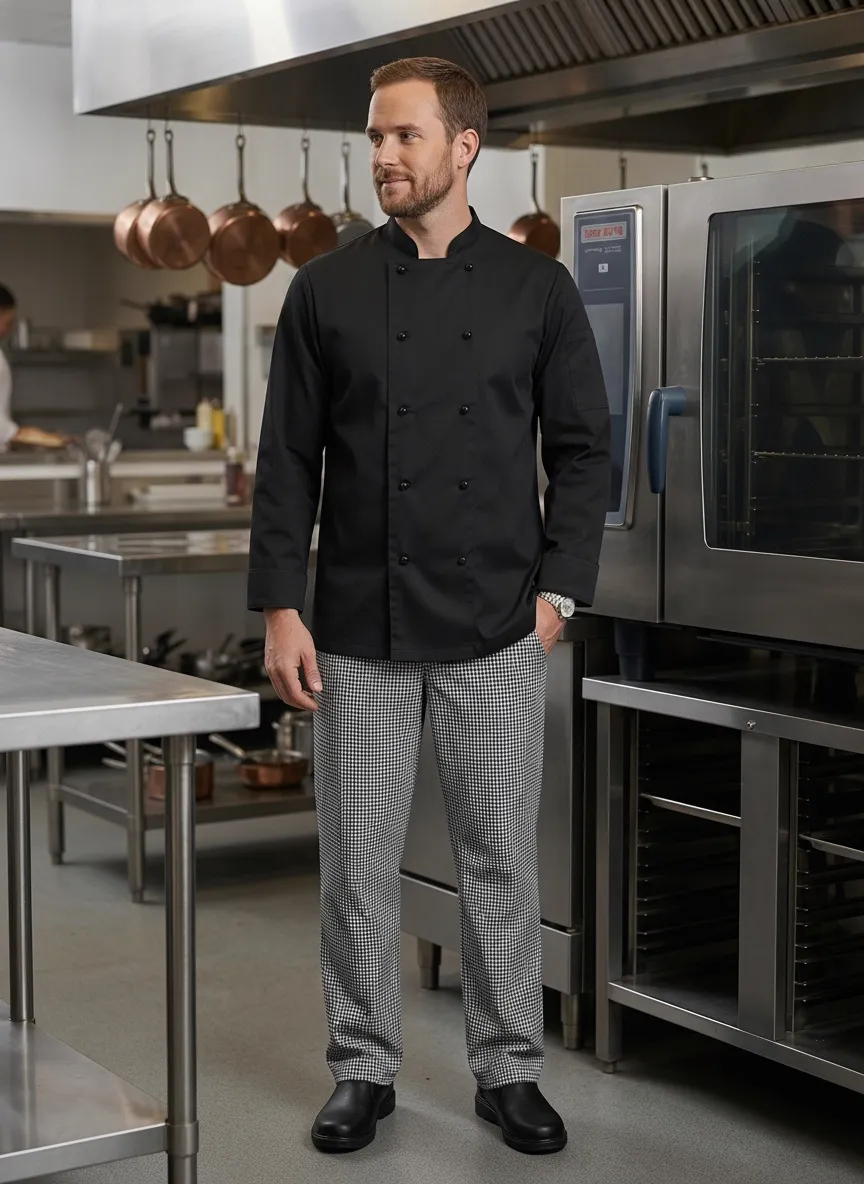
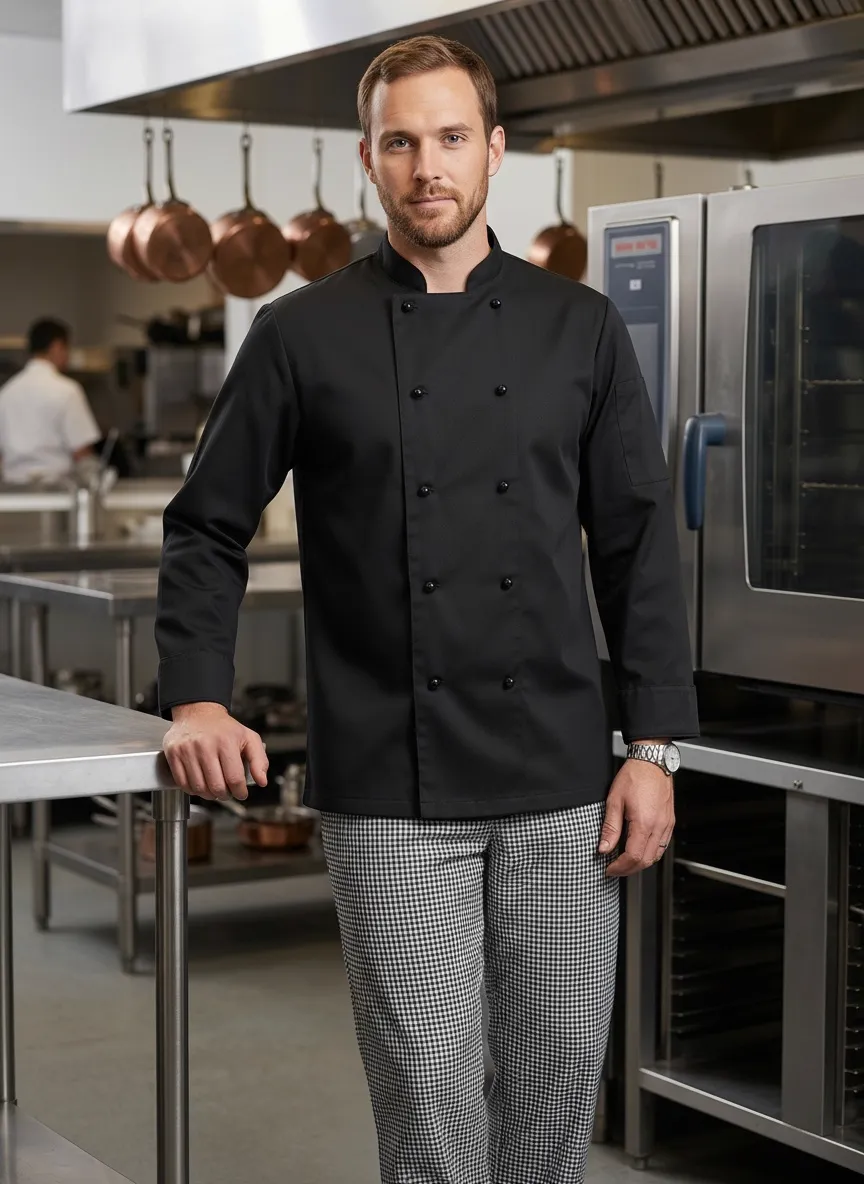
This is the transformation that makes the case. The input is a literal ghost mannequin product flat — the classic black double-breasted chef coat floating on transparency against pure white. The kind of asset that lives on every uniform supplier's site today. MODA AI puts that same coat on a real chef in a working commercial kitchen — copper pans hanging overhead, stainless steel convection oven behind, sous chef visible at the prep line in the background. No location rental, no food safety clearance, no five-figure shoot day.
BEFORE — Ghost mannequin flat
Walkthrough 3 — Casual Style
Denim Chef Coat with White Apron
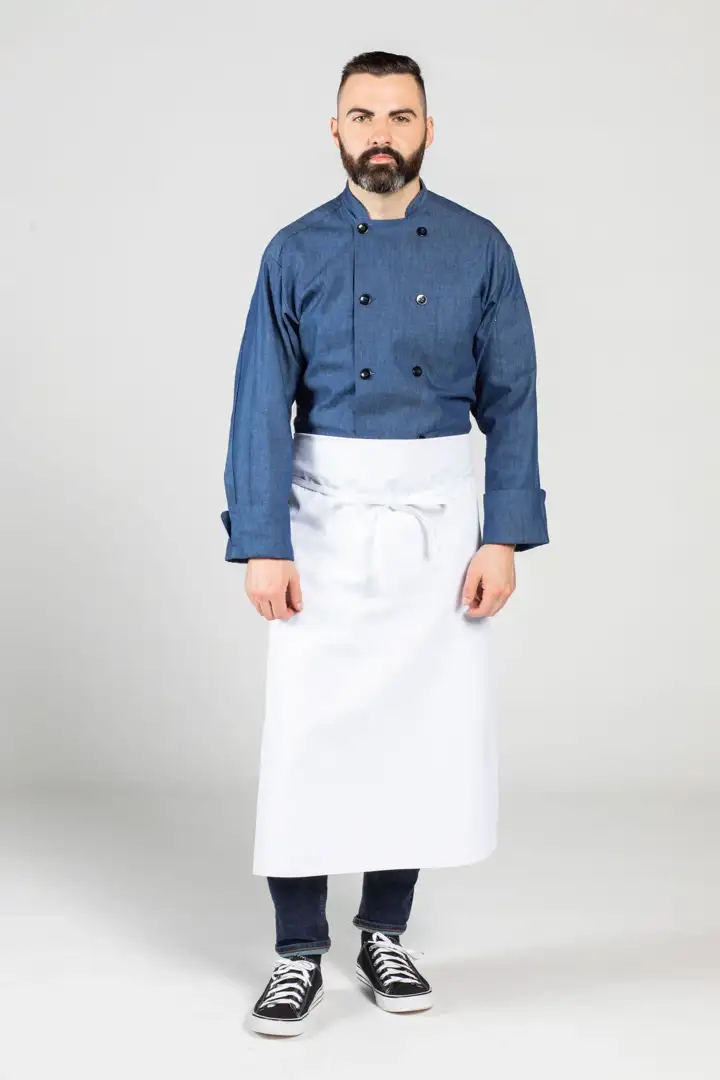
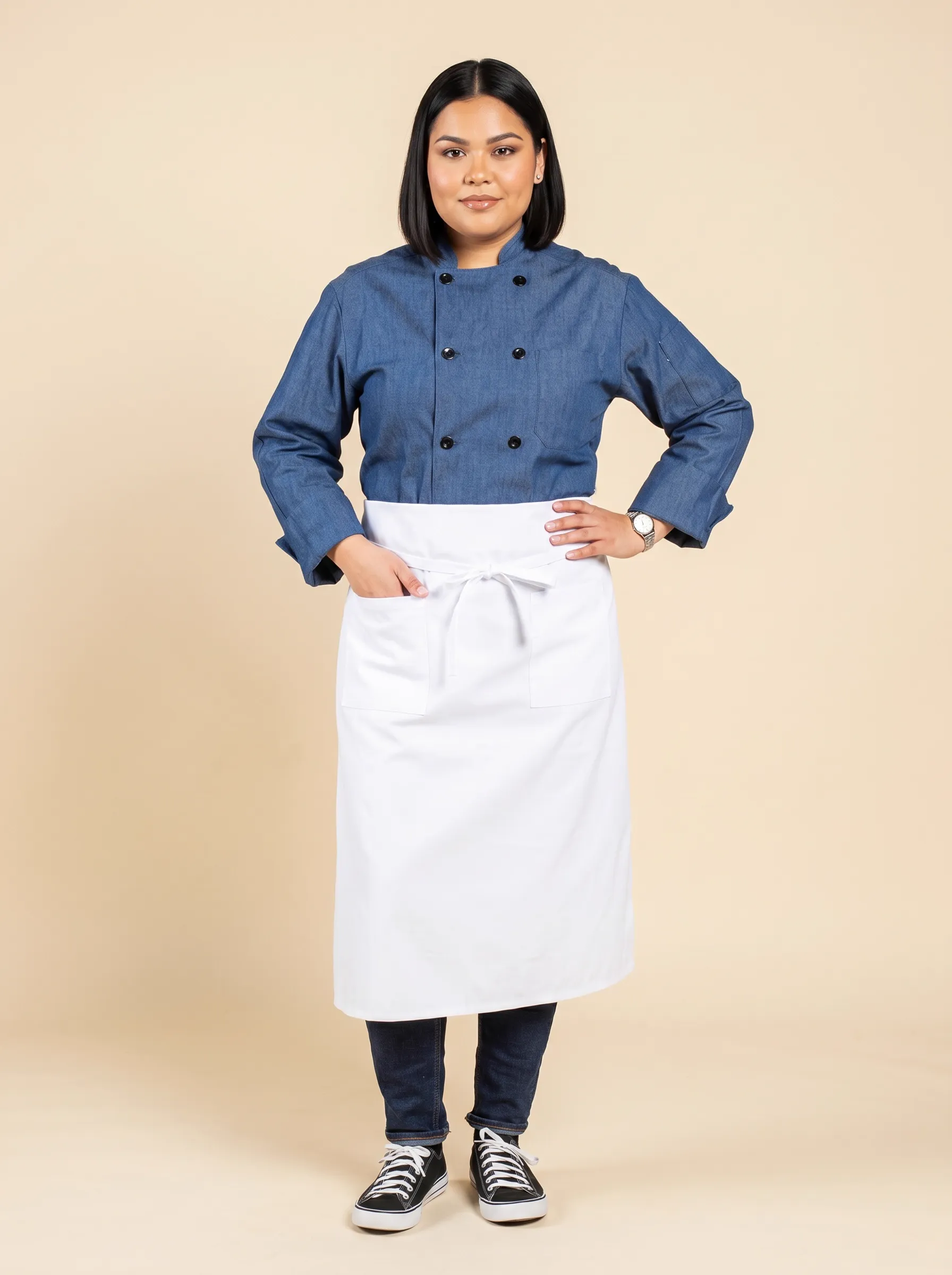
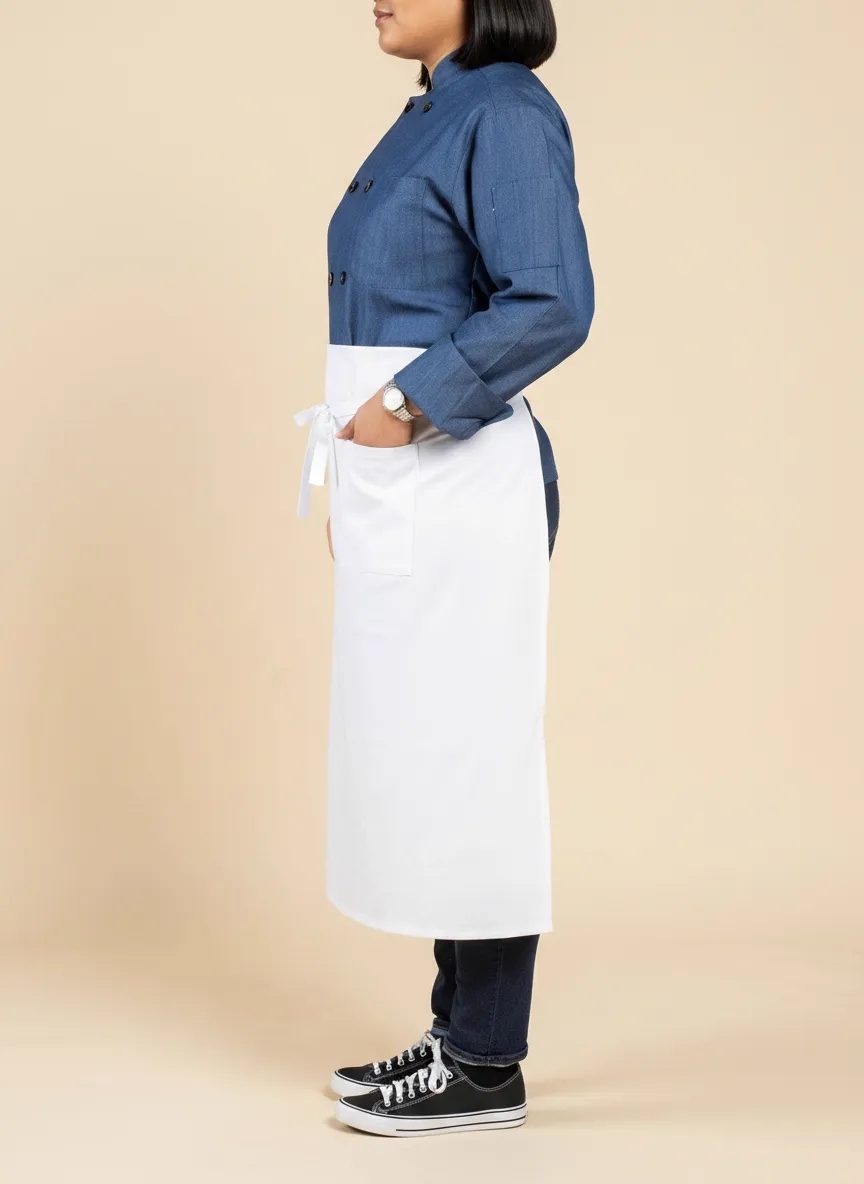
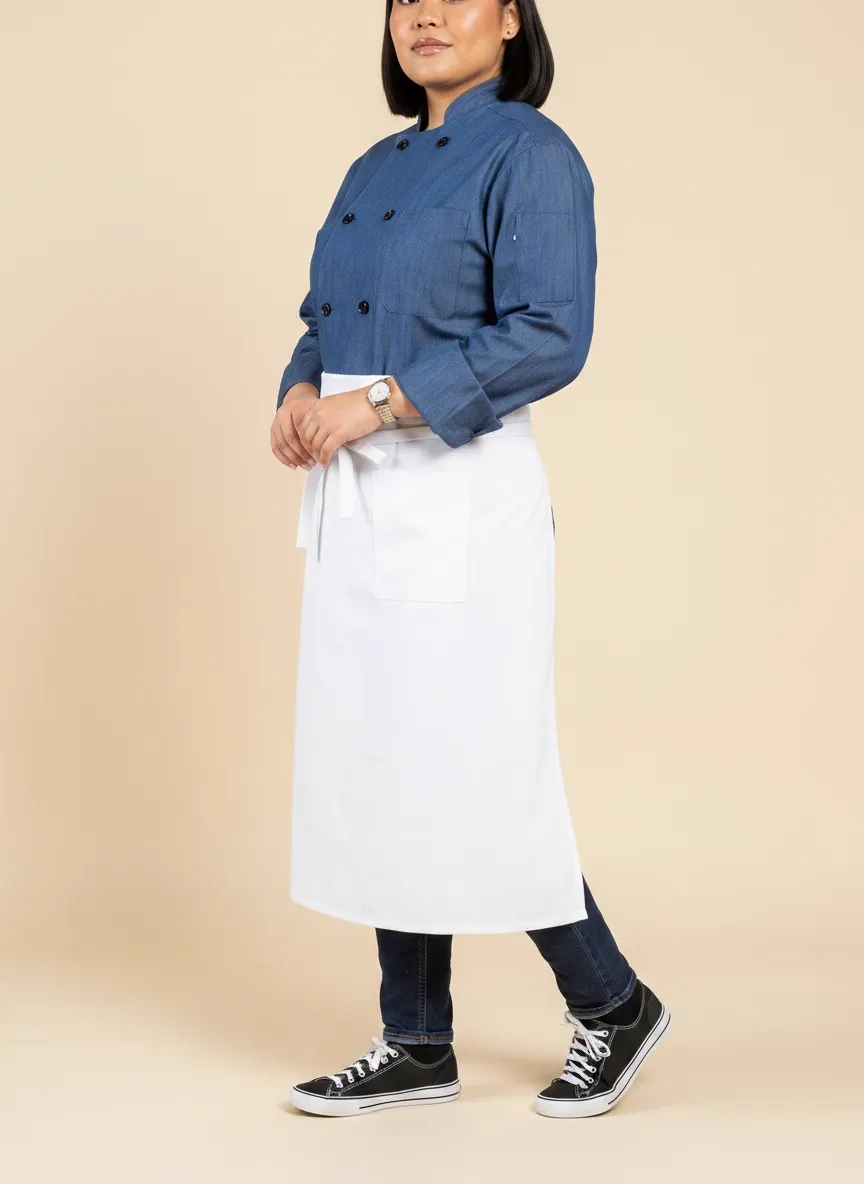
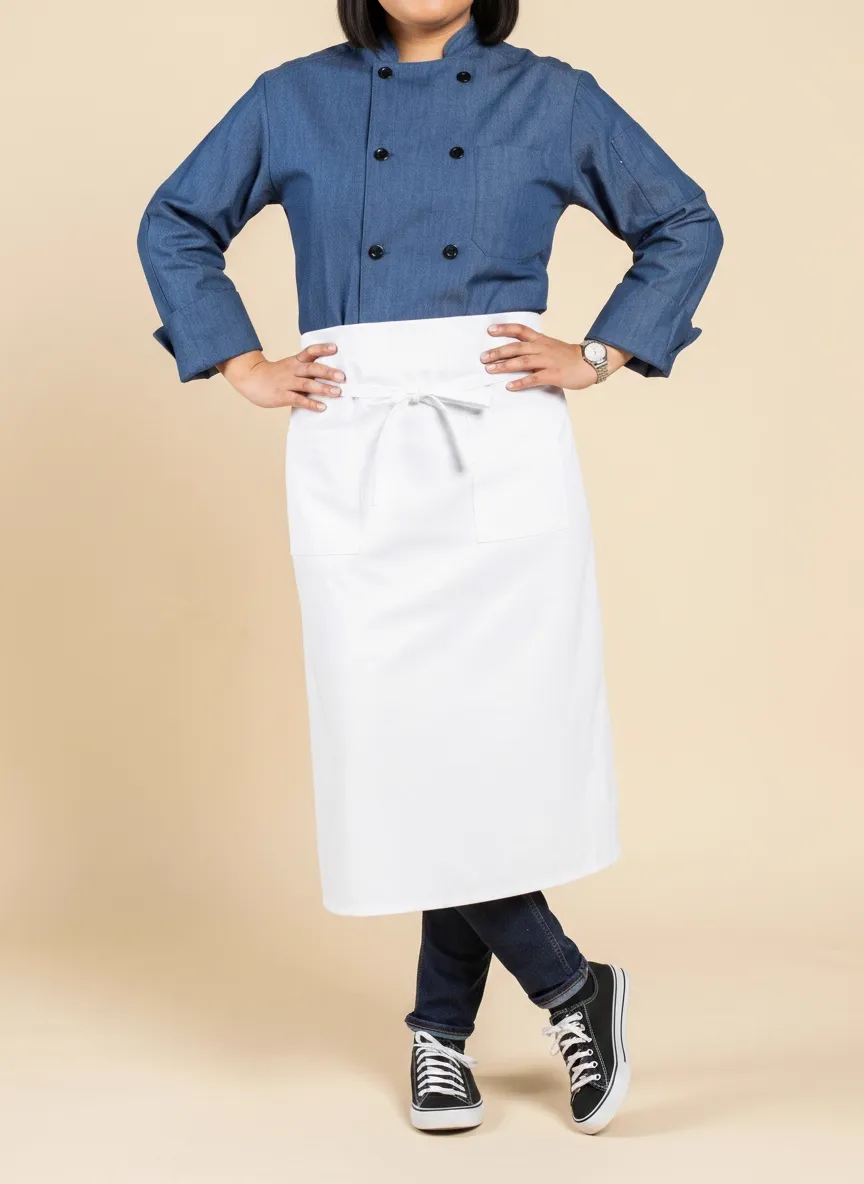
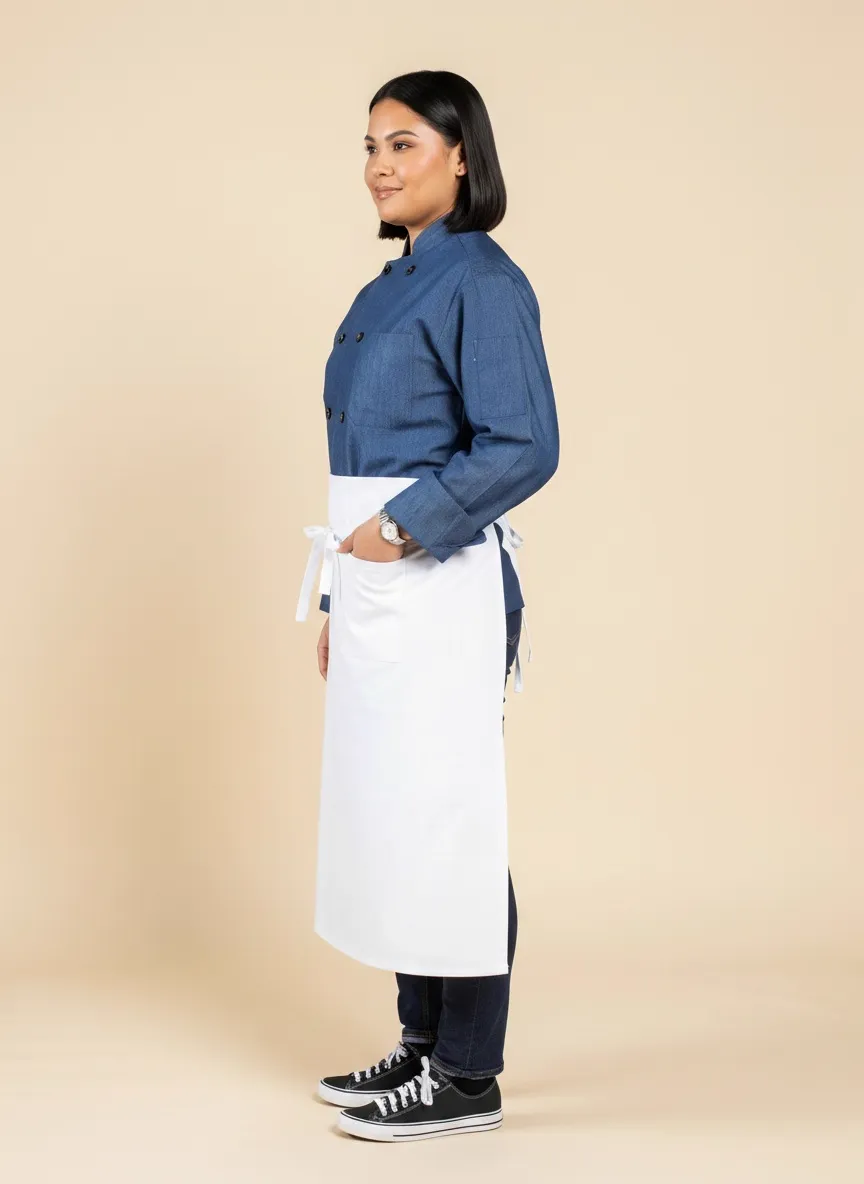
Modern farm-to-table and casual dining concepts run denim or chambray chef coats rather than the classic black. This set takes the supplier's stock male model shot of a denim chef coat with white waist apron and jeans, and recasts the same uniform onto a plus-size female chef in the same outfit, with side and back angles to round out the PDP. The catalog now shows the uniform on a body type that represents the actual line cook workforce.
BEFORE — Studio source
Walkthrough 4 — Front of House
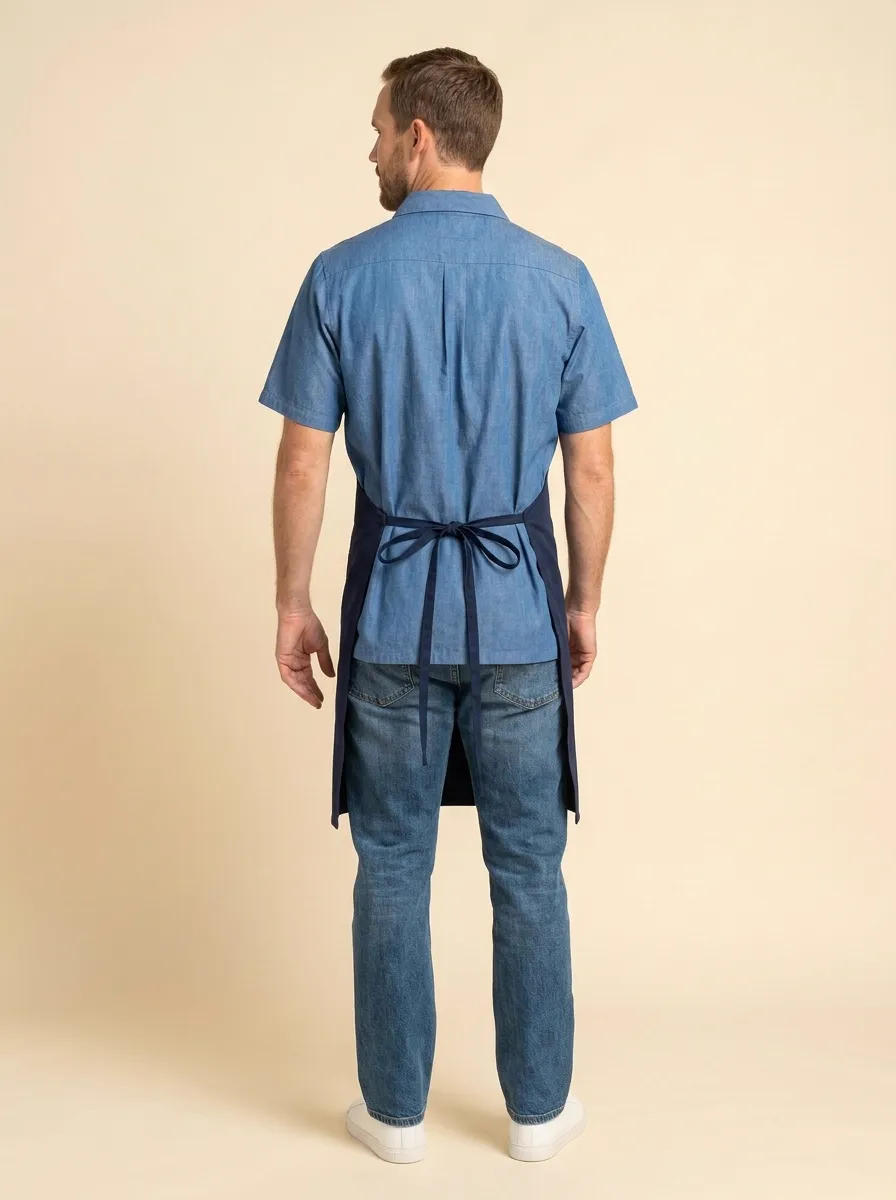
Navy Bib Apron and Chambray Shirt
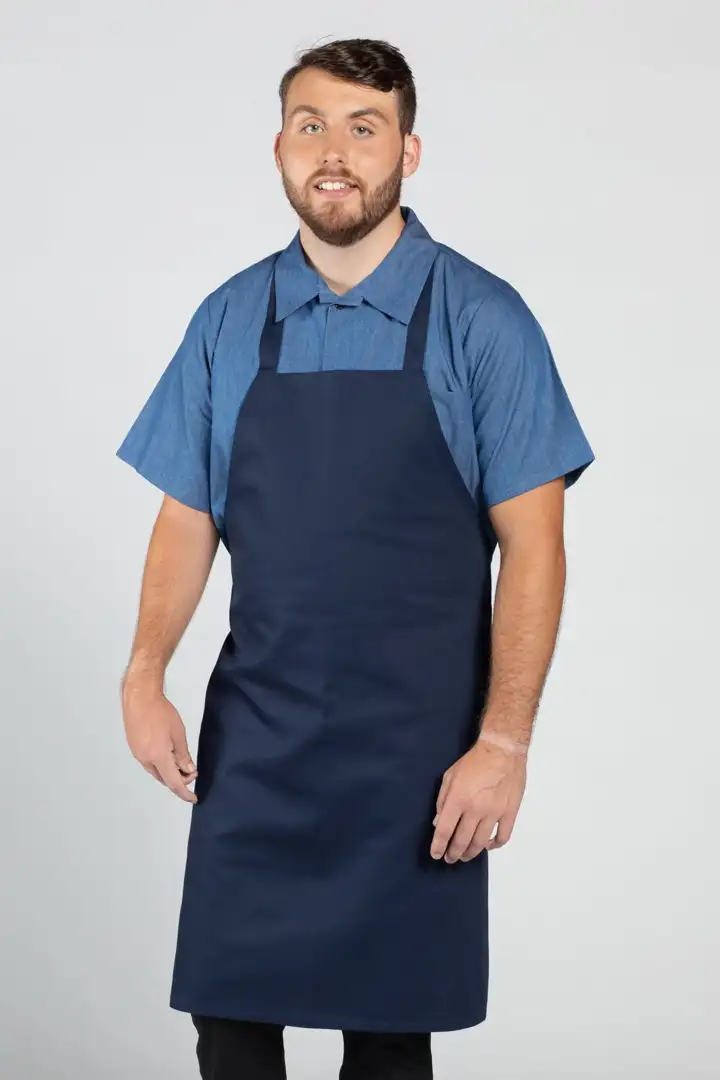
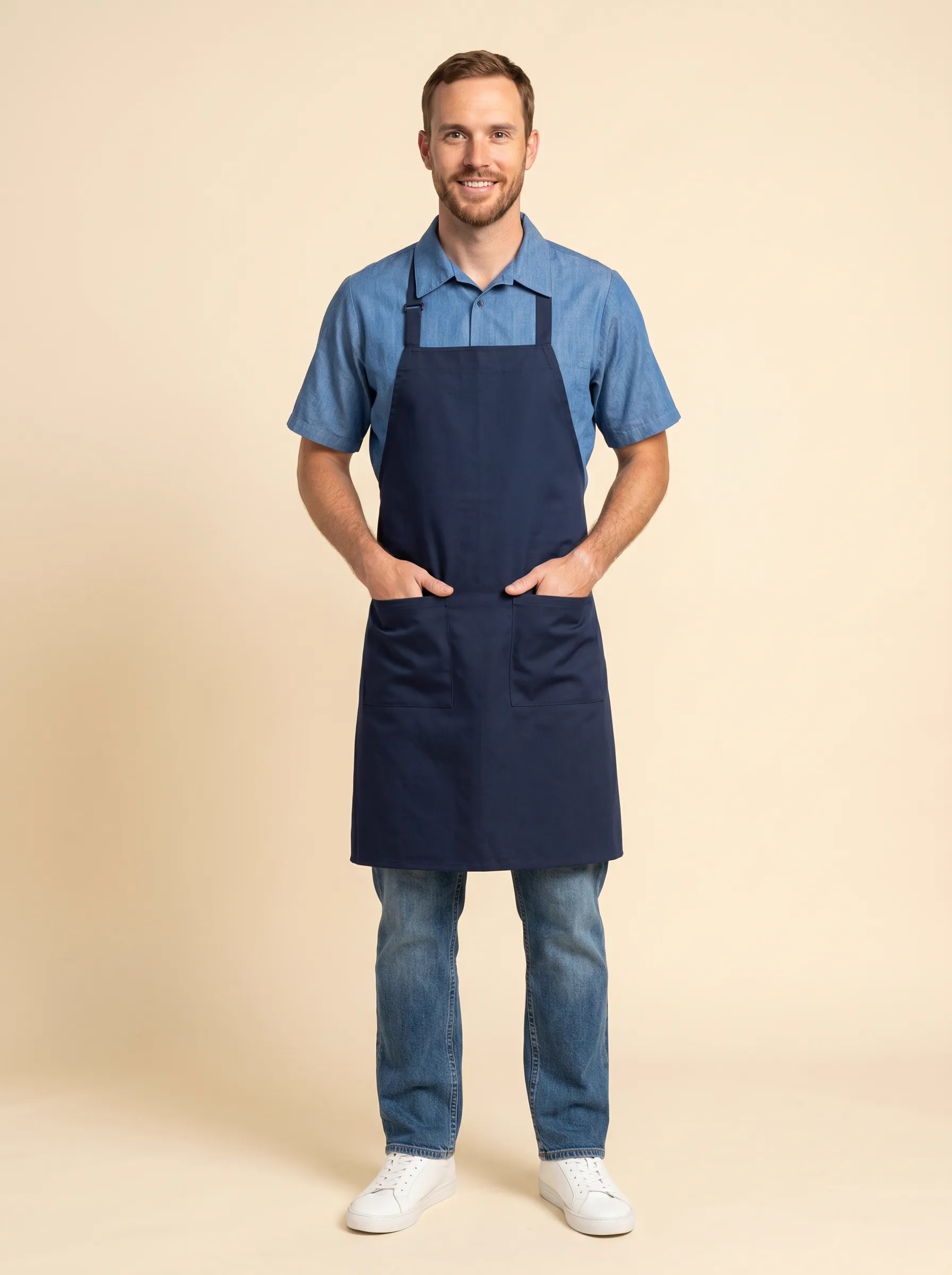
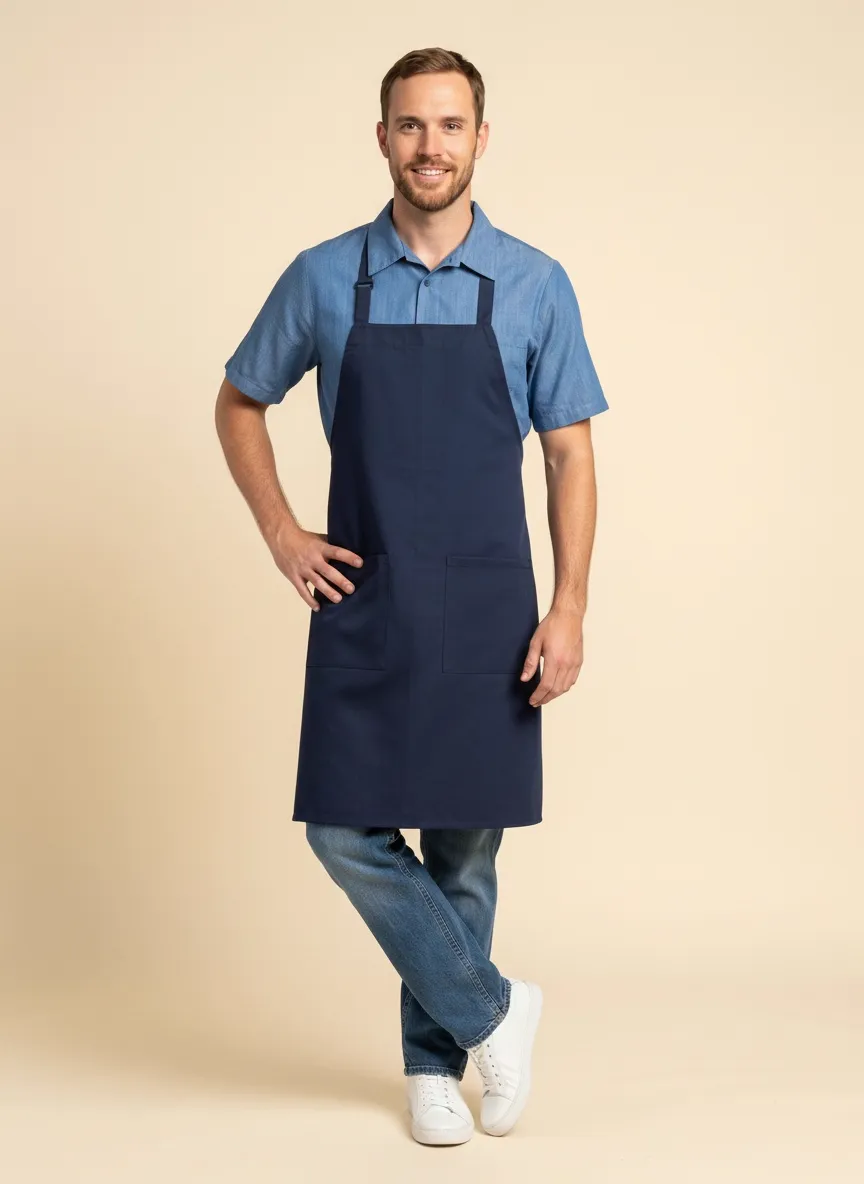
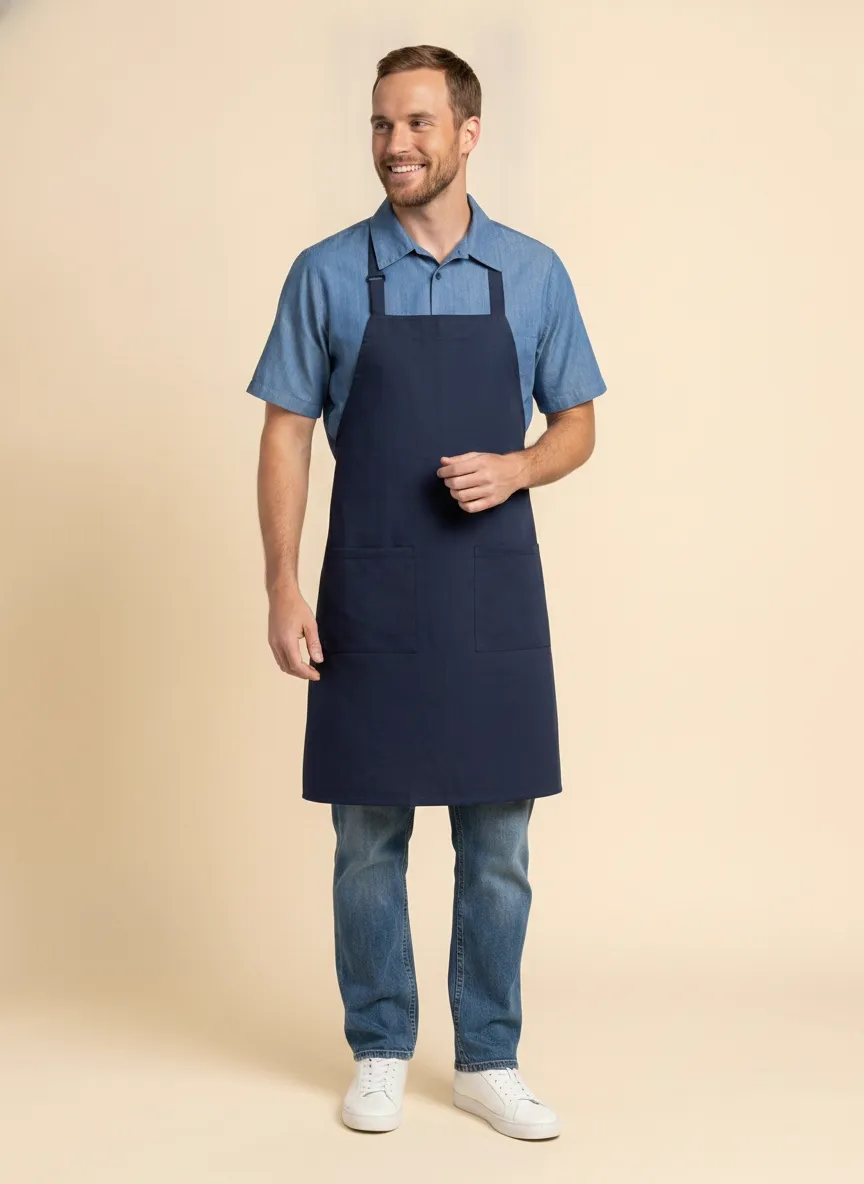
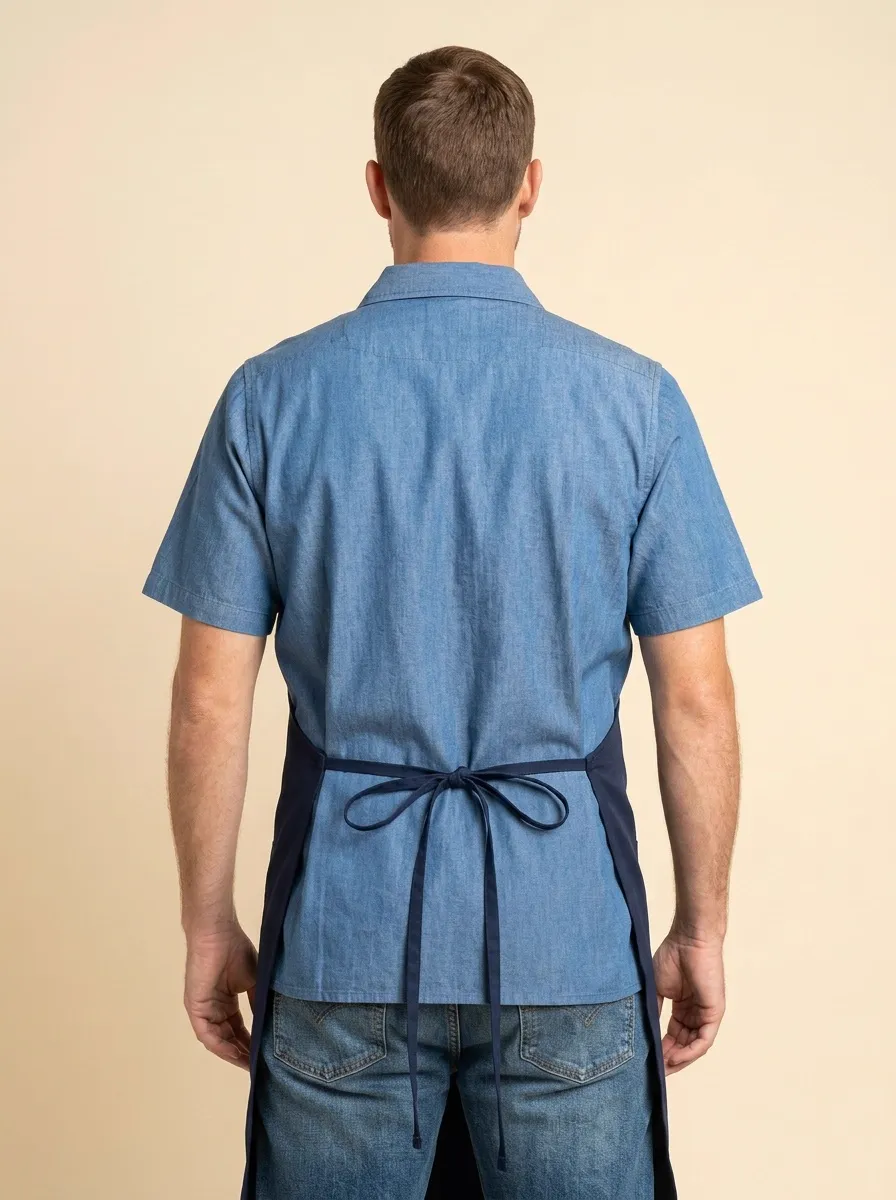
The bistro and farm-to-table aesthetic — navy bib apron over a chambray short-sleeve shirt with jeans and white sneakers. A standard front-of-house uniform that runs across cafes, brunch spots, and casual restaurants. The input is a standard supplier shot on a stock male model. The output keeps the same uniform on a face-referenced bearded male model with front, three-quarter, side, and back angles plus a hands-in-pockets pose.
BEFORE — Studio source
Walkthrough 5 — Server's Waist Apron
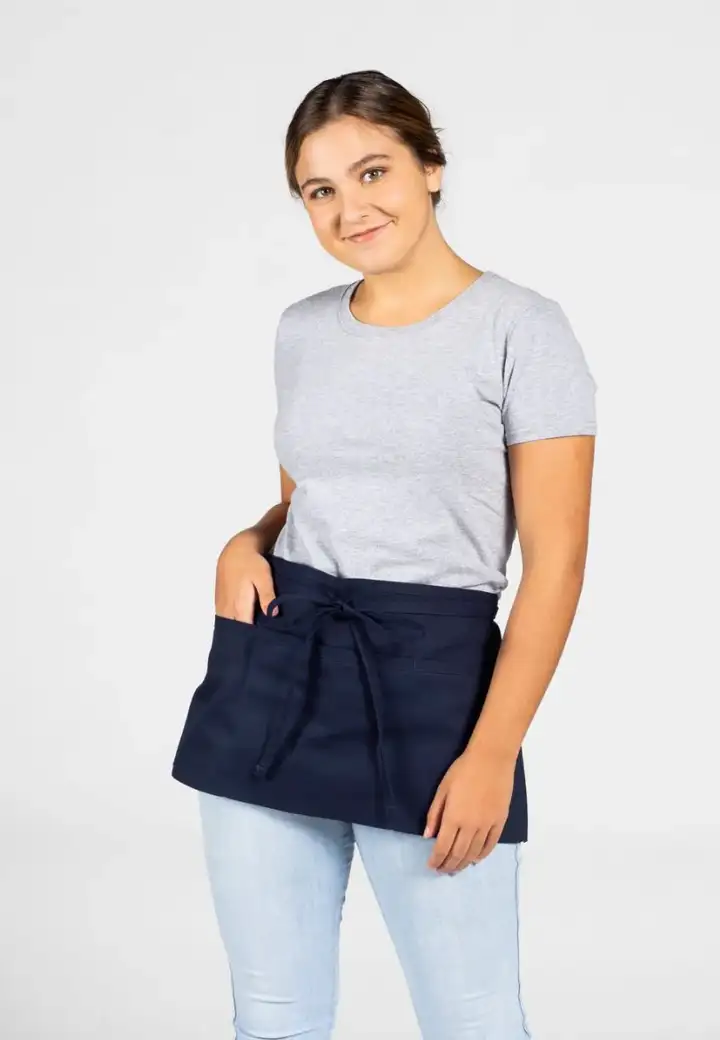
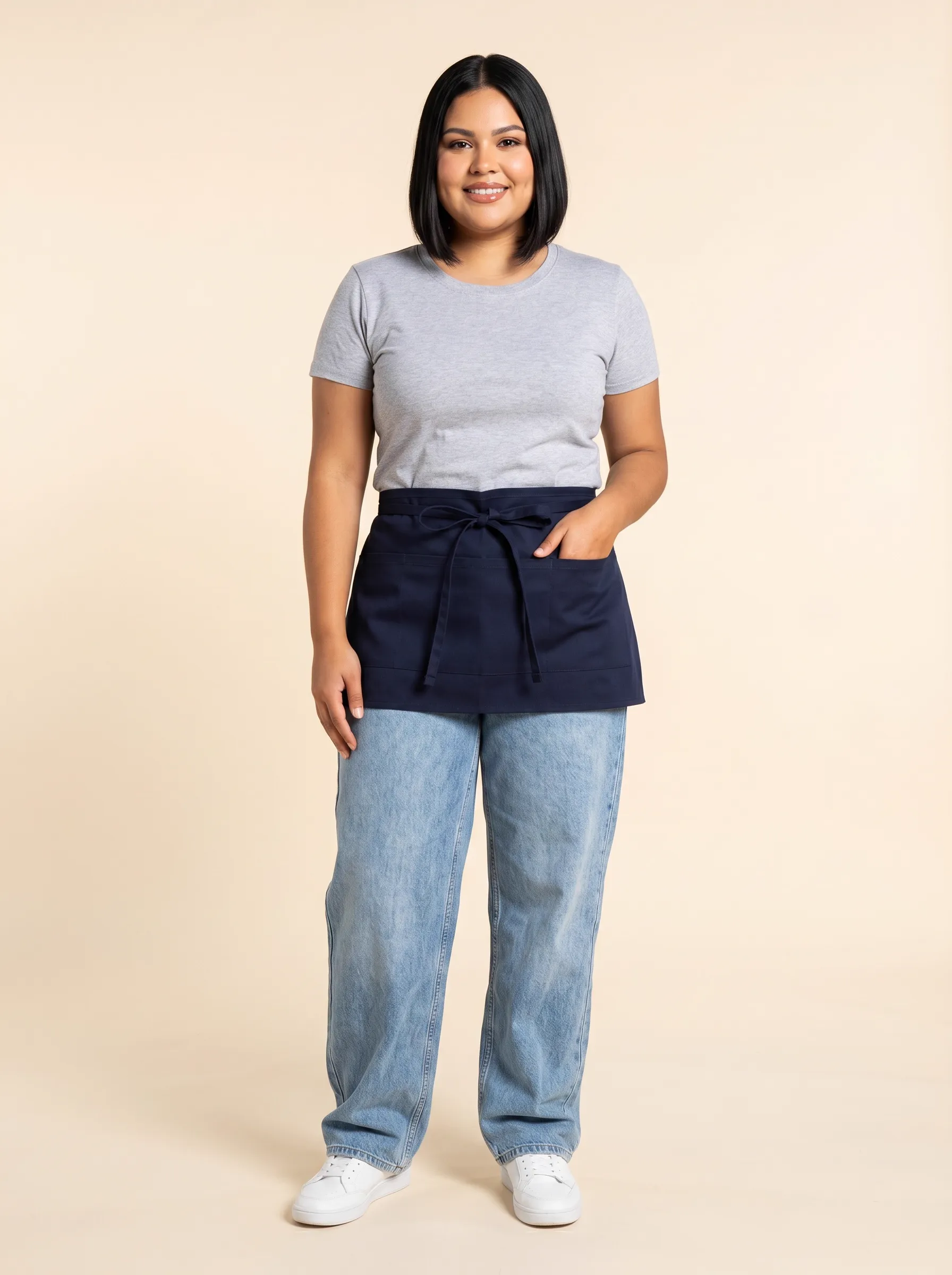
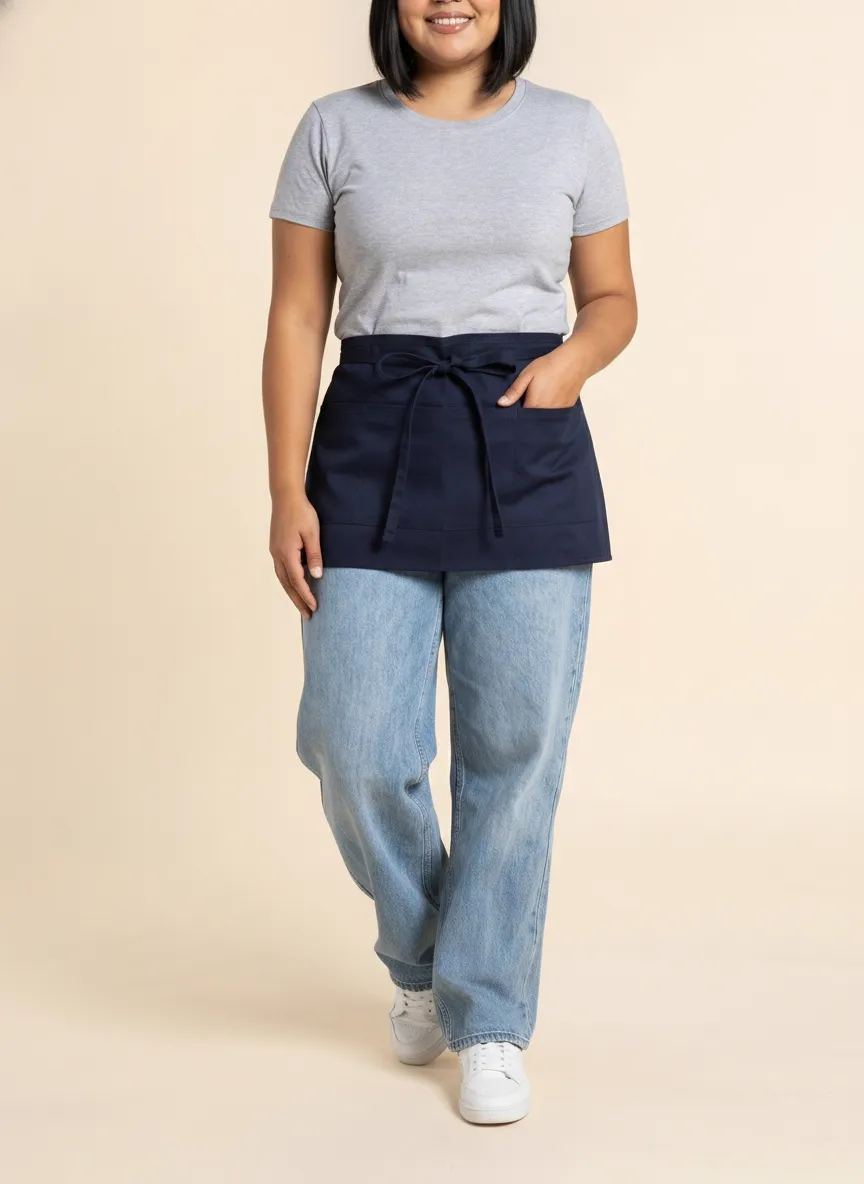
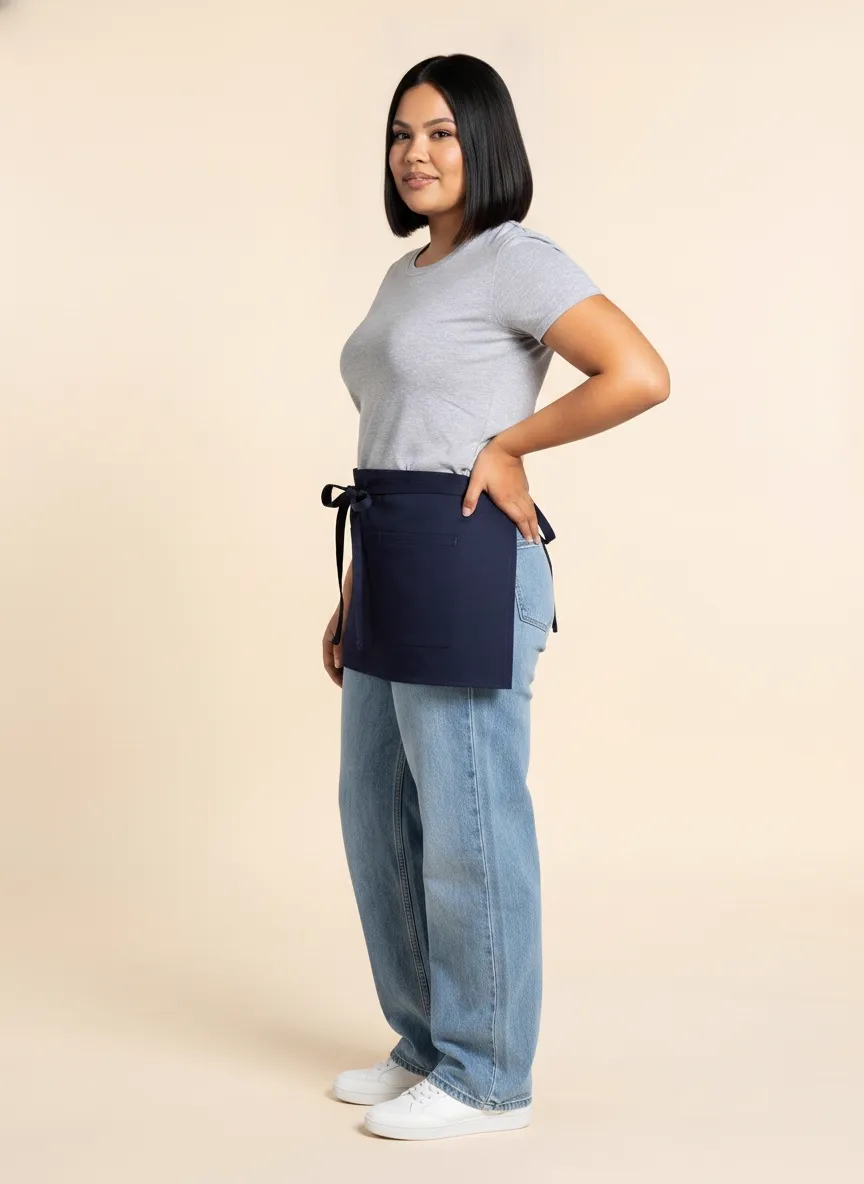
Short Navy Waist Apron, Server / Barista
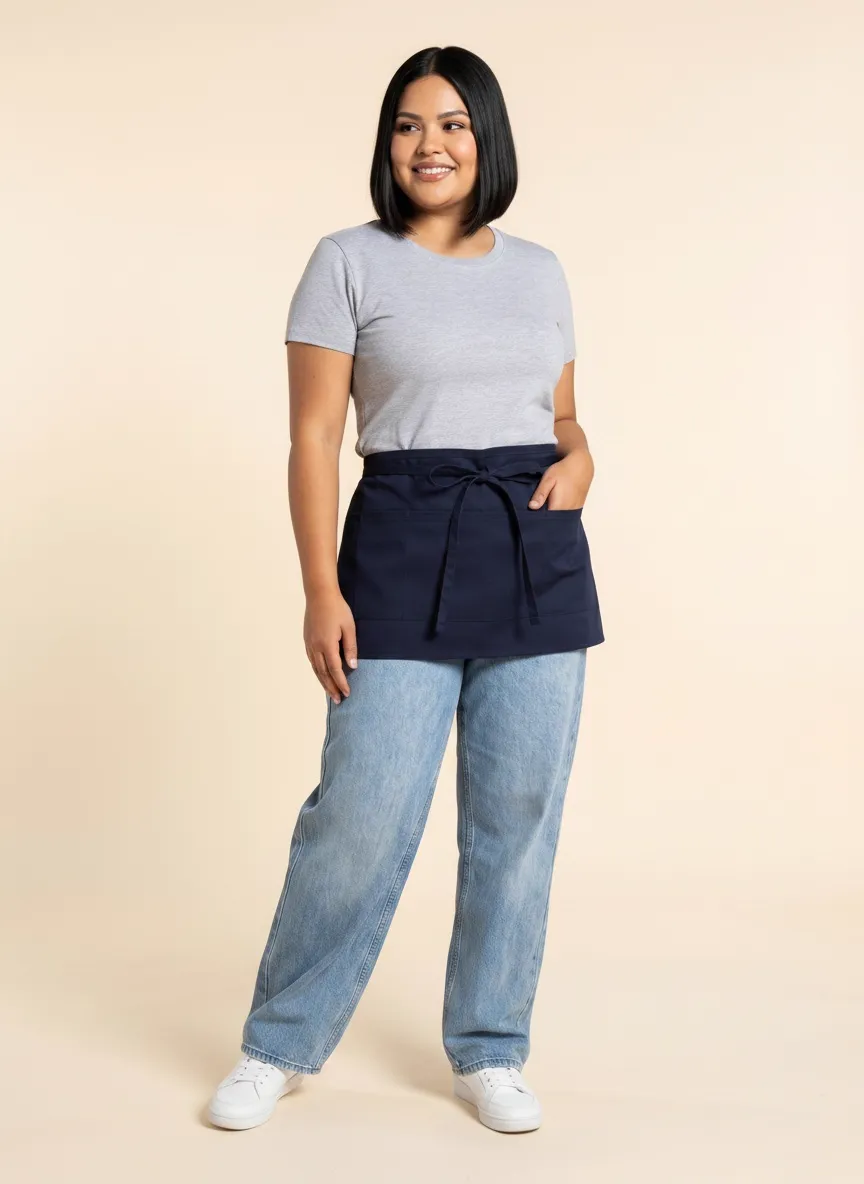
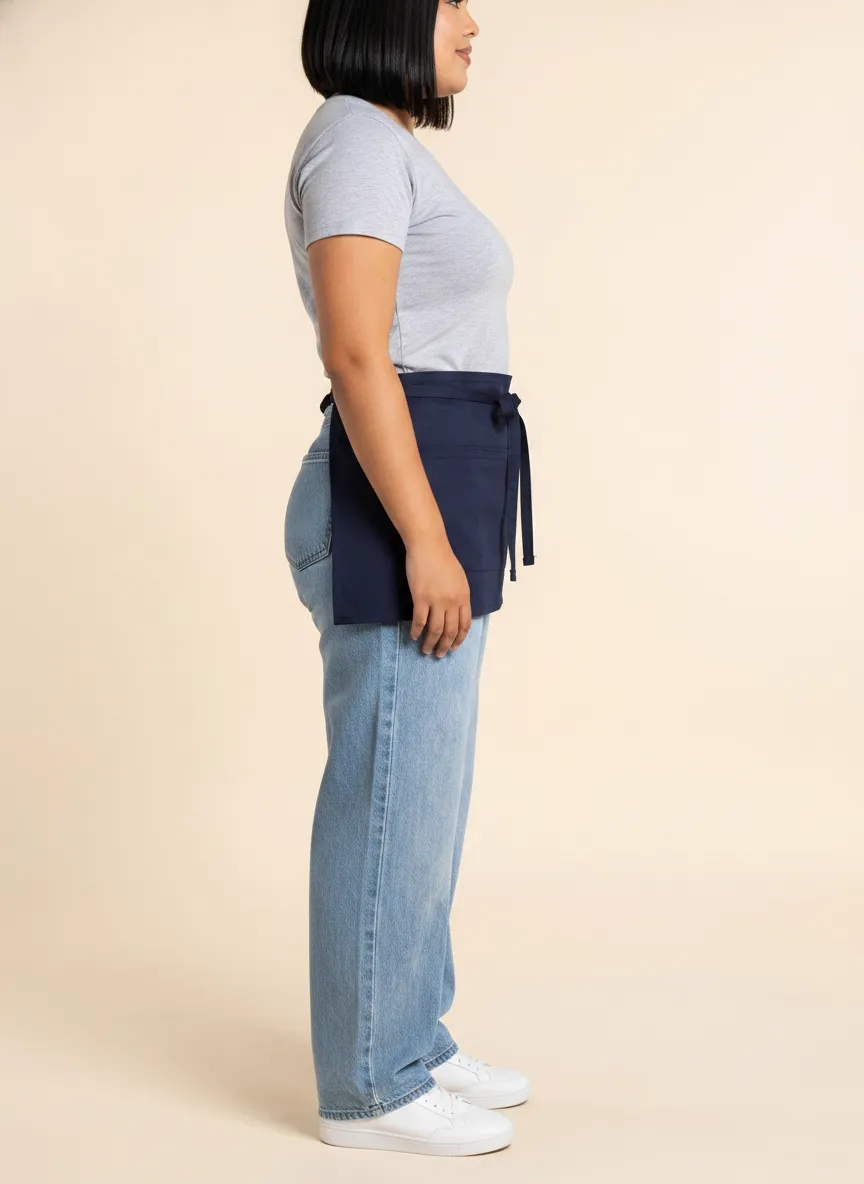
The shortest uniform piece in the category — the short navy waist apron with tie front and patch pockets, paired with a basic gray tee and light wash jeans. The standard server, barista, and counter staff uniform. Same input format as the other sets, same workflow, recast onto a plus-size female server with five catalog angles ready for the PDP.
BEFORE — Studio source
The Multi-Angle Math for B2B Uniform Catalogs
The fashion ecommerce literature on multi-angle imagery is well-established: shoppers want three to four images minimum before they commit. For B2B uniform purchases the bar is structurally higher, because the buyer is committing on behalf of someone else and accountability for fit, durability, and crew satisfaction sits with them. Earley’s B2B catalog research recommends front, back, side, and at least one in-context shot as the bare minimum to support the visual assessment a buyer would otherwise do in a physical showroom.
A single MODA AI session produces all of that from one supplier flat lay or ghost mannequin product flat. The supplier’s existing imagery becomes the input. The output is the multi-angle PDP coverage that converts the order — without renting a kitchen, hiring talent, or sending samples to a studio. The walkthroughs above each show five frames per uniform; the gallery at the bottom of this post shows the full 25-shot range across all five sets.
The Workforce Catalogs Aren’t Showing
BLS May 2025 occupational data tracks 197,300 chefs and head cooks, 2,651,090 cooks across all settings, and 15.7M total US restaurant workers under NAICS 722. That workforce is not one archetypal body. Walk through any working kitchen at 6:30 PM on a Friday and you will see a wider range of body types and statures than any chef uniform catalog reflects.
Four of the five walkthroughs in this post feature plus-size or mid-size models. That isn’t a marketing flourish — it’s a direct response to the buyer’s first question. A catalog that shows the uniform on one slim archetype leaves the buyer ordering for an eight-person line guessing on the other seven. A catalog that shows it on multiple body types lets them confirm the fit before they commit the order. Same product, same workflow, broader assurance.
Who This Workflow Is For
The walkthroughs above focus on chef and culinary uniforms because that’s the test set, but the mechanic generalizes to every utility and workwear category where the buyer is purchasing for a crew rather than themselves:
- Chef and culinary apparel — chef coats, aprons, pants, hats, kitchen footwear
- Medical scrubs and healthcare uniforms — the largest single workwear vertical, with the same in-environment imagery gap (clinical settings shot in a working hospital are expensive)
- Hospitality uniforms — front desk, housekeeping, restaurant floor, bartender, banquet staff
- Industrial workwear — FR coveralls, safety apparel, hi-vis, mechanic and trades uniforms
- Security uniforms — private security, event staff, corporate security
- Salon, spa, and beauty staff uniforms — smocks, aprons, branded service apparel
- Hotel staff uniforms — front desk, concierge, valet, housekeeping
- School, university, and retail staff uniforms — any branded crew-wear program
Frequently Asked Questions
Why are chef uniform catalogs so heavily dominated by ghost mannequin product flats?
Because commercial kitchen photoshoots are logistically out of reach for most uniform brands. Renting a working kitchen with operational hood lighting, food safety clearance, chef talent who looks the part, and the stainless steel reflection mess of a real environment runs into real five-figure production budgets per shoot day. The ghost mannequin flat is what's left — functional, fast, but visually indistinguishable across every chef uniform website on the internet. MODA AI generates in-environment catalog imagery from the same ghost mannequin input without renting the kitchen.
Do B2B uniform buyers actually buy differently than fashion ecommerce buyers?
Yes — fundamentally. A fashion buyer is shopping aspirationally for themselves; a uniform buyer is shopping operationally for a crew. They're asking three concrete questions: will this fit the bodies that actually staff my kitchen, will the team look professional during service, and will the garment work in the real environment of use. A single front-facing ghost mannequin shot answers none of those questions. Multi-angle plus multi-body plus in-context imagery answers all three at once.
How big is the chef uniform and workwear market?
The chef apparel market alone was valued at $814M in 2025 and is projected to reach $1.587B by 2036 at a 5.3% CAGR (Fact.MR). B2B uniform suppliers hold roughly 55-60% of distribution, with hotels and restaurants accounting for 67% of end-user demand. The broader workwear and uniforms market is projected to grow from $20B in 2025 to $30.6B by 2033. This is one of the largest underserved categories in Shopify B2B ecommerce.
How does MODA AI handle body diversity for kitchen and restaurant uniforms?
BLS May 2025 data tracks roughly 197,300 chefs and head cooks, 2.65M cooks total, and 15.7M total US restaurant workers. That workforce is not one archetypal body. Four of the five walkthroughs in this post feature plus-size or mid-size models because the real kitchen workforce includes them — and uniform brands selling to restaurant operators need catalog imagery that reflects who actually wears the garments during service. MODA AI's base models cover the full range.
Can MODA AI produce in-environment shots like a real commercial kitchen?
Yes. The second walkthrough in this post starts from a literal ghost mannequin product flat — a black chef coat floating on transparency against pure white background — and outputs the same coat on a real chef in a commercial kitchen, with hanging copper pans, a stainless steel convection oven, and a sous chef visible at the prep station in the background. No location booking, no food safety clearance, no five-figure production day. Same workflow that produces studio catalog shots, extended into the operational environment of use.
What other workwear categories does this workflow apply to?
Any utility or workwear category where the buyer is purchasing for a crew rather than themselves: medical scrubs and healthcare uniforms, industrial workwear, hospitality uniforms (front desk, housekeeping), security uniforms, salon and spa uniforms, hotel staff, school and university uniforms, retail staff uniforms, automotive service apparel, lab coats and cleanroom apparel. The mechanic is the same — escape the ghost mannequin baseline, show real bodies in the real environment of use, give the B2B buyer the multi-angle coverage they need to close the order.
Your catalog deserves more than a ghost mannequin.
Install MODA AI from the Shopify App Store. Upload your uniform flats. Generate multi-angle catalog imagery on real bodies in the real environment of use. From $1 per batch.
Get Started FreeThe Full Range, At a Glance
25 Catalog Frames Across Five Uniform Sets
Every frame across all five walkthroughs — the apron set, the commercial kitchen chef coat, the denim chef coat, the navy bib apron front-of-house, and the server’s waist apron. Five frames per uniform, ready to drop into the PDP.
Five uniforms. Five angles each. One session. No commercial kitchen rental.