Swimwear & Beachwear
AI Photography for Swimwear & Beachwear Brands: Body Inclusivity, Fit, and Print Fidelity at Catalog Scale
More skin than any apparel category. The customer’s own body type is the buying decision. 43% of US women wear size 14+. Here’s what AI swimwear photography has to actually do for a Shopify catalog to convert.
June 11, 2026 · 11 min read
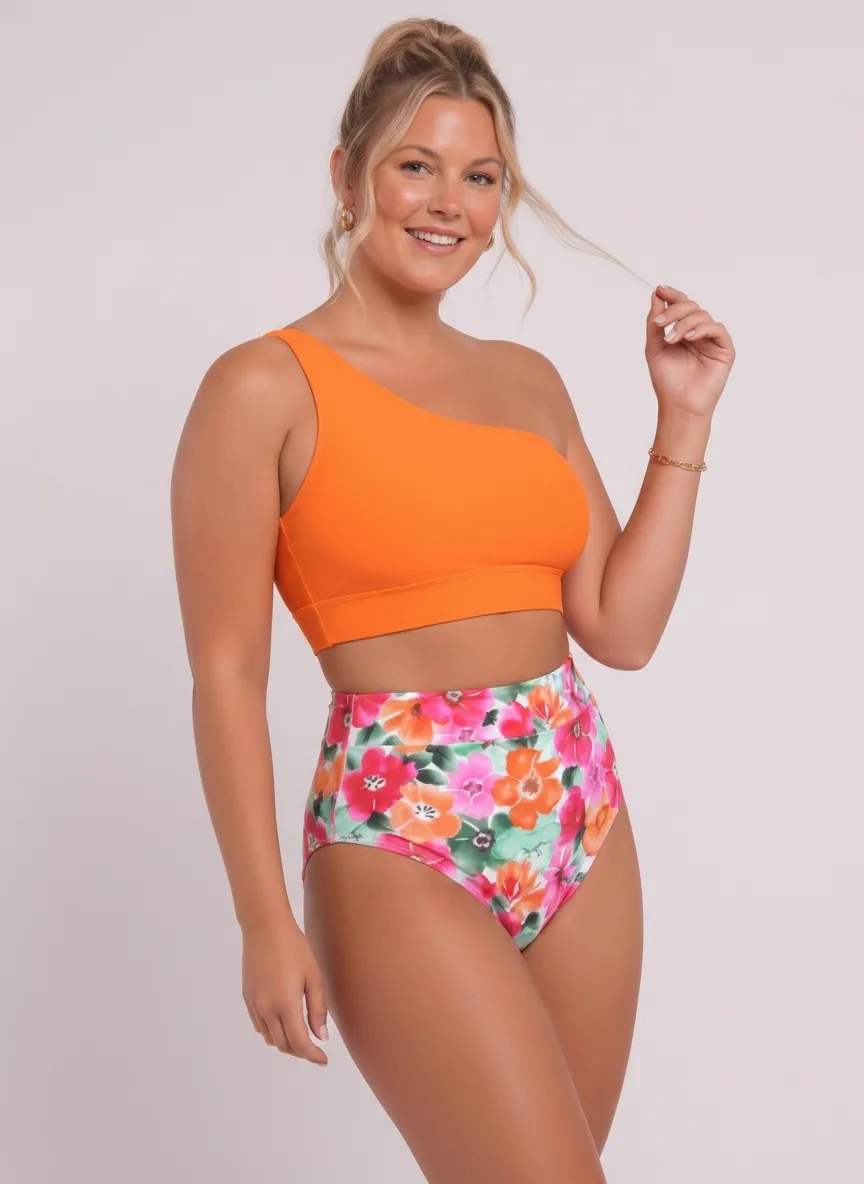
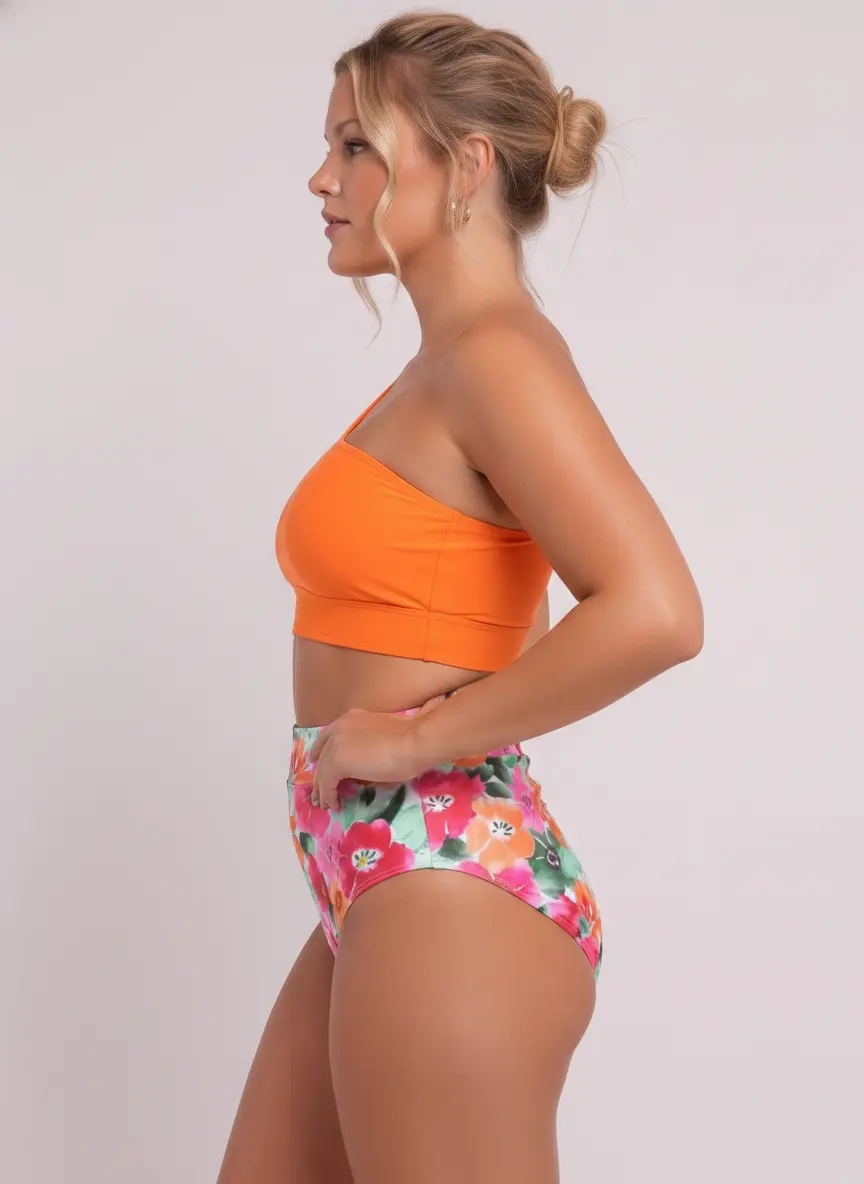
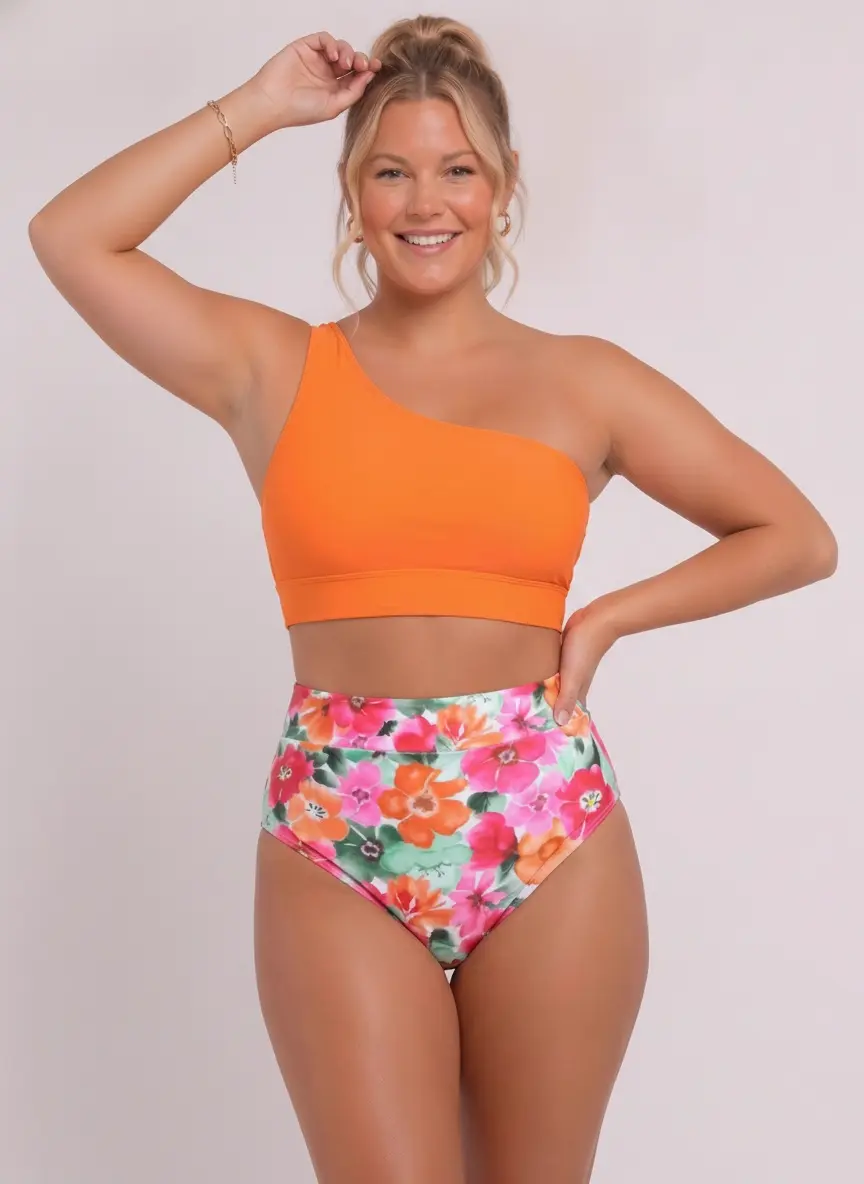
Orange neon. Hibiscus floral. Real skin texture. Real smile. The body the brand actually sells to. This is the standard.
See it in motion
The same upload that produces the catalog stills also produces a social-ready video. Fabric movement, real body, no shoot day.
$27.7B
global swimwear market 2026 — up 7.4% from $25.77B in 2025
The Business Research Company
9.1%
CAGR for plus-size swimwear — growing 2× faster than standard sizes
Dataintelo women’s swimwear report
30–35%
online return rate for lingerie and swim — the highest in apparel
Coresight Research
The Hardest Category for AI Fashion Photography
Most AI image generators are sold on a denim jacket demo. Mid-saturation color, a forgiving silhouette, most of the body covered, lighting designed not to test anything in particular. It’s a fair demo. It’s also the easy mode.
Swimwear is hard mode. The garment is mostly cut-away — meaning the customer is reading the model’s skin, body shape, and proportions as much as the swimsuit itself. The fabric range stretches from solid stretch knit to sheer ruched mesh in a single drop. Prints are vibrant, often tropical, and notoriously color-fragile under any rendering pipeline that wasn’t built for them. And uniquely in fashion, the buying decision is “does this work on a body like mine?” — a question only model diversity can answer.
That’s why this category is the most reliable stress test for any AI photography tool. If it carries swimwear — multiple body types, ruched mesh, vibrant hibiscus floral, real skin texture, accurate halter construction — it can carry everything else. This post walks through what passing the swim test actually looks like, with real outputs from MODA AI across five different swim styles and five different body types.
Where Generic AI Image Generators Break on Swim
Four failure modes show up consistently when generic AI image generators are tested on swimwear:
Skin smoothing turns the model into plastic.
Swimwear is mostly skin. Generic AI tools default to a 'beauty retouch' surface — pores erased, freckles airbrushed, skin texture flattened. On a full-body bikini shot where 70% of the frame is skin, that reads instantly as AI. The customer's trust drops on contact.
One body type, every shot.
Most AI image generators have a single 'default' body shape — slim, hourglass, tall — baked into the base model. Upload your swimwear and it renders on that one body, regardless of who you're selling to. For a category where 43% of US women wear size 14+ (Dataintelo), that's a category disqualification.
Mesh, ruching, and halter ties collapse.
Sheer mesh panels become opaque. Ruched fabric flattens to smooth. Halter ties become disconnected loops. The construction features that make swimwear feel premium are exactly what most generic AI tools cannot reproduce.
Bold prints drift in color and scale.
A vibrant hibiscus tropical floral becomes muted pastel. A crisp navy/white stripe becomes muddy gray. The hot pink loses 30% of its saturation. For swim brands whose identity is bold colorway, that's the brand asset broken.
Walkthrough 1 — Body Inclusivity at Catalog Scale
Five Bodies, Five Swim Styles, One Workflow
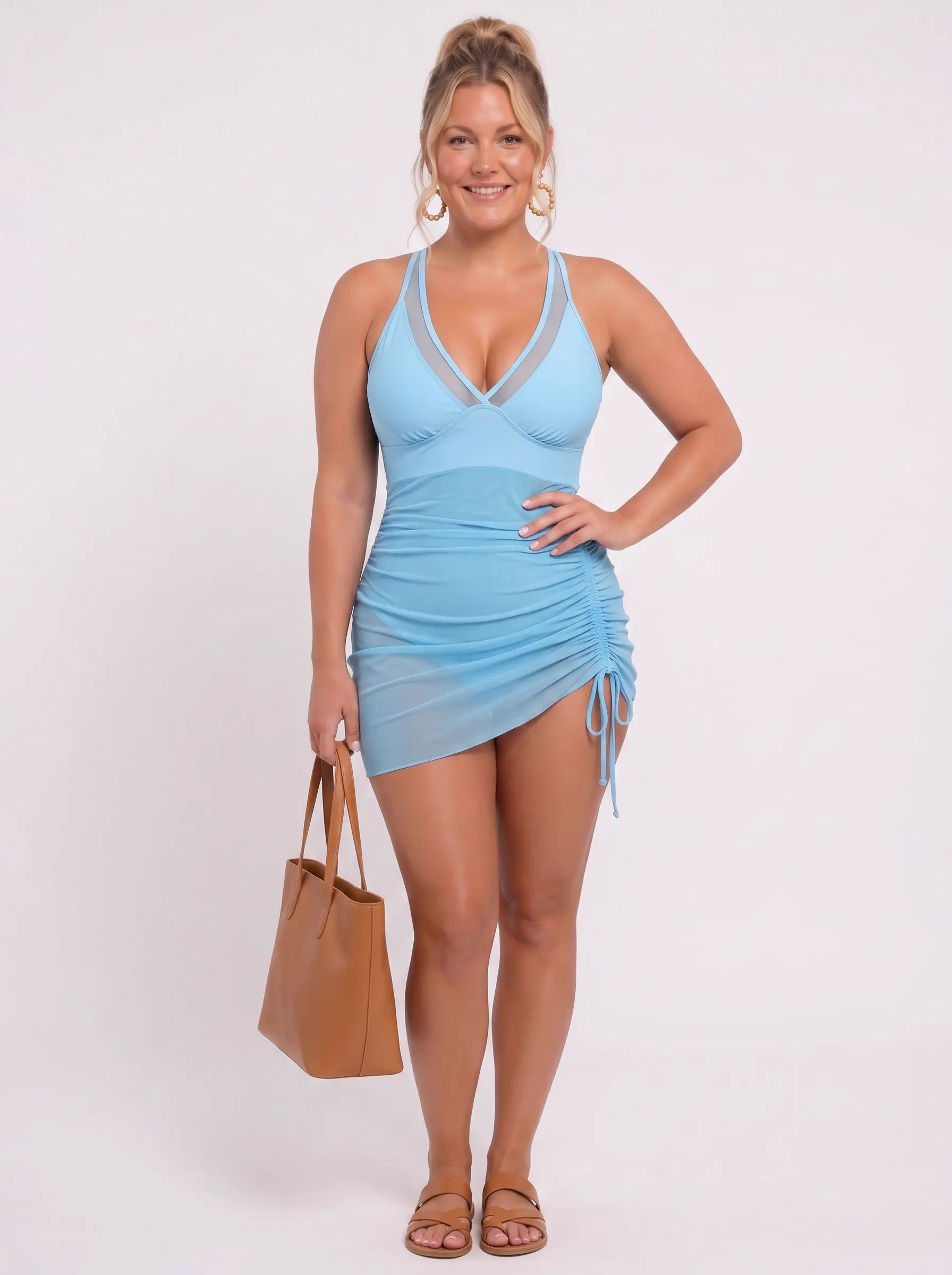
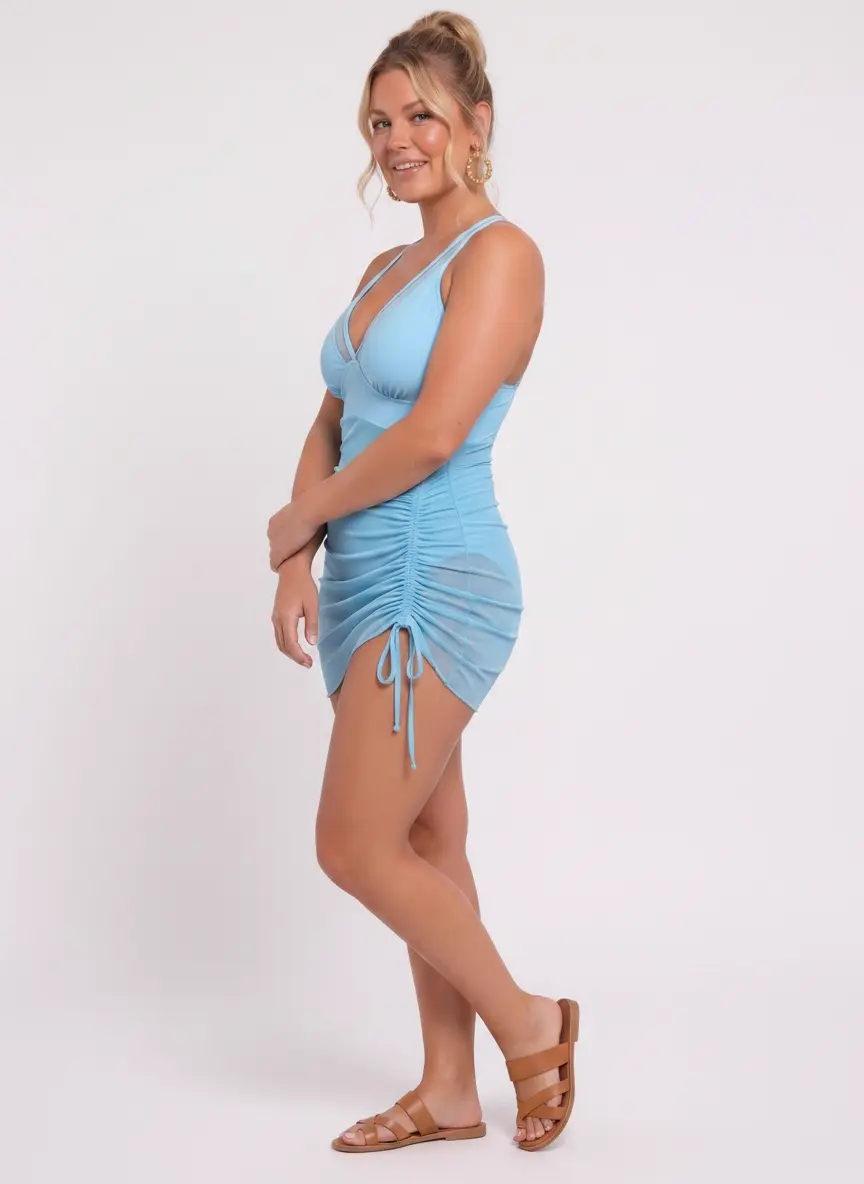
The biggest single difference between MODA AI and a generic image generator on swim is the base model range. Below are five outputs across five different swim drops — four plus-size, one slim. Different swimsuit construction in each: one-shoulder bikini, ruched mesh swim dress, halter cover, jewel-tone tank, classic twist bikini. Every model carries her own body language. Every garment renders at the same fidelity standard.
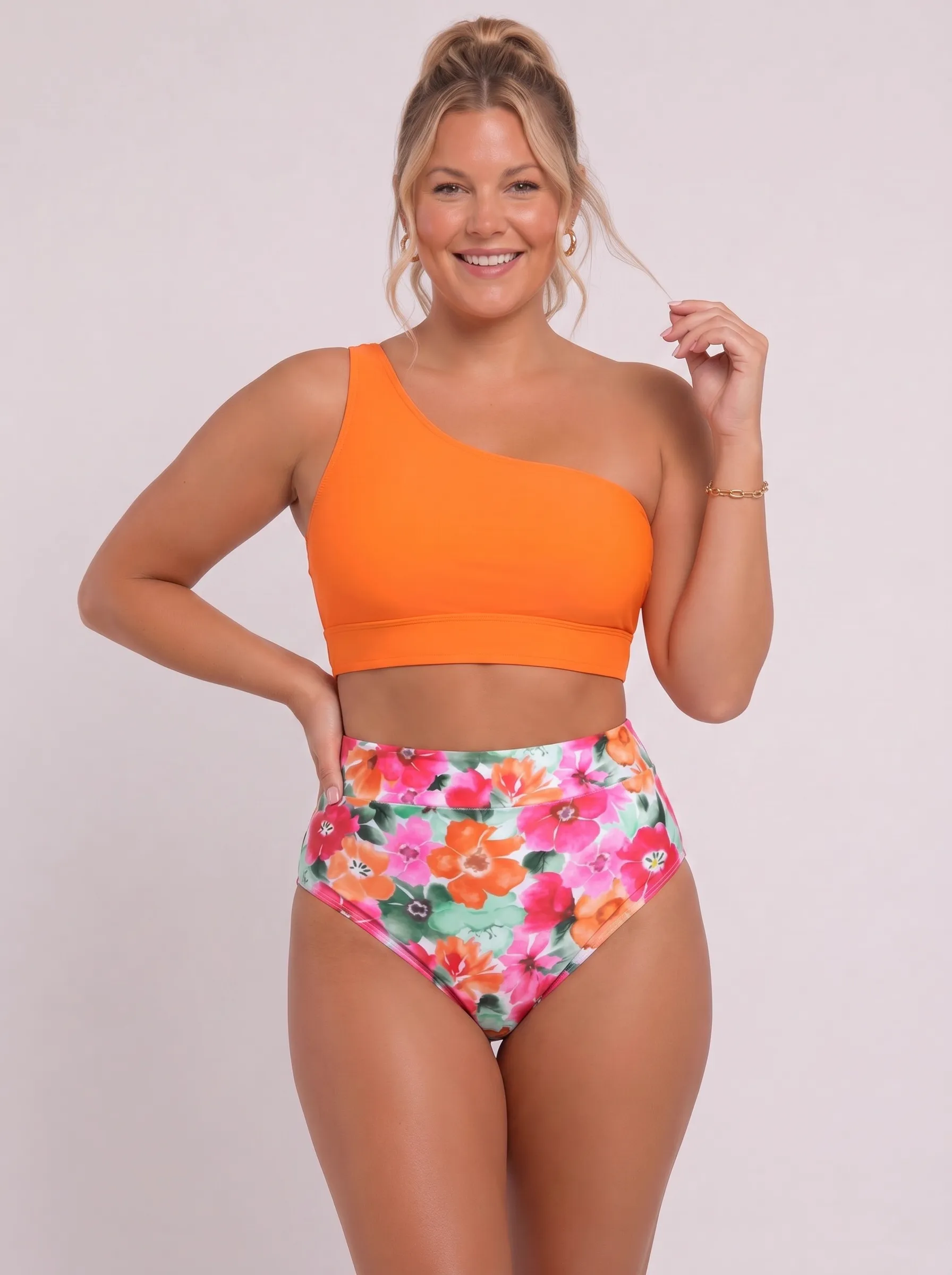
One-shoulder + floral
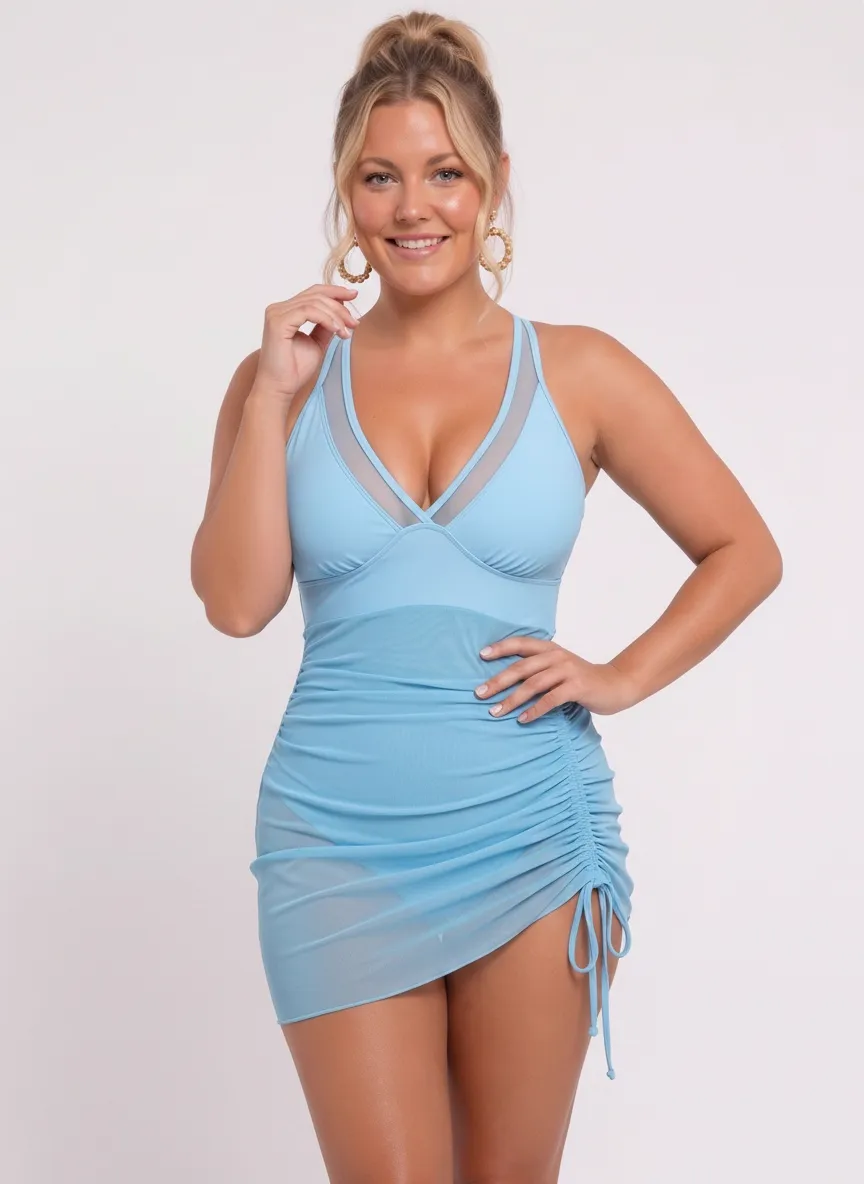
Ruched mesh dress
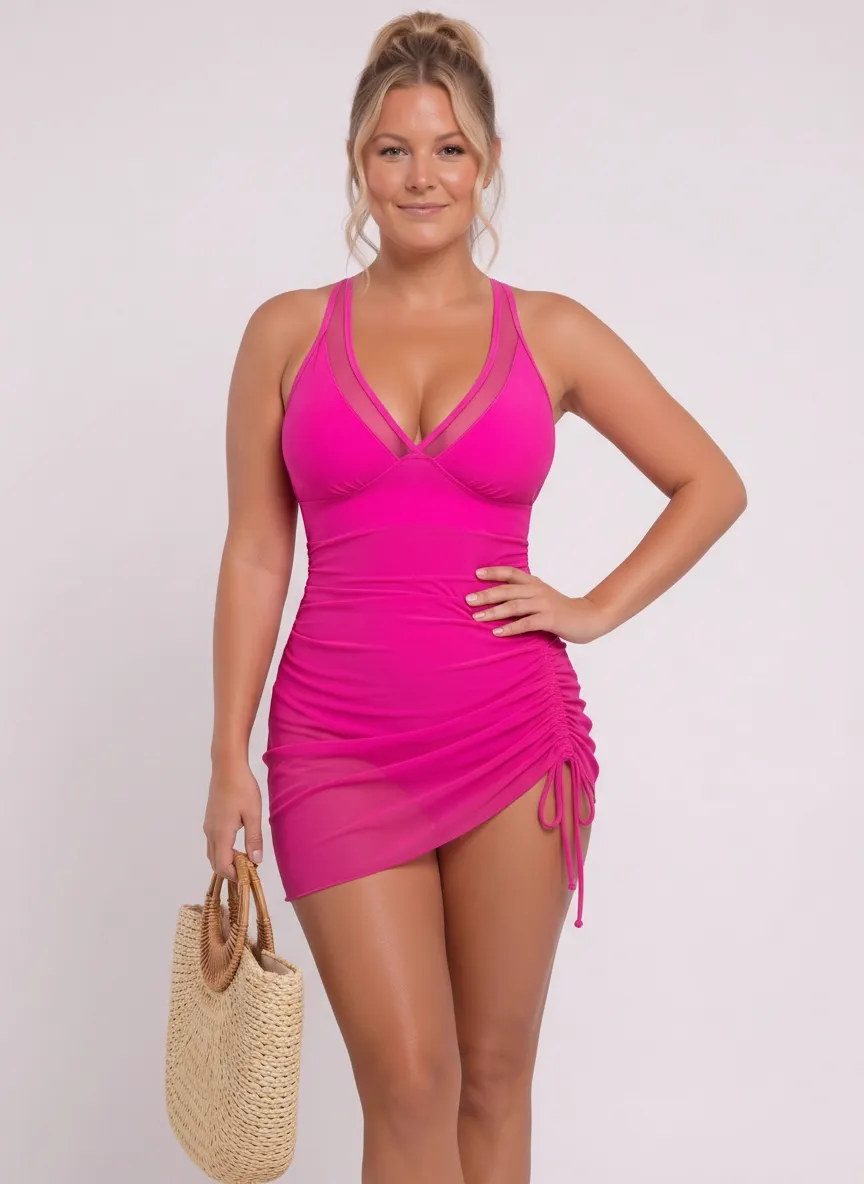
Hot pink halter
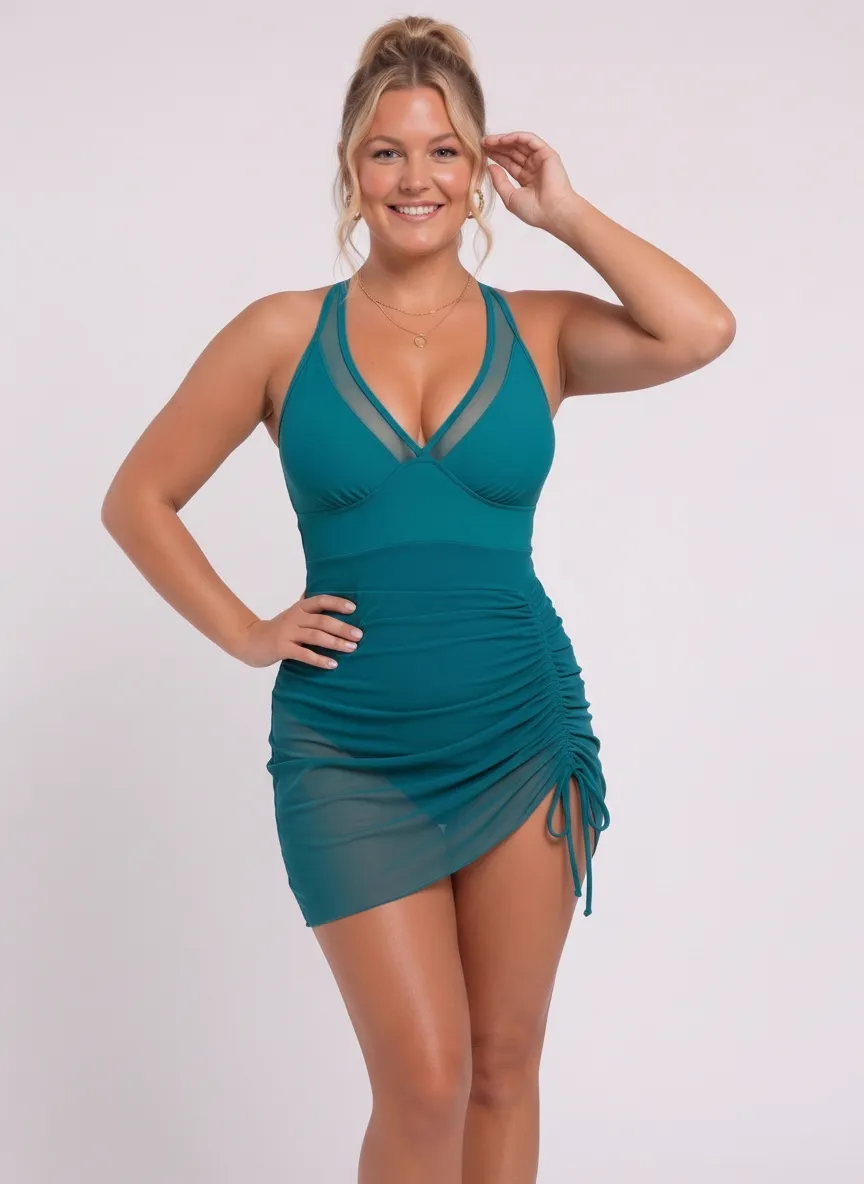
Teal halter dress
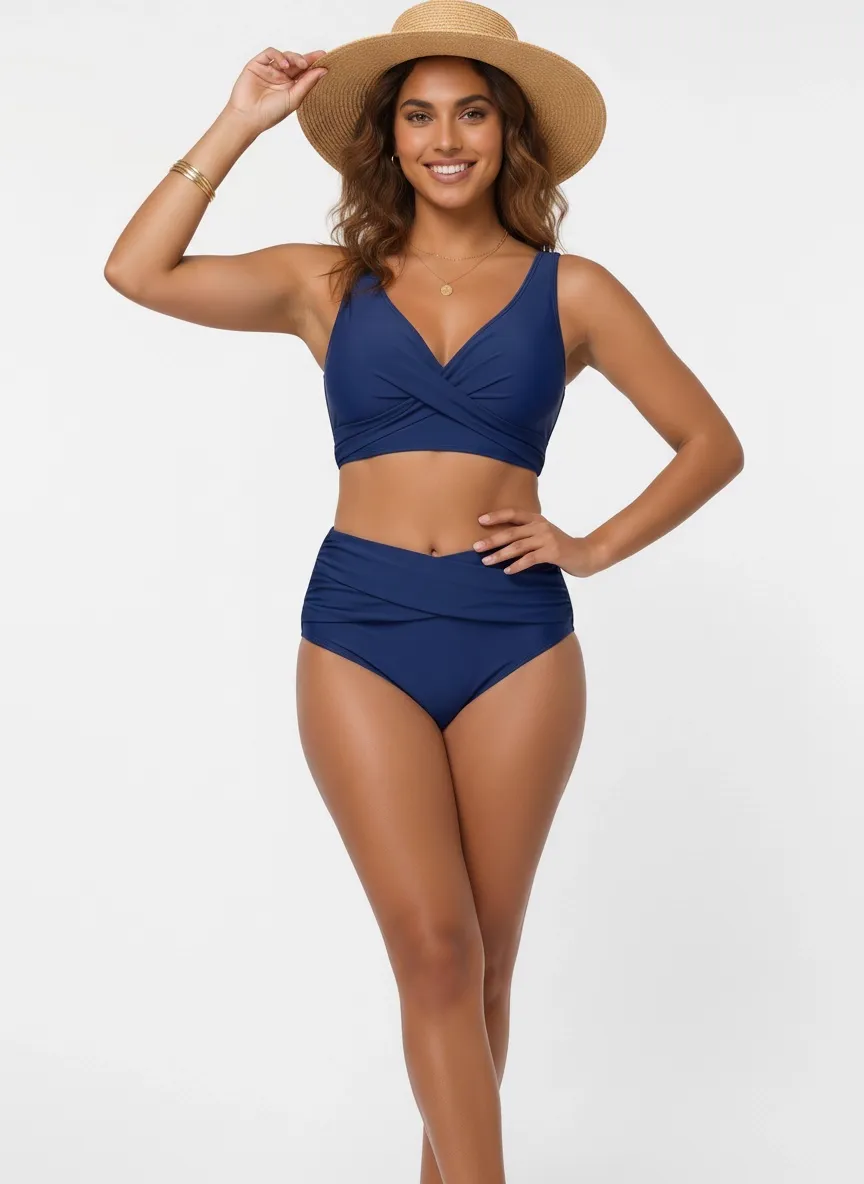
Navy twist bikini
Same workflow, same fidelity. The collection isn’t built around one default body — the body is what the customer chooses.
The conversion logic for body inclusive swim
Dataintelo found 56% of swim consumers prioritize brands offering inclusive sizing and over 70% prefer brands that promote body positivity. Plus-size swim is growing 9.1% CAGR vs 4.2% for standard sizes. A catalog that shows the swimsuit on one slim model misses both the demographic and the brand signal. Showing the same garment across multiple bodies isn’t a marketing flourish — it’s the conversion mechanic.
Walkthrough 2 — A Single Full Set
One Upload, Ten Catalog-Ready Angles
Every MODA AI upload produces ten catalog-ready images across 16+ pose angles — front, back, profile, three-quarter, seated, lifestyle with accessories. For swimwear that matters more than for any other category. Customers verify fit, support, coverage, silhouette, and the back view before they buy. Multi-angle imagery is one of the most consistent levers in swim conversion: more angles, fewer fit-driven returns.
Below is one complete output set — a navy twist-front bikini with high-waist bottoms, generated from a single flat-lay upload. The model identity stays consistent across all ten frames. The twist construction at the bust stays at the same height. The waistband sits at the same rise. The styling carries a straw bag and gold accessories through several frames for lifestyle context. This is what one upload produces:
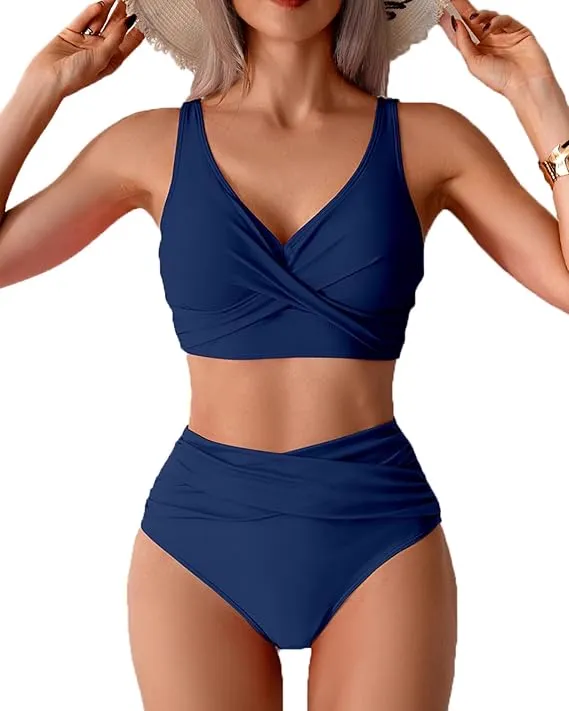
Input — flat lay, front
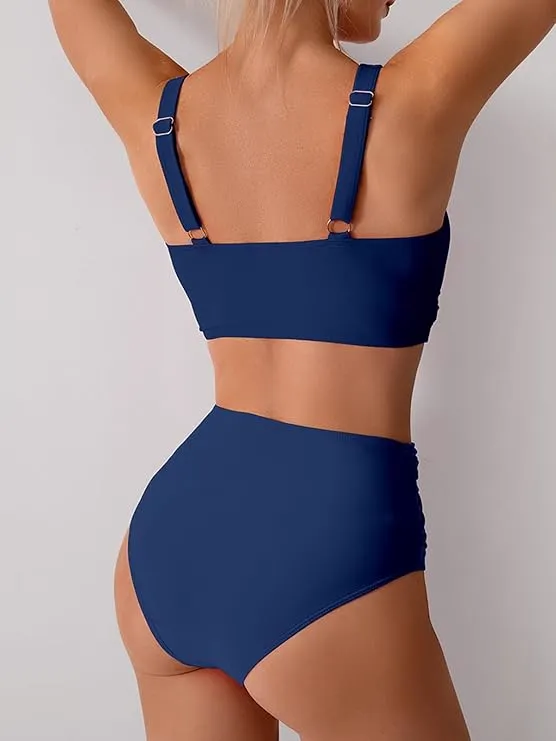
Input — flat lay, back
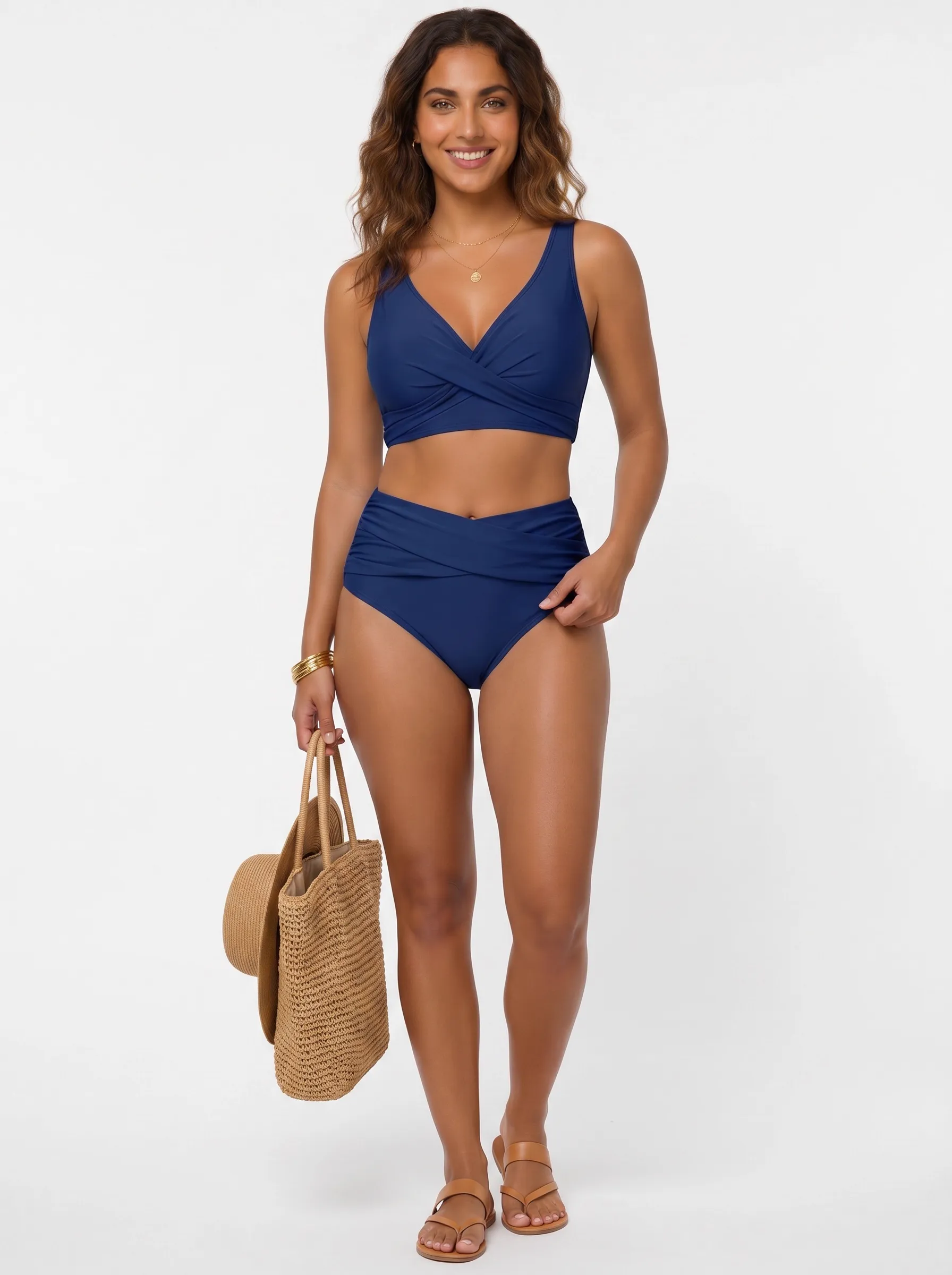
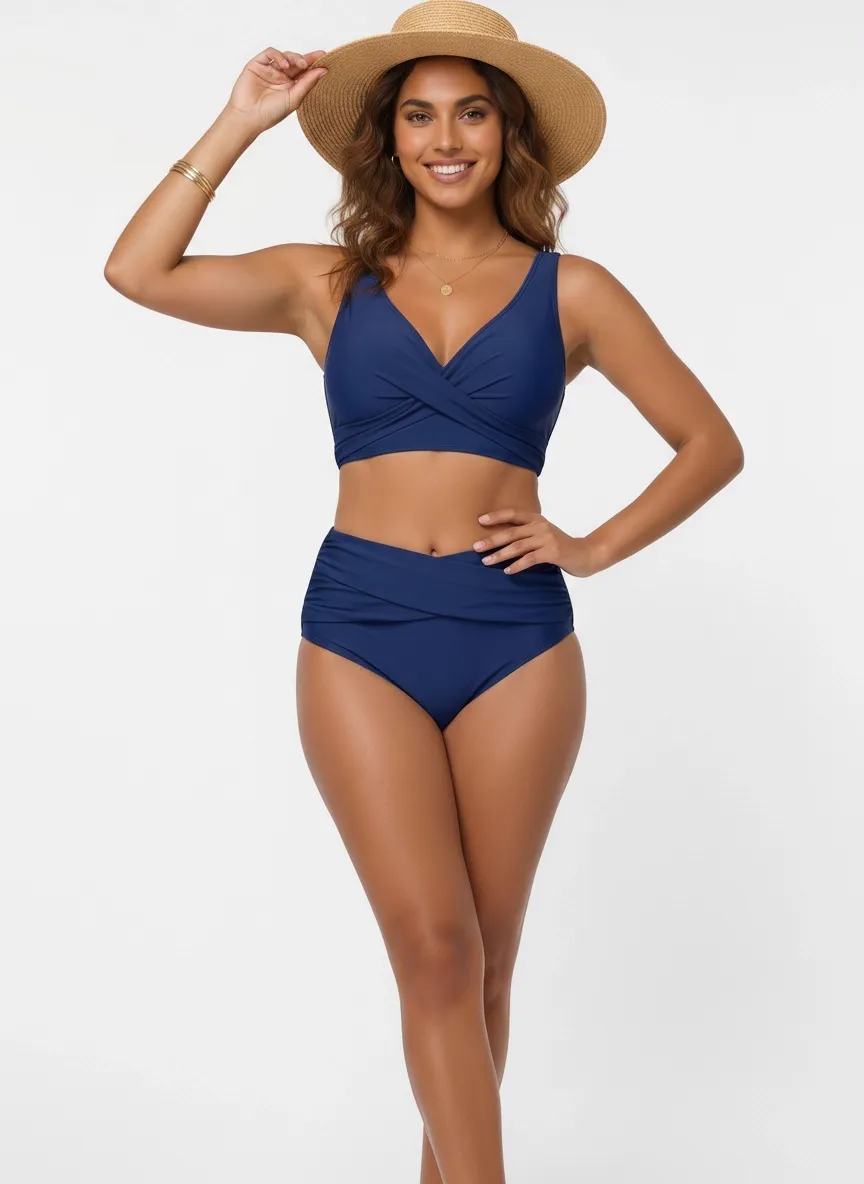
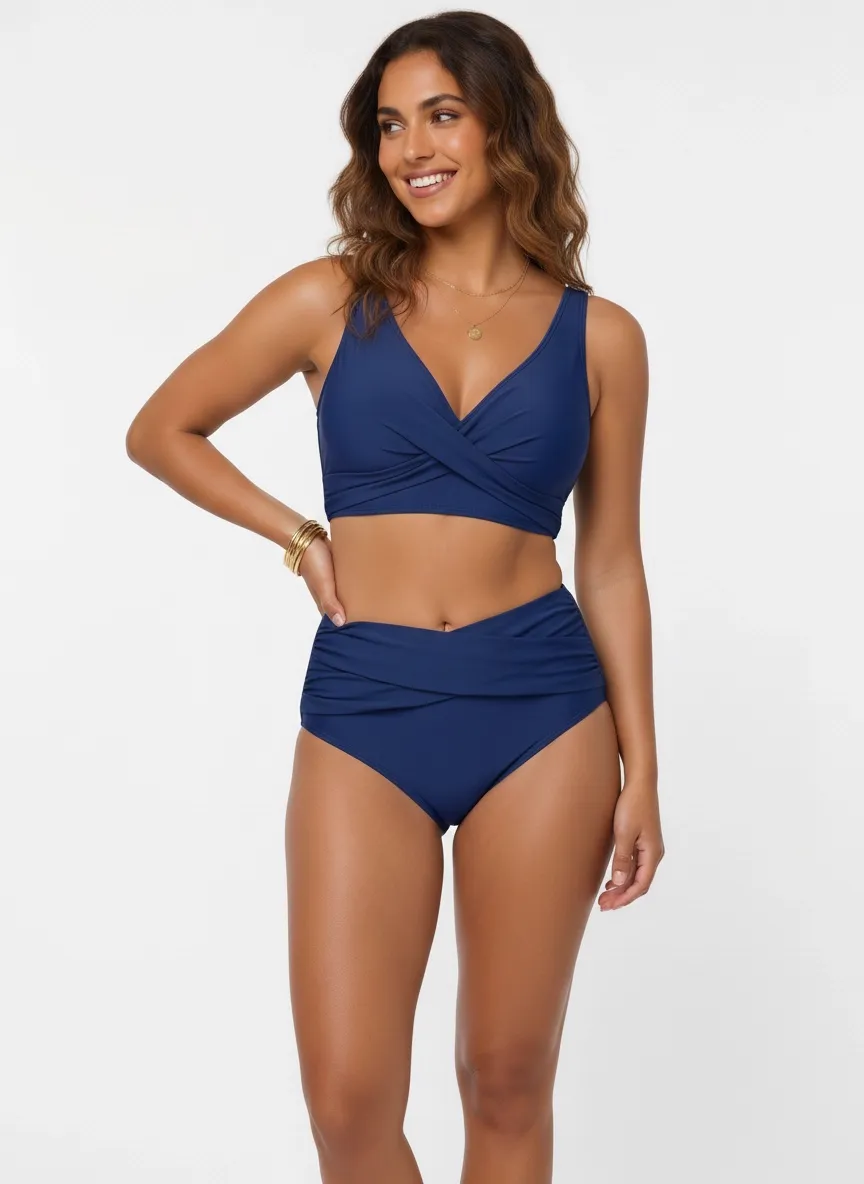
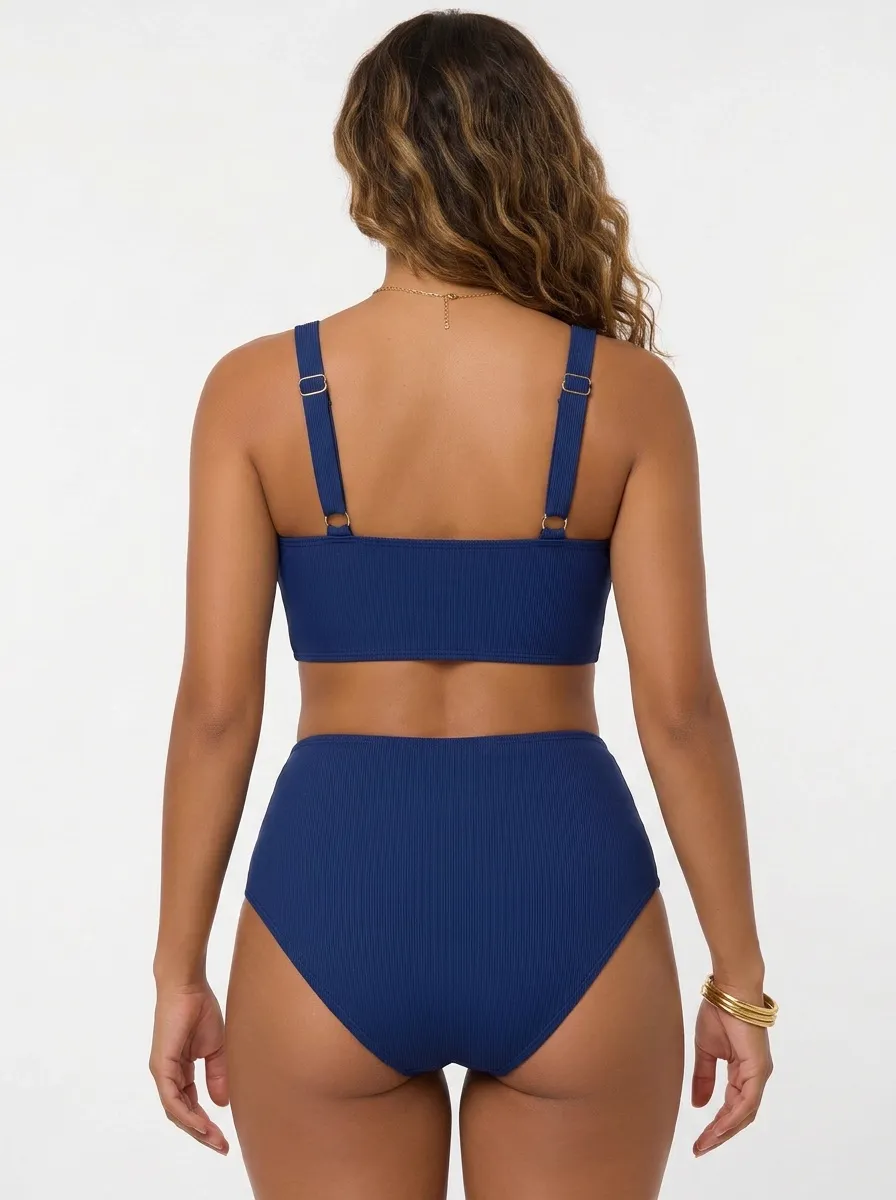
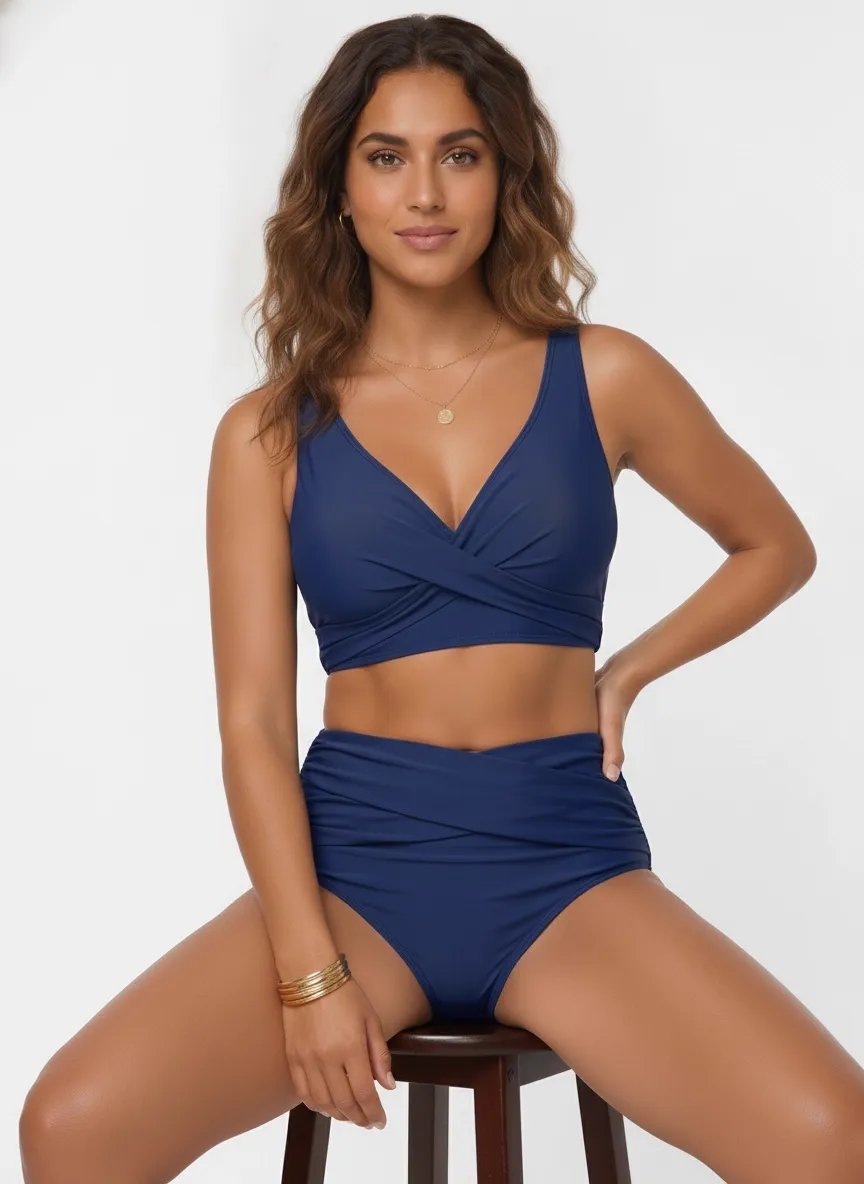
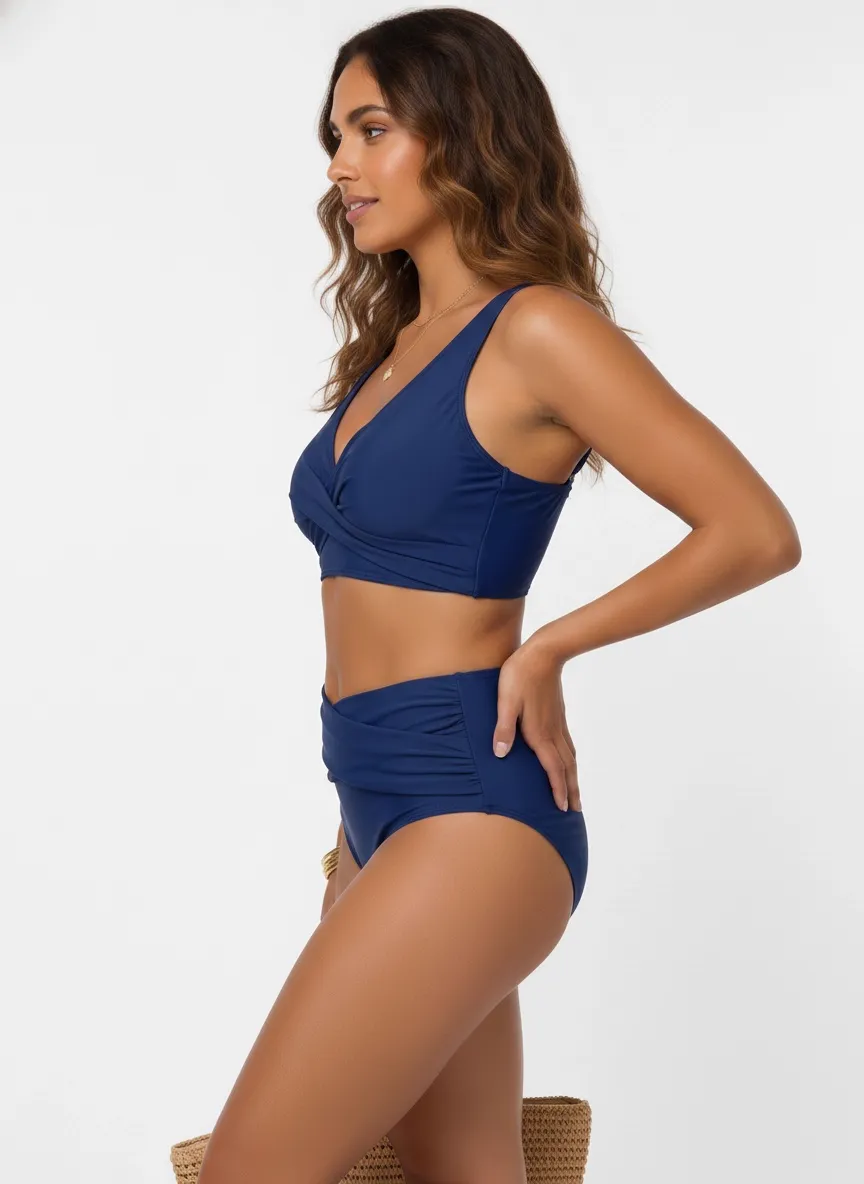
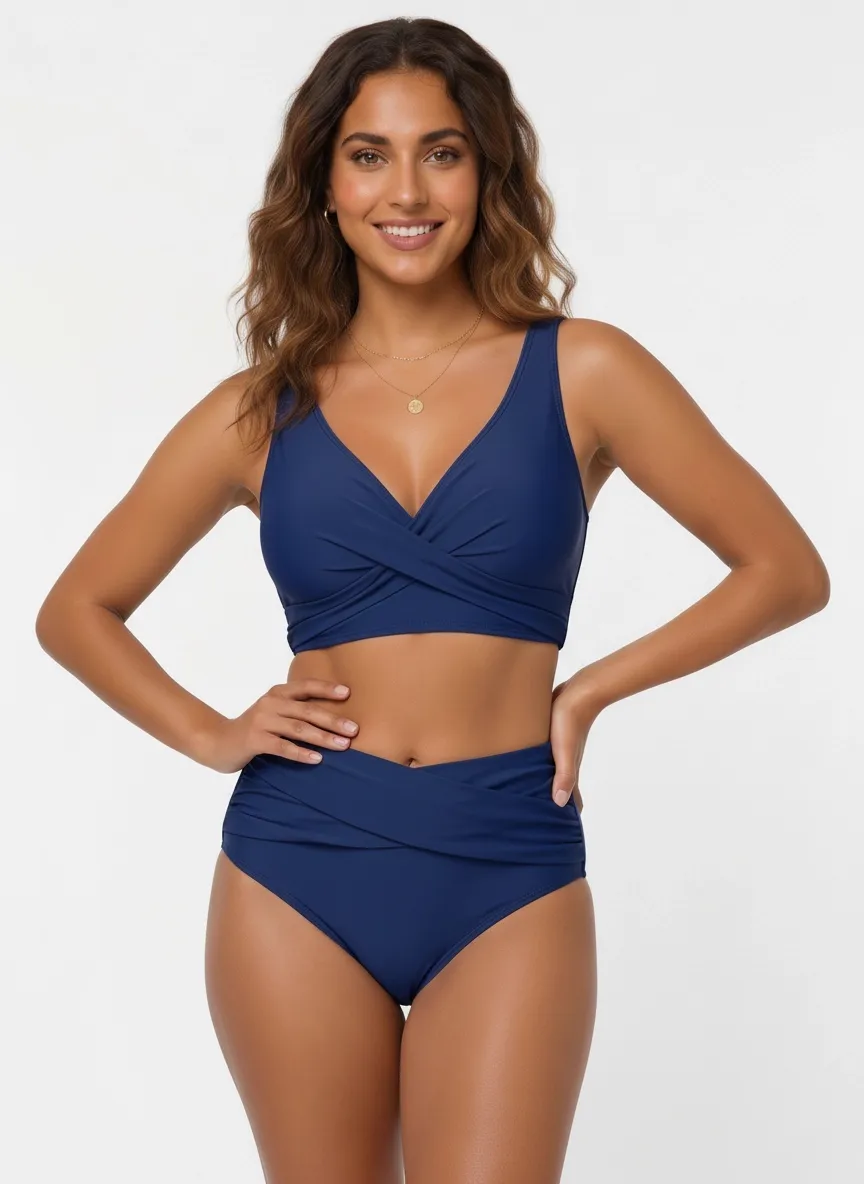
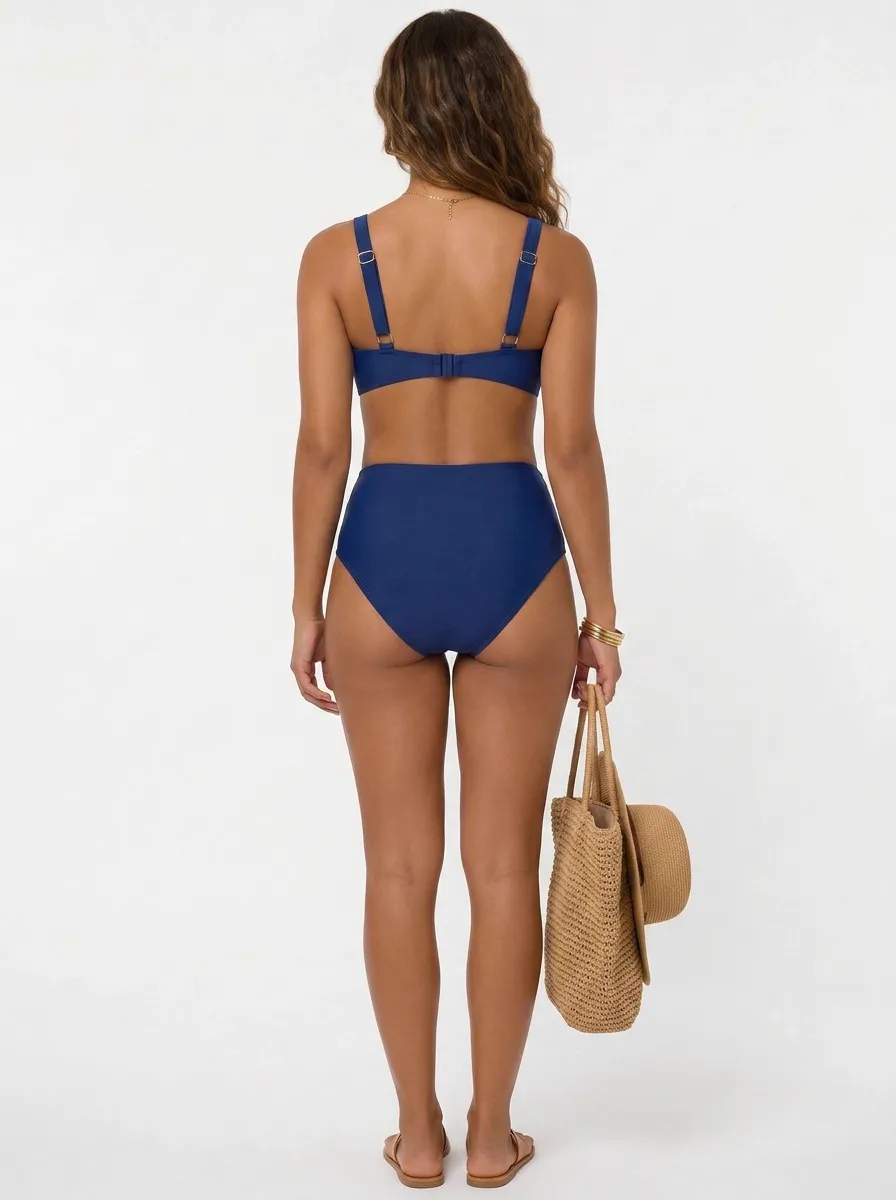
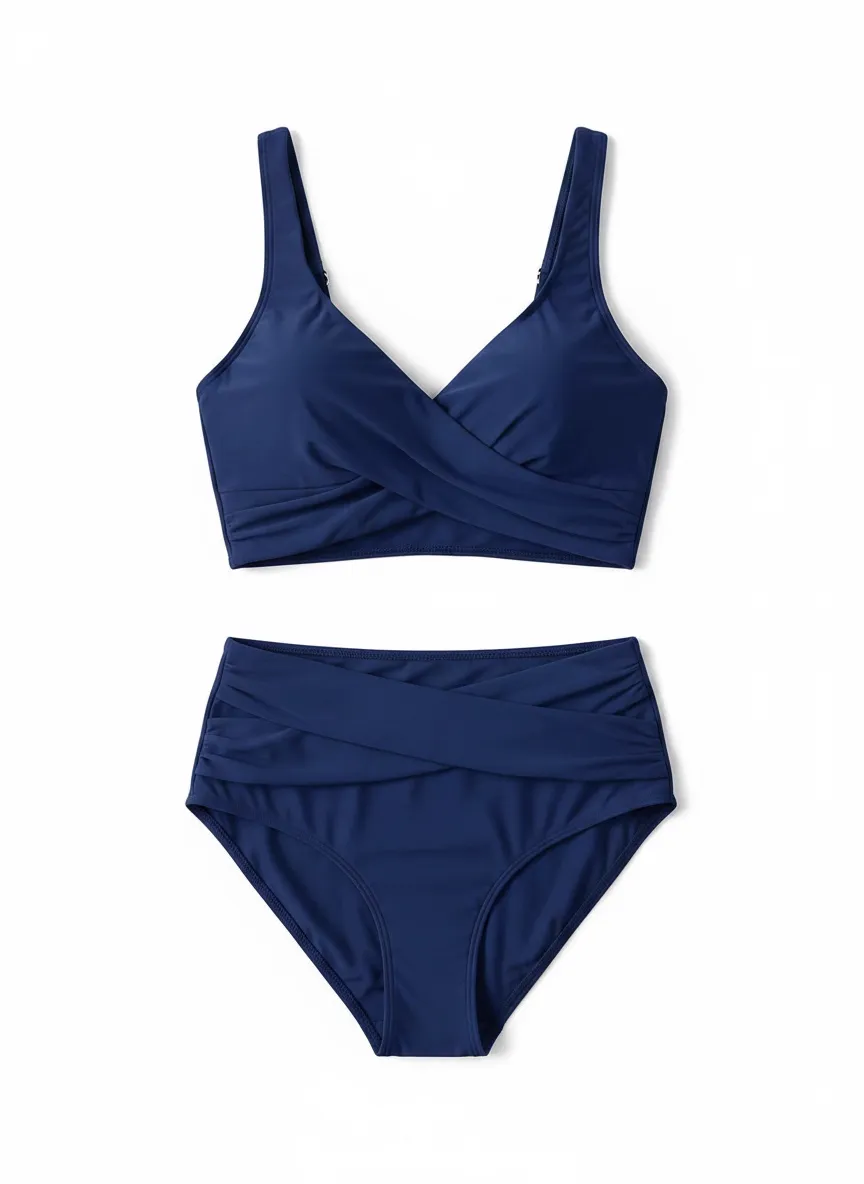
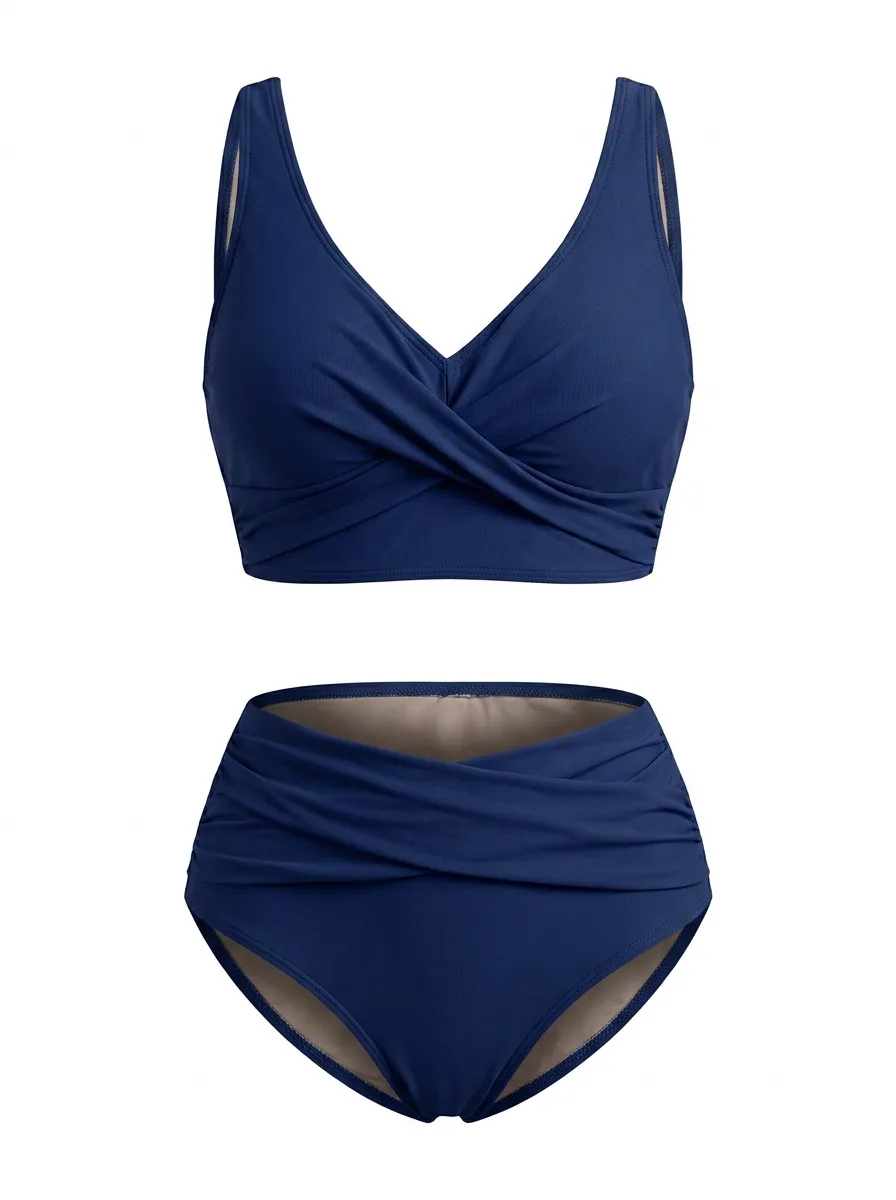
Ten frames. One model. One garment. Front, back, profile, three-quarter, seated, lifestyle. Every angle a swim PDP needs — from one upload.
Walkthrough 3 — Fabric & Print Fidelity
Mesh, Ruching, Prints, Stripes — All Preserved
Swimwear construction is where most AI tools quietly fail. The premium feel of a swim brand lives in the details — the depth of a ruched panel, the sheen on a mesh sheer, the saturation of a tropical print, the precision of a striped peplum hem. Below are four close-up outputs across four different garments, each stressing a different part of the preservation stack:
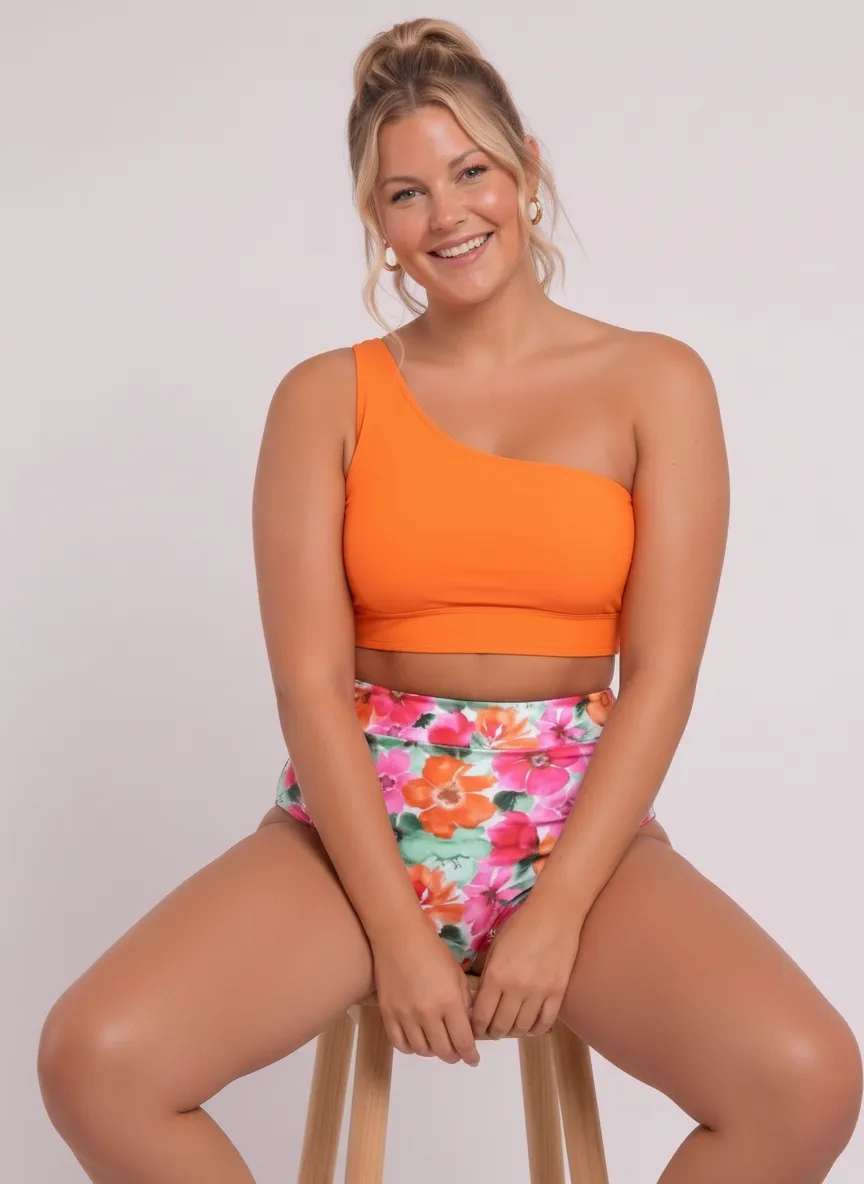
Tropical hibiscus print — color + scale held
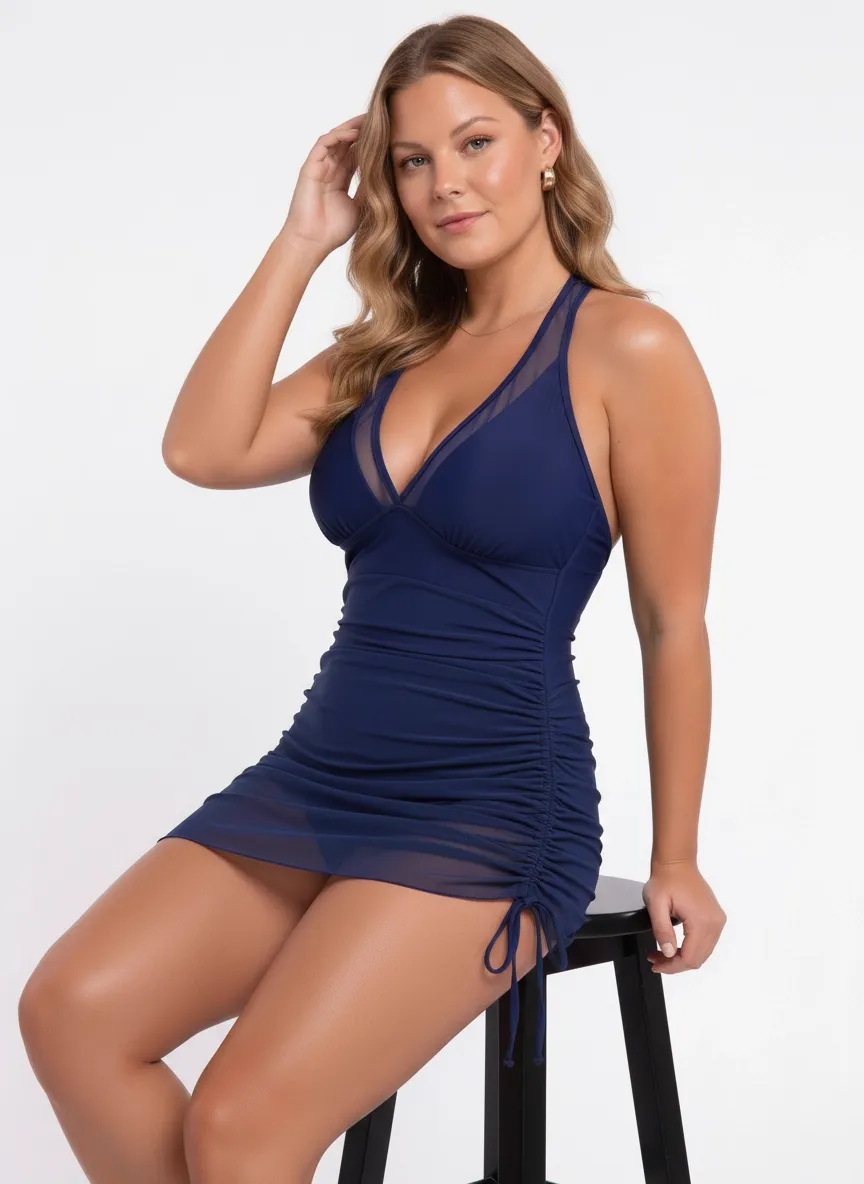
Sheer mesh + ruching texture
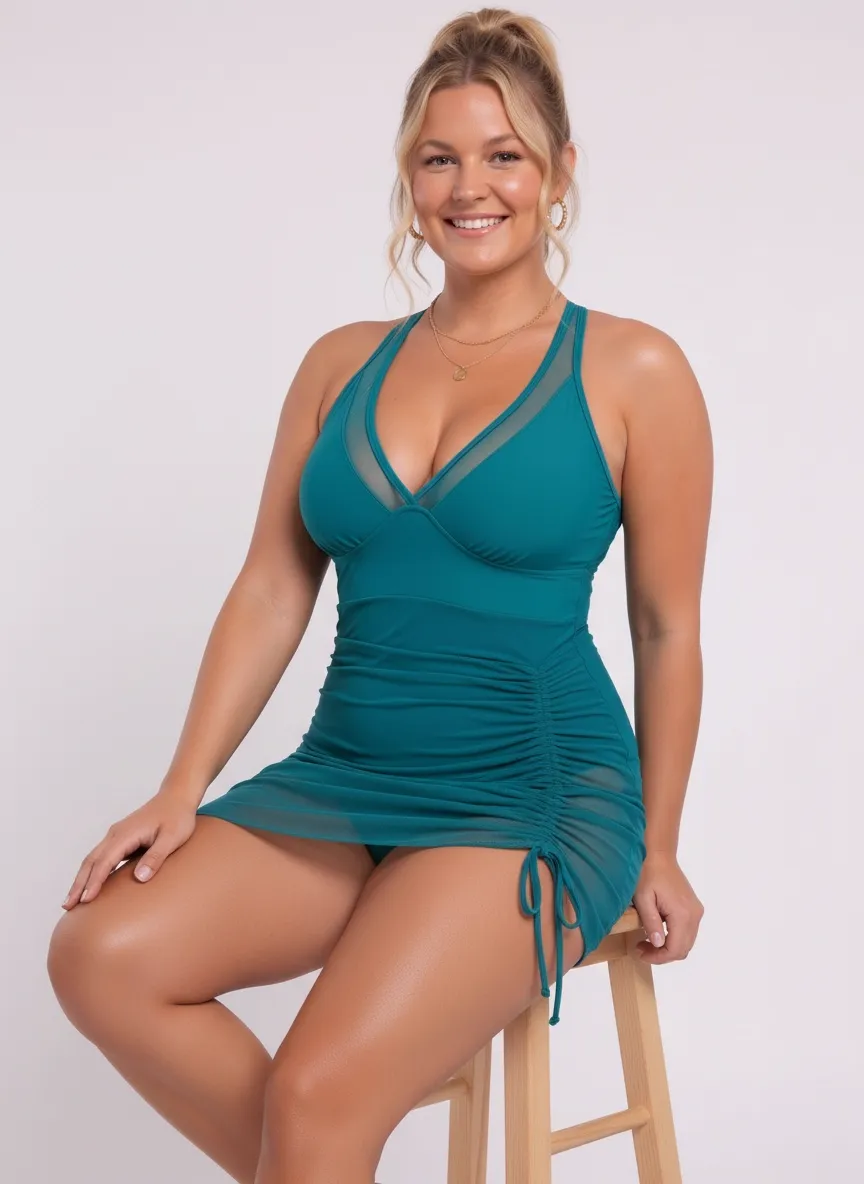
Jewel teal ruching + mesh inset
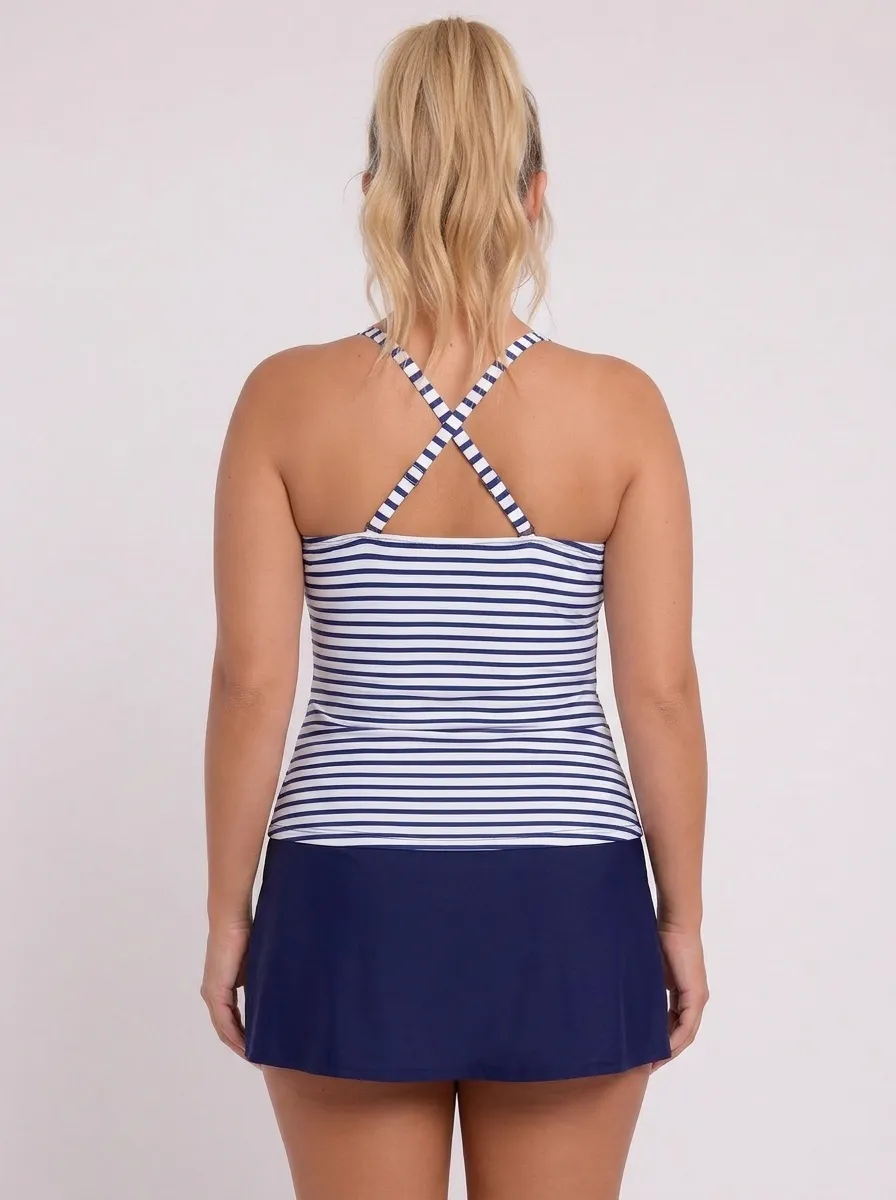
Navy stripes + skirt construction
Each close-up stresses a different fabric or construction feature. Each one survives the generation intact.
Walkthrough 4 — The Range, At a Glance
25 More Frames Across Seven Drops
Mesh ruched dresses in five colorways, tropical-floral bikinis, navy/white striped tankinis with peplum and skirted bottoms, halter swim covers, jewel-tone tanks. Different body, different garment, every frame. Same workflow, same Shopify session.
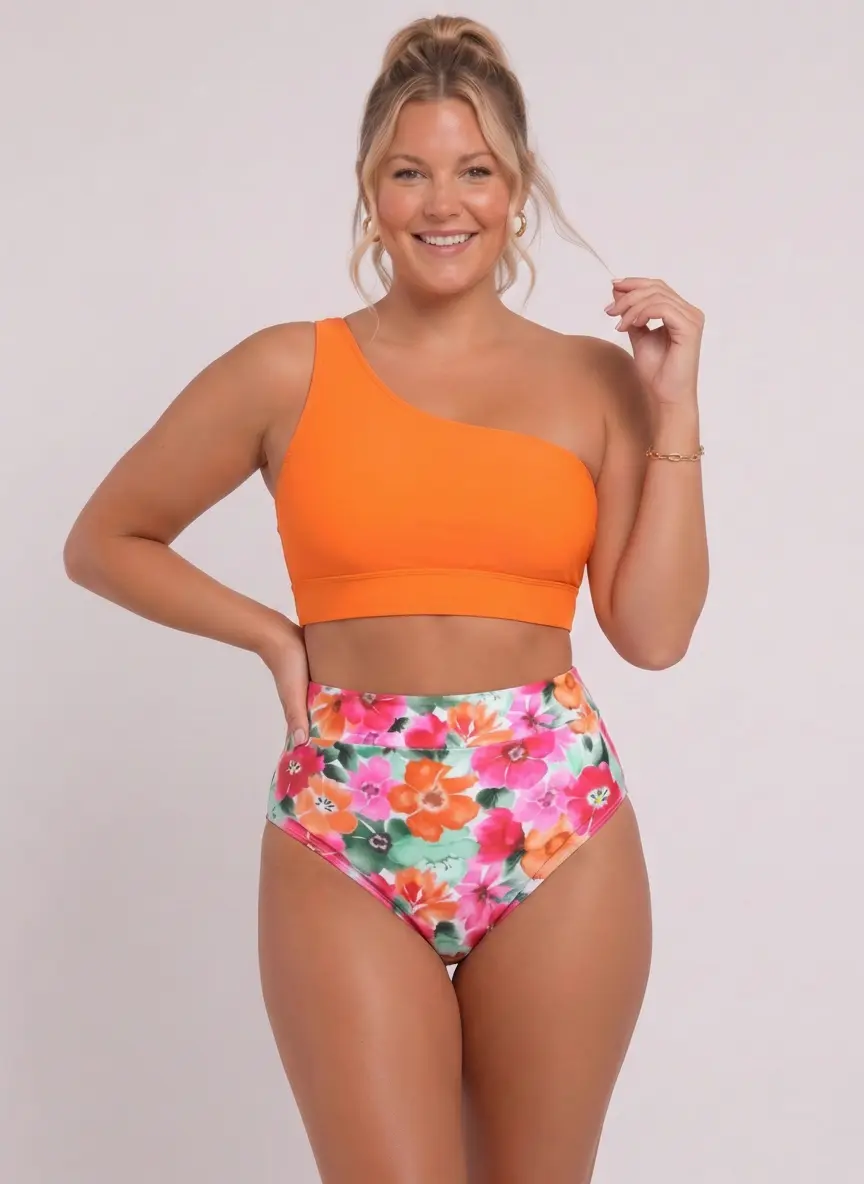
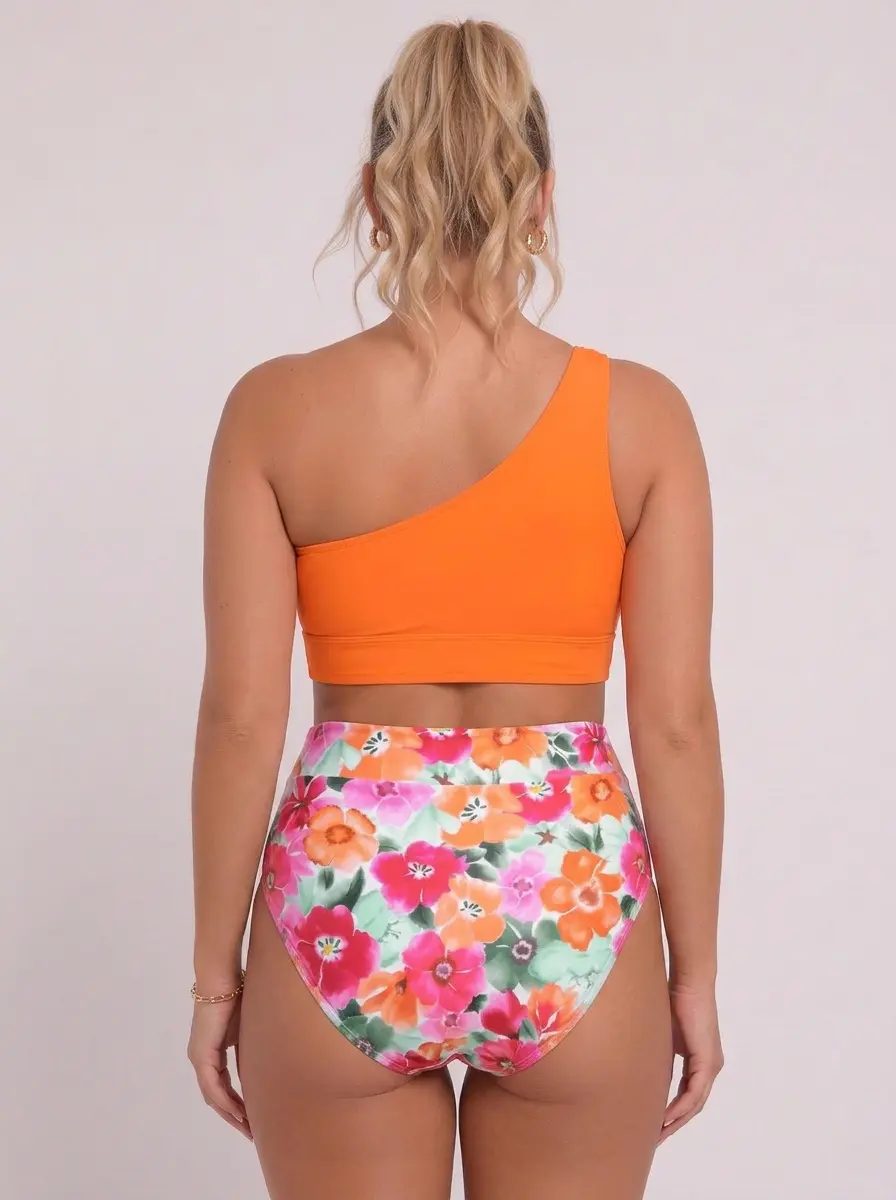
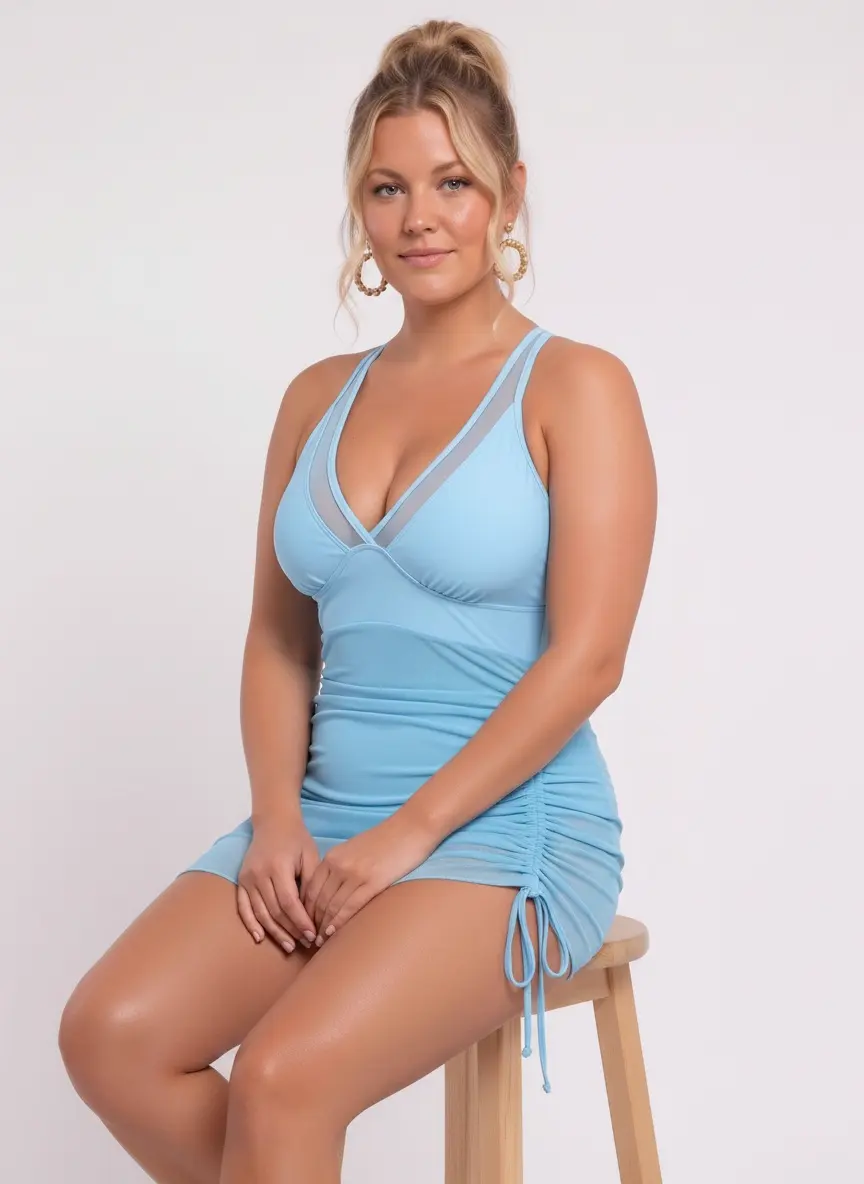
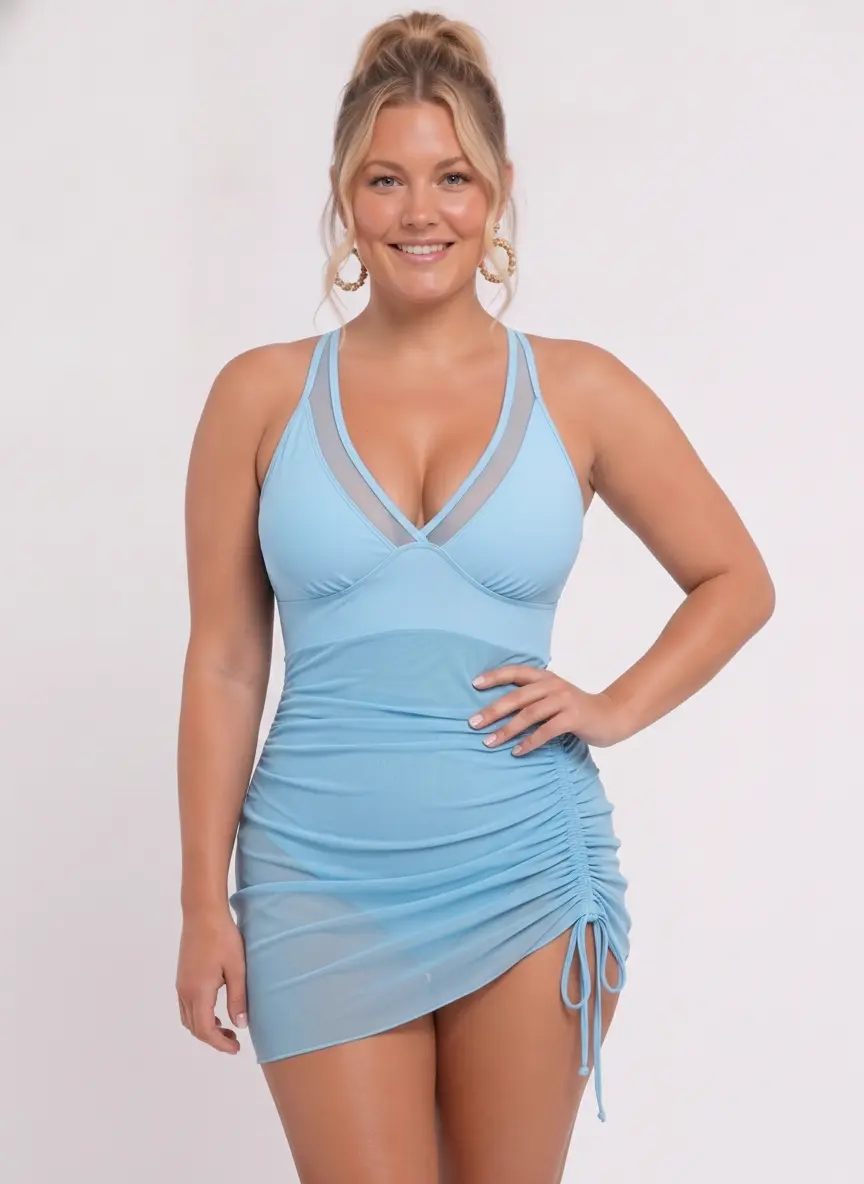
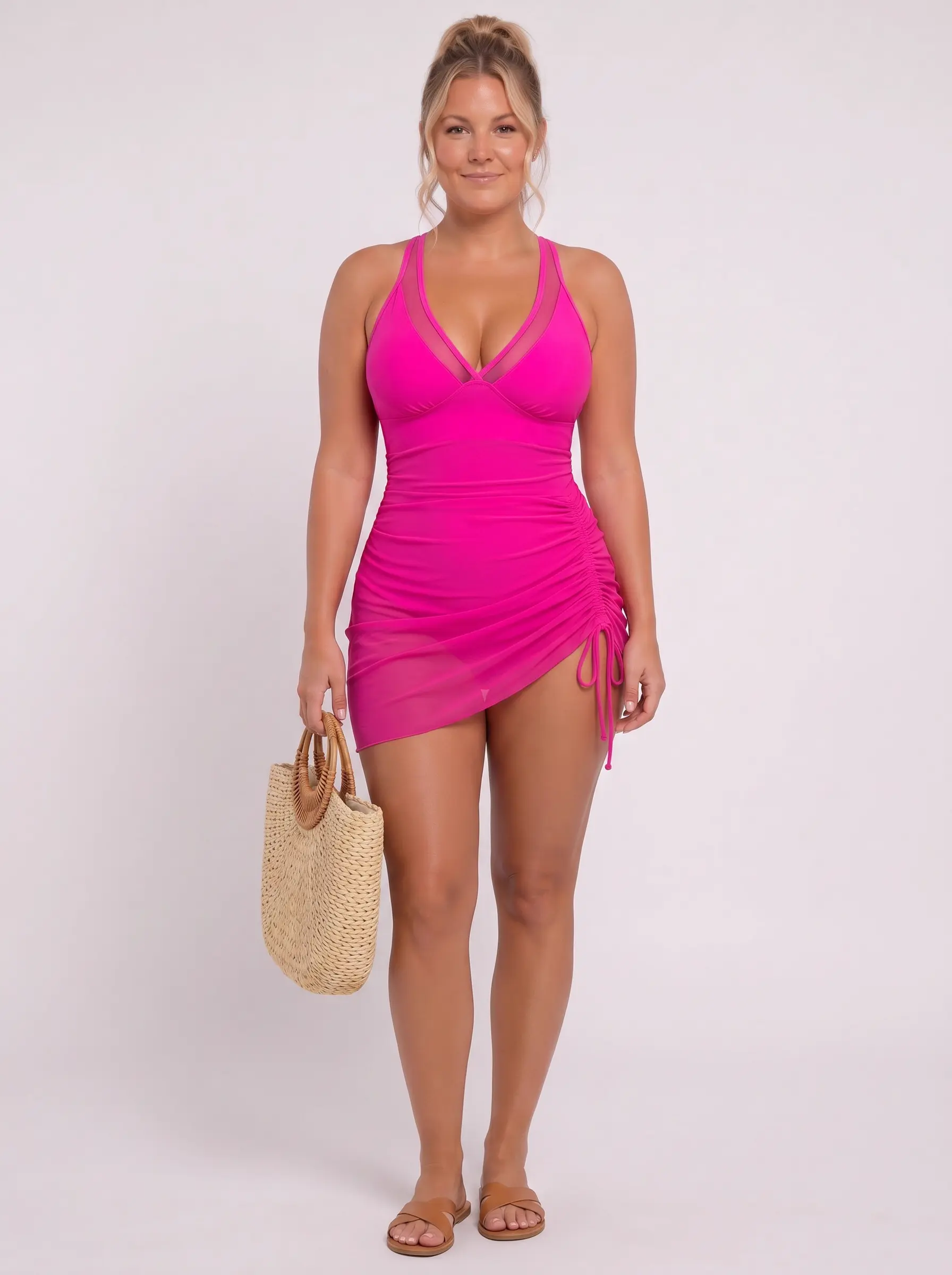
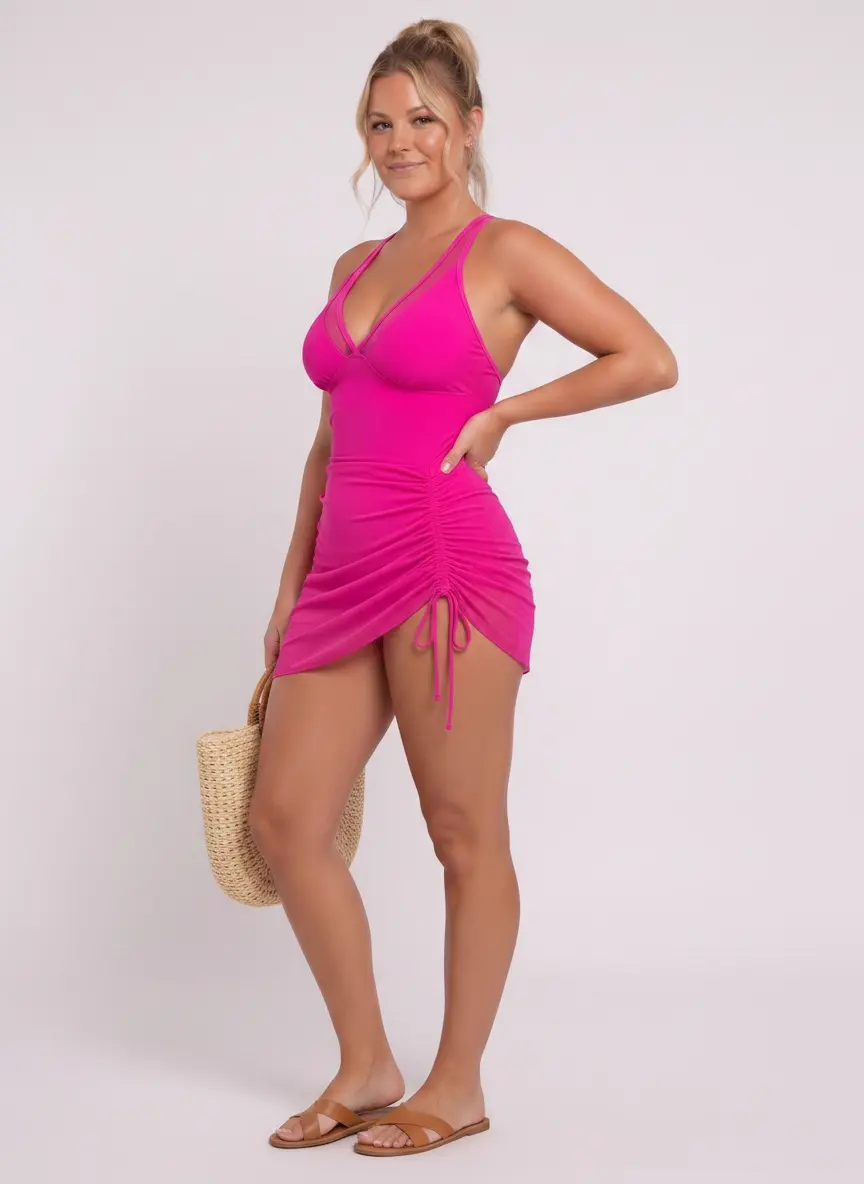
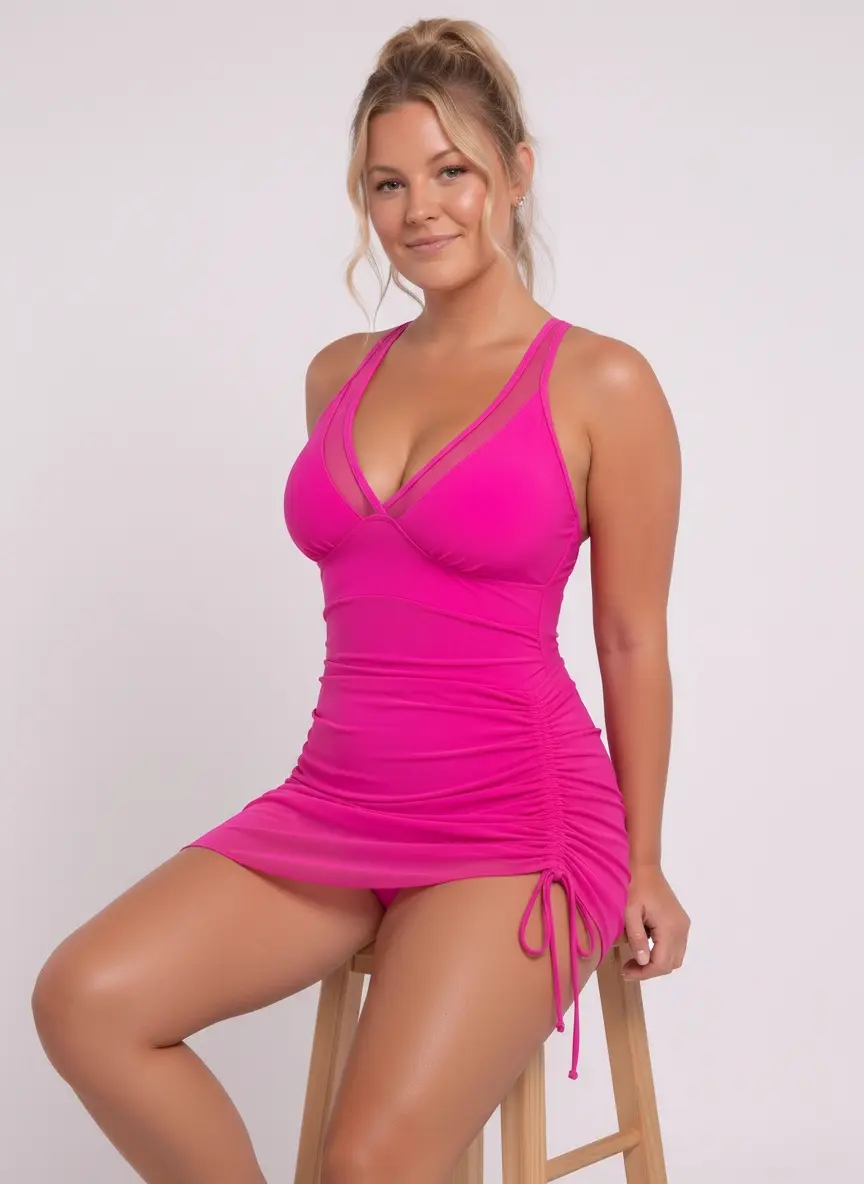
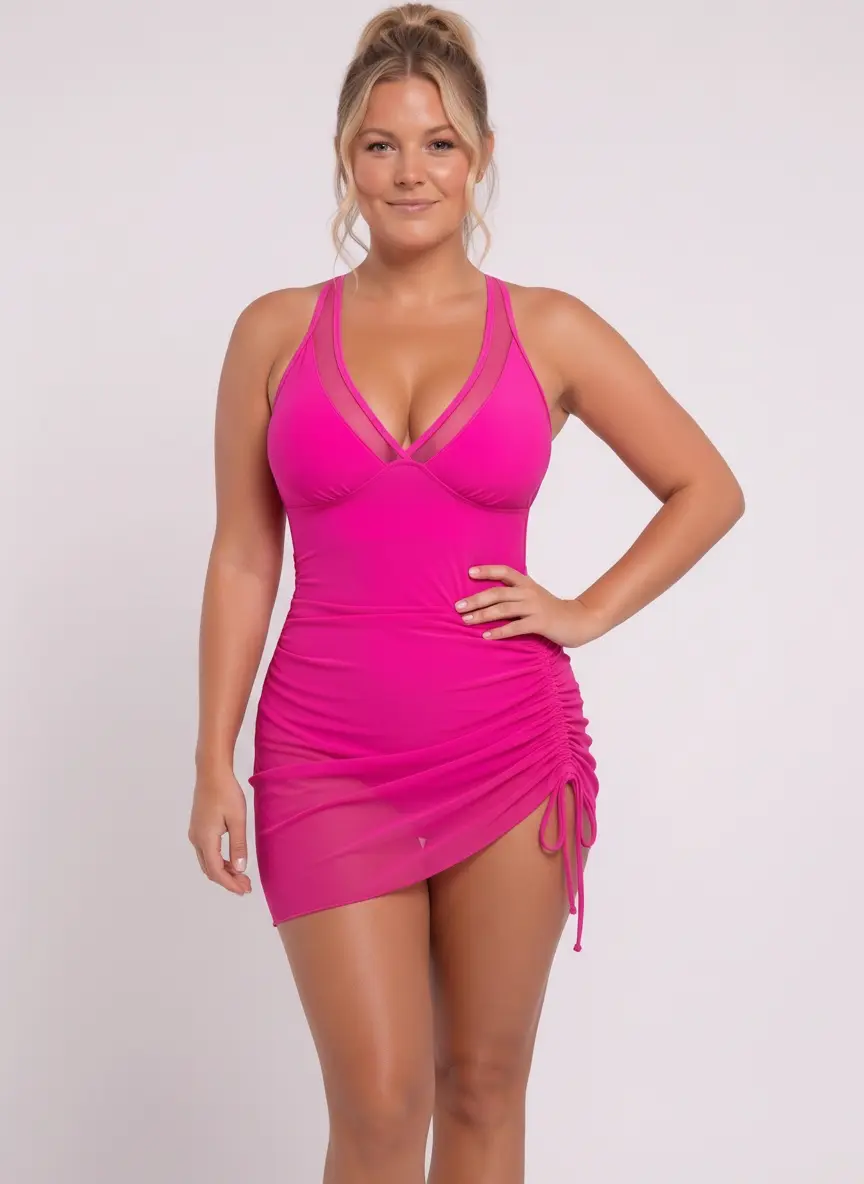
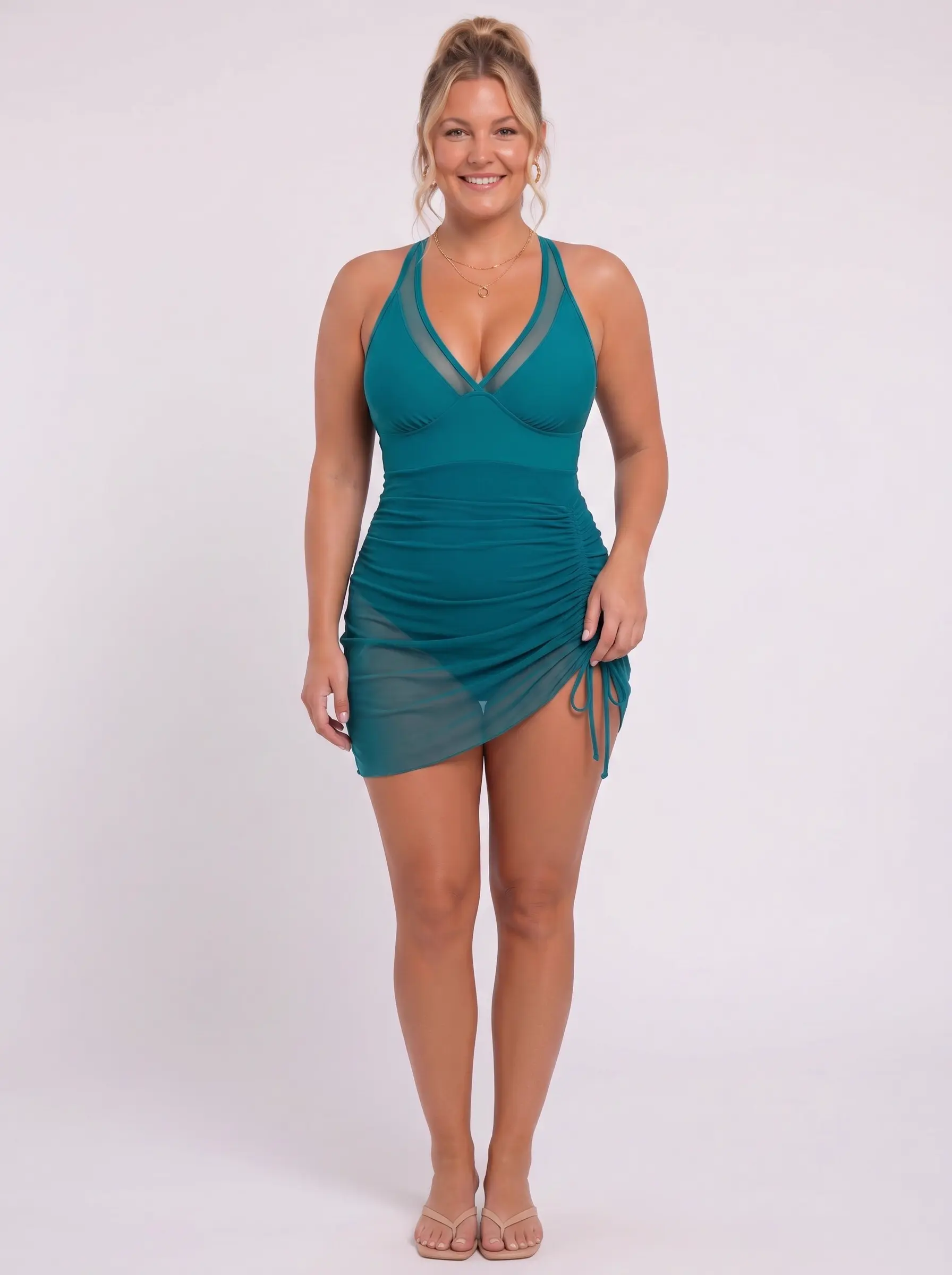
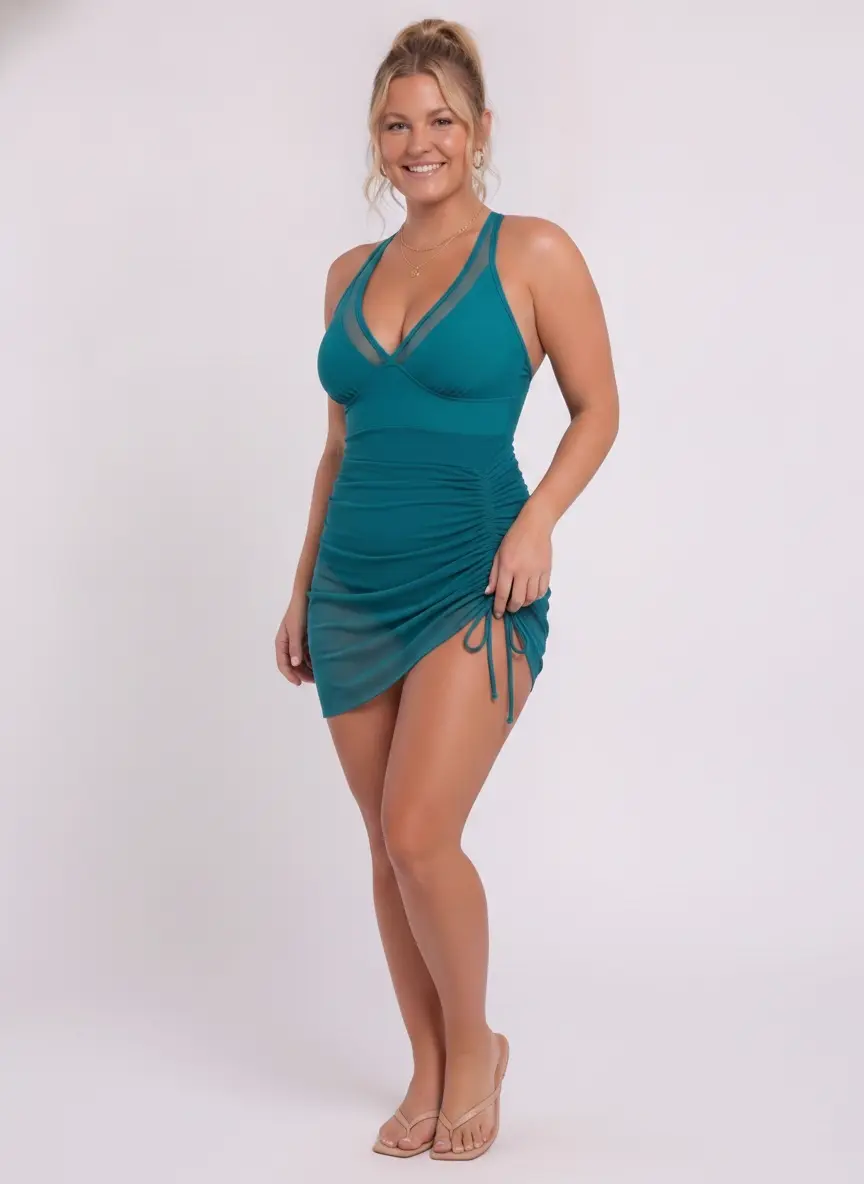
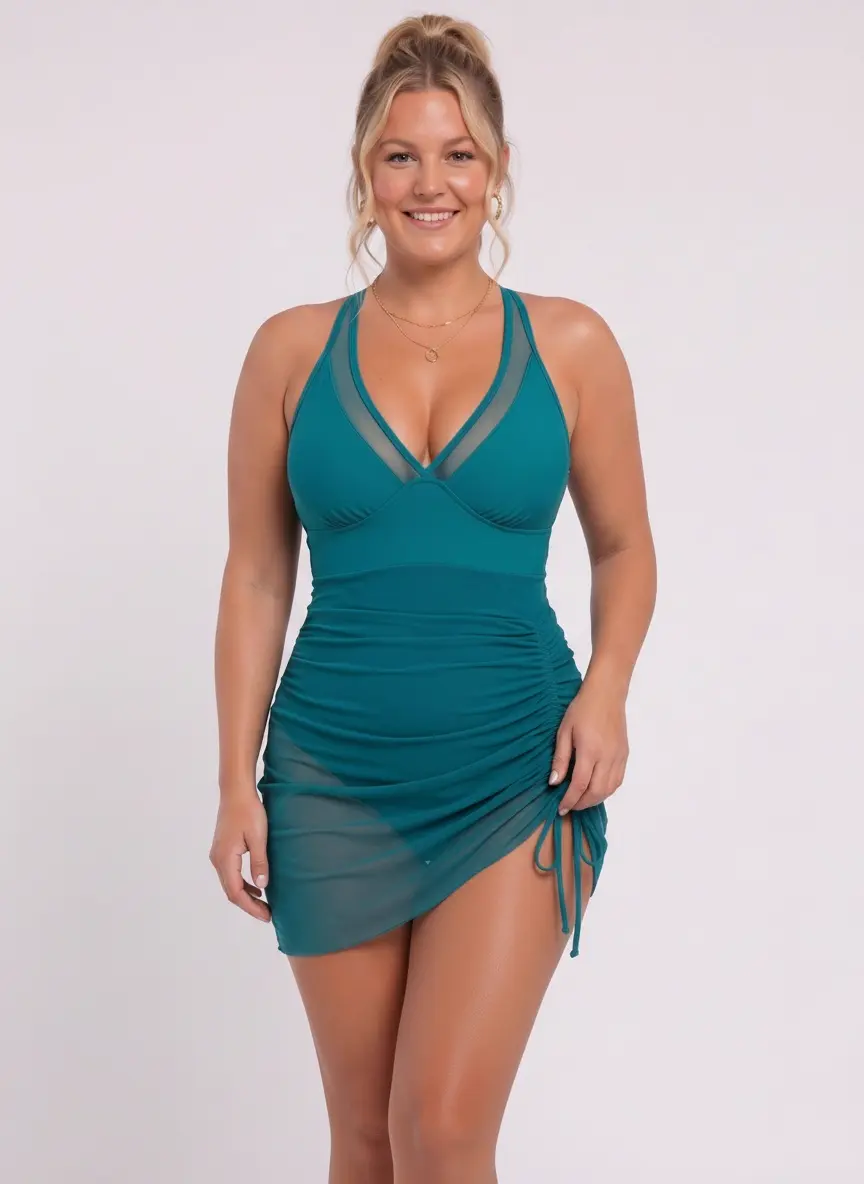
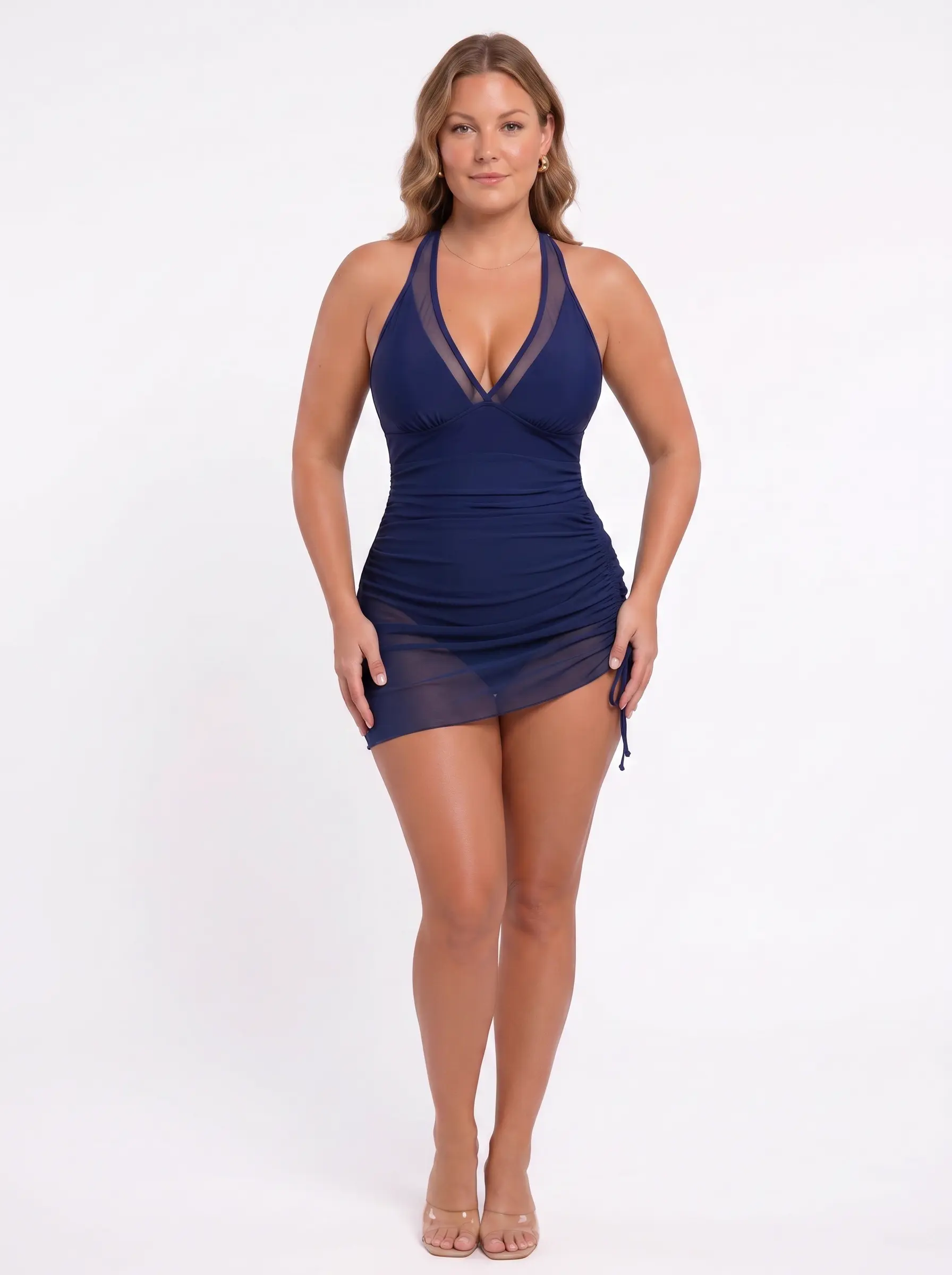
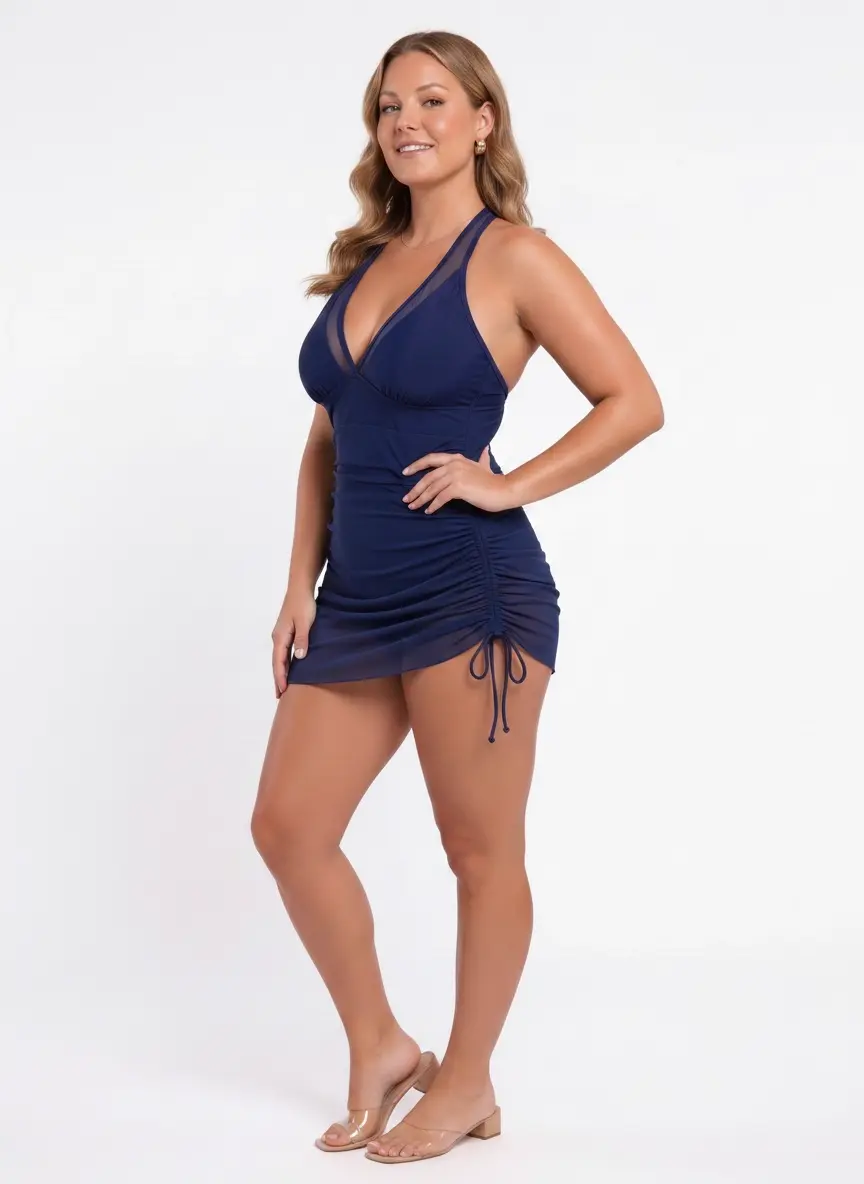
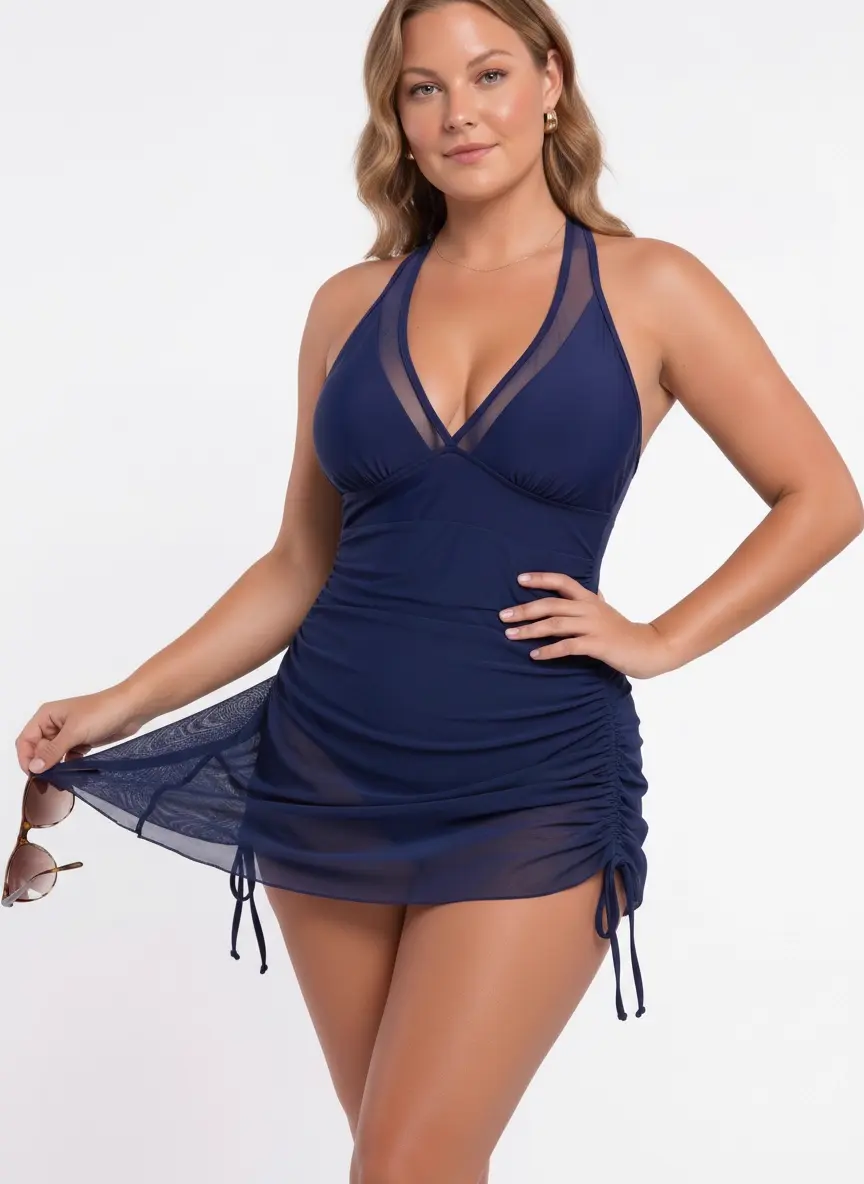
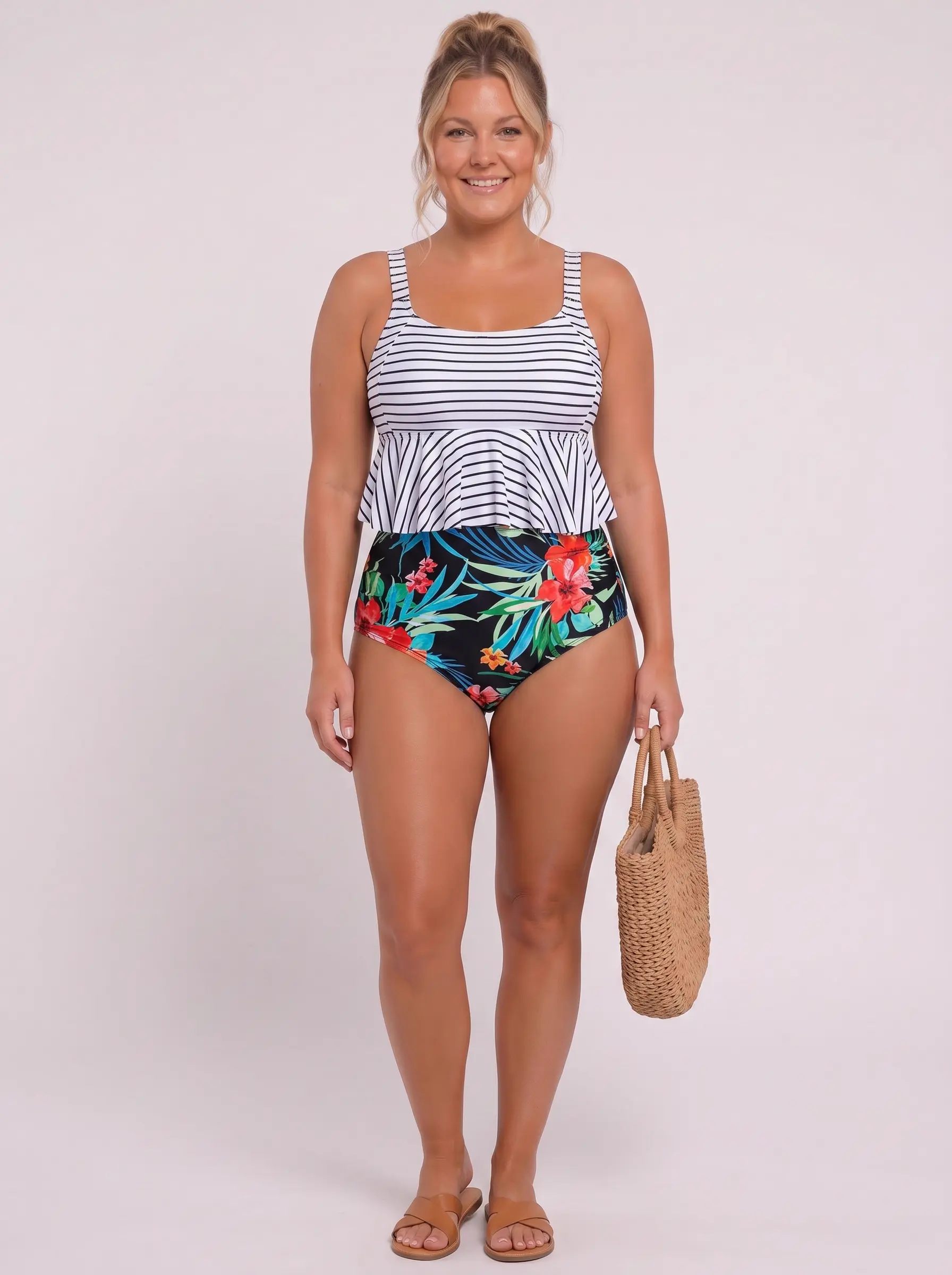
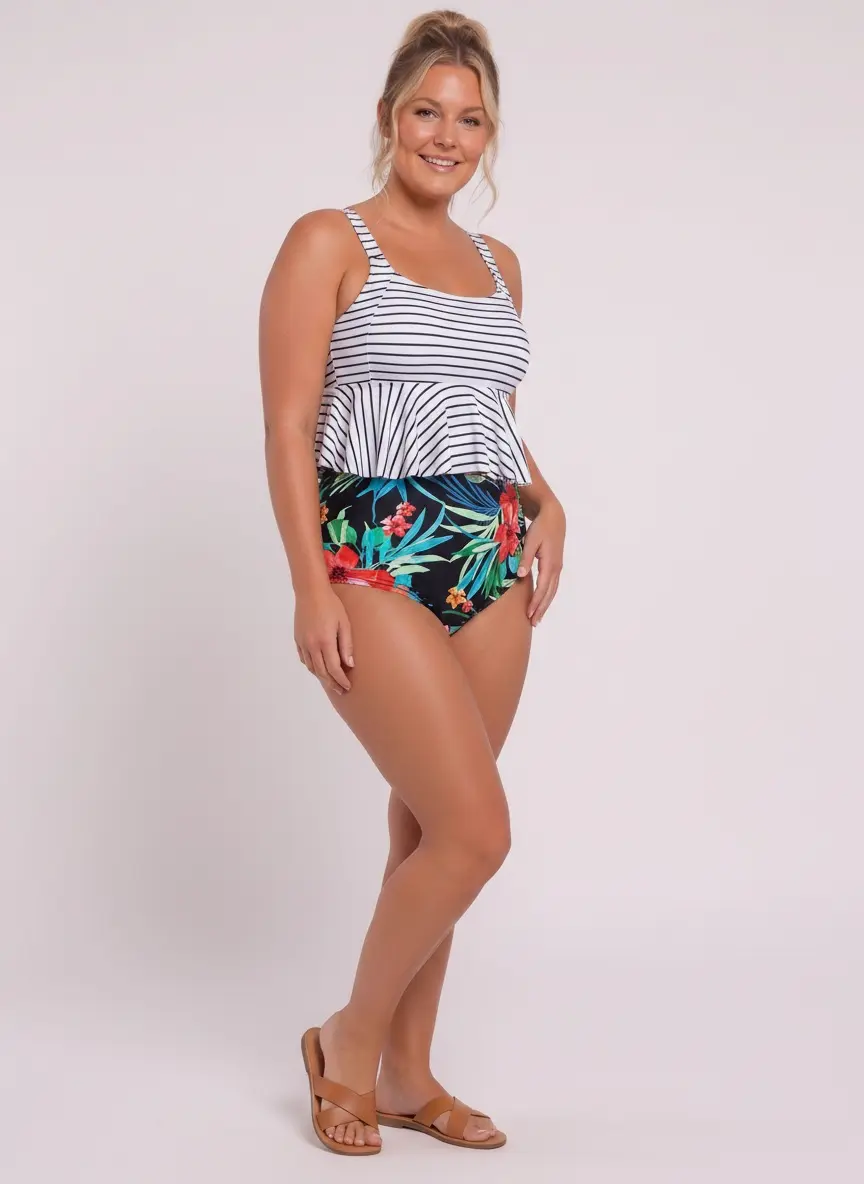
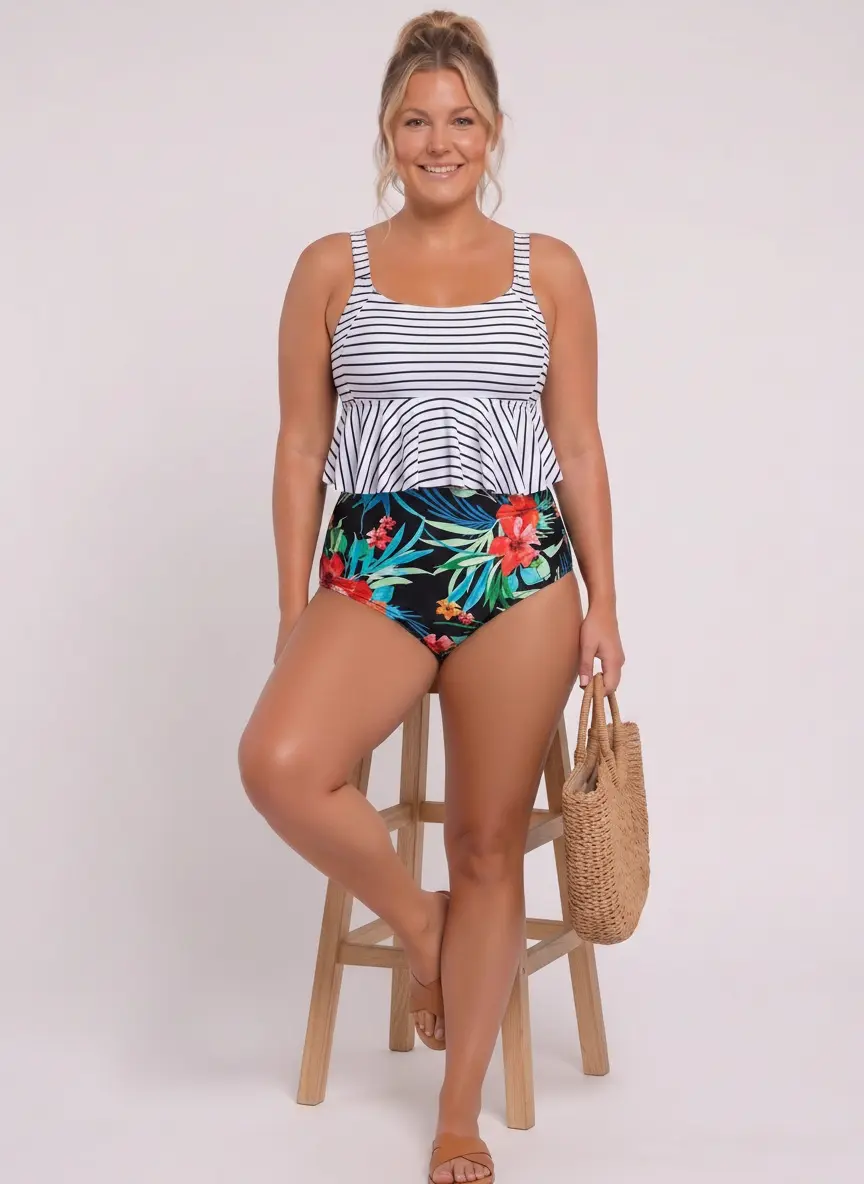
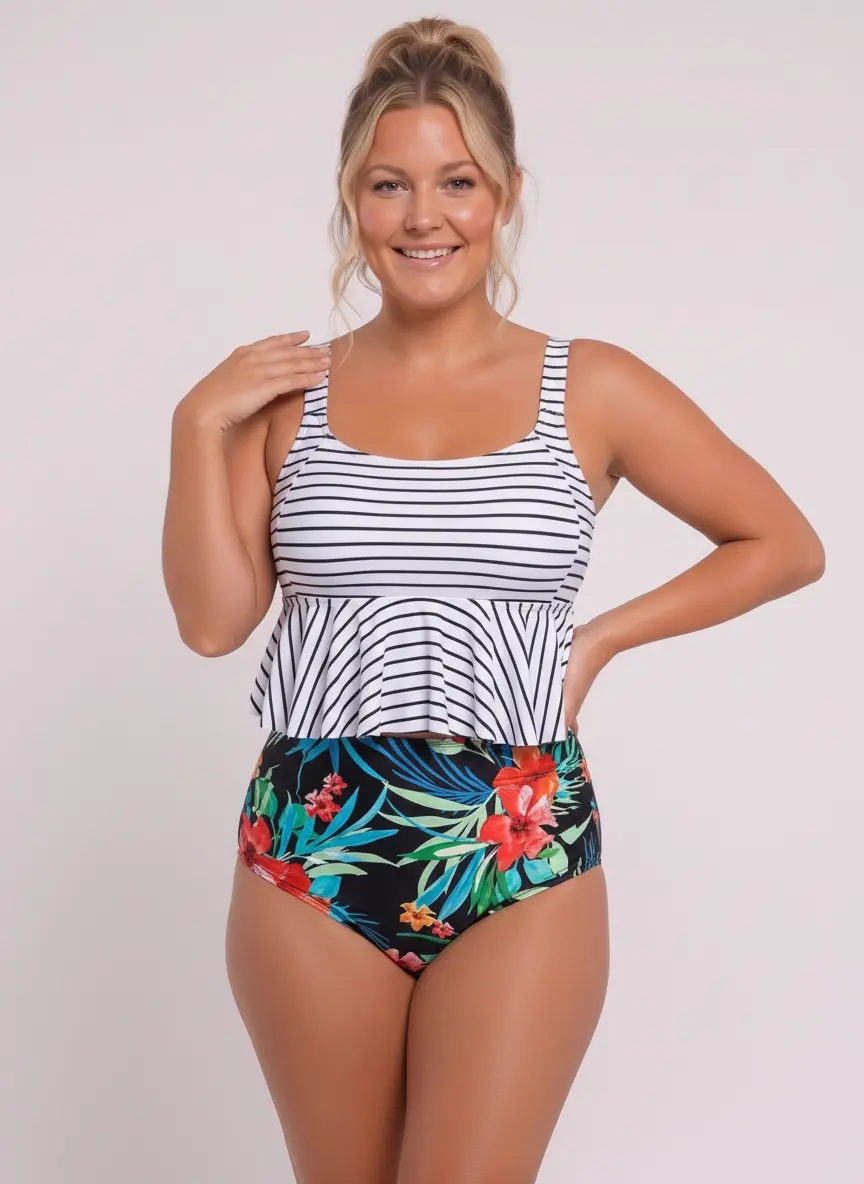
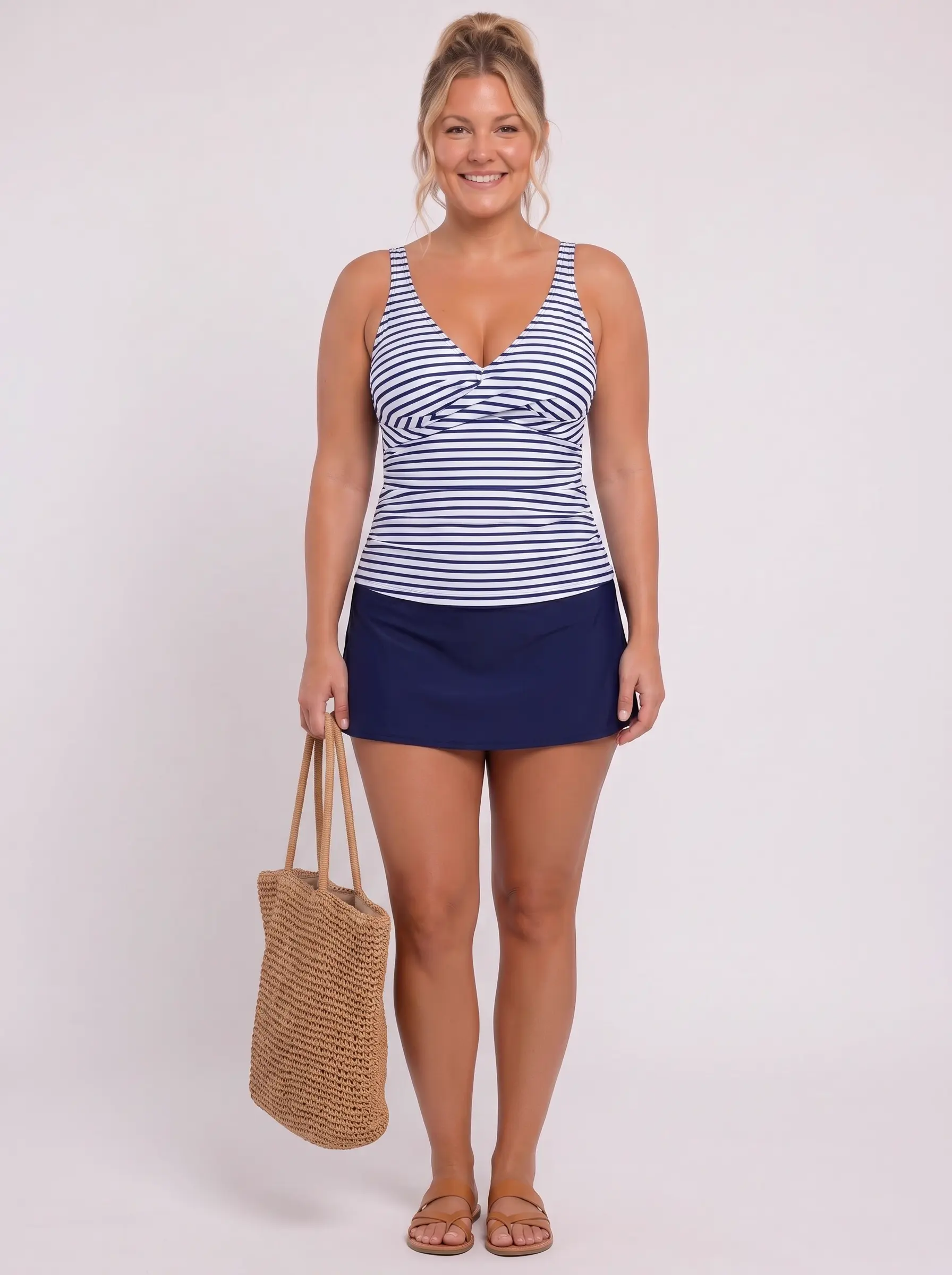
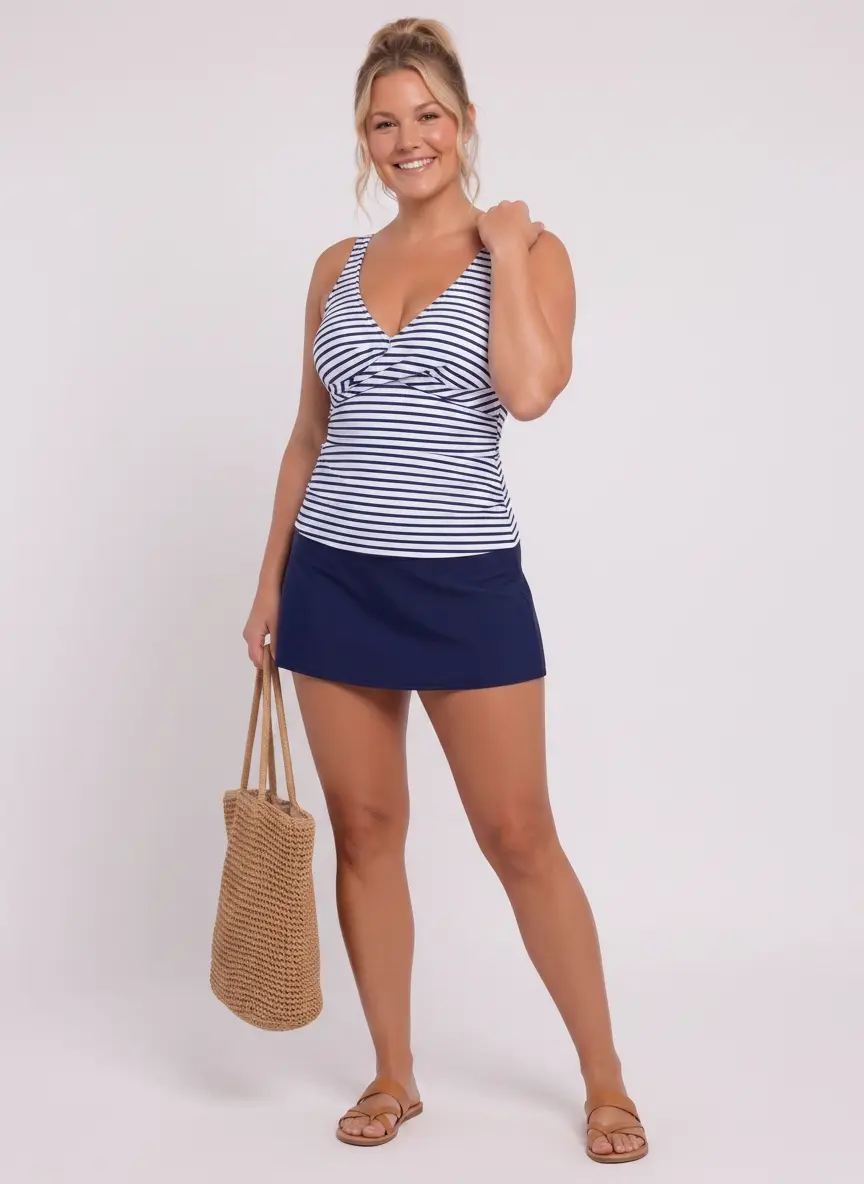
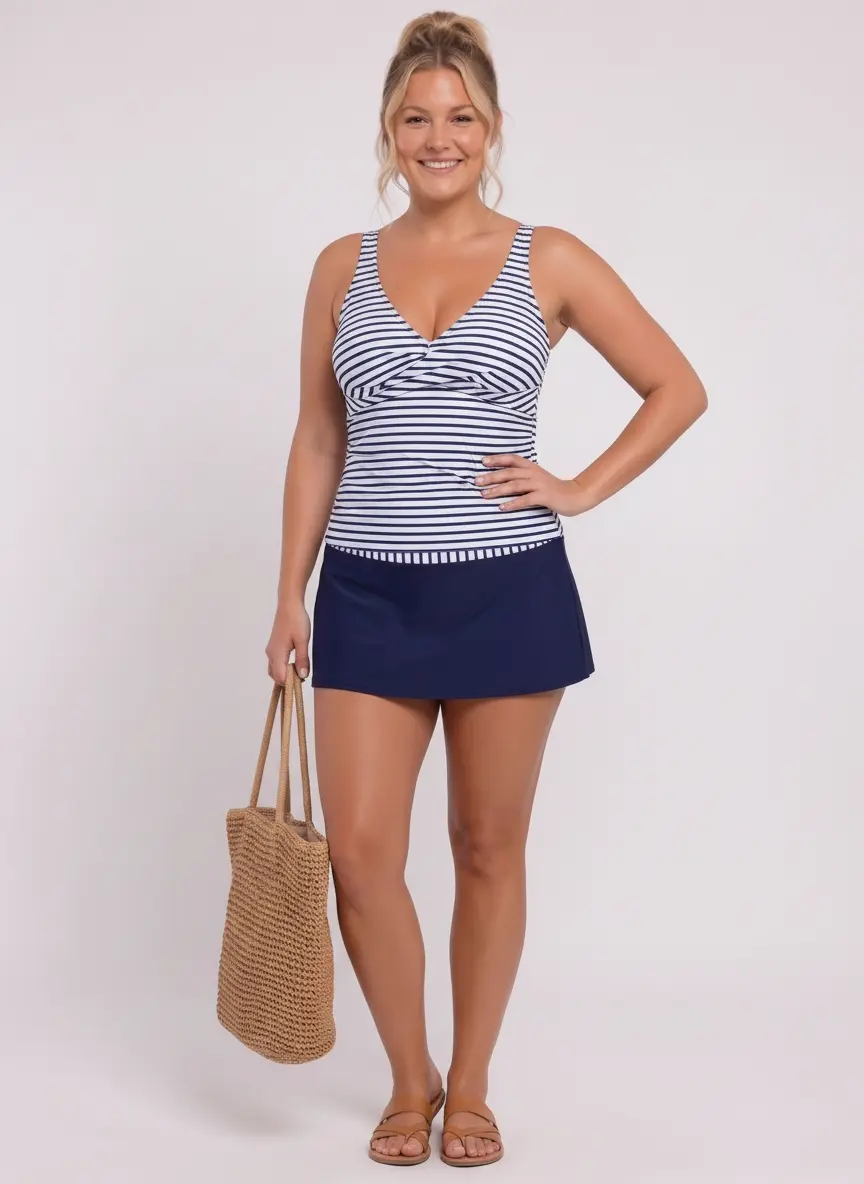
Seven different swim drops. Multiple body types. Every garment produced through the same MODA AI workflow.
Why Australian Swim Brands Are Setting the Pace
The test garments throughout this post are from an Australian body-inclusive swim brand, and there’s a reason that’s representative rather than incidental. The Australian swimwear market is one of the most credible export categories in fashion right now — 6Wresearch projects the market to hit $17.3B by 2031 at a 6.8% CAGR, and IndexBox export data shows New Zealand at 36% of Australian women’s swim exports, with the US at 16% and Canada at 13%.
The reason Australian swim travels well is the same reason it’s a useful test category. The aesthetic is sun-first and body-realistic — the brands assume real people in real water, not a single editorial silhouette. Body inclusivity is the brand promise, not a campaign. The Business Research Company tracked the global swim market at $25.77B in 2025, projecting $27.67B in 2026 at a 7.4% CAGR — with online retail growing at 7.58%, the fastest of any swim distribution channel. The category is moving online, and it’s moving toward brands whose imagery reflects the customer.
The Returns Math That Decides the Category
Swimwear and lingerie carry the highest return rates in fashion — Coresight Research tracks them at 30-35% online, with some categories pushing 40%. Almost all of that is fit-driven: customers can’t judge support, coverage, or how the silhouette will sit on their body from a single flat lay. A US swim brand case study documented a 47% reduction in return rate after introducing virtual fit technology — the same principle that makes multi-angle, multi-body catalog imagery the single most reliable conversion lever in swim.
MODA AI’s ten-shot output per upload, combined with the diverse base model range, is built specifically for this math. Every PDP has front, back, profile, three-quarter, and close-up coverage. Multiple body types can be generated for the same garment in the same Shopify session, against the same studio backdrop, with the same lighting standard. That’s what passes the swim test.
Who This Workflow Is For
MODA AI’s swim-fidelity workflow is built for Shopify brands across the full swim category:
- Body-inclusive swim labels — brands whose entire identity is built on showing the garment on multiple body types from one drop
- Australian and Pacific swim brands — the fastest-growing export category in the global swim market, exporting heavily to NZ, US, and Canada
- Resort and beachwear — sun-first aesthetic, lifestyle accessories, tropical print catalogs that need bold color fidelity
- Modest, mastectomy, and adaptive swim — categories where body representation and accurate construction are the trust signals
- Sustainable and eco-coded swim — mid-saturation natural prints and recycled-fabric textures that demand color and weave precision
- Swim activewear — performance fabrics and contoured construction where fit perception drives conversion
Frequently Asked Questions
Why is swimwear considered the hardest category for AI fashion image generators?
Three reasons. Swimwear shows more skin than any other apparel category, so any smoothing or plastic-looking texture is immediately visible. The customer's own body is the buying decision — they need to project themselves onto the model, which requires real body diversity. And technical fabrics like ruched mesh, halter ties, sheer panels, and bold tropical prints stress every part of an AI image generator's preservation stack at once. Get any one of those wrong and the catalog stops converting.
Does MODA AI handle plus-size models with the same fidelity as standard sizes?
Yes — and for swim specifically, this is the differentiating capability. MODA AI's base models include the full body-type range Shopify customers actually have. The walkthroughs in this post show four plus-size models in four different swim styles alongside a slim brunette, all generated through the same workflow at the same fidelity standard. No drift on softer body lines, no compression of curves, no defaulting to a single thin silhouette. 43% of US women wear size 14 or larger (Dataintelo); a swim catalog that only shows a slim model excludes nearly half its market.
How does MODA AI preserve fabric details like mesh sheer panels, ruching, and halter ties?
MODA AI carries the original garment's fabric construction, panel geometry, and stitching from the flat lay or mannequin input — so ruching texture, mesh weave, halter tie hardware, and elastic band depth all survive into the catalog frame. We don't generate a 'similar' swim dress; we render your specific garment onto a real model. Close-up frames preserve detail at scale; full-body frames preserve fit and silhouette.
What about complex tropical prints — do colors stay true?
Yes. Bold prints — tropical hibiscus florals, palm leaf patterns, navy/white stripes, jewel tones — are exactly where most generic AI tools drift. MODA AI carries the input fabric color and print scale into the output without shift. The orange neon stays orange. The hot pink stays hot pink. The hibiscus print stays the same scale and palette across front, back, and three-quarter angles.
How many catalog images does MODA AI generate per swimwear upload?
Ten catalog-ready images per upload, across 16+ pose angles — front, back, three-quarter, side, seated, lifestyle styled with a beach bag and sandals. For swimwear that matters more than for most categories: customers verify fit, support, coverage, and silhouette across multiple angles before purchase. Swimwear and lingerie carry the highest return rate in fashion at 30-35% (Coresight Research) and most of that is fit-driven; more catalog angles reduce that share.
Is this only for Australian or beach-coded brands, or any swimwear category?
The test set in this post is from an Australian body-inclusive swim brand because Australian swim is one of the fastest-growing export categories — projected to hit $17.3B by 2031 (6Wresearch). But the same workflow applies to any Shopify swimwear brand: resort and beachwear, surf, modest swim, tropical and Hawaiian, mastectomy and adaptive swim, swim activewear, sustainable swim labels. If your product shows skin and depends on body diversity, MODA AI is built for it.
Built for the swimwear catalog that actually converts.
Install MODA AI from the Shopify App Store. Upload your swimwear, choose your body type range, generate ten catalog-ready images plus video. From $1 per batch.
Get Started Free