Summer Photography
The Light That Sells Summer
Three garments. Three lights — noon, morning, afternoon. One AI system, capturing the time-of-day energy that makes summer collections feel like summer.
April 19, 2026 · 8 min read
30%
average conversion lift from product pages with rich lifestyle imagery vs. plain shots
eMarketer
45%
of shoppers abandon a sale due to poor or missing product imagery
Salsify, 2024 Consumer Research
When the Light Is Wrong, the Garment Disappears
Summer is the easiest season to photograph badly. A great linen dress shot at 4pm under flat overcast light reads spring. A washed-out beach in midday haze with no shadow reads generic stock photo. The garment can be perfect; if the light is wrong, the buyer doesn’t feel summer — and they don’t click.
The hard truth: in summer collection photography, the light is the message. The angle of the sun, the temperature of the sky, the way water and sand bounce light back — this is the language of summer purchase intent. Get it right and you trigger the aspiration. Get it wrong and you have a catalog photo of a t-shirt.
Below: three real shoots, three garments, three summer lights. One model, one workflow. Each shoot built around a single background reference — the location, the time of day, the lighting mood — chosen on purpose for the energy it carries.
Three Lights, Three Moods
Noon
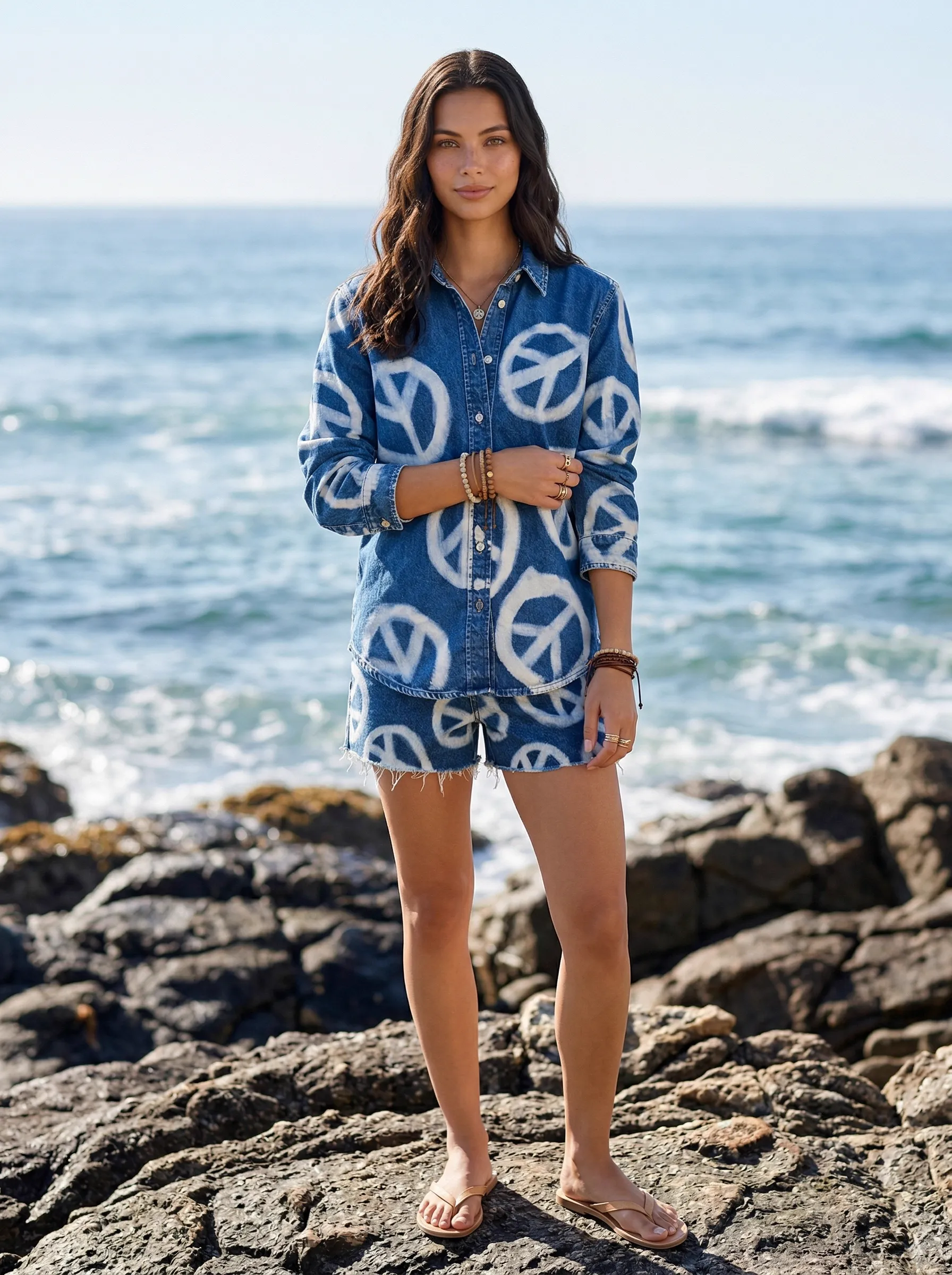
High sun, deep contrast, sun-soaked ocean. Hero energy — the loudest summer feeling.
Morning
Soft cool light, pastel sky, low contrast. Editorial calm — the polished summer feeling.
Afternoon
Warm side light, hazy backlight in hair. Lifestyle warmth — the lived-in summer feeling.
Light No. 1
Noon — Denim Peace Set on Coastal Rocks
This is the hero light for summer. Sun nearly overhead, shadows compressed into short stubs under chins and arms, ocean glittering with high-contrast reflections, sky a deep clean cobalt. It says vacation immediately — the kind of photo that stops the scroll because it carries actual heat.
Reference Photos
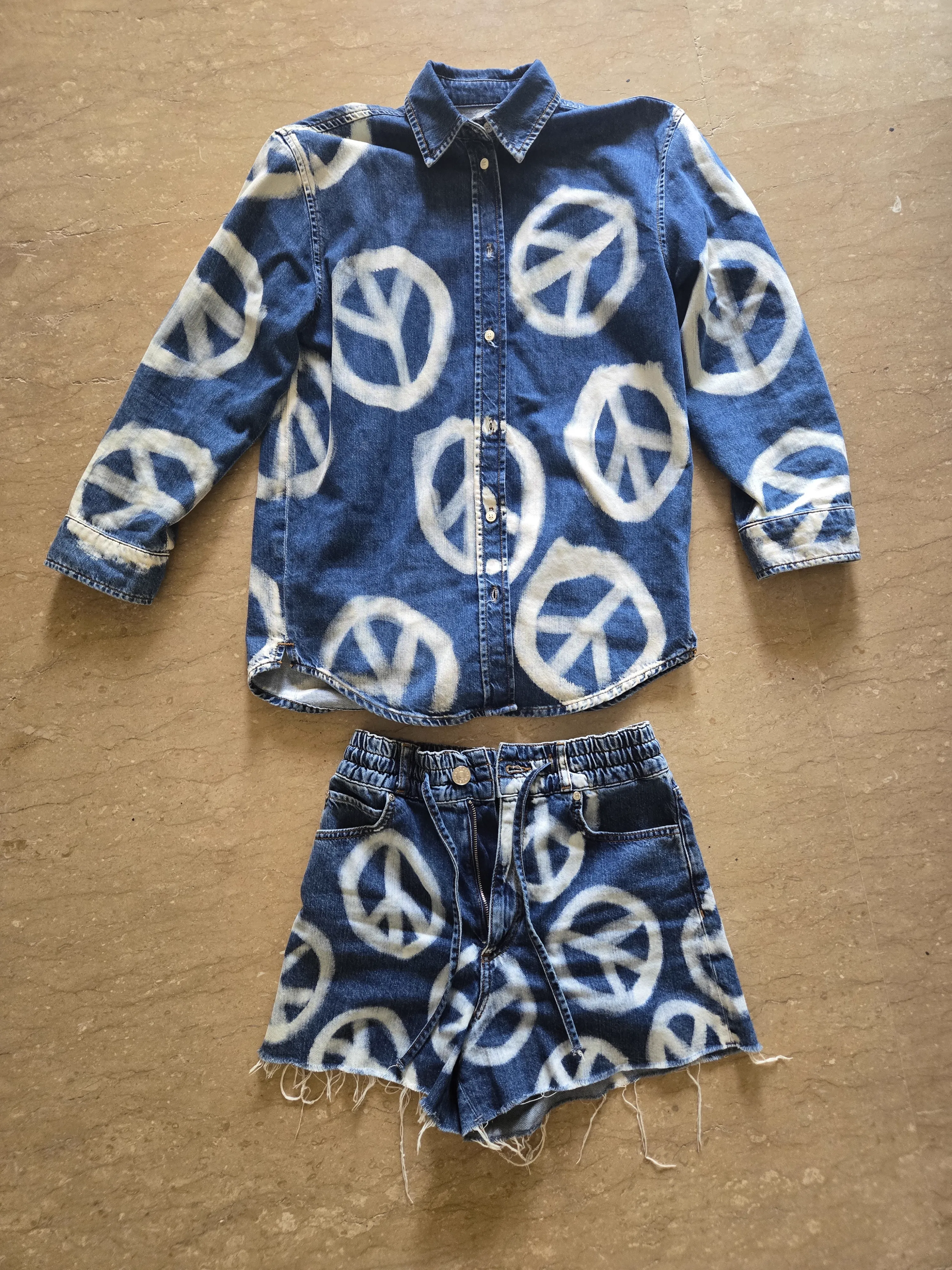
Front
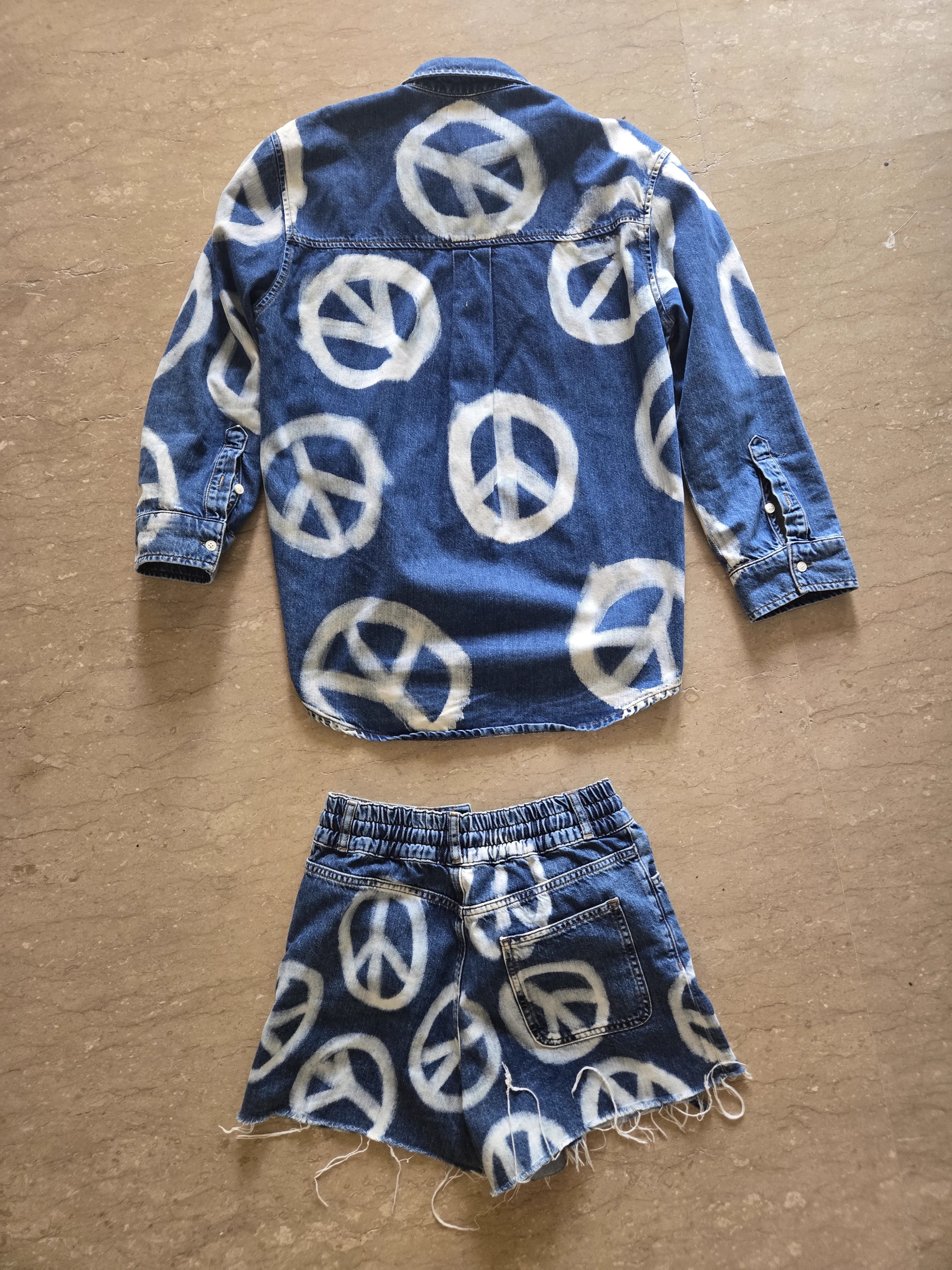
Back
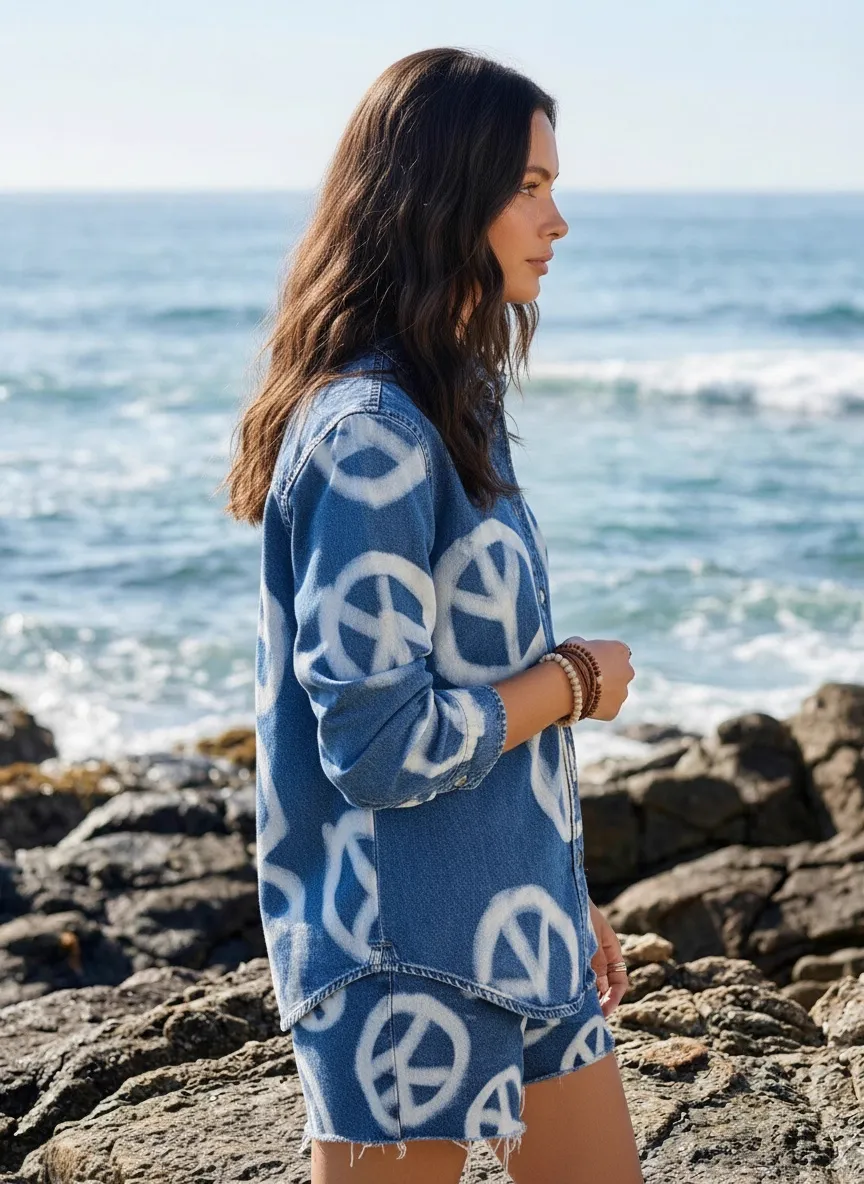
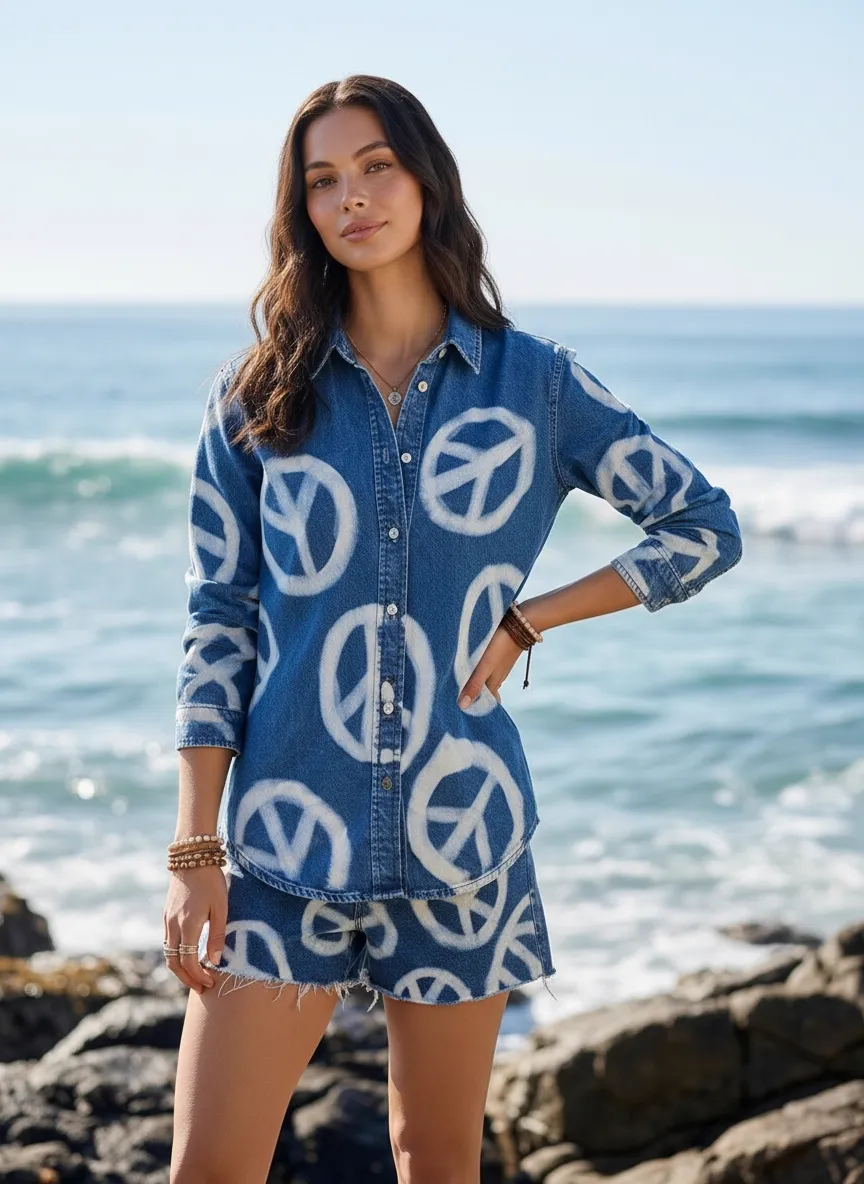
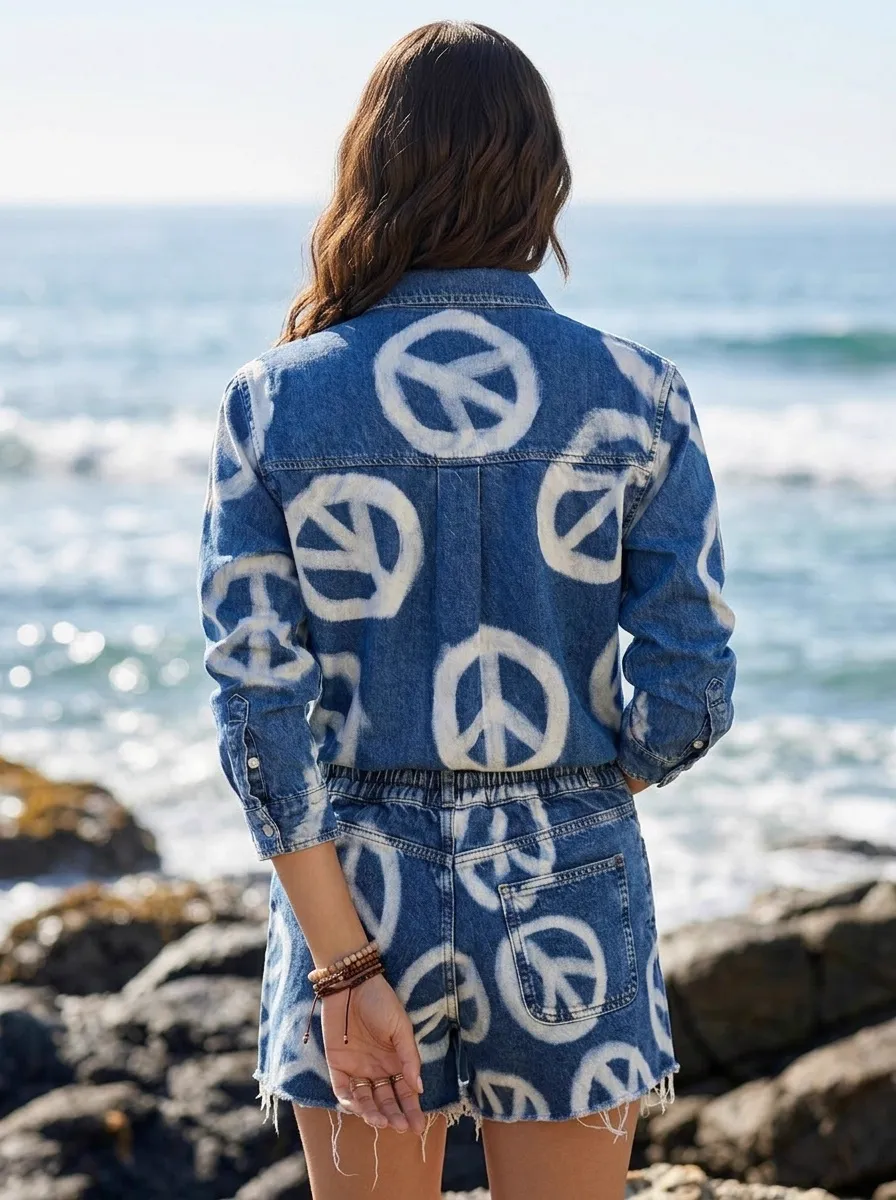
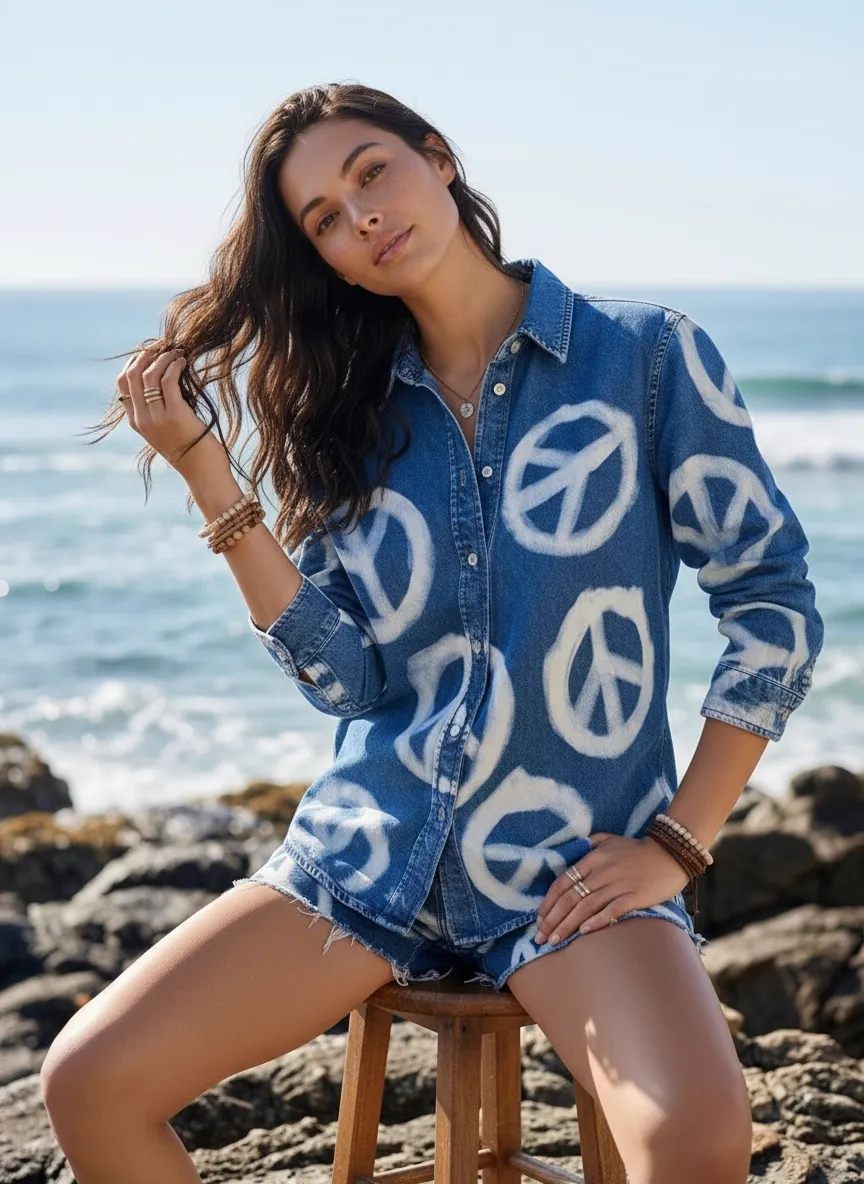
High sun, sharp shadows on rock, deep ocean blue — the visual signature of summer noon.
Notice what the light does to the garment. The indigo of the denim sits richly against the cool blue water, the white peace-sign prints pop against the high-key sky, and the model’s skin reads as actual summer skin tone — not graded, just lit. Peer-reviewed research from Pilelienė & Grigaliūnaitė (2017) found that warm color temperatures in advertising produce significantly higher purchase intent than cool ones. Noon coastal light is the warmest, most saturated time of the summer day — and historically the most expensive to put on a model.
Light No. 2
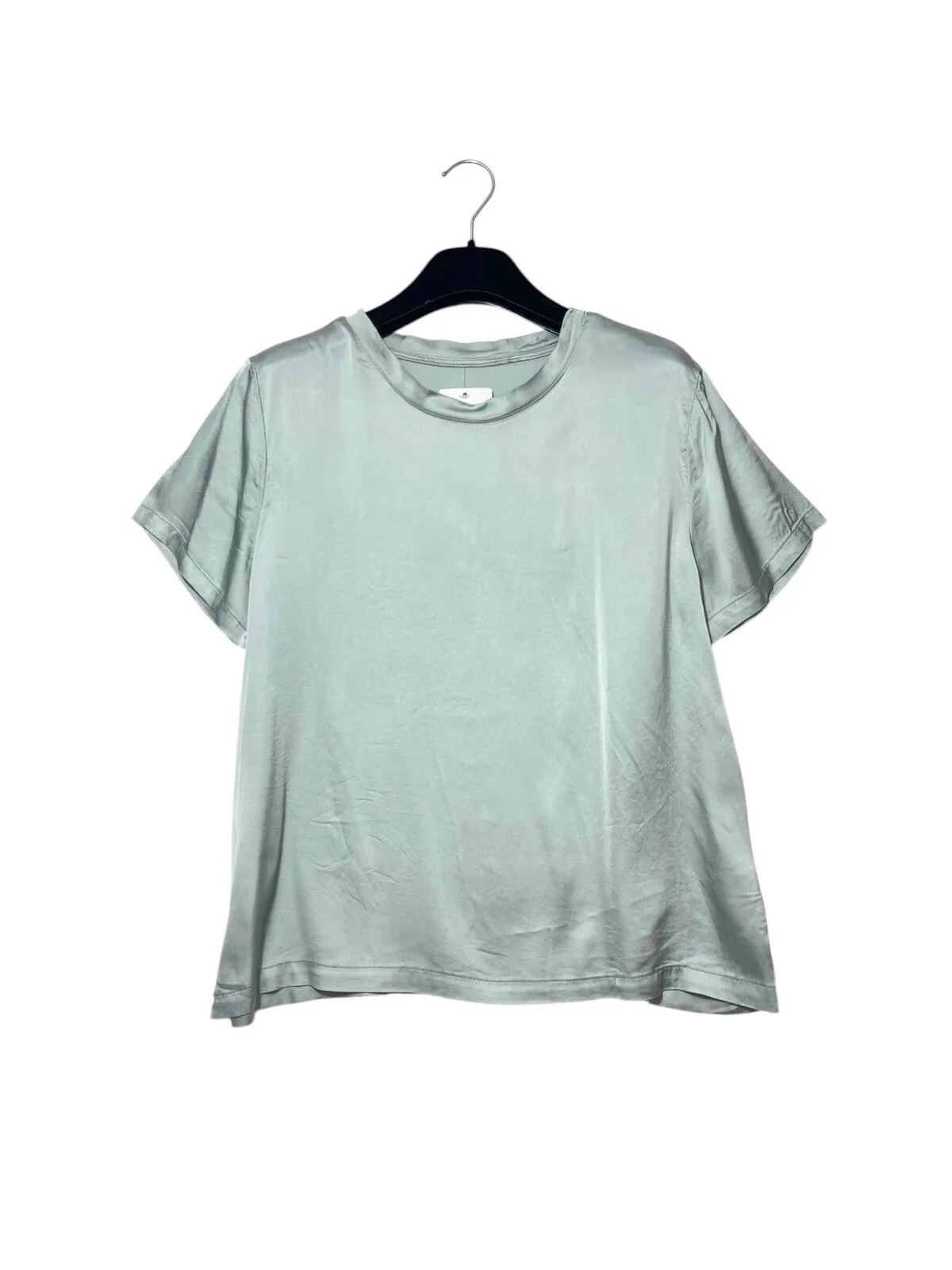
Morning — Mint Satin in a Mediterranean Harbor
Around 10 a.m. the light is fresh and soft. The sun is high enough to model faces cleanly but low enough to keep shadows gentle. The sky reads pastel, the water reads muted teal, and skin glows without burning. This is the editorial morning — the light luxury brands shoot for, the light that makes a satin tee read as something elevated.
Reference Photos
Front
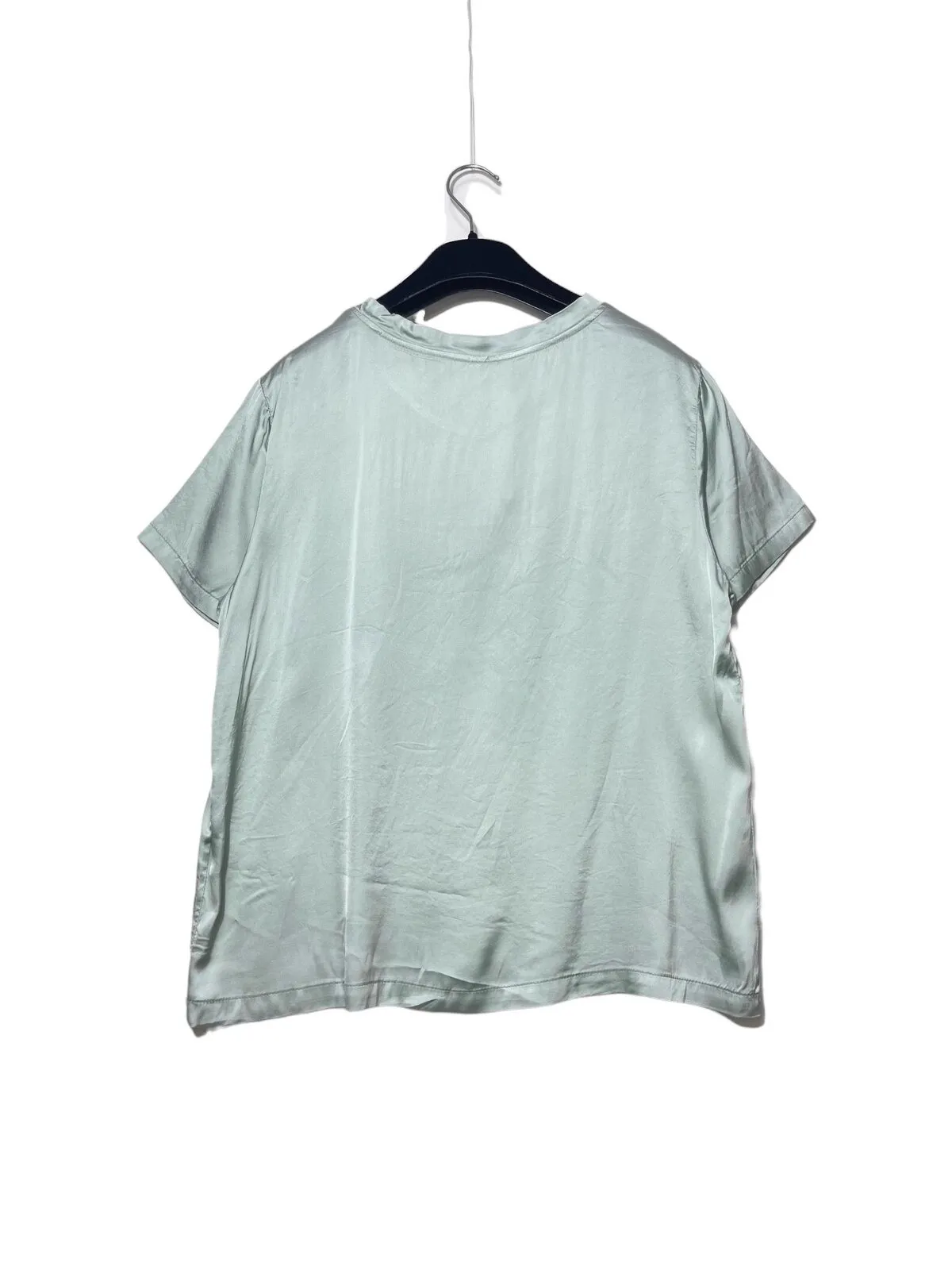
Back
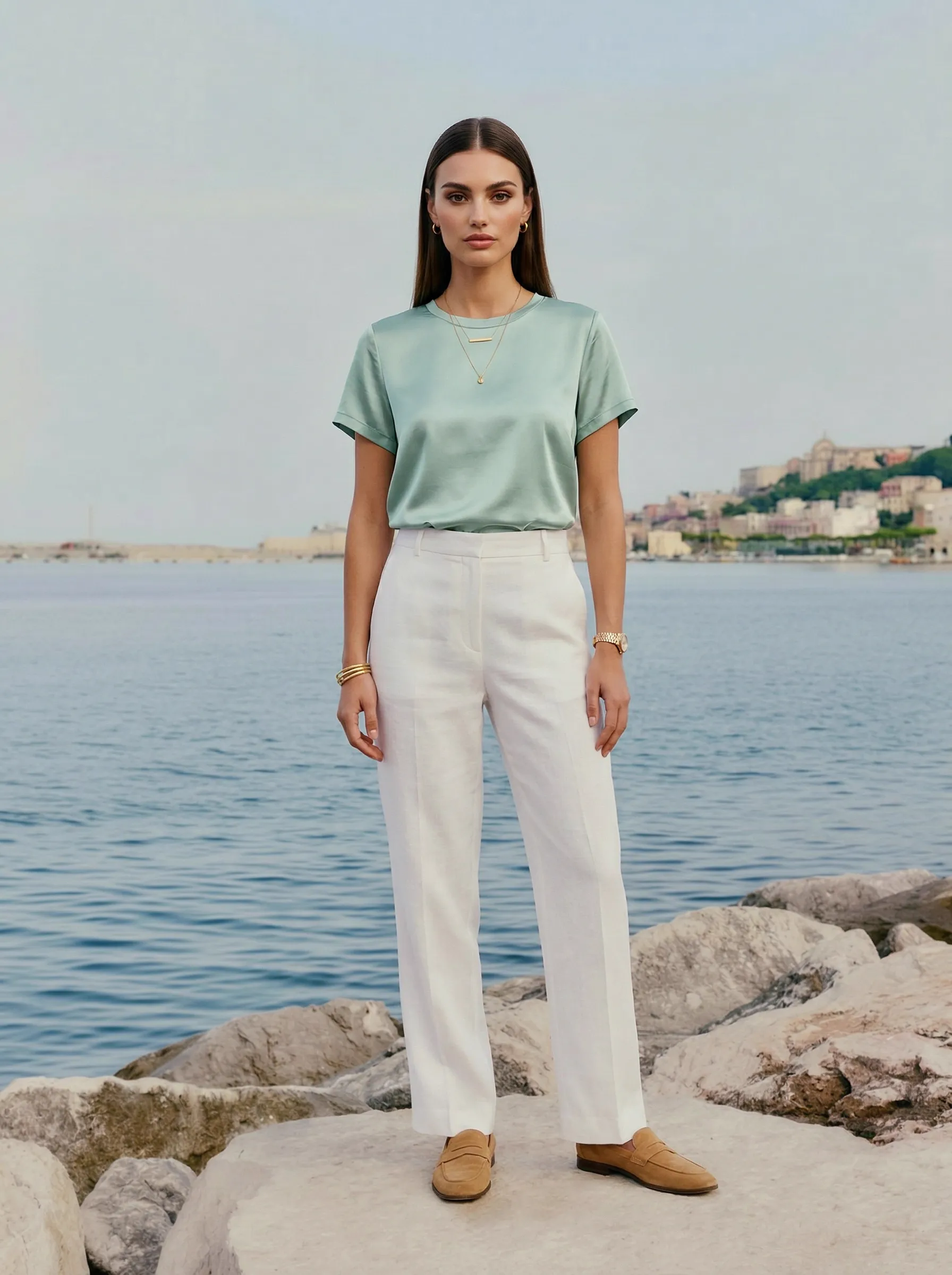
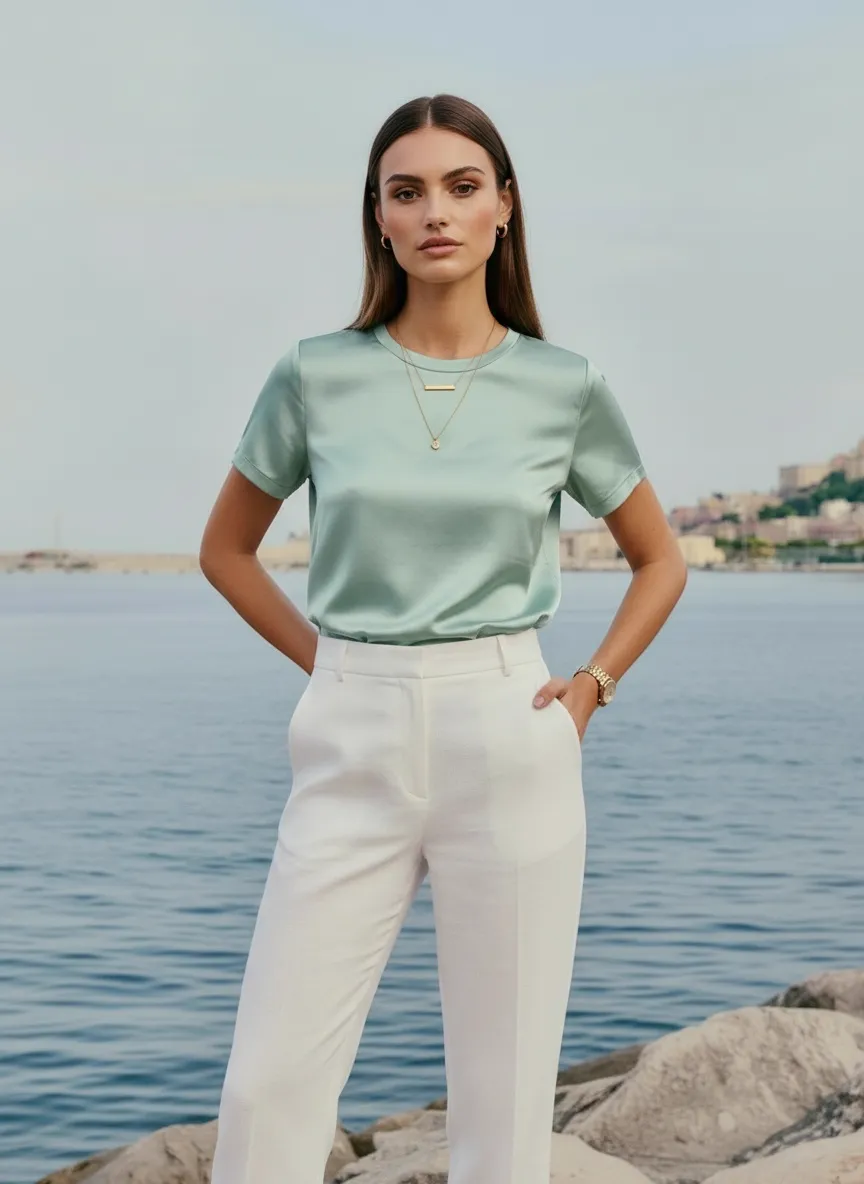
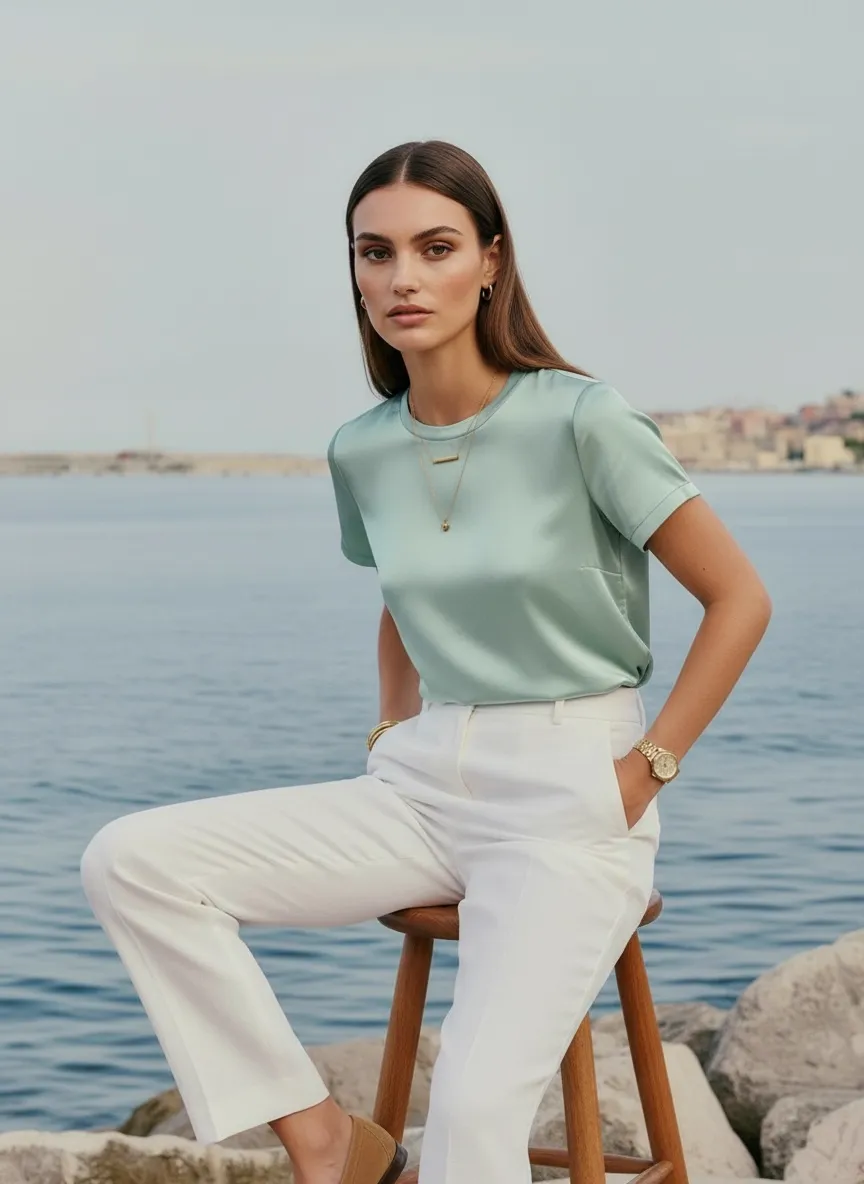
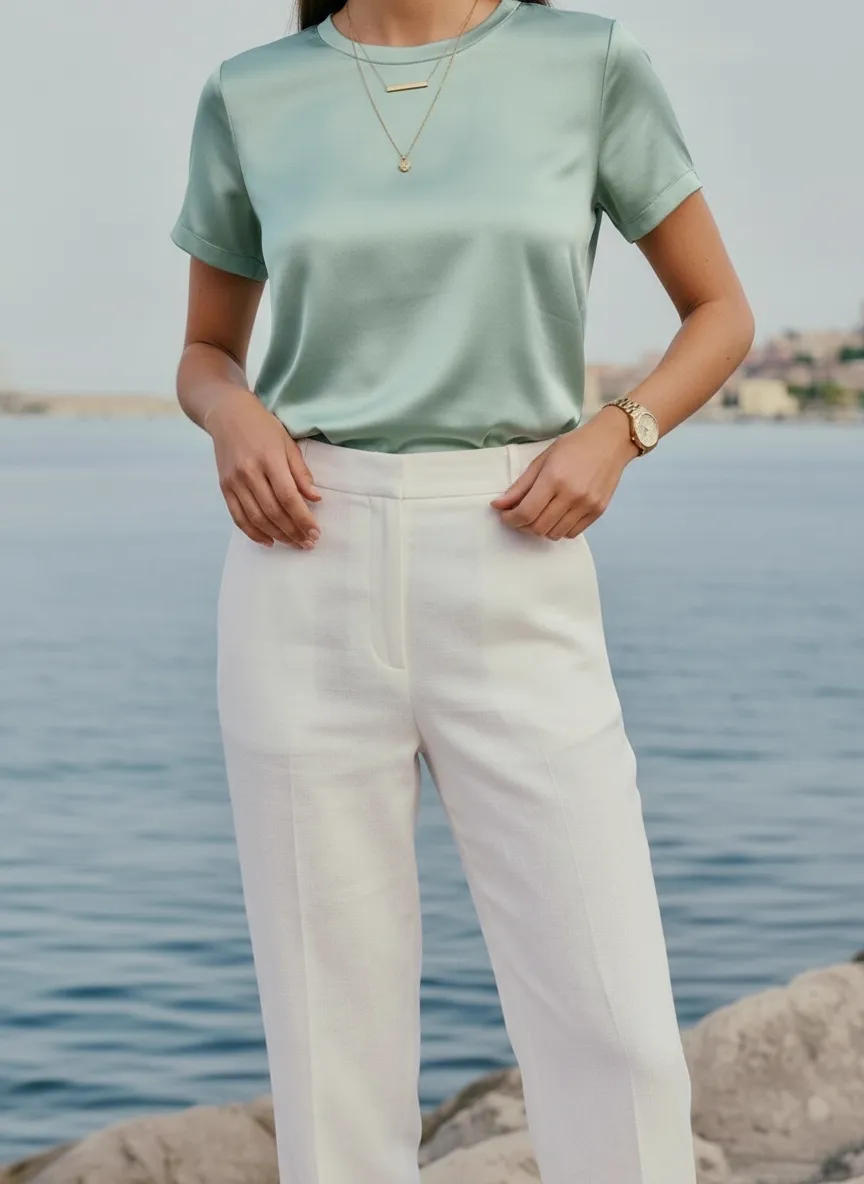
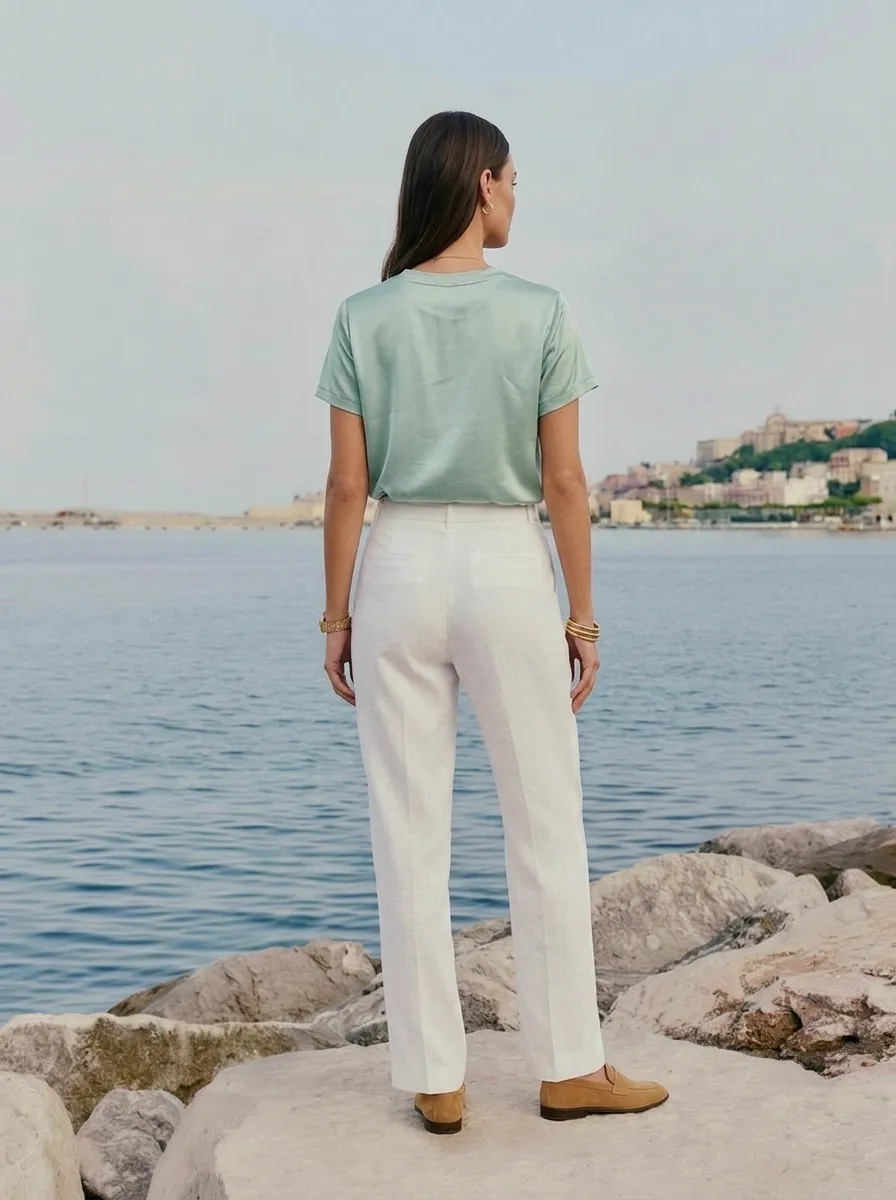
Soft cool 10 a.m. light, pastel harbor sky, muted Mediterranean teal — editorial summer morning.
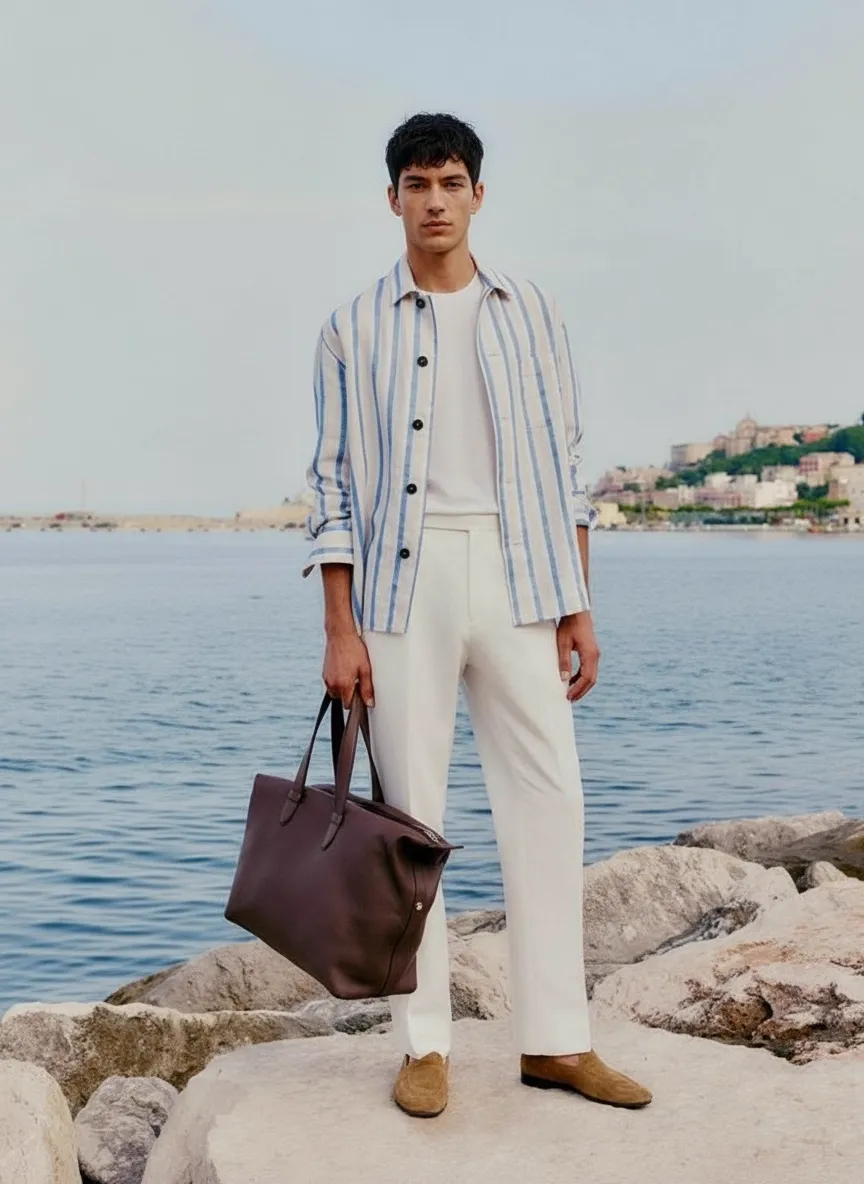
Background ref
Borrow the location. Bring your own brand.
Our background reference for this shoot was a stock catalog frame — a male model in the exact Mediterranean harbor we wanted. MODA AI captured the location settings, the time of day, the lighting mood, and the LUT from that single image, then placed our model and our garment into the scene. Background references are about the set, not the subject in it. Pick the light you want, from anywhere.
Light No. 3
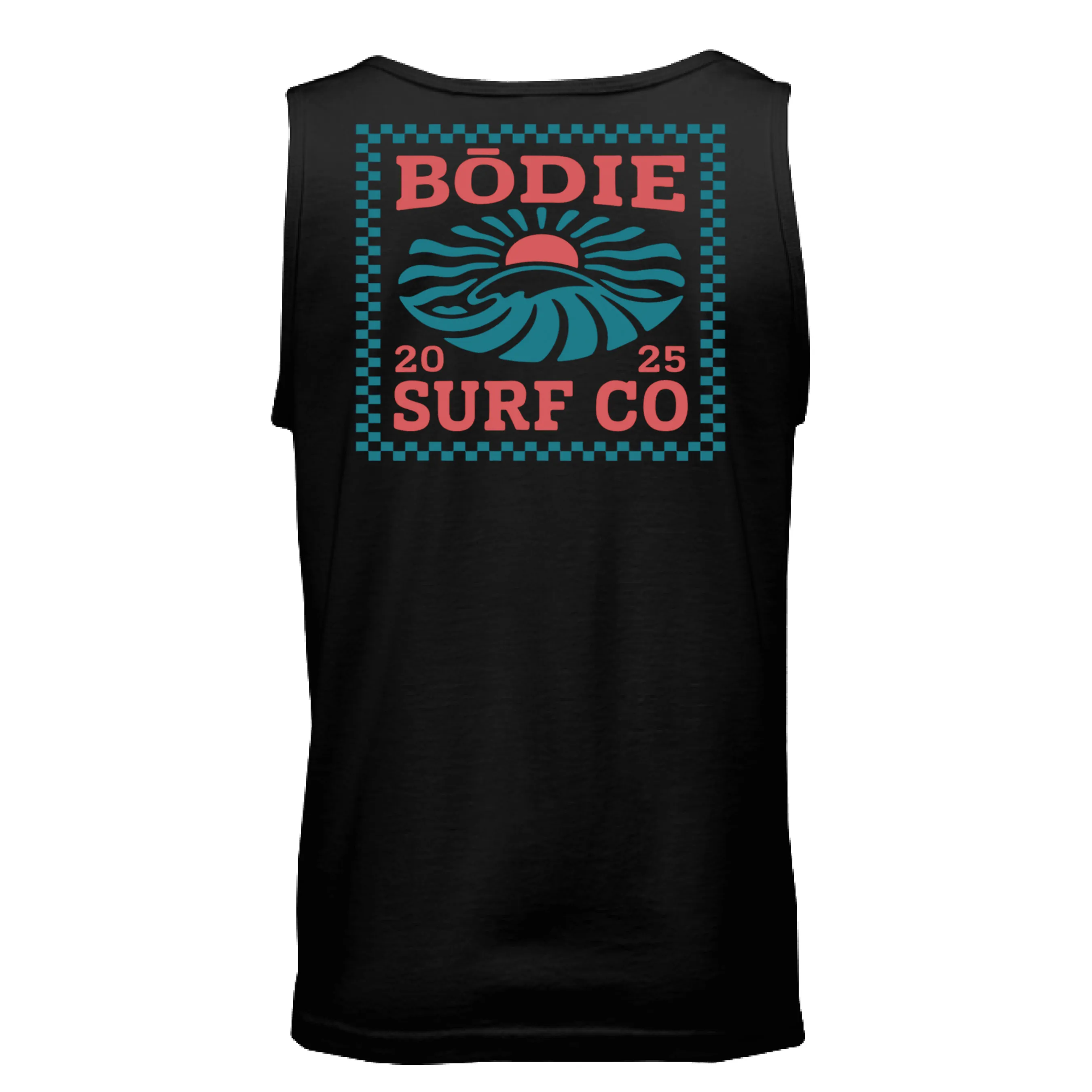
Afternoon — Surf Tank on a Beach Boardwalk
Late afternoon is the lifestyle light. The sun is low enough to side-light the face and rake through hair from behind, throwing that signature backlit halo. Coastal haze diffuses everything just slightly. Skin glows. The whole frame says this is what a good day at the beach feels like — less hero, more aspiration.
Reference Photos
Front
Back
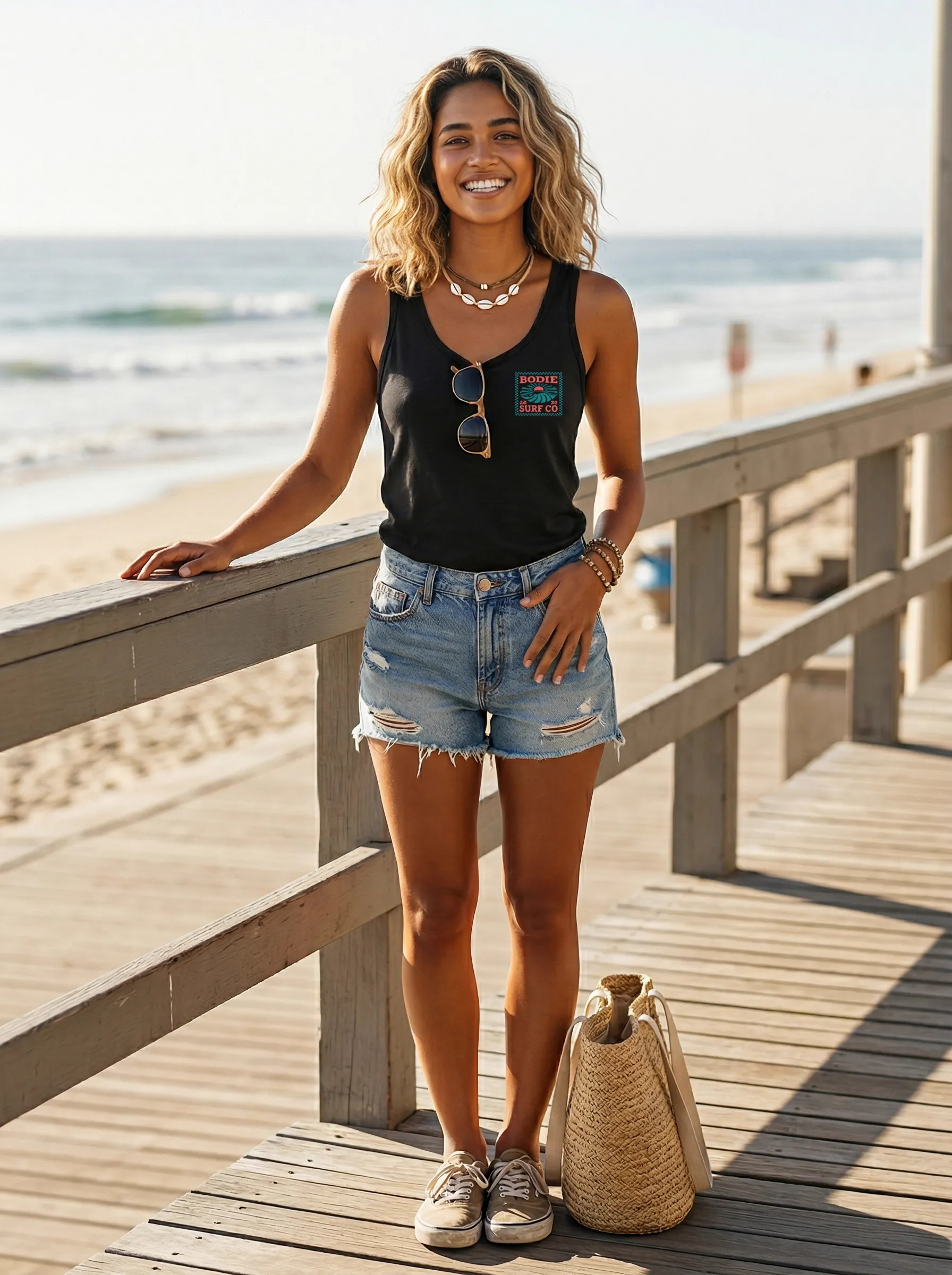
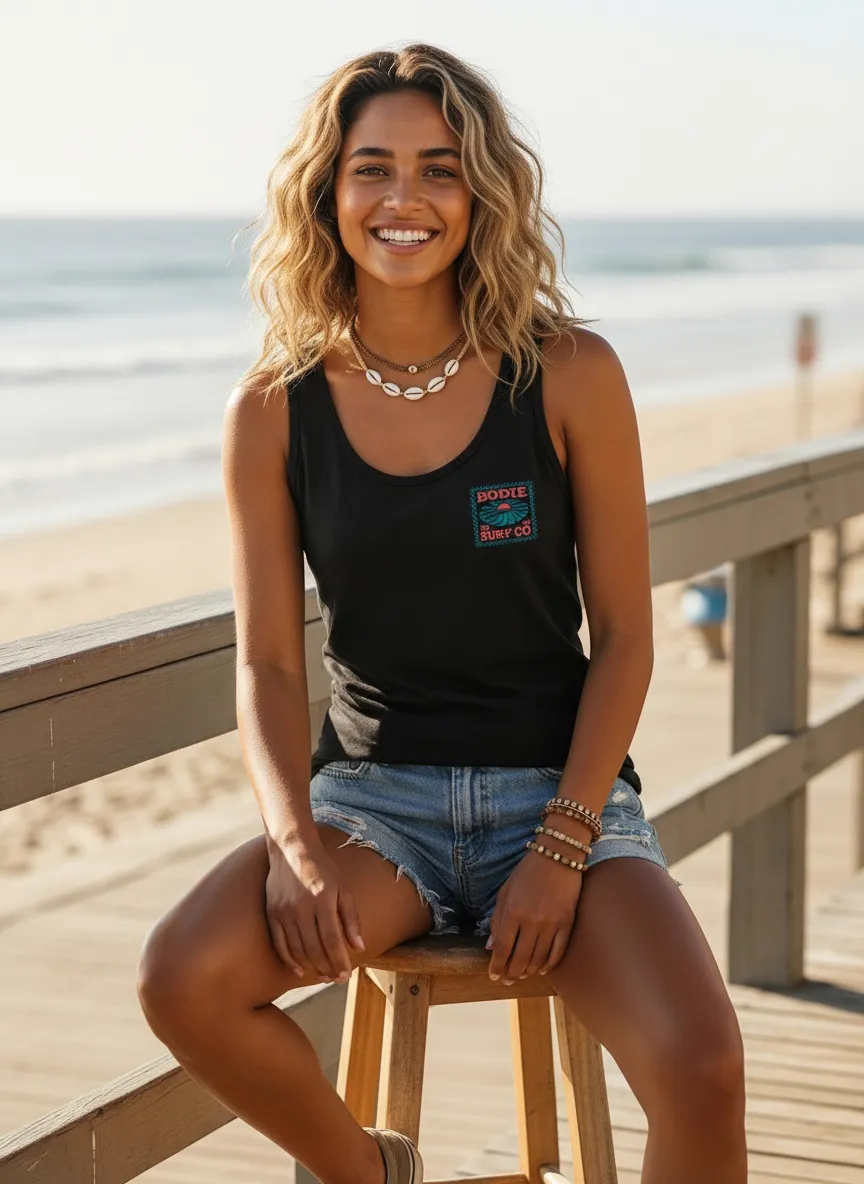
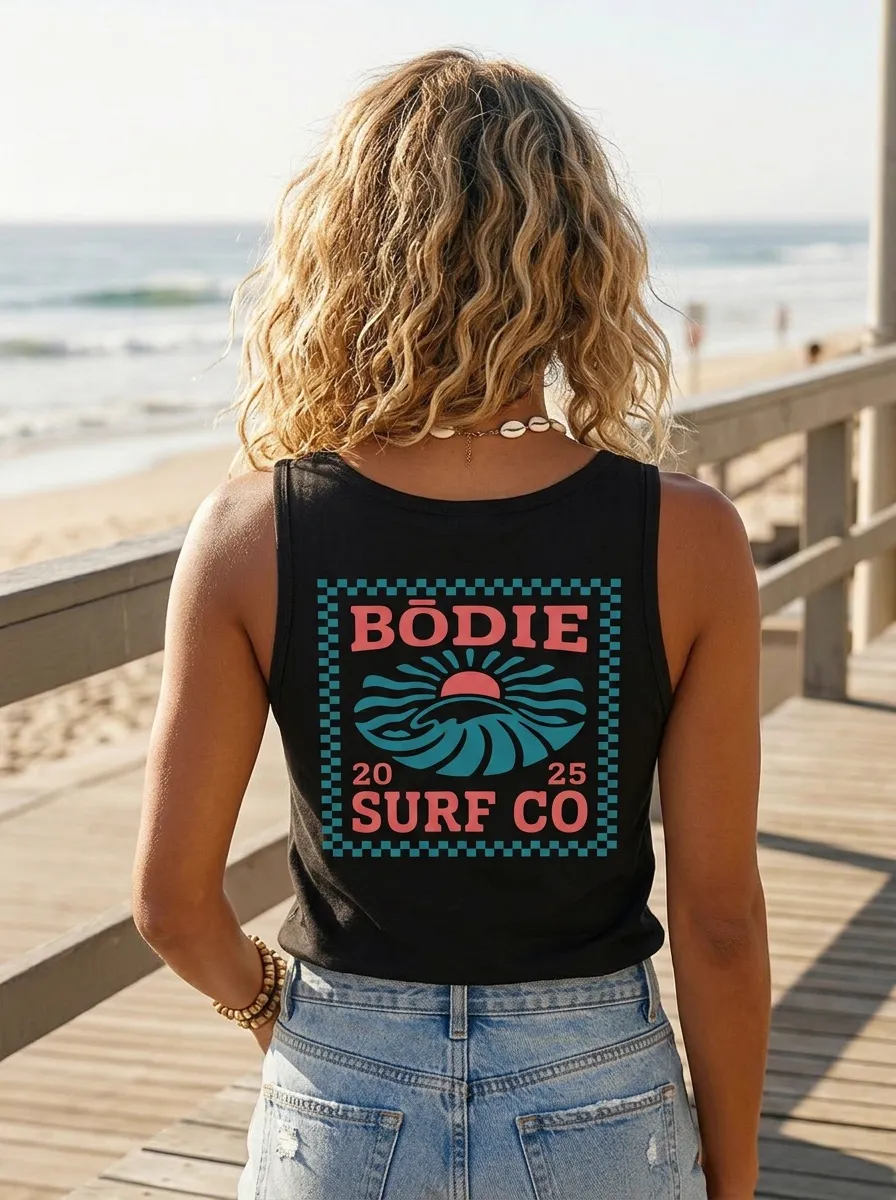
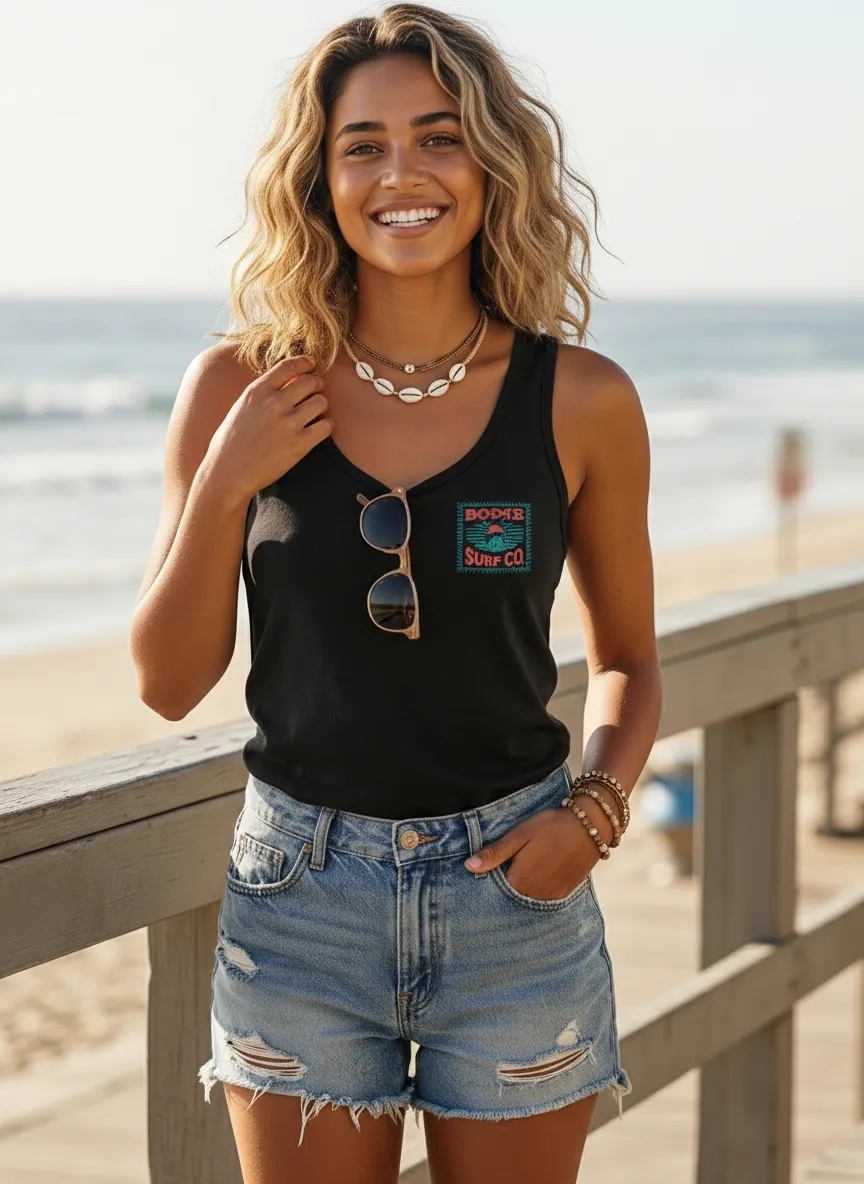
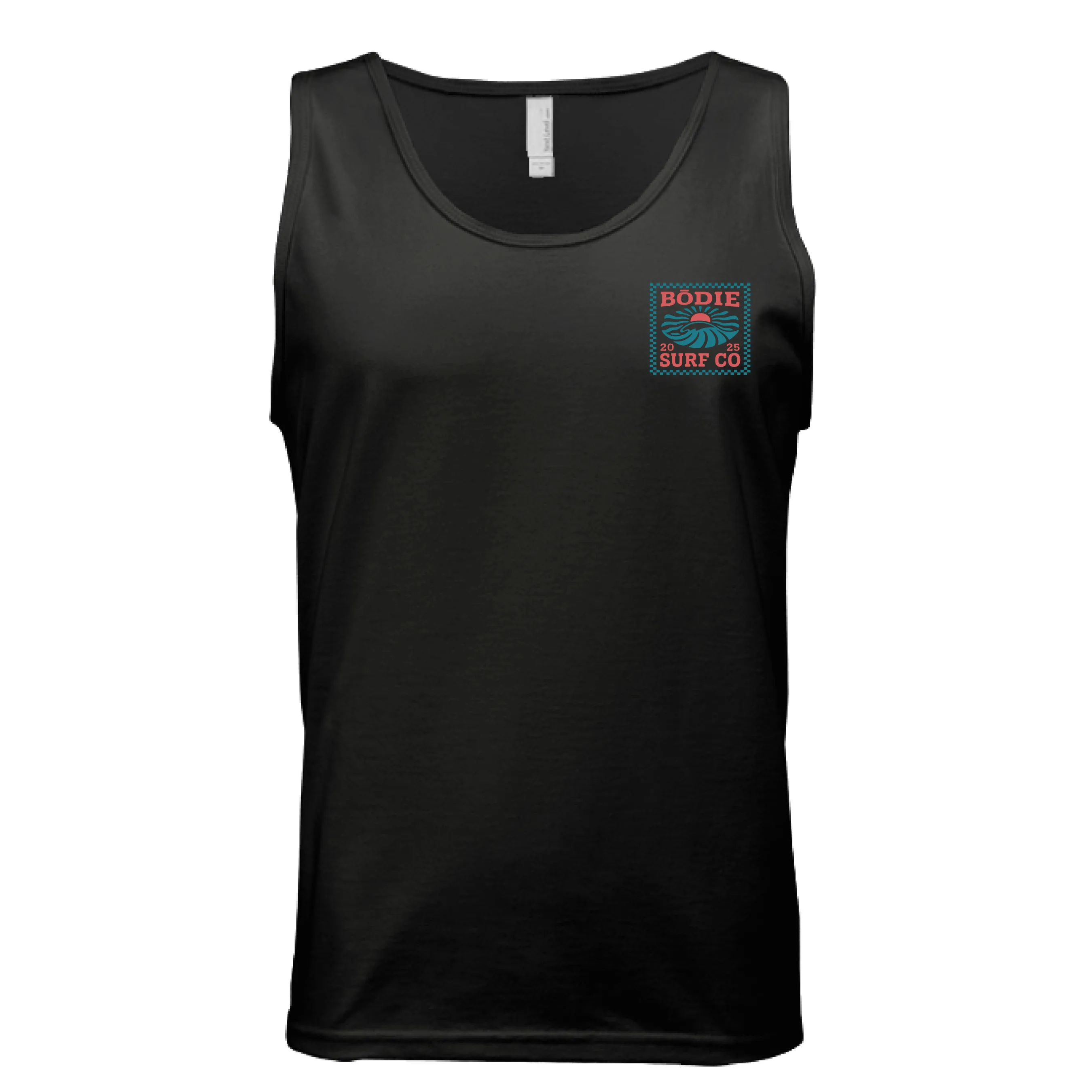
Warm side light, hazy backlight in hair, soft sand color — afternoon lifestyle summer.
Small front patch
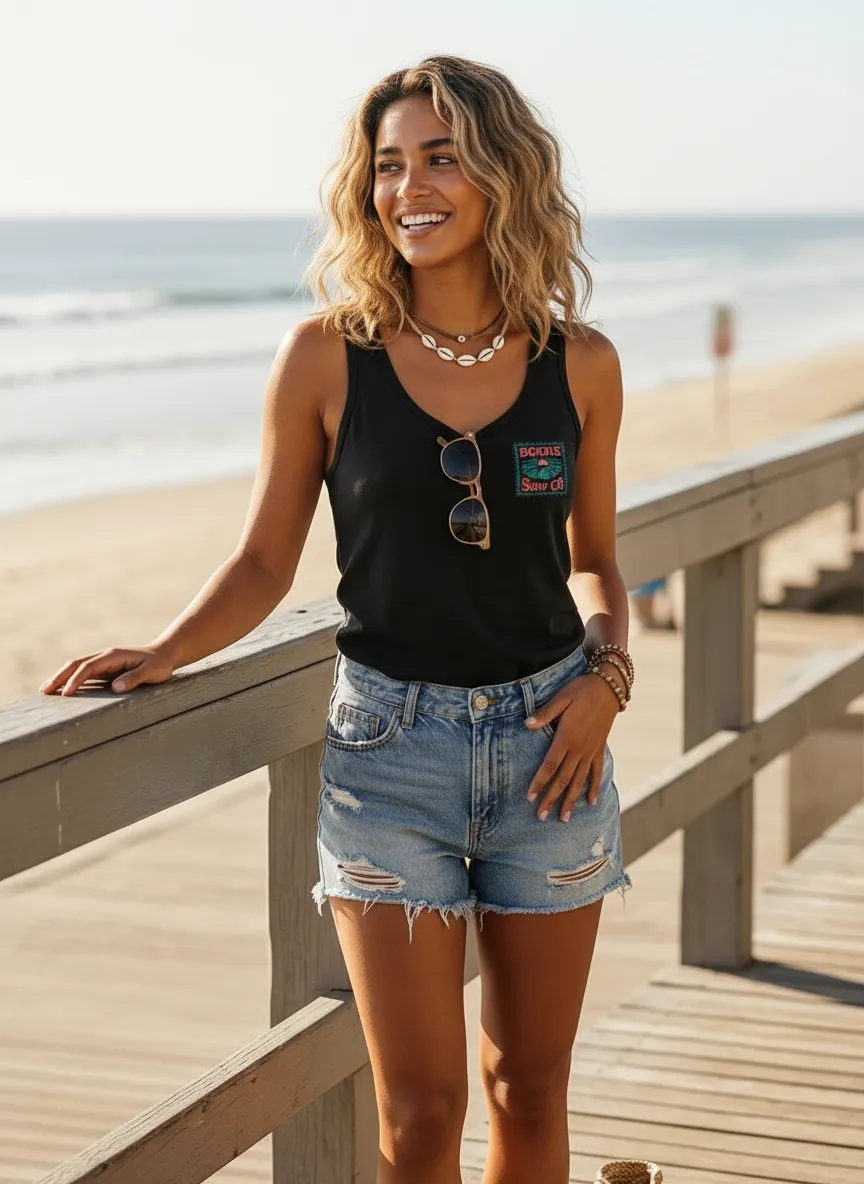
Large back yoke
Logo fidelity at both scales
Notice the brand graphics: tight legible details in the small front pocket patch, sharp lines and color in the larger back yoke print. MODA AI carries logo placement, scale, and color cleanly from the reference photo into every output — one of the details cheaper systems quietly lose on branded apparel.
What “Matching Summer Light” Actually Means
Summer light isn’t one variable. It’s a stack of details the eye reads instantly — even when the brain can’t name them. Every background reference you pick carries the whole stack: location settings, time of day, lighting mood, and the LUT. Here’s what shifts when you swap a noon-coastal frame for a morning-harbor frame or an afternoon-boardwalk frame:
Pick the Light by Picking the Reference
All three shoots above came from the same workflow. The lever that changed everything — the location, the time of day, the lighting mood, the color palette — was the background reference. MODA AI captures the full setting from that one frame: location settings, light direction, atmosphere, and LUT. Pick a high-sun coastal frame and you get noon. Pick a sunset boardwalk and you get golden hour. Pick a Mediterranean harbor at dawn and you get cool editorial morning.
For summer collections this is the single most important decision in the whole shoot. The reference carries the season.
More Summer Light Ideas
A few more frames from the MODA AI background library — each one carries its own summer light. Drop any of these in as your reference for any garment in your catalog. The location, the sky, the surface bounce, the LUT come along for the ride.
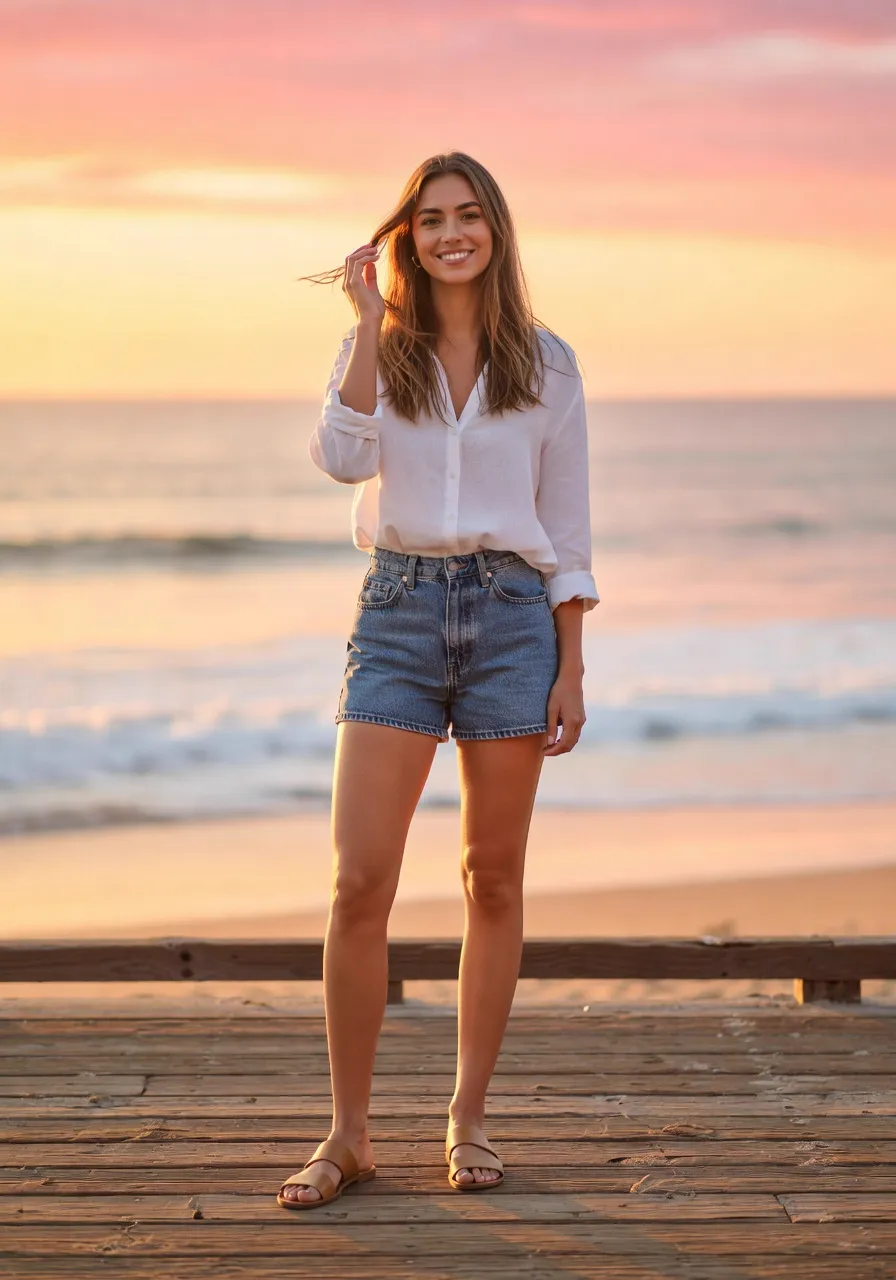
Sunset boardwalk
Pink-gold sky, warm horizon haze
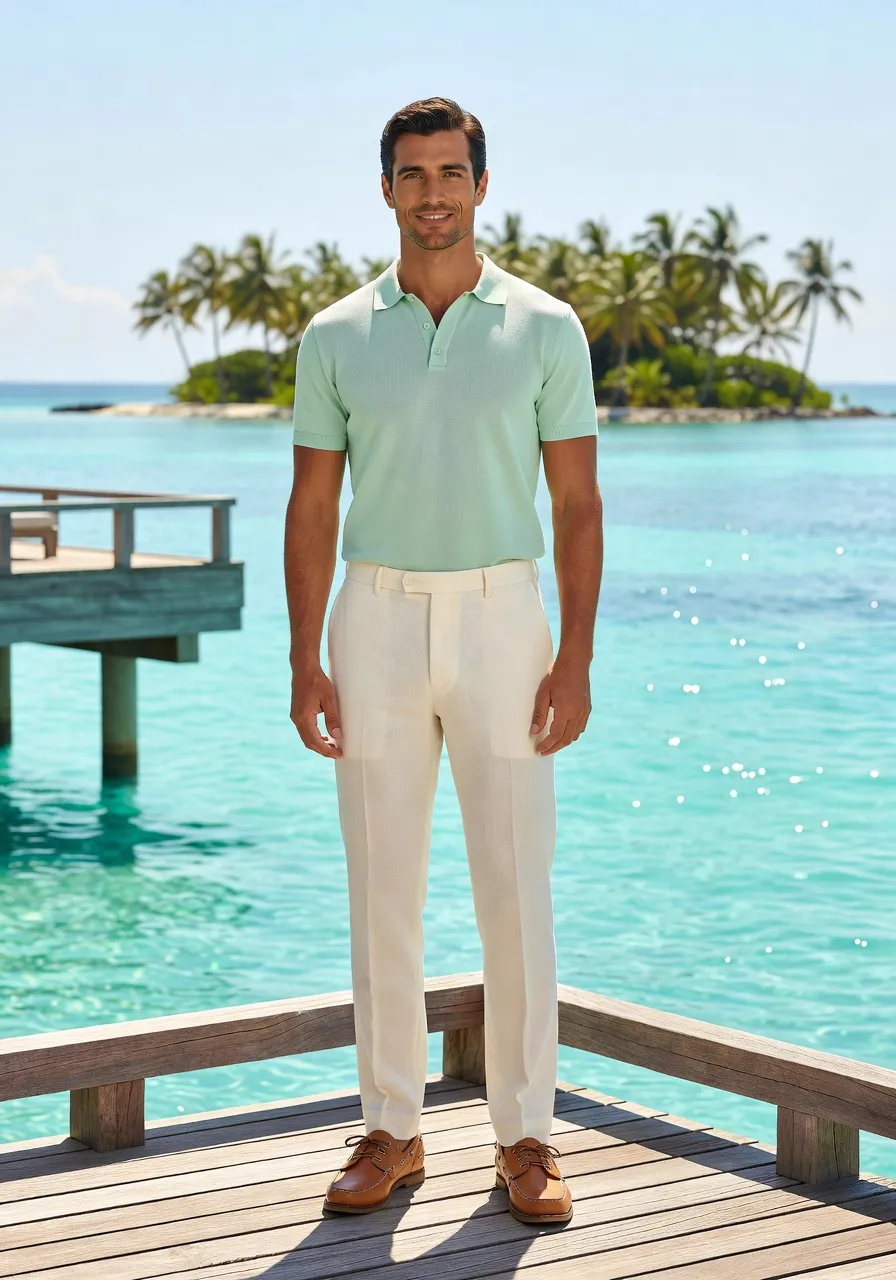
Maldives overwater
Turquoise water, tropical noon
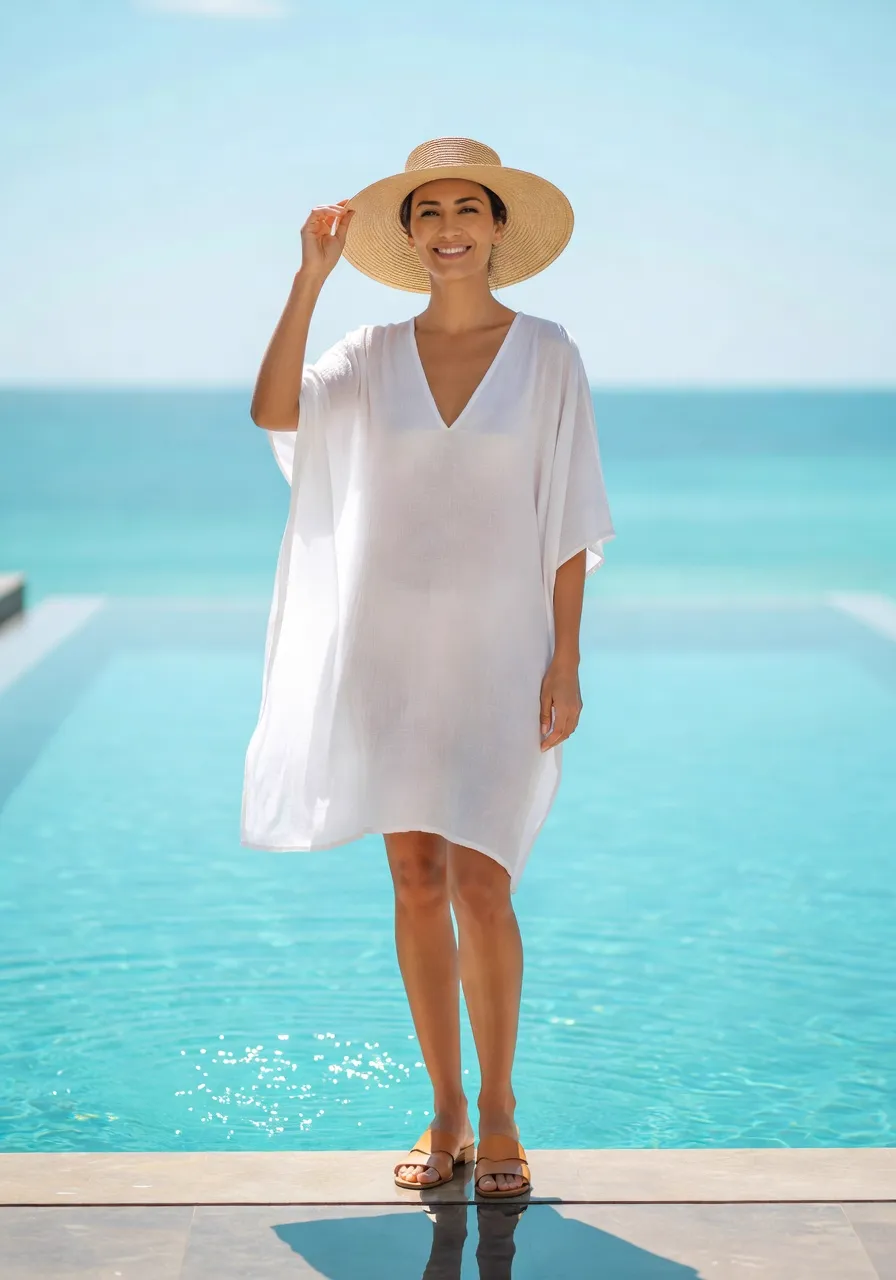
Infinity pool
Bright resort, mirror calm
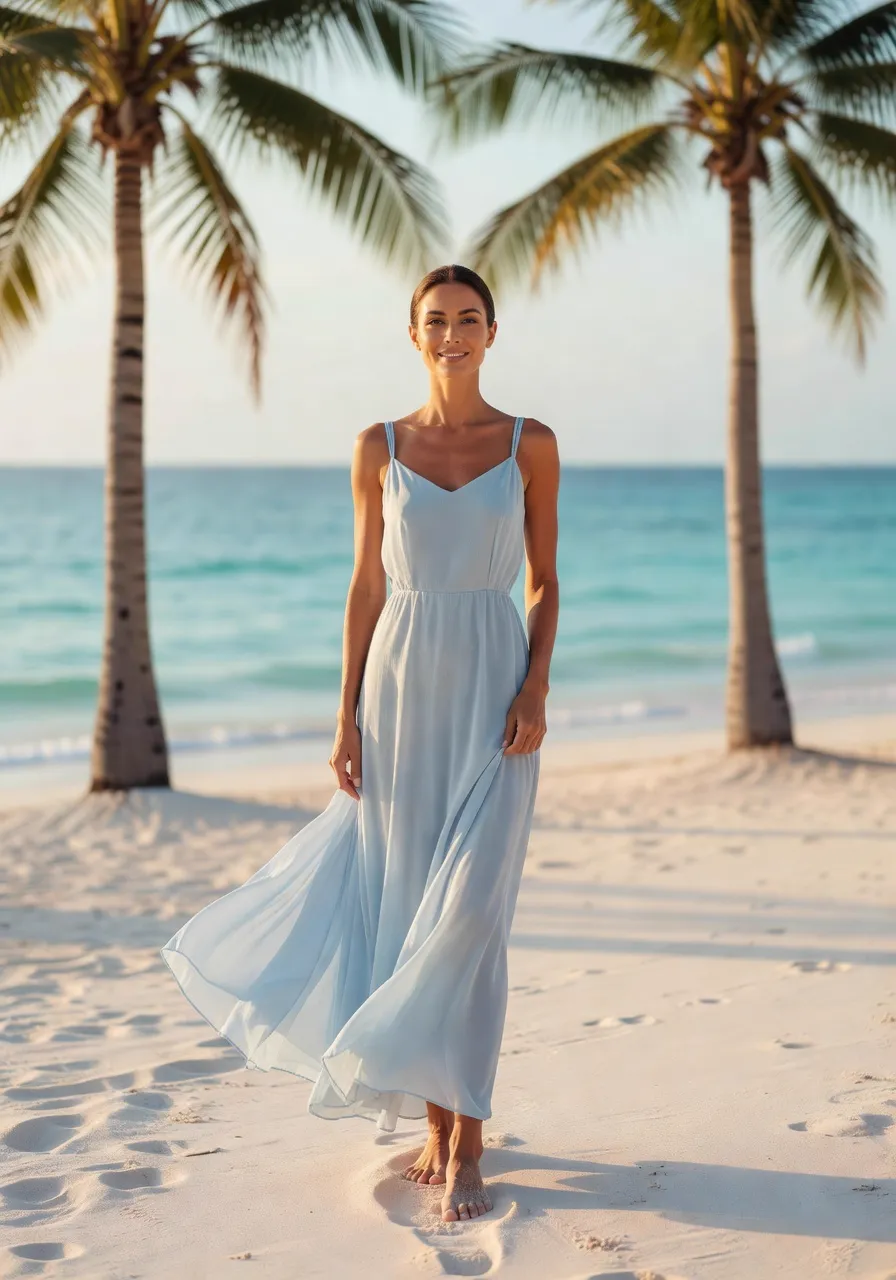
Palm-framed sand
Soft tropical, golden glow
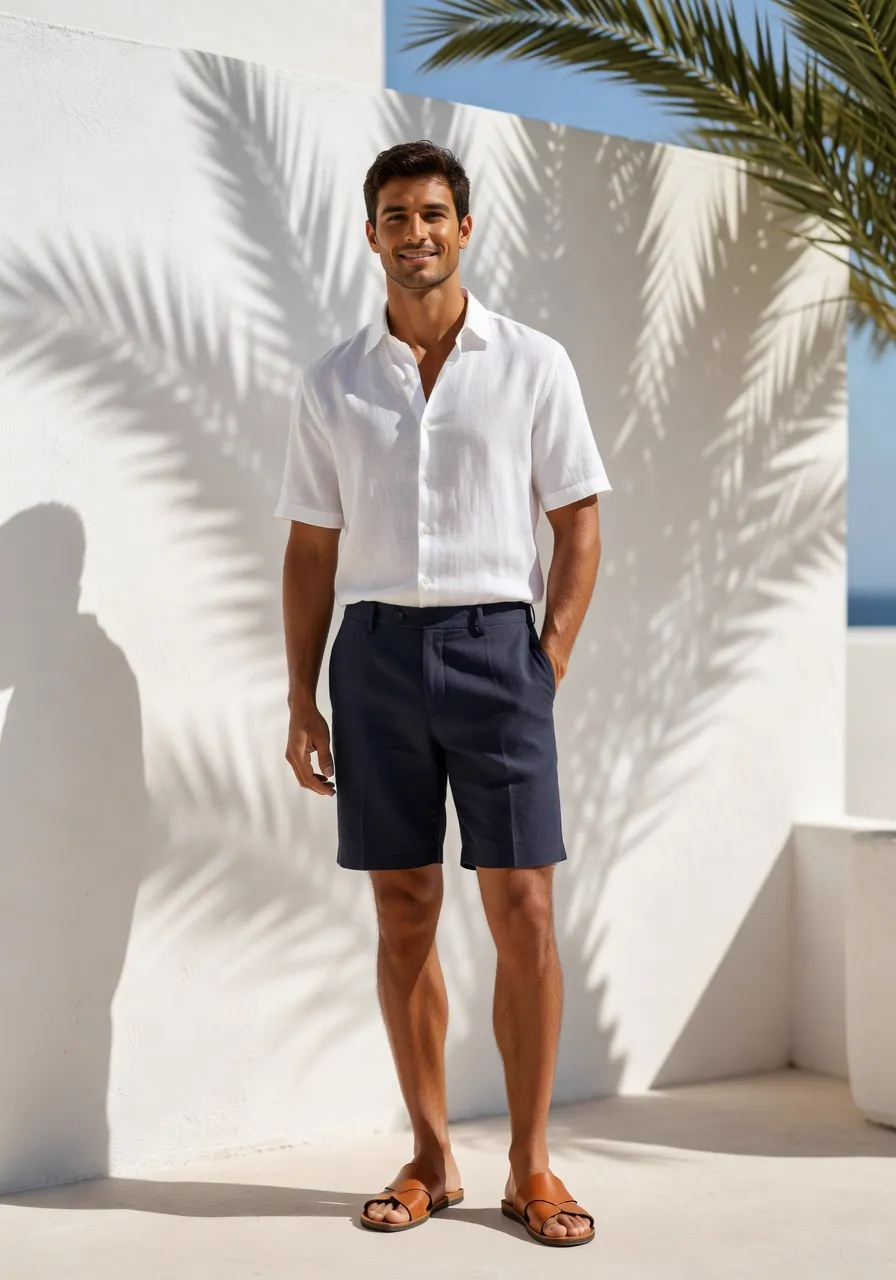
Mediterranean stucco
Greek-island midday, palm shadows
Five of dozens of summer-light references in the MODA AI library. Each carries a different version of the season — pick the one that fits your collection.
Why Summer Needs This More Than Any Other Season
Summer apparel is bought aspirationally. Most shoppers are buying summer pieces in spring — before the weather actually arrives, before the trip is booked, before the heat hits. The imagery isn’t describing the product; it’s triggering the daydream that justifies the purchase.
That aspiration tracks felt warmth in measurable ways. A 2020 study in the European Journal of Operational Research found that warmer-than-expected temperatures significantly increase summer apparel sales — independent of calendar dates and holidays. Your shoppers buy summer dresses faster on a 75°F March day than a 55°F June day. Imagery that feels warm triggers the same effect, year-round.
That’s why summer collection imagery needs to be deliberate about light in a way that other seasons can fudge. Winter boots can be shot in a studio. Summer linen needs the sun.
What Three Summer Lights Would Cost Traditionally
The three shoots above — one model in three garments under three completely different lighting setups in three locations — would normally require:
- Three different daylight windows (noon, 10 a.m., late afternoon) — you can’t shoot them in one day
- Three location permits or travel days (Mediterranean coast, Atlantic boardwalk, Pacific rocks)
- Weather backup days — cloudy noon kills your peace-sign shoot
- The same model on retainer across the entire window
- A photographer who can read summer light and a stylist for each location’s vibe
For most independent brands, this is simply not buildable. Shopify’s own conversion research correlates professional photos with roughly 33% higher conversion rates — but professional summer imagery has historically meant choosing one shoot, one light, and hoping it carries the whole collection. MODA AI takes that constraint off the table: a full summer lookbook with three lighting moods comes back from one set of uploads, in minutes.
Frequently Asked Questions
How does MODA AI capture a specific time of day for a summer shoot?
MODA AI captures the location settings, time of day, lighting mood, and LUT from your background reference. Drop in a high-sun frame for noon. Use a sunset boardwalk for golden hour. Use a low-sun coastal scene for cool editorial morning. Your model and garment stay locked — the reference carries the light.
Can I keep the same model across different summer locations and lighting moods?
Yes. Lock your model face reference, then run the same model through multiple background references — beach noon, harbor morning, boardwalk afternoon — in a single batch. Same face, same brand presence, completely different summer settings.
Why does warm summer light increase fashion conversions?
Peer-reviewed research (Pilelienė & Grigaliūnaitė, 2017) shows warm color temperatures in advertising produce significantly higher purchase intent than cool ones. Summer apparel demand also tracks felt warmth — a 2020 study in the European Journal of Operational Research found warmer-than-expected weather measurably increases summer apparel sales. Imagery that feels warm triggers the same effect.
Can I shoot a full summer collection in one day?
Yes. Traditional summer shoots need multiple daylight windows, location permits, and weather backup days. With MODA AI, you upload your garments and pick your background references — the full collection comes back with multiple lighting moods and settings, in minutes.
Salsify’s 2024 Consumer Research Report found that 78% of shoppers say product images are very or extremely important when making an online purchase — ranking imagery alongside price as the deciding factor. For summer, “quality” doesn’t just mean resolution. It means the light is right for the garment, the season, and the moment. It means visual storytelling that makes the buyer feel summer in their feed.
Shoot your summer collection in any light
Upload your garment. Pick the light. Generate a full lookbook in minutes — noon, morning, afternoon, golden hour.
Get Started Free